Lady Sovereign Tours North America

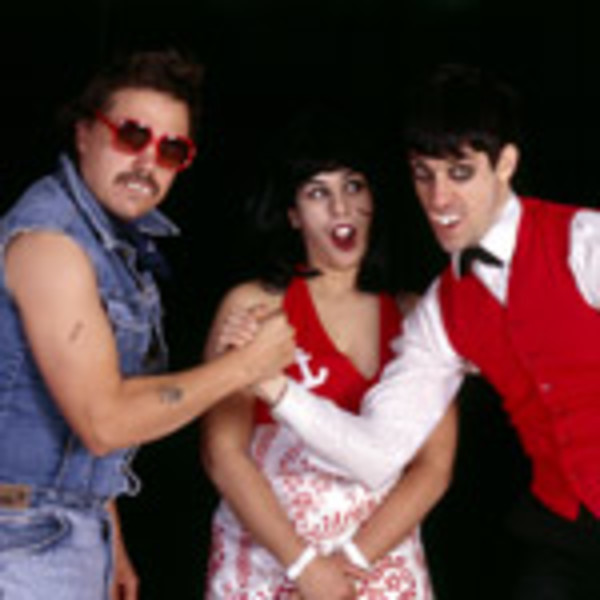
With a new date of October 17 set as the release day for her Public Warning album on Def Jam Records, grime’s favorite midget Lady Sovereign heads stateside for another US tour in support. Public Warning marks Sov’s major label debut, so expect packed houses coast to coast for this cheeky young lady.

Tour Dates

10/23 Montreal, Club Soda
10/24 Toronto, Opera House Concert Venue
10/26 Boston, Paradise Rock Club
10/28 Washington DC, 9:30 Club
10/29 New York, Bowery Ballroom
10/30 New York, Bowery Ballroom
11/01 Philadelphia, Starlight Ballroom
11/03 Detroit, St. Andrews Hall
11/04 Chicago, The MEtro
11/05 Minneapolis, The Varsity Theater
11/07 Boulder, Fox Theater & Café
11/10 Vancouver, Commodore Ballroom
10/11 Seattle, Neumos
11/12 Portland, Wonder Ballroom
11/14 San Francisco, Mezzanine
11/15 Los Angeles, El Rey Theatre
11/18 Las Vegas, Beauty Bar
11/19 San Diego, House Of Blues
11/22 Dallas, Gypsy Tea Room & Ballroom
11/23 Austin, The Parish
11/24 Houston, Meridian Red Room
11/26 New Orleans, The Parish
11/27 Tallahassee, The Beta Bar
11/28 Miami, Studio A
11/30 St. Petersburg, The State Theater
12/01 Atlanta, The Loft

ladysovereign.com

New Music Books

Think you know everything about music? Three new book series prove you’ve still got a lot to learn…

1. 33 1/3 Series
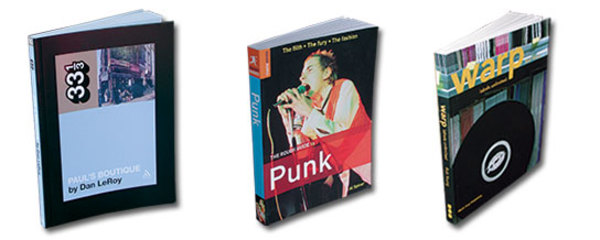
If you’ve ever loved one single album so much that you’d stop at nothing to discover more about its creation and its lasting effect on the course of musical history, then let editor David Barker’s 33 1/3 series (Continuum; paperback, $9.99 each) be your trusty guide. Early entries in the set–among them Joe Pernice’s fiction inspired by The Smiths’ Meat is Murder and Erik Davis’ mystical search for signs and signifiers in Zeppelin’s fourth album–focused on LPs from rock’s tried-and-true canon.

But the latest batch of 100-odd-page tomes lends credence to some less frequently cited musical touchstones: While not all would claim Paul’s Boutique as the Beastie Boys’ finest record, writer Dan LeRoy thoughtfully and humorously illustrates its importance in shaping sample-based culture. Other recent 33 1/3 editions include The Stone Roses and Doolittle, but the one we most anticipate is Matmos member Drew Daniel’s take on Throbbing Gristle’s 20 Jazz Funk Greats, currently in the works. Ken Taylor

2. Labels Unlimited
Far from just a name on an album cover, a few famous imprints have become arbiters of taste and guarantees of quality. The Labels Unlimited book series (BDP; paperback, $29.99 each) by London’s Black Dog Publishing goes behind the scenes at some of your favorite indie outposts, giving their business dealings equal time with the tunes.

Rob Young, editor-at-large for influential English mag The Wire, pens the entire series, which debuted in November 2005. The first installment was an in-depth profile of Warp Records, including interviews with Aphex Twin, Prefuse 73, and co-founder Steve Beckett; Young’s next volume, to be released in early October, examines England’s indie stalwart Rough Trade. “It’s obviously a hugely influential company,” Young says. “Its practices altered the whole record distribution scene in the UK and the shops they set up are still the first port of call for anyone looking for alternative music in London.” Later in the year, Young plans to tackle Jamaican music buff Chris Blackwell’s pioneering Island Records. Patrick Sisson

3. Rough Guides
If you’re going to Zimbabwe you might be tempted to pick up a Rough Guide, but do you really need something like The Rough Guide to Rock? You might. Trivial Pursuit fanatics, budding music critics, and collection completists will revel in the knowledge contained in Rough Guides Music series (Rough Guides; paperback, $24.99 each), which includes primers on techno, drum & bass, reggae, and brand new tomes on punk and soul/R&B. Even the snottiest record store clerk has a lot to learn from the books’ meticulously researched yet miraculously interesting entries, which span the gamut from obvious bands (Captain Beefheart, Bikini Kill) to cult favorites (Loop Guru, Miranda Sex Garden).

The company has enlisted top writers to curate the volumes, including Peter Shapiro (who penned the Hip-Hop and Drum & Bass volumes) and Blood & Fire label don Steve Barrow (who wrote Reggae, naturally), and has even roped in music celebs like Al Green and Pavement’s Stephen Malkmus, who contribute commentary and Top 10s for the iPod generation in the Rough Guide to Playlists. Tyra Bangs

Ian Wright: Addressing the Message

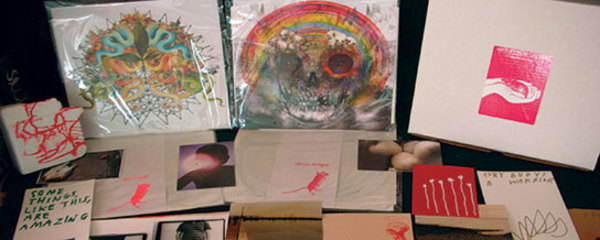
London-based artist Ian Wright may be a man of few words, but with over two decades of work under his belt, he can afford to let his imagery do the talking. While still unknown to many, Wright has carved a careful niche for himself over the years, using a variety of media and techniques to translate sound into images for countless commissions. From his work for Pete Townshend, Black Uhuru, and On-U Sound to his album sleeves for Factory Records and Cabaret Voltaire, Wright has made his mark on music culture.

After getting his degree in graphic design from the London College of Printing, Wright gravitated towards illustration. In 1980, he was hired by the highly influential music rag NME to create one drawing per week. It was here that he developed his love for process and play. Forced to work quickly, Wright took a different approach to each illustration, using materials as far-fetched as shoelaces and table salt (along with a healthy dose of Xerox) to keep things interesting.

His next big break was joining iconic designer Neville Brody’s studio, which was responsible for the look of magazines like Arena and The Face. Also in the office was a likeminded young designer by the name of Ian “Swifty” Swift, who manned the visual helm of the emerging acid jazz scene. During the early ’90s, Wright contributed extensively to the aesthetics of the movement, working with Gilles Peterson’s Talkin’ Loud label and Straight No Chaser magazine.

Always looking toward the future, Wright is excited about what might happen next. He has just completed his first solo show at NYC’s Christopher Henry Gallery, and continues to freelance in addition to teaching illustration at the University of Brighton.

XLR8R: Illustrator, designer, artist. Where do you lie?

Ian Wright: All seem to be relevant at some time or another.

You love to work with different materials. How big of a role does your medium play in your work?

The restriction a material places on me helps me solve the problem/picture! I enjoy that process very much. It could link to the fact I studied graphic design at college and only started illustrating once I graduated. I like to change. Experimenting with materials is an integral part of my work.

Another common element in a lot of your work is symmetry. Why do you gravitate towards this sort of balance?

To give my work a design element. I saw a Mott the Hoople cover, Mad Shadows, in 1969 and it always stayed with me. But it took 12 years to become an idea in my work. I also loved the work of Karl Wirsum of the Hairy Who, who also uses a sense of symmetry.

What about portraiture? Is that a way to distinguish yourself?

I love drawing people, especially those I feel strongly about. It could be a way to link myself to a musical area, trying to portray a feeling about a subject. I’m usually frustrated with my drawing, so playing around with ways of mark-making and process gives me results I can’t physically make.

Have computers had a big impact on your creative process?

I used to have use of a black-and-white process camera. I used to use it as I would a photocopier. We then got a photocopier, which I used to use as if it was a computer. I only really use a computer to process my images, or as a plan for a larger-scale image.

Rumor has it that Neville Brody’s studio was one of the first to experiment with the Apple Mac…

True. I think it was around 1990. We had one Mac for about eight people! We all got good at playing a game called Crystal Quest. I still love using a program called MacPaint.

Some of those eight studio members went on to be quite prolific in their own right, didn’t they? Is that where you first met Swifty?

Yes! My good mate Cornel Windlin was also there at that time, along with the great Tony Cooper (now sadly deceased), a truly inspiring and innovative designer; Simon Staines, who’s now a creative supervisor at the Useful Company; and Giles Dunn, a designer currently working in London and New York (punkt.com). It was an exciting time, and a good place to be, upon reflection.

Has the overuse of computers and digital imaging turned you off?

I can see the advantages, but I still can’t see a way forward for me with a computer. I usually need a collaborator!

Most people know you from your work on various music-related projects. Why are so drawn to the music side? Did you fancy being a professional musician first?

My dad had a speaker rigged up from a huge radio on our upstairs landing. When I was about eight or nine, I would be allowed listen whilst drifting off to sleep, the music seemingly coming out of the darkness, with radio static and hiss providing an ethereal quality. I was immediately hooked, and have been ever since. The Beatles–and then later, the radio DJ John Peel–provided my musical education. I never had any inclination to play an instrument, but I always loved hearing and watching drummers.

With technology rapidly taking over, what do you see for the future of music packaging? Do you think a digital copy of the album with little or no artwork will suffice, or do consumers still want something to hold and collect?

I would! I find it harder to remember particular tracks without a visual guide. With CDs I find myself referring to “Track 13” without knowing the name of the track. I find music packaging itself becoming more anonymous, throwaway. Money dictates. We are now aware of the price of music per unit. The convenience of playing and storing has taken over. It’s not for me.

What are you listening to these days?

The usual mix-up, [including] Gilles Peterson’s WorldWide radio show, loads of rare groove, Stevie Wonder, King Tubby, Dennis Bovell, Steve Barrows compilations for Blood + Fire, Hank Williams, The Beatles (always!), early Roxy Music, Beck, and Madlib in his many musical guises.

What do you hope to be doing in the next 10 years?

I want to keep the faith!

The Klaxons To Release EP

In the case of this UK-based trio, you can judge a band by its, er, album cover. Or at least by the track titles and overall appearance of the band, both of which hint at the idea carefree fun for everyone. Although still relatively new to the scene, The Klaxons have been turning heads with their brand of post punk meets dancefloor chaos, and the Xan Valleys EP is proof they’re enjoying themselves during this process. With melodies that resemble The Happy Mondays mixed with breakdowns and bpms more reminiscent of rave’s heyday, the EP is an energetic six tracks that definitely don’t follow the rules of predictability, and thank god for that. Expect more music, wacky outfits, and some US tour dates in the next few months from these guys.

The Xan Valleys EP is out October 10, 2006 on Modular

Tracklisting
1. Gravity’s Rainbow
2. Atlantis To Interzone
3. 4 Horsemen of 2012
4. The Bouncer
5. Gravity’s Rainbow Van She Remix
6. Atlantis To Interzone Crystal Castles Remix

Les Georges Lenningrad To Release Sangue Puro

The forthcoming album marks the third release for the Montreal-based art-rock trio that specializes in synths, drums, and guitar noise, and who has been cited as “juvenile fury” by some. In any case, Sangue Puro will definitely make you dance when you hear it, or at the very least understand why the band has developed a following that includes The Gossip, Erase Errata, and Sonic Youth. Stay tuned for details on an upcoming shows during the months of October and November.

Sangue Puro is out October 3, 2006 on Tomlab

Tracklisting

1. Sangue Puro
2. Skulls In The Closet
3. Scissor Hands
4. Ennio Morricone
5. Eli Eli Lamma Sabbacthani
6. Mammal Beats
7. Sleek Answer
8. Mange Avec Tres Doigts
9. Lonely Lonely
10. The Future For Less

Synch Festival: Greece Hits

Raving in Greece isn’t quite like raving anywhere else. You’re less likely to end up at an afterparty than to find yourself at an all-night diner on the outskirts of the city, where vintage jazz and recent R&B take turns on the stereo while you crouch on Turkish cushions, eating salty crepes. The crowds are different, too, there’s no jaded “been there, done that” feeling, because many partygoers are doing it all for the first time.

This was the third year of Greece’s Synch Festival (July 6-8, 2007), an upstart event modeled in part on Barcelona’s Sónar and Montreal’s MUTEK, though you wouldn’t necessarily have guessed it from the proceedings: Delays were routine and many in the crowd seemed unaware of how lucky they were to see legends like Mark Stewart and the Maffia or Underground Resistance’s Galaxy 2 Galaxy. But the public was hardly impassive–Amon Tobin’s crowd, packed ass-to-elbows, danced as though their lives depended upon it. (Despite a local explosion of minimally-inclined producers signed to international labels, house and techno didn’t fare as well as breaks; even as Chile’s Pier and Andrés Bucci improvised their way through one of the festival’s best sets, the tent was emptying out.)

Synch opened on a Thursday at Athens’ Benaki Museum of contemporary art with performances from K. Bhta, the Vegetable Orchestra, and Biosphere, but most of the action took place Friday and Saturday nights in a renovated industrial complex in Lavrio, some 45 minutes south of the capital. The tightly curated lineup was as good as it gets, expertly balancing rock (The Chap, Animal Collective), dance music (Henrik Schwarz, Argy, A Guy Called Gerald), and experimental sonics (Ralph Steinbrüchel, John Duncan). With local vendors’ booths dotting the compound and an exciting array of multimedia, including an immersive laser performance from Edwin van der Heide, the grounds took on almost carnivalesque trappings. Not just a smorgasborg of bands, Synch was a total experience, providing a succinct historical overview of experimental music even as it made history itself.

Output Recordings Closes Its Doors

Today Trevor Jackson, boss of Output Recordings, announced that the label has closed its doors, effective immediately. Jackson states the closure is due to “circumstances beyond his control.” Output was home to artists like Mu, Colder, Black Strobe, and Circle Square. This is the label’s tenth year operating, and they were close to celebrating their 100th release. What Mr. Jackson or any of the artists on the label plan for the future is not yet known, but XLR8R wishes them the best of luck in their respective musical futures.

More extras from our Dntel feature!

In Issue 100 we talked with Dntel, aka Jimmy Tamborello of the Postal Service, about his latest musical ventures, monkeys, and more.

What do your parents think of your music?
They’ve always been really supportive. The Postal Service was the first time that they totally genuinely liked to listen to it. Earlier, my stuff was a lot darker, or more goofy. They were always complaining that I didn’t turn the vocals up loud enough. That used to be my solution for any vocals that were a little bit off–I would just turn them down. It kind of drives me crazy when you can’t hear the vocals clearly, so I stopped.

Do you care about the difference between analog and digital?
I do now. I like being able to hear a little bit of how something was made. It’s nice when you can kind of feel the people behind the music that’s coming out. I notice that in older music, like ’60s stuff that I like. I like that it wasn’t so polished–you can kind of feel the bands in the studio making the music. You can feel the seams of the song and kind of hear how it was put together. With electronic music, you can simulate that feeling, but all the sounds that come out are more intentional. If I play a note on the keyboard that’s triggering the synthesizer, it’s going to remain the same unless you program in that things are going to change. With a guitar, each time you hit the string it’s going to be slightly different. Going back to the analog equipment thing, one advantage of analog gear is that it’s not so precise, so you start to get some of those accidents.

How did you meet Erlend

Watch Banksy Punk Paris Hilton

Yes, the whole Paris Hilton punked by Banksy has already made international headlines and in only a day has become slightly old hat, but we couldn’t resist throwing this up on the site today. Here’s a blow by blow video account of how the notorious street artist/professional prankster did a little embellishing of Paris Hilton’s new album.

Watch The Video

New At INCITE Online, Sept. 5

Get the latest tracks from XLR8R approved artists for FREE, only at xlr8r.com’s Downloads Section.

If you would like to receive weekly updates on our FREE downloads, subscribe to the XLR8R Podcast. iTunes 4.9 or higher recommended.

Benni Hemm Hemm – The 13-piece band’s self-titled album is available for the first time outside Iceland, and weaves everything from love songs and bells to Northern Soul into the tracks.

Grizzly Bear – Think classic Americana mixed with musicals, a few psychedelics, traces of the baroque and you’ve got a pretty accurate idea of the band’s sound

Somnitone – Making a special appearance on this IDM flavored hip-hop compilation from Merck, the last of its kind, as the label is soon to close its doors forever.

Kid 606 – Leave it to the boss of Tigerbeat 6 to top off his funkstep dancehall with lyrics about Jamaican prime ministers and the laments of women who bleach their skin for cosmetic reasons.

Land Shark – His self-titled full-length takes a takes derailing hard left turn from house music and straight into the sonic realms of industrial, punk and electro.

Page 3323 of 3781
1 3,321 3,322 3,323 3,324 3,325 3,781