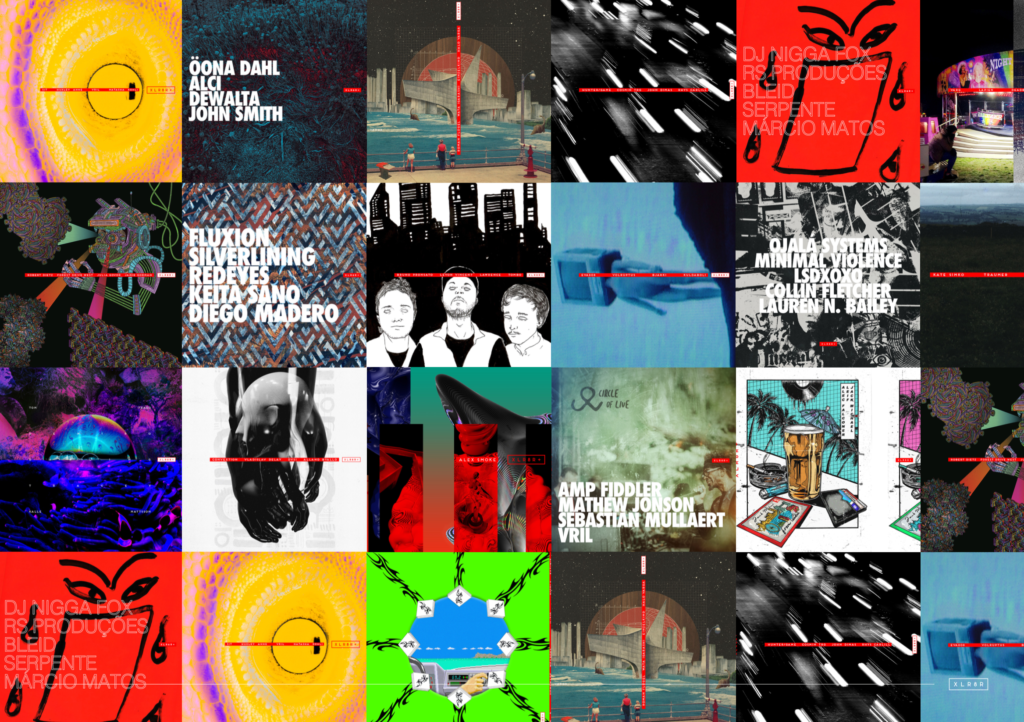
Moving beyond the constraints and classifications of the electronic realm, Anders Remmer goes post-everything with his latest album. From the soothing static pulse of “Five 6” to the fairy-dusted dubbery of “I’m Like You,” Hideout ebbs and flows with a superb fusion of basement-band instrumentation, daydreamy folktronics, and deliciously reverberant textures that softly melt all linear thought patterns. Each song unfolds gradually, taking its time to explore the nuances of every fuzzy, minimal melody and downshifted cadence through the warmth of Remmer’s rich, granular production. If this is lo-fi, you may never want to be high again.
Milosh Meme
It’s over… it’s over, begins the first song of Mike Milosh’s new album, his sadness evident from the start. The bittersweet lament of Milosh’s multilayered vocal harmonies are tinged with an approaching sense of hope; the notion that while the loss of love brings with it indescribable pain, the chance for romantic rebirth waits in the wings. These are the themes of Milosh’s last two albums, chronicling his adoration for and eventual breakup with a previous girlfriend. Meme sees Milosh moving on, discovering and exploring a new love. He draws us in on the gossamer threads of his voice, spinning his tale over a bed of percolating electronics and gently strobing synths that call to mind Telefon Tel Aviv or the majority of Morr Music’s roster; a nice set of slow jams for shoegazers and IDM kids alike.
Joe Bataan Call My Name
Originally released on the Spanish Vampi Soul imprint, the King of Latin Soul’s 2005 comeback record, included in its entirety on this digital release, also gets the remix treatment from ESL’s finest. Starting in the ’60s, Harlem-bred Bataan merged Latin and R&B sounds to create hits like “Gypsy Woman.” On his first record in 20 years, Bataan’s soulful voice still sounds timeless over organ fills and Latin rhythms. Tracks like “Call My Name” indicate that the King kept his game tight while he was away raising his children and counseling juvenile offenders. The set closes with Ursula 1000’s “Chevere Que Chevere” remix, a fine tribute to Bataan’s early influence on hip-hop.
Azeem Craft Classic
Released during Dubya’s first year in office, when the King and his court began plotting their imperial designs, this once out-of-print record still sounds relevant with tracks like “Bush is a Gangsta.” Originally limited to 3,000 copies, the Oakland-based MC has re-mastered his full-length debut (minus three tracks), featuring some of the Bay’s best hip-hop producers. Azeem attacks a beat like E-40 on a bender at a poetry reading, and cuts like the self-identity-dissecting “Imma Rmx,” with its stream-of-consciousness flow, should impress the Def Poetry crowd. Unfortunately, Azeem discarded the prose poem “God’s Rolex,” but tracks like “Rubber Glue,” where he plays a wack rapper, should have fans fiending for a new record-hopefully to hit before Bush’s impeachment proceedings begin.
Ugly Duckling Bang for the Buck
I’m always down to hear a rap album that doesn’t make me want to take my earrings off and grab a jar of Vaseline. Many alternative-rap artists confuse being different with being good; fortunately, that’s not the case with Ugly Duckling. This album isn’t defined by how “not like” everything else is it. Clever lyrics and funky uptempo tracks distinguish the SoCal trio from the pack on their latest release. The standout track “The Breakdown” is aggressive by UG standards but more amusing and danceable than most of what’s out there.
Various Artists Hard Truth Soldiers Volume 1
Paris isn’t kidding-the truth is hard. But who better to bring it to us than him, The Coup, Dead Prez, MC Ren, and “Mr. Black CNN” himself, Chuck D? America’s at war at home and abroad as Paris and family chronicle corruption, police brutality, racism, and sexism against a backdrop of baddup-bump slumps; these tracks can start a heated debate as easily as a hot-ass party. However, this compilation is best enjoyed away from distractions such as bumping and grinding. To really hear the hard truth, put on your thinking cap and go for a ride.
Sao Paulo Underground Sauna: Um, Dois, Tres
Rob Mazurek (Chicago Underground Duo/Trio, Isotope 217) teams up with Brazilian drummer/trumpeter/programmer Mauricio Takara (from the jazzy instrumental rock band Hurtmold) for this noisy, experimental project. The title track doesn’t divulge the duo’s post-rock leanings, but they’re slightly hinted at on the “Afrobeat-fueled Afrihouse” and “Pombaral,” telling pieces of this landscape soundtrack that translate the sounds of the tumultuous metropolis into music.
Greg Davis Amaranthine (from Idol Tryouts Vol. 2 LP)
Wobbly told us there’s an Indian saying, Heaven is between two tamburas. “This is the kind of music I would make if I could actually play guitar and if I could actually make a good, strong, clean, beautiful recording of anything.”
Electronic Queer: Broken Silences

In 1994, LA-based artists Dont Rhine and Marco Larsen formed Ultra-red, a collective of musicians and activists that defined the culture-jamming ideals that made mags like Adbusters and artist Shepard Fairey so popular. Since then, Ultra-red has grown to include numerous artists and community organizers from a variety of political struggles. With the help of Eddie Peel and abstract house producer Terre Thaemlitz, Rhine also manages the group’s online archive/digital label, Public Record, which recently released for one of queer culture’s most forward-thinking pieces of audio art, A Silence Broken. After Rhine attended a conference on psychoanalysis and politics with Matmos/Soft Pink Truth producer Drew Daniel-and witnessed the academics’ refusal to accept queer theory as a legitimate political discourse-the two asked a few friends to create music with source material from a queer protest in LA in 2000. Available for free download, A Silence Broken includes artists like Soft Pink Truth, Lesbians on Ecstasy, and Miau Miau TM providing differing, often danceable, takes on the LGBT war cry “Silence Equals Death”-a call to action to fight the AIDS epidemic and build acceptance and awareness of the LGBT community. Below, Rhine fields a few of our questions about the project.
XLR8R: What do you want people to do with this record?
Rhine: Radical, ecstatic, critical bodily engagement. Our struggles begin on the surface of the skin. Spare us the old clichés about “intelligent dance music.” A Silence Broken sees body music as a site for critical engagement… Just because many of us no longer feel like we’re living in an AIDS crisis, does that mean the crisis does not exist? Is ignorance the solution to crisis? Is silence the absence of crisis? Then one day we wake up and we’re told we’ve been infected with HIV, one day we’re told there’s no such thing as anonymous HIV testing, that our names are reported to the federal government, that there’s a cap on free access to AIDS drugs, that there’ll be no cure because the epidemic is too profitable, that abstinence is the only AIDS prevention the government will fund, that the majority of federal AIDS dollars are going to Christian fundamentalists, that AIDS is God’s punishment. And we wonder where the crisis came from.
How does electronic music convey political messages?
Political messages are not the point. I, personally, have little interest in communicating a political point in a piece of music. Rather, I am more interested in how music already activates us socially, sexually, intellectually, aesthetically. I see all these modes of being-structures of feeling, if you will-as having political currency. It is not the case that our politics merely reproduce our modes of being. Rather, it is through these that the conditions for our politics are reproduced. If our art insists on the disavowal of politics, then we get the politics that that disavowal makes possible. Today, that politics is fascism.
How did you go about choosing the participating artists?
These are people who are all struggling with their relationship to the history of struggle. We are colleagues in the politics of pleasure and the aesthetics of politics.
Is A Silence Broken also available for purchase, to support the cause financially?
Buying a record is no substitution for direct action. If people want to support the cause, then take collective direct action to end the AIDS crisis: using whatever dance music kicks your ass, throw your body into the machinery. Begin with wherever you’re at-depression, cynicism, anxiety, or anger-and turn that into a weapon, underneath the dancefloor, [on] the battlefield.
Dabrye: Cold Front
“Ann Arbor is like a soundclash,” says Michigan native Dabrye, while chiseling away at his veggie enchilada from inside San Loco, a Mexican joint on New York’s Lower East Side. Taking some time off from his beloved job manning the counter at jazz and soul retail outpost Encore Recordings back in Ann Arbor, Tadd Mullinix is in New York to talk to XLR8R about his new Ghostly International release, Two/Three. But first he’s content to wax poetic about the place he calls home; a city with so much green they call it “Tree Town.”
“Being so close to Detroit, you’ve got that urban influence,” he explains. “Now that music and culture are so global, you can get anything you want in Ann Arbor, yet it’s still relaxed.” The contrast between laidback Ann Arbor and hard-knock Detroit is a perfect foil for the music Mullinix makes as Dabrye (pronounced “dob-ree”). The Dabrye sound is rugged, technical, and sometimes banging-often closer to Timbaland than, say, El-P-but it does away with the aggression and in-your-face posturing one has come to expect from hip-hop. The music is unassuming and unpredictable, with lots of secret twists and turns-in short, it reflects Mullinix, who shows up to the interview looking like the avid skater he is, sporting an army green Etnies crew-neck sweater, a scruffy beard, and a laissez-faire hairstyle that makes him look much more approachable than his erstwhile shaved head.
A Man of Many Sides
Dabrye isn’t Mullinix’s only alter ego. Under his James T. Cotton guise, he delivers acid house and EBM that’ll make you think you’re playing Tempest on poppers; as SK-1, he makes mashed-up ragga-jungle; and, as Tadd Mullinix, he’s made experimental electronic pieces that could teach Luigi Russolo a thing or two about Futurism. Then there’s a character that he won’t cop to: Charles Manier, the maker of spooky, darkwave-disco masterpieces (as heard on Ghostly’s Disco Nouveau compilation). “I don’t talk about him,” he says with a mischievous grin. “He’ll remain my special secret.”
What all these aliases have in common-besides sharing a home on Ann Arbor’s Ghostly and Spectral Sound imprints-is a sound that is at turns evil and humorous, one that’s remarkably forward thinking but with an endearingly kitschy tinge. “The early ’80s-especially 1981 and 1982-had a big influence on my sound palette,” says Mullinix, who counts “Transformers, GoBots, Thundercats, and Silverhawks” among his favorite things.
Other favorites include decks (of both the turntable and skateboard variety), cheese, and weed, though he’s “taking a break” from the latter. His heritage may account for his dairy cravings. “I’m almost one hundred percent French,” Dabrye reveals, “so I’m eating bread, cheese, and wine on a daily basis.” So serious is he about his Roquefort that he’s close friends with cheesemonger (and DJ) Carlos Souffront, who works at famed Ann Arbor deli Zingerman’s.
Getting A Bad Rap
Dabrye debuted in 2001 with One/Three (Ghostly), an album that was the perfect soundtrack to Battlestar Galactica Cyclons doing the bump and grind; it was followed up a year later with Instrmntl, for Prefuse 73’s Eastern Developments label. He intended the music-which accentuated hard-edged electronic elements rather than the genre’s traditional funk and soul sounds-to serve as a calling card for future vocal collaborations with MCs. The indie hip-hop community got the gist-with Dabrye earning nods from J Dilla and collaborating with Five Deez’s Fat Jon-but critics and fans sometimes didn’t. Dabrye’s music was variously described as glitch-hop, click-hop, instrumental hip-hop or IDM, which he found more than annoying. “[Being labeled an IDM artist] bothered me a lot,” he confesses. “I understood that it happened because of Ghostly’s orientation and all that, but it didn’t come off as I intended.” Dabrye wanted his project to smell of industrially infected hip-hop. Instead, he laments, “It came off as another kind of electronic music.”
Dabrye was also a little confused about what was going on at his live shows (which, up until recently, had consisted of him performing solo in front of a laptop and some outboard gear). “I thought, ”Maybe I’m not painting the right picture for people,”” he recalls. “I was playing for white boys that would stand there and stroke their chins, and that bothered me. Some would dance a little, but I was like, ‘This music has sexiness in it and it needs to get to the right audience.””
Detroit Driven
The June release of Two/Three, the second installment of what’s intended as a Dabrye trilogy, will go a long way towards reaching hip-hop heads. If his first two albums were sparse and instrumental, Two/Three plays like a cipher, as Dabrye meshes his distinctive beats with vocals from a variety of MCs. “Air” features MF Doom’s intense narrative punctuated by SK-1-like interruptions from a vintage soundclash siren. “Nite Eats Day” places a fierce Beans a capella over a skittering rhythm.
The MCs here-including Wildchild and Vast Aire-don’t mince words… and neither do Dabrye’s cuts-nine out of 10 tracks on Two/Three clock in under four minutes. “I hate ornamental music,” Mullinix says firmly. “I don’t need to butter anything up.” Simplicity is the order of the day for Dabrye, who uses just two samples for most of his signature sounds. Half the time these soundbites don’t come from a dusty record, he explains. “They’re not even samples. I just went into Cool Edit Pro and generated a tone, and that was it-no keyboard or anything. Sometimes I’ll use a low-pass filter and put a chorus on it, but I do it all with an old SoundBlaster card!”
“I”m definitely coming through hard on the synthesizer shit,” he says of his new direction. “My new beats are coming off pretty dark, like a very cold and electronic vibe-almost ghetto tech.” Not surprising, then, that Two/Three features a ton of Detroit MCs, including Kadence (who will tour with Dabrye), Invincible, Finale, Guilty Simpson, Paradime, Big Tone, Phat Cat, and Slum Village members Ta’ Raach and Waajeed. “[Two/Three] is a very Detroit thing,” explains Mullinix. “Unfortunately, Detroit doesn’t get all the credit it deserves.”
One Motor City stalwart who does get shine is the recently departed J Dilla, the founder of Slum Village who Dabrye credits with inspiring him to make instrumental hip-hop in the first place. “If you listen to Slum Village, you’re talking about laidback, creamy soul that’s street but still conscious, and without being backpacker,” he says with admiration. The prolific producer shines as a rapper on Dabrye’s “Game Over” single, the cornerstone of Two/Three, and the regard he has for Dilla is obvious. “Jay Dee was my hero,” he says humbly. “A lot of people slept on his rapping style because it was little too subtle for most people to understand.”
Game Over?
The only question remaining is where does Dabrye go from here? When asked what direction he’s planning on taking this trilogy, Mullinix presents two options. “The first idea is to make Three/Three an instrumental end-cap, so it’ll go instrumental [album]/vocal [album]/instrumental [album],” he explains. “The other idea, since I have so much momentum in the hip-hop community, is to go [to] the next level with MCs. If I could get Busta Rhymes on the album I’d be stoked!”
Mullinix is quite expressive when he talks about other people’s music and the MCs he’s worked with, but he is noticeably more introverted when, as the interview comes to a close, he’s grilled for adjectives to describe his own sound. “Music fills in the gaps,” he offers. “It expresses the emotions that we, or at least I, don’t have words for.”