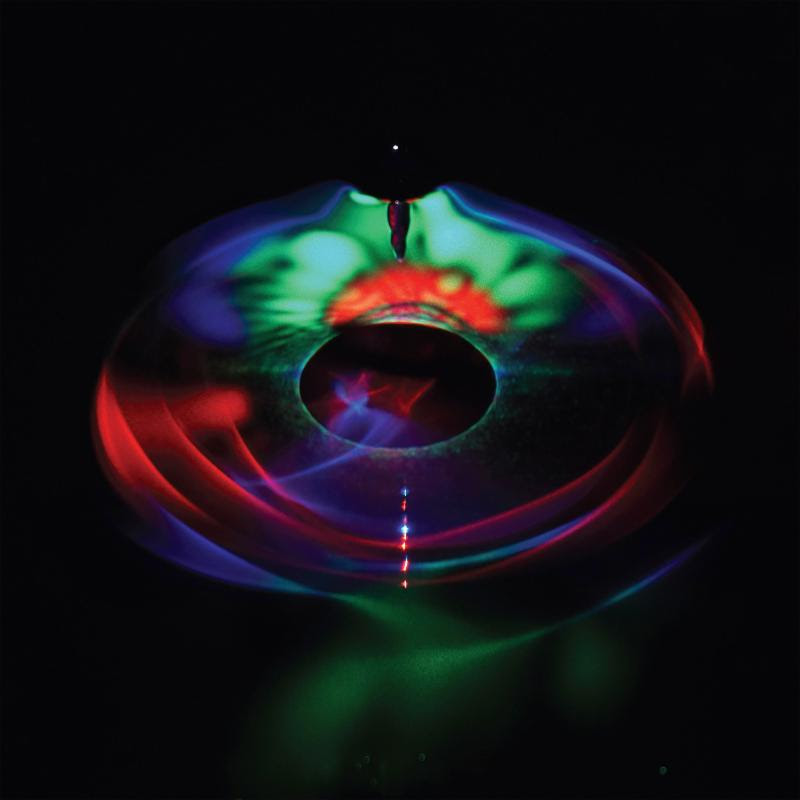
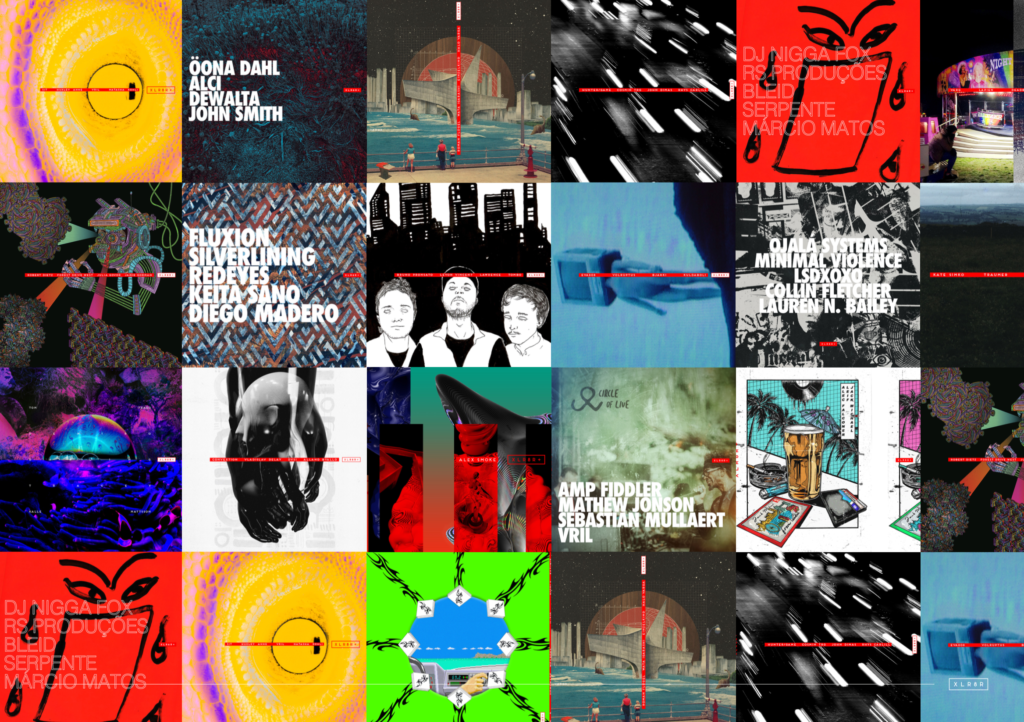
Featuring an all-star cast of remixers, including Luciano, Seth Troxler & Phil Moffa, Bruno Pronsato, and Clovis, the package provides four inspired interpretations that draw on Merveille & Crosson’s experimental jazz-like wanderings. From Luciano’s dark and twisted reworking of “Sous Le Sol” to Seth Troxler and Phil Moffa’s rolling techno interpretation and Pronsato’s mind-bending percussion excursion, the Cerulean remix package is sure to please those of more minimally-inclined persuasions.
In support of the release, Visionquest has offered up a full stream of Clovis’ remix of “Nordic Bummers,” a gorgeous jazzy dancefloor cut, available via the player below.
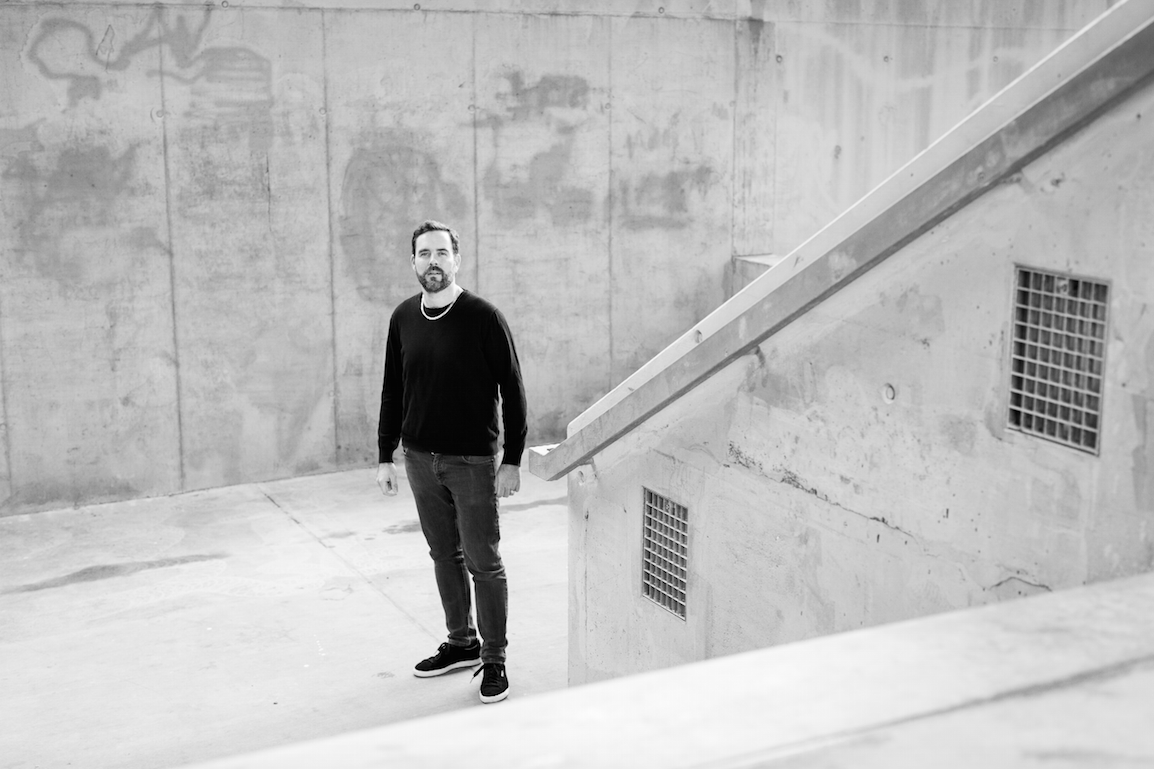
Swiss DJ and producer Sam Geiser’s technical proficiency should not be understated. As Deetron, Geiser has operated in the upper echelons of house and techno since the mid-’90s, delivering world-class, highly-acclaimed outings for coveted mix series (fabric, Balance, and DJ-Kicks), as well as two albums on Music Man Records and countless EPs and remixes on imprints such as Aus Music, Circus Company, Rejected, and the aforementioned Music Man. Geiser takes to each of these artistic endeavors with meticulous fervor, from his notorious three-deck mixing wizardry to his tough yet accessible productions. Geiser is one of the most consistent artists in the game.
Geiser’s latest outing as Deetron found him mixing the first 2018 edition of !K7‘s renowned DJ-Kicks series. Released back in March, the 38-track mix is the latest manifestation of Geiser’s gracefull mixing style and refined production aesthetic, crafting a body of work that, as he says, “represents my work as a producer and remixer as well as my aim to recreate tracks using three decks when DJing.” Under Geiser’s deft touch, the mix CD format comfortably leans more towards that of an artist album, massaging tracks together into new forms while approaching sections “more like a production or remix,” he states. It’s an emotive and engrossing compilation from an artist who has been blurring the boundaries of DJing and production for over two decades.
For our latest Artist Tips, we enlisted Geiser to offer a range of production knowledge, from recording synths into Ableton for in-the-box processing to morphing vocals into basslines and more.
Use Analog and Digital Synths in the Creative Process
I have set up all my synths in such a way that they run through my soundcard and into Ableton so I can put effects plugins over them and, finally, export them for my mixdowns. If you have a similar setup, here are a few tips on how to get going with making a new track.
Firstly, get together a basic rhythmic structure to play with and then start recording long takes using your master MIDI keyboard or recording audio directly with any synths you may not have hooked up with MIDI. After you have recorded a few takes, playback the MIDI or audio files and try to look for the best parts. Based upon these first recordings—which could be, for example, a chord progression, bassline, or lead—start building the track and arrangement. This process gives you more of a live feeling and allows for an instant and spontaneous approach to making music, which is important in my opinion, especially at the start of the creation of new music. Very often the initial idea transforms into something entirely different, harmony-wise but also rhythmically and I find that’s an exciting side to the process as well.
Use Plug-ins and Layers to Enrich Your Synth Sounds
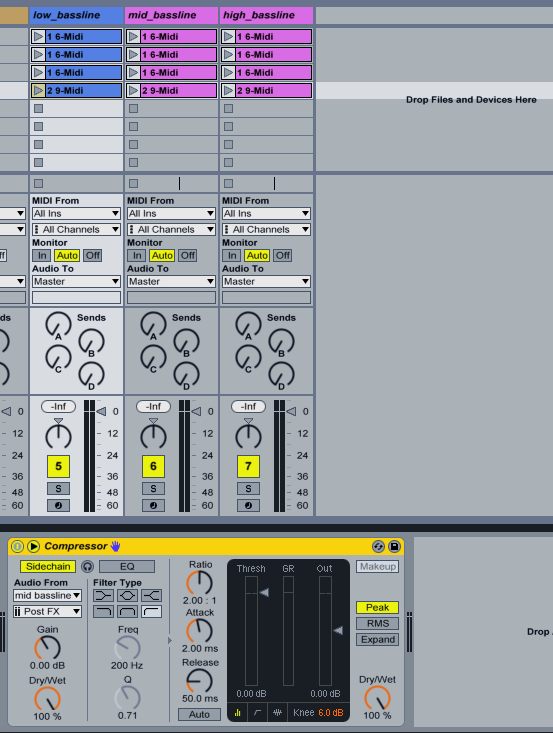
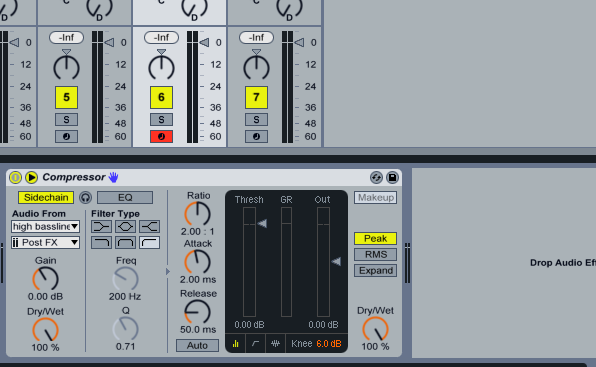
As mentioned in the above tip, the advantage of running the audio of the synths through the computer is the possibility of adding a plethora of plugins to the sounds. For example, you could use big hall reverbs such as R-Verb or Trueverb with low decays on basslines in order to give the sound more space and depth. I should also mention that the bass section, in general, is what I consider the most important in my music and it takes up most of my time spent in the final mixdown. In order to get a larger sounding bass section, layer multiple sounds playing the same bassline pattern. You can achieve the best results if you have a sound covering the sub-bass section below 100 Hz, another one covering frequencies around and just above 100 Hz, as well as a line covering the lower mids around the 250 Hz. In this case of three separate basslines, to get them to sound coherent and punchy together, use sidechain compression on the three elements feeding into each other. In order to do that, put a compressor on each of the two lower frequency basslines and sidechain the higher freq one into the compressor on the sub-bass and the highest frequency bassline into the compressor on the mid-frequency bassline, as seen below.
Work with Vocals or Other Samples to Build Sounds
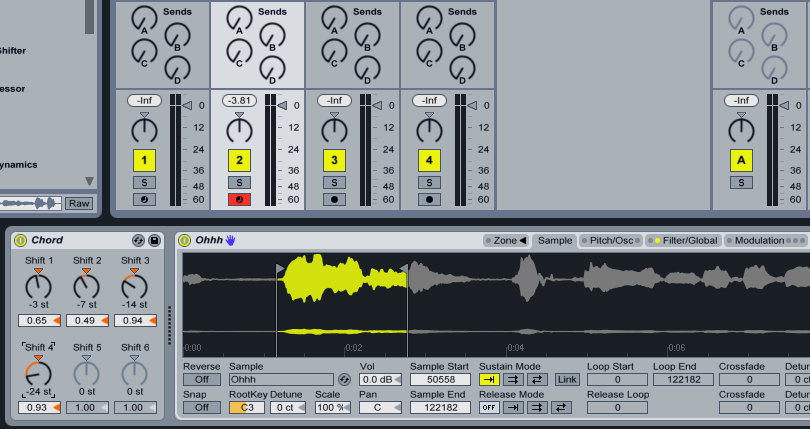
A technique I love to use to create pads or deep bassline sounds is to take vocal samples, or sometimes I also my own voice, and manipulate these in a way that they become a sound of their own. In order to do this, layer a simple “ooh” or “aah” across a certain spectrum, for instance, the circle of fifths across a few octaves—I often use the chord function in Ableton to do this. Following that, heavily process the samples with EQ’s, filters, reverbs, and distortion to your liking and thus create your own sounds to work with on the track. At the end of the day, it’s a lot like building a sound with a synth but I find it inspiring to use a sample that might seem unlikely to make a certain sound. My track called “Sing” and my remix for Tony Lionni have almost entirely been made using this approach and one of my personal favorites, the remix I made for Ezel’s “In my lifetime,” is also based upon this technique. Both tracks are making use of a choir-like sound I put into Ableton’s Sampler to transform into the bassline and main lead lines in both tracks.
Record Effects on Percussion
In order to give the rhythm section of my tracks more depth and atmosphere, I like to put effects on my percussive elements in the mix. For example, take a shaker and map it to a number of effects channels—for instance, a flanger, reverb, or delay—and then mute the original percussion channel and keep the effects channels playing solo. Quite often during the process of doing so, a percussive element can develop a life of its own and become more of a melodic element in the track. There’s a lot of trial and error involved in this, so the more you tweak and override your effects the better. I also like putting reverbs on my bass drums and then recording them solo on a separate channel, before sampling them as individual sounds with Ableton’s Sampler or Impulse and layering the new sound with the kick drum with the help of sidechain compression.
Double Vocal Channels for a Richer Sound
A simple but effective trick you can apply when working with vocal stems is to duplicate the original channel—which immediately enriches the sound and body of the original vocal parts—then slightly re-time it so it works almost like a very short delay. You can then pan both of them left and right in order to give the vocal more width and spectrum. The next step is usually adding effects to the duplicate channel like, for example, adding a harmonic doubler effect or some distortion. This very much depends on how you would like the vocal to sound—more earthy and clean or possibly more robotic and processed, for example. Furthermore, you could use the same approach described in the paragraph above and place an effects chain on one of the channels and record it solo as a separate channel and layer with the original sound.
The multi-instrumentalist producer Chris Kaz will return with another future-soul offering, “Track 09,” and has also announced forthcoming album Untold.
An extension from last year’s “Track 03,” the single showcases Kaz’ abilities in producing thought-provoking, soulful music, engulfed with his distinctive vocals.
Born and bred in London, Kaz’ multicultural heritage has always been a key influence on his output. As a half Greek-Cypriot and half German-Sri Lankan, his music is inherently diverse and inspired by a multitude of genres.
Untold will be released this summer via Perth Records, with “Track 09” available to download via the WeTransfer button below.
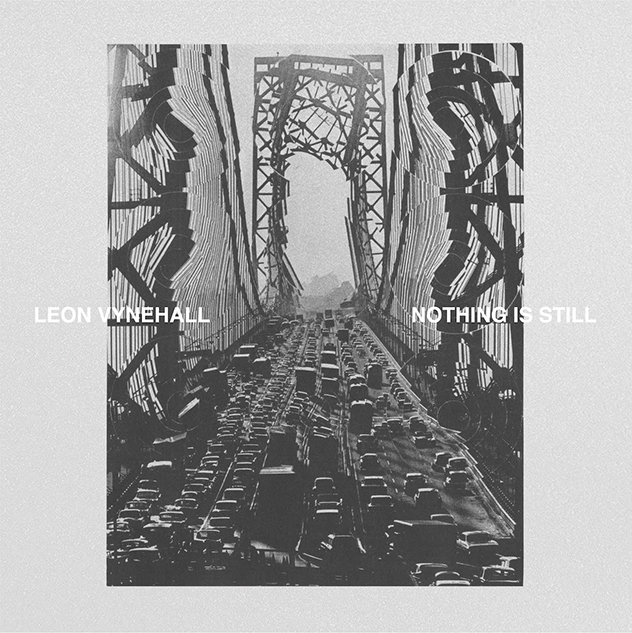
Just six years into his career as a producer and DJ, Leon Vynehall already has a lot to live up to. His two double EP releases, namely Rojus—released in 2016 on Running Back—and, in particular, the brilliant Music For The Uninvited—released in 2014 on Martyn’s 3024— set the bar incredibly high. These and subsequent 12” releases earned Vynehall near universal accolades and a place in most credible end of year charts. Leon Vynehall was one to watch. Therefore, anticipation for this release, Nothing Is Still—his first album proper and the start of his relationship with new label Ninja Tune—has been significant. Does this album meet expectations? Well, that depends on what you’re expecting.
Upon first listen, this album will disappoint those searching for the clever and inventive dancefloor tracks for which Vynehall has become most loved. There isn’t actually anything here which could be recognized as house music. Its absence is a lot to get over, even more so given the highlights of this nature present on Vynehall’s aforementioned long-players. But, once you do get over it—and it may take several listens—Nothing Is Still is an intriguing engagement with an ambitious artist clearly still in development. More Phillip Glass or Steve Reich than it is Phillip Lauer or Steve Hurley, it is a contemplative exercise in electronica wholly focussed on the story it is trying to tell. And, if you afford it the patience, it does so charmingly.
That story is essentially a tale from Vynehall’s own family and it’s evident in the care he’s taken with the project that it’s one close to his heart. Long before he was born, Vynehall’s grandparents decided to move from south-east England to New York City. This album, plus the extensive novella which accompanies it, are essentially a partially reimagined travelogue of their experiences on the journey and within that alien culture.
We start on the coast of England, samples of seagulls and calm waters denoting closeness to the shore. Before long, a swell of strings rise preparing the listener for the ambitiousness of what’s to come; deep plunges of synths evoke the wild, open sea and when top end percussion is introduced, it immediately conjures images of sustained motion. The journey has begun.
On second track “Movements,” we are placed comfortably within Ninja Tune territory; beautiful electronica with more than a nod to jazz in its swinging rhythm. Multiple brass lines give way to a lovely piano solo. The sampled guitar of “Birds On The Tarmac” sounds promising; are we edging into modern classical or even ECM territory? Unfortunately, the short track doesn’t develop. It’s a shame. Vynehall proved so competent working within a krautrock framework on his Midnight on Rainbow Road release, and you’re urging him to take you in that direction here. Or at least to something you can get your teeth into.
Many of the tracks here are bookended by samples and, to his credit, Vynehall does create a rich mental picture of the story with their use. But on “Julia,” the sampled monologue isn’t particularly engaging and yet the music again defers. Coupled with “Birds On The Tarmac”’s non-start, there’s a lull in the album here.
Interest returns with “Drinking It In Again,” its sampled vocalizations reminding a little of Tom Waits. But it’s the next track, “Trouble,” where things really liven up. Split into several sections, it depicts an unpleasant encounter with authorities while sightseeing close to the Canadian border. When the punching bass is introduced midway through, you can imagine it signifying the violence of the scenario. The album’s preceding single “Envelopes” comes next. It’s a well-chosen lead track: atmospheric and barren to start, with a slow tempo hip-hop beat and backward samples, before its pleasing synths give in to a growing cascade of strings. There is no end to their rise; the comedown you might expect never materializes. It feels like a lack of resolution and it’s rather gripping. With this unexpected direction of strings, Vynehall pleasingly wrong-foots us. It’s reminiscent of how he did so on “Inside The Deku Tree.”
Halfway through “English Oak,” the track morphs into an engaging techno construction, not unlike some of Carl Craig’s Landcruising-era soundscapes. It drops back into an orchestral base before tantalizing with a sampled string sound, perhaps a kora or other harp? It is a beautiful but all too brief moment which, again, you’re willing Vynehall to expand upon. But this is frustratingly offered as merely a glimpse—a fragment of the wider story Vynehall is trying to tell. A cathedral of cleverly intertwining samples stuns on “Ice Cream,” before the string-laden and saddening ultimate track “It Breaks” signals the adventure’s end.
It’s a pleasant but not altogether engaging finale. You’re left questioning if this has really been such an adventure at all. For Vynehall’s grandparents? Certainly. For Vynehall himself, in his meticulous research and emotional attachment to the story? No doubt. But for the listener?
Leon Vynehall is still a relatively young man. Less than a decade into his career, on Nothing Is Still, he has embarked on an incredibly ambitious project that shows an altogether different side of his music making and artistic expression. It is an exciting installment, not least because it opens up possibilities for him within several different mediums in the future. And considering his track record in the curation of events, there’s no doubt that this significant talent would prove a success in whichever direction he chooses to apply himself. His grandparents’ story is served well here, subtly and with Vynehall’s admirable aim to never take center stage over the telling of the tale. Though it remains to be seen if, given his past proficiencies, fans might have hoped he would have actually shown more of himself on his debut artist album. As an artistic endeavor, it is a laudable milestone for Vynehall. But as an album that warrants repeated listens, over many years? That will be for fans to decide.
Tracklisting
01. From The Sea/It Looms (Chapters I & II)
02. Movements (Chapter III)
03. Birds On The Tarmac (Footnote III)
04. Julia (Footnote IV)
05. Drinking It In Again (Chapter IV)
06. Trouble – Parts I, II, & III (Chapter V)
07. Envelopes (Chapter VI)
08. English Oak (Chapter VII)
09. Ice Cream (Chapter VIII)
10. It Breaks (Chapter IX)
Ninja Tune will release Nothing Is Still on June 15, with “English Oak,” “Movements,” and “Envelopes,” streaming in full below—or here for EU readers due to temporary GDPR restrictions.
The four-track Post-Moloya EP follows Labelle’s 2017 album, univers-île, and, like that album, the new EP was produced on an array of machines in his high-rise apartment in Saint-Denis, which looks out on the beautiful cultural crossroads of La Reunion. The EP itself is a modern yet deeply rooted nod to maloya, one of the two main musical genres of Réunion, resulting in a gorgeous hybrid of instrumental trance music.
In support of the EP, Labelle has offered up a download of the EP’s opening track, “After The End,” which pairs organic instrumentation with hypercolor synth work and a fascinating, explorative wonderment, which, as Labelle explains, “conditions the listener to shamanic revelation.”
You can download “After The End” via WeTransfer below, with Post-Moloya available here.
Due to temporary issues regarding the GDPR, EU readers can stream the track here and download it here.
Why is it that, in the case of music festivals and events, some experiences easily fade into the abyss of forgotten moments in our minds, while the marvelousness of others can continue to grow clearer with time? Is the quality of the event’s musical offerings the one true factor that defines the way the experience is imprinted in our memories? Or is it the crowd and the people we experience it with? Maybe it’s the venue and production? Or maybe it’s a combination, and those special events that embed themselves in our memories as the most gratifying are the ones that are able to tap into excellence in all these areas.
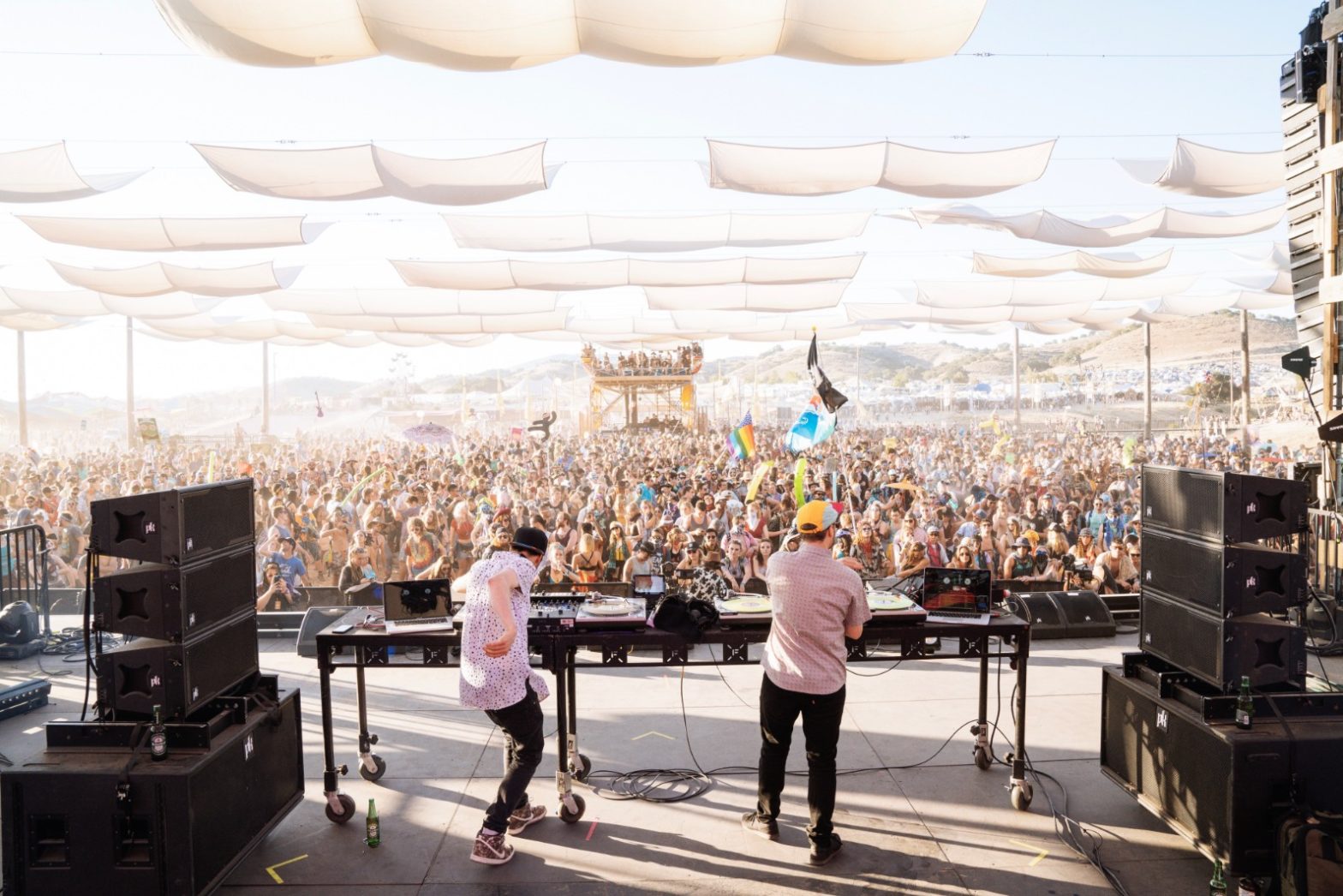
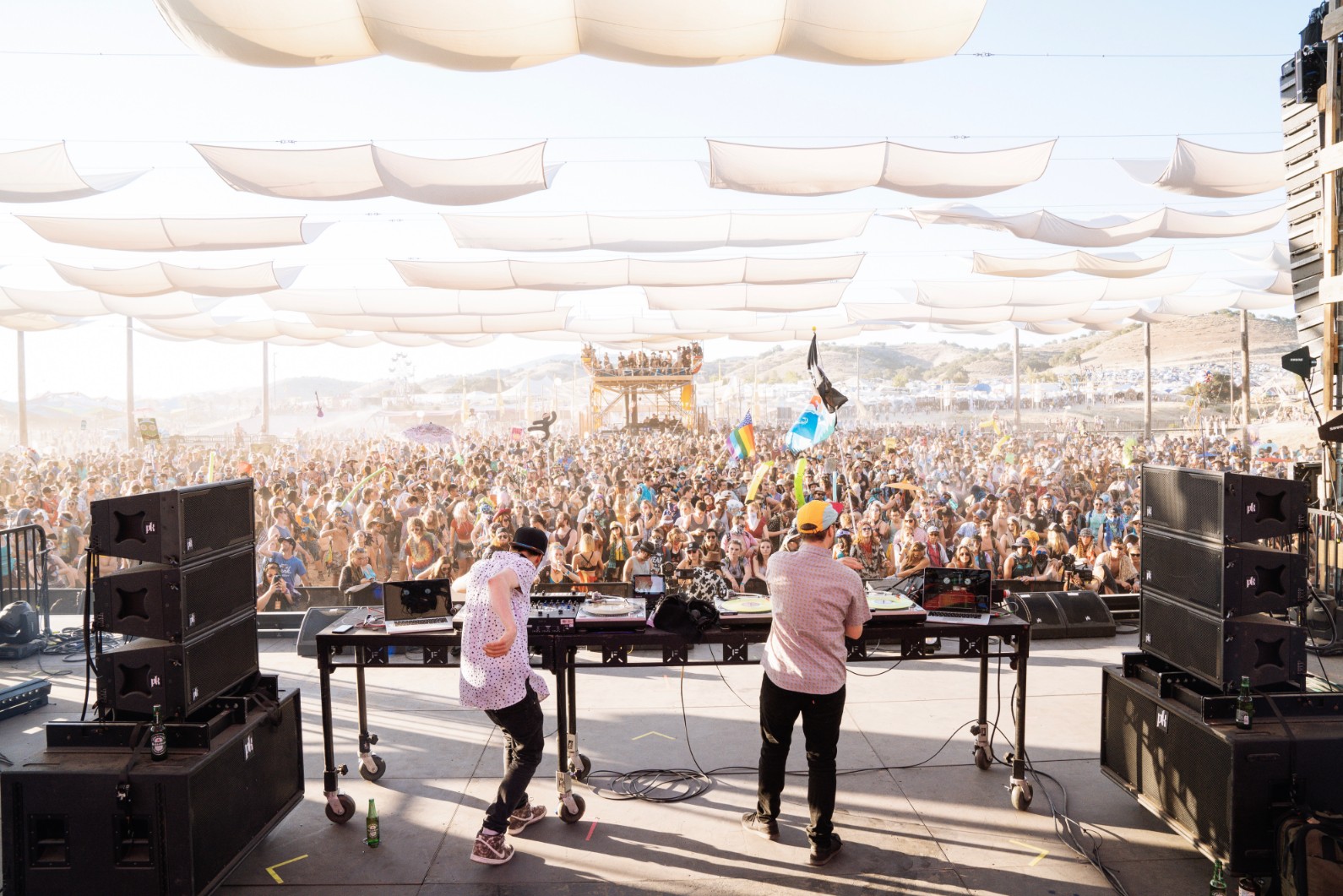
This certainly seems to be the case with transformational camping festival Lightning in a Bottle, which over the past several years has solidified itself as a favorite for many West Coast festival addicts. The dance music weekender, produced by Do LaB (the team behind the eponymous musical structure at Coachella), descends upon the shores of California’s Lake San Antonio during Memorial Day weekend each year, bringing together an eclectic mix of underground scenesters, Burning Man disciples, and neon-clad kandi ravers.
While at other festivals these cliques couldn’t seem more at odds with each other, LiB’s extensive program of music, art, local vendors, and family-friendly activities—all set amongst the backdrop of Do LaB’s iconic structural aesthetic—result in a sense of cohesion and seamlessness not found elsewhere. Further, these offerings are responsible for the formation of LiB’s own unique festival culture, which has grown to encompass some of the best qualities of the aforementioned groups: the musical intellect of the underground, the promotion of self-reliance and sustainability rooted in Burning Man, and the colorful friendliness of California’s thriving rave community. All were on full display at this year’s LiB, ensuring that the festival’s 2018 edition will be remembered as one of the top events of the season to date.
Although the festival officially began on Wednesday afternoon, the bulk of LiB’s performances and activities ramped up on Friday after most attendees had arrived and settled. Despite the arduous task of setting up camp, which was made more difficult this year due to uncharacteristically strong winds and moody security staff, festival goers were full of excitement as LiB’s three main stages—Thunder, Lightning, and Woogie—kicked into gear. Do Lab organizers seemed to expect this: the musical programming for Friday was by far the most upbeat of all three days. At the house and techno-oriented Woogie (a cult favorite within LiB’s confines), Dirtybird mainstay Will Clarke quenched the crowd’s thirst for party tunes with a mix of sample-heavy tech house bombs. Across two bridges at the Thunder stage—which came to life this year as “Wapiti,” Do LaB’s newest and most frenetic structural creation—Bay Area-born producer and Counter Records signee Giraffage dropped a fusion of disco and trap while the sun disappeared behind the distant hills.
By nightfall, swaths of electronic pop lovers were gathering at the main Lightning stage to catch a performance from crossover duo Sofi Tukker. While the Ultra act’s two sold-out shows in LA the week prior were met with acclaim, their LiB performance was marked by collective feelings of mediocrity; even the duo’s ridiculous(ly) popular song “Best Friends” seemed too relaxed for Friday’s crowd. Back at the Woogie, funky-house pioneer Purple Disco Machine played the first of many highlight sets of the weekend, blending fresh gems like Disclosure’s recent “Ultimatum” with nostalgic tunes such as Earth, Wind & Fire’s iconic “September.” While the set was an ideal precursor to the lovely tapestry of techno and disco woven by The Black Madonna, the real focal point of Friday evening was Modeselektor’s closing DJ set at Thunder, which opened with Vril’s “Torus XXXII,” released on Giegling sublabel Forum. The Ninja Tune duo’s appearance was some of the most forward-thinking, intense music we’ve ever heard at LiB, distinguished by extended emotional breakdowns and deliciously mind-melting bass (standout tracks included Jon Hopkins’ recent album cut “Emerald Rush” and the FJAAK remix of Missing Channel, Robert Hood, and Claude Young’s “Onslaught”).
On Saturday, the overcast weather of the previous evening had shifted, making way for clear blue skies and smooth, crisp beats. Teeming groups of attendees (“LIBers” as they’re often affectionately called) gathered at the rocky shores of Lake San Antonio for some rest and relaxation before the day’s festivities, donning massive popsicle and bird-shaped floaties and gulping beer. One glance at the convivial lakeside atmosphere induces an immediate appreciation for the festival’s venue and surroundings, with Do LaB’s simple yet detail-oriented structures complementing the beauty of the site. By around four in the afternoon, the energy at the stages had already kicked into high gear. Mira, a resident at Berlin’s Kater Blau, serenaded crowds at the Woogie with a low BPM, groovy mixture of evolving melodic house cuts. Over at the Favela Bar—a quirky after-hours spot curated by Southern California selector Patricio—Dadon and Jimbo James, the minds behind LA-based blog Music Is 4 Lovers, dropped a satisfying journey of minimal tech house. The LA duo’s slot proved to be the perfect segue into a set from Yotto back at Woogie, with the Finnish Anjunadeep favorite displaying a powerful mastery of progressive house mixing and production (the forthcoming Yotto track “Katsu” was especially thrilling as the golden hour ensued).
Next, at the breezy, cloth-draped Lightning stage, German live electronic act Monolink’s performance was a huge improvement from earlier West Coast appearances, but still not at the level of other indie crossover projects like Bob Moses or Jan Blomqvist. Back at Woogie, Canadian DJ/producer B. Traits whipped the crowd into a frenzy with an eclectic set of exuberant techno dotted with old school rave elements. Patrice Baumel followed with a deeper, more impressive sound than the big room vibe we’re used to from the Amsterdam-based producer and DJ—this was perhaps due to his focus on setting the tone for Saturday’s closing act, MOOD Records boss Nicole Moudaber. Despite Moudaber’s reputation for all-encompassing explorations of smooth, metallic techno, her LIB appearance felt disjointed and out-of-place, sounding more like a broken dishwasher than a techno set from a seasoned, heavyweight DJ. The musical quality of the night, however, was saved by a surprise back-to-back masterclass in melodic techno from Patricio and Patrice Baumel at the nearby Favela Bar, where loaded, totem-holding LIBers gathered around Subtract’s hard-hitting Danley system until the music ended at around four in the morning.
Sunday’s arrival brought rising temperatures and a blazing sun, resulting in lakeside revelry well into late afternoon. Oona Dahl helped jumpstart growing crowds during her set at the Woogie, with the All Day I Dream affiliate exhibiting a penchant for diverse selections not often seen in melodic-leaning circles. The reliable YokoO came next with a euphoric set of deep house before French pioneer Rodriguez Jr. delivered a solid performance (fast-paced edits of 2016 track “Mistral” and Baobab album cut “Monticello” were notably good.) While hoards of LIBers cleared Woogie to catch Zhu’s closing set at Lightning, Stimming capped a weekend of stellar tunes with a virtuosic live set of glitchy, emotional electronica.
All in all, the musical programming was top-notch throughout the whole weekend; not only did organizers succeed in the diversity of the festival’s bookings and the quality of the sound at each stage, but their attention to timing and scheduling was also on point.
A quick look back at the lineup for 2018’s Lightning in a Bottle Festival indicates that Do LaB’s 13th annual edition was not meant to be the festival’s most memorable or spectacular. Bookings from the likes of The Black Madonna, Stimming, Modeselektor, and Sofi Tukker were all solid and reliable choices, but not even close to the level of last year’s program, which included globally-renowned heavyweights like Richie Hawtin, Stephan Bodzin, Sam Gellaitry, tINI, and Kaytranada. Despite this, the LA-based production house demonstrated that for LIB, having the most stacked lineup is a nice feature but not always necessary. As long as there is substantial care and thought placed on the festival’s musical offerings, activities, production, sound, and venue—factors obviously important to Do LaB—a diverse, energetic crowd will converge and a great weekend will ensue. Upon reflection, it’s clear that all these elements played key parts in forming the wonderful memories of 2018’s Lightning in a Bottle; memories that, instead of fading or blurring, will actually ripen with time.
As announced, Hyperdub will release the debut album of Joe Powers (a.k.a Proc Fiskal), titled Insula.
Joe Powers is from Edinburgh, Scotland far outside the network of the grime capital of London. The Highland Mob, his debut EP, landed on Hyperdub last year, opening up his music to open-eared footwork and drum & bass fans as well as the grime crowd. He followed this up with a jungle-inflected EP on Om Unit’s Cosmic Bridge label, called Yes Boss, and will now release his debut album, Insula, which “switches the feel and intention towards a personal, and melodic music with one foot in grime, infused with often comic, often wistful recorded moments from his environment.”
Tracklisting
1. Restart
2. Apple Juice
3. Kontinuance
4. 2L
5. Achiltibuie
6. Scotch Precog
7. Pints
8. Dopamine
9. Punishment Exercise
10. Dish Washing
11.Vaudeville
12. Future Headache
13.Hoax Nos Trinit
14. Evil Spirits
15. A Like Ye
16. Mourn Non Did
Insula LP will land on June 8, with “Apple Juice” streaming in full below—or here for EU readers due to temporary GDPR restrictions.
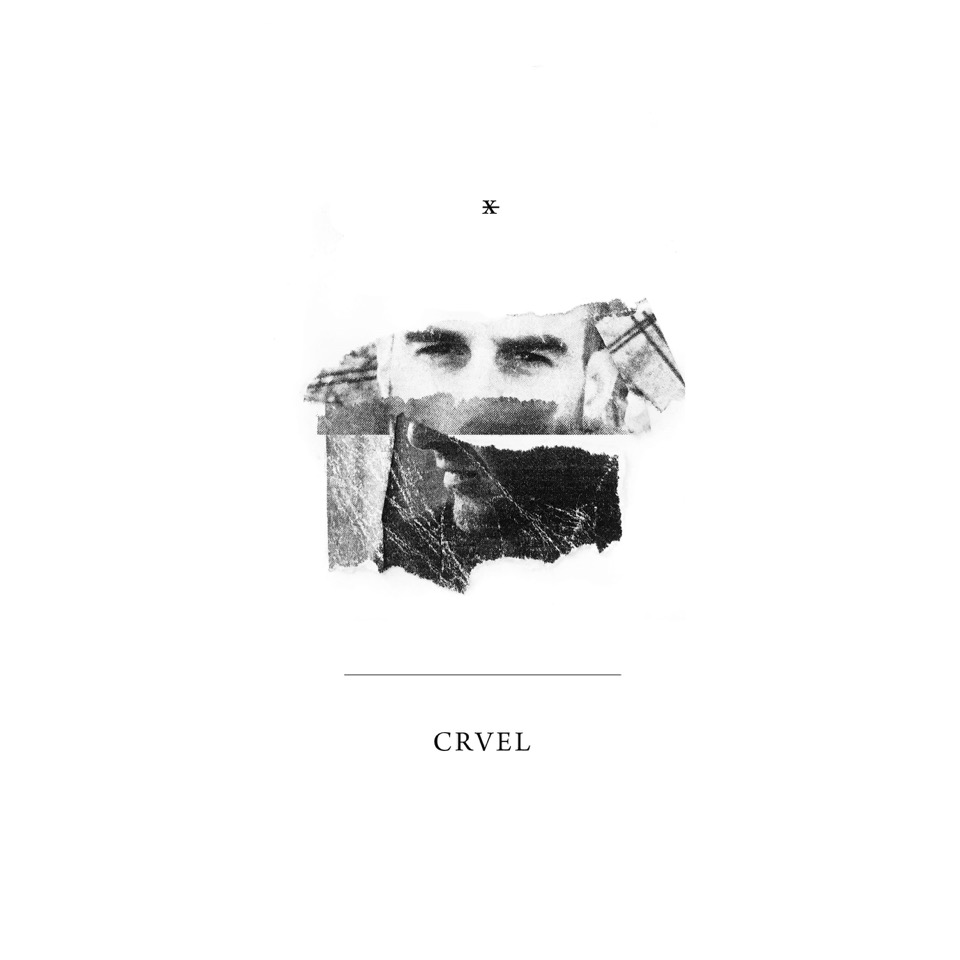
CRVEL is the collaborative project of P.E.A.R.L. and Tensal, whereby the two producers aim to create “cyclical weapons for the most obscure dancefloors.” We’re told to expect raw synth lines, crispy high frequencies, continuous sequences, and plenty of details and subtle twists that keep the flow going. Their debut EP, out June 15 via Falling Ethics, features “four exercises of futuristic techno with no turnabouts, straight to the point with a timeless attitude.”
In support of the release, you can download “VEO II” in full via the WeTransfer button below—or EU readers can stream here and download here due to temporary GDPR restrictions.
Alexis Taylor has announced a US tour and shared a remix of “Beautiful Thing,” the title track from his recent album on Domino, by Matias Aguayo.
Alexis’ latest album, Beautiful Thing—released back in April on Domino—presented a collection of hazy, strange, and, at times, dark electronic ballads full of heartfelt songwriting. The record was the first solo album Alexis had made with a producer, with the Hot Chip frontman enlisting Tim Goldsworthy, co-founder of Mo Wax and DFA Recordings, to produce it.
With the album now on the shelves, and following a recent set at London’s All Points East festival, Alexis has announced a US album tour set to kick off this week, which find Alexis accompanied by Susumu Mukai (aka Zongamin) on bass and Leo Taylor (The Invisible, Floating Points) on drums.
Alongside the tour announcement, Alexis has also shared a remix of the album’s title track by Matias Aguayo, which finds the Cómeme label head in wild, unhinged form, as Alexis explains:
“I first came across Matias as he was performing an amazingly funky, wonky and wild percussive live set in Calvi, Corsica many years back. I then became a fan of much on his Cómeme label. It is a real privilege to hear his very raw and impassioned new take on ‘Beautiful Thing’ featuring his own vocals, revised lyrics, and grinding, pulsating grooves. So much more than a remix!”
You can stream the remix below, along with Alexis’ tour dates.
Due to temporary issues regarding the GDPR, EU readers can stream the remix here.
Tour Dates:
June 8 – Troubador, Los Angeles w/ support Annie Hart (of Au Revoir Simone)
June 9 – Great American Music Hall, San Francisco w/ support Annie Hart
June 11 – Doug Fir Lounge, Portland w/ support Annie Hart
June 12 – Barboza, Seattle w/ support Annie Hart
June 14 – Empty Bottle, Chicago w/ support Annie Hart
June 15 – The Loving Touch, Ferndale w/ support Annie Hart
June 16 – Horseshoe Tavern, Toronto w/ support Annie Hart
June 18 – Elsewhere, Brooklyn w/ support Moon Diagrams (Moses of Deerhunter)
June 19 – Johnny Brenda’s. Philadelphia w/ support Moon Diagrams
June 20 – U Street Music Hall, Washington w/ support Moon Diagrams
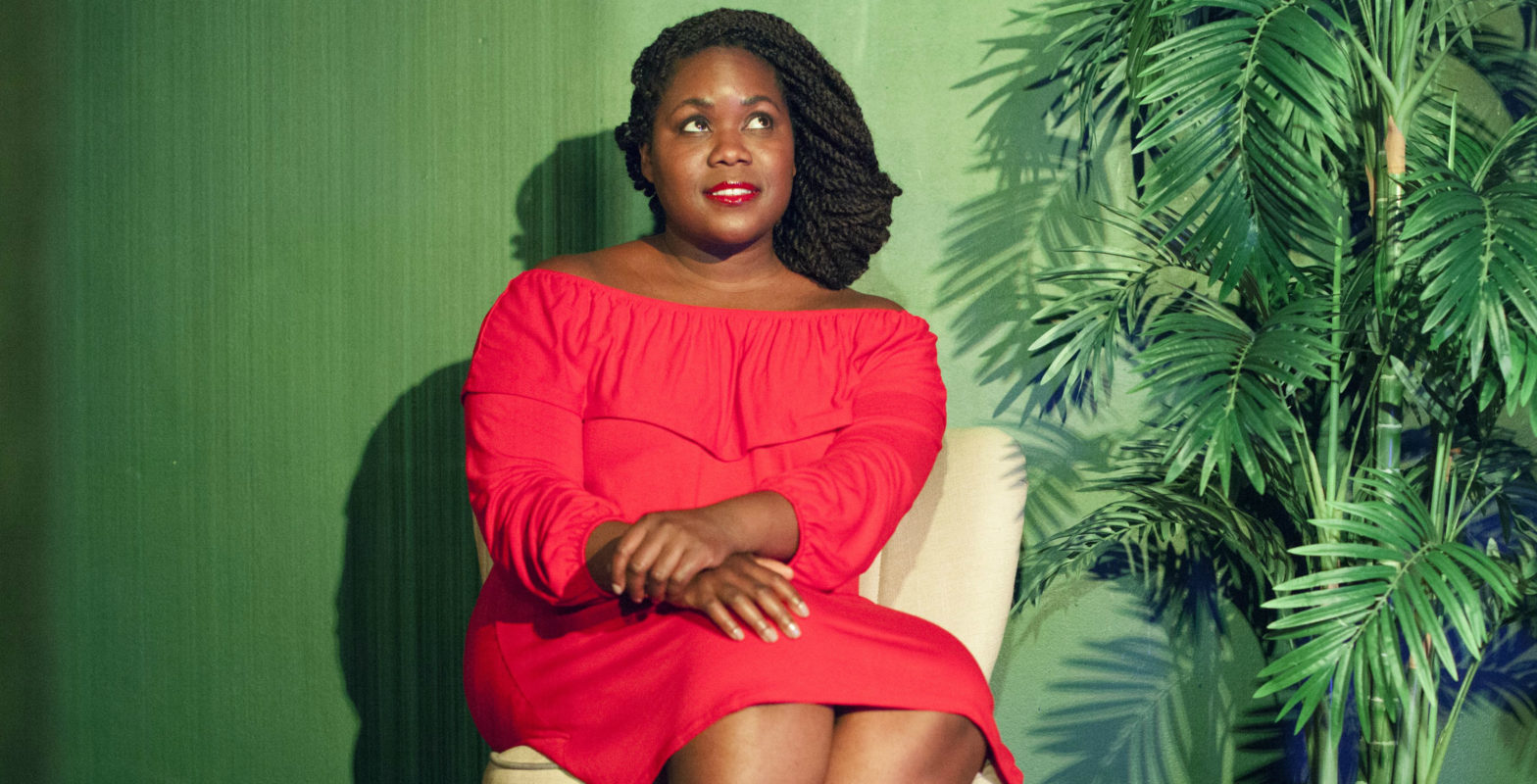
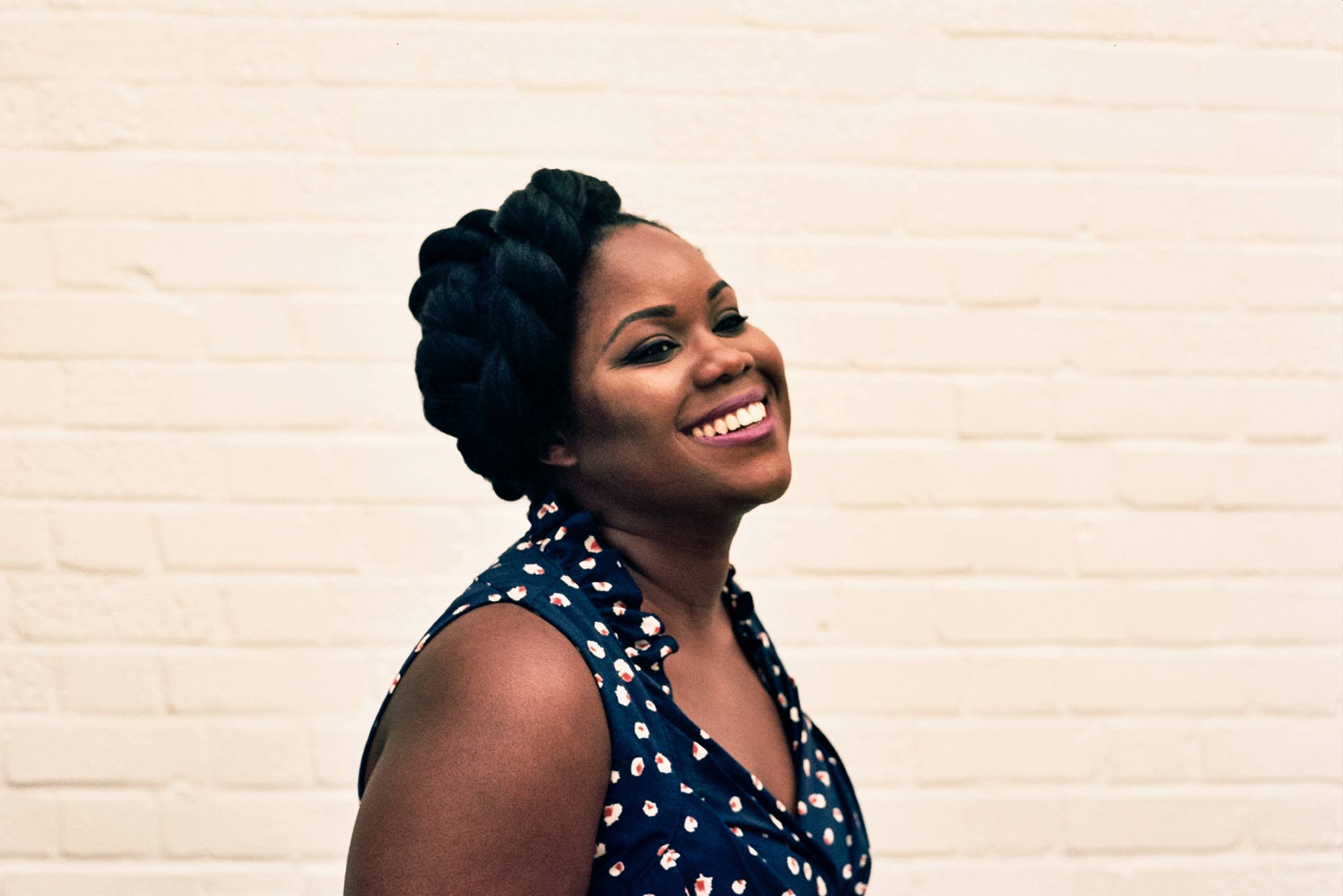
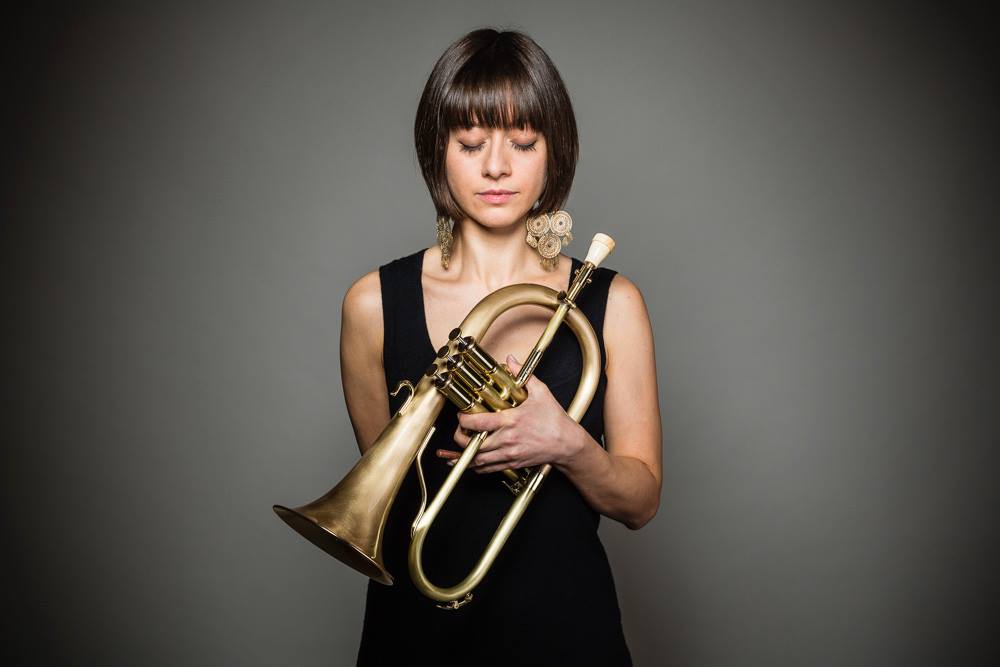
It’s hard to picture a time when British jazz was as effervescent as it is now. From Manchester’s Matthew Halsall and GoGo Penguin to Glasgow’s Graham Costello, musicians up and down the UK are producing unique strands of jazz in 2018, elevated by a new global taste for the genre. Nowhere is this explosion of talent more apparent than in London, where a youthful movement of new artists and forward-thinking, established names, from Ezra Collective and Zara McFarlane to Shabaka Hutchings and The Colours That Rise, are mixing traditional instrumentation with fresh influences from ambient music, grime, reggae, house, and psychedelia with new modes of playing and recording. “London jazz is absolutely buzzing with talent and inventiveness, with many layers spanning generations and with multiple interlocking scenes,” says trumpeter Yazz Ahmed, one of London’s key players.
The American jazz scene has always overshadowed, unsurprisingly, its British counterpart. Still, London’s jazz club Ronnie Scott’s has maintained a status as among the world’s finest since it opened in 1959; while venues such as Dingwalls and The Jazz Café in Camden, and Vortex in Dalston have all contributed to London’s live jazz circuit and club underground over the years. Notable musicians from Stan Tracey and Don Rendell through the 1960s and ’70s, and Courtney Pine and Soweto Kinch in the ensuing decades, have buoyed up the scene and gained international acclaim. In addition, the super-group Jazz Warriors and development organization Tomorrow’s Warriors have become launch-pads for the solo careers of a new generation of jazz artists.
For many years, at least where entertainment media has been concerned, British jazz has been viewed as something of a niche concern. It’s had periods in the spotlight and a cool cache at times, thanks to the efforts of DJs such as Gilles Peterson and Patrick Forge who have championed the music on their radio shows for Kiss FM and Radio 1, and in DJ sets around London and beyond. Jazz-influenced sub-genres of dance music, including acid jazz, trip-hop, and nu jazz in the 1990s and 2000s, have had spells in the spotlight, too. But still, jazz in the UK has found it difficult to shake off a slightly fusty reputation, lampooned as elitist or silly by comedy shows like The Fast Show’s “Jazz Club” sketch. There’s been a major shift now, with London’s array of unique acts each tackling the sound in a fresh, unexpected way. And women are at the forefront of the capital’s movement, including tenor saxophonist Nubya Garcia, aforementioned trumpeter Yazz Ahmed, singer-songwriter Zara McFarlane, and saxophonist Camilla George.
Due to temporary GDPR restrictions, you can stream this video/audio here.
McFarlane, originally from Dagenham, Essex, just outside London, has earned acclaim recently for her second album Arise, out through Gilles Peterson’s Brownswood label. On the record, her transcendent vocals blend with deep spiritual moods, caressing Rhodes keys, and spiraling tenor sax on “Pride.” On “Fussin’ and Fightin’” and especially on “Freedom Chain,” McFarlane draws from dub and reggae in a nod to her parents’ Jamaican heritage. Especially arresting is a take on The Congos’ 1970s roots reggae classic “Fisherman,” rhythmically stripped down and laden with lush strings and piano.
For McFarlane, who grew up listening to London soul acts such as Soul II Soul, the new appetite for jazz at the moment is to do with the broadening of people’s listening tastes. “Most people listen to many different styles of music now,” she says. “They’re open to listening to new things, exploring new things.” That exploration is made all the easier now thanks to the internet and streaming portals such as Spotify: listeners can try new sounds without having to buy something they might not like. In addition, young fans of this new wave of jazz are unencumbered by the genre’s past associations, and so can enjoy it with fresh ears.
Jazz from London in 2018 is a composite, a bit like the city itself, reflective of its diverse demographics, multifarious mix of cultures, ethnicities, and neighborhoods—and the art, history, and music that emanate from them. Yazz Ahmed is a Bahraini-British musician whose roots are reflected in her 2017 album La Saboteuse on Naim Records. Laden with her expressive trumpet, songs such as “Whirling” have a strong Middle-Eastern quality, while the subtle touches of electronics on “Inhale” indicate the influence of artists such as Radiohead and These New Puritans, with whom Ahmed has toured. She views this expression of her heritage, and these inspirations, as a byproduct of London, too.
“London is one of the most diverse, cosmopolitan, and artistic places to live in the world,” Ahmed says. “Its population brings a huge wealth of cultural heritage from all around the globe. Just by being fortunate enough to live, study, work, and create my music here, I have been gifted the opportunity to absorb much of this wealth of inspiration. While I was studying jazz, or earlier, playing in my local music service bands, I was also listening to reggae, hip-hop, Middle-Eastern songs, and classical music. For me, all these sounds were simply a part of the natural environment I grew up in.”
Though jazz has frequently mixed with other genres and absorbed other influences in the past, its latest iterations and artists are especially adaptable to other styles of music and recording techniques thanks to the Spotify effect—and, more importantly, the multiplicity of music scenes in the capital. London musicians such as Shabaka Hutchings weave their version of jazz with lysergic effects, electronic noise, and the studio tricknology of dub reggae.
Hutchings is seen as a leader for the new scene, an established saxophonist originally from London who grew up in Barbados before returning to the UK. As part of groups The Comet is Coming and Melt Yourself Down, he’s helped redraw perceptions of what jazz can be, adding vibrant sax to psychedelic constellations of synth music and wild electronic effects, or hyperactive punk funk. His main band, Sons of Kemet, infuse their jazz with elements of roots reggae, and also rapid-fire grime lyrics. On their latest, politically charged record for Impulse, Your Queen Is A Reptile (with each track dedicated to an alternative queen of black history), Joshua Idehen spits over the kinetic drums and urgent horns of “My Queen Is Ada Eastman” to electrifying effect. On “My Queen Is Mamie Phipps Clark”, Congo Natty (the venerable jungle and dub producer), adds his own conscious words.
Shabaka’s approach is omnivorous and experimental. He has collaborated with Chicago house and techno outlier Hieroglyphic Being, plus Radiohead’s Jonny Greenwood, as well as appearing on many of the records of the new jazz guard. For these contemporary jazz artists, he’s someone to look up to. “People like Shabaka have done such good work in smashing up the stereotype that jazz has to sound like it did in the 1960s,” says drummer Femi Koleoso of Ezra Collective, a key group in the jazz renaissance. “When you’re inspired by someone like that, it gives you the freedom to do your thing. It gives you the freedom to have mad effects pedals and put your trumpet through them or the freedom to say, ‘I wanna cover a D Double E and Skepta tune for a jazz gig’. That’s what people are attracted to because it’s a form of honesty.”
Koleoso and Ezra Collective (whose other members are Dylan Jones on trumpet, James Mollison on tenor sax, Joe Armon-Jones on keys, and TJ Koleoso on bass) are another example of the experimental nature of London’s current jazz scene. They draw from grime production and house beats in their approach to jazz, in addition to more conventional models. On the band’s 2017 album Juan Pablo The Philosopher, there’s a distinct influence from afrobeat on the track “The Philosopher”: Koleoso’s polyrhythmic drums have a supple style that suggests an affinity with the music of Nigerian funk pioneers Tony Allen and Fela Kuti.
“The jazz art form, even from its origin, has been a cocktail of different things,” Koleoso says. “I think that in the UK particularly and in America, us using jazz elements, mixing it with things relevant to today, whether that be hip-hop or grime or Afrobeat, that’s given it a fresh life. That’s what people are attracted to a lot of the time because you can listen to Ezra Collective and feel like you’re watching jazz music, but you can also feel like it’s relatable to you.”
The fresh blossoming of the jazz scene in the US has had a big part to play in making the sound accessible to new listeners in the UK. It’s opening ears to a UK homegrown scene which was already there, bubbling away in the background. Superstar rapper Kendrick Lamar’s leftfield, highly acclaimed 2015 hip-hop LP To Pimp A Butterfly featured a considerable jazz influence, and the playing of guest saxophonist Kamasi Washington, putting the genre back on the map in a way not seen for years. Followed by the success of Washington’s enormous triple LP The Epic and Thundercat’s jazz-touched Drunk, there was a sea change in the perception of jazz worldwide.
“I think when To Pimp A Butterfly dropped, it was like the big reveal moment,” says another key player in London, Moses Boyd. “The majority of the population caught up in a way. It always takes one thing. Although there were a lot of albums, if you talk about jazz musicians, like Black Radio by Robert Glasper, there were a lot of albums before that mixed jazz and hip-hop, but when it comes from the king of hip-hop at the moment, Kendrick, it’s a great co-sign. And I think it’s just readied people’s ears for what was already out there, and what was to come. When you look at what came after, you had Kamasi’s The Epic, and since then it’s been a great stream of forward-thinking music.”
Ezra Collective drummer Femi Koleoso, the band’s spokesman, agrees that this US connection to hip-hop has been important in re-branding jazz and disassociating it from the prim and proper establishment ties it’s had until recently. “To Pimp A Butterfly opened the closed-mindedness that people had towards jazz,” he says. “Previous to that, I would argue that people saw jazz music as an elite art form that was dated. Further addressing that now, are all the mandem who are here doing their thing.”
Jazz in the States has had a fluid relationship with hip-hop, from the fusions of Gang Starr, Freestyle Fellowship, and A Tribe Called Quest in the early 1990s to the amalgams created by Robert Glasper and Kendrick Lamar now. In London, jazz interacts with electronic music in a similar way. In the past, producers from the worlds of drum & bass (4 Hero, Alex Reece) and garage (Sunship, MJ Cole) have incorporated elements of jazz into their beats. Now, having grown up with these forms of music in the background, it’s the jazz musicians themselves taking aspects of London club culture and dance flavors, and working them into their creations.
Moses Boyd is one of many upcoming jazz artists in the capital whose sound crosses over with dance music. He’s had acclaim as part of the duo Binker & Moses, while his solo Absolute Zero EP from last year was a deep, cosmic affair that found the drummer pitching his rolling, heavy polyrhythms over twinkling synth arpeggios and stargazing atmospheres on tracks such as “Sirens.” A particularly beguiling and natural mixture of sounds, it demonstrated Boyd’s clear love and deep understanding of both electronics and jazz; unsurprisingly, he’s worked with everyone from Floating Points to Sampha and Four Tet. Boyd thinks the influence of sound system culture, originally imported by Caribbean migrants to the UK, has had a profound effect on the shape of jazz in London now. It has since been developed into a myriad of offshoots and dance music sub-genres by black British Londoners.
Due to temporary GDPR restrictions, you can stream this video/audio here.
“Through the cultures that are here, they’ve kept sound system culture alive, and it’s bred many forms, from lovers’ rock to grime,” Boyd says. “It keeps evolving. I come from a family that used to be a part of sound systems. It’s not something I overly think about, but when I’m writing and creating, I’m always channeling that sort of energy. As much as I write music for me, it goes beyond that; it’s about community and people in the dance. That’s where I’m trying to bridge the gap, whether it’s acoustic or electronic, improvised or not, to me, it’s like, ‘How am I related to that culture?’”
The axis between dance music and jazz is also explored by Kamaal Williams. Originally part of the much-hyped Yussef Kamaal, a band that mixed broken beat touches with lush Roy Ayers-esque ’70s jazz-funk, Williams also operates as Henry Wu. He made his name with jazz-licked house tracks on Eglo and Peckham label Rhythm Section (a vital outlet around which some of the current jazz/dance fusion has crystallized), and now continues to fold influences from club music into the live drums and squelchy funk keyboard textures of his new album The Return on Black Focus. The combination is apparent, too, in the work of The Colours That Rise, who mix Afro-futurist vibes, touches of Detroit techno, and live playing on their 2020 EP to cultivate a space-age jazz-funk feeling.
Broken beat, in particular, has often leaned towards jazz. It’s the dance music style that has the most in common with the medium, with its absorption of loose-limbed drum work, jazz chords, and live instrumentation. As jazz has become more popular, broken beat has risen again, too, with Dego (formerly of 4 Hero) and Kaidi Tatham’s collaborative project Dego & Kaidi recently releasing A So We Gwarn on Theo Parrish’s Sound Signature label, filled with organic jazz funk and more overt electronic aspects, plus plenty of syncopated broken beat grooves. Ruby Rushton is a group drawn from Peckham’s 22a crew, who normally make house, broken beat, and hip-hop, but on their album, Trudi’s Songbook Vol.1 are on a 1970s fusion flex. Also part of the band is Tenderlonious, who makes deep house, broken beat, and hip-hop, but is most of all a musician, playing flute and saxophone. He’s about to release his debut album proper, The Shakedown, featuring the 22a Archestra and full of supple, organic live jazz grooves with lashings of cosmic synth.
The compilation We Out Here, released in February this year on Brownswood, is a perfect primer for London’s current crop of talent, featuring many of the big names (including Moses Boyd, Ezra Collective, and Nubya Garcia) and huge tracks such as pianist Joe Armon-Jones’ sublime mix of electronic funk and smoky horn on “Go See,” and the capricious, shifting clarinet moods of Shabaka Hutchings’ excellent “Black Skin, Black Masks.” Recorded over three days in North London, it was a collective effort, with many of the bands and artists already friends or sharing personnel in their lineups. “This scene is connected up on friends, so it was positive vibrations to see everyone,” Koleoso says.
This united strength and support network, says Zara McFarlane, has contributed to the visibility of the jazz scene now. “A lot of the guys that I know have come through Tomorrow’s Warriors,” she says. “We’ve all worked together and know each other. I think it’s maybe that camaraderie; we get along really well and we’re open to each other’s work. Musically that’s a really nice place to work in. I like working with people I get along with that I know really well, it makes the process really fun and it’s a safe space in that way. It’s friends getting together, wanting to do their own thing.”
Another important factor in the growth of this musical phenomenon has been the handful of new jazz-friendly clubs cropping up in the capital. Total Refreshment Centre (TRC) in North London regularly hosts gigs from the new guard, or DJs pushing the sound, and Jazz Refreshed hosts events at Mau Mau Bar in Portobello, West London, as well as running its own festival and putting on acts at Glastonbury and SXSW. “There are lots of good venues and promoters,” Boyd says.
London’s revived jazz movement is expanding, and further album releases such as Joe Armon-Jones’ debut solo record on Brownswood, Starting Today, will continue to raise its profile. There’s no shortage of upcoming talent, either. Yazz Ahmed tips pianist Alcyona Mick, multi-instrumentalist Tori Freestone, and clarinetist George Crowley (who plays with Shabaka Hutchings on “Black Skin, Black Masks”); Zara McFarlane rates Camilla George and Ashley Henry; Moses Boyd singles out Ricco Komolafe and beat-maker-turned-jazz player Alfa Mist for praise.
As it continues to cross-pollinate with other styles, London jazz will mutate into more thrilling forms. “For a long time everyone has looked to America as a beacon of export culture, but now, they’re looking at Europe and London in particular,” Boyd concludes. “They’re realizing this thing has spread. Whatever you want to attribute it to, there are different accents saying amazing things. If you look at somewhere like London, there’s definitely a different shift. It is spreading, through social media and the ease of communication. It’s a great thing.”