We last heard from Italian duo Evil Twin in January of this year with the release of the stunning video for “Heaven,” a bass-heavy cut from their AYIN album on Italian/Portuguese label Shit Music For Shit People. Today, the duo returns with The Myth of Sisyphus, an album inspired by the Greek tale of the same name.
With the release, the duo look to bring the tale and its message into a modern context, as they explain: “In Greek mythology, Sisyphus was the king of Ephyra. He was condemned to repeat forever the same meaningless task: pushing a boulder up a mountain, only to see it roll down again. The workman of today works every day in his life at the same tasks, and his fate is no less absurd than Sisyphus’ one.” Musically, the album flows through a range of emotive cuts, from synth-heavy ambient to haunted spoken word, post-rock, and electronica, delivered as a coherent whole.
In support of the release, the duo have offered up shimmering album cut “The Rise” as today’s XLR8R download, available via WeTransfer below.
Later this month, Glasgow label Craigie Knowes will release The Third Annual War Child, the first VA in this year’s two-part 12″ and digital series to raise money for War Child—a children’s charity helping kids in areas of conflict around the world.
As is the case with the War Child series, 100% of the profit from the release will be donated to the charity. For the release, Craigie Knowes has once again enlisted some of the most revered names in house and techno, including Luke Vibert, DJ Overdose, Cynus, TEXTASY, ASOK, and London Modular Alliance, who deliver a set of tracks spanning breaks, acid, techno, and jungle. The second VA will follow soon after with cuts from Mark do Mosch, Credit 00, William The Squid, Jared Wilson and Eluize.
In support of the release, the label has offered up a full stream of DJ Overdose’s gritty electro cut “More Ounce,” available via the player below.
Ableton’s three-day exploration of music, technology, and creative practice will take place outside of Berlin for the first time this year, setting up in Hollywood for three days of talks, performances, and hands-on workshops.
This year the program will be spread across various venues throughout LA, including confirmed locations EastWest Studios and the Montalbán Theatre. The lineup of participants haven’t been announced yet but artists from previous years have included Lee ‘Scratch’ Perry, Suzanne Ciani, Holly Herndon, Jace Clayton and Laurel Halo. You can sign up for 2018 program news via the Loop site.
Ticket registrations for the limited-capacity event will open on June 13.
Point Blank’s latest track breakdown features UK bass producer DJ Q.
In the video, DJ Q walks through his latest single, “Time to Shine,” going over what his set-up consists of, as well as his workflow, several of his favorites tricks, how he uses Ableton 10’s new features, and some of his favorite plugins including the Endless Smile filter. He also details how he uses Ableton’s grouping abilities and gives good insight into his mixing process, taking special care not to muddy parts of the track by keeping different elements in respective frequency areas.
You can watch the video in full via the player below, with more on Point Blank’s courses here.
Few contemporary electronic artists stir up as much intrigue as Roman Flügel. The German artist is a long-time and highly influential figure in these musical circles, but also one that’s forever been hard to pin down. “I enjoy the surprise,” Flügel says about his DJing, “that’s why it’s difficult to describe what I do.” But with a career spanning nearly 30 years and showing little signs of slowing down, discussing contemporary house and techno’s evolution without a mention of Flügel’s contribution is nigh on impossible.
Flügel’s relationship with music began many years ago in Darmstadt, on the outskirts of Frankfurt. For Christmas 1987, Roman’s older brother gifted him DM/STREETSOUNDS’ Chicago Trax compilation, the spark in a long-standing affinity with vibrant and melodic electronic sounds—opening “Pandora’s box,” reads his profile. This later inspired a move to Frankfurt, where he enrolled in a Musicology course and spent a lot of time engaging with the city’s nightlife community. He was a regular in Sven Väth’s renowned Omen club, where he discovered the legendary Warp or Underground Resistance label nights.
He spent his late adolescent years collecting a vast array of musical equipment and experimenting with sound design, and soon gave a demo tape to Jörn Elling Wuttke, a well-known face in Darmstadt’s music scene with whom Flügel has gone on to collaborate on many projects, perhaps most notably Alter Ego and Holy Garage. Having helped establish the Klang Elektronik, Ongaku, and Playhouse labels in the early ’90s, Flügel quit his studies to focus on music. “It seemed obsolete somehow, just to be analyzing church sonatas all day when there were so many interesting things going on around me,” he recalls. “When, on top of that, the only semester on modern music was cancelled that year, I decided to leave the university.”
He’s since gone on to release under a plethora of aliases and orchestrated many successful collaborations. Much of his solo work has arrived on Dial, including three full-lengths; while he released his first LP on Playhouse, the now legendary imprint that has released iconic records by Isolée, Ricardo Villalobos, and LoSoul. Elsewhere, his work as Eight Miles High and Ro 70 show his quieter side, while the remixes (e.g. for Daft Punk, The Human League, Primal Scream, Pet Shop Boys, Kylie Minogue) evidence the work of a brilliant and singular musical mind. And this is only really scratching the surface of a career that also includes various high-profile mix CDs and DJ performances, showcasing a versatility and originality that is so often lost.
His XLR8R Influences mix is just another glimpse into Flügel’s mind. In truth, we had no idea what to expect—bleeping house, quirky techno, futuristic Italo-disco, abstract electronica, or even something completely different. But instead, Flügel looked back and selected some of the songs closest to him—a collection of “audible experiences” that he feels “hunt” his mind on a subconscious level. Listen carefully, and you can hear much of this material’s peculiarity in Flügel’s work.
“Music has been my companion since I was a child. I like to see it as a big puzzle or mashup with thousands of pieces. But what is connecting the dots? I think music is some kind of emotional amplifier that is reaching beyond what words can express. That’s why I enjoy music that (at least) I consider as unique, weird, and soulful whether it be jazz, rock, electronic, or classic. My podcast is trying to connect some of the audible experiences of my life that are constantly hunting my mind on a subconscious level and maybe manifest somewhere in my own catalog.”— Roman Flügel
Tracklisting
01. Space “Magic Fly”
“Magic Fly” sounded very futuristic for a seven-year-old back in 1977. Disco music was all over the place on television shows and someone in our family invested a fiver for this irresistible 7″. I was hooked on the spot!
02. Moondog “Oasis”
I’ve been a fan of Moondog’s music for many years but discovered this one in particular just recently when Eris Drew picked me up from the airport before my last gig at Chicago’s Smart Bar. You can learn so much if you meet people with an impeccable taste in music.
03. Wild Style OST “Gangbusters” (Instrumental)
The movie “Wild Style” presented hip-hop and graffiti to a wider audience in Germany when it came out in 1982. Luckily my brother bought the album soundtrack and I was able to discover something I had never heard before: scratching. A few years later I was able to put the album in a wider context and what I love about it until today is it’s very specific sound (besides the amazing overall groove of course).
04. DAF “Rote Lippen” (Red Lips)
Radio chart shows played a major role when I was young. You’d wait for your favorite song to be played and then press the record button of your cassette recorder in the right moment to “own” it. Suddenly there was something new happening in West Germany called “Neue Deutsche Welle” and some of the music made it into the actual charts. DAF’s “Der Räuber Und Der Prinz“”(The Robber And The Prince) was one of these rather very weird sounding tracks. I got the album Alles Ist Gut (Everything Is Good) that contains “Der Räuber…” and “Rote Lippen” as a present on my 11th or 12th birthday and it’s still some of my favorite music of all time. The production by Conny Plank is ace and nothing similar had been recorded before and maybe even after.
05. Yo La Tengo “Saturday”
I discovered the music of Yo La Tengo at a very specific, let’s say unhappy period of my life and it eased my pain. Their sensible approach as a band made guitar music attractive again after I refused to listen to guitar music for almost all of the ’90s. They are still one of the great bands of our time and continue to release amazingly beautiful albums.
06. Reggie Griffin & Technofunk “Mirda Rock”
For a short time, break dance was huge when I was a teenager. “Mirda Rock” still sounds fresh and funky using various synths and vocoder-driven voices. But what I love most about it is the combination of Roland TR-808 and Simmons drums.
07. Arthur Russel “The Platform On The Ocean”
What’s great about Arthur Russel’s music is that it is hard to pin down. Dance? Maybe. But it is so much more. An ocean of artistic creativity paired with a unique ear and heart.
08. Blumfeld “2oder 3 Dinge, die ich von dir weiß” (2 or 3 Things I Know About You)
Maybe it’s hard to explain for anyone who’s not speaking German. But this band from Hamburg was the hottest alternative German band in the mid-’90s, not only because their lyrics were out of the ordinary. It was an interesting time became independent rock and electronic music finally gained a certain amount of interest for each other. Especially in Hamburg where the label Ladomat released some of my records as Roman IV or Sensorama (with my long time studio partner Jörn Elling Wuttke) back then.
09. Prince “The Ballad Of Dorothy Parker”
I was sitting at David Moufang’s house in Heidelberg when we were making music together around 1997. Those day and night sessions could go on for some time and at a certain point while taking a break, David played me “The Ballad Of Dorothy Parker” by Prince saying it would be in his opinion “one of the best pieces of music Prince had ever written.” It totally blew me away. The arrangement, the story that’s being told, those Linn drums… just incredible.
10. Suicide “Sneakin’ Around”
The beauty of filth!
11. Anthony Manning “Untitled”
The discovery of the label Irdial Discs was like exploring a new planet of sound. Everything was different. Not just the music but also the look. The attitude. Even today I don’t “understand all of the records I bought from the Irdial catalog but they’re all great.
12. Nass El Ghiwane “Ya Chalal”
The first time I listened to this music was a few years back when I was sitting in a taxi in Paris. It took me to the airport right after I played at the legendary Pulp with Jennifer Cardini. The North African driver listened to a whole CD of this band, which he told me was coming from Morocco. I told him how beautiful it sounded to my ears. Actually I was really touched by this. He turned up the volume and as we reached Charles De Gaule airport, he handed me the CD as a present.
When Kraftwerk’s album Computerwelt came out I was just attending high school. A friend of mine got it as a birthday present from his uncle and told us to have a listen. I’ll never forget the immediate impact the album had on me. I must have listened a thousand times to the cassette copy on my Walkman, trying to understand how that music was recorded and produced. “Taschenrechner” in particular introduced me to the possibility of “noise” in music.
14. Brian Eno “By This River”
What can I say? Brian Eno is simply one of the greatest.
15. Glenn Gould “J.S. Bach, Prelude Nr.6 d-moll”
Even though I have stopped playing the classical piano some years ago, I still like listening to classical music sometimes and J.S. Bach never let’s me down.
16. David Bowie “D.J”
Lodger, the album from which “D.J.” is taken is probably my favorite Bowie album. Listening to this song helps me to not take myself too seriously, and even though the idea of what a DJ is maybe has changed drastically since the release of Bowie’s song in 1979, there’s still truth to find in the description of the sometimes glamorous but tragic life of a D.J.
The latest release on Fortuna Records arrives from Shimshon Miel.
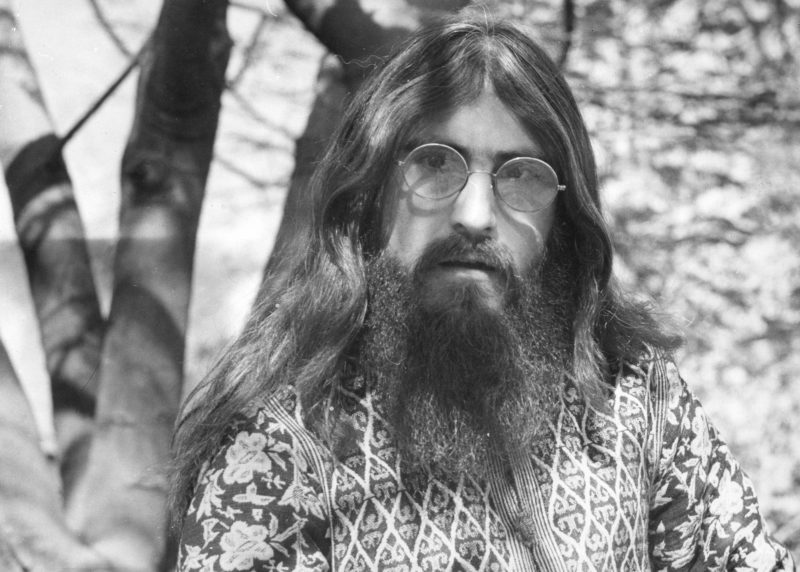
Shimshon Miel is “a lone-wolf hippie from Tel-Aviv” who self-released his only album in 1977, providing a glimpse into his singular hallucinogenic psych-folk sound. For its latest release, Fortuna pulls two standout cuts from the album to reissue them for the first time, alongside a late-night club edit by Kalbata.
Keeping in tune with the wild ’70s psychedelic style of the time, Miel’s tracks are trippy, percussive soundscapes unlike anything heard in recent times. On “Amsterdam Experience,” layers of percussion tumble around each other across the stereo field in a cosmic haze, while “Nueiba Nueiba” pairs Miel’s percussion with haunting guitar lines. On the remix front, Kalbata adds enough 808 sub weight to “Amsterdam Experience” to twist it into a ritualistic club weapon.
Ahead of the release on May 18, you can pre-order Amsterdam To Nuieba here, with “Amsterdam Experience” streaming in full via the player below.
Dig through Berlin artist Phillip Sollmann’s output as Efdemin—from his 2004 debut on Dial, Kleine Wirrniss, to Naïf, his latest outing on Curle Recordings—and you’ll find a minimalistic thread running throughout. Sollmann allows his tunes to unfold in a natural, flowing manner, never forcing or overcomplicating things. Due to this, each and every track—and every element within each track, for that matter—has a strong idea at its core. Take 2010’s “Secrets Of Shoeshine,” for example, which utilizes a wall-shaking bassline, relatively simple drum programming, and trippy, sampled chords to deliver a six-minute deep house club weapon; or 2014’s “Some Kind Of Up And Down Yes,” a deep techno track dripping with character that, as Sollmann states below, consists of a beat, a bassline, and a DX7 pad. This ability to inject personality into simple, familiar dancefloor tropes is a defining quality of Sollmann’s work—and he has stayed true to this ethos across three albums on Dial (Decay, Chicago, Efdemin) and close to 20 EPs on Curle Recordings, liebe*detail, Diamonds & Pearls, Dial, and his own Naïf.
Sollmann’s DJing, too, subscribes to this minimalistic format. Anyone that has caught him in action can attest to the way he lets tracks breath in a set while carefully sculpting key aspects to blend in the mix—which segues into his latest endeavor, Naïf, a 29-track offering that walks the line between the album format and a mix CD. Naïf is made up entirely of unreleased cuts from Sollmann and valued collaborators, all of which will end up as releases, with two landing on Curle and five on Naïf. The way the release has been painstakingly curated to unfold seamlessly like an artist album is itself a direct metaphor for Sollmann’s artistic career—one that favors subtlety and patience over obvious, in-your-face dancefloor cues. With this in mind, we enlisted Sollmann for our latest Artist Tips feature to provide insight into his studio processes.
I don’t think I’m the best person to give production tips on a technical level, but I can tell you a little bit about what I think is most important when it comes to composing music.
Every time I enter the studio it feels like it’s my first time. I have never had established formulas that I follow, and I think that is one reason why I still love doing it. Sometimes when I feel the need to get professional compression on a certain instrument or a better mixdown, I attend the YouTube academy and get it done with a little help from Pensado’s Place or some other expert wasting their time making videos for guys like me. But most of the time, I try to ignore the rules and just follow the sound, as that’s what matters.
So that’s where I start.
Ignore the Rules
I am quite impressed by the level of perfection that many contemporary producers have reached. At the same time, I am extremely bored by the streamlined sound and textures that repeat certain formulas over and over again. What made techno so great in the first place was that there were no rules to follow because it was all new. I think this has been lost a little now. To really stand out, I think you must consciously ignore what everybody else is doing; instead, you should aim to discover your own sound and mode of expression.
It’s the same with DJing. It’s so easy to prepare a whole “perfect” set on a computer and present it later in the club; but then there will be no surprises for you and no surprises for the audience. It’s, of course, much more dangerous to play a set without knowing exactly what will happen and there’s a lot of fun to be had adjusting to the situation.
Applying this to the studio, you can easily get lost, but that’s where the great things happen—when you just let go and open your ears to what is actually possible rather than trying to sound like someone/everyone else. I think you have to pretend like it’s 1996. This, of course, can take years, but it’s worth trying.
Take Breaks
I guess you have experienced it already: you keep working for hours on a track, or even a loop, trying to perfect it—sometimes even for the whole night—then you come to it the next morning and realize that it’s not even nearly half as good as you thought it was!
Taking a break saves a lot of energy and time and, most of the time, you get a new perspective with every break you take. Go outside for five minutes, have a drink, or just stop the music and come back to it after a while. In doing so, you will gain a lot of depth in your perception of what you are actually doing.
But remember that breaks are sometimes dangerous. You might run into a friend, have a drink, and lose track of time and space. Once you get back to work, your enthusiasm and direction are gone. I think you must be intelligent for when you take your breaks; this comes from experience.
I once shared a studio with a friend. One day I took a break for lunch, received a call from a friend and moved to the other side of town to help him. It took me half a day to get back to the studio and, on the way, I was already anticipating a continuation of the work I had started in the morning but when I opened the door I was shocked: my friend had no clue what I was doing and switched off the main fuse when he left. Everything was gone! I tried to restore it, but no chance. So you see: taking breaks is not without risk.
Listen to Your Environment
I know it’s very convenient to just use sounds from libraries that come with every DAW these days, but it’s so boring because so many other people are using the same sounds. I think this is where field recorders are so useful because they are cheap and they sound amazing. So why don’t you go outside and bang on everything you can find (not people or pets, please) and see what sounds will come out? Many tracks of mine contain sounds from things like the iron fence in front of the studio, a bass drum made out of the wooden door in the toilet, the ambiance of the backyard at night, and so on.
Another great option to achieve a more unique and personal sound is sampling. I strongly believe in sampling sounds from the records you like. Each sample delivers a good portion of noise and character, and you won’t get that from a plug-in!
Another amazing source of character, weirdness, and noise is a hardware sampler. I have three different ones and use all of them from time to time: Ensoniq ASR-10, Akai MPC 2000, and AKAI S 612. The last one has become a key instrument in my studio setup. It is unbelievably simple and limited but sounds fantastic and is so easy to use. The parameters include a filter, decay, LFO, and sample start and end. Using a mic I often find myself singing or talking into the machine. I have never been disappointed by it. Simply the best piece of gear. Check out this video and see if you can get one!
If you can’t find one, you might wanna look for some nice sounds in your environment. For example, there is a bridge close by my studio which has fences on both sides. Since I was a kid I would beat on everything to see how it would resonate and sound, and I haven’t stopped doing it ever since. So, of course, I banged on the bridge’s fences and got rewarded with a beautifully tuned sound close to a steel drum. I recorded it one night when there were no cars passing by and used the samples in “Wonderland (The Race For Space)” from my Chicago album (Dial, 2010). Then one day I talked to my friend John Gürter and told him about this beautiful bridge and he started laughing out loud and played me a track he made out of samples from the bridge himself!
To give you another example, on my debut album, Efdemin (Dial 2007), you can find the track “Knocking at the Grand.” The Balafon-like harmonic percussion sounds are samples from a recording in Vienna where I was banging on the outside walls of the Museum of Modern Art, Mumok.
Delete All Those Lame Tracks
I am absolutely convinced that one reason for the flood of boring productions is the possibility of having unlimited tracks in a DAW. When you’re working on more than eight tracks, I think you lose focus of what is really important in each track. So instead, why don’t you try limiting the number of tracks? I think four should be the maximum, but you should definitely have no more than eight!
If you are lost in a composition and can’t get the track done it might be time to delete all the unnecessary accessories and get back to the core of the track. On my last album, Decay (Dial 2014), you can find a bunch of tracks where I did exactly this. After I had recorded tons of tracks in my studio in Berlin over the timespan of one year, I started working on the recordings while in Japan for some months. It was a very interesting process. As the machines were far away and I had only recorded sound files to work with, I had to really identify the key aspects of the tracks. What I basically did was clean up everything and identify the core of each composition. I also deleted a bunch of tracks and this helped me to see the tracks clearly, reducing the music to what is really important.
My favorite track, “Some Kind of Up and Down Yes,” consists of only three things: a beat and a baseline made with a modular system run through a Moog lowpass filter and a DX7 pad on top. It is very simple and some might think it’s boring, but it’s a great example of deleting everything unnecessary for a huge amount of clarity.
10 years ago I also wrote the track “Acid Bells” with just an 808, some bass, and a simple line played by some physical modeling plug-in by AAS. It’s one of the few tracks that I still play in my DJ sets myself.
The same goes for my track “Move Your Head” from my recent mix CD Naïf (Curle Recordings). It simply features a Roland TR-808 run through an Eventide H3000, pads from the microtonal app Tuning Vine, and my voice. It is limited to the max.
Play Your Shit to Others
This is something that is sometimes shocking and sometimes makes me cry. Playing your music to others while you are trying to finish it might help you identify what’s wrong within seconds. It’s often the case that you’ve been working on stuff for hours—or days—and then your friend will tell you the problems, even after just one listen. You might even realize that you have been cheating on yourself with that cheap bassline or that stolen loop from the library. In short, the second pair of ears helps a lot to listen to what you are really doing.
Whenever I have something that needs to be finished, I play it to one of my neighbors in the building where my studio is located. Ed Davenport, who works next door, has been a great help throughout the years, as has John Gürtler, who I collaborate with sometimes as Sollmann & Gürtler. They’ll often find the obvious and redundant parts of my tracks within seconds.
Sometimes even just imagining a certain person sitting alongside me can work. After I had completed the score of “Monophonie” for Ensemble and was listening to a performance of it, I imagined I was my friend Lawrence (Dial Records head) who couldn’t make it that night. I had to laugh many times while listening to my own music with the imagined ears of someone else: and I realized how typical the music was—”typically Sollmann.”
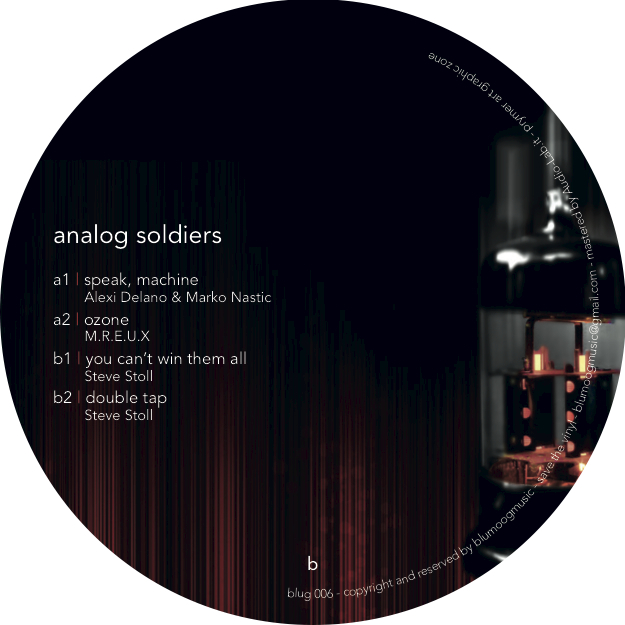
Last month, Blumoog Music dropped its first release of the year, a four tracker featuring a collaborative cut from Alexi Delano & Marko Nastic, a solo effort from label head M.R.E.U.X, and two from veteran Steve Stoll.
The EP, titled Analog Soldiers, follows a stellar 2017 run that saw outings from Terrence Dixon, Beroshima, Aubrey, Gotshell, Frankie Serous, Marc Troi, and, of course, M.R.E.U.X himself land on the label. Like much of Blumoog’s back catalog, Analog Soldiers delivers a set of techno cuts ripe for the floor, from Alexi Delano & Marko Nastic’s deep and menacing “Speak, Machine” to M.R.E.U.X’s hypnotic, groove-led “Ozone” and Steve Stoll’s swinging pair of outings.
In support of the release, Blumoog has offered up the label head’s outing as today’s XLR8R download. Built from a galloping rhythm and atmospheric synth lines, “Ozone” is a deep cut fit for the early hours.
You can grab “Ozone” via WeTransfer below, with the EP available here.
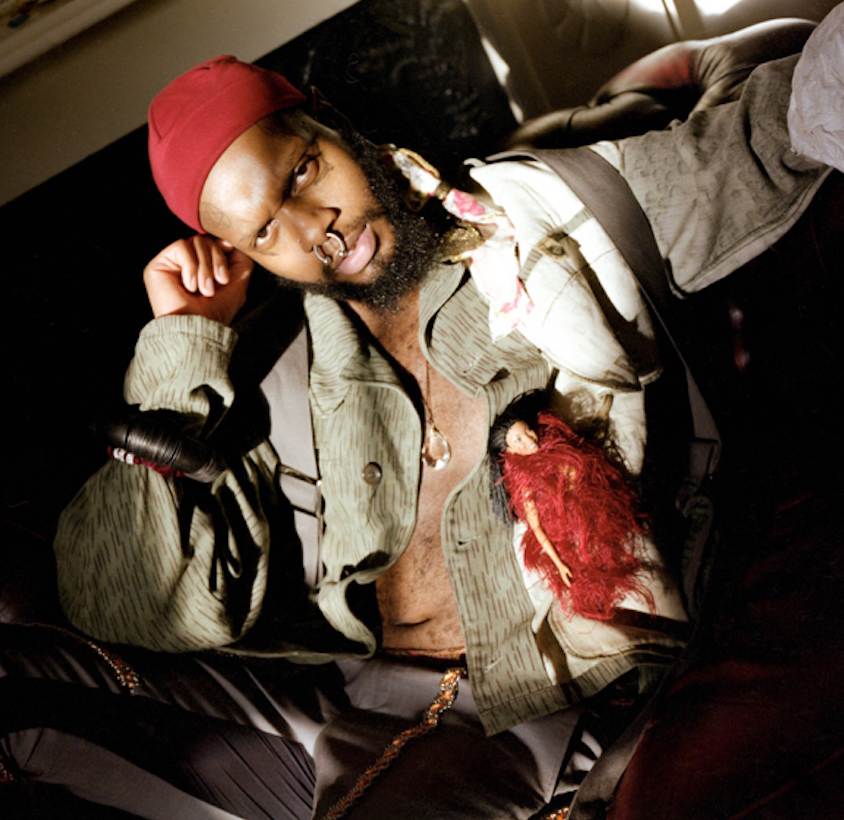
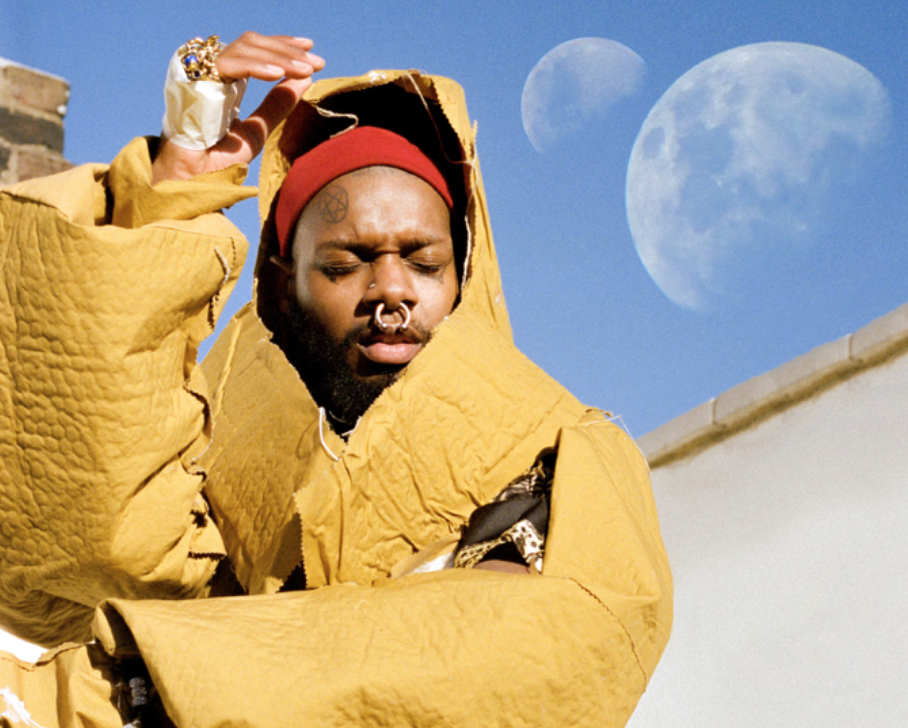
serpentwithfeet has shared a new single, “cherubim,” produced with Katie Gately and mmph, with an official video directed by Allie Avital. It’s taken from his upcoming debut album, soil, out June 8.
“cherubim” is a “fanatical love song,” in which serpentwithfeet naively exclaims about a new wondrous man he’s fallen for. The video follows the lead single “bless ur heart.”
serpentwithfeet is an experimental R&B/gospel vocalist and performance artist whose growing body of work is rooted in dueling obsessions with the ephemeral and the everlasting—key components of his artistic journey from a childhood stint as a choirboy in Baltimore through his time at The University of the Arts in Philadelphia, where he studied vocal performance before relocating to New York City.
soil is described as “a return to the sensibilities and wide-eyed curiosity of his musical youth before symmetry and sterile soundscapes ruled the roost.”
Tracklisting
01. whisper 02. messy 03. wrong tree 04. fragrant 05. mourning song 06. cherubim 07. seedless 08. invoice 09. waft 10. slow syrup 11. bless ur heart
soil LP will land on June 8, with “cherubim” streaming in full above.
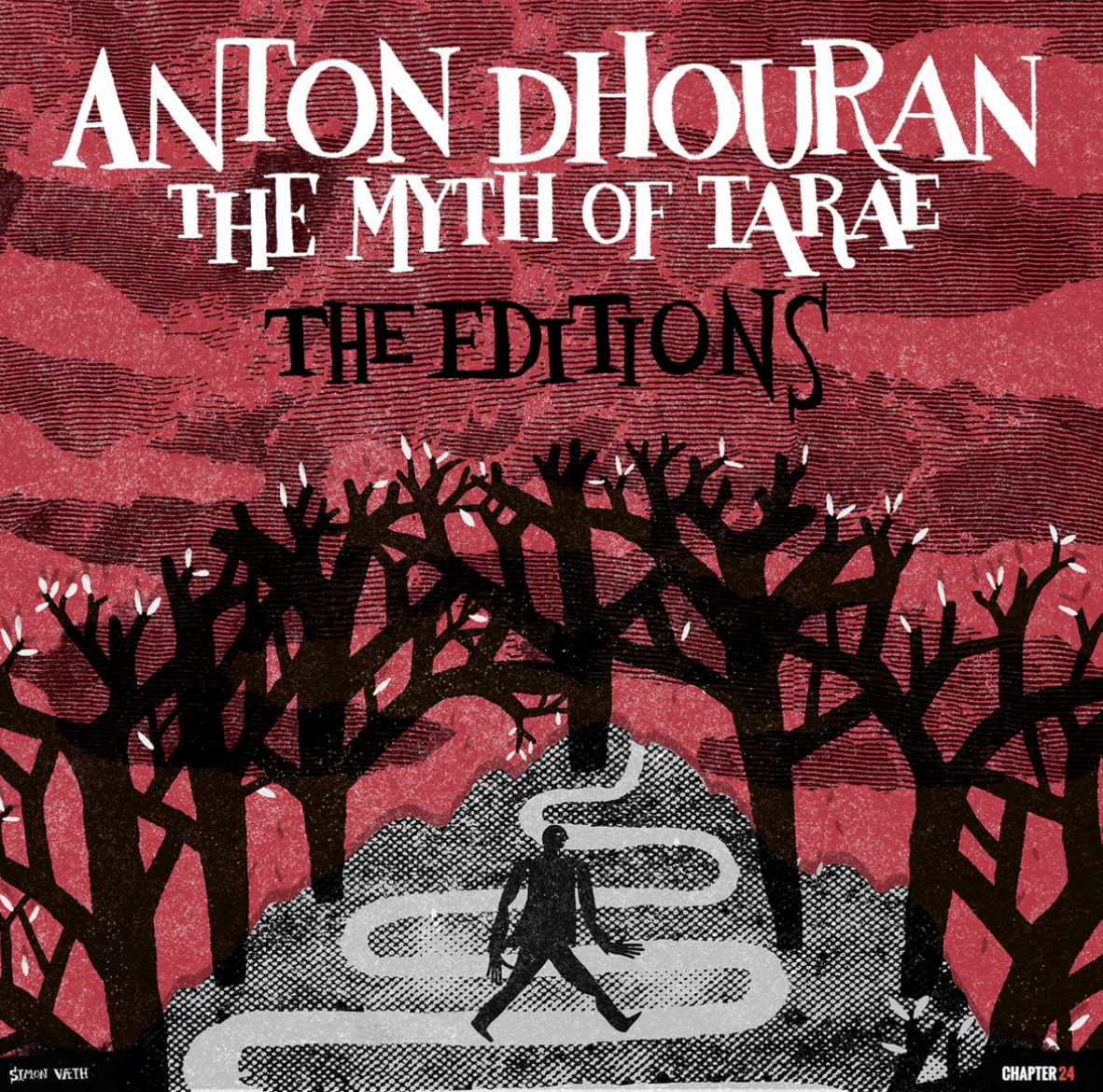
In the aftermath of Chapter 24‘s second album, namely The Myth of Tarae by young Parisian composer Anton Dhouran, the label will now release an Editions package.
Dhouran’s debut full-length LP melds electronic, instrumental, and cinematic styles similar to how he has done for labels such as Diynamic, Family N.A.M.E., and The Soundgarden. On this release, the title track is reworked by Third Son, Olderic, and AZZUR label bosses Konvex & The Shadow. Their “Rodeo Edition” is furnished with a distorted arpeggiated bassline and features swelling harmonies alongside the original vocals. Meanwhile, their “Celestial Edition” is more mellow.
In support of the release, out May 18, you can download “The Myth of Tarae” (Konvex & The Shadow Rodeo Dub), an unreleased take specially for XLR8R, in full via the WeTransfer button below.
Tracklisting
01. The Myth of Tarae feat. Ed Begley 02. The Myth of Tarae {Third Son Edition} 03. The Myth of Tarae {Olderic Edition} 04. The Myth of Tarae {Konvex & The Shadow Rodeo Edition} 05. The Myth of Tarae {Konvex & The Shadow Celestial Edition}