Mount Kimbie have announced a remix package for their most recent album, Love What Survives.
The package will feature six remixes split across two 12″s, which will be released over consecutive weeks on May 4 and May 11. The first will feature an extended rework from Nina Kraviz—which can be heard via the player above—alongside two DJ tool versions, with the second featuring remixes from Marcel Dettmann, Gerd Janson, and Ellen Allien.
Mount Kimbie have also announced a full live band tour of North America in May, the dates of which you can find below.
Tour Dates:
May 11 – Arcosanti, AZ – FORM May 12 – Los Angeles, CA – Echoplex – SOLD OUT! May 13 – San Francisco, CA – The Chapel – SOLD OUT! May 14 – San Francisco, CA – The Chapel – JUST ADDED! May 15 – Portland, OR – Star Theatre May 16 – Seattle, WA – Neumo’s May 17 – Vancouver, BC – Imperial May 19 – Toronto, ON – Velvet Underground May 20 – Sainte-Therese, QC – Santa Teresa Music & Arts Festival May 22 – Philadelphia, PA – Johnny Brenda’s May 23 – Philadelphia, PA – Johnny Brenda’s May 24 – Washington, DC – Black Cat May 25 – Brooklyn, NY – Brooklyn Steel May 26 – Boston, MA – Boston Calling Festival
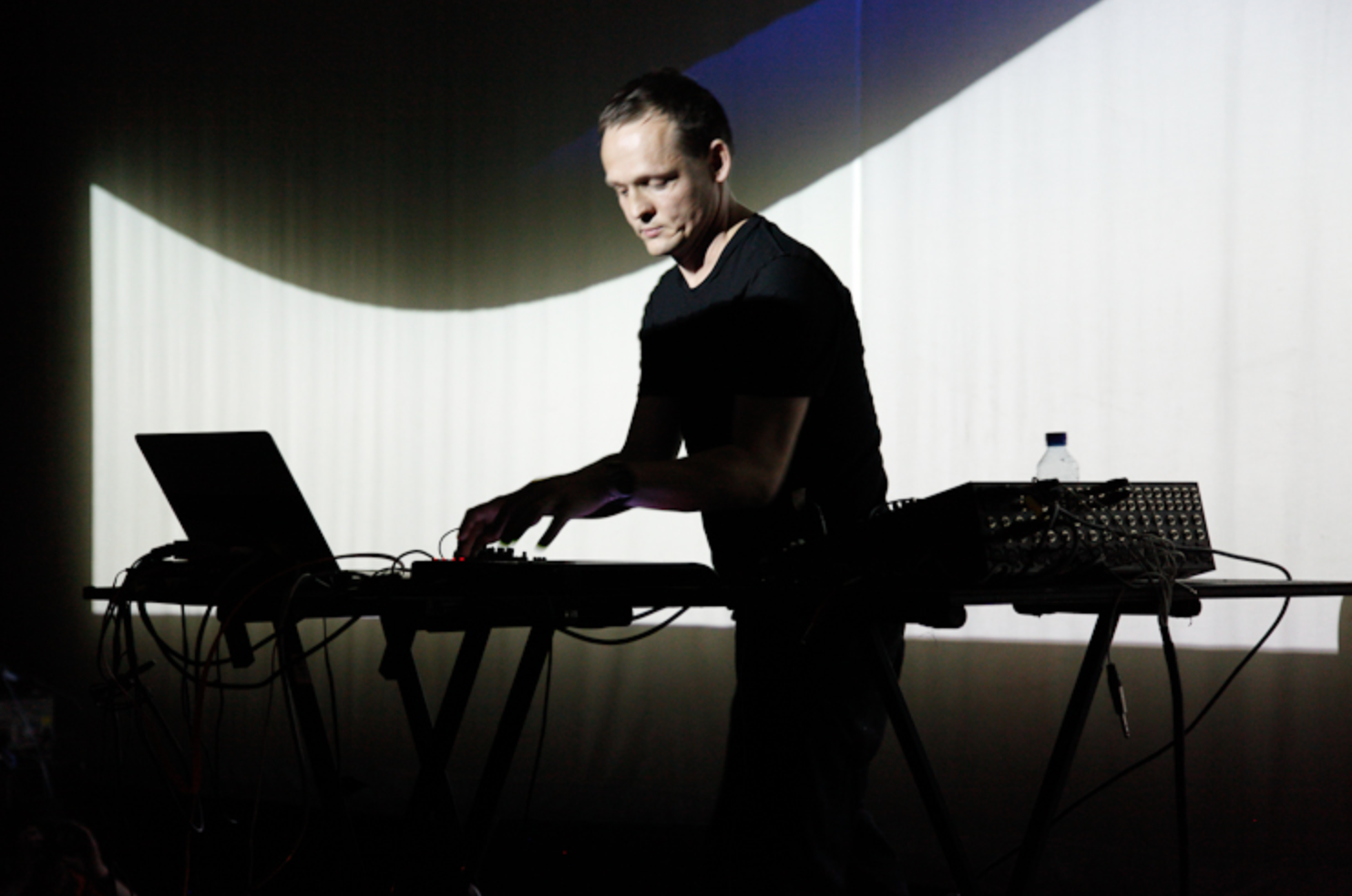
Carsten Nicolai, better known as Alva Noto, has answered your questions this month.
Nicolai, born September 18, 1965, is considered one of the most important sound explorers of recent times. A former Architecture student and a visual artist interested in the physical qualities of sound, the German musician is part of an artistic movement whose work explores the intersection between art, science, sound, and music, with a strong adherence to reductionism. Adopting the Alva Noto pseudonym in 2000, he’s worked on many projects, both on his own and with other artists including Ryuichi Sakamoto, Bender (Diamond Version), Bretschneider (Signal), Blixa Bargeld (NBBA), and Ryoji Ikeda (Cyclo), to name a few.
As a musician, capturing the scope of Nicolai’s work is no easy task given his list of releases, exhibitions, and more. He co-founded the groundbreaking raster-noton label (having founded NOTON in 1994) just before the turn of the millennium, and has since performed and created installations in some of the world’s most prestigious spaces, including the Guggenheim, New York and London’s Tate Modern.
In terms of releases, he’s shared material via Mille Plateaux and raster-noton. It is here that he has released some of his most defining and widely known work in collaboration with Ryuichi Sakamoto—with whom he also composed the soundtrack to the 2015 film, The Revenant, which received 12 nominations for the 2016 Oscars. Their latest collaboration, Glass, landed recently; and Nicolai’s latest album, UNIEQAV, arrived on March 16.
Nicolai also works as a visual artist, known for his elegant yet minimalistic aesthetic. After participation in important international exhibitions like documenta X and the 49th and 50th Venice Biennale, Nicolai’s works have since been shown worldwide in extensive solo and group exhibitions.
What was your approach for processing Sakamoto’s piano on your collaborations?
Each record has a different approach. I was very shy with the processing of the first album; I didn’t process his sounds so much but in the later collaborations I have taken a more radical approach, mainly because Ryuichi was interested in and open to me processing it more.
In collaborations, you need to establish a common ground and a certain trust with each other, and over time Ryuichi and I have established this, so I think we’ve started to give each other a lot more space when it comes to our work together. I think much of this is down to our live shows that we’ve done together because this relies a lot on improvisation and processing things in a more experimental way. It’s taken a long time; we’re talking about many years—but now we’ve established it we want to explore ways to improvise on that common ground. Ryuichi describes our collaboration as he delivers the fish and I am the sushi knife. It is the perfect combination for good sashimi!
The latest release, Glass, is just a manifestation of this. It’s different in a way because I am not processing anything. We’re just playing together. I think this is a completely new step. To begin with, for our first release, we were separated. Ryuichi was dedicated to the piano and I did electronics, but on Glass there is no piano.
I’m fascinated by the textures and attention to detail in your music. Do you find yourself absorbed in your work when you’re recording?
My recording process is extremely immersive. I think every recording process is that way. I become completely obsessed with this sound and vision I am trying to achieve. With all the possibilities today, you have to work intensely. You have to isolate yourself and spend time in the studio listening to material and just trying things. It takes a lot of time—at least eights hours a day, for me. When I’m in the zone it feels like I am floating. I can be there for a whole day and then when I leave it feels like only one hour has passed.
I would like to ask a question about labels and publishing. We’ve had offers for our music by minor labels, but these options end up being financially unsustainable, and also by publishing on various internet portals (Soundcloud, Bandcamp, etc.) we feel our work would be lost at sea. What would be your suggestion for sharing this music, and what should we do to promote our work? Do you think we should perhaps open up our own label—and is this better than releasing on a label with a strong reputation?
It depends a little bit on what you’re doing. If you feel very drawn to a label and your music feels like a perfect fit, then you should, of course, contact these people and send in your music. Don’t give up if you feel it’s the right place. However, most artists, especially experimental artists, have a feeling that they are doing something that doesn’t fit in easily with the output of an existing label, so, in this case, I think it’s best to start your own label. This is especially true nowadays because it’s so easy to find new music with the internet and social platforms. However, you should first invite your friends to listen to your music and build a community; it’s important that you do not produce for a market or with the intention of making money out of it. If you’re focused only on commercial success then it becomes very hard to find it. Find people who appreciate what you’re doing. As I said, this is easy today because there are so many platforms where you can share your music.
That’s how we did it with Raster-Noton. I never even thought or trusted that the results would ever come. It was just a natural development that we found people who kind of liked the music we were making. We just thought we were a small group of people doing what we were doing, and then people discovered it naturally. It was a small community and it took years for a wider audience to develop. You need to be patient, and your expectations must not be too high. It’s a very strange moment when you realise that your audience is a lot bigger than you thought. As an electronic music producer, you can feel quite isolated and then when you get feedback it’s so strange.
I also think that starting your own label is good in the long run because you will retain control over your music. The music industry generates a lot of money but it doesn’t give back to the creative people—the most important people. Let’s make a simple example: in Europe, a CD costs around 18 euros. If the artist is lucky, they’ll receive just one euro. It means that only a small percentage of what the consumer pays ends up in the hands of the creator. The music industry has built a system that is not very transparent and one of the reasons it’s not transparent is because there are a lot of people who are involved in the musical work. Independence gives you a lot more freedom and flexibility. Maybe this stops you from using certain tools and platforms to find success, but in my case it was very easy because my music has never been for a wide audience. It was just natural to release my music on my label.
I actually think that the music industry is undergoing a big shift that is not finished yet. People are beginning to prioritise independence and this, in turn, gives creators more of an opportunity to make a living from their work—from their musical creations. If this doesn’t happen then a lot of the creators will eventually disappear.
How do you approach composition, in general? What inspires you, workflow, state of mind, etc?
I am very inspired by visual imagery, especially film. I am also fascinated by non-musical sounds, like noises and auditory accidents. I am also inspired by architectural drawings.
I would also say it depends on the project. When I start an album or a release, I normally begin by sketching (sonically) what I would describe as an atmosphere, which itself stems from a picture or a metaphor. This could be a little clip or a still image. One time, for example, I started with a clip from a science fiction movie. It was not an important scene; it was just a side view of a control room—and I went back and looked at this scene to refocus my mind on this atmosphere upon which I was basing the music.
Sometimes I can also do rough sketches and I compile them into a kind of compilation, like a demo tape, and then I try to stay within this realm—or general atmosphere. It’s difficult to describe. It’s sort of a vision that’s not easy to express visually. In fashion, they’d call it a mood board. Often these visions will come from architectural drawings, for example, those of Daniel Libeskind’s “Micromegas,” and that will become the reference point for the entire release. It’s like I am creating a soundtrack for that vision. It’s a bit like someone is sending you a postcard and I am making a soundtrack for that postcard. This vision is in my mind’s eye rather than something I can actually draw.
Looking back at my discography, I can go back to each release and identify a clear visual aesthetic that I wanted to achieve at the time. Listening to that music then brings the spirit of that image alive again. While listening, I can clearly recall exactly what I was thinking and seeing at that particular time.
For the new album, the vision is a little different because half of it came from a sort of live set. The first time I played one of the album tracks was in Berghain, here in Berlin, and this triggered the vision; I knew then how I wanted the album to sound. I know the acoustics of the space very well, and it’s a great place for listening to sound. The album was inspired by a certain moment of the night; I had a certain feeling where I felt really together with the audience. I was then intent on recording a soundtrack for that vision, or for that particular moment.
How does your approach for soundtracks differ from that for your own releases, and can we expect more work with films from you?
For The Revenant, and I guess for all soundtracks, it’s different because you’re a bit like a servant. What you do is get really into that topic and try to become one of the characters inside the movie. With The Revenant, it was a super compressed and intense period. I was in Los Angeles and I was only immersed in the movie; all my time was dedicated to it. I’m not sure when I’ll do it again. I’ve had offers and I’ve worked on two projects like this before, but it depends on whether I can visually see a connection to myself in the film. If I can connect then I will perhaps do another one.
Having been published on the Mille Plateaux label, is philosophy an important source of inspiration in general?
Not really. In the beginning, Mille Plateaux was just a name. Not everybody who released on the label was necessarily connected to the French philosophers. I know that Achim Szepanski, who founded the label, studied some philosophers from the Frankfurt school so I think he was inspired by this when it came to the running of the label. Maybe the overall structure of the label was influenced by this but only a few of the releases on the label were actually aligned with this particular philosophical concept. I connected with the label via an invitation from Achim who was always looking for new material that had a visionary and futuristic aesthetic, with a new approach to sound. Yes, I think this is more the main topic rather than the philosophy behind the name Mille Plateaux.
Someone once commented that the music of Noton is made to be enjoyed “whilst on drugs.” What is your view on this, and what kind of “zone” do you put yourself into when actively listening to your own / your label’s music?
I don’t personally take drugs, especially not for working, because my biggest drug is the music. The music has to create that feeling, I think. People sometimes tell me that my music sounds good on drugs but I really don’t have any idea because I have never experienced it. That being said, I find it is interesting to read people’s descriptions of what they experience while listening to my music on drugs.
How did you get to know Mika Vainio? How would you describe him as a person and collaborator?
I met him for the first time in New York when he was performing with Ilpo as Pan Sonic in a small techno club in late 1996. I then visited him in Turku in Finland and we worked together on the soundtrack installation called “Micro Macro.” Later, we both lived in New York and started to work at a mutual friend’s analog studio.
Mika was a concentrated and dedicated worker, I have to say. He had an incredible ear and we both really enjoyed working on music together. One of the key things about our relationship was that we were always learning from each other. By working with him, you learned a lot about silence and space. Maybe the most amazing thing for me was how he could find beauty in any sound. He gave a lot of attention to sounds that you perhaps wouldn’t give any attention to in the first place.
As a person, Mika was not a man of many words but once you became close to him there was a very generous and funny person with a great sensibility for art, sound, and food.
Once, I’ve seen you performing in Barcelona, at the Espai Jove La Fontana. There, you were playing together with Anne-James Chaton and Andy Moor. When the performance finished, Anne-James and Andy Moor stayed to receive a big applause for that great music, but, instead of this, you went directly off stage. If you feel comfortable, could you explain what happened to you at that moment?
I don’t like the classical approach to collecting applause. I feel ok on stage as a performer but I am a little bit too shy to collect applause. I am not interested in this part of being a musician.
Could you tell us more about your process of taking your compositions to live performances?
I don’t use or own too much outboard gear so I can actually take a lot of my studio with me when I go on stage. Therefore, the focus is not on compressing my studio setup but rather on solving problems, simply because there are things I can do in the studio that are not possible in the live environment. To do this, I work with my assistant, Nibo, to build instruments, both software and hardware, that will serve a specific purpose in my live set. Where necessary, we will program Max for Live and build stand-alone applications for the live set, even if they’re only used for one or two songs. It’s a lot of effort for only a little use, but it’s important for me to work.
One example of this is a live analysing tool that Nibo and I built. It also functions as a sine wave generator. Its purpose is to analyse what Ryuichi plays, in this case, and then it gives me a precise frequency of the decay of the tone. I then have a choice on which sine waves I am going to add, lower or higher. I can do this in my studio, in an offline situation, but it’s not possible to do it live on stage.
I also use these instruments for making sounds. Nibo made a piece of software that allows me to make sounds outside of what a synthesiser can do. These sounds are mathematically possible but not possible with a normal synthesiser. We also developed a sample bit crusher that loops the sample and I can define how often and in which way it gets crushed. It’s like a copy machine, where you can copy the copy and copy it again. I can try different loops out and change them every time. This is also more for recording purposes.
I was wondering what percentage of your creative process is sound design, and what percentage is composition, and what percentage is mixing and technical aspects. I constantly find myself getting away from what feels musical when working with electronics and getting caught up in the technical details.
For me, the term “sound design” is a tricky one because I don’t make a distinction between sound design and composition. The mixing and technical aspects are also part of my process and a crucial part of composition but it does not take too much of my time. I tend to use instruments that I am used to using, having worked with them for a long time. I think every musician has their favourite tools and you have to understand that more complex instruments require more time to learn, and you have to put the time in to learn them. For me, one of my main tools now is editing. I’ve become a very fast sound editor. When trying to solve a problem, I will always think about editing a sound rather than trying to recreate it.
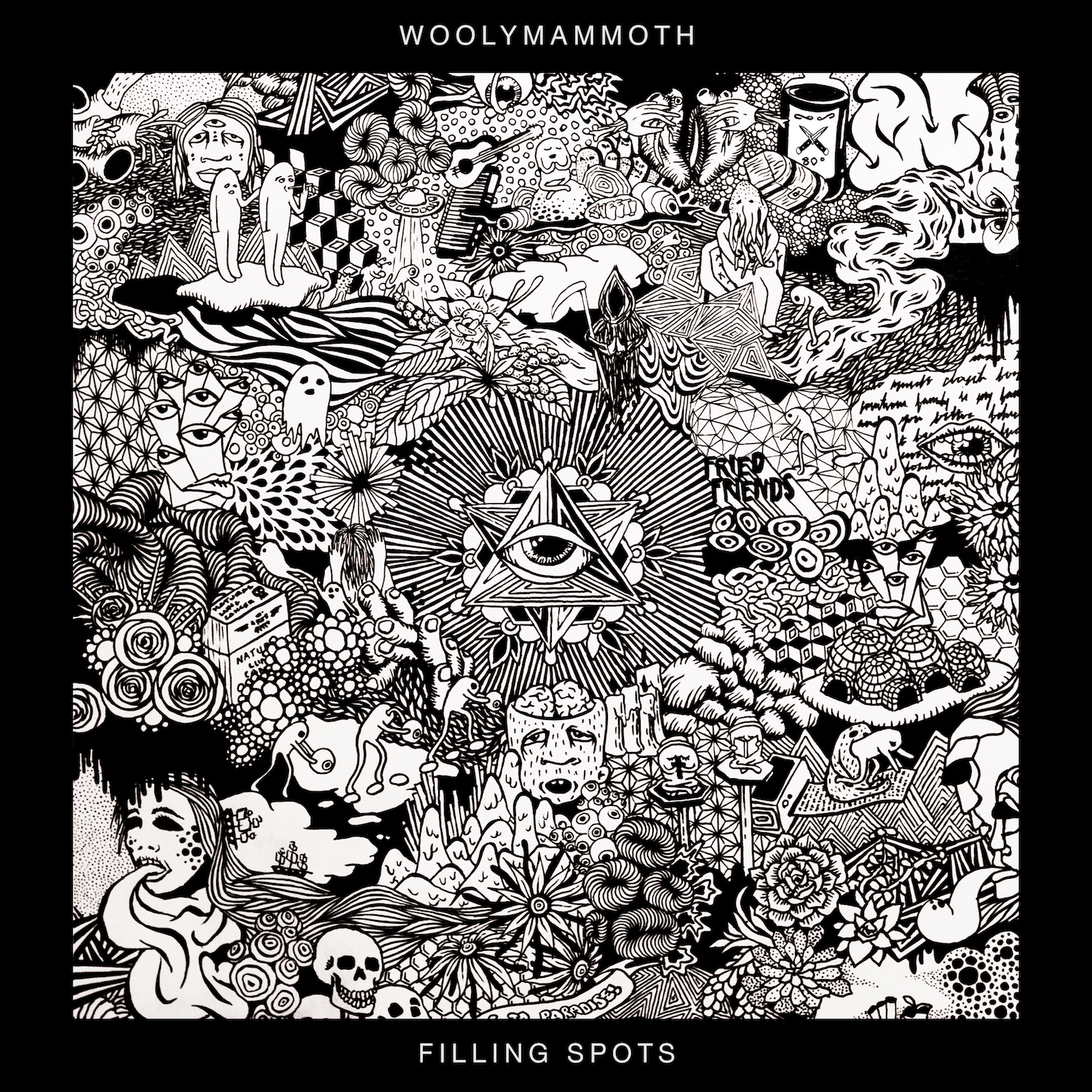
Young American producer Woolymammoth (Jason Wool) has an intriguingly twisted take on the interface between hip-hop and electronics. Originally from San Francisco but now LA-based, in the space of four years he’s made a name with his rugged, scraping beats and undulating bass tones, somewhere on the frequency dial between glitched-out IDM, the unique experimental hip-hop sound of his adopted city, and modular synth-crafted sound design.
If his early EPs such as 2015’s Tricks on Buygore and 2016’s Come Wit It with Graves on Artist Intelligence indicated a skill for beat-making and an individual outlook, Filling Spots, his debut album for Alpha Pup, sees him experimenting and broadening his sound. There’s more than a smidgeon of San Francisco’s experimental electronic history sprinkled into this record, from Kid 606’s manic glitchcore to DJ Shadow’s restructuring of samples. On “Nofknway [124] UMTME,” with Bleep Bloop (who releases on Shadow’s Liquid Amber label), Woolymammoth teases with a house beat, before dropping into snaking Sheffield techno patterns and nightmarish stretched bass elements, over buckled drums and weird effects. “The Comeback” has MC Legoon delivering ill raps over a stripped beat, with scuffed record hisses and scattered jazz samples appearing suddenly, only to disappear like mirages in the desert.
The opener “Discovering Inspiration/Release” is a rare moment of gentle reflection, as a cascading Rhodes keyboard accompanies a sampled torrent of water in the background, before “Whyuthinkurdiffrnt” snaps us out of it; it’s the kind of roughneck and leftfield jam that would detonate the floor at LA’s Low End Theory, the club co-founded by Alpha Pup label owner Daddy Kev. Its fractured beats stumble and trip over vibrating sub frequencies and spaced out reverb. “Shadeslove” is an ominous buzz of dark side synth, with a menace you can imagine appealing to UK outfit Ivy Lab.
Woolymammoth’s growing sophistication as a producer is clear on this record. Older cuts, such as 2015’s “Tricks,” were immaculate in their crafting, but more conventional in their choices of sounds. “Riddim Fix,” with Yakoze, is an example of Woolymammoth’s new palette, with its hints of footwork rhythms, submerged blips, and eerie dub effects that interject. His experiments with a Eurorack modular synth system contribute to the record’s plethora of oddball and compelling noises, like the tinkling, smashed glass sounds of “Maktar” or the stiff mechanoid reverberations of “4THACULTURE/Wegotadubsgame.” These kinds of experimental elements framed in accessible beats align Woolymammoth with local beatsmith Eprom, and also outlier Amon Tobin.
On the whole, Filling Spots is an engaging record, though in pursuit of a recognizable sound, at times it can be a touch samey. Those moments when Woolymammoth goes off-piste are the most gripping, such as his nods to footwork on “Riddim Fix” or straight up rap on “The Comeback.” When he combines his heavy beats with further flights of fancy, he’ll really be onto something.
Earlier this month, Mexico City’s Umor Rex label released Kohl’s Learned Ethics / Imposed Ethics EP.
Kohl is the dub-based project of New York City artist, musician, and label owner Nathaniel Young. Co-founder and label manager of Blankstairs, Young uses the Kohl project as an outlet for personal reflection and transformation, looking at different interpretations of “right” and “wrong” and “good” and “evil” through a dubbed-out framework. The tracks themselves are beautifully subtle and reflective, unfolding naturally with dense and inviting textures and dub-techno grooves.
Recorded and produced in summer 2016, Learned Ethics / Imposed Ethics can be purchased here. In support of the release, Young has offered up the deep and atmospheric “Moral Supposition” as today’s XLR8R download, available via WeTransfer below.
On April 4, Magda, BMG, and T.B. Arthur will once again team up as Blotter Trax for a new EP.
Following on from Lost Basement Tapes and Blotter Trax – 1.0, the new EP finds the Midwest supergroup in typically psychedelic form, delivering three deep and hypnotic tracks of avant-garde electronics. From the tripped-out broken beat’s of “2.1” to warped electro grooves of “2.3,” Blotter Trax – 2.0 is another standout collection of left-field dancefloor weapons from three Midwest pioneers.
You can pre-order the EP here, with the tripped-out “2.3” streaming in full below.
The next release on Manchester’s electro-focused Natural Sciences label comes in the shape of a two-track EP from Datawave, an unknown producer from Belgium. It’ll be his first ever release. There isn’t much else to say about him.
The self-titled EP, landing March 30, is available for pre-order here, with “Hidden Outpost,” a dark, twisted electro jam, available to download via the WeTransfer button below.
Smallville producer Moomin will head to veteran house imprint Wolf Music for his third album, Yesterday’s Tomorrow.
With two LPs on Smallville and a string of releases and remixes on Aim, Freerange, Watergate Records, and his own label Closer, Moomin has established a strong reputation for his warm, sample-led approach to deep house.
Yesterday’s Tomorrow is said to see the Berlin-based artist “return to old tropes with an immediately familiar sound,” blending elements of house and infusing them with a long documented love for hip-hop, all while breaking new ground with “a swerve towards jungle and drum & bass.”
Tracklisting
01. Daysdays 02. In Our Lifetime 03. Shibuya Feelings 04. Maybe Tomorrow 05. Move On God 06. 949494 07. Into The Woods 08. Fruits
Yesterday’s Tomorrow is released May 18, with clips streaming below.
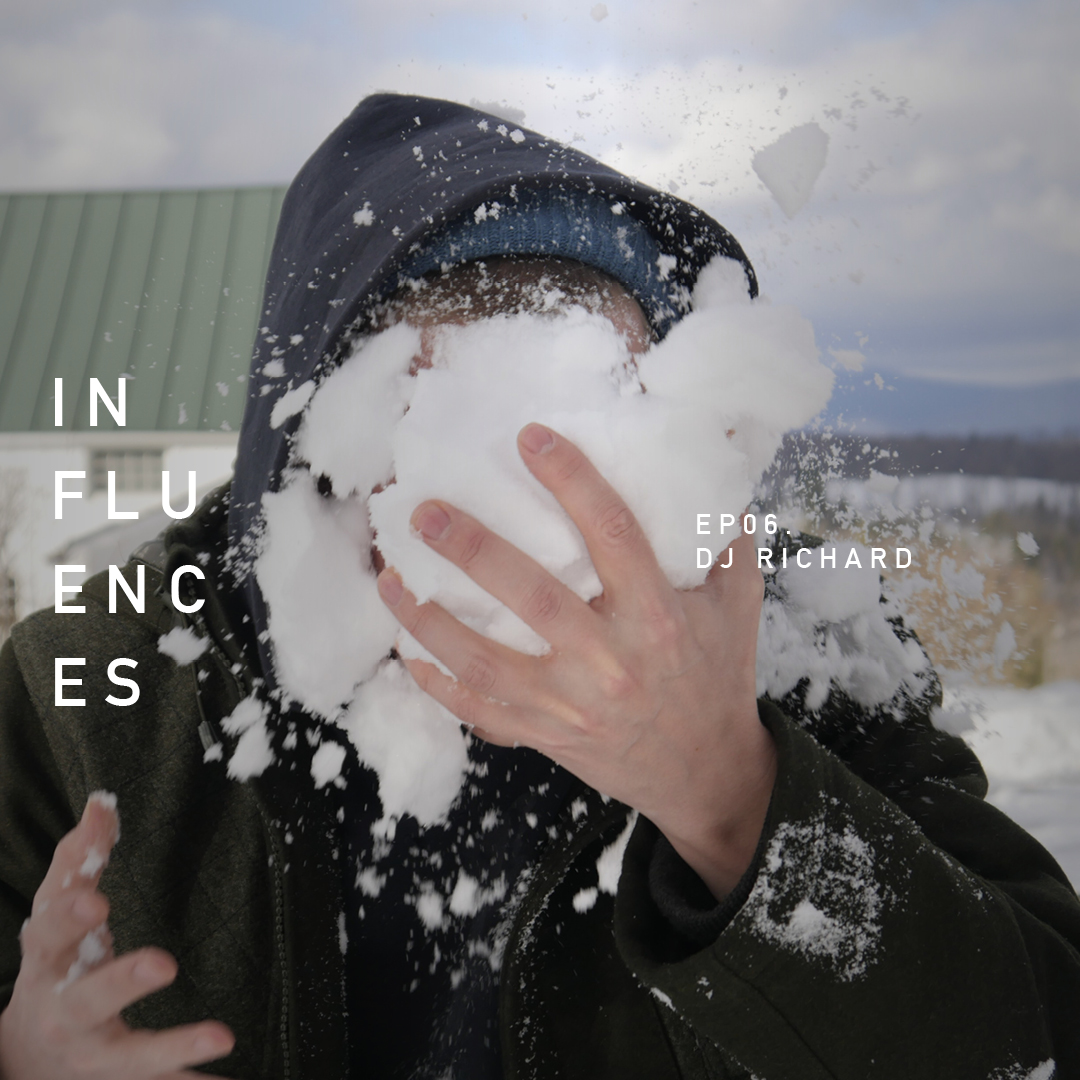
Emerging from the Providence noise scene, DJ Richard has proceeded to earn himself a stellar reputation for his tense, often bleak take on ambient house and techno music. The DJ-producer, born and raised in Portsmouth, Rhode Island, is an intriguing character, admired by many but known by few. His real name, to this day, remains something of a mystery.
As an artist, he set tongues wagging around 2012 with Leech2, a four-track release on White Material, a label and collective he set up with Rhode Island School of Design classmate Quinn Taylor (Young Male). The collective also includes Galcher Lustwerk.
Leech2 was among the label’s first releases, followed by Nailed to the Floor in 2014. Both quickly sold out of their initial pressings and earned accolades from the underground club scene—with positive reviews all around. Within a short period of time, and after a string of solid releases, the label developed a cult status; 12″s, which were limited in pressing, were to be found on Discogs for much more, as demand for the work of those involved escalated beyond their wildest anticipations. DJ Richard, the most widely known of the three, had become one of the most fascinating figures in electronic music.
It’s a reputation that remains today. Interest in him has only continued to grow, in part down to a splendid debut album, Grind, which came via Berlin label Dial in 2015. The album, which combines DJ Richard’s skill in propagating ephemeral and ambient sounds with his aptitude for electronic body control, is full of cinematic unfoldings and sonic color, blending bright filaments of melodic optimism with moments of yearning melancholy. It’s an utterly captivating piece of work.
Intrigued to learn more about the DJ Richard’s sounds, XLR8R reached out to see if he’d reveal some of the influences behind his work. His nostalgia-inducing Influences podcast, almost 90 minutes in length, sees him dig deep into his past, blending some of the inspiring works that caught his attention on late-night radio with the work of some more contemporary producers that have inspired his music. You’ll more than likely recognize some, but it’s unlikely you’ll know them all.
“The idea behind this mix was to focus on non-club music that has been important to me at some point and to leave the tracks unmixed, in a style similar to a late-night community or college radio program. I grew up obsessed with radio and would record tapes and tapes worth of material from what I heard on the local Rhode Island stations. I was especially interested in programs that played grunge and early ’90s alternative, but occasionally other things would catch my attention; I have distinct memories of the first time I heard Art of Noise’s “Moments in Love” or The Psychedelic Fur’s “Love My Way” in these programs and being completely blown away.
“In terms of the selections, I wanted to represent a broad range of musical influences that share a certain flow between them. Some of these tracks have influenced my sense of melody or composition, while others have been stuck in my head for years. I also included a few tracks from friends and acquaintances whose music and performances have inspired me. I have mostly left out punk/metal/noise etc. for the sake of a more low-key listen.
“The mix was recorded on a rainy day at my boyfriend’s place in Montreal.” — DJ Richard
Tracklisting
01. Roland S. Howard “(I Know) A Girl Called Jonny” 02. T. Zchien & The Johnny “Let Your Life Be Free” 03. Kim Jung Mi “Your Dream” 04. Las Grecas “Te Estoy Amando Locamente” 05. Riz Ortolani “Corpo di Linda” 06. Mike and Pam Martin “Lonely Entertainer” 07. Yves Tumor “The Feeling When You Walk Away” 08. The Savage Young Taterbug “Togethermen” 09. 戸川純ユニット “極東花嫁” 10. Die Form “Ton Retrait Des Eaux” 11. Phew “Mapping” 12. Zone “The Prophet” 13. Slowdive “40 Days” 14. Kathy Heideman “The Earth Won’t Hold Me” 15. Robert Lester Folsom “See You Later, I’m Gone” 16. Mistress Mary “Dirt Will Be Yer Name” 17. The Seeds “A Faded Picture” 18. Peter Grudzien “The Unicorn” 19. Karen Dalton “Sweet Substitute” 20. Dead Moon “Can’t Do That” 21. Sandy Bull “Carmina Burana Fantasy” 22. Chrome “In a Dream” 23. R. Stevie Moore “Steve” 24. Russian Tsarlag “Open Air”
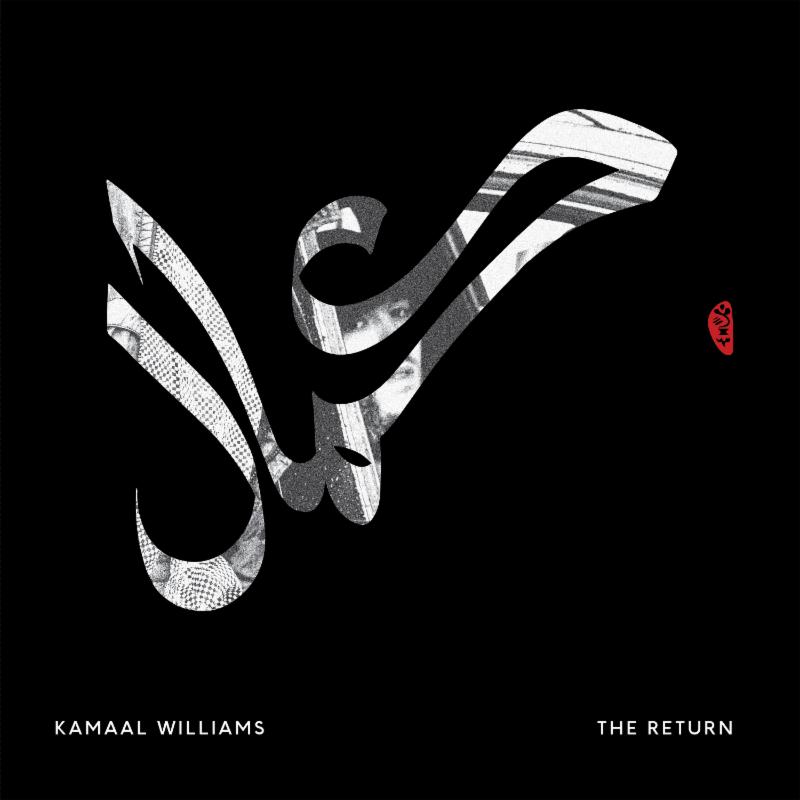
London-based jazz fusion artist Kamaal Williams will release a debut album in May, titled The Return.
Williams is perhaps best known for his Yussef Kamaal collaboration with Yussef Dayes, which resulted in 2016’s Black Focus LP on Gilles Peterson’s Brownswood Recordings. Elsewhere, he’s shared a catalogue of 12″s for imprints such as MCDE, Eglo, and Rhythm Section as Henry Wu, establishing himself as a key figure in his thriving international scene for the past few years.
The Return sees Williams playing keyboards as part of a group that includes bassist Pete Martin and drummer MckNasty, along with sound engineer Richard Samuels. It’s described “a natural evolution” of the Yussef Kamaal project, “mining the influence of visionary jazz but blended with all kinds of texture, sounds, and signals from the over-saturated London streets.”
In the US, the likes of Kamasi Washington and Thundercat have made great strides in opening a whole new dialogue between jazz and hip-hop, drawing in a young, highly engaged new audience in the process. Kamaal Williams mine a similar seam on the other side of the Atlantic alongside other exciting London talents such as Ezra Collective, Ruby Rushton, and Shabaka Hutchings.
The 10-track album will be the debut album released on Wu’s new label Black Focus Records.
Tracklisting
01. Salaam 02. Broken Theme 03. The Return 04. High Roller 05. Situations (Live In Milan) 06. Catch The Loop 07. Rhythm Commission 08. Medina 09. LDN Shuffle 10. Aisha
The Return LP will land on May 25 with “Salaam” streaming in full below.