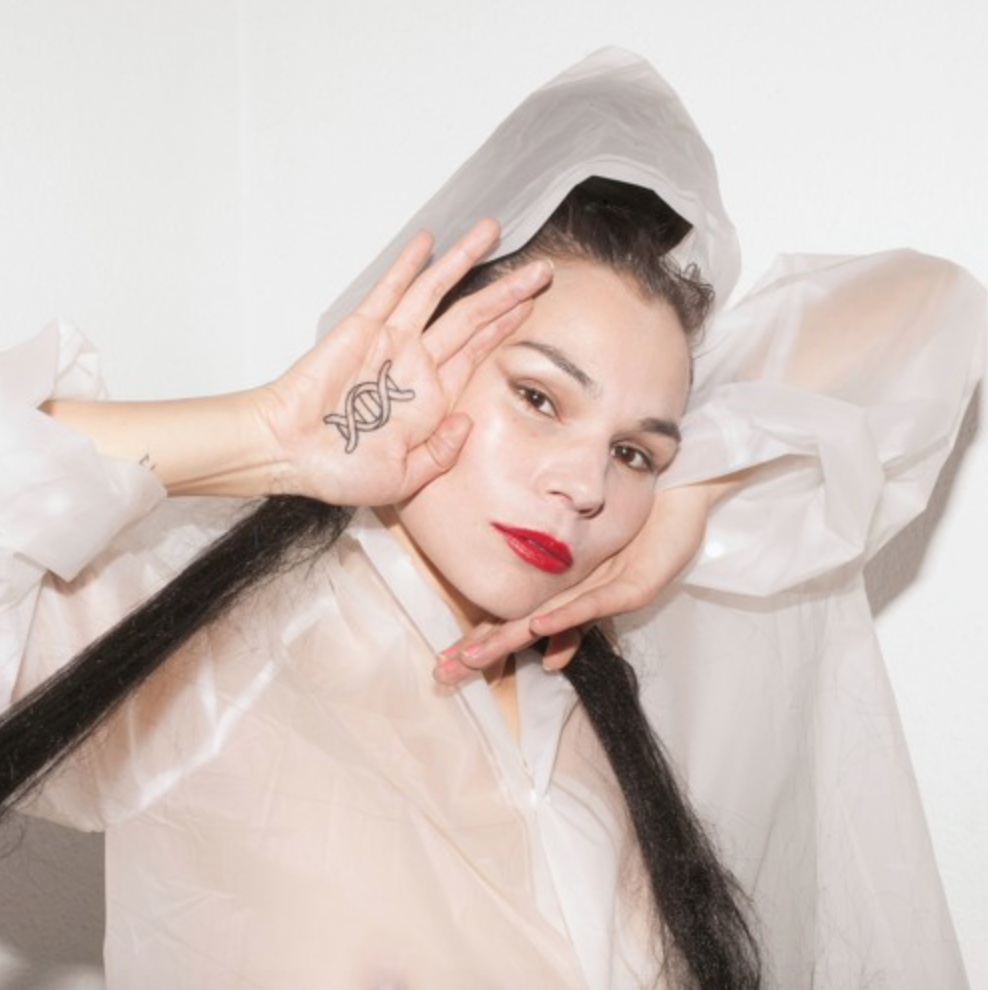
Brazilian-born producer TERR will drop her new EP, Have You Ever, on Permanent Vacation on March 30.
The new EP, which follows a string of releases on Scuba’s Hotflush imprint, presents a collection of cuts driven by TERR’s love of analog gear, combining twisting synth lines with multi-layered textures, hypnotic vocal hooks, and wall-shaking basslines. With its idiosyncratic style cues, Have You Ever furthers TERR’s retro-futurist signature and signals an exciting new talent in house and techno.
Ahead of the release, TERR has offered up a full stream of the dub version of the EP’s title track, available via the player below.
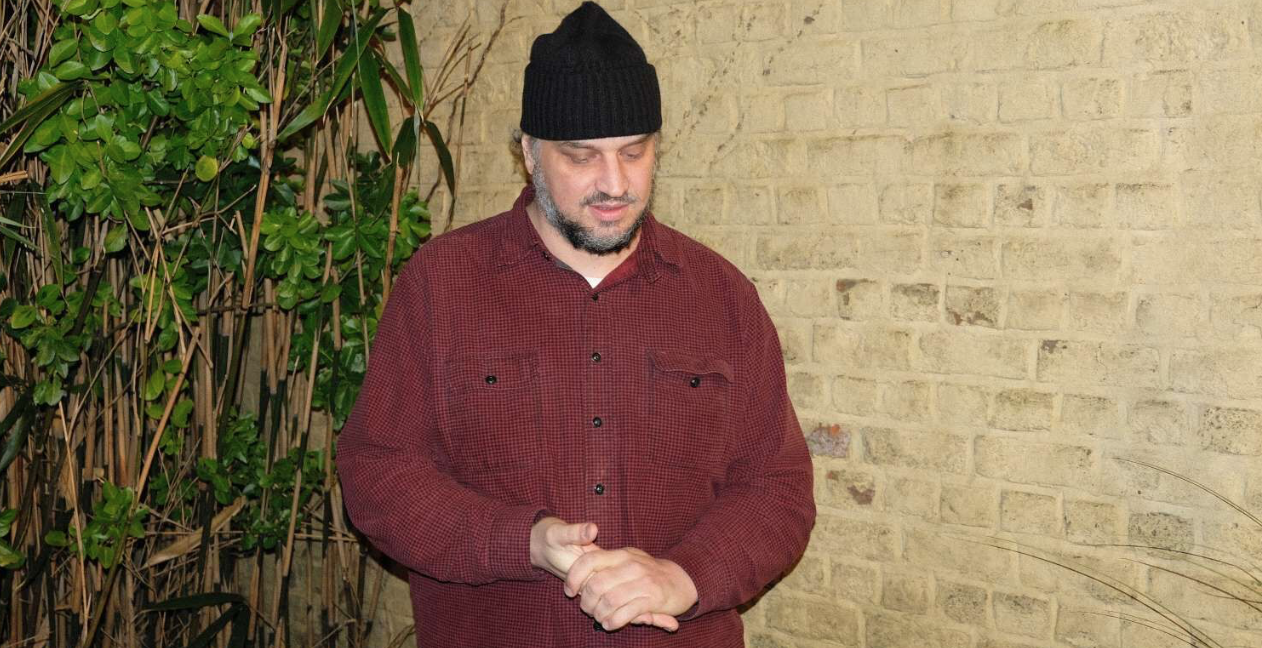
Belgian artist Laurent Baudoux (a.k.a. Lawrence Le Doux) is a musician of many guises. Since the late ‘90s, Baudoux has worked across a range of solo and collaborative projects that have touched on everything from melodic house to IDM, weirdo rap, and ambient, all the while managing to defy classification. From his unorthodox hip-hop trio Baleine3000—which also features Japanese MC Illreme and French DJ Afrojaws—to the frenetic hardcore rhythms of his Sun OK Papi K.O. project, the more you dig into Baudoux’s back catalog, the more you wonder just how far the rabbit hole might go.
The majority of his work under the Lawrence Le Doux moniker has landed on label home Vlek; the latest of which, an LP titled Host, looks to the history of Belgian electronic music, melding digi dub with airy computer-driven house and gritty industrial. It also acts as a perfect starting point to Baudoux’s fascinating sonic universe. His work outside of Vlek, too, has garnered praise. Last year, Baudoux released a well-received LP on John Talabot’s Hivern Discs—which was originally written as a soundtrack to a film about Donna Haraway—and a 12” on La Pacifique Records/Unknown References, both of which explored slightly more accessible yet exciting strains of electronic music.
Lawrence Le Doux will be playing at this year’s edition of Listen! Festival, taking place from March 29 to April 1 in Brussels, Belgium. More information can be found here.
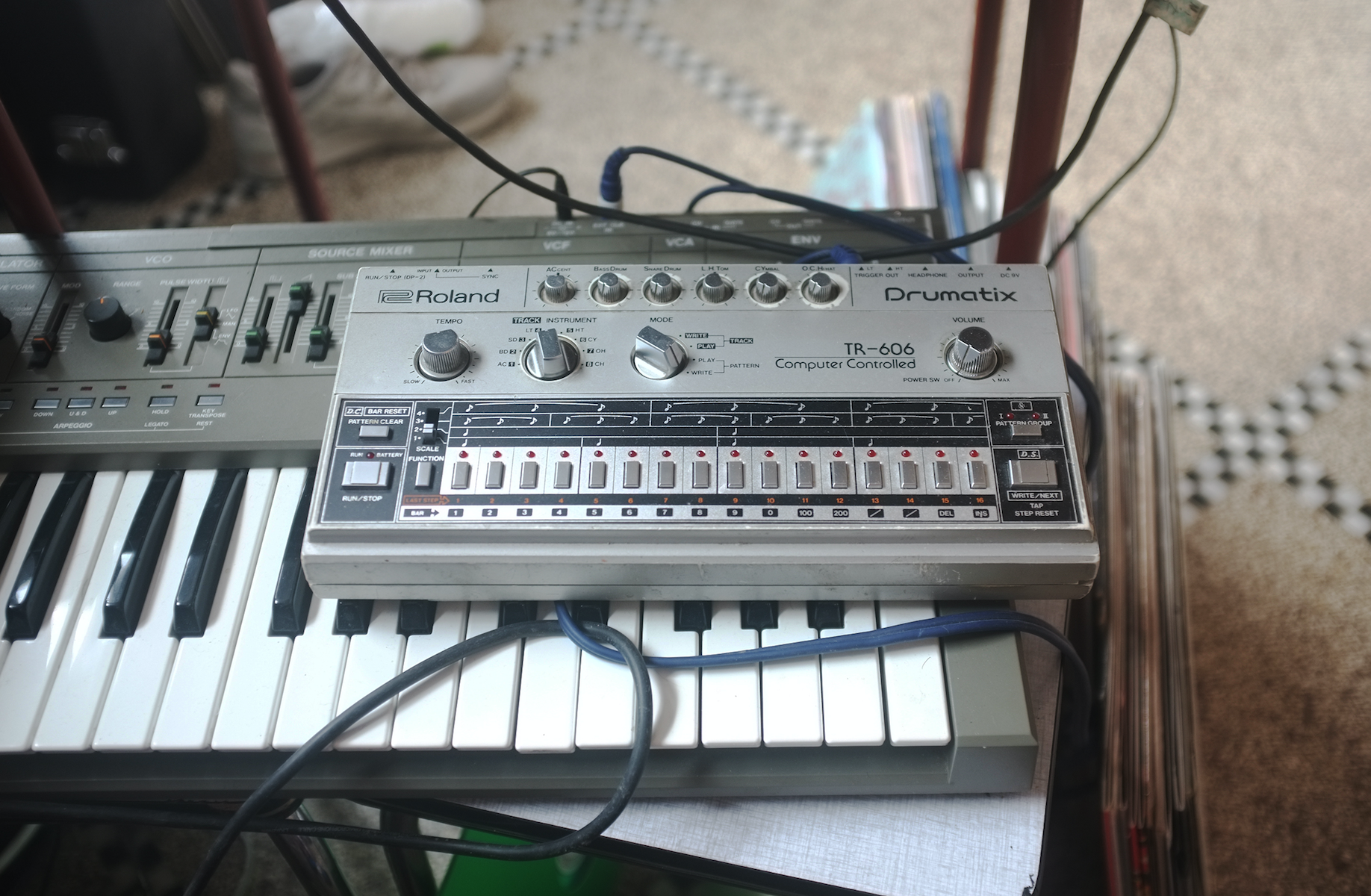
Roland TR-606
I don’t use so much hardware to produce percussions and drums, but this one is precious. It’s the first analogue drum machine I bought; before that, I had a digital Boss DR-660, and now I have a Nord Drum, too. The groove of the 606 machine is as straight as a tuxedo but with a nice combination of toms, hi-hats, and saturation you can get a nice unexpected groove.
My 606 is permanently synced to my computer going through the trustworthy KMS-30 from Korg. I use the TR-606 mainly for the toms, the hi-hats, and the cymbal, but the coolest feature of this box is definitively the double trigger out. It’s perfect to control the sequences of my old analogue synthesizers like the Pro-One, the SH-101, and the Pearl Syncussion.
In the future, I would like to get a Future Retro Swynx to add some shuffle in the groove of this sweet silver box.
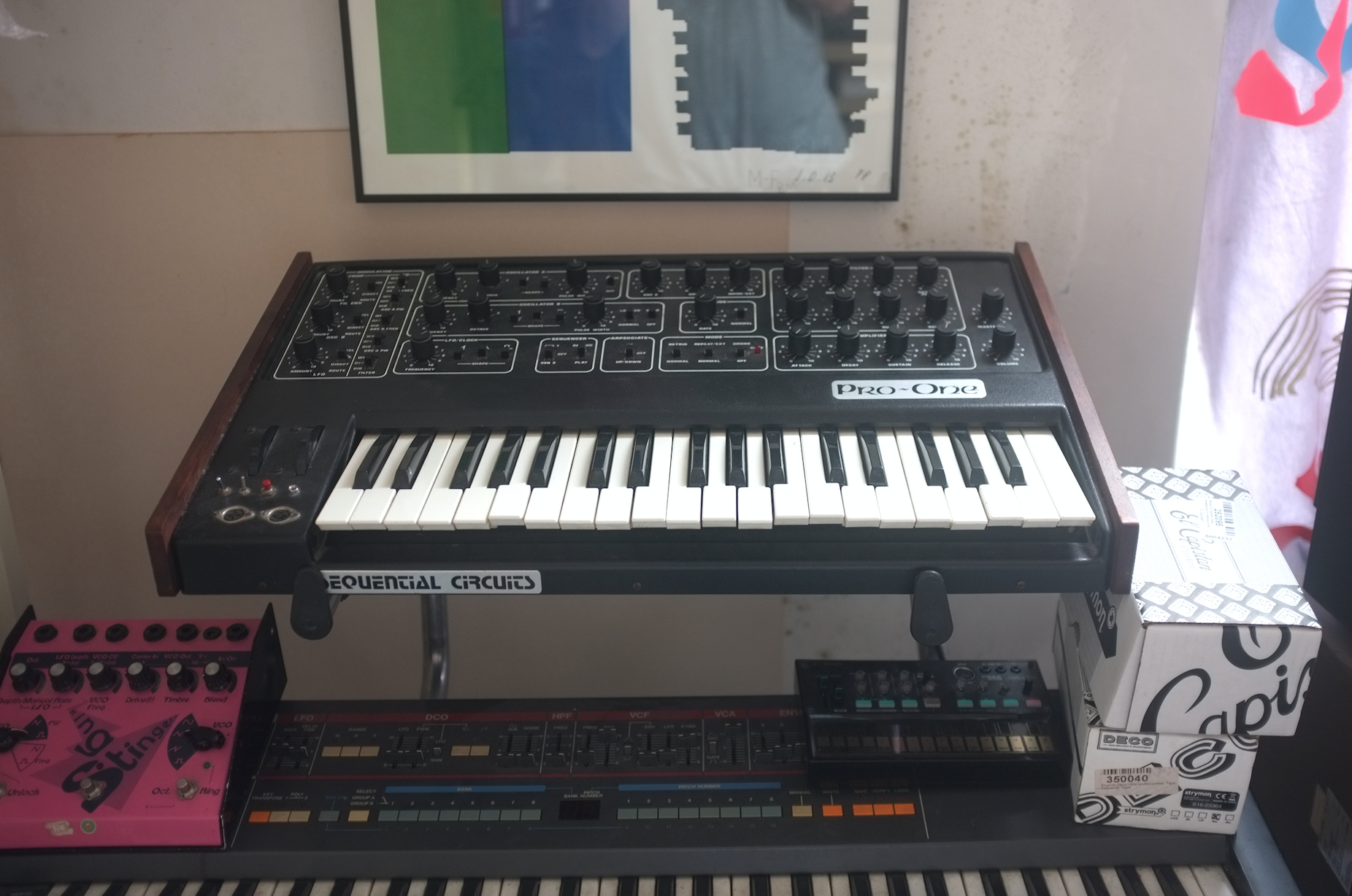
Sequential Circuits Pro One
The first time I heard of the monophonic Pro-One synth was through the Texan new-age artist JD Emmanuel. He used several of them synchronized together. It is mostly known from the new wave scene, used by bands like Depeche Mode or Soft Cell. It shows how versatile this machine is, capable of sweet dreamy melodies but also of aggressive electro basses. It has a basic internal sequencer that I can trigger with the TR-606. I used it quite a lot on the soundtrack I made for the film “Donna Haraway: Storytelling for Earthly Survival” (Music for Documentaries, on Hivern) together with an old Farfisa Mini Compact. Something I’ve added to the magic: inside my Pro-One, on the circuit board, there are images printed of Shiva and mushrooms.
Note: In the background of this picture is a silkscreen by the Belgian artist collective Atelier Pica Pica. I surround myself with art, records, books; for inspiration, it is just as important as the machines I use.
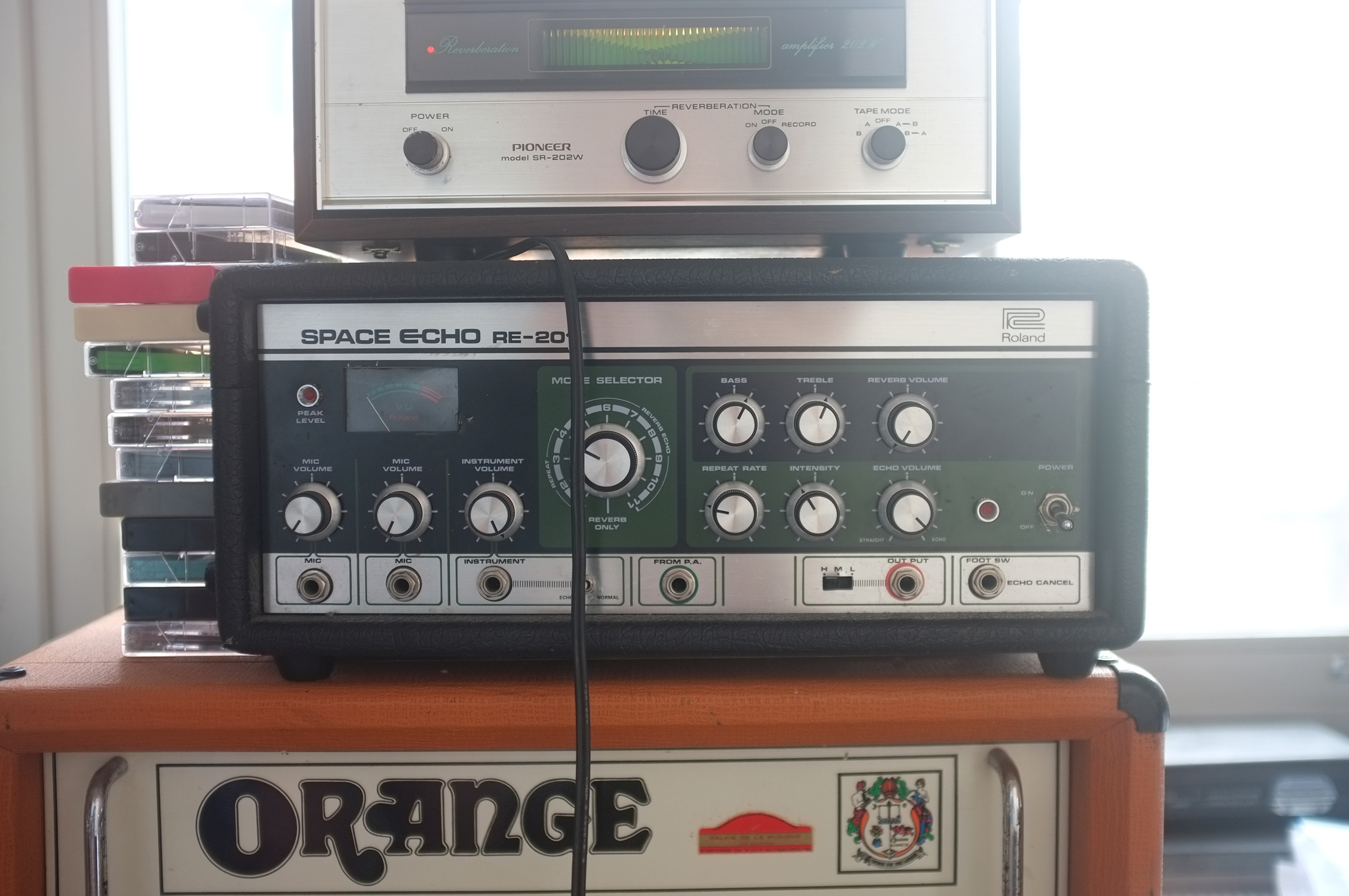
Roland Space Echo RE-201
Dub and especially its studio approach has had a huge influence on my work. The first time I heard about the Roland Space Echo was from the Mo’ Wax scene in the ’90s. It was only after this that I realised that this effect was used by dub pioneer Lee Scratch Perry. I remember that Jan St Werner from Mouse on Mars told me that in the ’90s when they travelled with a Space Echo, they put it in a simple suitcase without any protection in the aeroplane. It’s crazy because it’s as heavy as a rock.
In my earlier productions, I used to get echo with machines like the first AD-80 from Ibanez, the Vestax DDG-1 or the infamous PDS-8000 of Digitech. They’re all useful for different purposes; they have different sound colours, specific background whispers, and varying echo features. But, without a shadow of a doubt, the mother of all is the RE-201 Roland Space Echo. I have used this mixer/echo machine abusively for both studio recording and live performances since day one. Today, because it is quite heavy to travel around with, for the shows I have replaced it with the lovely El Capistan from Strymon.
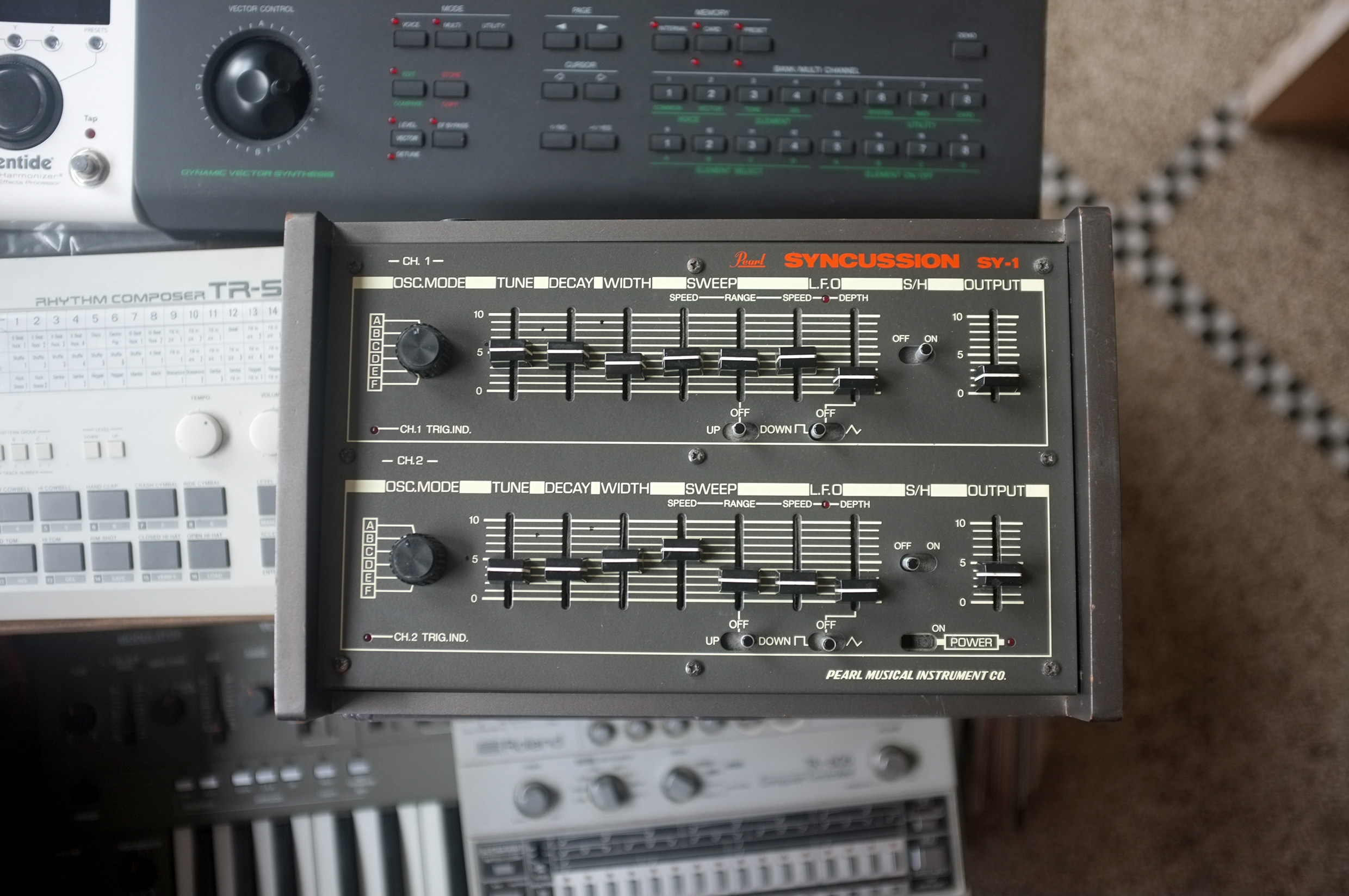
Syncussion SY-1 Pearl
This is a very simple and efficient drum synthesiser. I bought it because I thought that Yukihiro Takahashi from the Yellow Magic Orchestra used one, but I was wrong about that. He used an Ult Sound DS-4. They sound pretty similar, I guess.
This thing is good for a lot of stuff, for example deep kick drums, which are maybe deeper than the 808’s, but also basslines and idiosyncratic percussion. Almost all of my kick drums are done with it. For example, on the track “Tronf 424” on my last album (Host, on Vlek) you can hear it in the random percussion elements and bassline. It has this industrial kind of sound, powerful and percussive.
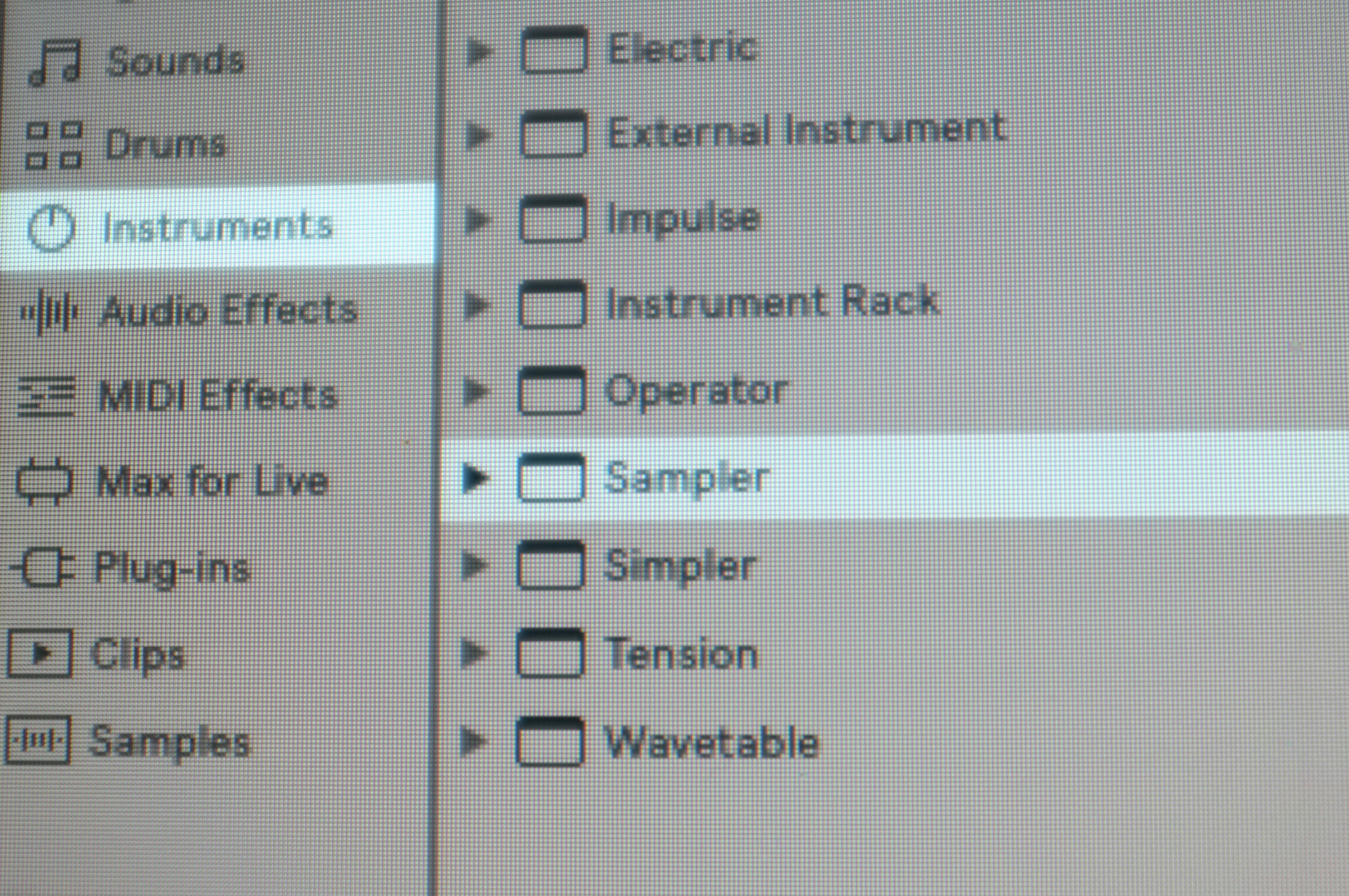
Simpler and Sampler, Ableton Live
I could send dirty sex messages to Ableton Live every day, because I dig this program so freaking much. Simpler and Sampler may be the most important parts of my working process. First I jam and record, but then everything gets cut, screwed, and edited here. Basslines, rhythms, melodies, synths, you name it, they go through this tool. It’s like the clean haircut of the production process.
Laboratorio de Electrónica Visual (a.k.a L.E.V.) 2018 has revealed its final plans for its upcoming 11th edition.
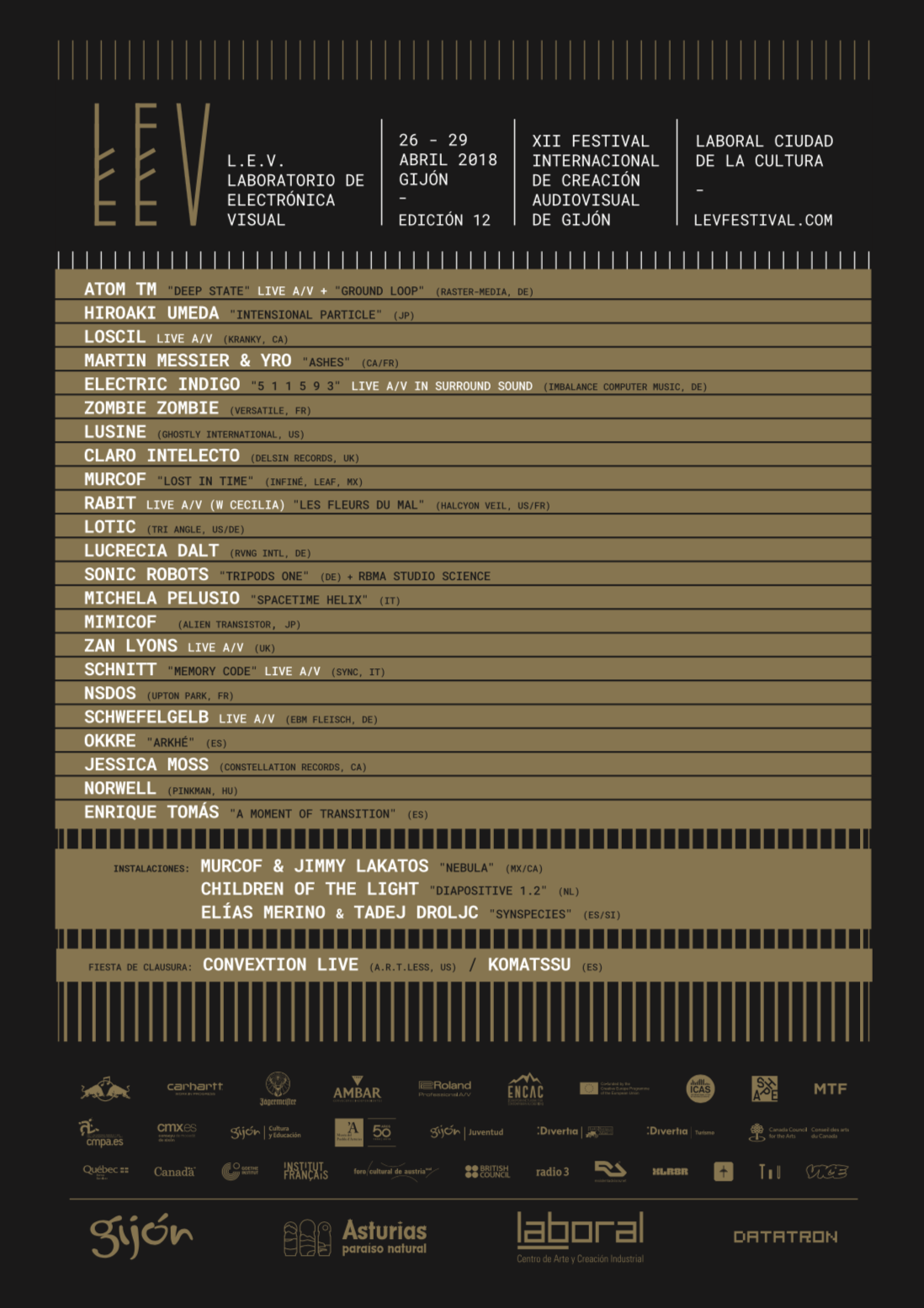
L.E.V., a project co-produced by the Government of the Principality of Asturias, Gijón’s Town Council, LABoral Centro de Arte, and Datatrón Collective will return to Gijon, Spain from April 26 to 29, featuring a lineup full of innovative international acts that “aim to go beyond classic formats within the fields of sound and vision creations.”
Included in this final announcement is Claro Intelecto, who returns to L.E.V. 11 years after his performance at the first edition, this time showcasing his new album, Exhilarator. We’re told to expect “a cinematic album reflecting very different moods and textures, where moments of heavenly beauty combine with windy grooves of frozen techno and heavy basses.”
Attempting to track the evolution of new audiovisual languages, L.E.V. will also present a selection of projects pushing the limits of digital creativity, including SCHNITT, an artistic project by Amelie Duchow and Marco Monfardini who will present MEMORY CODE, an A/V performance based on visual memory. The project works with an image stored in the human mind which will be remembered and recreated combining sound and visual elements.
Sunday, April 29 will see performances from Lotic and NSDOS. The former will showcase POWER, his new work, to be released by Tri Angle in July. Meanwhile, French artist NSDOS will present his own take on techno using futuristic instruments built from old audio converters, Gameboy emulators, and assembled metal parts.
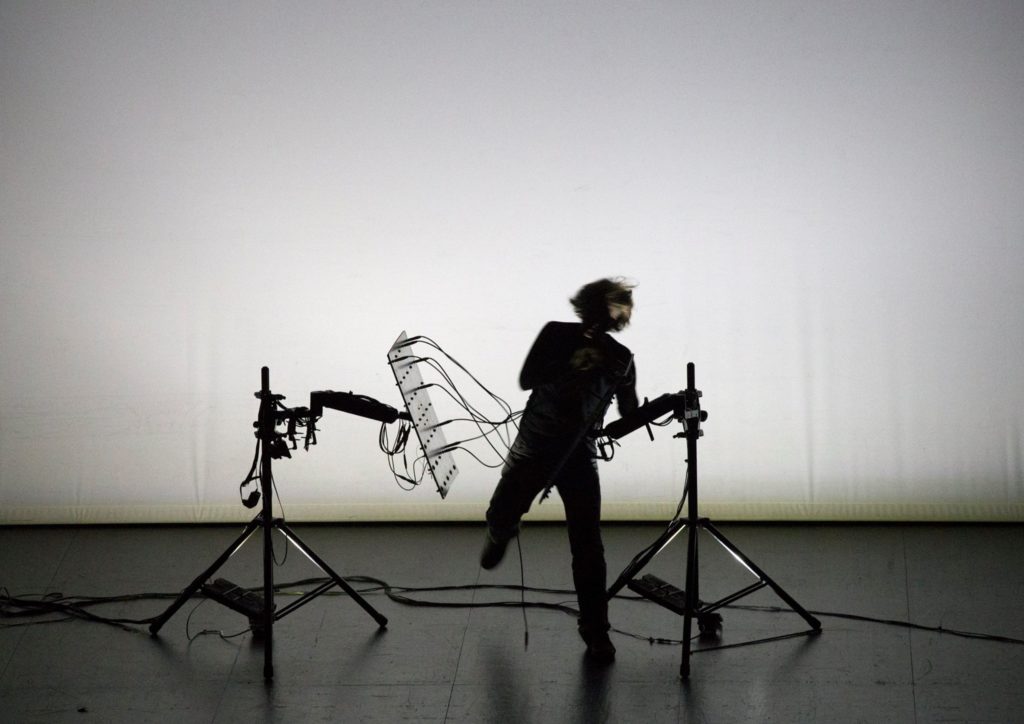
Elsewhere, Sonic Robots will partake in Studio Science, a series of workshops and educational videos created by Red Bull Music Academy, focused on showing the creative processes of some of the most creative minds in contemporary electronic music.
Finally, as part of ENCAC (The European Network for Contemporary Audiovisual Creation), a network L.E.V. has helped to found and promote with LABoral Centro de Arte, there will be two worldwide premieres shown in an installation format. The first is NÉBULA, a large-sized installation created by Murcof and Jimmy Lakatos in order to study the relationship between light and cosmos. SYNSPECIES [Spaceless latitudes] is a collaboration between Elias Merino and Tadej Droljc. There will also be a performance by Spanish artist Enrique Tomás.
This year’s edition takes place from April 26 to 29 in Gijon, Spain, with more information, including tickets and the full lineup, available here.
Riding from Keflavik Airport to Reykjavik, I became hypnotized by the landscape’s bleak, desolate beauty—where lone, deserted concrete structures dot the barren, snow-covered rocky hills. Before approaching Reykjavik proper, you’re invited into the country’s folklore with signs reading “Viking Town” and “Elf Town,” juxtaposed by modern, brutalist industrial structures and towering glass monoliths. It’s a fitting arrival to Sónar Reykjavik, the experimental music and arts festival taking place in one of the world’s most intriguing country’s.
Iceland’s stark beauty, as I would come to realize, is reflected in much of the music presented at Sónar Reykjavik, which prides itself on fusing an international presence with a beguiling local artist offering. The artists assembled for this year’s edition mostly sit in the experimental realm, from the warped rap fusion of Icelandic artists Lord Pusswhip, Reykjavíkurdætur, and JóiPé and KRÓLI, to Ben Frost’s searing ambience and the confounding rhythms of Jlin—all fitting soundtracks to a region full of geographical wonders.
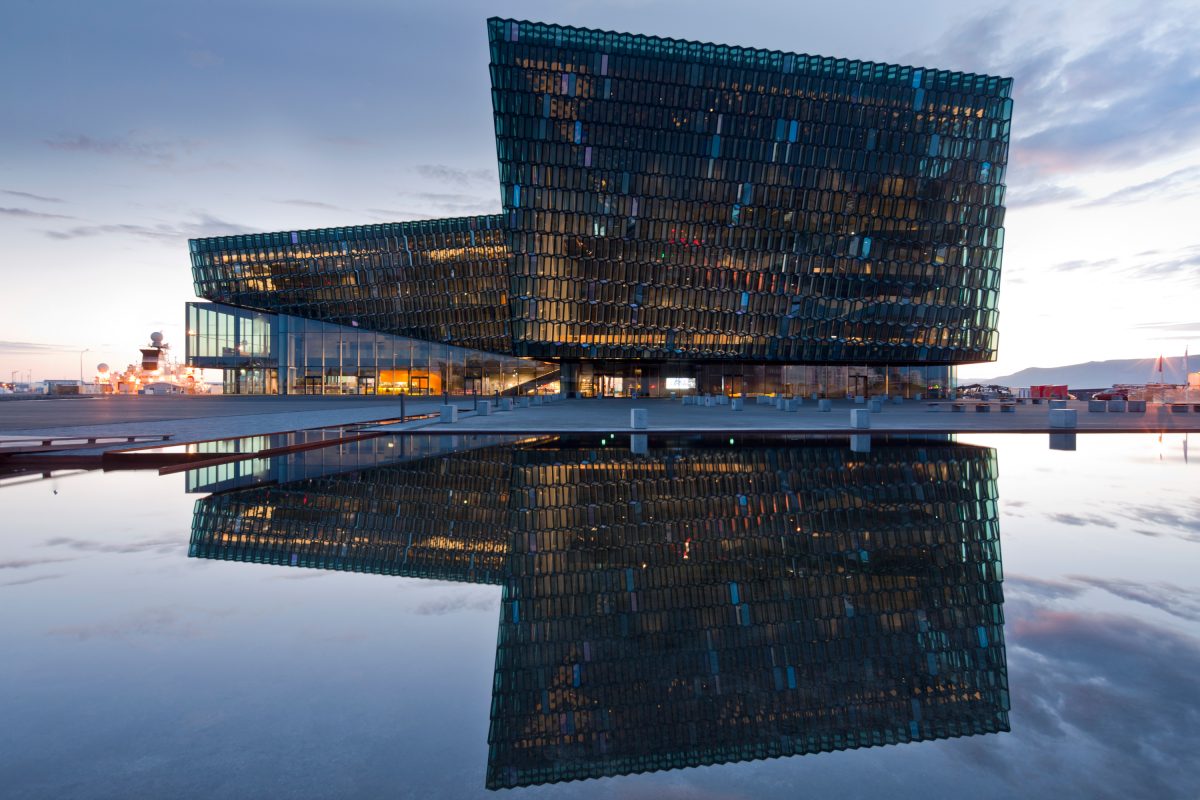
The official programming takes place at the Harpa, an alluring glass structure that acts as the festival’s only multi-stage venue. The building’s towering presence cuts an awe-inspiring figure with the ocean and snow covered mountains as its backdrop, and for a first time visitor to both the city and Sónar, it immediately roused excitement for the approaching festivities.
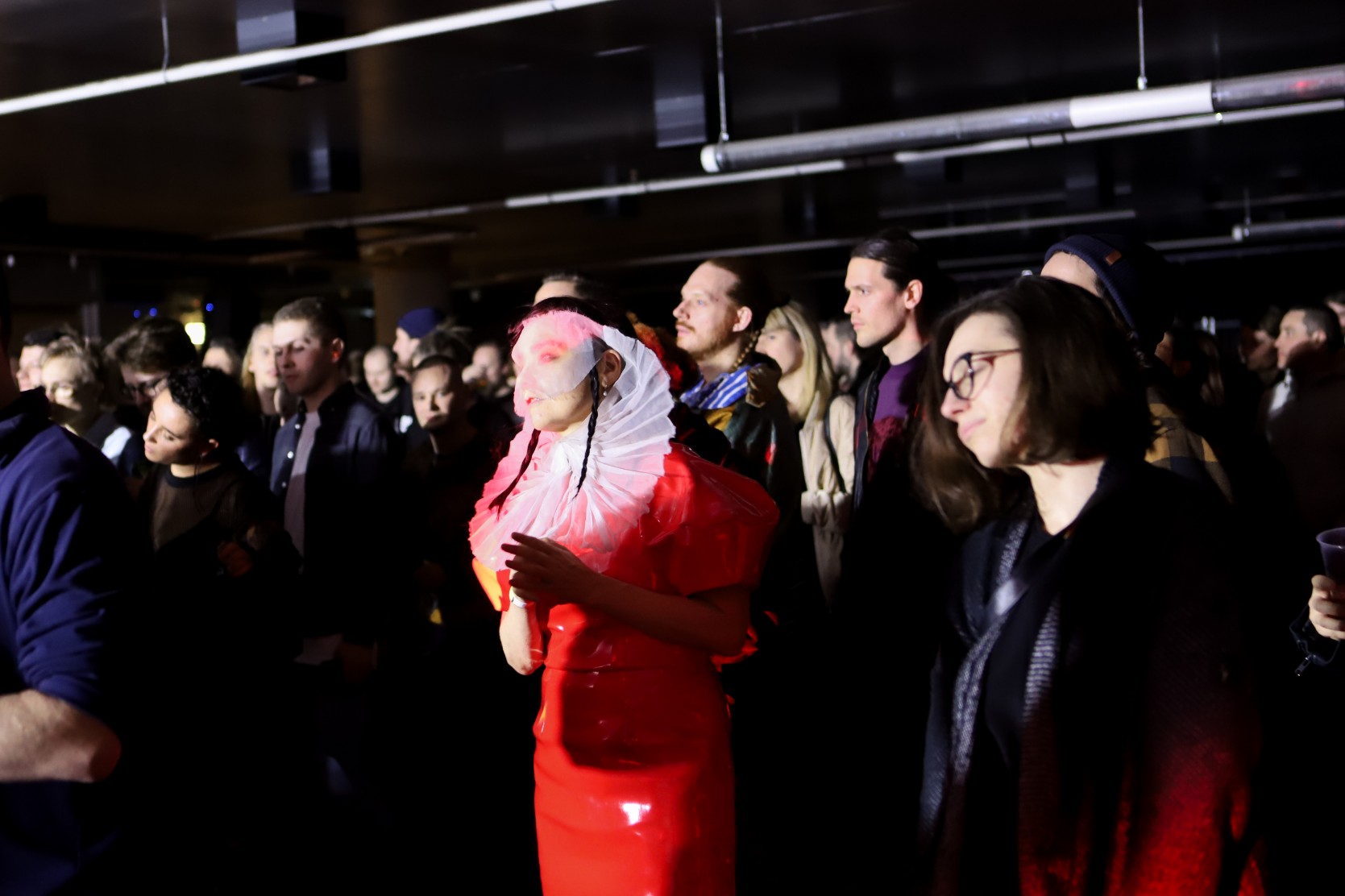
Still in its infancy, Sónar Reykjavik isn’t without its teething problems, to be expected given its remote location and Iceland’s modest population. On Friday, the festival’s opening night, attendance was noticeably low, which hampered the atmosphere and vibe a little—it did, however, make moving around the venue easier. Secondly, the sound at the RBMA stage was subpar. Lafawndah’s achingly beautiful performance, for example, was hampered by low volume. That being said, and to the festival’s credit, these issues had been ironed out by the second day, promising for the years to come.
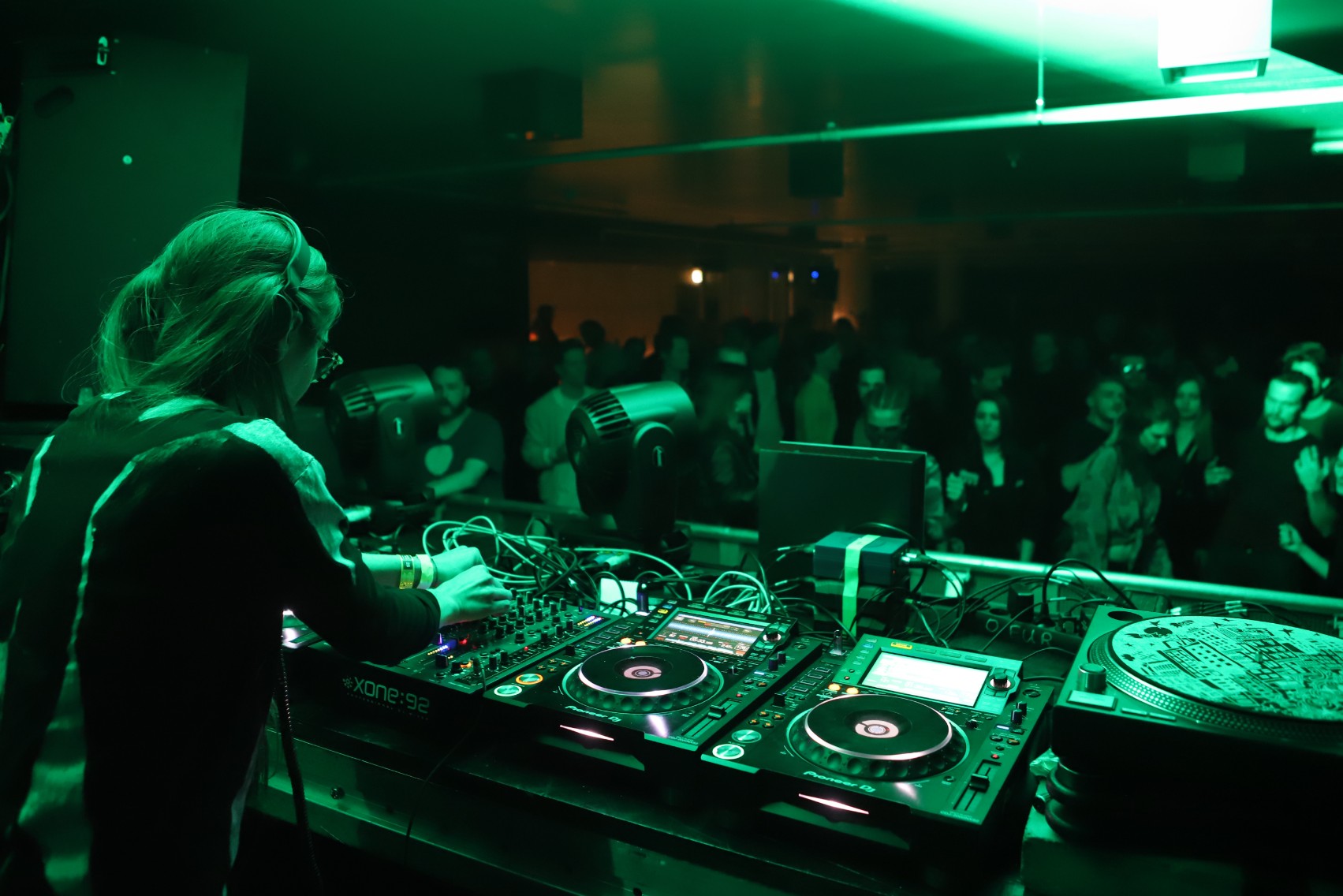
The sound wasn’t an issue at the three other stages, including at SonarLab, presented by Resident Advisor, where Lena Willikens delivered one of the weekend’s best sets. Her skill at mixing disparate styles in a fluid and cohesive manner is something to note; across her one-and-a-half-hour time slot, she moved through electro, techno, and wave-influenced club cuts in a subtle and graceful manner that had the whole crowd transfixed—and dancing wildly, mind you.
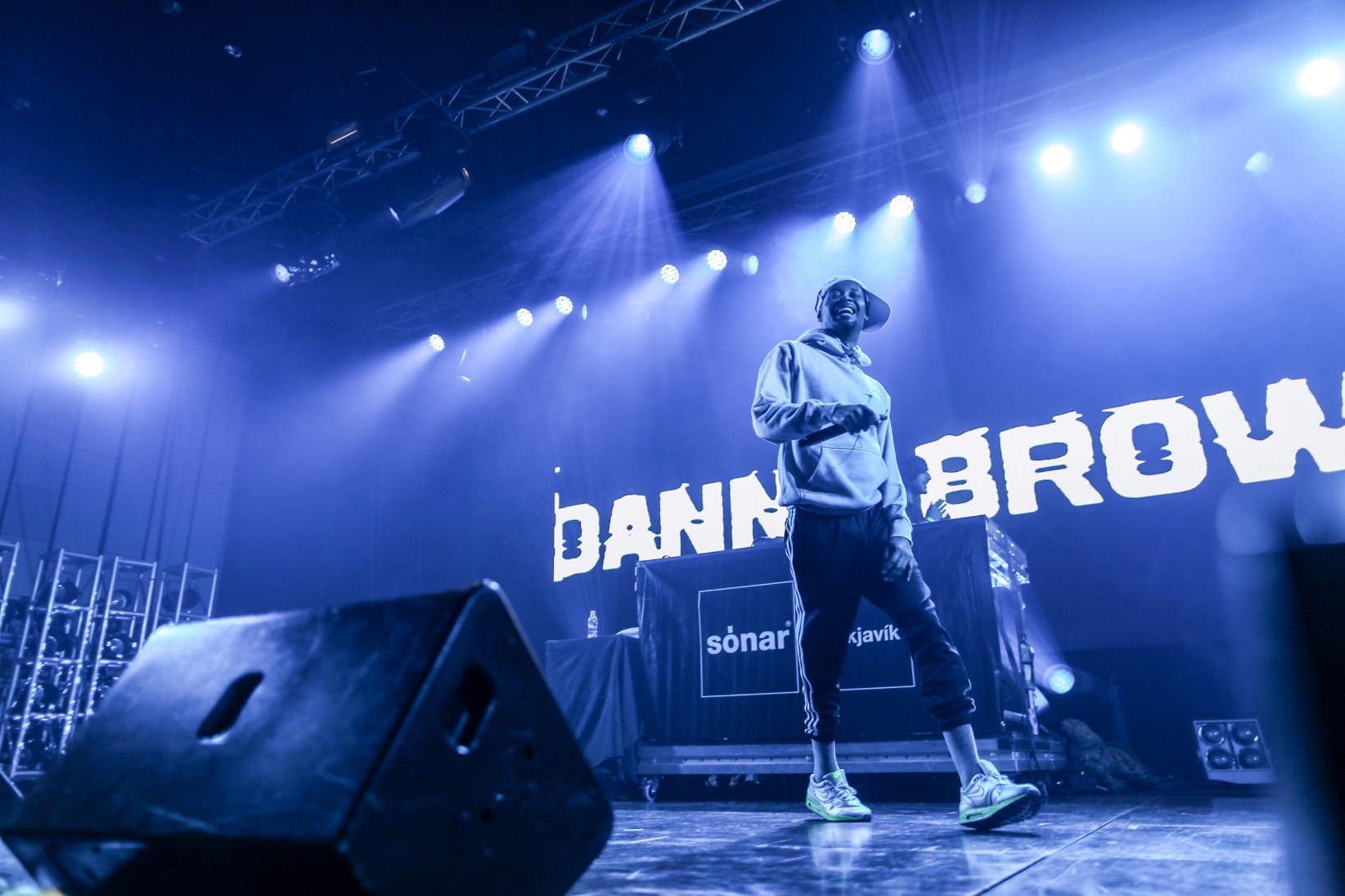
Unfortunately, I didn’t get to see Jlin, but by all reports, she too played a standout set that had everyone in attendance—including Björk—flailing their limbs in uncontrollable spasms. Back up in the SonarClub, the festival’s biggest room, Danny Brown captivated an excited crowd who, after Brown announced it was his birthday, sung the Detroit rapper happy birthday—much to his delight and surprise. Although his abrasive persona isn’t for everyone, Brown’s stage presence and charisma is hypnotizing and, for the closing set of the festival’s first night, an impressive and inspired booking.
As alluded to earlier, one of the ace’s up Sonar Reykjavik’s sleeve is the region’s beauty and its harsh, old-worldly history. Most international attendees, myself included, had a range of extracurricular activities and tours planned outside of the festival’s offering—most of these were recommended by the festival, too, encouraging local immersion. From renowned attractions such as the blue lagoon to the natural geysers, the countless waterfalls, the golden circle tour, and lava caves, Iceland is a country with a seemingly endless amount of adventure and exploration on offer. Even a walk around Reykjavík harbor presents views rarely seen anywhere else in the world. For foodies, too, the city offers a long list of establishments serving an array of fresh fish and locally sourced condiments—the Bryggjan Brugghús, located in the harbor just up from the Harpa was one such place worthy of mention.
After somewhat of a slow start, Saturday proved to be the most impressive of the festival’s two-day run and, arguably, the most musically diverse. The harsh, powerful electronics of Ben Frost kicked things off, with the Australian-born, Reykjavik resident creating confronting yet engrossing waves of sound. Armed with an array of synthesizers, controllers, and a guitar, which he utilized to draw droning feedback from the speaker stack, Frost delivered a set that played out like a score to a harsh Icelandic winter. Next door in the SonarHall, as Underworld were halfway through playing their third track to a jam-packed room, 10-member female hip-hop collective Reykjavíkurdætur (which translates as “Daughters Of Reykjavík”) stepped up. Although I couldn’t understand the lyrics, the group drew me in with their alluring performance, which, as I could concur from the recognizable beats and melodies, featured covers of popular hip-hop tracks alongside a raft of originals. Their performance and ideology, which looks to “rebel against conservative misogynistic values of modern society,” was indicative of a strong female presence at the festival, a shift towards equality that resulted in a refreshing energy and numerous scintillating performances.
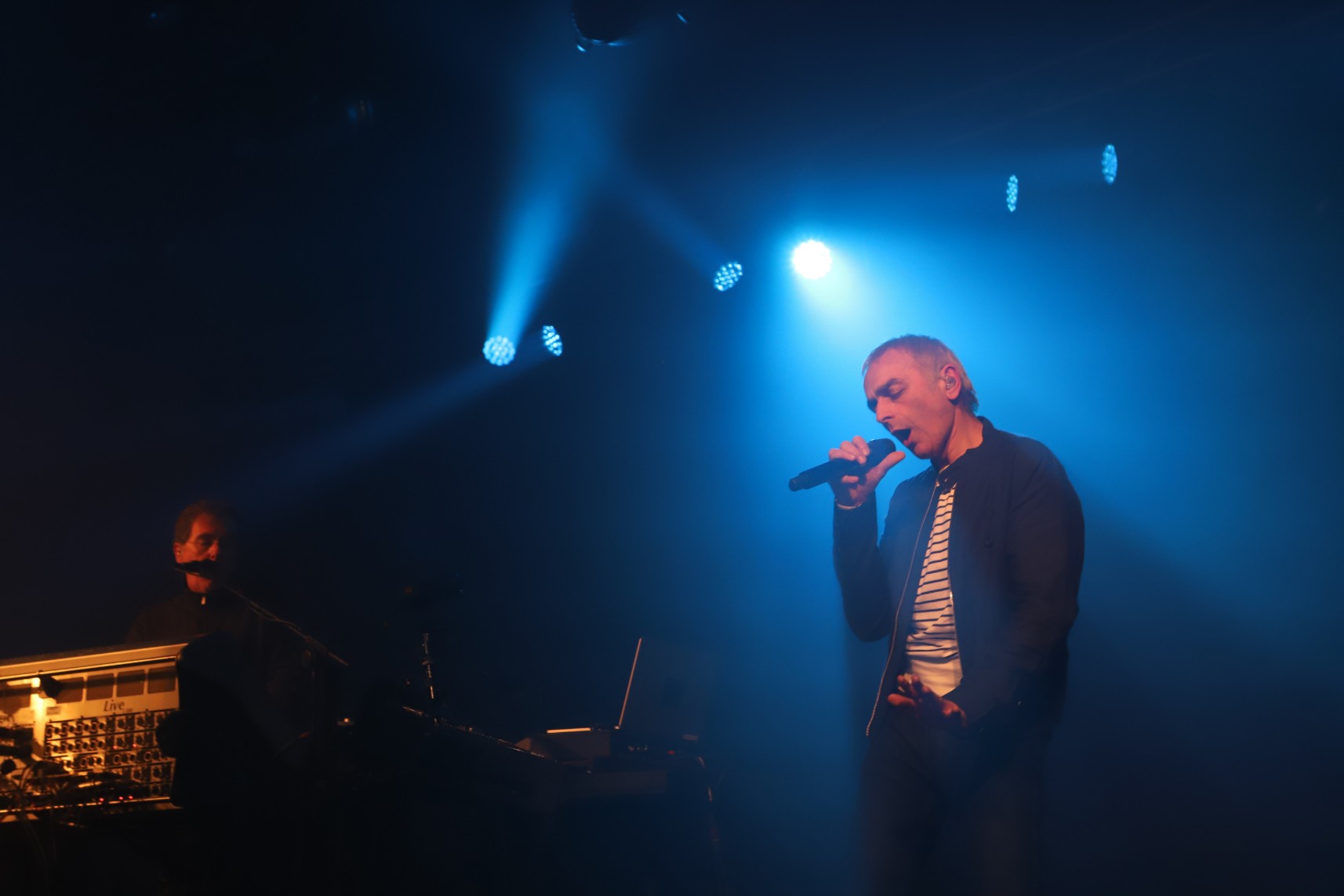
Returning to the city for the first time since 1994, Underworld showed once again why they are so revered. With the ever-enigmatic Karl Hyde cutting shapes and Rick Smith arming an array of gear, the duo spun through classics such as “Dark & Long (Dark Train),” “Cowgirl,” and “Jumbo,” much to the glow-stick-welding crowd’s delight, before closing on their notorious cut “Born Slippy,” which, as Hyde explained, was the first time they had played it in Iceland.
After a short break, proceedings were handed over to local icon Bjarki to close the SonarClub stage—a monumental task after Underworld. Backed up by a Blue Man Group-like cast of masked dancers and TV-faced mannequins, the bbbbbb label-head patiently built his set with a raft of broken beat cuts, warped techno, and out-there breaks. With each new track and energy shift, Bjarki conjured more people through the doors after the mass exodus after Underworld, and by the midway point of his set, it was packed with swaying heads and shuffling feet.
Down in the SonarLab, it was left to Cassy and local DJ Yamaho to close the festival proper—every year, as a direct reflection of its ethos, Sonar pairs an international guest with an Icelandic DJ to close the festival. Over their two-hour time slot, Cassy and Yamaho delivered cut after cut of groove-laced house and techno, showing just how seamless and enjoyable B2Bs can be when they work, with tracks like Mr. G’s “Ben & Gerd (Killin It M Day)” getting a rapturous response. Once the last track played out at 4 a.m., thunderous applause and calls for “one more track” filled the car park; although, this time, that was that and Sonar was done.
As far as destination festivals go, you’d be hard-pressed to find one with as wide an offering as Sónar Reykjavik. For those looking for a welcoming party atmosphere, you can find it there; for those after a stimulating mix of experimental music, that too is there; and for those after adventure and exploration outside of the club, Reykjavik and its surrounding region has it in spades. Even with the slight drawbacks mentioned above, this year’s edition of Sónar Reykjavik was one of the most enjoyable and memorable festival experiences I’ve had in some time, and one I’ll be returning to for years to come.
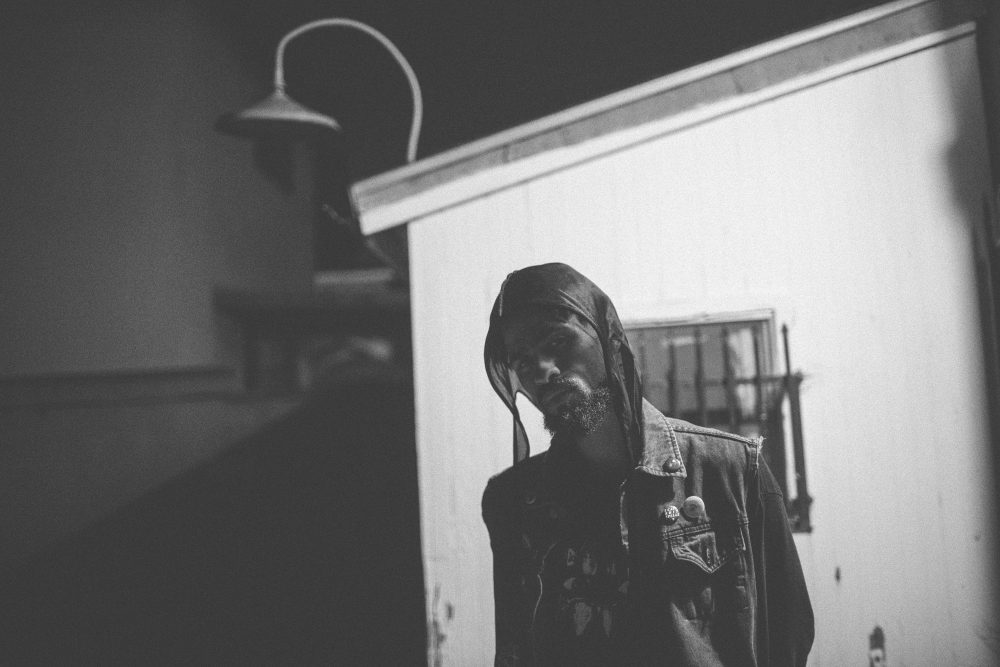
Tomorrow, Philadelphia rapper lojii will release his latest album, lofeye, via Brooklyn label Youngbloods.
lofeye follows lojii’s 2017 album, due rent (released on Portland’s Fresh Selects), which explored a “day-in-the-life story of lojii struggling to make ends meet as a black man in America.” Expanding the narrative, lofeye will explore lojii’s life-to-date, as he explains:
“lofeye is about working with limited resources and making the highest quality life out of what the fuck you got. It’s when you’re ‘lo-fi’ by circumstance (not just for aesthetic) but your aim is always higher. In essence, this is an LP about being rooted in the dirt you come from but reaching for the sky above you.”
The tracks on the album touch on boom bap, house, electronica, grime, trap, and punk, with production credits going to Sadhu Gold, Marc Rebillet, Repeated Measures, HeapRize, and Soulection’s NiceGuyxVinny. Over the 14 tracks, lojii delivers his message via his notoriously smokey, avant-garde rhymes, flowing from subtle hooks to devastating verses.
In support of the album, lojii has offered up the album’s opening cut as one of today’s XLR8R downloads, available via WeTransfer below.
01. DNA ☤ ∞ 02. Dislocation Of The Alpha 03. Intentional Dreams 04. Aetherave 05. Hyperlands 06. Inner State Of Alchemy 07. Light Luxury 08. Genesis Of Ohm 09. Time (Tool) 10. Time Is The Illusion Of Solidity 11. Cell Stems Spa
Daniel Avery has today shared new track “Projector” alongside a video created by with London design studio Flat-e. The track is taken from the UK producer’s new album, Song For Alpha, released April 6 on Phantasy worldwide and Phantasy/Mute in the US & Canada.
The video marks the second time Avery has teamed up with Flat-e, following their first collaboration on the glacial animated video for “Slow Fade.” At the time, Avery commented, “The thing I admire about Flat-e is that they recognise the beauty in mystery. They create worlds into which you can fall with your eyes closed.”
Speaking about the most recent visual, Flat-e said, “We created the video for “Projector” by layering animations of crystalline structures, then manipulating them digitally until they appear almost fluid.” Colourful shards of refracted light reflect the track perfectly, bringing its shimmering synth stabs and icy percussion to life.
Song For Alpha is Avery’s exploration of the space in which home listening and club music intersect. “I’ve become increasingly interested in those moments in a club when the outside world becomes little more than an inconsequential thought at the back of your head.”
Slowdown represents the second half of a two-piece project, following on from the first half, Upsweep, which was released in October 2016. On Slowdown, Epperson presents two distinct versions of each of the five tracks—one stripped-back and minimalist (Iris), and the other a shimmering pop interpretation (Amelia). The music is tense, immersive, and visceral, fusing elements of folk, jazz, and synth-pop into dream-like trips.
Following the album release, Epperson has shared a tense and unsettling short film—which was co-directed by Epperson and Jake Saner—that pairs her track “20/20” with a narrative that follows two protagonists through a series of engrossing scenes.
You can watch the short film via the player above, with the album available here.
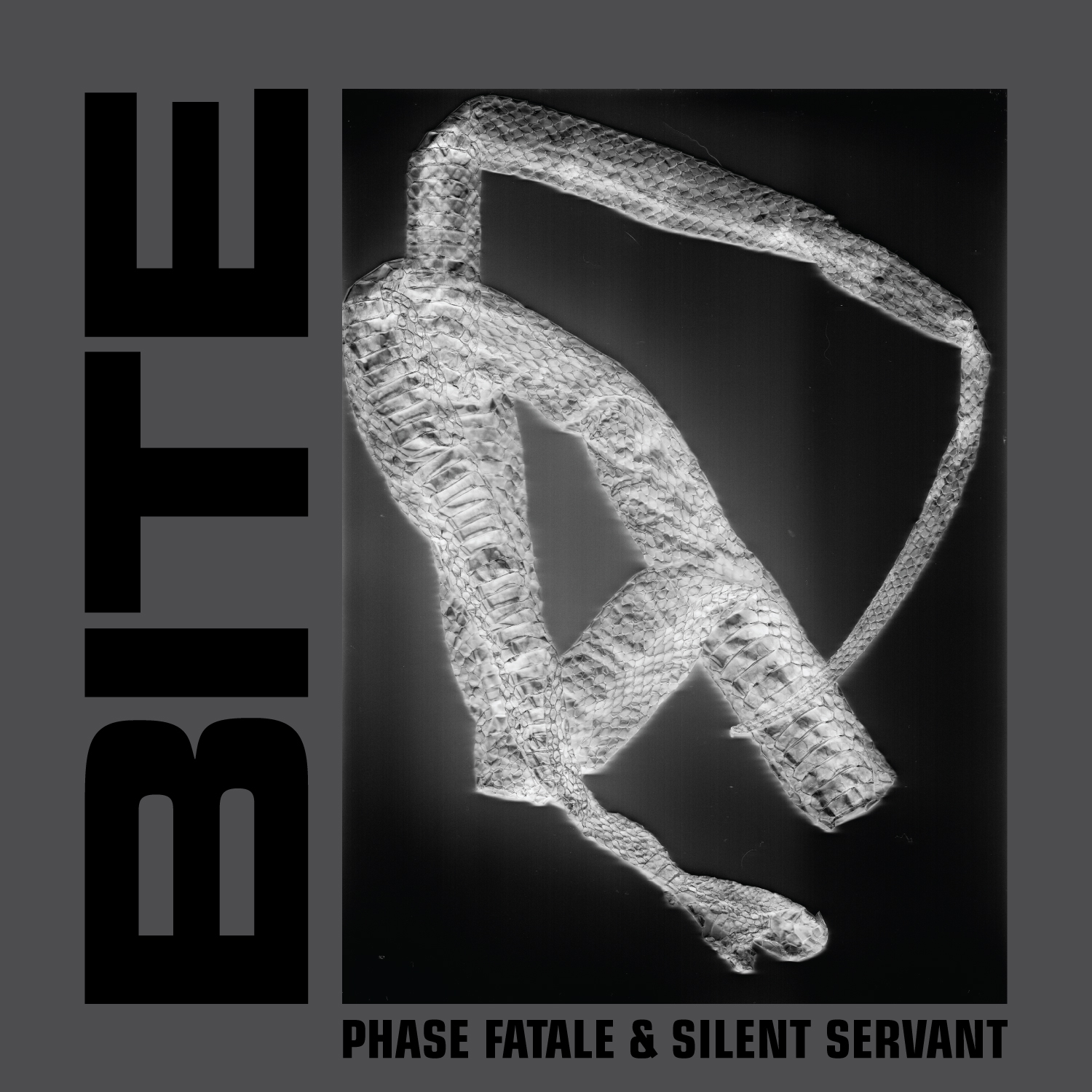
Phase Fatale (Hayden Payne) and Silent Servant (Juan Mendez) will release a collaborative EP on March 26. The duo started their collaboration in 2016 performing together live at several Jealous God showcases across Europe, such as Berlin Atonal, and then working together on Payne’s Redeemer (Extended Mixes) 12” from his album on Hospital Productions last year. Their upcoming Confess EP, on BITE, is a studio documentation of those aforementioned live performances and “harnesses the cathartic energy of the stage into a physical medium,” the label explains.
In support of the EP, the pair have offered up “Confess” as a free download. It’s a ruthless track that crushes together bass-heavy broken beat rhythms with straight-ahead kicks and snares. Grab it now via the WeTransfer button below.
Phase Fatale (Hayden Payne) and Silent Servant (Juan Mendez) will release a collaborative EP on March 26. The duo started their collaboration in 2016 performing together live at several Jealous God showcases across Europe, such as Berlin Atonal, and then working together on Payne’s Redeemer (Extended Mixes) 12” from his album on Hospital Productions last year. Their upcoming Confess EP, on BITE, is a studio documentation of those aforementioned live performances and “harnesses the cathartic energy of the stage into a physical medium,” the label explains.
In support of the EP, the pair have offered up “Confess” as a free download. It’s a ruthless track that crushes together bass-heavy broken beat rhythms with straight-ahead kicks and snares. Grab it now via the WeTransfer button below.