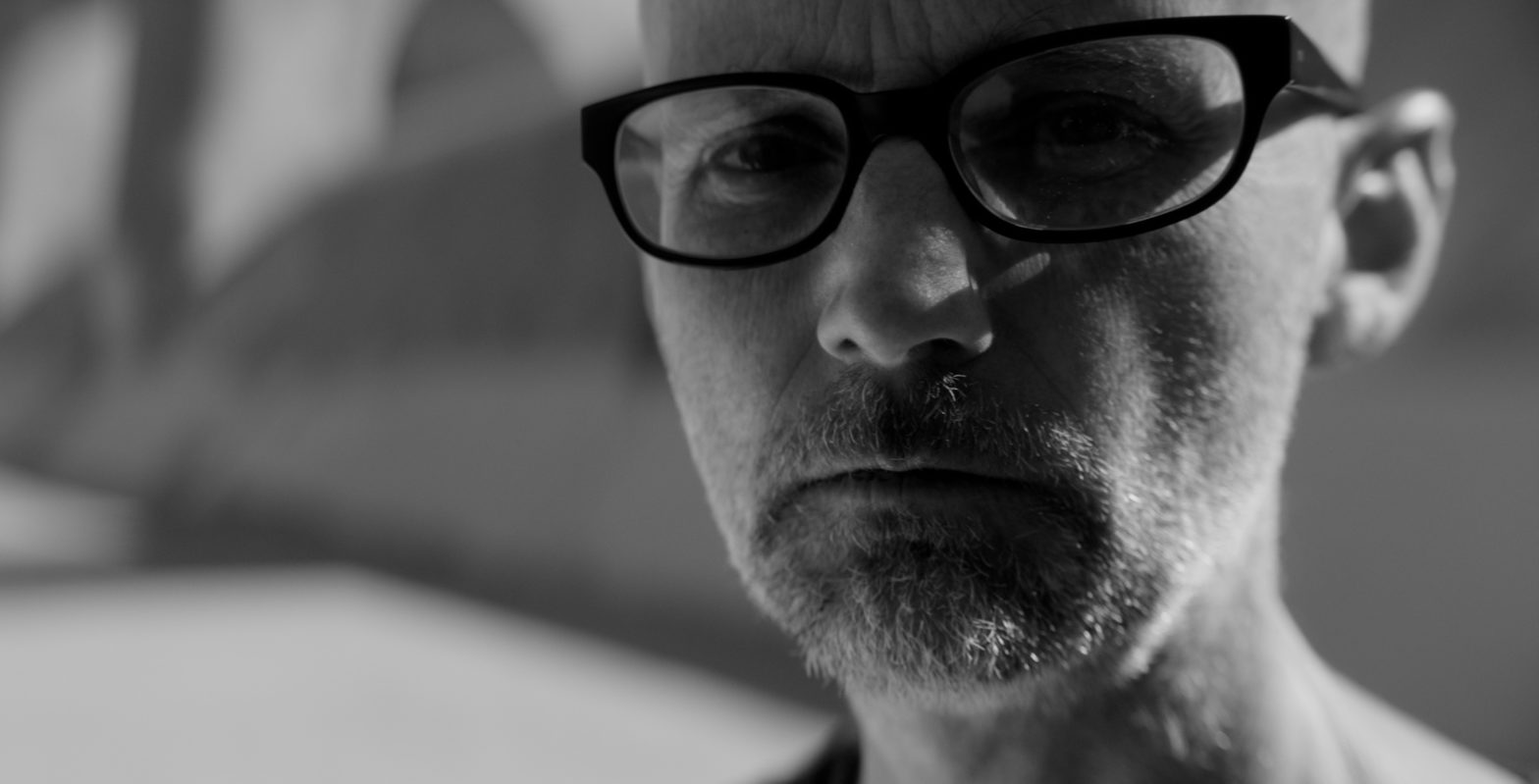
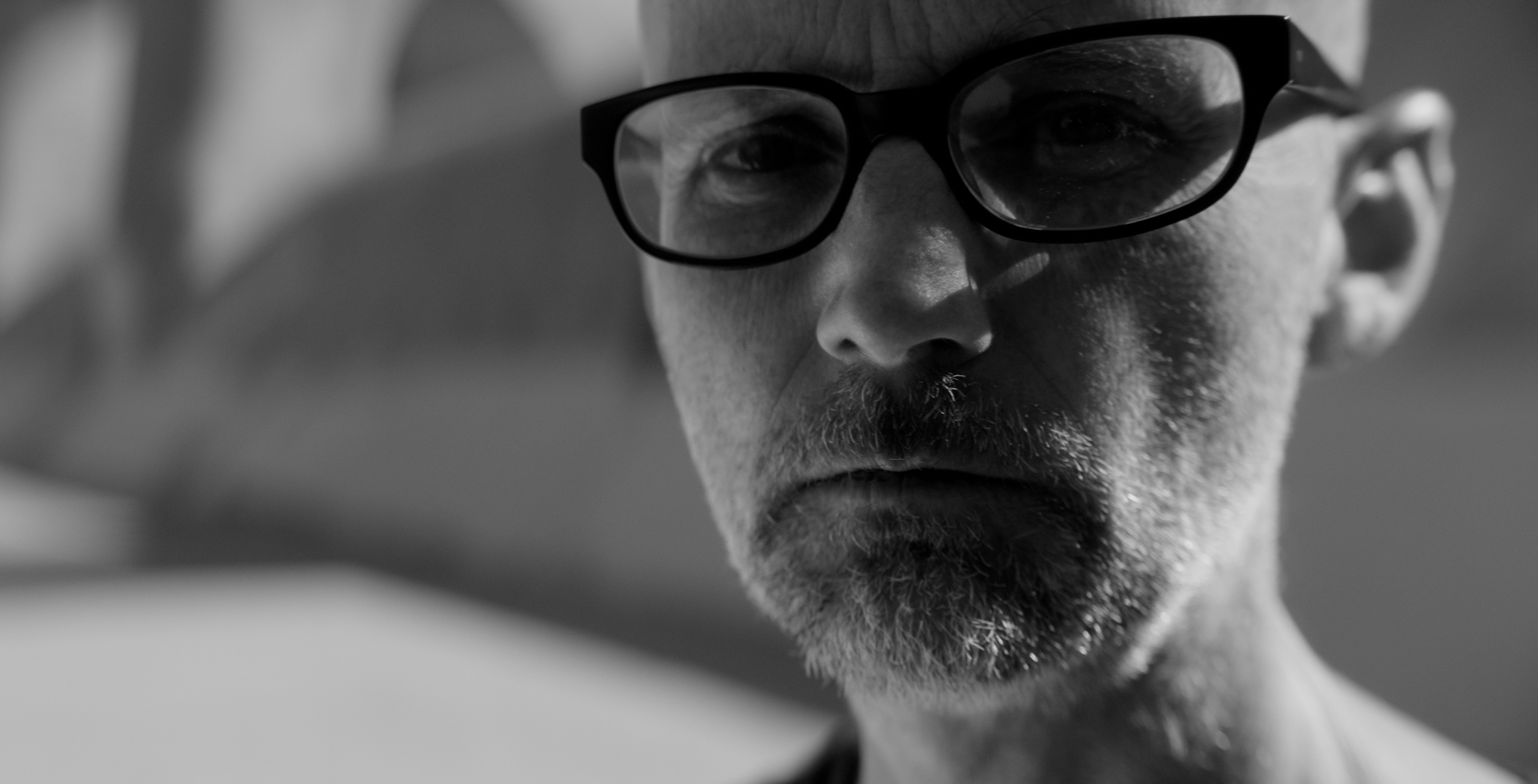
Moby is up next in our Ask The Experts series, with Alva Noto‘s answers to be published soon.
It feels a little unnecessary to pen an introduction on Moby. Suffice to say that the American musician, DJ, record producer, singer, songwriter, and more—real name Richard Melville Hall—is one of the most important and defining figures in electronic dance music, having helped bring the music to a mainstream audience both in the UK and in America. He’s released 14 albums to date, with another on the way, and has sold over 20 million records worldwide—responsible for classics like “Why Does My Heart Feel So Bad?”, “Porcelain,” “Natural Blues,” and many, many more. Over the course of a 30-year career, he’s co-written, produced, and remixed music for the likes of David Bowie, Daft Punk, Brian Eno, New Order, and many more leading names. As a fan of music, it’s almost unthinkable that you won’t have both hear and appreciated his work. It’s a quite remarkable résumé, that only continues to grow.
Moby’s 15th studio album, Everything Was Beautiful, And Nothing Hurt, is situated in the post-apocalyptic wasteland following the Divine’s abandonment of Man. It follows on from Moby’s last studio album, 2013’s Innocents, and finds him returning to “trip-hop, soul, electronics, and even some gospel.” The album also reportedly explores “concepts such as individuality, emotion, spirituality and the brokenness of humanity,” having been recorded in Moby’s bedroom studio in Los Angeles during the spring and summer of 2017.
Ahead of the album’s release later this month, Moby has stepped forward and offered to answer your questions about DJing, production, or anything else. All questions should be sent to [email protected] with “Moby” as the subject line. We’ll pass them along to Moby who will then select his favorites, and soon we’ll publish the answers.
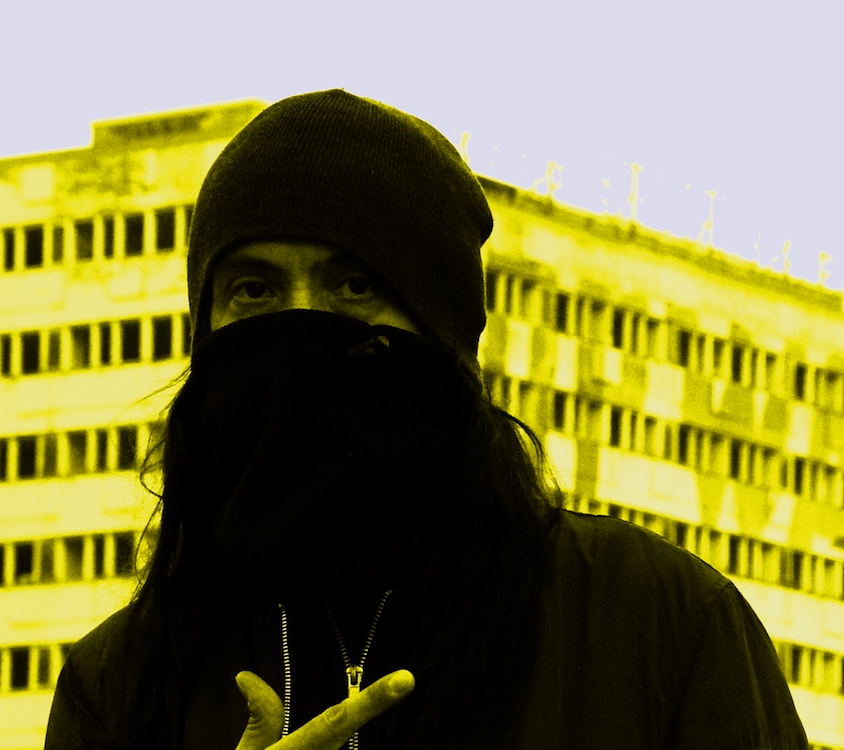
Max Durante’s first LP in a 30-year career, The Experiment, is a new, left-field direction for an artist whose history traces from the birth of techno, through IDM, industrial, and electro. Spread over four sides of vinyl, consists of beatless pieces (which reveal another character when slowed to 33RPM), broken-beat techno, and straight-up dancefloor trips.
The LP opens with eight minutes of full immersion in the eternally looped beat of “EX-P01.” It clears the palette for the diverse yet distinctive, ambient-leaning tracks which make up the first 12”. On the C side, Durante’s focus is on the dancefloor, with hard-hitting, tense techno tracks made in collaboration with acclaimed duo Retina.it and half of Rephlex act D’Arcangelo. On the final side, “EX-P07” is trademark Durante in the style of Black Light (KYN001) or his recent records for Sonic Groove, before an ambient outro ends the experiment.
In support of the release, Kynant Records have offered up “Can’t Raining Every Day,” an unreleased cut made in the same recording period as the album. You can grab it now via the WeTransfer button below, with the album available now.
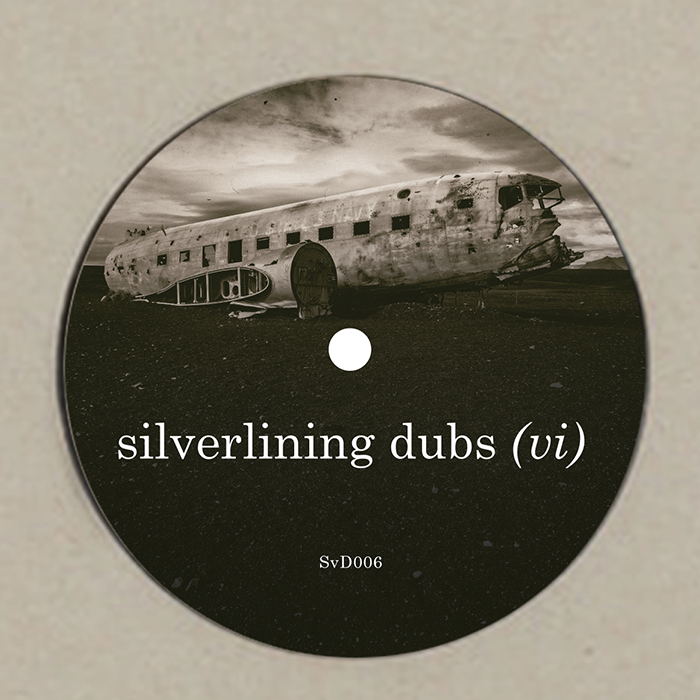
After a run of sought-after re-issues, smattered with the occasional unreleased track, London producer Silverlining continues the series with the Silverlining Dubs (vi) EP, this time comprised entirely of brand new tracks from his new South London studio.
Sketched out on the road, during the summer of 2017, between the backwoods of Canada and the vineyards of Southern Spain, these three tracks were then re-patched and mixed down on a nearly identical setup to that on which he created the ’90s productions that have defined this Silverlining Dubs label.
Tracklisting
01. Nanoschitzel 02. Eye in the Sky 03. Munticles
Silverlining Dubs (vi)will land on March 5, with “Nanoschitzel” streaming in full via the player below.
Creating Innate was a process that spanned more than two years for the 20-year-old Long Beach artist. The album explores intrinsic human qualities and the inherent process of self-reflection on the search for identity.
Cavalier explains: “For me, this album is about revisiting your sense of innocence and childlike wonder before it’s mostly gone and trying to look forward in relation to what you learned returning to that headspace. I wanted to capture the feeling of looking around at the world for the first time again. Of course, when you look back at your past those experiences become abstracted, so I tried to represent that sonically as well as visually on the album. It’s kind of analogous to looking at yourself in the mirror and experiencing depersonalization. Self-reflection and looking inward with honesty play big roles in the project’s concepts.”
We’re told that Cavalier’s “ultra-precise sound design ignites the imagination.” Daring synths spring from a solid base of always-smooth and soulful R&B. Globular basslines bubble under needle-sharp drums. Earnest lyrics and soft piano add humanity to an otherworldly creation of cross-bred genres. Incongruent elements snap together and surprise.
Los Angeles-based podcast series Neptunian Influence is celebrating its one-year anniversary with an exclusive mix from Lost Trax.
Neptunian Influence is the brainchild of LA electro purveyor Miranda Calzada (a.k.a. Whipnotiq), who created the podcast out of a deep passion for electro and the desire for a wider representation of dance genres in the LA underground scene—Neptunian Influence will also expand into a record label this year. So far, Neptunian Influence has hosted mixes from some of electro’s brightest talents, including Sassmouth, Athene, Shinra, Subversive, Kiernan Laveaux, and Calzada herself.
Handling the one-year anniversary celebrations is the enigmatic and anonymous Lost Trax—a group with releases on influential labels such as Delsin, Tabernacle Records, Shipwrec, and Frustrated Funk—who weave twisted acid lines and tight rhythms into a hypnotic 70-minute mix.
Shorelights has a new album on the way via Subwax Bcn.
Shorelights is a collaborative ambient techno project comprised of Rod Modell (a.k.a. DeepChord) and Walter Wasacz and Christopher McNamara of the Detroit-based audio-visual collective nospectacle. Their new LP, Ancient Lights, is their second offering, following on from last year’s Summer Cottage Soundscapes LP on echospace [detroit]. Ancient Lights looks to expand on the vision and range of Shorelights’ deeper than deep aesthetic with a stunning display of sound design and atmosphere across an hour-long live recording—the recording is split into parts and will be released as a double 12″ and on CD.
Ahead of the album’s release, Shorelights have shared a full stream of album cut “Lighthouses,” available via the player below.
The LP, which is the first full-length release by Eddie Ruscha under his given name, presents a collection of wondrous, free-flowing music that touches on balearic, afro, psychedelia, and cosmic house. The melodically rich album plots a path of self discovery while “exploring melody that can mutate as different shades of beauty,” as Ruscha explains.
Ahead of the release, Beats In Space has shared a trippy, cosmic video for album cut “Carried Away,” which pairs glowing visuals with the track’s sun-drenched synth lines.
You can watch the video in full via the player above, with the album available for pre-order here.
Early last month, Isle Of Jura released its second album reissue, Champagne In Mozambique, a five-rack album from Ingleton Falls—a duo made up of Andy Hannam Seymour and Andy Eardley.
The LP, which was originally released in 1991 as a limited run of 100 self-distributed cassette tapes, touches on ambient, dub, house, and balearic, while infusing influences from acts such as Dub Syndicate, African Headcharge, Gary Clail, The Orb, and The KLF.
In support of the LP, label head Kevin Griffiths has recorded a wonderfully eclectic mix under his Jura Soundsystem alias, weaving together a stunning array of world music, rare grooves, and balearic-tinged cuts.
You can stream the mix below, with Champagne In Mozambique available here.
Do you wish to become a full-time musician? Like many of you, Jeff Derringer did too, and it was all very promising until January 2004—when he was diagnosed with cancer, jeopardising his hopes of a life in music. “I needed the healthcare and security,” he reflects more recently, saddened at the latest setback: a second diagnosis that ended all faint hopes that remained. These are tremendously unfortunate circumstances for an artist with considerable promise.
But it doesn’t end there. While Derringer, a Chicago-based techno DJ-producer, will forever be tied to a day job, this does not forego him a career in music at all. In fact, he’s become a longtime resident of Smartbar, one of America’s most infamous and revered dance clubs, where he has been curating his Oktave events there for over eight years. His productions have been released on esteemed labels all over the world, including Soma, Electric Deluxe, Perc Trax and many more—all the while maintaining a nine-to-five position like so many out there. Reflecting on his experiences, Derringer looks back to discuss whether it’s possible to reach your maximum potential as an artist without ever quitting your day job.
A few years ago, a respected and long-tenured artist in the house and techno underground made some controversial statements on social media about the difference between a full-time and a part-time artist. He argued that if you aren’t performing and/or producing full time, then you fall short of the bar that defines what an artist is. In other words, part-time artists are actually hobbyists, and their music does not command the same respect as someone who works on it as a profession. The belief is that only the completely immersed artist is wholly true to their art. The part-timer doesn’t have it all out on the line, and therefore can’t make true art, because their life and their livelihood don’t depend on it.
This statement was met with the predictable backlash, as artists and fans alike came out in protest. There were plenty of folks who thought that art was art, no matter who makes it or what else they do with their time. The argument was made that DJs play great tracks regardless of who made them, so why should it matter? This was followed by the standard back and forth in the comments section, and then eventually the thread died down.
It is an interesting question, however, and lately, I’ve had cause to think about it quite a bit. Can you be a real artist without focusing on your craft full time? Does having a “straight” job disqualify you from being eligible for greatness? Or can you still find that greatness even if you’re pursuing your art as a part-time endeavour?
I’ve been a cancer survivor since January of 2004. Back then, I was a drummer in an indie rock band in Williamsburg, Brooklyn, and I was optimistic about the situation I was in. We were doing well on the NYC scene and we had “interest” from a number of labels. We rehearsed next door to Interpol and down the hall from TV On the Radio, so it didn’t seem like that far of a stretch to imagine that we would soon enjoy similar success. It wouldn’t be long before we quit our jobs and went on tour in support of our first album. The script wrote itself—or so I thought.
All that changed when I found a lump below my left ear, which was soon diagnosed as a malignant squamous cell carcinoma. It started in my tonsil and spread to the lymph nodes in my left neck. After a week of intense panic consulting with doctors, family and friends, I had 10 hours of surgery, followed by seven weeks of radiation and chemotherapy. Total shit storm.
“A young-ish guy like me with a stage four throat cancer in his medical history is more often than not going to be tied to some kind of day job—and the insurance it provides.”
One of the most difficult parts of the recovery process in 2004 was realizing that my dream of leaving the day-job life and joining the musician’s circus was in serious jeopardy. In America especially, the healthcare system is difficult for people who have pre-existing conditions. A young-ish guy like me with a stage four throat cancer in his medical history is more often than not going to be tied to some kind of day job—and the insurance it provides. I need the best healthcare I can get, as well as guaranteed monthly income in case of emergency, both of which are significantly harder to come by in the full-time creative life.
A lot has changed for me since then, and most of that should be saved for a different article. I’m not drumming anymore, obviously, and over the last 14 years, I’ve become immersed in the worldwide techno scene. I moved back to my hometown, Chicago, in 2010, where I continued the Oktave nights I started in New York. I was lucky enough to get hired teaching music production at Columbia College. I also found work teaching at Apple, who is the provider of my healthcare. Speaking of lucky, I started performing at Smartbar soon after returning to Chicago, and a couple years later they made me a resident. Score! These jobs combined to build a modest living. They also allowed me the stability and flexibility to stay focused on my music career, such as it is, and the latitude to travel for gigs and release records.
Things moved along nicely until summer 2017, when I had a setback. I was diagnosed with a second throat cancer, similar to my first but more intense, as the primary tumor was on my tongue. The timing was far from ideal: Oktave was soon celebrating its eighth anniversary, and I was finally starting an Oktave record label, something I’d wanted to do for a long time. Life has a way of laughing at you when you try to make a plan, right?
“Can I still fulfill my potential as an artist without pursuing it full time?”
If I wasn’t tied to the day job market before my second diagnosis, I certainly am now. The life of a full-time touring artist is simply no longer available to me. Two instances of throat cancer will do that to a person. And lately, my mind has been wandering back to the same questions I found myself asking in 2004 when the shock of my first diagnosis was still fresh. Can I still fulfil my potential as an artist without pursuing it full time?
I certainly understand the value of full-time immersion. The life of a successful artist relies heavily on repetition. It’s like any other skill: you have to show up every day to see results, and it takes practice to develop the skills to make consistently strong records. Having an abundance of time to focus on that alone is a big advantage when you’re trying to build up a body of respectable production work. Even if you’re not writing, it takes time to think and prepare and immerse yourself in the sounds you want to create.
The full-time artist can also be more focused on their career as a whole, which is another big benefit of not working a day job. Outside of production (and let’s not forget that there are very successful full-time DJs who don’t produce at all), the full-timer can rehearse their live performance more regularly—practice time is gold. They can also collaborate with other artists more often; they can focus more energy on promoting themselves with all the various online tools we now have at our disposal. Importantly, they can go out to clubs and events more than someone who reports to a job in the morning. So much of the business of music is done at night, in the venues where the music is performed. Having the freedom to be in that environment week after week without an early morning responsibility is huge.
In addition to this, the full-time artist has the time to pursue other avenues for their music—avenues like licensing and commercial work. Advertising and video game scores, licensing deals and the lot pay well, and with the continued onslaught of content on all platforms, there are more opportunities to land your music in projects that pay. The resourceful, motivated artist can find many different avenues to generate cash from their work.
Finally, there’s the reputation factor. In my experience, I’ve found that industry professionals—booking agents, press agents, managers—are more likely to take you seriously if you’re not working amongst the proletariat. There’s always a chance that the industry will embrace you while you’re working nine-five, especially if you capture the cultural zeitgeist of the moment in some way. But in a lot of cases, the people who work behind the scenes want to see that you’ve reached a level of bona fide popularity before they sign you, and that usually means you’re generating enough income to be free of a job.
These are just some of the advantages that the full-time creative life affords the artist, and I certainly haven’t listed them all. But being an artist full time isn’t easy, either; despite the considerable advantages, there are also significant risks. An artist must determine their appetite for a lifestyle that, for most, essentially boils down to full-time freelancing. While there are some artists who live very comfortable and even glamorous lives DJing at the best clubs and parties around the world, the great majority of us have to make compromises, regardless of how much time we spend producing and performing. There are sacrifices that freelancers make to maintain their relative freedom.
“Trying to find a balance between commerce and creativity, with basic survival the priority, is not easy.”
For example, here are a few of the questions you should ask yourself before jumping into the full-time pursuit of the creative life: Are you comfortable not knowing how much money you’re going to bring home every month? How important is healthcare to you—are you ok having less-than-adequate coverage, or no coverage at all? How far can your dollar stretch from week to week—without a guaranteed income, what kind of budget are you comfortable living on? Can you be productive working at home? Are you OK living with roommates, or renting and sharing studio space? Do you embrace travel? Do you like spending your evenings in music venues, and can you handle the temptations and pitfalls this entails? Trying to find a balance between commerce and creativity, with basic survival the priority, is not easy.
Of course, one of the primary reasons artists want to go all in—to go full time—is to expand the amount of time they have to develop their work and their skills. To improve. However, it’s a misconception that there is a direct correlation between time spent and artistic development. Ask any producer: how much of your extra time do you actually invest into production (and not, say, playing video games)? Another big question is how much of your raw production output is actually worthwhile material? How much of your extra work would you want to release anyway?
I am of the opinion that most artists working in the underground dance community have between three and six great tracks in them per year. Many producers, even the legends, fall into the trap of over-saturating the market with material. For years I’ve seen artists water down their catalogs with mediocre tracks, as a simple response to the pressure of remaining visible and bookable. The prevalent thinking is that quantity beats quality, leading to extra stress on the artist to produce.
“It’s possible that a part-time approach to the studio, utilizing fewer hours but more focus, can get the same results as a full-time artist who spends every day writing tracks.”
For me, this is the wrong way to go. Being a tough editor and a hard critic of your own work are some of the most important skills you’ll use as a producer. I stress these principles to my students every semester. Working the writing muscle is incredibly important, but if you’re not critical of the tracks you release, you can firebomb that full-time career of yours in a hurry. Being objective about your productions is one of the hardest parts of being successful, and that skill is crucial no matter if you have a day job or not. A discerning producer will hopefully release only their best tracks, regardless of how many records it nets them in a year. It’s possible that a part-time approach to the studio, utilizing fewer hours but more focus, can get the same results as a full-time artist who spends every day writing tracks.
I feel like this has been one of the advantages of staying in the everyday workforce. My studio time is certainly more limited than I’d like it to be, as I have to spend precious hours working on other things. However, the fact that my time is limited forces me to focus, so I can be as productive as possible when I get to be in front of my machines. The part-time musician must be extremely disciplined, and critical, to assure her time in the studio is not compromised. For me, this discipline is enhanced, rather than harmed, by having a full-time job. Because I have a job and a schedule, I am generally in my studio at the same time every day, with a premium on being productive. While this strategy doesn’t produce results for everyone, it has definitely been helpful for me.
That said, the major difficulty with having a regular job comes into play with touring; live dates are by far the most lucrative opportunities available to the modern DJ/producer. The amount of travel you can handle is a personal choice and one you can’t make lightly. Travel is a huge part of today’s creative career, and there is no argument on this point: the full-timer who isn’t beholden to an employer has more freedom to take gigs in the far-flung places that make up the club landscape.
One thing to think about in this regard, however, is the mental and physical toll that this level of travel entails. Even if you could tour every weekend, do you want to? Personally, I don’t think I’m cut out for a life spent waiting in airport lounges and sleeping in coach seats. I love to travel and without question, most of my best gigs have been in Europe. However, if I were obligated to go overseas three or four weekends a month to pay my mortgage and my health insurance bills, it would be a whole different ballgame. While some artists are successful enough to travel in style, fly business class and stay in five-star hotels, most have to rough it and work with a much smaller budget. I can’t imagine being constantly on the road like that; the stress would fry my circuitry.
I think the travel issue is one every artist has to consider for themselves. Personally, I’m happy finding a middle ground when it comes to my touring and gigging. Over the past few years, I’ve been going overseas two or three times a year and travelling within the States once a month or so. For me, this is an ideal amount of exposure, even if it’s not going to make me an underground superstar. It’s also not going to make me rich, which is ok as well. While I’m sometimes envious of friends who are touring a lot and doing things I can’t do, I generally know I’m doing what’s best for me—both for my physical and mental health.
That leaves the last point in this debate—the highly subjective question about commitment versus risk. The idea mentioned at the beginning of this piece is that artists who have jobs aren’t risking everything, and therefore can’t have the drama and intensity in their music that only full-time immersion can engender. The risk of making your living in music, it’s said, fuels the passion and the soul of the artist’s creations. Part-timers are tourists, right?
I’d like to refer you to a quote by Gary Numan I found in a great book by Lori Majewski and Jonathan Bernstein called “Mad World—An Oral History of New Wave Artists and Songs That Defined the 1980s.” Numan, as I’m sure you already know, wrote one of the most influential and transcendent songs in all of electronic music, called “Cars.” Here is his description of the writing process:
“Was Cars easy to write? Piece of piss, innit? I’d wanted to learn bass guitar better; I’d never written a song on the bass. So I went to Shaftesbury Avenue in London and bought myself a cheap bass called a Shergold Modulator. I’ve still got it—it hangs on a wall in my studio. I took it home, got it out of its case, and the very first thing I played was the first four notes of “Cars.” That was it. The first four notes I played on that guitar, and I thought, ‘That sounds all right.’
“Honest to God, Cars took me ten minutes—all the parts, all the arrangements. Another 20, and the lyrics were done. The whole thing took about half an hour, from opening the case to having the finished bass line, arrangement, lyrics, and vocal line sorted out. The keyboard line came a bit later when I got into the studio because I didn’t have a synth; I had to rent one. It was the most productive 30 minutes of my life.”
My opinion on this is that anyone, and I mean anyone, can write a great track. You can be a career producer with the best equipment money can buy; you can be a touring artist who plays three times a week, has a killer home studio and puts out records once a quarter; you can be an up-and-comer who spends all her time watching Youtube videos about production techniques while working as an art director for a magazine; you can also be one of my electronic music students at Columbia College who just got a laptop and a MIDI controller, and stumbles on a killer riff that quickly morphs into the track of the month that every DJ has in his set. There are literally no rules on this account.
Art, and music, are simply too ethereal, too intangible, and too mysterious to ascribe any particular lifestyle or workflow. I’ve been doing it too long to think any other way; I’ve seen talented people work their asses off for 20 years before they become known. I’ve seen less talented people get lucky, find their creative voice in a month and become massively popular overnight. I’ve seen a lot of shades in between. There is no formula, and there is definitely no prescribed amount of time you have to spend doing it to legitimize your work. A solid track is a solid track—only a fool wouldn’t play it out.
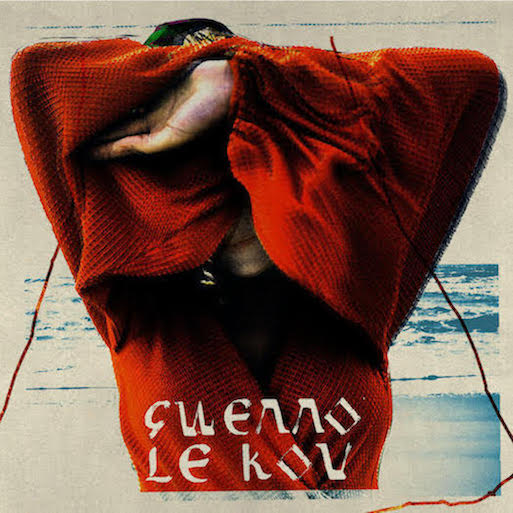
Welsh artist Gwenno Saunders sure likes big ideas. The Cardiff-based musician’s debut solo album Y Dydd Olaf (“The Final Day”) was a record themed around the 1970s Welsh language sci-fi novel of the same name by Owain Owain, and sung almost entirely in her native tongue. Her new long player Le Kov, by contrast, finds her waxing lyrical about the myths and legends of Cornwall and the role of women in the English county’s rich history. Le Kov is sung in the little-spoken Cornish language—in which Gwenno is fluent, too. To the uninitiated, these ideas might seem obscure or unapproachable. Yet, Gwenno’s records sparkle with sonic innovations and strange, captivating melodies, which make understanding the words unnecessary.
A former member of the indie-pop band The Pipettes, whose sound nodded to 1960s Phil Spector-produced “girl groups,” Gwenno’s solo material instead tends towards the electronic, and psychedelic rock. On 2014’s “Fratolish Hiang Perpeshki,” she funnelled gothic 1980s post-punk and spooky electronics into an addictive and danceable 4/4 pulse. “Dawns Y Blaned Dirion” from Y Dydd Olaf was the glorious meeting point of Boards of Canada or Plone ambient synths and Stereolab-indebted organic bass. Le Kov (which translates as ‘The place of memory’) amplifies the psychotropic elements of its predecessor, drawing on 1960s electronic pioneers such as The United States of America and Delia Derbyshire’s band The White Noise to further develop Gwenno’s own hypnotic sound.
“Hy a Skoellyas Lyf a Dhagrow” begins the record in a spectral fashion, materializing in green mists of synth before solidifying into a gorgeously bittersweet song of soaring string riffs, piano, and a vocal from Gwenno that alternates between whispered words and medieval mysticism. Also the name of a track from Cornish electronic maverick Aphex Twin’s album Drukqs, it translates as “she shed a flood of tears”—and the song’s emotion is starkly apparent whether you understand the lyrics or not.
Singing in Cornish is no cynical angle for Gwenno, but an honest expression of her upbringing and her sense of connection to, and yet distance from, Cornwall. “I was raised entirely in Cornish and Welsh, they were the only languages that we conversed in at home and so I’ve always viewed them both equally,” she has said. “When the time came to start thinking about recording again after touring my last album, Y Dydd Olaf, it just felt like the most natural and obvious thing to do.” The language sounds like a natural accompaniment on “Herdhya” (or ‘pushing’), where Gwenno’s Welsh accent is apparent, but the words are unfamiliar, weaving through a field of reversed guitar and shoegazing synth, reminiscent of a gentler My Bloody Valentine or something from Nathan Fake’s Drowning in a Sea of Love.
With her collaborators on the record, regular producer Rhys Edwards, drum engineer Gorwel Owen and mixer David Wrench, Gwenno invokes a vivid, mysterious and endlessly compelling world of sound. “Jynn-amontya” is a gorgeous piece of exquisitely produced and stately psyche rock. Somewhere between the work of Broadcast, Jane Weaver or BadBadNotGood, it seems designed for hazy warm evenings in the last light of the sun. “Daromres y’n Howl” is a motorik chug of brain-teasing hypnotic details and trippy electronic touches, with Super Furry Animals singer Gruff Rhys contributing guest vocals, and “Hunros” is a swirl of ’60s melancholia with distorted, subtly wonky keys. That Le Kov is so loaded with meaning and significance adds to its appeal, but ultimately it’s the emotion and sound of the songs that make it such a wonderful and unusual record.
Tracklisting
01. Hi a Skoellyas Liv a Dhagrow 02. Tir Ha Mor 03. Herdhya 04. Eus Keus? 05. Jynn-amontya 06. Den Heb Taves 07. Daromres y’n Howl 08. Aremorika 09. Hunros 10. Koweth Ker
Le Kov will be released on March 2 via Heavenly Recordings.