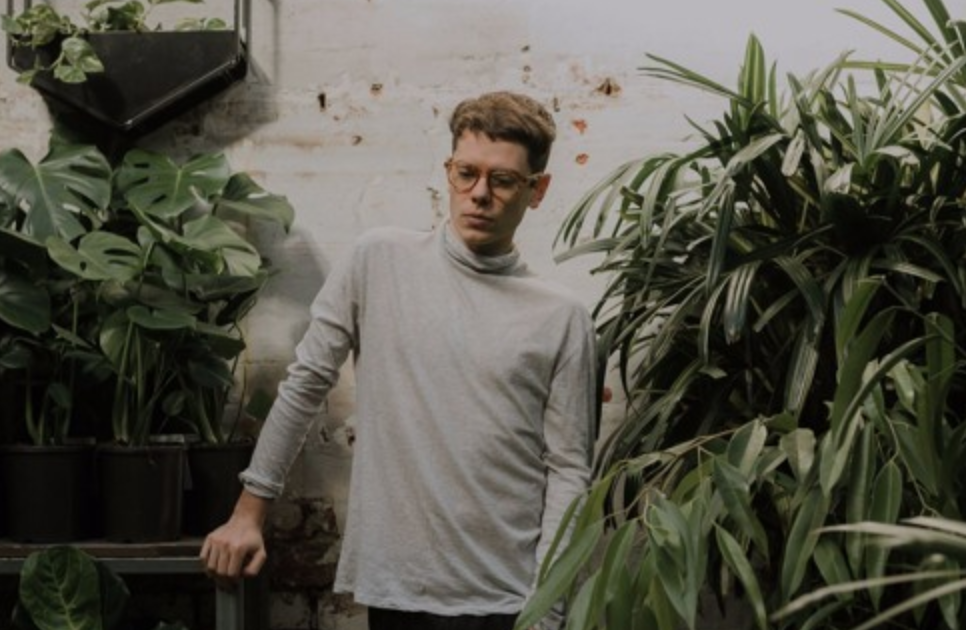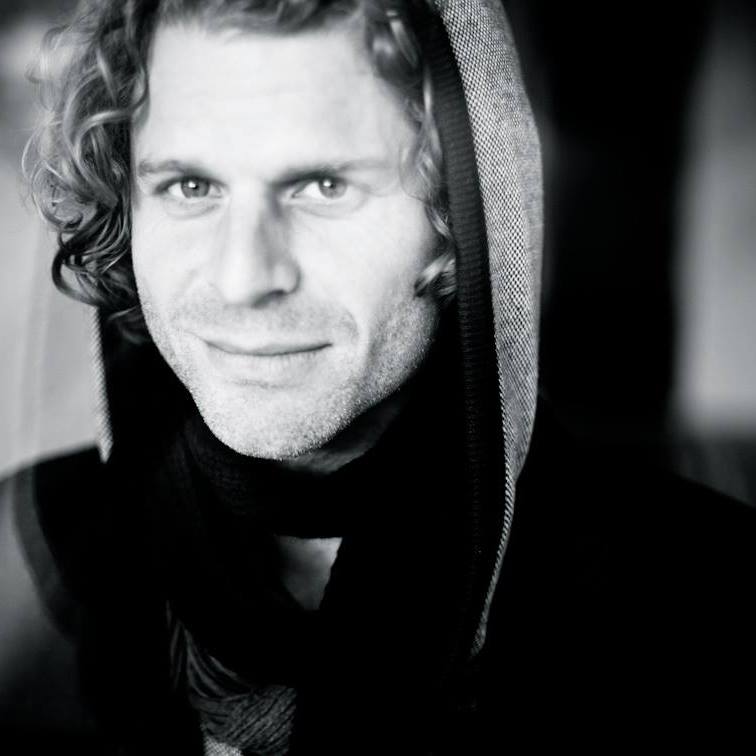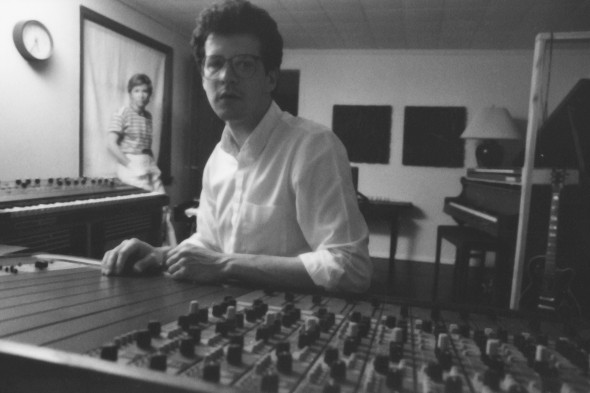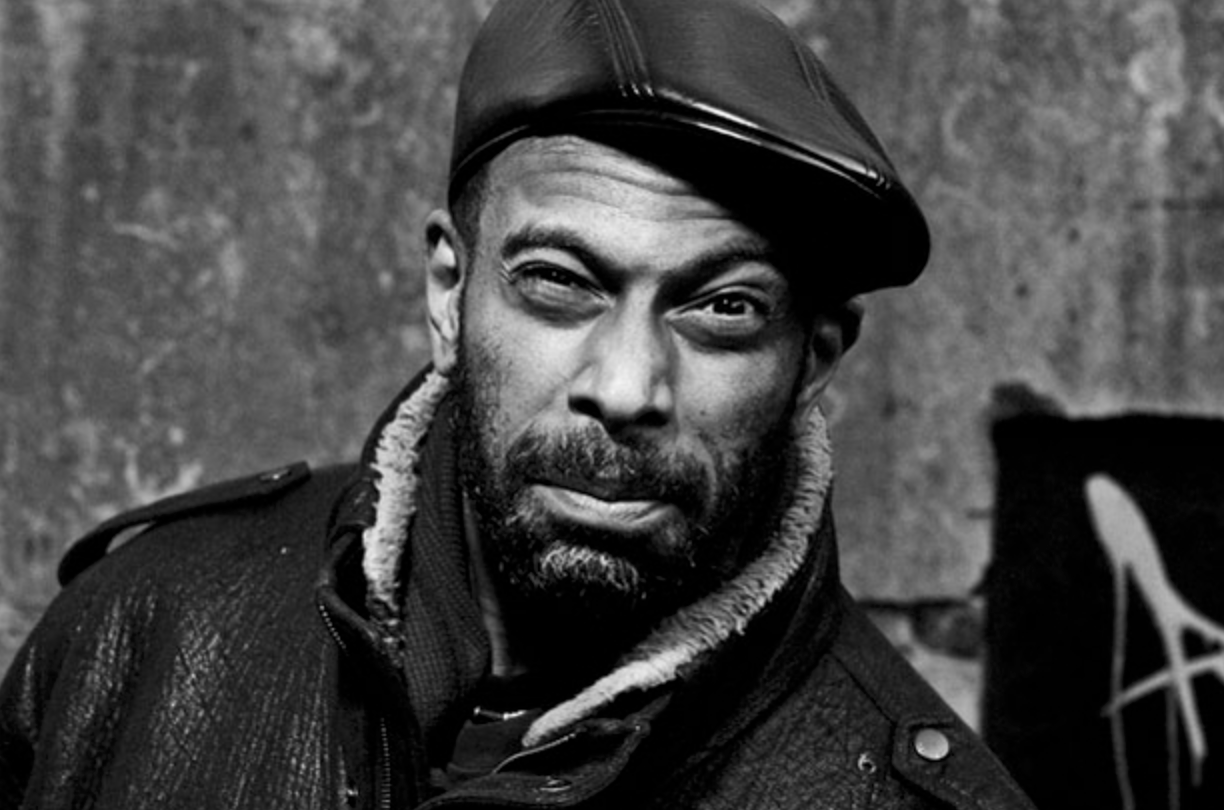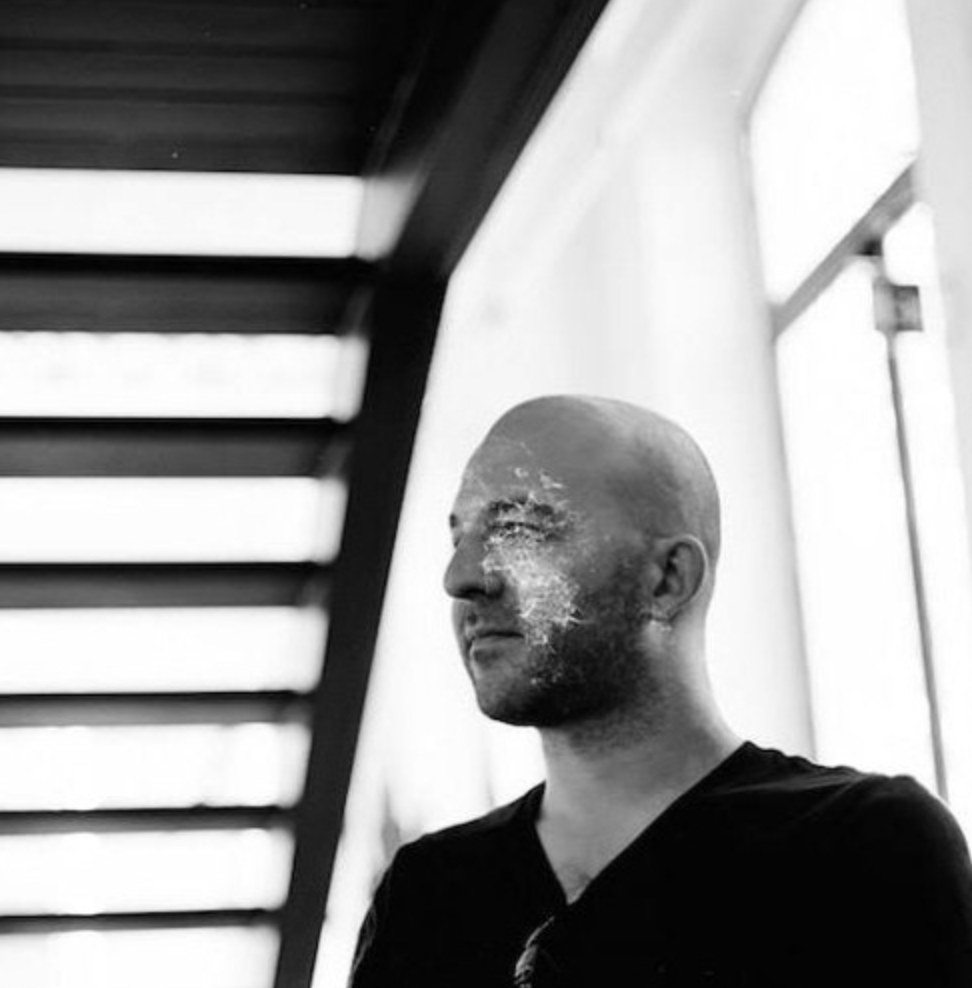
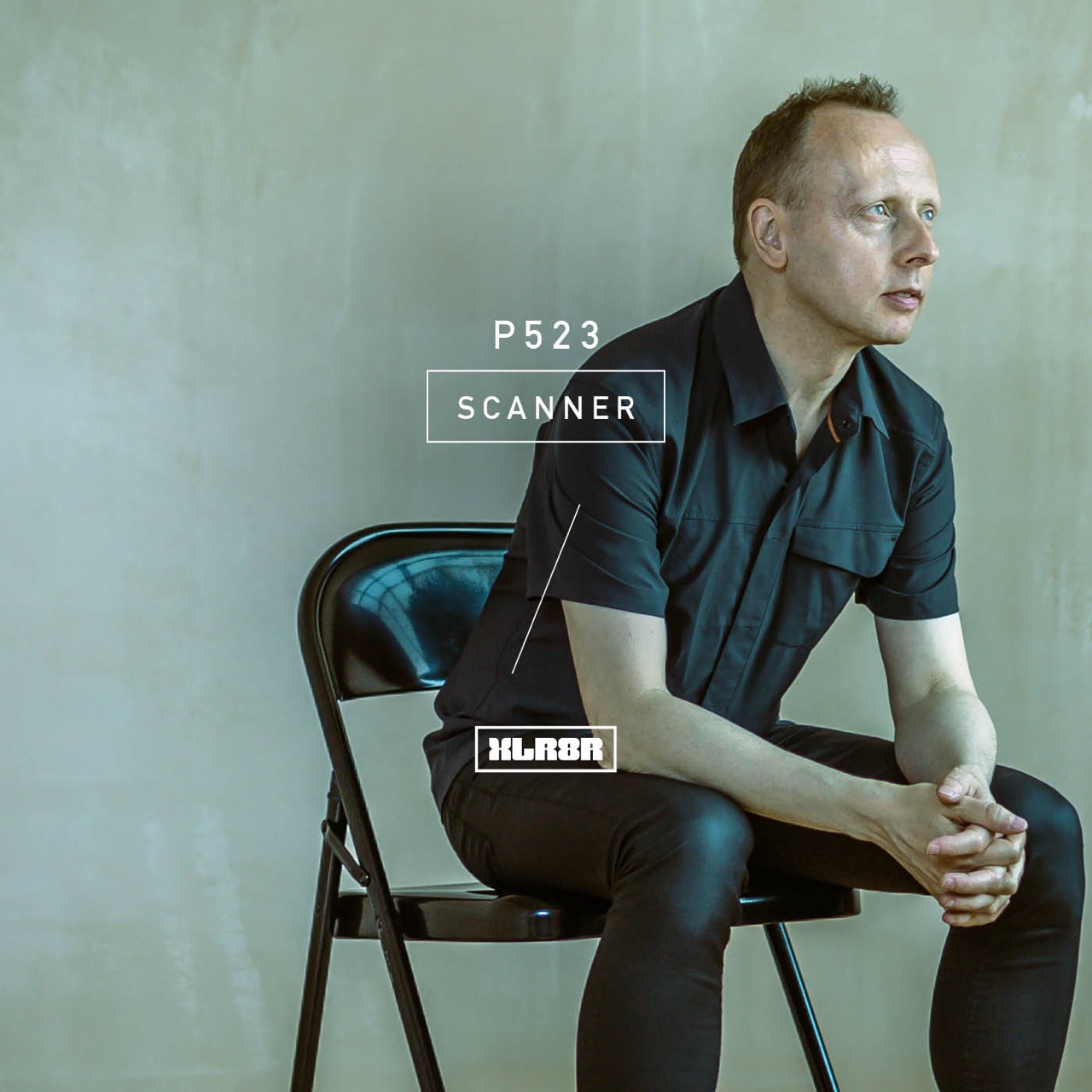
It’s a challenging task trying to condense a career like that of Robin Rimbaud’s into a digestible introduction. For close to 30 years now, Rimbaud has been a major force in sonic art, crafting experimental sound pieces that connect a beguiling array of genres for concerts, installations, and recordings. His commissioned pieces include campaign work for Nike Hyperfuse, Chanel, and Stella McCartney, as well as scores for the UK Olympics’ The Big Dance in Trafalgar Square, the re-opening of the Stedelijk Museum in Amsterdam, the world’s first ever Virtual Reality ballet with the Dutch National Ballet, and collaborations with Bryan Ferry, Wayne McGregor, Merce Cunningham, Mike Kelley, Miroslaw Balka, Torres, Michael Nyman, Carsten Nicolai, Steve McQueen, Laurie Anderson, and Hussein Chalayan, amongst many others.
As Scanner, Rimbaud’s output is just as sprawling and dense—take a look at his discogs page and Rimbaud’s relentless work ethic will be instantly apparent. Since the release of his first self-titled album in 1995, Rimbaud has clocked over 130 releases as Scanner, including albums and EPs for Sub Rosa, Ash International—of which Rimbaud was an early operator—Room40, Parallel Factory, Bette, and his own Scannerdot Publishing. Rimbaud’s latest two offerings arrived in the last few months of 2017 and presented two deeply affecting albums. The first, The Great Crater, was commissioned by Glacial Movements and acts as a score for the appearance of strange ice circles in Antarctica and the subsequent discovery of underground lakes; while the second, SCANNER ::: FIBOLAE” target=”_blank”>Fibolae, a haunting and meditative collection of electronics, is the first studio album under the Scanner moniker since 2009, recorded after he lost his entire family and left the comfort of a familiar city (London) to live in a former textile factory in the UK to re-invent his life.
To kick off the year, Rimbaud has delivered a stunning two-hour mix titled “music to pass the time, although the time would have passed anyway.” Built from personal field recordings and music that accompanies Rimbaud on a daily basis, it’s a hypnotic tapestry of sound that will help you glide into the new year.
What was your entry into music?
I’ve been recording since I was around 10 or 11 years old. We had a cheap 1970s tape recorder at home and I used to record TV shows like Spiderman on it so I could listen to them later on, as VHS tape recorders had yet to be invented. Then I realised I could record our birthdays, holidays, Christmases, trips on the school bus, the sound inside our fridge etc—rather like the way people use their smartphones today to photograph all the time. So the tape recorder offered me a way to record the world around me, without any ambitions of using it in any other way, but just because it was there and accessible, and of course, fun to do.
In fact, I still have those cassette tapes and spent last summer digitising everything so it was like a form of time-travel, hearing voices, conversations, and the sounds of my old family living room that I’d not heard since that time. With all my family now deceased, it was also an extraordinarily moving experience living through those ghosts. It’s incredible what images they can present to me, far more than photos in some ways as you can actually hear the physical space. So sound has always played a part in my life.
So it was the technology itself, as simple as that sounds, that drew me into music. Tape recorders then led me to play with electronics, guitars, piano, and eventually making what’s popularly known as music.
Did you come from a very musical background?
None of my family had any artistic or creative inclinations, although they listened to music all the time on vinyl, cassettes, and the radio. My family was a very normal working class British family, living in constant debt, working standard jobs to try and make a living, as cleaners, decorators, or postmen. The very concept of using creative art forms to actually make a living was a very foreign concept but I knew from a very early age exactly what I wanted to be doing. I cannot explain how I felt this with such confidence but I just did.
What led you to electronic music?
In many ways, my life’s work has been born from a series of chance encounters and discoveries of technology. I was born in the 1960s and so growing up in the 1970s offered a different approach to life than it does today. Technology was not as abundant then as it is today, and the very idea of being able to maintain a relationship with the world further than your close friends and family was an impossible fantasy, and could only be achieved by finding a pen-pal on the other side of the globe to communicate with. Today at the swish of a thumb we can meet people, make sounds, discover new worlds. So for me, the discovery of electronic music was an adventure, full of surprises.
When I was 11 years old we had a remarkable music teacher at school who played us the prepared piano works of John Cage which completely blew my mind, something that was so otherworldly and experimental, yet magical and unforgettable. My love for Cage began immediately. That was rapidly followed up by a chance encounter on the London tube with my next-door neighbour when I was about 14 years old. He was a conductor and had the visual scores of German composer Stockhausen open on his lap, notating and working on them. I was transfixed by the shapes, colours and wholly alien notes on the manuscript, offering up strange sonic possibilities. Even without hearing a note of Stockhausen I was already fascinated!
Then I was fortunate to be given a reel-to-reel tape recorder by my English Literature teacher at school when I was about 15 years old, then borrowed synthesisers from friends, eventually saving up for a four-track Fostex tape deck when I was about 25 years old. All of these little pieces of technology led to my body of work today. Even when I had a guitar as a teenager, I would detune it and process it with pedals or do all kinds of things with it to expand the sonic palette beyond the scope of the standard sound.
Much of your work is centred around crafting music, sound design, or effects for visual components—what draws you to this way of working?
One can choose many routes in life and I’m frequently surprised when even the most experimental of artists follow the traditional route of record album-make press-tour-sell product and so on. That’s never been interesting to me. In fact, the product is the least interesting part of any project.
I’m drawn to projects that reward me personally, going far beyond ego, financial reward (although that’s always handy), and notions of success, but things that have meaning to me initially and hopefully others afterwards. Everything I do draws in a new audience, so I’m interested in challenges.
Like many folks, I like all kinds of music, films, books and so on and in my own creative output am equally content exploring something cinematic one moment, then something with live classical musicians the next, finishing by producing a rock band. I’m a happy shapeshifter and find it very easy to adapt to new situations and respond to a brief as necessary. It also helps that I’m super easy going but professional and am proud to say I’ve never missed a deadline in 25 years of professional work. Indeed, I frequently deliver before a deadline.
Much of my practice over the years has been focused on collaboration. I am a consistent collaborator in all fields, frequently with artists quite outside of the field of music, and it would be impossible to choose one over another. Whether it’s with a writer, an artist, a video maker, a choreographer, or architect, the ability to exchange and share ideas is crucial and these collaborations allow me and the collaborator to work as both negatives and positives of each other, recognising spaces within the work fields and ideas of the other. It teaches the respect of space but also the relevance of context and extension of one’s ideas to the other. They will listen to you if you listen to them, just how life should function in general.
Your new album explores themes inspired by strange ice circles appearing in Antarctica and the discovery of underground lakes—how do you go about composing an album when it has a clear theme like this?
How to begin anything is the biggest challenge but I maintain a good discipline towards work, beginning every day in the studio, Monday to Friday, early in the morning and working until 6 p.m. I simply begin with sounds, which sometimes work and sometimes don’t, but failure is also an essential part of any success. I have a substantial archive of sounds which I can draw in at these times and had various records of ice flows, melting ice, and so on which I could use as an accompaniment to more electronic sounds. I had the focus of time, which always helps, having decided to write the entire album within one week, so I kept to my own deadline.
The Great Crater came together in such an easy fluid way. I imagined it as scoring a film, beginning with a massive explosion of ice, quite literally the earth opening up, then moved through a variety of moods, until the end when it offers a sense of optimism, yet still tinged with melancholy and concern. I had this picture in my head as I wrote the album so that helped make the theme constantly connect to the music.
Curiously, this is one of two new albums, as Fibolae, out on Anna von Hausswolff’s new label, has just been released this month, too.
To date, I’ve released a ridiculous amount of commercial recordings, perhaps around 75 albums, but a significant proportion of these are commissions, responses to invitations, or soundtracks to contemporary dance or films. The idea of simply recording music for myself for release has been the furthest thought from my head for many years and it’s only once every few years that I consider such an adventure.
Fibolae was prompted by a series of truly horrendous losses, with my entire family passing away in a very short frame of time, one in an especially brutal and unforgiving manner, and trying to deal with such losses whilst maintaining a public persona in terms of performances and so on. At the same time I choose to leave the comfort of a familiar city (London) to move to a gigantic former textile factory in the UK, and a combination of these forces acted as the impetus for the album.
It’s “personal” as it was made out of a very mixed set of feelings, from shock and anger through to melancholy and confusion, and even uses recordings of their voices within the framework of the album. It’s very much a direct response to significant life changes in a very short time.
So The Great Crater and Fibolae offer up different pictures of the same creator, yet compliment one another well I feel.
Where and when was this mix recorded?
I recorded this mix in my studio, assembling all the pieces over a day.
What equipment did you record the mix on?
It was compiled within Ableton Live, allowing me to layer and mix in all manner of personal recordings, too, from church bells in Italy to lakes in Spain, all appearing within the tracks. There’s a lot of detail within the mix, rather than just have one track follow another, it’s nearly always entirely two or three things playing at the same time.
Was there a particular mood or idea you were looking to convey?
I was searching for a theme and rather struggled until I suddenly thought, how about sharing a picture of what I’m listening to at the moment, in some playful sense of real time. Not a historical trajectory, or particular mood, but music that accompanies me as I administrate my life, writing emails, making interviews, completing my accounts, and so on. That’s to say frequently banal moments soundtracked by frequently extraordinary music.
How did you select the tracks you wanted to include?
As the title of the mix (“Music to pass the time, although the time would have passed anyway”) suggests, it’s all music that I’ve been listening to as I work. If I’m not actually involved in making music myself, I’m always listening to music from when I’m awake at 7 a.m. until I close the office at 6 p.m. I still have a passionate love of music so I hope it crosses over all acceptable boundaries and taste. So there’s a huge variety of materials in the mix, taking you from Aphex Twin to Bernard Parmegiani, from Roland Kayn to Rush. It was an honour to combine the forces of material that have been around for many years from John Cage and Cornelius Cardew to pieces that no-one has even heard yet from artist such as Bana Haffar.
Where do you envisage the mix being listened to?
The mix is a very listenable two-hour collage of music and sounds, so is ideally suited to complete your tax return, shopping for shoes online, or washing the dishes. I would hope people would find all manner of locations in which to listen to it and let me know where it worked best for them.
What else do you have coming up?
I rarely play live shows these days so there are a handful of dates around the world in 2018, beginning in London with a very special intimate show at Iklectik. There will also be a Scanner 7″ featuring exclusive tracks that will be limited to five individually numbered copies total. They will be given away via random draw and will only be available at this event.
Then I’m performing over in Paris with American musician and philosopher David Rothenberg for the Nemo Festival (16 Feb), at the ICA Boston (23 Feb), and then in April to present the world premiere of GRIMM in Amsterdam, a new ballet with Dutch National Ballet and ISH which I’ve scored and then goes on tour. Later in the year, I’ll be premiering A Little Bit of Everything: Scanner Scans Bedford, a new commission with BBC Concert Orchestra, alongside a new version of Mike Oldfield’s classic Tubular Bells.
I’m also working on an extraordinary project with Polish artist Kasia Molga that will have a real impact upon the lives of others, researching and producing materials that will contribute towards a greater understanding of soil and global warming.
And what else? I’ve written a book called Wrong Stories, about everything that has gone wrong with my professional career in the most humiliating of circumstances, and continue to explore countless projects where I remain largely invisible but prolific.
Tracklisting
01. William Eggletson “Introduction DCC 05.19” [Secretly Canadian]
02. Rush “Cygnus X-2 Eh” [UMC]
03. Loscil “Red Tide” [Kranky]
04. Tetsu Inoue “Health Loop” [Instinct]
05. Thomas Brinkmann “Olga” [Ernst]
06. Cornelius Cardew “The Croppy Boy” [Ampersand]
07. Terre Thaemlitz “Soulnessless” [Comatonse Recordings]
08. Bana Haffar “Endo” [MakeNoise Music]
09. Spatial “System I” (Meat Beat Manifesto FreQ) [Infrasonics]
10. Autechre “acdwn2” [Warp]
11. John Cage “Seventy-Four For Orchestra” [Edition RZ]
12. Leo Anibaldi “Untitled 5” [Lost In It]
13. Floating Points “Kuiper” [Pluto]
14. Aukai “Snow” (Abul Mogard Rework) [Aukaimusic]
15. Natalie Beridze “Come to Kiss Me” [Laboratory Instinct]
16. Aphex Twin “Sekonda e,+2” [Warp]
17. Roland Kayn “Ykties” [Frozen Reeds]
18. Keith Fullerton Whitman “110320” [Industrial Abbotsford]
19. Pragma “Dowser” [Fonagraphie Pragma]
20. Ben Frost “Do You Want Me to Go” [The Orchard]
21. Gust “Alan Lamb with Garry Bradbury” [Unreleased]
22. Bernard Parmegiani “Départ Serge” [Transversales Disques]
23. Stephane Wrembel “Vox Populi” [Soundcloud]
24. Murcof & Vanessa Wagner “Avril 14th” (Aphex Twin) (Loscil Remix) [State]
25. Alfred Schnittke “Larisa” [unreleased film score]