Visionist released a new video for “Value,” directed by Frederik Heyman and taken from his recent album of the same name.
Value, the second album from experimental composer Visionist, was released last month via Big Dada, dealing with complex interweaving ideas of artistic value, self-worth, and vulnerability.
Today, Visionist shares the video for title track “Value.” A spectacular visual representation of the album themes, it places Visionist in a number of self-savior scenarios.
““Value” initially deals with the issue of self-struggle, and those actions internally but also externally that have caused this torment… The overcoming of this is one of self-preservation and self-savior,” explains Visionist. “I wanted to work with Frederik as he deals with the perception of realness, something I deal with within my own anxieties, creating and believing in situations that haven’t even happened yet.”
Director Frederik Heyman is best known for his use of photogrammetric techniques— using 3D scans to insert real-world subjects into staged digital scenes, manipulated by mechanically induced movement and timed text. Describing the process behind “Value” Heyman says, “Visionist and I focused on historic press images of people in the need of rescue. Visionist then reenacts these situations via numerous 3D scans that are processed into several digital installations, maintaining the original photographic stillness that is key to my work.”
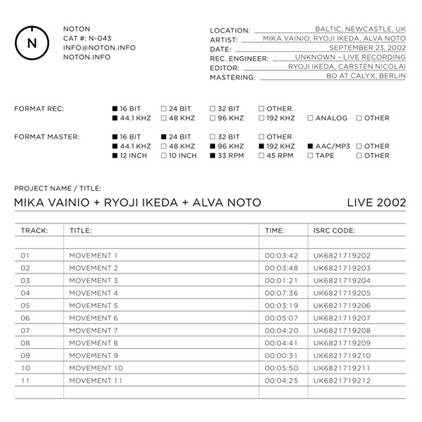
The 45-minute recording, which is split into 11 “movements,” features the trio performing at Newcastle’s Baltic Arts Center in September 2002. According to Boomkat, it is the only recording of the trio performing.
Noise icon Vainio passed away earlier this year at the age 53.
Tracklisting
01. Movement 1 02. Movement 2 03. Movement 3 04. Movement 4 05. Movement 5 06. Movement 6 07. Movement 7 08. Movement 8 09. Movement 9 10. Movement 10 11. Movement 11
Originally released in 1990 on Doremix Records, Techno Bert was the studio project of Robert Passera and Stefano Cundari, co-owner of Memory Records and mastermind behind some Italo disco classic names, though he, unfortunately, died of cancer soon after the release.
“Neue Dimensionen” was developed on Siouxsie and the Banshees‘ well-known guitar riff of “Happy House.” While Cundari cared for the sounds from the 48-channel analog bench and assigned modular effects to the tracks, in the studio, there was also musician Stefano Carrara who piloted the keyboards and the Notator installed on the Atari computer. The couple started the work by sampling the Human League “Being Boiled” groove, and built on harmony and melody inspired by Siouxsie & The Banshees with a Jupiter synth to which they added a low reinforcement obtained with a Roland TB-303. The drum set was based on Roland Tr-909 samples. The sample of the voice comes from “Herrmann Hiess Er” by Nina Hagen, cutting and pasting vocal fragments all around the track, from which they got the name “Neue Dimensionen.”
Even though it was distributed by Flying Records, only the most attentive clubs talked about Techno Bert’s single. Many discovered it the following year through the Belgian press that circulated in almost all of Europe, or through the Spanish version of Spitfire. Even without big sales numbers and without any radio passage, the song continues to survive by virtue of a subtly underground connotation.
It’s now set for a repress, limited to 500 copies, and the digital version comes with a Marvin & Guy remix, which can be exclusively streamed in full below.
12” Tracklist
A1. Intro A2. Neue Dimensionen B. Neue Dimensionen (Instrumental)
Digital Tracklist
A1. Intro A2. Neue Dimensionen B1. Neue Dimensionen (Instrumental) B2. Neue Dimensionen (Marvin & Guy Remix)
Originally released in 1990 on Doremix Records, Techno Bert was the studio project of Robert Passera and Stefano Cundari, co-owner of Memory Records and mastermind behind some Italo disco classic names, though he, unfortunately, died of cancer soon after the release.
“Neue Dimensionen” was developed on Siouxsie and the Banshees‘ well-known guitar riff of “Happy House.” While Cundari cared for the sounds from the 48-channel analog bench and assigned modular effects to the tracks, in the studio, there was also musician Stefano Carrara who piloted the keyboards and the Notator installed on the Atari computer. The couple started the work by sampling the Human League “Being Boiled” groove, and built on harmony and melody inspired by Siouxsie & The Banshees with a Jupiter synth to which they added a low reinforcement obtained with a Roland TB-303. The drum set was based on Roland Tr-909 samples. The sample of the voice comes from “Herrmann Hiess Er” by Nina Hagen, cutting and pasting vocal fragments all around the track, from which they got the name “Neue Dimensionen.”
Even though it was distributed by Flying Records, only the most attentive clubs talked about Techno Bert’s single. Many discovered it the following year through the Belgian press that circulated in almost all of Europe, or through the Spanish version of Spitfire. Even without big sales numbers and without any radio passage, the song continues to survive by virtue of a subtly underground connotation.
It’s now set for a repress, limited to 500 copies, and the digital version comes with a Marvin & Guy remix, which can be exclusively streamed in full below.
12” Tracklist
A1. Intro A2. Neue Dimensionen B. Neue Dimensionen (Instrumental)
Digital Tracklist
A1. Intro A2. Neue Dimensionen B1. Neue Dimensionen (Instrumental) B2. Neue Dimensionen (Marvin & Guy Remix)
After Discrete Circuit kicked off ASTRAY, another offshoot of the Berlin party series AWAY, with two EPs, next up is H4L with a four-track EP. Over the course of the release, the Berlin-based live studio project explores some tougher, jam-driven experiments.
“Hell For Leather” is the closing track of the release, topping off the package with IDM-rooted drum patterns and leftfield yet industrial jazz design. Coinciding with the EP’s release, an alternative version of “Hell For Leather” is available for download via the WeTransfer button below.
Tracklisting:
A. Wild Hunt AA. Sahara Pump Theory B. Wild Hunt (Mark Broom Remix) BB. Hell For Leather
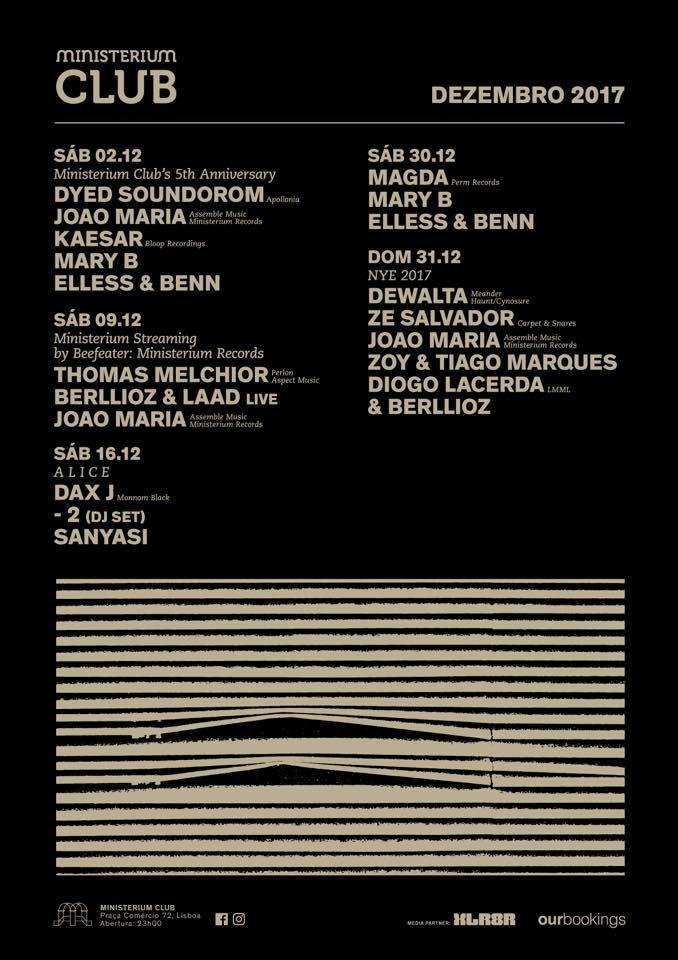
Ministerium Club opened in December 2012 in facilities previously occupied by the Portuguese Ministry of Finance. It has since become one of the main references in Lisbon for house and techno, hosting weekly events with names from the forefront of electronic music alongside underground local talent.
The lineups for December are as follows, with more information available here.
December 2 — 5th Anniversary with Dyed Soundorom
Dyed Soundorom Joao Maria Kaesar Mary B Elless & Benn
December 9 — Ministerium Records with Thomas Melchior
Thomas Melchior Berlioz & LAAD live Joao Maria
December 16 — A L I C E #11 Dax J, -2 & Sanyasi
Dax J -2 Sanyasi
December 30
Magda Mary B Elless & Benn
December 31—NYE
DeWalta Ze Salvador Joao Maria Zoy & Tiago Marques Diogo Lacerda & Berllioz
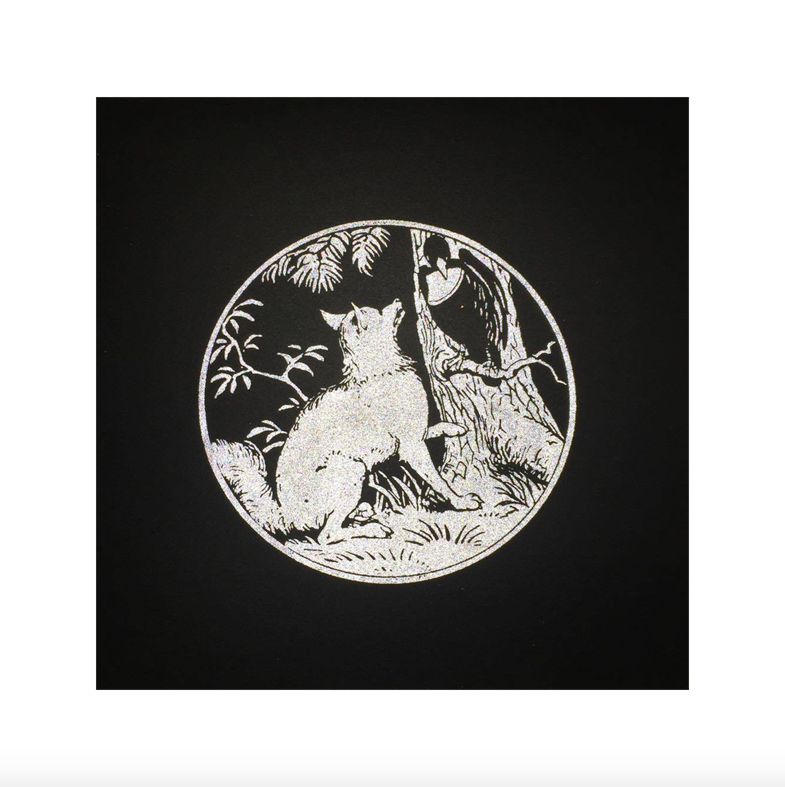
Dropping on December 1, The Fox And The Raven will be the debut release for Denise Rabe’s self-titled label.
Rabe is launching the label to be the channel through which her “personal, unfiltered, haunting sound will find its body and voice.” For the first piece, The Fox And The Raven presents three textured techno cuts built from razor-sharp percussion, tense synths, and droning basslines, sonics journeys that perfectly fit the tales of lore chosen to illustrate each release.
In support of the release, Denise has offered up “Aves Are Falling” as today’s XLR8R download, available via WeTransfer below. You can pre-order the EP here.
Born in Miami to Cuban immigrants, Alpha 606 is the project of Armando Martinez, a multi-talented multi-instrumentalist. The group was founded by Armando and Rey Rubio in 1998, and they were joined by two more percussionists in 2003. Although they have since parted ways, the group put out several records together, debuting with the Computer Controlled 12″. Armando has since continued touring and performing solo as Alpha 606, pushing what he calls “Electrónica Afro-Cubano,” a dense and colorful sound that melds advanced electronics with intricately played live hand drums. Last year, he released Afro-Cuban Electronics, a seven-track LP via Detroit-based Interdimensional Transmissions. In this week’s Artist Tips, the Cuban multi-instrumentalist gives some tips on making music without the use of your computer.
Removing the computer from my production process has allowed me to hear a bigger “image” of my music. This is something I would suggest to anyone who has been producing “in the box” for too long. Removing the screen from in front of me forced me to listen with more focus to my music because I had zero visual cues. Just because a waveform on the screen looks like it should sound good doesn’t mean it always does.
Another issue you may have experienced is that staring at the screen causes eye fatigue and this inevitably results in shorter studio sessions. Just giving the PC a break for a bit, at the very least, may provide you with a reimagined approach to software music production once you return.
But how do you produce and record tracks with no computer?
Below are the tips for those wishing to build complete tracks only using external gear.
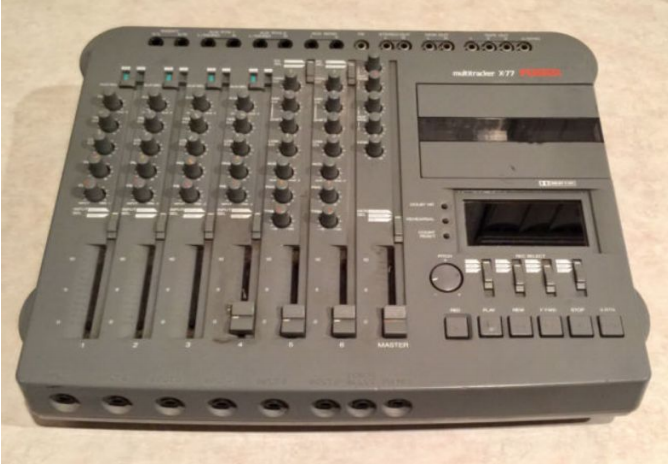
Get your Hands on a Four-Track
Pick up a cheap four or eight-track tape recorder, like most of us had back in the day. It will bring a level of simplicity to your process that you might find refreshing. In limiting your track count, an ear for spotting elements that detract from a track is fine-tuned because there just isn’t space for everything. You develop the habit of quickly letting go of anything that doesn’t add a vital component to the song. Become disciplined and force yourself to complete tracks using this and you will gain valuable production experience and perhaps some decent tracks in the process.
With most software having unlimited tracks, it’s too easy to just add another channel to add more excitement to an arrangement, instead of focusing on making three or four elements sound incredible first.
Many of my favorite classic tracks from the ’70s and ’80s were done with a limited amount of tracks. These songs rarely went over 24 tracks even with the inclusion of multiple channels of vocals and effects and many times up to eight drum channels.
Striving to convey your ideas with fewer elements is obviously not limited to a non-computer workflow; I have, however, found it too big of a temptation to overdo a nearly completed track on a computer, by adding yet another unnecessary VST chain to make it all “better.”
Limit Your Instrumentation
With the computer off, it’s gonna be pretty hard to use those VSTs. Now, let’s go hunting for that old keyboard lying around the house to generate your bass line. If you don’t have one then I would suggest buying an old analog synth. It may not sound very exciting at first, but if you push through the initial boredom you will typically yield unique sounds.
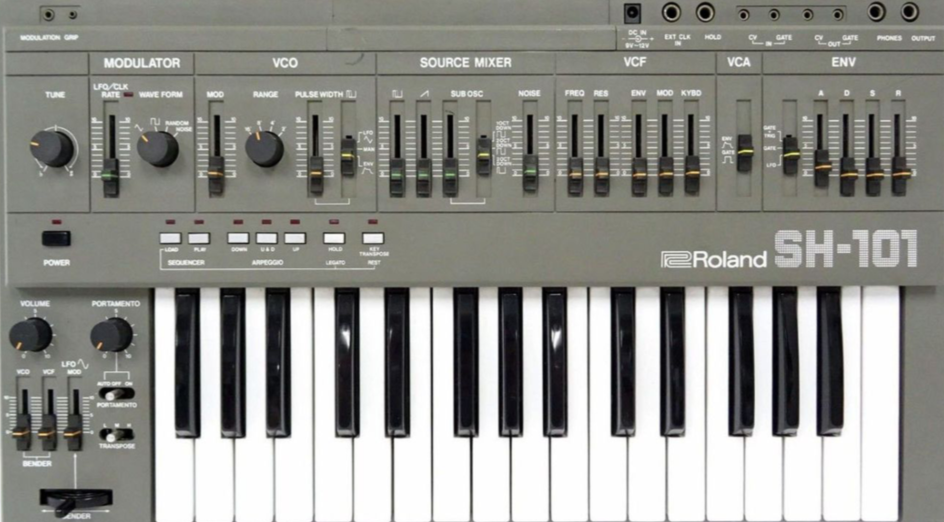
I would recommend grabbing something along the lines of what I use, the Roland SH-101. The SH-101 has now exploded in price but it was $300 and unpopular when I got it, so I’m sure there’s another synth out there for you. This was my only sound source for a long time. In being limited to only one synth, I learned a lot about each one of its functions and a great deal about subtractive synthesis in general. I suppose also because of the analog circuitry, I have never been able to generate a bass tone as punchy and with the types of harmonics it generates, from a VST, so that was a huge plus.
I learned how to synthesize most mono instruments on the 101 and generated a drum kit with kicks, snares, hi-hats, and conga sounds and sampled them. I also created interesting chords by sampling multiple individual notes, with sound variations in each note, into the sampler. So yes, onto the next crucial piece of your compact hardware setup: the sampler.
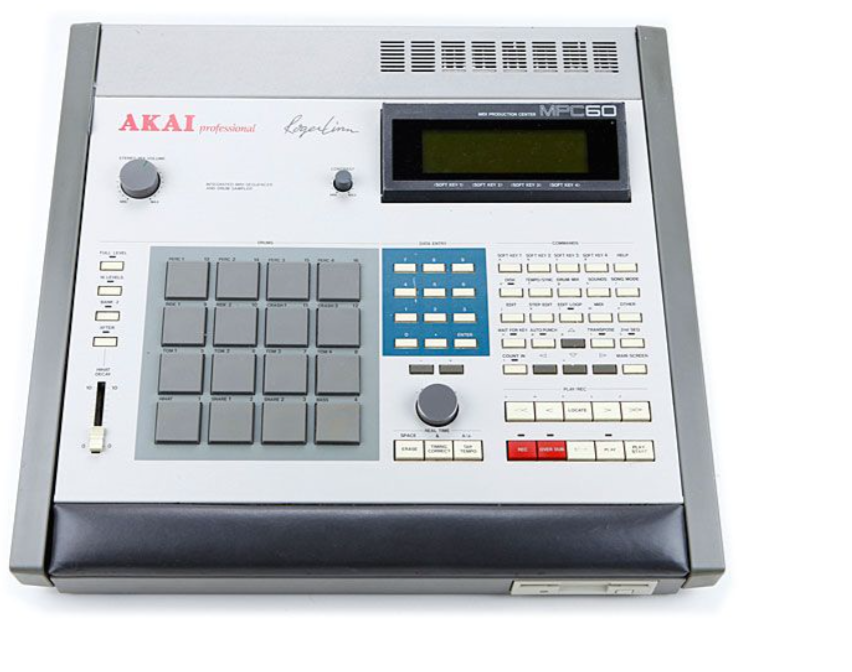
Sampler. Get One.
With an external sampler/sequencer or a drum machine, you can push the limited “classic” workflow even further. Instead of multi-tracking, you can instead build your song inside your sequencer and perform and record it stereo into your recorder with no extra passes or takes.
Too often, producers are making patterns and beats that unwittingly sound similar to others producing with software. Since most of these DAWs use the same cut/copy/paste sequencing tools as their competitors, it becomes a challenge to sound original. There are always those who can still break the mold using software, but they are the exception.
With a sampler/sequencer or an old boss drum machine with a guitar pedal, more authentic rhythms and sounds are easier to come by. When you develop this further with a sampler, very powerful kits can be created and stored.
Go Easy on the EQ
A huge advantage of this less is more workflow is definitely your EQ programming. As there are fewer sounds competing for space, there is more room for each sound to breathe. Each sound can be lightly sculpted closer to its original sound and without too much altering of its original character.
There are many sound systems at large venues which excel at highlighting music with less going on. With fewer frequencies fighting in your music, mixing in a chaotic live situation with the uncontrollable acoustics of the venue, becomes much easier. Unless you have a really nice EQ channel, rarely will boosting EQ improve the sound without introducing unwanted artifacts.
Some higher end EQs, however, may add a desirable color to the sound. It’s important nonetheless to first make sure the original sound source is sculpted how you want it without EQ being needed. Use your EQ pots instead to remove gain from trouble frequencies rather than boosting, then raise your channel volume for makeup.
Learn an Instrument
Learning an instrument can be a life-changing experience for anyone. When I first started writing and singing songs on the guitar as a teen, I was captivated by being able to get a depressing feeling or a bad sentiment out of my head and into a song. All of a sudden, it seemed as if I was able to observe these feelings from the outside looking in. I could best describe it as what happens during meditation when you teach your mind to simply watch and not react to troubling thoughts as they arise and they will effortlessly pass.
I regularly use the guitar to capture and work out melodies and ideas quickly without having to plug anything in. A piano is great as well, just without the portability.
Although our phones now have instruments of all sorts, they do not offer the satisfaction of an acoustic instrument with a sound chamber like the guitar, piano, or hand percussion. Spending time focusing on learning an instrument also creates a special connection with you and the music you make with it. Learning percussion like bongos, which you can take anywhere, will greatly help your beats and add new rhythmic creativity to your patterns.
Grab Something Modular
Getting your hands on some Eurorack modules could lead to an inordinate amount of fun. Oddly enough, as intimidating as it may seem to understand the myriad of cables and the difference between CV, Gate, VCFs, and VCAs in modular synthesizers, you are in fact simplifying your sound generation. Since you are buying the individual root components of a synthesizer, you have a lot more possibilities with sound design. Even simply patching cables in different ports and experimenting and sampling accidental sounds typically produces extraordinary results. It may appear daunting at first but instead of littering your track with a million VST sounds, one well-sculpted tone is much easier to arrive at with a modular synth. Even with a digital module, its DSP is solely dedicated to the function of the module.
In computers, the same DSP for your synthesizer is having to process many other background processes. It’s easy to see how the CPU availability for your sonic adventures with a modular is that much more abundant.
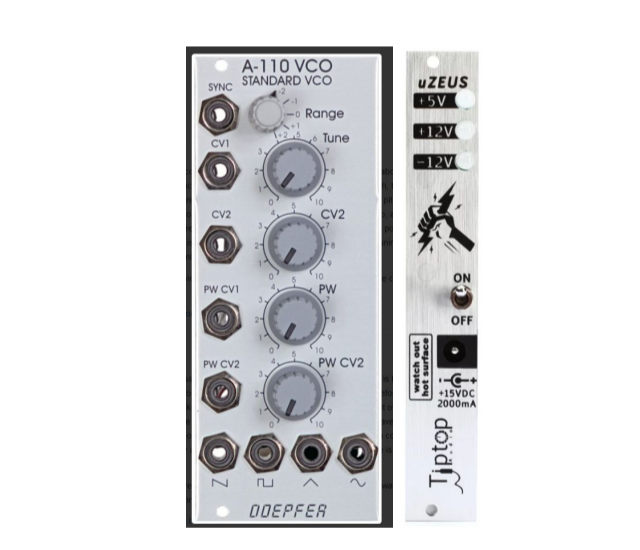
When making your first modular purchase, consider you will also need to buy a power supply or a powered case for your modules. Spend around a $1000 and you can have a powerful modular synthesizer with very open-ended architecture. But you could definitely get started with $300 for a simple, used power supply and oscillator to get things going and sampling away.
By sampling and chopping up the sounds from the modular to your sampler, you will have more control of your rig than with a CV sequencer. This is because one small touch of a knob on the module and the CV values you programmed in your sequencer have now changed. This is one of the only few downsides with modular song creation, which is why I suggest complementing your modular with a sampler/sequencer.
My first purchase for modular was the Social Entropy Engine eight-track MIDI sequencer with the CV expansion board. It is extremely fun controlling modules with CV and gates programmed on the engine along with the internal LFOs; the only issue is when you want to replicate that again, it’s difficult. Others see the impermanence and improvisational aspect of modular as the true beauty of it and I can see that as well.
Periodically Switch Up Your Songwriting Approach
It took me a while to realize that I always started creating a track the same way, with a kick drum. Now I sometimes start with a melody, chord progression, or even just a texture. Lately, I’ve been building the rhythm section first with the Cuban clave and adding instruments from there.
There is no right and wrong way to start a song or idea. Some say you need to have the song in your head first, and although this certainly does happen, tinkering and experimenting with new sounds can lead to musical directions you quite possibly would not have had otherwise. Start a new track differently next time and you might be pleasantly surprised at the ideas it inspires.
Bring It All Together
Once everything is up and running, the simplicity of limited machines might be a breath of fresh air for you. Even if you decide to return to software production in the future, the new skills and techniques acquired from having to work with a limited setup will be of enormous value for you as a producer.
Alpha 606 will be performing live at next year’s Comunité Festival in Tulum, Mexico. Also on the bill are Rhadoo, James Holden & The Animal Spirits, Lawrence, Vlada, Auntie Flo, and many more. More information can be found here.
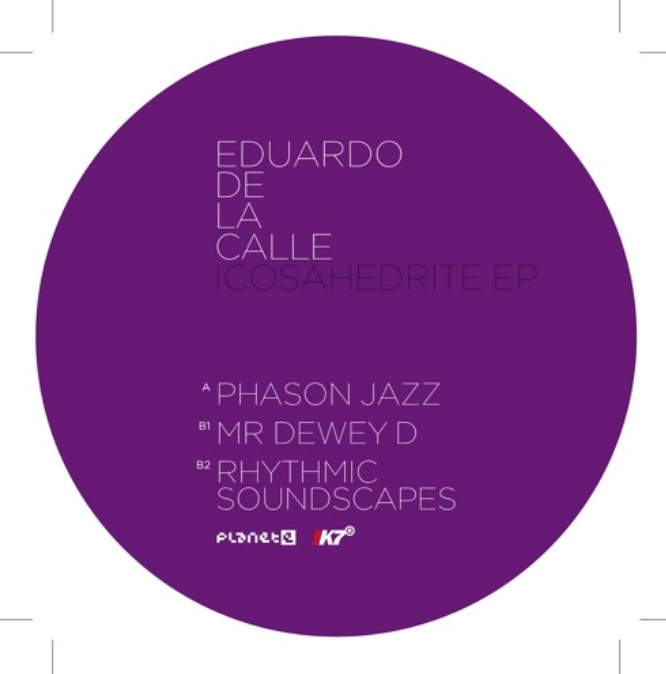
The word “Icosahedrite” refers to the geometric figure icosahedron and arises from the idea that the EP is an amalgam of electronic music styles with many other aspects of traditional musical genres, like jazz and blues. Metaphorically, those genres act as the multiple sides of an imaginary icosahedron.
The EP will be the Spaniard’s first solo release on Carl Craig‘s Planet E.
Tracklisting
A. Phason Jazz B1. Mr Dewey D B2. Rhythmic Soundscapes
Icosahedrite EP will land on January 26, with clips of “Phason Jazz” streaming below.
RAAR will soon present the first EP from label co-founder Louisahhh, A Trap I’ve Built.
The EP is supposed to create a bridge, in both theme and feel, between Louisahhh’s previous, dancefloor-oriented tracks and a more live-sounding, post-alternative industrial pop.
Louisahhh describes A Trap I’ve Built as an “intentionally brutal” body of work.”Wading through murky themes of rape culture, addiction, masochism, and deprivation, whatever isn’t explicitly lyricised bleeds through in a sonic ambush. It is my intention that listening to these songs, or DJing them, should be an experience that leaves the audience a little shaken up, something they can feel in their teeth. I hope that A Trap I’ve Built is delighted in because (not in spite) of the fact that it is upsetting,” she continues.
Tracklisting
01. Hey Trouble 02. To Me Right Now 03. Trap 04. Line 05. Like A Vice
A Trap I’ve Built EP will land on December 1, with “Hey Trouble” streaming in full below.