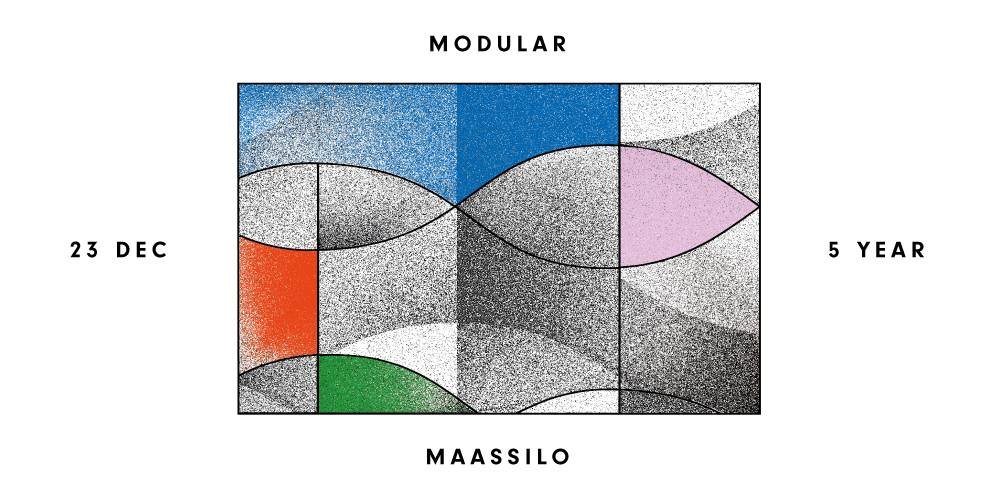
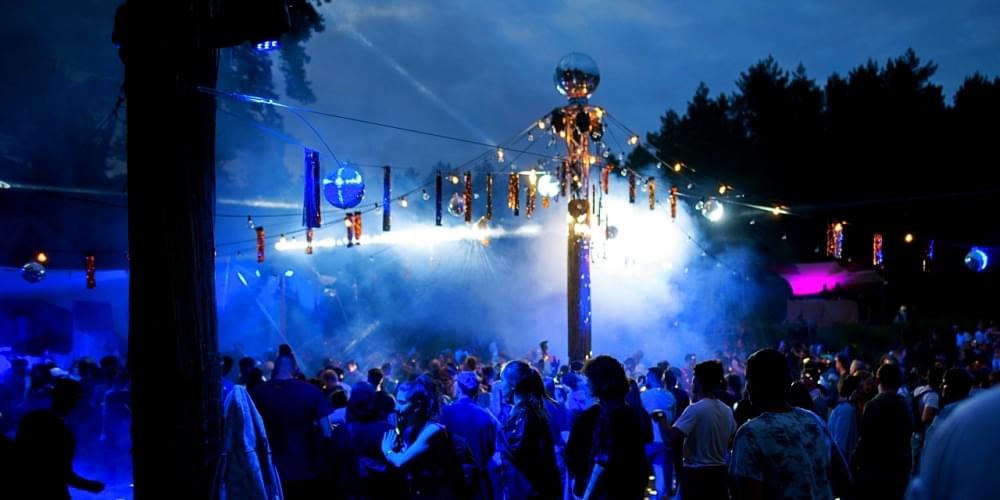
Rotterdam-based organization Modular is turning five this year and will celebrate the milestone with a big celebration on December 23 featuring artists such as Ben Klock, Bicep (live), and Job Jobse.
Modular is a well-known event organization in the Rotterdam nightlife. In the past five years, they’ve grown from a small club event to a respected organization with an extensive event portfolio.
2017 was a busy year for the team. In addition to Modular Festival, which took place for the second time, Modular organized a Factory Edition, a beach party, and a special performance by Colin Benders at Kino. Also, the first edition of NachtiBAR (a collaboration with the Leipzig-based organization Nachtdigital) took place last spring in the infamous nightclub BAR. Modular is finishing off the year with their five-year anniversary, at the Maassilo, on December 23.
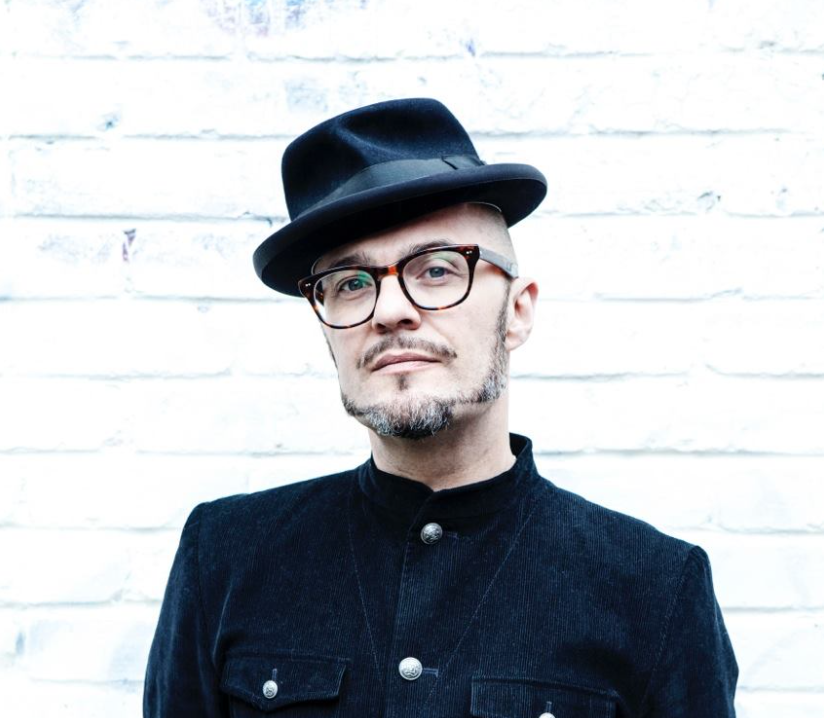
The boys from Bicep are no strangers to the Modular crowd, and they will play at Modular for the fifth time. The Irish duo released their long-awaited album in September and will be bringing their new live-set to the event. Modular resident Job Jobse will also be part of the anniversary. While at the same time, Berlin-based Ben Klock will close off the Maassilo’s main room. Another Modular regular, Philou Louzolo will play b2b with Amsterdam-based Max Abysmal. Kobosil, Deniro, and Rotterdam talent Stranger finish the lineup.
In addition to the musical program, a brand new project called ModulART, will be launched during the event. This project will showcase the works of Rotterdam-based artists and creative minds.
Tickets for Her Damit Festival 2018 are now on sale via XLR8R.
Her Damit is an intricate house and techno festival held at abandoned bunkers near Berlin. Ex-military backdrops, dense woods, and an intimate atmosphere ramp up the intensity while bringing techno-lovers from all over together.
A lineup is yet to be announced, but the first acts will be revealed in December.
Details
Start/End
Friday, June 8 from 10 am until Sunday, June 10. Guests can stay at the camping site until Monday.
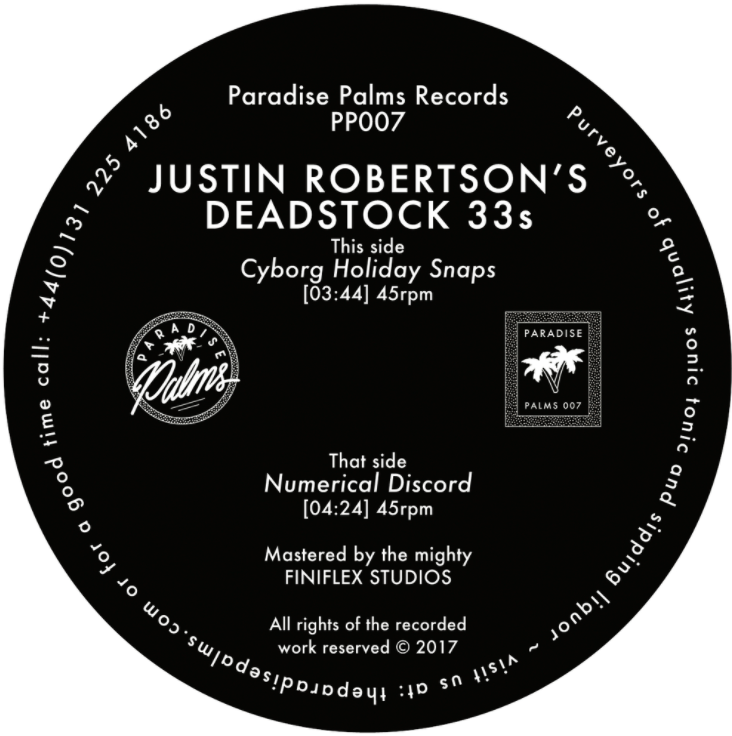
Dive-bar turned record label Paradise Palms will present a brand new 7” from revered producer Justin Robertson, a man with over 23 years experience as an innovator and restless proponent of forward-thinking music.
Robertson’s tireless work ethic has ensured that he remains one of the most relevant and exciting DJ-producers around. His latest incarnation as The Deadstock 33s has been garnishing lavish praise from figureheads such as Andrew Weatherall and Erol Alkan, as well as a diverse cross-section of fresh talent.
yoyaku has proudly welcomed Pola to its AKU sub-label, adding the Kuku EP to a consistent catalog of sleek, minimal house by the likes of Janeret, Varhat, Clébert, and Molly.
Kuku marks AKU’s eighth release and Pola’s third, following recent EPs on Finale Sessions and on his own All Inn Records.
The record’s title Kuku derives from a playful word used in Russian children’s games, not to mention its alliterative ring with the record label’s name. The two-track EP is said to “showcase Pola’s streamlined production style, wasting no time in delivering focused dancefloor energy.”
Pola (a.k.a Norbert Dunai), first established the Polarize alias while building a reputation as resident DJ of Romania’s Midi Club in Cluj Napoca. In 2009, he founded All Inn Records, a vinyl-only label known for culling the brightest young artists in underground electronic music. After nearly a decade of ushering in sounds at the forefront of the scene, the Pola moniker was born as a vessel for Norbert’s work as a producer and remixer, through which he injects his own style into a musical wave he helped to inspire.
French DJ-producer Sébastien Léger has scored the soundtrack to the fictional game “Vastatron.”
Away from his diverse musical palette which encompasses a wide range of electronic sounds, Sébastien’s other passion is retro video gaming. More than just a hobby, Sébastien not only owns his own arcade room complete with full-size classic machines, he has now scored the stunning soundtrack for the fictional video game titled “Vastatron.” Comprising of seven originally composed tracks, each production is said to provide the perfect setting and backdrop for the fictional world of “Vastatron.”
“Motorway,” a dramatic offering fused together by fluttering synth melodies, is taken from the LP and can be downloaded in full via the WeTransfer button below.
Up next in our Real Talk series is Rod Modell (a.k.a. DeepChord), a dub techno luminary and sound-designer with 25 years involvement in electronic music and over 50 releases under various aliases and styles. He’s featured a lot on the XLR8R pages over recent months, with an Influences podcast and a number of release reviews, but this submission is sure to incite some discussion.
Just several months ago, XLR8R reached out to Rod see if he’d be open to a feature and/or a mix based on his latest LP, Auratones. Needless to say, a lengthy email exchange began that covered various different topics, including the modern state of music journalism, Andy Warhol, and the inherent lack of diversity or imagination in interview questioning. Buried within one of Rod’s replies, a detour if you like, was a fairly detailed passage seemingly suggesting that recent techno music is “irresponsibly” made and that it may be “destroying nervous” systems through its harshness. “The beauty in techno is gone,” he explained, adding that his most recent sound collages are inspired “more by Andy Warhol’s artwork, or William Burroughs‘ cut-ups more than any music.” Naturally intrigued to know more, XLR8R asked him to elaborate as part of our Real Talk series. This is what he had to say.
In the 1990’s, I began collaborating with Michael Mantra. Mike was an extremely gifted musician who lived in California and specialized in brain-hemisphere synchronization music. He understood how to effectively incorporate binaural beats within music to induce positive states of consciousness. We were label mates on Kim Cascone’s Silent Records label.
Working with Mike taught me lessons that I regard as some of the most important things I’ve learned about making music, and still practice today. Mike taught me about the world of “soft noise.” He taught me about the responsibility of making sounds that don’t disrupt the subtle energy fields (“chakras”) of the human physiology and to use sound as a gradient for creating positive states of mind and improving the lives of others.
“Music can miraculously heal conditions that modern medical science can’t. But music can also negatively affect one’s well being if the sounds are used carelessly.”
When I first started working with Mike on projects, it was difficult. I would contribute sonically, and often Mike would let me know that my parts weren’t “soft” enough. He classified sounds into two main categories: “soft noise” and “harsh noise.” Often, the sounds that I was using back then were a little too harsh for Mike. I accepted his (constructive) criticism and continued working diligently on the collaborations, making adjustments to the sound as Mike suggested. At the end of the project(s), I felt that I learned more than I could have from any music university. Mike taught me that music was more than merely sounds arranged in scale. He taught me that these were energy fields that interact with the vibratory fields of human beings, and can positively (or adversely) affect people. Music can miraculously heal conditions that modern medical science can’t. But music can also negatively affect one’s well being if the sounds are used carelessly. Sadly, Mike passed away in 2014. It was a tremendous personal loss for me… and for the world. I am deeply thankful for the privilege that I had to be a student of his. He professed a Zen-Buddhist approach to sound-design with a higher purpose—sound that wasn’t merely for entertainment, but for human transformation and healing.
“When you combine harsh noise and one of these monster sound-systems, there is serious potential for damage and physiological unbalance.”
In the past decade, I’ve experienced some commercial success with my music and had the opportunity to play in clubs around the world. In these travels, I’ve heard many things that make me think about Mike’s teachings. I think that techno is getting harder and harsher in recent years. I was watching a certain artist perform recently in Berlin and honestly had to leave after about five minutes into the set. It actually felt like I was sustaining nervous-system damage. It was brutal. After this experience, I started contemplating what the artist’s responsibility is in all of this (if any). When we perform, we are hurling sonic projectiles at people. The sound-systems installed in these clubs today are getting more and more massive and powerful. When you combine harsh noise and one of these monster sound-systems, there is serious potential for damage and physiological unbalance.
I came into the “techno world” during the early 1990’s in Detroit. The music was soft and round back then. There were lush strings, melodies, layers of exotic percussion, and references to jazz and soul music. Over the years, the sound keeps getting more and more scaled back, and it seems that today, many tracks are just skeletons of the deep warm sounds of early Detroit classics.
And to be honest… I AM a fan of reduction, but I think it’s more important to pay attention to the “harshness-factor” in this reduced sound. When you have so much negative space in a track, what’s there is 10 times more important. In many ways, I think the music being created today is a response to the huge sound systems popular in clubs lately. Artists are creating food for massive Funktion One and Void Acoustic systems. It seems to me that these systems are amazing at reproducing hard transients, and maybe less good at reproducing layered textures with slower transients. Whatever the reason, the sound is getting harder and more physical, so perhaps more care is necessary in selecting sounds used in the music.
To be clear, I am not suggesting that music be made in any particular way over another way. I’m merely suggesting my observations and offering food for thought. Maybe softening things a little could make it more cerebral? Giving more attention to the way sound affects the mind instead of just thinking about the feet could be good.
Enveloping a dancefloor in a strange mystical ambient fog floating above the kicks and bass, blurring the edges a little, and making the sound fuzzier could be a good thing. I think there is an increased popularity in ambient music these days. It seems ambient had it’s heyday back in the mid-1990s, and then became progressively less popular. Maybe this recent resurgence in ambient popularity is a reaction to the harshness experienced on the dancefloor? Maybe we’re craving something to counterbalance this aggressiveness?
“… this subtle beauty seems to have been replaced by pummeling, bludgeoning intensity.”
Some new dance music is more aggressive than the hardest Japanese noise music or heavy metal. Back in the early ’90s, techno presented a science fiction aesthetic. It was futuristic art. Music to be played inside the Niterói Contemporary Art Museum, or a planetarium before the show started. It was subtle, inducing visions of celestial bodies and outer space. I vividly recall the intergalactic artwork by Rufus on Transmat in the ‘1990s. Rufus’ artwork was the visual accompaniment of this futuristic sound. But this subtle beauty seems to have been replaced by pummeling, bludgeoning intensity.
Sometimes this can work for the short term. It induces excitement when you walk into a dark, foggy club. My concern is the long-term effects this can have on the nervous system. The cumulative effect… considering Mike’s teachings mentioned above. And also, once again I want to reiterate, I’m not going so far as to make any conclusion about what is better or worse, but to provide food for thought. Maybe it’s worth experimenting with softer forms of dance music. I am seeing some artists who once were only known for their hard aesthetic, branching out into more exotic forms of electronic music. Anthony Child’s Electronic Recordings From Maui Jungle Vol 1&2 come to mind.
Also worth touching upon is timelessness and disposable nature of modern techno tracks, and the possibility of there being some correlation to the “softness of the sound” influencing this. I’ve noticed many of the hardest techno tracks seem to be released, peak-out, then dwindle into obscurity all within in a short period of five or six months. The music is seemingly becoming more disposable. There aren’t as many timeless classics being introduced today.
“I wonder if the harder-edge of current tracks contributes to a shorter lifecycle of the music.”
Stuff like Aril Brikha’s “Departure in Time,” Moritz von Oswald and Mark Ernestus’ “Round One – Round Five,” “Lifestyles Of The Laptop Cafe” by The Other People Place, or “Soundtrack [313]” by The Detroit Escalator Company. These records were milestones for me. Like the classic ambient releases on Apollo (sublabel of R&S Records in Belgium), and Kompakt. When I bought these records 15-20 years ago, I was amazed when I first played them, and they didn’t leave the turntable for months. I wonder if the harder-edge of current tracks contributes to a shorter lifecycle of the music. Much of today’s dance music is only applicable to the dancefloor, rather than something one would listen to in a quiet living room while having a cup of coffee. It seems that with some of the old techno classics, they were just as enjoyable in your car, driving around Detroit on a cool autumn day, as they were in the club. Music that has a meaning outside of the club-setting may better transcend into the realm of “timeless music.” Softening up the sound a little could give a dual functionality to modern tracks.
I think in many ways, hard rhythm and bass provide the propulsion of a track, but the subtle ambient details stimulate the mind. Many artists are only concerned with the propulsion element today, but the awesome beauty of a track lies in the quiet details. The majesty of a track lives in the soft, out-of-focus bits that you didn’t realize you’ve heard until they’re gone. The sounds of the peripheral. These are the sounds that take the mind on a journey and provide balance. These are the transformative sounds.
MUTEK has announced its first US edition, taking place in San Francisco from May 3 – 6, 2018. The announcement signals MUTEK’s existence in seven cities across four continents, with SF joining Montreal, Mexico City, Buenos Aires, Barcelona, Dubai, and Tokyo.
The event will be helmed by two experienced co-directors: Surefire Agency founder Miroslav Wiesner and Gabrielle de Villoutreys. Lineup and venue announcements are are set to arrive in the next few weeks and in the meantime, MUTEK.SF is seeking performance proposals from American artists and those residing in the area.
You can find more information and submit artist proposals here.
Titled You Are Safe, the album’s title and theme “illustrates the safe-haven Keinemusik has built itself over the last eight years” with their core crew of the aforementioned artists, DJ Reznik, and painter/visual artist Monja Gentschow. The 10 tracks on the LP encapsulate what Keinemusik stands for, flowing through atmospheric house, broken-beat grooves, trippy tribal cuts, and more pop-inclined R&B hybrids. Outside of the core producers, the album features contributions from London-based Chiara Noriki, Jennifer Touch, and former Hercules And Love Affair and Jessica 6 member Nomi Ruiz, who is also the voice of Keinemusik’s NR& project.
You can pre-order You Are Safehere ahead of the November 24 release, with “Civilist” streaming in full below.