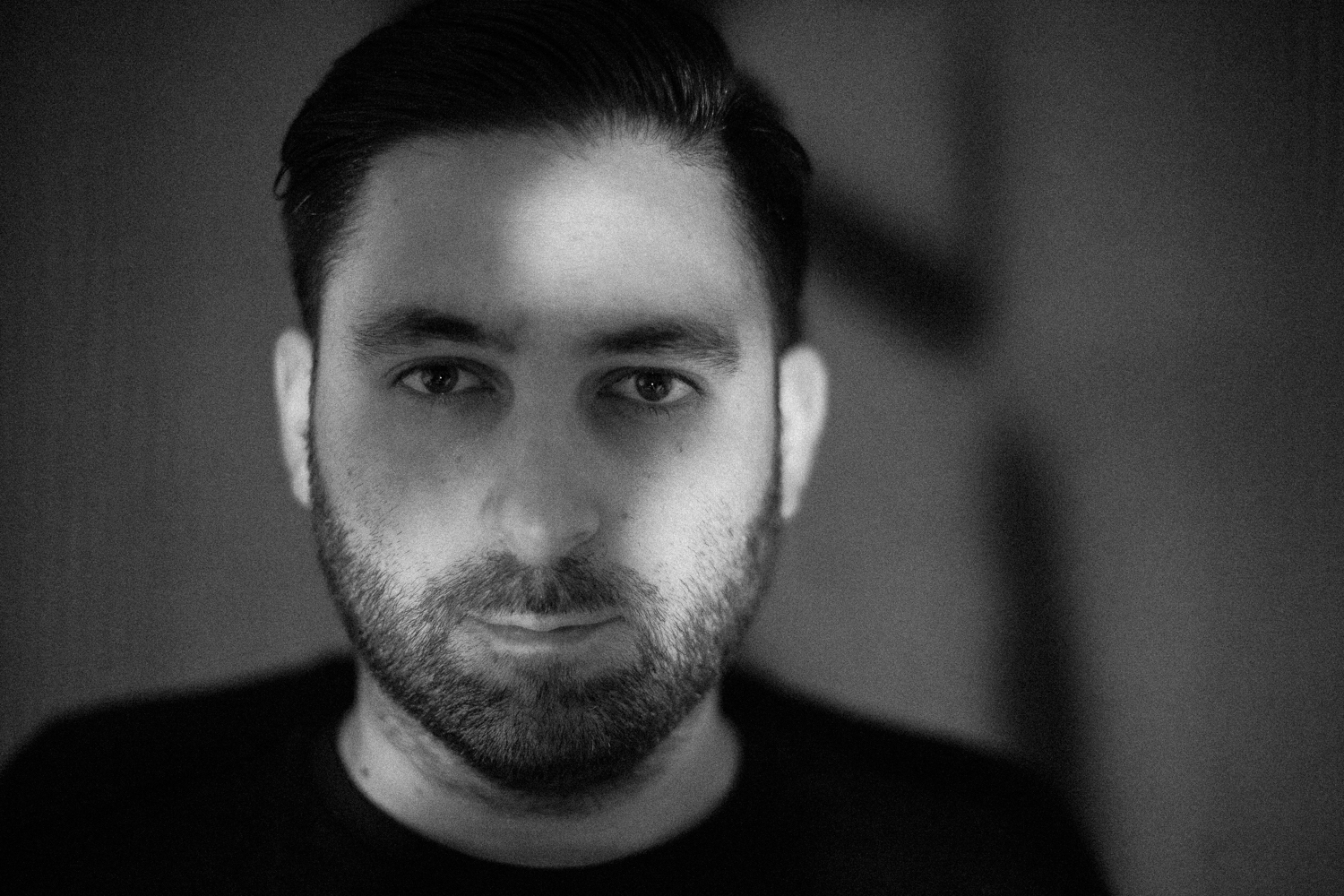
Real Talk: Cosmin TRG

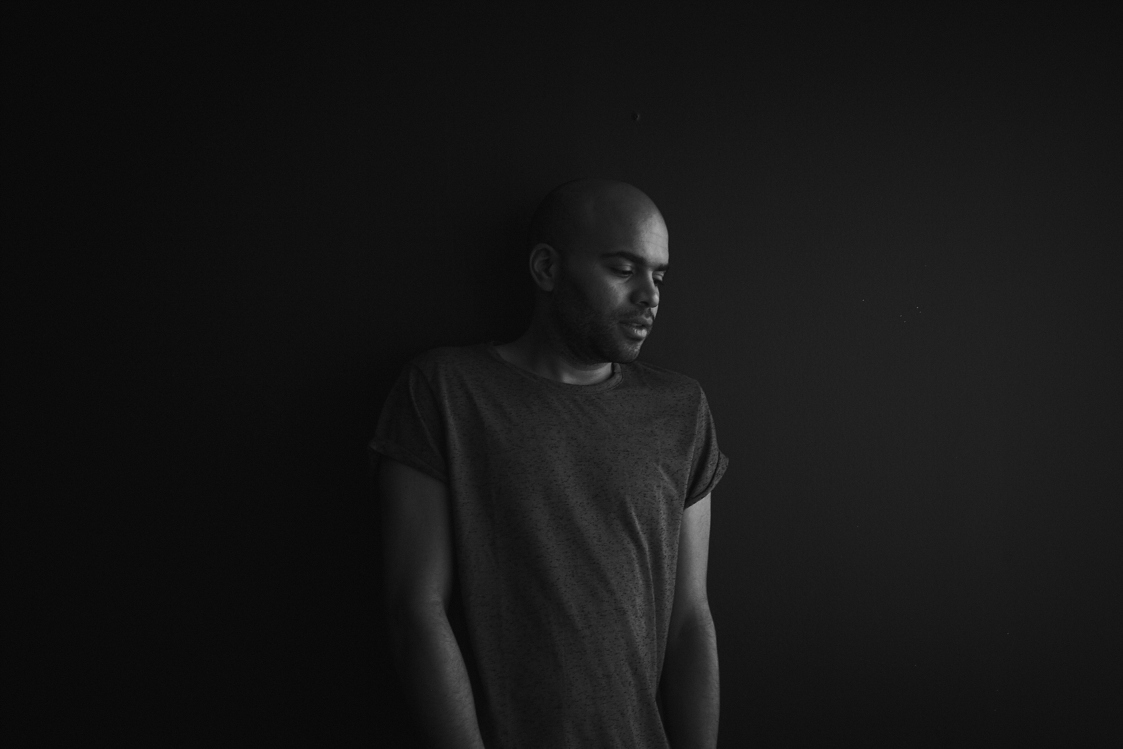
Our Real Talk series returns, this time with Cosmin TRG, formerly known as TRG, and now one of dance music’s ubiquitous figures. Throughout a career spanning almost a decade, the Berlin-based Romanian producer has released music with Hessle Audio, Hemlock, Running Back, Rush Hour, and 50Weapons, building a diverse and iconoclastic catalog in the process.

Taking cues from ’90s era leftfield electronics, warehouse techno, the pioneers of early lab recordings, and minimal film scores, Cosmin TRG has created his own brand of modern, textural sonics in a contemporary context. His flair for abstract, low-end drum section methodology and a natural propensity for sculpting arresting soundscapes have earned him a solid reputation with audiences, peers, and critics worldwide.

After a flurry of releases, including two full-length albums (Simulat;2011, Gordian; 2013), Cosmin TRG recently returned with a new two-track EP on Sportiv, his first release of 2017. Though impossible to pin down, there’s a distinguished and distinguishable sonic personality about all to that which bares Cosmin’s name, from his earlier work to his more techno releases of more recent years. But that’s what makes him the essential electronic talent that he is.

For this month’s Real Talk, he offered to explore how social media has broken the dance music ecosystem.

“Ugh, not the fucking Novotel,” I winced, muffling my disgruntled moan with my memory foam flight pillow. Air meets the eyes and feels like sandpaper, muscles ache like having just gone through the trials for a Japanese TV show, thoughts racing at Warp 10. An excruciating 50-minute flight from Berlin to Amsterdam can do that to a man.

Well now, the paragraph above is all tongue in cheek, but could easily describe the agony (or perception of it) of touring DJs. Recent events have highlighted the plight of event promoters who need to cater to artists’ requests or put up with their respective borderline psychotic management. As the harrowing affair was exposed on social media, details of the experience went viral in meme form. The artist’s lodging requirements became the object of online derision, the mobs drew blood, and privileges were checked. The trivial issue of riders surfaced again in the public eye, but wasn’t it just the tip of the iceberg? Haven’t we constructed a glamorous image of a scene, only to scoff at its inanities when they’re fed back to us?

“The role of social media has completely and unequivocally changed the dynamics of dance music, how it’s made, who it’s made for and how it’s consumed.”

The role of social media is sort of the industry’s secret of Polichinelle. It has completely and unequivocally changed the dynamics of dance music, how it’s made, who it’s made for and how it’s consumed. The “scene” is a construct, and it operates with myths, which it would rather see unchallenged because its very identity is at stake. There are many things people who work in the industry will not address, for fear the sheen would quickly wear off. However, there is an urgent need for transparency and myth-busting so we can clean out tired stereotypes.

Social media has undoubtedly had immensely positive effects on dance music. The ability to connect like-minded individuals and present them with cutting-edge music instantaneously is one of the biggest gains of our times. Geographically isolated scenes have flourished and the benefits of instant cultural communication are undeniable.

At the same time though, we are witnessing a shift in how the message is delivered. Facebook, Twitter, and Instagram have taken over traditional media as visual-based channels. How do you communicate new music, for instance, over media that’s focused on the visual and not so much on the audible?

Attention has shifted from the actual music to its visual signifiers. Crates of vinyl, rows of modular knobs and blinking lights, dusty MPCs have become the norm in the visual communication of electronic music, that caters to a form of rather passé fetishism. This, in turn, has a collateral effect on artists who don’t adhere to this visual code. Having a strong catalog is no longer sufficient; one has to master the several media platforms and produce relevant, engaging content for as many users as possible. Disgusting marketing speak, right? And yet it has come to this. The quest for likes, followers, validation is a reality in dance music that won’t go away too soon.

Here’s the deal: social networks have gone from the faceless, stateless, trans-geographic utopias of IRC, forums, and mailing lists to the carefully curated personal branding islands of sexless narcissism of Facebook and Instagram. As a social ecosystem, dance music relies heavily on communication and community; it relies on social media. But their premises do not coincide.

For dance music, art is its main product. In social media, you are the product. As such, platforms will treat artists like businesses, and not like generators of content, taste-makers or opinion leaders. For instance, through its algorithms, Faceboook has made it impossible for artists to share their music, by severely limiting the visibility of relevant posts and favoring memes, selfies, and sponsored content. Whenever you see that an artist has a sponsored account, you assume there’s some kind of corporate interest behind, when in fact it might just be that artist’s only way to make sure someone sees their posts.

Whenever I share a music video or a release that I like, Facebook offers to “boost” it for me, for X amount of money, so it reaches a certain audience. Even then, the algorithms are not transparent and you end up engaging with an army of bots that are totally removed from your real community. Some will argue that as an artist that gets paid, you’re sort of a business, so you should sort of pay for using a service. But last I checked, Facebook’s mission was to “Give people the power to build community and bring the world closer together.” There’s nothing there about making you pay for it.

Indeed, the issue of music promotion on Facebook might seem frivolous compared to how insidious the whole platform really is. Instead of merely empowering its users to have a voice, Facebook tracks their online behavior, mimics social patterns and then plies them with advertising. It essentially sells you, or a version of you, back to you.

This brings me to the critical topic of how we broke the dance music ecosystem. Music is no longer enough; we need narratives. We need online personas, we need visual aids to navigate an increasingly crammed pool of artists vying for attention. And the attention span is increasingly smaller. Technology has democratized access to music production and consumption. On the other hand, social platforms have infantilized the process and how it’s presented to the world. It’s left specialist press outlets hanging by a thread.

Look, taking selfies with your modular setup is the new taking press pics with your silver Sony headphones. Most DJs look goofy, uncomfortable, sullen or distraught in official photos because there’s only a number of things you can do with your hands. There’s only so much food on a plate that you can take pictures of and boast on Instagram.

The circuit by which release news makes it onto specialist online media outlets is in itself gradually unsustainable. In his The Ransom Note piece, Dan Cole explains the plight of contemporary music journalism: “In today’s age, I now know very few full-time paid music journalists, and out of that, a very small percentage make their living without having to supplement their income through erroneous tasks such as marketing, bar-work, or even PR. (By the way, if you are one of those operating within the duality of PR and journalism, itself being a huge conflict of interest, you are a betrayal to the cause).”

In the midst of a growing demand for a democratized scene, social media and press outlets have helped to create a dance music aristocracy. Its select few members are mentioned incessantly, as they rake in the clicks of their pious fans. Their mundane activities are turned into news-worthy material. A twitter statement on the enduring vinyl versus mp3 dispute will be blown to epic proportions. Their culinary/ lifestyle/ sartorial preferences will be paraded over several “socials,” in a thinly veiled attempt at creating shareable content.

In turn, the obsessive focus on the same 100-something household “brand” names gives the general public the impression that there is an elite group, a Super League; outside this bunch, the other artists seem like hobbyists who should really try a little bit more. One look at festival lineups and club nights will reveal a somewhat homogenous booking policy.

Again, the divide between public discourse and market reality couldn’t be deeper: as audiences and taste-makers clamor for diversity and change, bookers have to work within the confines of economic reality. Often, it becomes a game of one-upmanship where clubs compete against each other by stacking up lineups with more royalty than a Berghain anniversary for a 300 capacity venue. A delectable experience for the audience I’m sure, but one that upsets the natural dynamics of a scene and is ultimately confusing.

There is probably no quick fix to the status quo. By the looks of it, many things we hate about our scene are only going to get worse. But I think it’s absolutely essential that we acknowledge the immense progress that has been achieved in recent years and start a conversation. In a world that’s rapidly changing, and not necessarily for the better, it’s now more important than ever to send a clear, strong message of positivity, inclusivity, equality, and community that has been the pillar of dance music for decades.

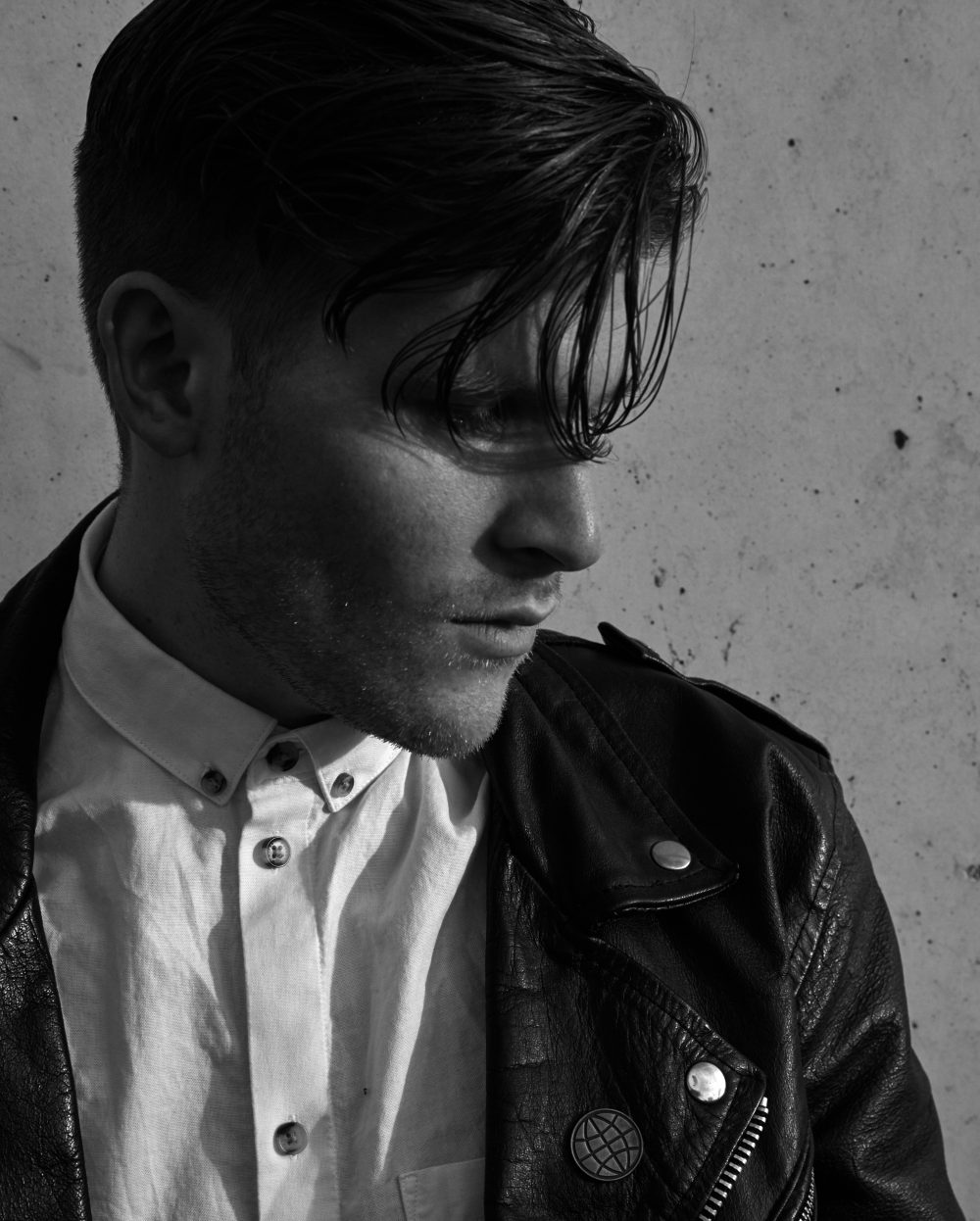
Tom Trago ‘Rain Room’

Yamaha’s DX series of synthesizers has long been a source of inspiration for Tom Trago. The DX7, in particular, appeals to the Dutch producer thanks to a unique sound that he describes as glassy but classic and icy.

34 years after it went on sale—the same year as Trago was born, interestingly—the synthesizer’s sound still bristles with a futurist appeal. Trago, who was partially trained in how to use the DX7 by studio friends Bok Bok, Sterac Electronics, and Juju and Jordash, has decided to pay tribute to this most distinctive of synthesizers by using it as inspiration for Serene Waters, his first EP for Voyage Direct since 2014 epic Hidden Heart of Gold.

Across the course of five sparkling, spacey and melodious tracks, the Voyage Direct chief showcases the variety of sounds that can be teased from the DX7.

Serene Waters is out on October 16, with “Rain Room” available to download now via the WeTransfer button below.

Tracklisting

01. Harvest
02. XYZ
03. Rain Room
04. Opulent (Without Mix)
05. Opulent (Within Mix)

Stream Yair Elazar Glotman’s Evocative New Album in Full

Yair Elazar Glotman‘s latest opus is out today on Subtext Recordings.

Glotman—under his own name and monikers Blessed Initiative and KETEV—explores the outer reaches of the sonic universe, forging new textures and alien-like atmospheres through new processes and meticulous sound design. His latest album, Compound, follows where 2015’s Études left off, presenting two evocative long-form pieces that are at once beautiful, menacing, and poignant. Recorded as a trio with pianist Rieko Okuda and percussionist Marcello Silvio Busato, Compound confounds the listener with a swirling barrage of foreign sounds, sounds drawn from the outer edges of familiar instruments and the microscopic details often overlooked (think the pluck of a string or the clunk of a piano key). The recordings were then layered and reformulated by Glotman into the two full pieces on the album.

In support of today’s release, Glotman and Subtext have offered up a full stream of the album, available via the player below.

You can purchase Compound release here.

Premiere: Hear a Track From François X’s Debut Album

François X‘s awaited debut album will land on his own DEMENT3D imprint on October 23.

The album, titled Irregular Passion, follows a string of EPs on DEMENT3D and will be the French techno artist’s first of 2017. The LP was inspired by the intense possibilities of nightlife and the “euphoria and melancholy, spotlights or incognito, sexual contact or lonely voyeurism” that comes with it. Musically, the album follows this trajectory beautifully, presenting a collection of cuts that, although all loosely sitting in the techno spectrum, offer a wide-ranging look at François’ enticing production chops.

Irregular Passion will be available on vinyl and digitally on October 23, with album cut “Down Under” (feat. Opuswerk) streaming in full via the player below.

Floating Points Preps New 19-Minute Track

Sam Shepherd (a.k.a Floating Points) will release a new 19-minute track, titled “Ratio,” on October 19.

“Ratio” is described as an “epic rack bordering on 19-minutes that harks back to his earlier dance floor focus releases.” It was developed over the course of the summer as part of the UK artist’s solo live electronic show at festivals around the world.

The full-length version will be available on all digital platforms.

The track will also be available on vinyl, presented as a deconstructed mix of the 18+ minutes. The A-side of the vinyl will feature the track in two parts: the first nine minutes being identical to the digital version, followed by solely the organ section of the second half. The vinyl’’s B side, in contrast, will feature the beat/drums and bassline of the second half of the track in isolation.

Releasing the track in such a fashion, Shepherd encourages DJs to create their own mixes by bringing the different elements together in their own style.

Tracklisting

A. Ratio (Pt. II Organ)
B. Ratio (Pt. II Dub)

Pluto will release “Ratio” on October 19, with clips streaming below.

Levon Vincent ‘For Paris’

In dance music, Levon Vincent has a voice. A distinct voice through his music and his presence on social media. Since he announced his second LP For Paris with a long post in his usual, seemingly unedited style, there has been tangled debate on his Facebook page, from praise and support, to rejection and attack. Did he apologize adequately? Is this a PR stunt? Is it more about him than the victims of the attacks? Is he profiting from a massacre? and so on…

I remember when the controversy over his comments about the Paris attacks in 2015 was going on. His voice was more present on social media then, and what I appreciated was that it sounded like a human being—a soup of smart stuff, dumb stuff, contradictions, etc. It felt like the root of his comments was well-meaning; he just didn’t think or edit himself enough to consider their real implications. That he took the backlash seriously and has produced a work based on all that material is admirable and significant. I wish more producers in the dance idiom worked consciously like this—autobiographically, if you will—and engaged with social issues.

Because if the message on the dancefloor goes beyond the more common themes of sex, ego, escape, etc.—all of which are important and relevant (like Levon’s “Double Jointed Sex Freak”)—and also into social and political issues, then we’re talking about a dancefloor that’s intellectually more diverse and progressive. And perhaps more ethical than an exhibit of solely base messages, however effective they might be at getting people off. This makes me think of the nature of roots music. Social subjects, fundamental issues, poetic content. I think many mature people would agree that a dancefloor that’s predominantly about getting mashed and having sex has its place, but quite a small one, considering its social and individual potential.

But is For Paris for the dancefloor? I picture a meditative time at home with it in a special introspective mood. “Late Reflections” has the kicks and arrangement and length associated with the dancefloor. But it didn’t make me move. It’s got a sharp and bold melody that made me think of Steve Reich’s “New York Counterpoint,” but without the melodic and harmonic complexity.

The most ambitious piece is “Hope for New Global Piece – In 3 Parts.” There’s something innocent, even infantile about the quality of the sounds and the melodies. The transition from the first to the second part is sloppy. Really the composition and the three-part split feel like sketches. If this is what Levon’s hope for new global peace sounds like, it sounds undeveloped, unedited like his written statements. I imagine cartoon bunnies hopping around a prairie, not broken societies healed and men and women living on Earth in peace.

Many of the tracks do sound like musical expressions of their titles. I would be interested to hear in what order Levon’s composition went. And perhaps that’s one of the issues here, one of the reasons why it doesn’t quite work for me: here is a dancefloor producer and DJ with an audience used to bangers and deep tunes for the club. But here Levon isn’t channeling the energy of the rave, but inviting us to consider ideas such as what the world would be like “If We Choose War” or “If We Choose Peace.” Is a house LP an adequate artform for this task?

Nothing alive is static. And so it’s common for a person to find an artist, fall in love with them, and then fall out of love with them when their work changes, or doesn’t change. Or when they themselves have changed. I give a lot of respect to Levon for having the confidence to push forward. My favorite records of his from around 2008–2010 are alive and will be as long as people play them. Like any career, as long as he keeps producing, lasting work will come.

For Paris has an avant-gardist taste, and the homemade artwork and written statements ring sincere. It’s easy to bitch and jump on Levon’s unedited words. The guy is an artist, not a politician. He’s a public figure, he does have social responsibilities, but the attention should mostly be on his musical and artistic statements. So, does For Paris create peace?

For Paris is available for free download here

Blackest Ever Black to Release Silvia Kastel LP

Blackest Ever Black will soon release the next album from Silvia Kastel, titled Air Lows.

The Italian artist debuted on the label last year with cassette-only mix called Bibula Harena; this will be the first album released on the label, though she has put out several others of varying genres elsewhere.

We’re told that the LP was prompted by a “late-flowering interest in techno and club music.”

Tracklisting

01. Target
02. Bruell
03. Air Glow
04. Air Mob
05. Heart 2 Tape
06. Spiderwebs
07. Concrete Void
08. The Closer The Stranger

Air Flows is scheduled for November 10 release.

Wolfgang Voigt, Dixon, and I:Cube Remix Vermont

Dixon, I:Cube, and Wassermann (a.k.a Wolfgang Voigt) have remixed tracks by Vermont—the collaborative project of Marcus Worgull and Danilo Plessow (a.k.a Motor City Drum Ensemble).

II Remixes features two tracks from the duo’s last album, II, which came out earlier this year. Meanwhile, “Paradigma” is a previously unreleased track, and sees a rework by Wassermann.

Tracklisting

01. Vermont “Dschuna” (Dixon Mix)
02. Vermont “Dschuna” (Dixon Instrumental Mix)
03. Vermont “Skorbut” (I:Cube Mix)
04. Vermont “Paradigma” (Wassermann Krautramatrik Mix)

II Remixes is scheduled for October 24 release, with clips here.

Burial to Debut on Boddika’s NonPlus

Burial will release a new EP, this time on Boddika‘s NonPlus label.

The two-track release lands just weeks after Rodent, the London artist’s latest single that landed just over three weeks ago. It will also be his first release away from his regular label, Hyperdub, since 2015’s Temple Sleeper on Keysound Recordings.

Tracklisting

01. Pre Dawn
02. Indoors

NonPlus will release Pre Dawn/Indoors on vinyl and digital on October 27, with clips available here.

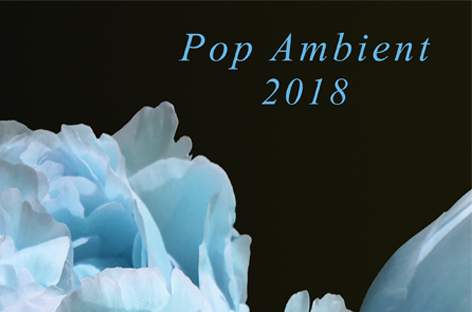
Kompakt Reveals Pop Ambient 2018

Kompakt has announced revealed this year’s Pop Ambient series compilation.

Launched in 2001, Pop Ambient is one of Kompakt’s best-known series, having hosted many well-known tracks, all compiled by label co-founder Wolfgang Voigt.

Included this year are tracks from The Orb, Jens-Uwe Beyer, T.Raumschmiere, Kaito, Mikkel Metal, and more. It will land on November 17 on vinyl and digital.

Tracklisting

01. Fresco & Pfeiffer “Splinter”
02. Yui Onodera “Prism”
03. Chuck Johnson “Brahmi04”
04. Triola “L’Atalante”
05. Kenneth James Gibson “Disinclined To Vacate”
06. Kaito “Travelled Between Souls”
07. Mikkel Metal “Shame”
08. Jens-Uwe Beyer “Athos”
09. The Orb “Sky’s Falling”
10. T.Raumschmiere “Eterna”
11. Würden & Pfeiffer “Panorama”
12. Yui Onodera “Nine Chains To The Moon”

Pop Ambient 2018 is scheduled for November 17 release.

Page 504 of 3781
1 502 503 504 505 506 3,781