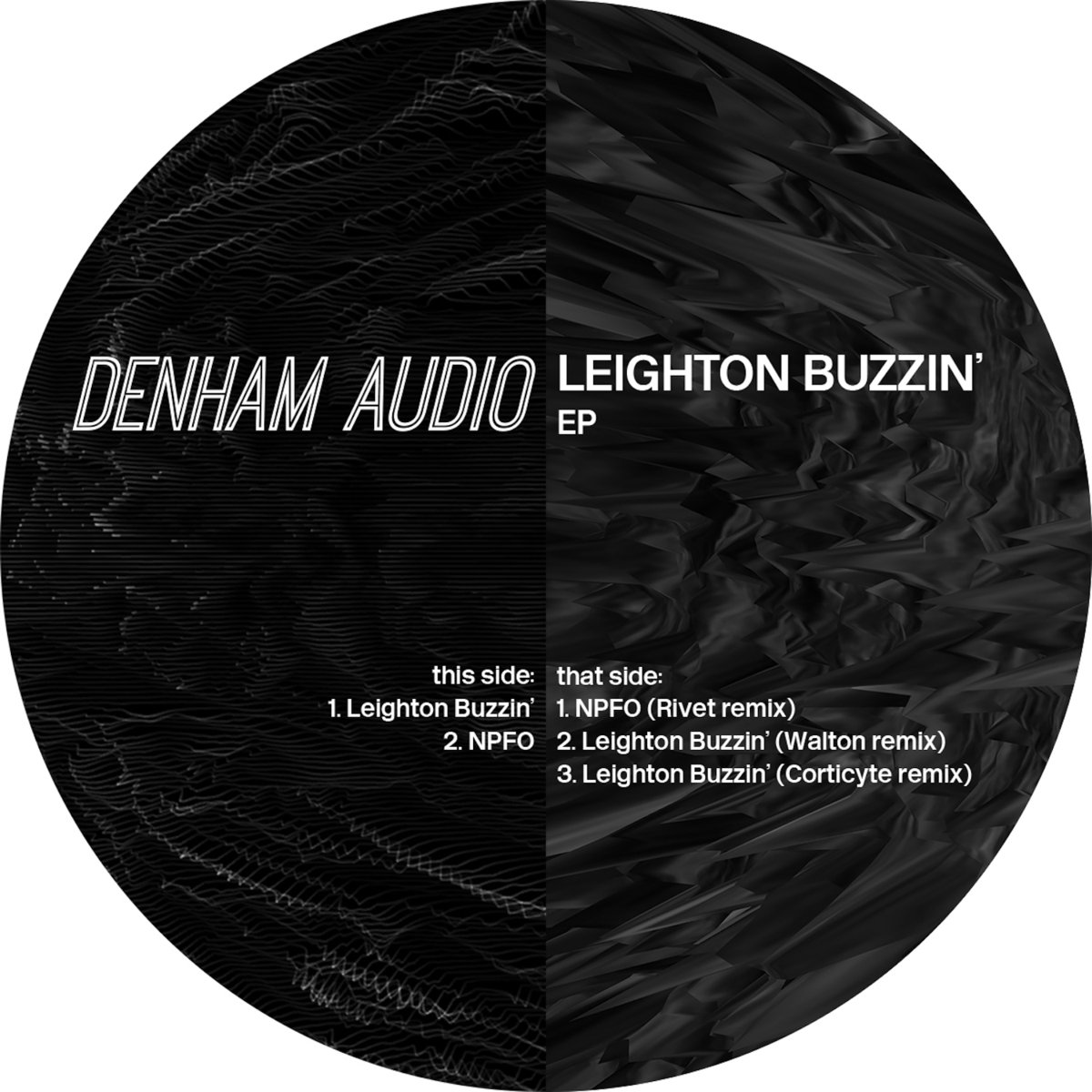
Since their inception in 2015, Sheffield trio Denham Audio have already amassed releases on Circular Jaw, Tessier-Ashpool, GRNDWRK, Tumble Audio, Heretic, and Addison Groove’s new GROOVE imprint. Their latest, titled Leighton Buzzin, will land on Artifice on March 6 and continues their stellar run with two new originals and three remixes from Walton, Corticyte, and Rivet.
Both the originals feature the bass-heavy, breaks-led sound the trio have built their name on, with the remixes ranging from Walton and Corticyte’s bass-heavy and slightly sinister reworks of the title track to Rivet’s acid-drenched techno bomb.
Leighton Buzzin will be available as a limited-edition 12″ and digitally on March 6 and can be pre-ordered at Artifice’s Bandcamp page. In the meantime, you can the unreleased extended version of Rivet’s remix of “NPFO” via WeTransfer below.
On March 17, Echoe will release its first release of 2017, a remix package for label head Francesca Lombardo‘s “Remembrance.”
Remembrance The Remixes features reworks from Cassy, Laura Jones, Jade, and La Fleur, and marks the first remix package in the label’s already impressive discography. Across the four reworks, “Remembrance” is molded to a varied set of club frameworks, from Cassy and La Fleur’s 4×4 outings to the breakbeat grooves of Jade and Laura Jones—all four cuts also manage to retain the emotional resonance of the original.
The package drops digitally on March 17, with the vinyl release arriving a few weeks later on April 7. Ahead of those dates, you can stream Laura Jones’ jazzy drum workout in full via the player below.
Berlin label and collective oqko have just released their sophomore full-length album, astvaldur‘s At Least.
Across its seven tracks, At Least traverses through dense atmospheres, fathoms-deep bass, stunning melodies, inspired sound design, and mind-bending polyrhythmic percussion patterns. Fittingly for a debut album, At Least is a “personal re-evaluation of the boundaries of the genres he [astvaldur] draws inspiration from,” which is evidenced in the hard-to-define cuts that make up the release.
At Least can be picked up via oqko’s Bandcamp page on handprinted and stamped vinyl and digitally—a further representation of the organic and synthetic essence of the album. In support of the release, you can stream the album in full via the player below.
Letherette is the project of Richard Roberts and Andy Harber, two childhood friends so close that they are “more like brothers than anything else,” they say. The roots of their connection date back to one deep snowstorm one December—the worst since 1960, at the time—during which they were both born, so bad it was that ambulances were unable to transport their respective mothers to the nearby hospital. They then grew up just 30 minutes away from one another in Wolverhampton before crossing paths for the first time at the age of just 11 when they attended the same secondary school. Andy threatened to beat Rich up if he didn’t invite him to join a football game, and they took things from there—becoming close friends from that moment.
Both had musical experiences early in their lives: Andy loved guitar music, and had two older sisters and was “made” to sing along with them in the car; while Rich’s Dad has a massive soul collection. It wasn’t long until the duo began making music together, initially just hitting record and improvising for hours and hours. “We’d just smoke joints and indulge ourselves,” they say—and they also attended a school full of young electronic talent: Actress was two years above them, with Alex Nut in the same year. The latter introduced them to Bibio, and like him and Lee Gamble, they attended courses at Sonic Arts college.
And they’ve come a long way since then. First, they remixed Bibio’s “Lover’s Carvings” for his album The Apple and the Tooth, released on Warp in 2009, before releasing two EPs on Eglo Records subsidiary Ho Tep. In 2012, they contributed a remix to the vinyl version of Bonobo’s Black Sands Remixed album and released their debut LP on Ninja Tune the following year—and the label has since seen one more LP and several more EPs from the duo. Their latest album, Last Night On The Planet, dropped just last year.
Stylistically, their output is settled somewhere between hip-hop and French house—and the methods involve a heavy use of sampling, though incorporated with live instrumentation. In this month’s Artist Tips, we asked the duo to elaborate further on these sample-heavy processes.
Equipment
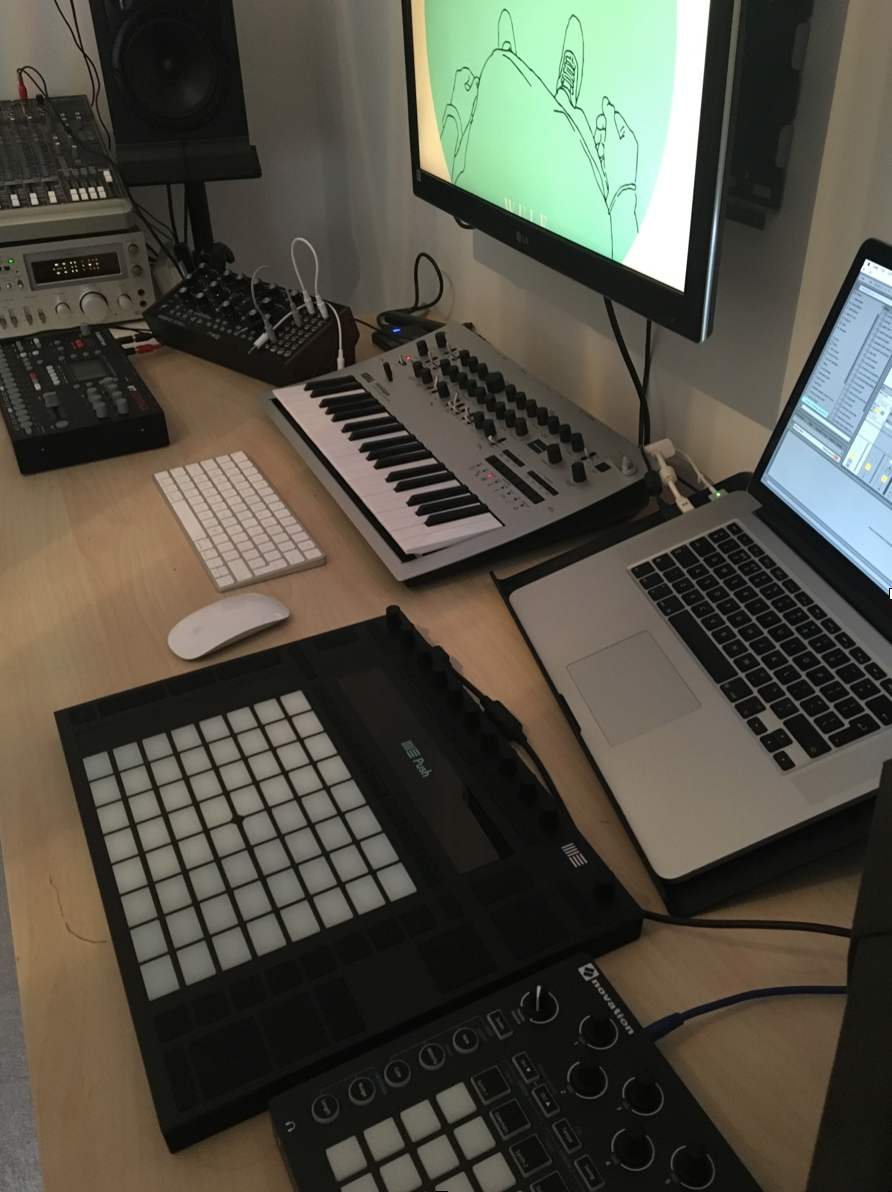
Sampling is my main sound source when making music, so any new ideas or technology that can influence or spark creativity are always a bonus. Learning the Akai MPC 2000, for me, was the blueprint of all sampling; and I still find all MPC’s and most of Akai’s rack samplers the most user-friendly and intuitive samplers in the game. I’ve also used and owned a Roland VP9000, Octatrack, Iris, Ableton simpler /sampler, Novation Circuit, Yamaha A3000/4000, Yamaha Su700, and so on. Also, some other odd VST granular samplers; including some Max For Live stuff I’ve made myself. Here’s a few tips, tricks, and techniques that I use when using samplers to make music.
Slicing
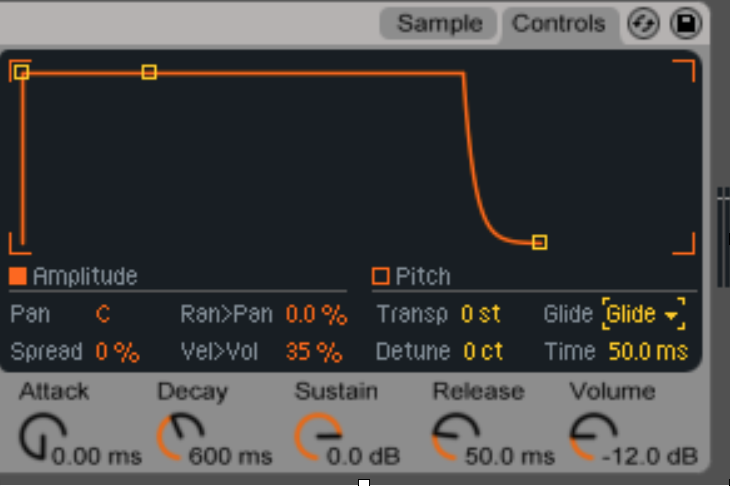
I mostly use Ableton’s Simpler or Sampler these days. Slicing audio to Sampler is very similar to the MPC style of sampling, adding samples to pads and triggering them. The new Simpler also has some great features. A little trick I like with Simpler is the “glide” feature, which allows you to play/pitch the sample as it plays, but without re-triggering the sample or changing the speed of the sample (time stretching). I used this a lot for the track “Dog Brush.”
Very similar to Roland’s elastic audio, you can, in essence, play a new melody with the music sampled. To take this process a step further, I often use the “Audio to MIDI” function—this can be found when right [control] clicking on an audio sample—which I’d consider to be a style of sampling, and extract the harmony or melodic content from an audio file and put it into MIDI notation. This can then be flipped/reversed etc. to create new chord progressions or melodies.
Process
I sometimes sample entire tracks to samplers like the Yamaha A3000 with the sample rate set to about 22k. The A3000 has a 22k (lo-fi) setting which is particularly nice; it rolls a lot of the high frequencies off but really beefs up the kick and bass. I used this process with the track “Shanel.” It was actually passed through the process twice.
It also works really well when you slow tracks right down and sample them, and then speed it up to the original speed. It’s a long-winded process but it definitely gives it a sound. I’ve even tried this in Ableton, where I slow a drum loop down to something silly like 40 BPM (originally being 120 BPM) and resample the slowed down drum track through a tape saturation plugin, render it, and then speed it up back up to its normal speed. It’s a process I used a lot with “Soulette”: I recorded parts of the track in from the cassette and then pitched whole parts down and resampled them. It always produces something a little odd and unexpected especially if you use it with effects.
Techniques
One of my favorite tricks to do on certain samplers is to “sample flip” samples while a loop is playing. For instance, you could have a different hi-hat sound for every triggered hi-hat, or have it change for one bar of every loop, or even a different clap/snare combination every other hit or loop. I used this in the track “Triosys,” recording loops and variations into Ableton and then arranging them together. I’ve also tried this with a range of scaled single notes and had the sampler randomly select the next note; sometimes it can produce unexpected patterns or melodies.
Another technique I like to do is using samples that have a few sounds in them like a small rhythmic loop or melodic pattern. When sequenced and slowed down or sped up they can create odd swing to sequences—it can also add a little life to a static sounding drum loop. I try not to be too anal about truncating samples as you can get some happy accidents this way.
Final Tip
I love using distortion on drums and samples, and I’m always looking for a new sound or way of processing it—whether using an old sampler and distorting its inputs, or using plugins that emulate tape or guitar amps. Nothing quite beats real tape distortion, especially if the tape is worn or a little damaged. I collect three-head tape machines for this purpose as its so quick to process samples from the computer to cassette and record it back in. Three-head tape decks have separate record and play heads so you can monitor from the tape in real time (slight delay depending on gap length between record and play head). Press play and record and switch monitor to tape and then drive the input until it peaks or you’re happy with the level of distortion, then obviously record this back into the computer.
Oscar, BAFTA and Golden Globe nominee Volker Bertelmann (a.k.a. Hauschka) will soon release his eighth studio album, titled What If.
According to City Slang, the label, the sound is “unmistakably him,” but it is also a “more immediate and full-bodied” album than its predecessors, going on to describe it as his most “wild” release to date. “I definitely decided with What If to make a record that might be my most radical. The lyrical piano has disappeared, and the sounds I’m fascinated by—like noise and electronic elements—have taken over” says Bertelmann.
For production, Bertelmann used an old Roland Jupiter 4 synthesizer and an Eventide H3000 Harmonizer, as well as engaging with his trademark technique of utilizing unusual objects to treat (or “prepare”) the piano. But most notably—in a break from his traditional methodology— he also programmed parts for self-playing “player pianos” (also known as pianolas), exploiting the speed at which they could play, manipulating the resulting sounds, and building layers to emphasize a composition’s meter.
Not for the first time, Bertelmann also decided to construct his new record around a conceptual framework. But while, for example, 2011’s Salon Des Amateurs employed the prepared piano’s percussive qualities to explore his love of house and techno, What If aims to provoke reflection beyond the musical sphere with the titles of the both the album and its individual tracks.
“I had the idea of doing an album that is, in a way, a statement about the world in which we’re living and in which I see my kids growing up,” Bertelmann elaborates. “What If deals with utopian concepts, and speculates about the world in thirty years’ time. The more I feel questions being raised, the more I try to understand how activity is needed to make the drastic changes required, and there are still people out there who deny that global warming or other similar circumstances exist. Even scientists can’t convince them anymore, so I wanted to dedicate this to such thoughts. The record is there to create awareness for certain topics, but I didn’t want to make it too heavy. It’s more like a very playful way of dealing with our perspectives.”
What If represents the first time that Bertelmann has worked with anyone else on one of his solo albums. “Half of the record was recorded with Francesco Donadello, who also mixed the entire album at his Vox-Ton Studio in Berlin,” Bertelmann says, “where our basis was first-take recordings of my improvisations before I then did overdubs. The second half was recorded in my studio with a Yamaha Disklavier (a contemporary player piano that can record performances to a MIDI file), where I captured layers of programmed pianos and worked with my hands like a filter for the sound.”
Tracklisting:
01. I Can’t Find Water 02. Constant Growth Fails 03. My Kids Live On Mars 04. I Need Exile 05. I Can’t Express My Deep Love 06. Nature Fights Back 07. Familiar Things Disappear 08. Trees Only Exist in Books 09. We Live a Thousand Years
Antoine Husson’s (a.k.a Electric Rescue) Paris-based techno label Skryptöm will release a compilation featuring cuts from Roman Poncet, Laurent Garnier, and more in celebration of 10 years in operation.
The tracklisting is as follows:
Tracklisting
01. Laurent Garnier “Electric Djedi Disco Biscuit” 02. Inigo Kennedy “Placation” 03. Wlderz “Everything” 04. Truncate “Ideas” 05. Maxime Dangles “Our Own Choices” 06. Kmyle “Athmos” 07. Scan X “Stage Ready” 08. Zadig “The Hadron’s Trail” 09. Leghau “Timeless” 10. Paul Nazca “Neuk” 11. Roman Poncet “Caje” 12. Johannes Heil “Obfuscator” 13. Moteka “Asketyll” 14. Electric Rescue “Together”
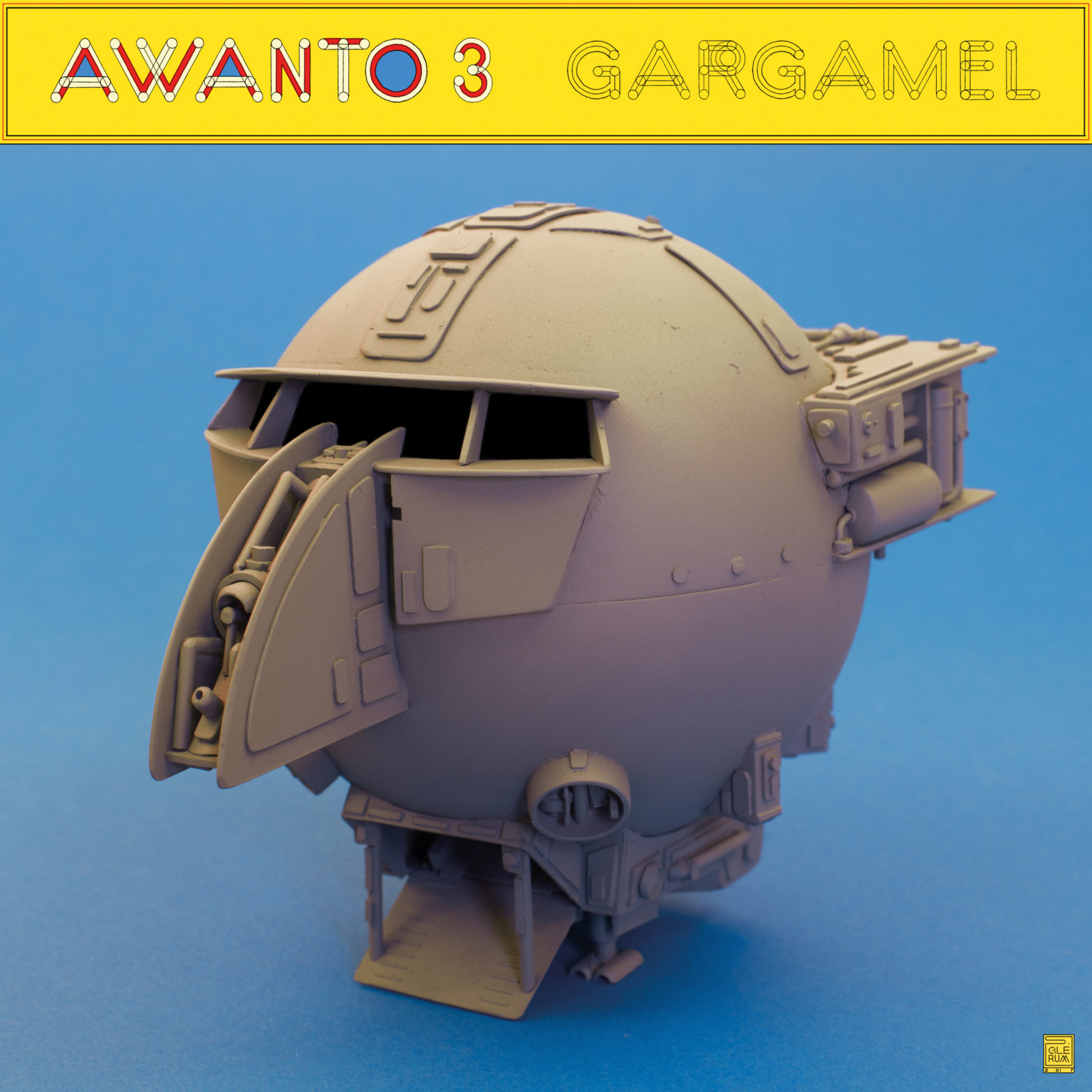
Steven van Hulle (a.k.a. Awanto 3) will return to Dekmantel Records with his second full-length album, titled Gargamel.
The nine-track album follows on from several EPs on the Amsterdam-based imprint.
The Amsterdam DJ-producer kicks off his album with friend and co-producer Darling. “Azrael” builds over shuffling, infectious rhythms, a cluster of vocal stabs and heartfelt keys. “This Is When We Met,” “Why Don’t You,” and “Gargamelancholia” are—on the other hand—aggressive peak-time tracks embracing classic acid aesthetics, while “Positive Negative’ is a stretched-out house track incorporating the tussle of wonky boogie and tribal bumps.
Gargamel continuous with the low tempo track “Hooli Goose”; while “Happy Bird” is a tripped-out set of ambient and lo-fi themes, before Dexter appears for “Think,” showing his skills with the 808.
Tracklisting
A1. Azrael (with Darling) A2. Positive Negative B1. This Is When We Met B2. Hooli Goose C1. Why Don’t You C2. Ride The Dragon D1. Thick (with Dexter) D2. Happy Bird D3. Gargamelancholia
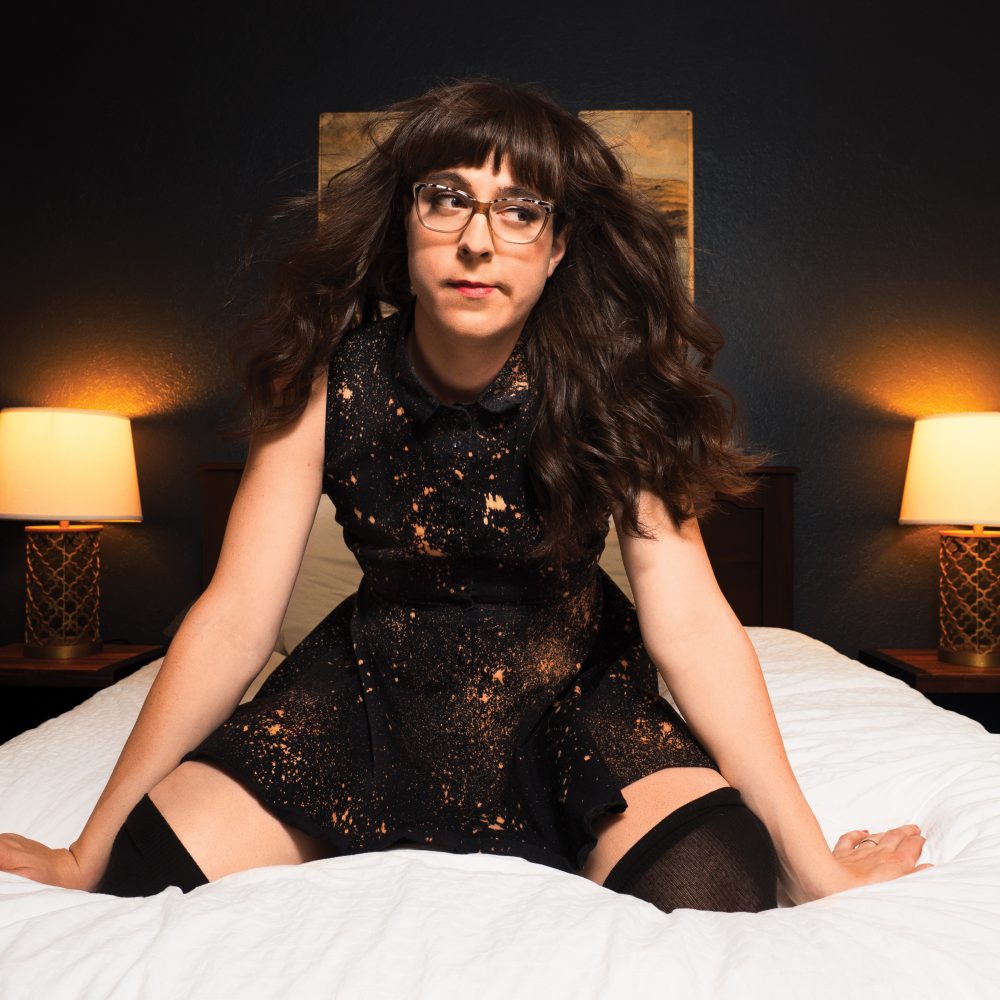
Brooklyn-based house and techno artist Maya Bouldry-Morrison (a.k.a. Octo Octa) has previously put music out on the likes of 100% Silk, Running Back and Skylax. She is set to release her second studio album on San Francisco’s Honey Soundsystem imprint. The forthcoming Where Are We Going? is described by the label as being “like a diary,” containing a number of autobiographical references.
In reference to album cut “Do you feel better?,” Bouldry-Morrison stated: “It was the question every single person asked me after coming out as transgender. Overall I do, but no, I don’t feel better at every moment, which is why the track slips out with a dour bass drone in addition to a beautiful pad. These days, both emotions are ever-present for me.”
Where Are We Going? is due out March 24. Stream “Move On (Let Go) (De-Stress Mix)” in full below.
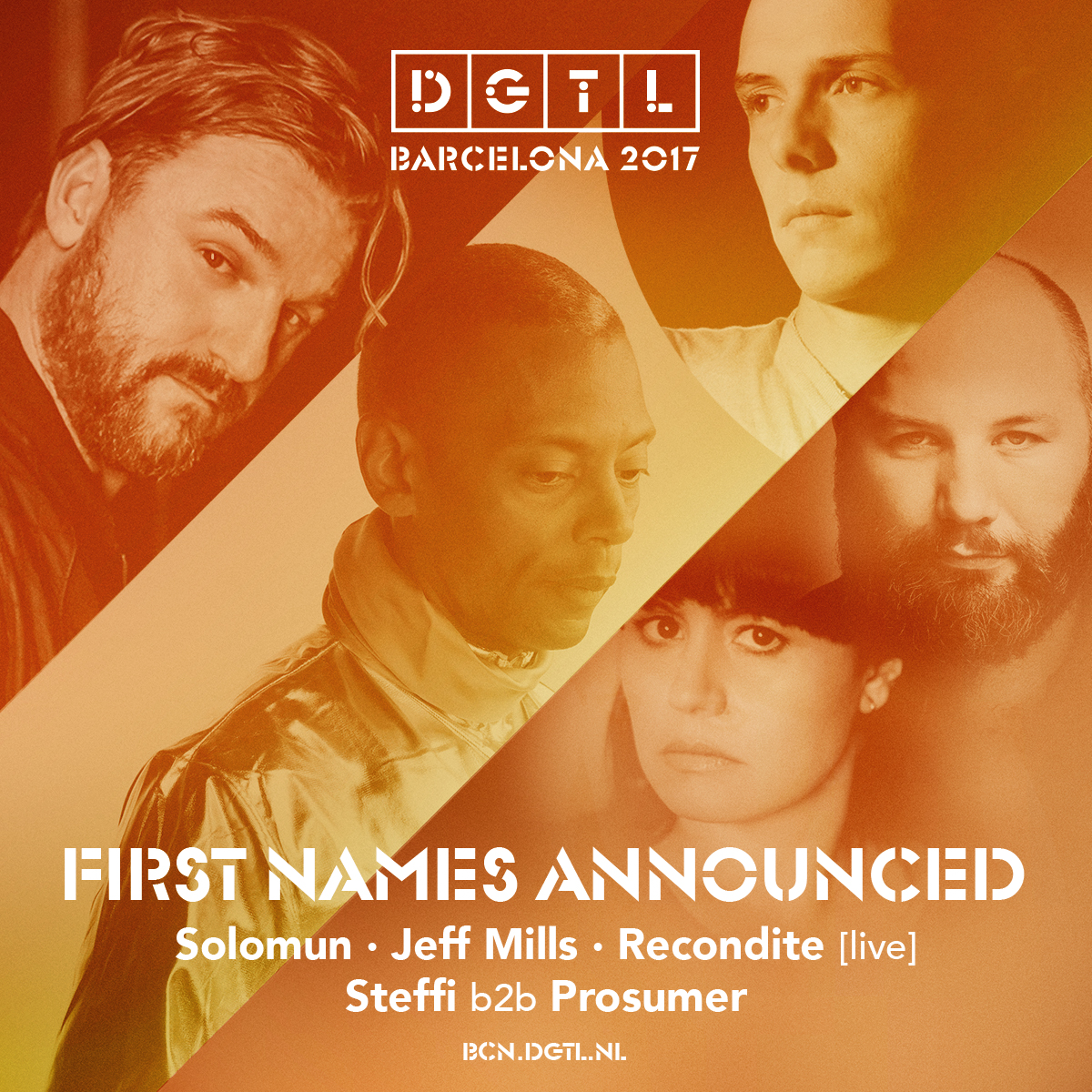
DGTL Barcelona will return to Parc del Fòrum on August 11 and 12 for its third edition.
Once again, there will be over 60 artists spread over four stages. The first announcements for this year are:
Solomun Jeff Mills Recondite [live] Steffi b2b Prosumer.
DGTL Festival landed for the first time in Barcelona in 2015, after years of revolutionizing the Dutch electronic music scene. Its first edition gathered 20.000 people and 40 artists divided over three stages; while the second one, in 2016, drew 30.000 visitors in.
Just like previous editions, DGTL Barcelona 2017 will host an official after-party on both nights at Nitsa Club.
Adrian Sherwood and Rob Ellis (a.k.a Pinch) will soon release a new collaborative LP, titled Man Vs. Sofa.
The duo first met at Fabric, when Rob fortuitously invited Adrian, one of his heroes, to spin at a night he was curating. Hitting it off straight away and mutually impressed by each other’s sets, they agreed to stay in touch.
Man Vs. Sofa is now their second album, and is described by the labels as “more cohesive and focus” than its Late Night Endless predecessor. The labels continue, “the beats are more technoid, insectoid and paranoid, with layers of percussive detail laying a web for bright spots of melody and smeared FX to drip through.”
The release also features several notable guests: the piano of Martin Duffy from Primal Scream and Felt decorates five tracks; Dizzee Rascal collaborator Taz completely owns the mic on “Gun Law,” while Skip McDonald of the Sugarhill Gang, Tackhead, and Little Axe lends his talents, too.
Of the making of this album, Pinch comments, “Having spent around five years working together, our work-flow has developed and improved considerably, and we both feel that the music we’re making now is something neither of us could or would do alone. Adrian has amassed a bunch of new (old) studio equipment over the last couple of years too, so there’s been a lot more stuff to play about with, and that’s expressed in some of the directions the tracks go in. I hope it resonates with listeners as much as it does with us.”
CD/Digital tracklisting:
01. Roll Call 02. Itchy Face 03. Midnight Mindset 04. Lies 05. Unlearn 06. Man Vs. Sofa 07. Charger 08. Merry Christmas Mr Lawrence 09. Juggling Act 10. Retribution 11. Gun Law
Vinyl tracklisting:
A1: Roll Call A2: Itchy Face A3: Midnight Mindset B1: Lies B2: Unlearn B3: Jazzy Geoff Cakes (vinyl only exclusive) C1: Charger C2: Merry Christmas Mr Lawrence C3: Juggling Act D1: Retribution D2: Gun Law D3: Man Vs Sofa
Man Vs. Sofa is scheduled for February 24 release, though “Retribution” was included on the #savefabric compilation.