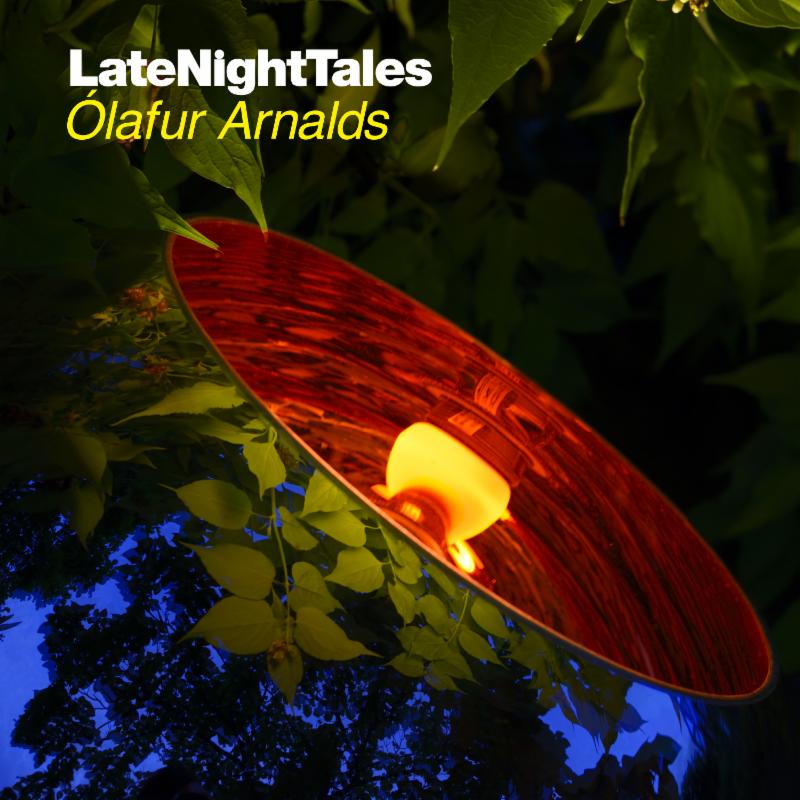
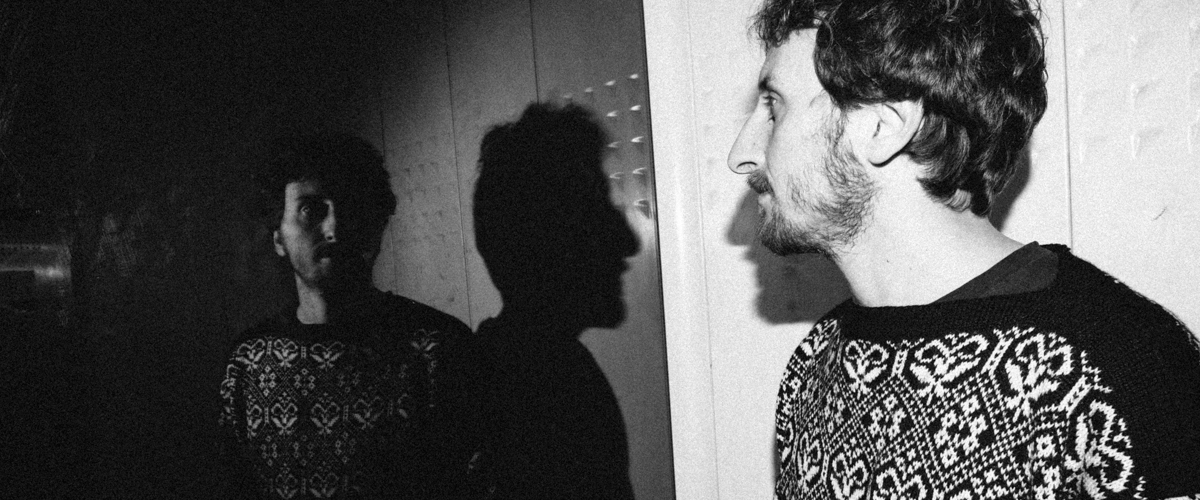
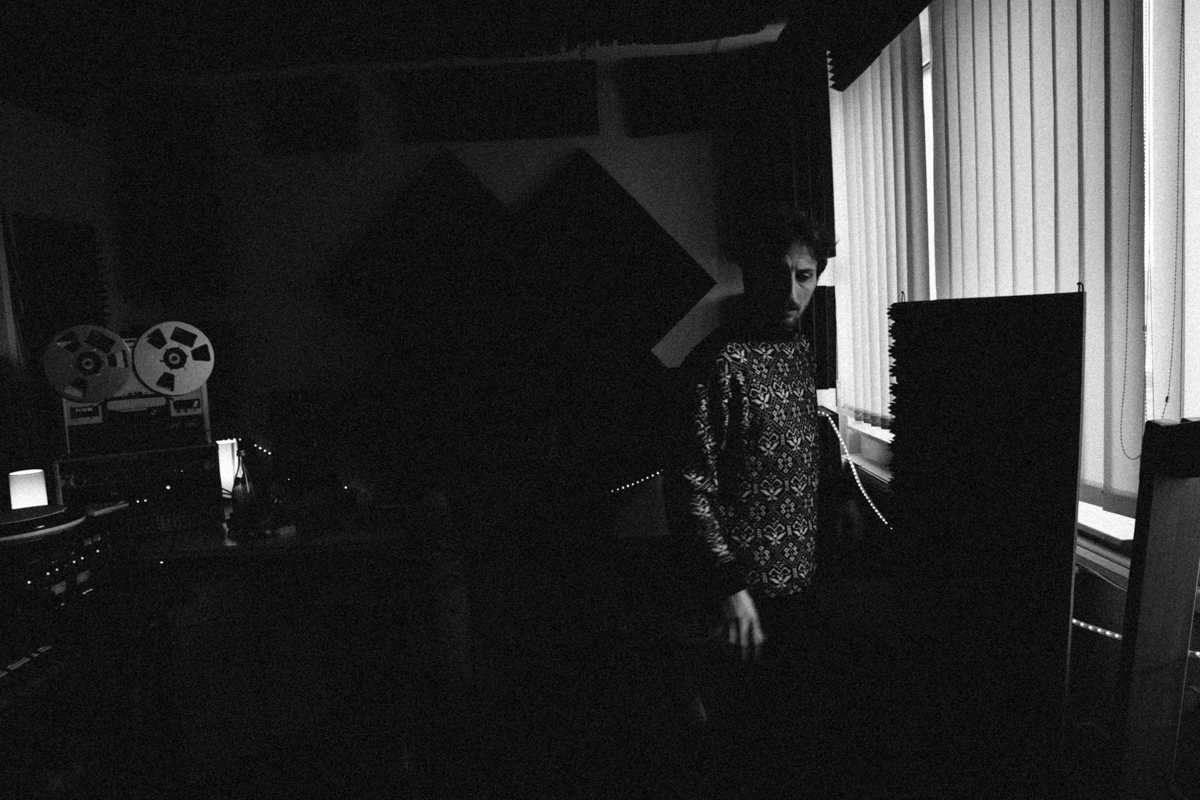
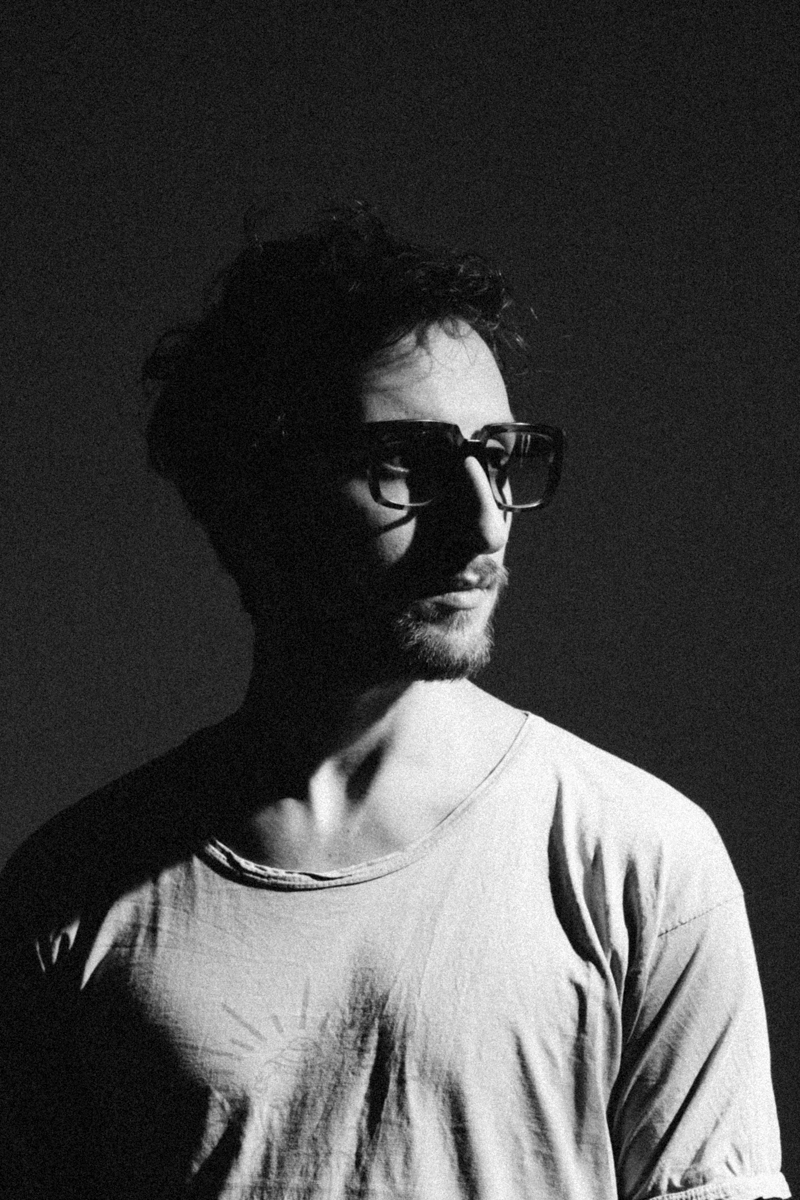
Additionally, Arnalds includes a number of exclusive tracks, like his cover of Destiny Child’s “Say My Name”, a new song from his duo with Janus Rasmussen as Kiasmos, and a new solo piece called “Kinesthesia I”, which is streaming below now.
Arnalds:
“When I was asked to do the next installation of the Late Night Tales series I thought “This will be fun and easy, only a couple of days work. No problem!”. Six months later, I was still pulling my hair out in some kind of quest to make the perfect mix. As someone who has never really done mixes before, I learned a lot of things along the way and the whole experience was very inspiring. I decided to approach the mix in a similar way as I would one of my scores. This is the soundtrack of my life. I included songs from many of my friends and collaborators and tried to deliver a mix that represents who I am as an artist and where my influences are coming from – both personally and musically.”
Late Night Tales – Ólafur Arnalds is scheduled for June 24 release.
Real Talk’ is a series of artist-penned essays that appears on XLR8R from time to time.
This month’s submission comes from Luca Mortellaro, the DJ-producer better known as Lucy. The Italian-born, Berlin-based artist has long been something of a central figure in the global techno scene, acknowledged widely for both his studio output and live/DJ sets. Following two well-received LPs—namely 2011’s Wordplay For Working Bees and 2014’s Churches Schools And Guns—Mortellaro recently announced, Self Mythology, his third long-player which is scheduled for May 6 release via his own Stroboscopic Artefacts label.
Sonically speaking, the forthcoming album is different to what you would perhaps expect, drifting considerably closer to ambient, improvisational pastures than anything that Mortellaro has put his artist name to before. But while this release marks a clear progression in Mortellaro’s sound, evidenced throughout is the artistic authenticity that is present in all of his works. Production, as referenced in last year’s In the Studio feature, remains today Mortellaro’s most viable vehicle for self-expression, and serves a very different purpose to his DJing. In this month’s real talk, we invited him to explore the split between these two contrasting sides of the artistic character.
Reflecting on the expression of culture, it is obvious to all of us that contemporary western society is built upon the dichotomy between the public and the private self. This is something that our scene does not escape. We use things. The private self uses things from the outside to present the public self in certain ways. We use things so they contribute to this representation. We do it all the time. Every day. From the point of view of an artist producing music and performing, the product of the private self is no longer the means to present the public self as a performer. I’d like now to go deeper into this aspect of split consciousness.
“What I do when I produce music and release it, is to share an innermost private self, while when I perform something else is often expected of me.”
For a very long time it was all about producing music for me, alone, submerged in my feelings with an almost complete absence of active external stimuli (by “active” I mean, seeing concerts, attending club nights, talking to other producers or DJs). Only subtle stimuli were present (the vinyls I was buying and pirate radio stations I was listening to). The DJ thing came way after, starting as a fun game with friends, and slowly transforming into a real dedication. This is the reason why there is a split between my experience as a producer, and my experience as a DJ. What I do when I produce music and release it, is to share an innermost private self, while when I perform something else is often expected of me. Not to share, but to entertain. Challenging this dogma is what makes me feel like an artist, not like a clown. This gap is not only a matter of episodes, it’s a real emotional gap. It took me years of gigging professionally to find a way to resolve these two aspects to fit into the organic workflow I am in nowadays.
But going one level deeper (or higher, depending on the perspective), these dynamics aren’t just limited to my personal experience, but to a wider social phenomenon: the gradual eclipse of the importance of the producer, and the fast uprising of the performer.
It is a risky process. It is, of course, a phenomenon related to a very clear tendency of the last decade: social networking and the significance it has been given. The result of a massive amount of people projecting their “real” identity into a no-longer faceless web, produces a multi-stage faking process. Let’s keep in mind that reality and representation of reality are not at all the same thing. Representation of reality (and of the self in this case) always contains a substantial amount of constrictions, governed by the social framework around the scene. The main way for a performer to present himself/herself today belongs in the virtual world of social media. Your fans are often invisible to you, aside from when you are actually playing out there. The work of the artist becomes mainly to manage one’s self-representation online. The whole thing becomes: how can I sell myself through my online profile? In the end you will never meet in person most of those who you deal with online—the greater majority of your fanbase. So, the focus drifts from the inward deep research on your own artistic language, to the outward attempt to reach that invisible (and very often so ready to judge without any critical thinking) fanbase.
“In this storm of stimuli and distraction, the focus on your own creative energy is the most precious thing you have left.”
This brings us to the reason why in the music business with which we’re dealing, nowadays an amazing and wild gig snap or video is more important then an EP release. But do we really care? I don’t. In this storm of stimuli and distraction, the focus on your own creative energy is the most precious thing you have left. It’s your last anchor to a non-fake world, to real perception, to an authentic way of digesting your experiences, traumas and joys, and to allow you to transform them into a wonderful and powerful piece of art. It’s your last chance to not forget about what I call “the message.” Not the one of virtual mirrors (social networks), but the one of your deeper feelings and tendencies. The one that makes you a real human in all your complexity and paradoxes, your chaos and unpredictability. If you lose it, you could be successful or not, but I doubt you will be happy. And it’s not even about happiness (as it’s actually not about being successful either), it’s about not finding out after many years that you are nothing other than a funny monkey in a grotesque circus. Just a mask in the theatre, a walk-on actor that could be you or anyone else in your position. David Bowie‘s precious words come to my mind: “Oh man, wonder if he’ll ever know. He’s in the best selling show.”
If one manages to keep this in mind, and to hold strong to your own values, then magic can actually happen. Regarding my personal experience in the electronic music scene, I am talking about those moments, those divine moments of verticality that happen when the social ritual of dancing to obsessive music on one side (the crowd) and choosing, mixing and/or manipulating that music on the other side (the performer) becomes one. Then the private and public self merge together in a moment of unity when all masks fall down (not really all of them, but still…), with those few moments when you feel so at one with the crowd that the split dissolves, as well as those moments when you manage to get to the deepest corner of your listeners’ soul with the music you produce.
Milan-based imprint Parachute is set to release the debut EP from Sergio Maggioni (a.k.a. Neunau), which will be released at the end of May.
Italy’s Parachute Records was set up in 2014, and has put out music by Clockwork (as well as CW/A, his collaboration with Avatism), Camara and the late Max_M amongst others. The label’s next record comes from Neunau, an artist making his debut with an EP of sounds recorded at the ancient forge museum in Bienno, in the middle of one of the largest valleys in the central Alps. According to the label, he has used natural phenomena (water, iron and microphones) to “grind contemporary dance music to its barest essentials.”
Ahead of the release, the artist has put together a short documentary. Check out the trailer to it below.
Neunau is set for release on May 27, and can be pre-ordered via Bandcamp. Check out one of the cuts from the EP below.
Berlin’s Krake Festival has shared details of where and when it will take place this summer.
Hosted by local label Killekill, Krake is an annual event that is now approaching its sixth edition. This year it will kick off on Wednesday July 27 at Urban Spree, with concerts and expositions, before moving to Suicide Circus on the following Friday for an evening of contemporary techno. On the Saturday and Sunday of the festival, proceedings shift to Griessmühle, which will host a series of label showcases.
The lineup for this year’s event will be announced soon. For an idea of what to expect, last year’s event welcomed performances from the likes of Kamikaze Space Programme, Untold, Eomac, and Killekill regulars Cassegrain & Tin Man.
To buy tickets for this year’s event, head to the Krake site. Check out a trailer for the festival below.
Turin-based experimental duo Niagara (a.k.a. David Tomat and Gabriele Ottino) make a crooked, quirky, and wholly engrossing form of music that most closely aligns with pop. It’s hard to place the group in any genre confines, which is only ever a good thing, and each album it produces—from the indie-fusion of 2013’s Otto to 2014’s technology-focused Don’t Take It Personally—takes inspiration from conceptual cues and pushes the band’s sound further into the nether regions of the sonic spectrum. The concept for Niagara’s latest effort, Hyperocean, is water—an element that has inspired them from the very start of their careers. “Hyperocean is a pluri-dimensional planet almost completely covered in water. It changes continuously, reacting with whoever is visiting it by switching from one number of dimensions to another,” Tomat and Ottino explain.
Fitting of its concept, Hyperocean is a morphing, ever-changing collection of left-field electronics and emotionally-drenched experimental pop in line with contemporaries such as Animal Collective, Lapalux, and Nosaj Thing. Like these aforementioned artists, Niagara doesn’t rely on vocals to be at the forefront of each of its tracks. Instead, they are used as another layer in a coalescing stream of auditory stimulation—sometimes muffled beyond recognition. And like the unpredictable nature of the ocean itself, the album moves from muted opener “Mizu,” which beautifully pairs barely-heard field recordings with heart-pulling strings and guitars, to more volatile and explosive cuts such as “Hyperocean” and “Escher Surfers,” before coming up for air at mid-way ambient cut “Firefly.”
As the album moves along, this ebbing and flowing continues with the visceral shapeshifting of “Fogdrops” and brain-melter “Roger Water,” two cuts that perfectly show the tug of war between Niagara’s pop sensibilities and its more experimental side. The back half of the album definitely favors the experimental side. “Solar Valley,” Twin Horizon,” and “Alfa 11” all seem to cave in and implode, mutating as they gallop along in a chain reaction of abrasive synths, polyrhythmic drum patterns, corroded guitars, and altered vocal phrases. It’s an anarchic end, but an appropriate one for an album and group of this nature. With every release, Niagara pushes its sound further, sometimes to almost breaking point—but it’s at that point that the magic shines through. On Hyperocean, Tomat and Ottino have found just the right balance of songwriting prowess and apocalyptic experimentalism.
Hyperocean will be available on the April 29 via Monotreme Records on digital formats, CD, and as a limited edition of 500 180g vinyl LPs (300 clear and 200 black) that will include a free album CD inside.
Rising Melbourne-based producer Nick Wuksta (a.k.a. Wabz) will release his latest EP, Sleep Less, today via Solitaire Recordings.
Following on from his debut full-length album, Argyle—released in June of last year—Sleep Less goes deeper and darker, taking in influences from UK garage and two step to create a unique and atmospheric sound of his own. Positioning itself as a continuous piece of work, the EP flows beautifully from one track to another, sounding wholly coherent without repeating itself. From EP opener, “Nightrider,” to closing cut, “Walk This Way,” Wabz manages to show us a diverse collection of work filled with floor-shaking bass, claustrophobic atmospheres, and paranoid vocal chops that have us hanging for more.
With the EP officially released today—you grab it here—Wabz and Solitaire have offered up a full stream of the entire release, which you can hear via the playlist above.
Spacetravel (a.k.a. Luca Cara) doesn’t have a long trail of releases behind him. But following his first EP, via Binh’s Time Passages imprint—which captured his experimental blend of futuristic techno, acoustic textures and playful house sensibilities—he has caught the attention of a number of esteemed selectors, including Vera and Alexandra who recently enlisted him to inaugurate their soon-to-launch Melliflow label. This alone is impressive for someone with such a modest discography, an accomplishment only matched by the announcement of a forthcoming double EP on Zip and Markus Nikolai’s esteemed Perlon imprint.
Up until now, almost nothing has been documented about the Sardinia island native. Pictures and interviews are nowhere to be found. His success to date has been based on musical merits alone. However, having selected Spacetravel for XLR8R’s Best of 2015: New Artist’s list, we are proud to have him contribute to our weekly podcast series. In doing so, he also gave his first interview, offering some basic insights into a typical day in the studio, the underlying inspirations behind his music, and future plans.
Can you tell us a bit about your background? I was born and raised in Sardinia Island where I spent most of my life and where my family is from. I moved to Berlin about six years ago.
Do you remember the first time you ever came across electronic music? I guess my first real approach was in London in the illegal rave party scene at the beginning of the 2000s. I never grew up with a guru or anything like that. I got my music influences from different electronic scenes from all over the world. When I was younger, I used to go and spend my summers in Ibiza. I did that for eight consecutive years, and it obviously had an impact on me. But my move to Berlin was really the catalyst for me to set up the music thing and really develop this Spacetravel project.
When did you start playing records? I started playing music when I was pretty young—I’d say around 18 years old from my place’s basement in Sardinia. I started by looking at DJs play and going home to try and emulate what they were doing. Some time after that I started playing records at a famous bar in Ibiza, called Noctambula, which at the time was being run by some friends from Sardinia, and I guess the main incentive behind this was simply boredom. I just thought the music I would hear while I was out was too boring and I wanted to create more interesting tracks.
How would you describe your sound in your own terms? Would you say your artist name is evocative of the sound you’re trying to recreate through your music? Yes, totally. I would say my sound is a mixture of everything I like, of every genre I like. Something I wanted to hear while out but never did, so I decided to create it myself in the studio. If I had to use an adjective for it, I guess I would use “fresh.”
So where does your artist name come from? My name originated after I had already started producing music. I would listen to my tracks and deliberate on different name ideas that could fit me and my sound, but nothing ever really came to mind. One day, while I was traveling, I ran out of clean shirts and decided to buy a new one. That t-shirt had “Spacetravel” written on it, so the day after I bought it, it suddenly occurred to me that I liked the sound of Spacetravel. So basically that’s how my artist name was born—from a t-shirt!
How did you learn to produce music? Were you self-taught? I learned by myself, alone, like a dog in the street [laughs]! I would say I was mostly self-taught, discovering things on my own, in my studio at home, with some tips from friends here and there.
How do you approach the task of producing? Do you go into the studio with a preconceived idea? A lot of times the ideas just come to me at night. It depends on the moon I would say. That’s the type of person I am. I go every single day to the studio, so if the inspiration comes to me during the night, then the next day I lock myself up in the studio and make that sound. There’s also a lot of times when I go in there and I don’t quite know what to do or where to start, so it’s more of a spontaneous process. I turn on the machines and see what happens. I guess I would say it’s a 50/50 process. Sometimes, it’s when I don’t really know what to do, that the music actually comes out really good. On many occasions, it happens that I can end up with tracks that once they’re finished, I listen to them and I don’t really like them. But then, other people do. Music is obviously always a matter of personal taste.
Would you say you consider yourself to be a producer first or a DJ? DJing and production are two different things that go along together for me. I personally prefer the intimacy of producing in the studio and having that freedom to express myself through my productions—it’s a really personal moment for me. While, on the other hand, playing is a moment you share with others. It’s a giving and receiving of energy between you and the people. This type of “contact” or “connection” with others is also important in helping you get new input and inspiration in the production process.
Can you tell us a bit about how you landed on Binh’s label? The relationship between Binh and I really stems from our mutual passion for music. It just so happened that upon my arrival to Berlin, I ended up renting a room in Binh’s place. It is this connection with him that not only allowed us to share our mutual passion with each other but that opened up the door for me to the music scene in Berlin.
Would you say he’s someone that has had a big influence on your career? Well, yes, I would say so—but first and foremost we are friends. He definitely had a lot to do when it comes to my discovery of a more mature approach in the studio. Most importantly, however, he was the first one who really trusted in me and gave me a platform to express myself through his label, and also by inviting me to play alongside of him at CDV.
What about Vera and Alexandra? Did you know them before being chosen to help them launch their Melliflow label? As for Vera and Alexandra, I have known them both since before. The fact that they have put so much trust and faith in me by selecting my music as their new label’s first release is really great! I think it’s really important and cool that between friends we do these kinds of things to help and support each other out, and I truly wish them a successful journey with their new label!
“It’s really hard sometimes to know who is genuinely interested in you versus who wants something out of you.”
Would you say a lot has changed since you started gaining recognition and building yourself a following? I think it’s too early for me to say that things have really changed. It can be hard sometimes to know who is genuinely interested in you versus who wants something out of you, but I always try to stay positive and avoid wasting my time thinking about those things. Even though, being so “new” in this business can also feel somewhat overwhelming at times and knowing what the “right” thing to do can be hard. At the end of the day, it’s a really great thing what is happening to me right now and I’m really happy about everything, of course.
What else is coming up for Spacetravel? I’m not the best at making plans but for sure lots of new music is coming ahead. If I project myself into the future, I just see myself in a not-so-different place from where I am now. I already enjoy my life and what I’m doing so I just hope I’ll be able to reach more people with my music so that we can go on this journey together with awareness.
Having previously released music on esteemed labels such as Kompakt and Hypercolor, French musician SebastianBouchet has recently delivered a four-track EP titled Sailor onDanny Daze’s Omnidisc imprint. The EP, which is the first release of the label’s new ‘Swim Series,’ comes after the release of his wildly successful 2015 single “Captain Drag,” which gained support from the likes of Rebolledo and Barnt, helping the track materialize into a resounding underground hit that traveled far and wide.
With an A-side that is laced with mellow bass-driven grooves and chilly synths that come together in an agreeable, crooked, and funky undercurrent, the B-side of the EP is a split between the soaring sounds of “Etna” and the downcast display of “Pacific Seb.”
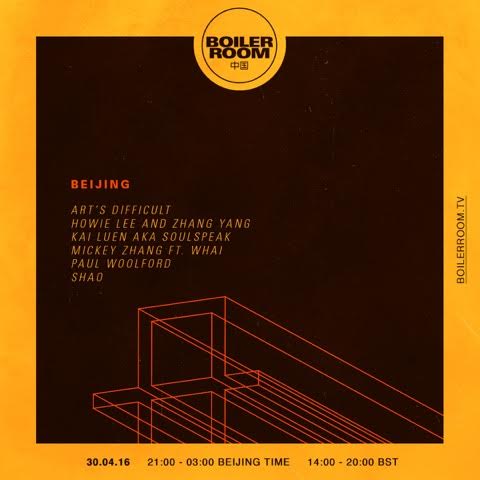
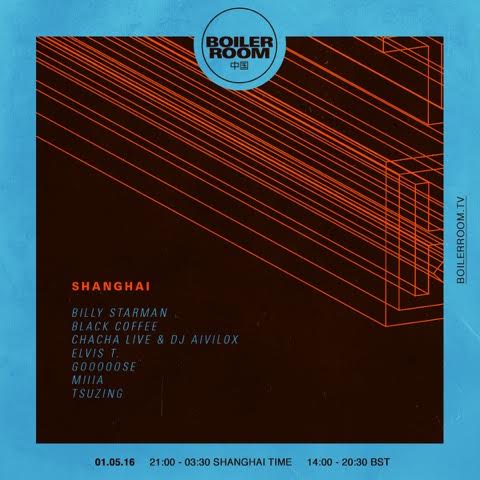
For the first time ever, the international music platform Boiler Room is set to host two performances in both Beijing and Shanghai. Blocked from using both Youtube and Soundcloud, China remains a massively untapped market for the world’s community of underground music fans. Featuring a slew of celebrated Chinese and Taiwanese DJ’s such as SHAO, ELVIS.T, Howie Lee,Billy Starman, and more, Boiler Room has also enlisted the help of South Africa’s head-honcho of house Black Coffee and one of the UK’s leading names in techno/house Paul Woolford.
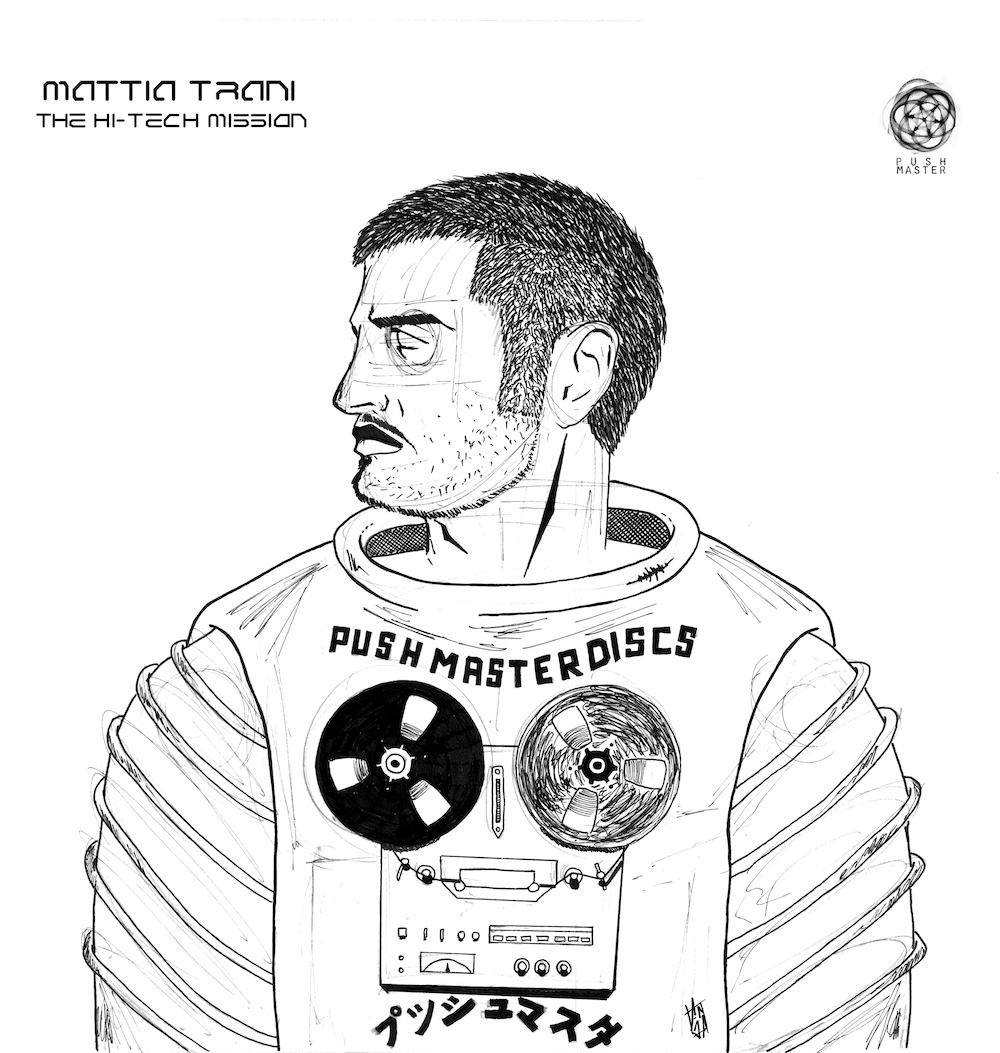
Hailing from Italy, producer Mattia Trani is gearing up to release his latest album titled The Hi-Tech Mission on May 13. Trani has been representing the Detroit sound in Italy for some time now, with releases on Minimalsoul Recordings, as well as his Pushmaster Discs imprint (a label that has also hosted the likes of Ilario Alicante, Myles Sergé and Percyl). In a recent interview with XLR8R, Trani explains how the idea of space travel inspired his album, saying: “I love space, I love the planets, I love this unknown universe around us, and so for my listeners the idea is to imagine going into a space shuttle for an unknown destination. The music accompanies the listener’s entering of the ‘Hi-Tech Shuttle’ together with me.”
Ahead of this release, Mattia Trani has graciously offered up the title track off his upcoming album as an XLR8R download. Coming in at 132 BPM, the track is a heaving and acidic undertaking with a knotty Detroit feel that pays homage to Motor City artists such as Juan Atkins, Derrick May, and Underground Resistance who have played a crucial role in shaping the artist’s sound.
You can download “Hi-Tech Mission” below via WeTransfer.