The Parisian selector behind My Love is Underground, Jeremy Underground, has detailed the label’s second compilation. As Resident Advisor reports, in keeping with its curator’s keen ear, My Love is Underground (12 Other House Tracks) unearths a few hidden gems: Groovestyle’s 1994 track “Love,” “Even Deeper” from UK twosome Granite, and Instinct’s “Mindsearch,” from 1990 among them. The compilation is due out as a triple-LP in early 2016 via Favorite, and clips are streaming here via Pusher Distribution.
A1. Groovestyle – Love (Underground Mix) A2. Mindchime – Disco Boogie (Tokyo Dub Mix) feat. Isi Samuel B1. Sublevel 3 – Someway, Somehow (Zack Toms Dub) B2. The Groove Monster – Think About It C1. DJ Tools & Co. – Hey Mr Shy One (Not Too Shy 2 Sample Mix) C2. Richard Purser Featuring Daniel Double – To The Sky (Club Mix) D1. Dionne – Feel Da Rain (D’pac Dub) (Edit) D2. Techno Soul – Expectations E1. Granite – Even Deeper (Part 2) E2. Sanjay – Untitled F1. The Unknown – Get On It F2. Instinct – Mindsearch
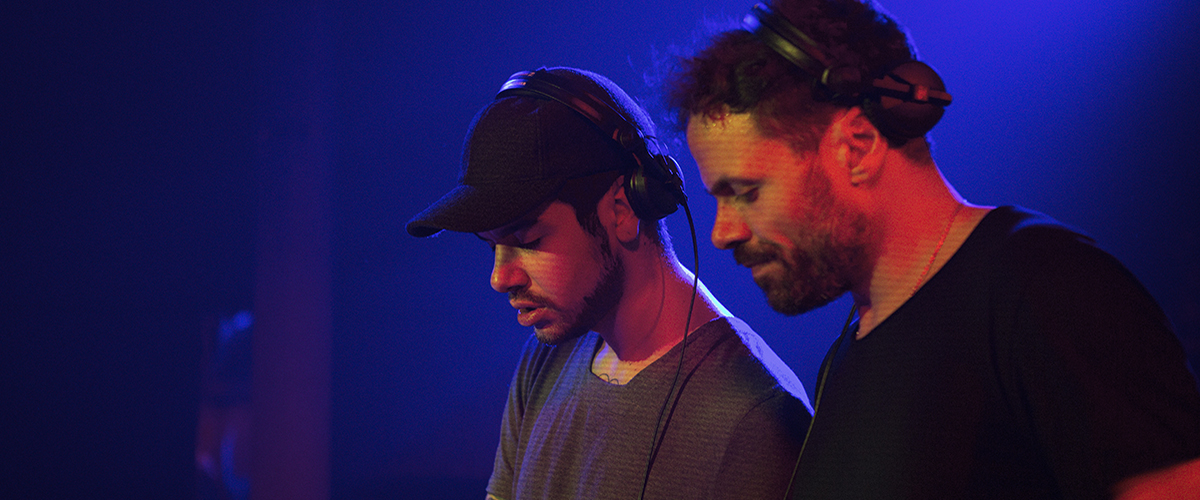
There’s a lot of discussion around Tale Of Us right now. The Italian duo, which consists of Matteo Milleri and Carmine Conte, have grown to become one of the leading names in the electronic music scene. In many ways, their output over recent years—a uniquely poignant and melodic take on traditional techno—has become an iconic part of the wider musical climate, inspiring other like-minded artists to pursue similar soundscapes. But now, for perhaps the first time, there are lingering doubts over the future of this sound: Has it had its day? Is it just a short chapter in a far greater narrative? Has its popularity led to overexploitation? Is Tale Of Us trapped in a style absent of longevity?
Questions, too, are being raised over the duo’s long-awaited debut album. What can we expect? Why are R&S Records, an independent label acknowledged as a platform for forward-thinking artists, in line to release it? Given that it’s already three years overdue, will it ever even really surface? Intensely guarded and notoriously private, it’s little surprise that neither Milleri or Conte have really spoken publicly on these subjects—but in Berlin last week, they took some time out of their congested touring schedule to reflect, and to give their thoughts on it all.
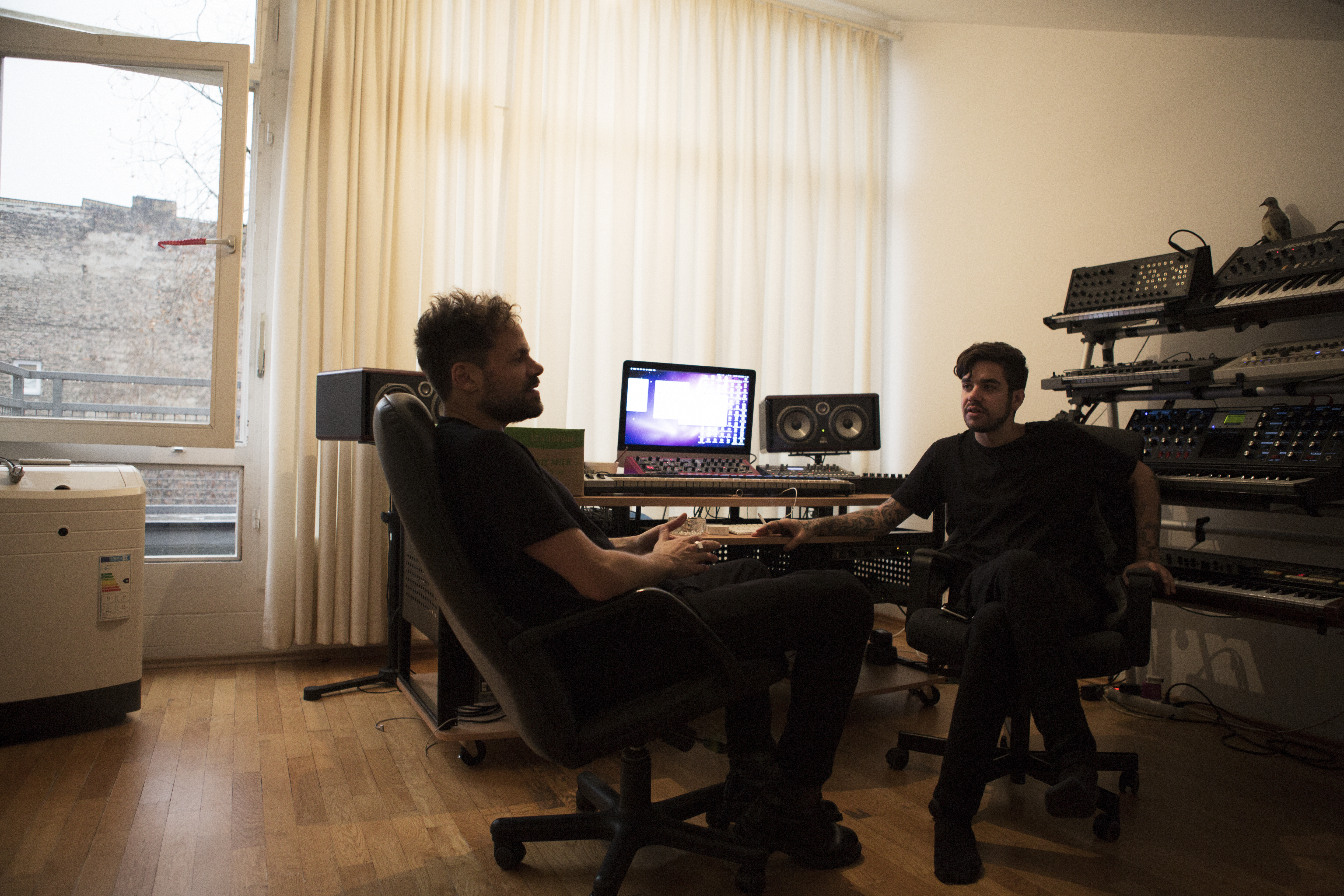
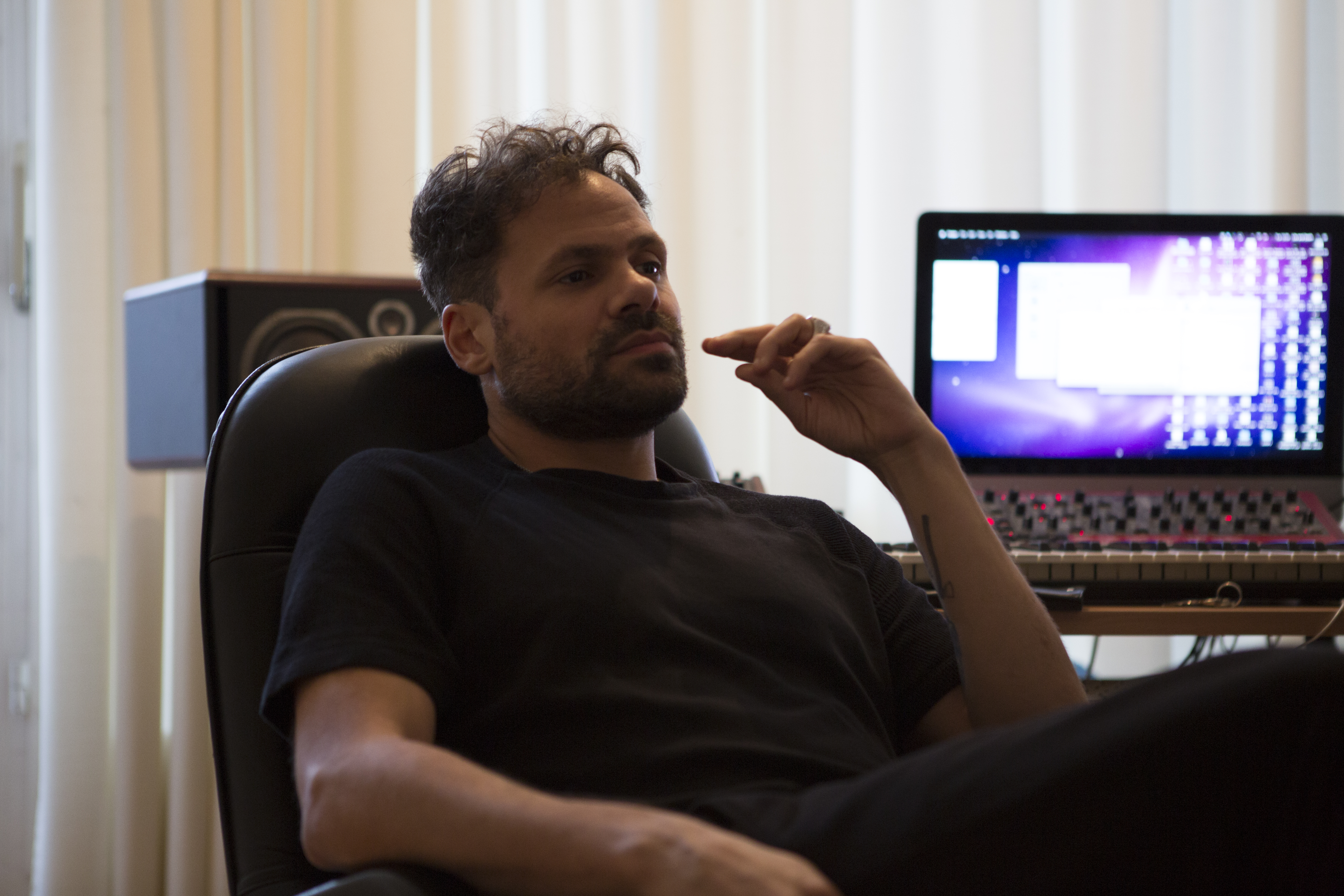
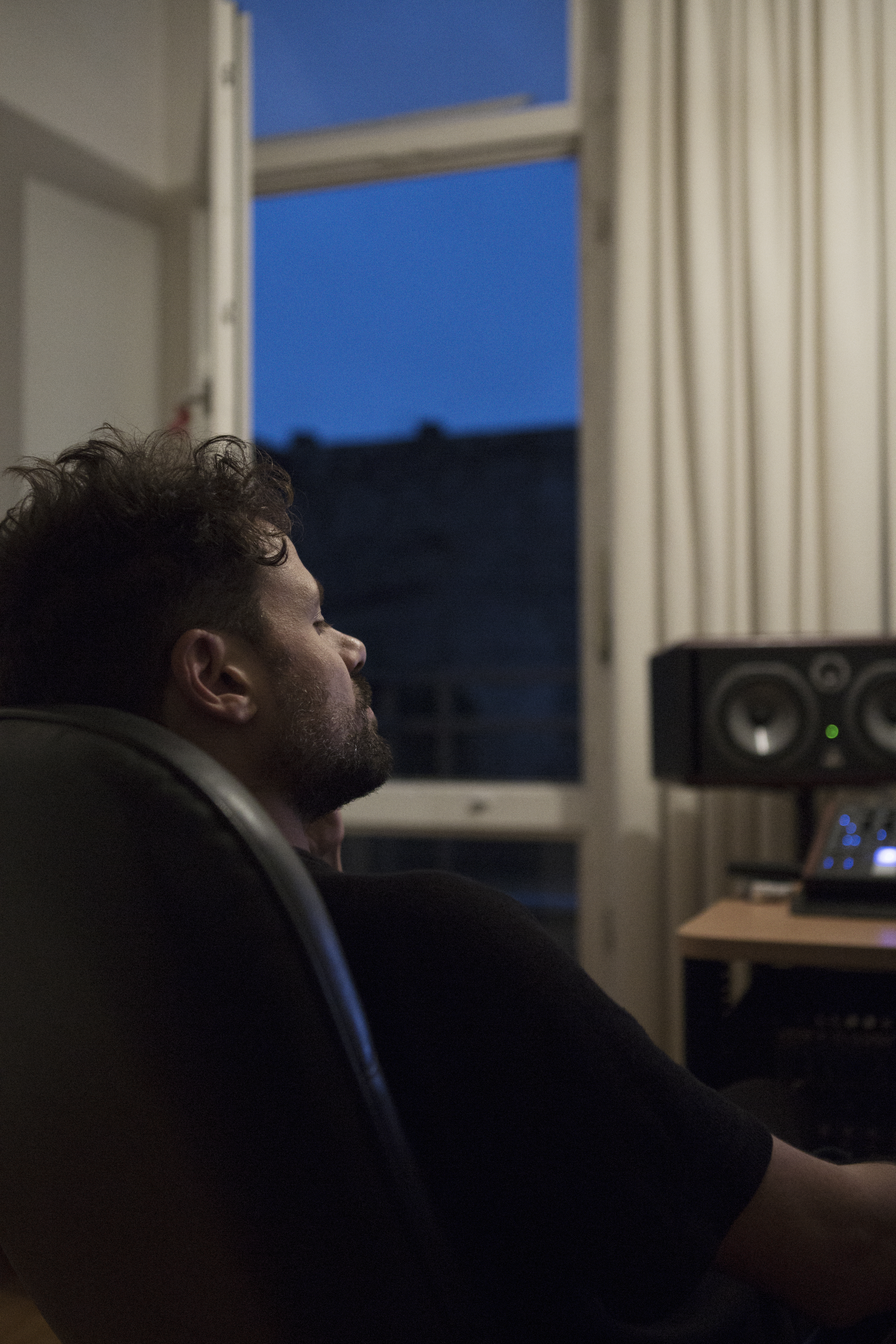
The initial discussion takes place in a top-floor Kreuzberg apartment, which now hosts Alessandro and Federico Fognini, the pair better known as Mind Against. It’s the same space that Conte and Milleri have used for their two previous media encounters of note, and it is where they first called home when they moved to Berlin five years ago. Both have now moved away, albeit to two separate apartments on the same street. Nestled in the corner is the recording studio as shared by Life and Death, the label that released the duo’s infamous 2011 remix of Thugfucker’s “Disco Gnome.” Milleri has since become a Life and Death co-partner, alongside Greg Oreck and Manfredi Romano (a.k.a. DJ Tennis). Almost all of their material has been recorded between here and Conte’s home studio, less than five minutes walk down the road. It’s a Tuesday afternoon and they are both doing some last-minute preparations before they travel to Poland to play that evening. Milleri is having some lunch and Conte is smoking a cigarette on the balcony outside. A car is scheduled to take us all to Berlin Hauptbahnhof station in just over an hour’s time.
In a 2012 interview with Resident Advisor, Milleri stated that a Tale Of Us debut album was “70 percent” complete. In March last year, he then confessed that it was still a work in progress. To say that it feels a little overdue would be a grave understatement—but the reasons behind the adjournment are numerous and understandable.“It’s quality control,” Conte explains, smiling. “It’s quite simple.” Together, they have actually completed three studio albums—dated 2010, 2012 and 2014—but not one has been heard by anyone outside of the duo’s few close and trusted confidantes. “The albums were crazy, but we didn’t know whether they were good enough,” Milleri explains. “There wasn’t necessarily anything wrong with them, but they definitely weren’t right.”
Instead of disposing of this wealth of studio material, the duo have elected to break it down and release those tracks fit for the dancefloor as several EPs—namely 2011’s Dark Song, 2013’s Another Earth, and this year’s “Astral” and “North Star”/”Silent Space”—while preserving anything that fits the hazy, experimental vision that they hold for the album. Over dinner at Conte’s later that week, the pair pull out a test pressing of two such tracks, but are hesitant to give too much more away. The LP will come, they attest, but the release has been postponed indefinitely. “We haven’t given ourselves a date, because it just blocks the creative process,” Milleri explains. “We are going to take some time to work on it this year, but if you force it, then nothing happens.”
While the release date remains ambiguous, the duo’s intentions are anything but. “It has to be a step away from the dancefloor,” Millieri reveals. “It has to feel like it isn’t part of that world.” Their aim, he says, is to release a piece of work that is removed from anything they have done before—“these more more ambient tracks can’t just be fillers for dancefloor tracks,” he continues. Included within this vision is a ticketed performance show, something akin to that of Massive Attack or Underworld, instead of their acclaimed DJ sets. There is little doubt that there lies sufficient material within their steadily growing discography and unreleased works to compile a credible techno LP, but their yearning to push the boundaries in search of a “proper artist album” is proving to be an arduous hurdle to overcome.
“I think that we are still trapped in some kind of techno situation. With an album, you have to be completely comfortable in your zone, so you can do something totally honest.”
The problem is that the direct nature of the EP format suits their style— and that writing an album is a very personal endeavor, and so does not suit collaborative artists. In addition, they say that it can be hard to escape the constraints of techno with such a heavy touring schedule. “I think that we are still trapped in some kind of techno situation,” Milleri explains. “With an album, you have to be completely comfortable in your zone, so you can do something totally honest.” The obvious solution would be to take time away from the road to spend time in the studio—but this is something that Conte and Milleri perceive to be a sizeable risk, given their status today. “We’re in a good place right now,” says Milleri, “so it’s not easy to stop playing shows in order to produce an album with a view to doing ticketed shows,” he continues. “We have to do it because that is the next step, but it’s going to be a challenge.”
Central to this desire to explore more experimental musical pastures is R&S Records, the infamous Belgian imprint founded by Renaat Vandepapeliere and Sabine Maes. On initial inspection, the label, which has almost unrivalled reputation for pushing avant-garde electronic music, does not seem like the perfect fit for the duo’s well-defined sound. It came as surprise when news broke that R&S was the rumored home for the debut album—despite Milleri stating previously that he intended to release on the label—and even more so when the duo’s first EP on the imprint was neither sonically innovative or especially inventive. But, as Milleri and Conte explain, there is more to the story than meets the eye.
Vandepapeliere, one of the genre’s pioneers, is interested in signing their debut album because he “strongly believes that the dancefloor world is limiting their musical expression.”And he has a point: “Distante,” the intensely beautiful track that the duo shared in celebration of this year’s Piano Day, certainly supports this theory. “That track is a good example of what we can do if we really sit down and release our skills,” Conte says. The duo explains that Vandepapeliere’s insistence that they experiment has opened their minds to the idea that they can pursue more diverse soundscapes. “It’s easy to talk about making something other than dance music,” Milleri says, “but actually writing this is another matter. You have to be a proper musician and, since we are not classically trained, it’s not so easy. But when someone like Renaat comes along with such a proposition, you think about what you can do”. The label actually rejected the first full album that the duo delivered because it was not experimental enough, and they opted not to sign “Astral”—a dancefloor-focused track—on the same grounds. The agreement to release the “North Star”/”Silent Space EP”—which originally consisted of four tracks—was made on the condition that more innovative works would follow soon thereafter.
And, as becomes apparent, this sonic shift is just one small part of a far bigger picture. On more than one occasion, Milleri uses Massive Attack as an example of his long term ambitions are a recording artist. Ignoring any musical comparisons, he says that the way they are marketed, and the way they have earned the trust of their fan base, is something that he and Conte are striving for as they continue their journey forward. “Massive Attack can be a movie, a track or a show that you buy a ticket to. They can do any of those things, and make different types of records, and people will still go for it,” he explains. “That’s a great achievement.” In line with this endeavor, Conte and Milleri confess to rolling out what they call a Tale Of Us “show,” something they perceive to be entirely distinct from the club sets that they have been touring since 2011. “We are developing it without any announcements or anything like that,” Conte reveals. “It’s still a work in progress.”
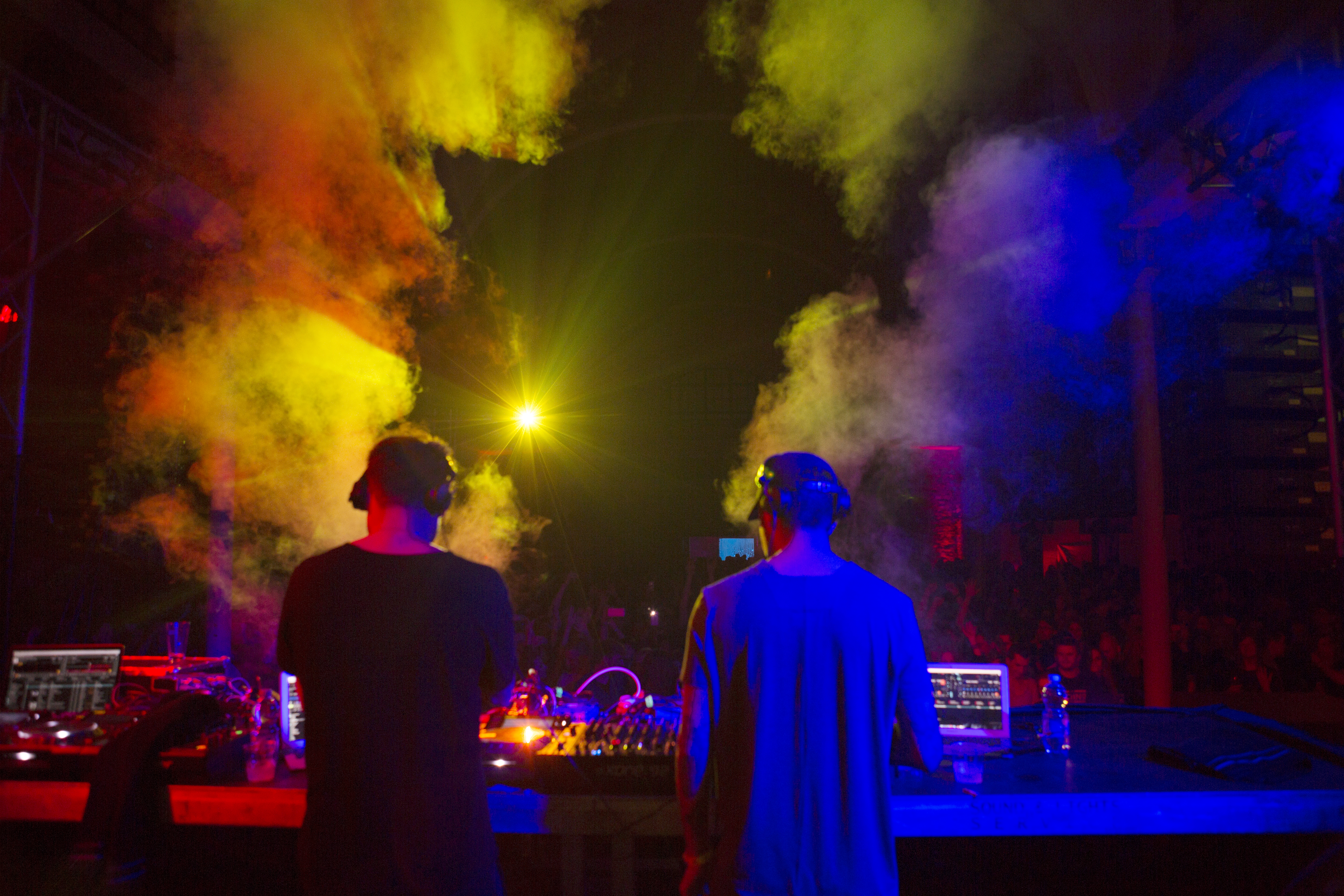
This news, however, is probably nothing new to those who have seen the duo perform at a recent festival. The production for the regular club set, for which they travel with their tour manager, Felix—along with any friends, family, bookers and management—is minimal in comparison to the audio-visual show, which requires both a lighting and visuals specialist. The name, of course, remains unchanged, in a similar vein to that of Massive Attack. Etienne Heraud, the duo’s manager and long-term adviser, explains that it is normally Milleri and Conte who fund this specialist production out of their own artist fees. “At these big events, the production is just too impersonal so we have to do something different,” Milleri says. “As artists, it’s important that we affirm our individuality and identity.” 2015, they say, saw more club sets than “shows,” but they intend to push the latter going into 2016.
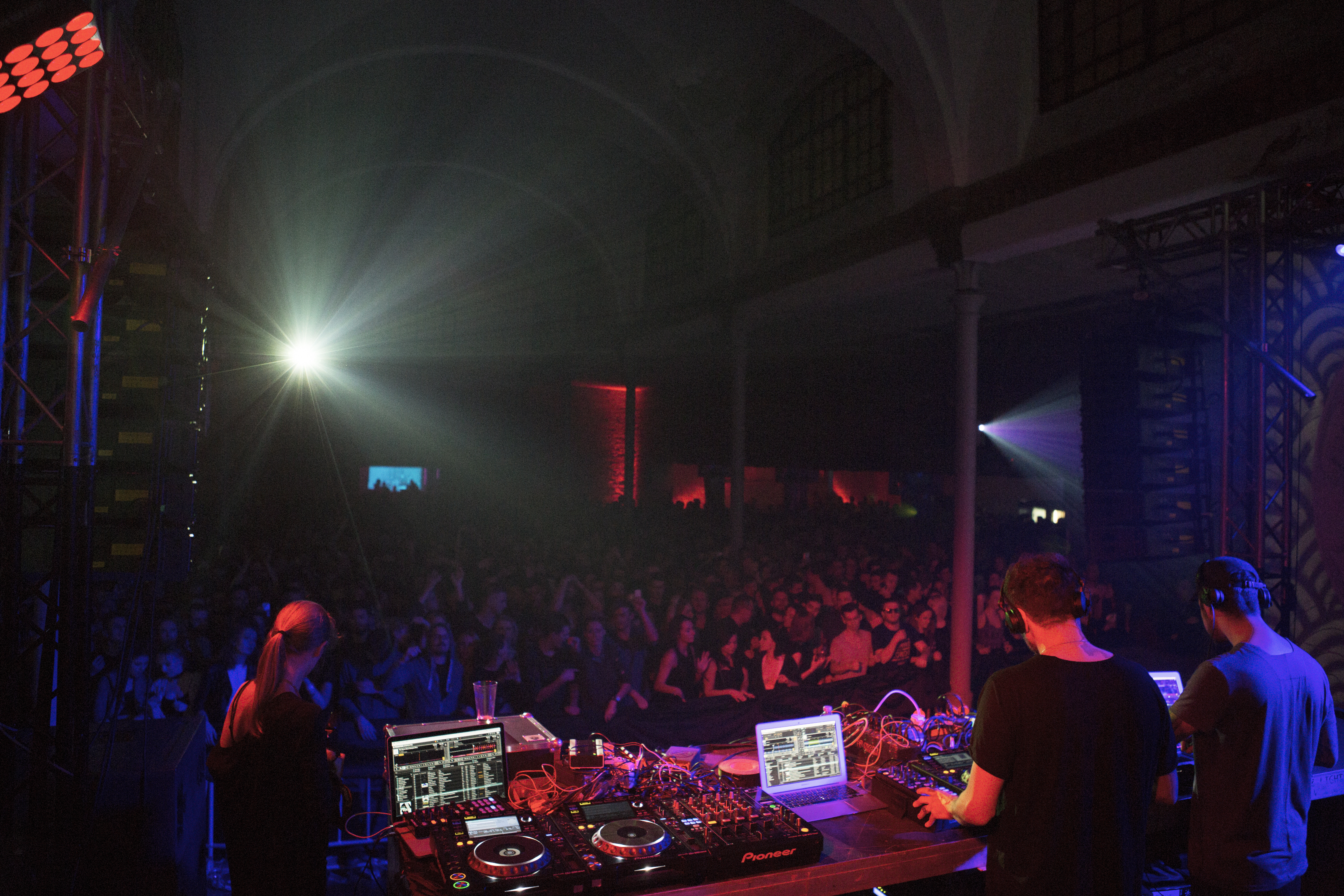
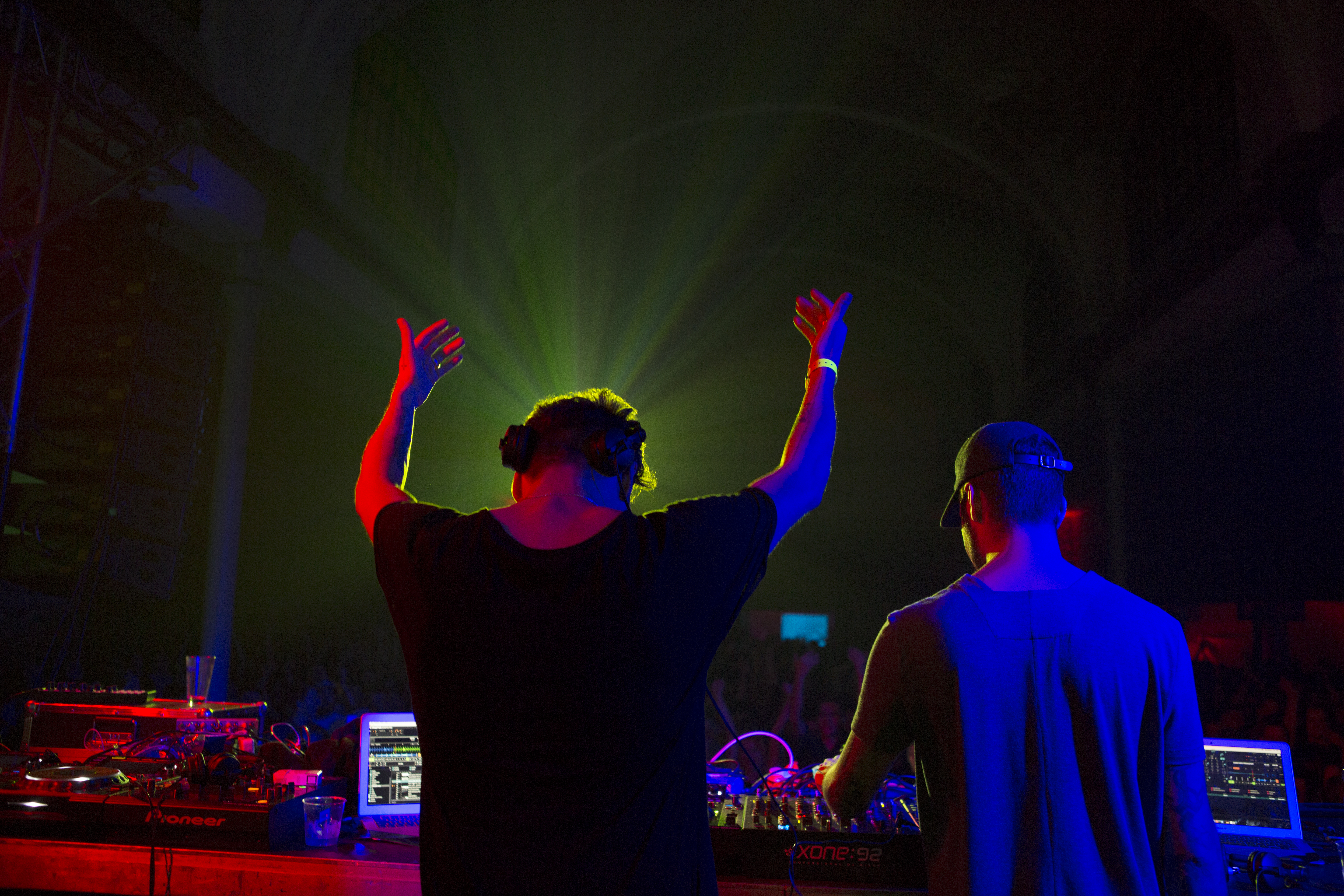
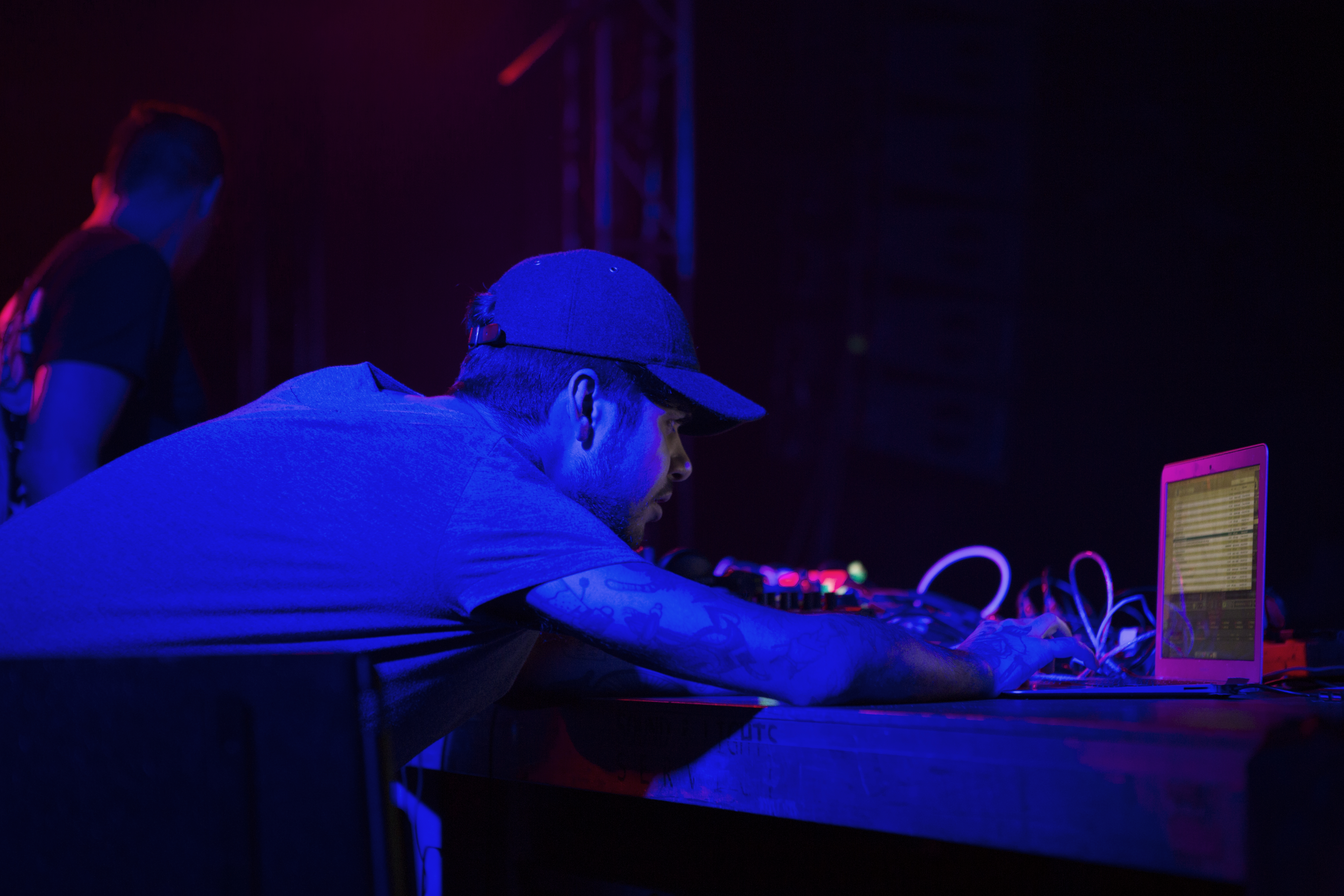
On the subject of their set, it’s important to note that both the club and audio-visual versions are something akin to a hybrid between a DJ and a live. “We are definitely not DJs,” says Conte, laughing over a glass of whiskey at the hotel bar in Poland. “We only do that very rarely.” Barring a special occasion—something that happens just a few times year—Tale Of Us sets are strictly limited to two hours. The reasons, they say, are twofold. Firstly, their sound is “too intense” for anything longer. During one extended set at Watergate, Conte reveals that they had to stop on several occasions just to check that the crowd wanted more. “We want our shows to be short and impactful,” says Conte. Secondly, their processes make it “extremely difficult” to concentrate for long periods. Using Traktor— because it allows them to change the key—Milleri and Conte play back to back, but will always have a third track playing, and will include a fourth for “special moments.” This layering system, they say, is very “hands on” and requires their total attention “at all times.” “People can be listening to electronica, like a Rival Consoles track, and they won’t even realize it,” Milleri says. “It would be almost impossible to play this stuff in our sets otherwise.”
“With the same characters, we tell a different story.”
In this sense, a Tale Of Us gig is closer to a performance than a DJ set: Instead of having an almost infinite array of tracks from which to choose, they have a concise selection that fit their defined sonic mold, many of which are unreleased. Besides this quality control, Milleri says that one of the reasons their discography is so limited is because they enjoy playing music that is not available to the public. A Tale Of Us set does not change not so much in the tracks that are played out, rather in the order in which they appear. “With the same characters, we tell a different story,” explains Conte. The way they explain it is like a jigsaw: There are two or three foundation tracks that have a designated point in the set—Recondite’s “Serak,” for example, was delivered to them specifically as an an opener, and the duo produced “North Star” for the same precise purpose—and the combination of the other tracks will then shape the story they tell. Playing an unreleased Woo York track before Locked Groove’s “Eleven,” as Conte explains, will soften the mood, and they will normally play “Another Earth” in the middle of a show to give the crowd a boost. In order to maintain some originality, the whole set is then revamped every two to three months, although there are certain tracks, like Rødhåd’s remix of Howling, that have a longer shelf life.
Whereas artists like John Talabot and Gerd Janson have the tools to play a blissful daytime set at Dekmantel or a dark and twisted one at Panorama Bar, the inherent inflexibility of a Tale of Us show limits the circumstances in which they can perform. Given this, it’s no surprise that the their management must work hard to nail down finer details of a booking request before they can even consider confirming it in the schedule. Over dinner at Conte’s, the duo’s booker, Aurelia Ortiz at the Artist Alife agency, explains that she must be far more stringent with the details of a Tale Of Us request than with the other artists on here roster. Details such set times, stage and line-up, she says, must all be confirmed before accepting the booking.
Sonically speaking, the release of the impending album will not mark the first time that Milleri and Conte have taken a change of course. A simple YouTube search will reveal a catalog of their releases that sit much closer to house and disco than the techno sound that they’ve adopted over recent years. It’s hard to fathom that the same artist is behind the remix of Maceo Plex’s “Can’t Leave You,” for example, or “Another Earth,” or this year’s “North Star.” “We pushed too close to the deep house with our remixes,” Milleri says. The change came in 2013 when they first started to consider themselves as “professional artists,” Milleri explains. “We didn’t belong in that world,” he continues. “It was a risk to move away but we didn’t have a choice; our crazy minds started pulsing and we knew we had to do it.” The result, they say, was the Another Earth EP, an iconic release that marked the birth of this new techno sound, something Conte feels has always been a part of them. “It [this sound] didn’t exist,” explains Milleri. “There was the German Ostgut Ton-influenced techno more minimal stuff pushed by Minus, but there wasn’t anything with this melodic side,” he continues. “We love harmonies and so that’s where we went.”
“The journey for Tale Of Us is still continuing, but this is as big as we’re going to get in terms of dance music.”
It has been said, however, that the duo are now trapped within the sound that they created. Support for this theory came when their latest original works were carbon copies of almost all that had come before. A long list of artists have flooded the market with similar-sounding material and there is a sense now that public tastes are moving on. While Conte and Milleri explain that a desire to grow is behind their decision to innovate, they are also aware that the realms of this romantic techno have now been sufficiently exploited. ��We are not trapped, because we are going to take it to another level with the album,” Milleri explains. “We’re looking forward, instead of just copying ourselves.” The goal, he says, is not to make their current sound any bigger, but to evolve into something new. “The next step we’re going to take is not renovating our dance music style; we’re actually going to take a bigger step,” he says. “The journey for Tale Of Us is still continuing, but this is as big as we’re going to get in terms of dance music.”
If Tale Of Us is to achieve those ambitions and transcend the dancefloor, it is important to note the role of the people that immediately surround them. The Tale Of Us team—from management to bookers to PR—feels like a close-knit group of trusted confidantes rather than a bunch of industry professionals. Friends first; colleagues later. Although listed as manager, a position he has filled since 2014, Etienne Heraud’s job spans a far wider remit. “I’m definitely not like the usual manager,” he jokes. He is authorized to make decisions on their behalf, and was invited into the team after earning their trust by working closely with them during his days as a French promoter. “We needed a manager so we could focus on our creative processes, and this was the natural decision,” says Conte. Such widespread success does not come without its headaches, and the duo explain that the team play a fundamental role in their success, both in a professional and personal capacity. There have been, they say, a number of periods where they have required these trusted people to drive them forward when motivation has been especially low. “The team is very important to us in this way,” Conte says. From a professional standpoint, Milleri refers to it as a “company.” “Everybody has a specific role in implementing our strategies and making these visions happen,” he says. “The trick is to have the right people, who you can trust to support your ideas.”
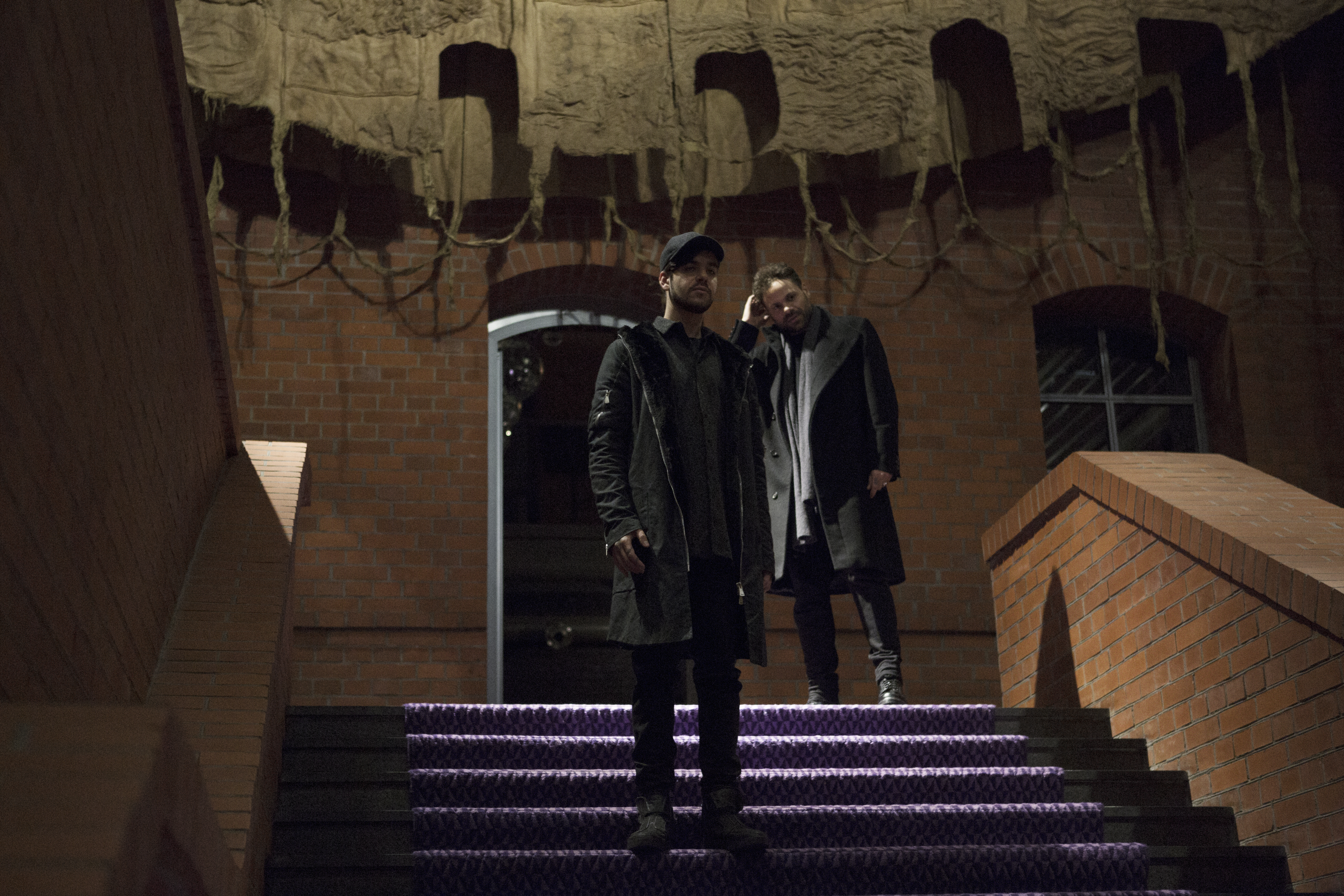
One thing that strikes you, above all else, during time spent with the team, is the calculated nature of the operation. It feels as if there is a very specific motive behind each action; a reason behind each piece of information that escapes the private confines. It was only after months of discussion that they agreed to speak at length with us. Lessons have been learned, says Milleri, most notably the duo’s decision to respond to the RA’s critical review of their 2013 remix of Mano Le Tough’s “Primitive People”—an immature decision he describes as “very stupid”—but internal activity of the team is now very carefully managed. This shroud of mystery that they’ve created around them is not something they originally intended—but it has become, they say, an important part of their marketing strategy. As individuals, Conte and Milleri are both amiable and welcoming, though intensely professional and focused, but this dark, brooding image that they present on stage and online is part of their brand that the whole team work hard to protect. “We have found a marketable way to present ourselves,” Milleri says. “We like the idea of being artists of the night so we try to use silhouettes instead of showing our faces in photos too much,” he adds. “We also feel that we shouldn’t be too present, and that we should just do the right remixes that we want, and not release too much.” Social media, too, is “very carefully structured” and media activity is kept to an absolute minimum. Video interviews are strictly forbidden. “We like Instagram because it is more mysterious,” says Conte. At the end of each calendar year, the duo sit down with team to re-evaluate their goals and the applicable strategies.
Reflecting on the past 12 months—the Radio 1 Essential Mix, the EPs and the remixes—it’s hard to deny that 2015 has been their most successful year to date. They have, they say, achieved more than they could ever have anticipated. “It’s just been a series of small steps,” says Conte. “We’ve worked hard but it’s been very organic.” But listening to their unreleased material leaves you with the lingering feeling that their best work may yet be to come. It feels expressive. It feels sincere. It feels genuine. Perhaps, therefore, this is just the beginning. Perhaps Chapter 3 will be the most enchanting. Perhaps Conte and Milleri’s artistry will only become apparent when they remove the shackles of the dancefloor. The tale continues.
Belfast’s Extended Play Recordings will mark a milestone on November 30 with the release of EP50 Statement of Intent, an album of 14 original cuts from some of Northern Ireland’s rising producers.
Belfast is fast becoming one of the world’s premiere electronic music cities and Statement of Intent presents the sonic sound of the city, and Northern Ireland for that matter, with a wide ranging set of club-focused tunes. From “Sqelch,” Ejeca’s stripped back techno missile, to “Eastside Rhythm,” Moodtrax’s rolling drum-machine workout, the release puts forward a set of cuts that each have something to say, with a distinct vibe running throughout. Statement of Intent is also exactly that, as the label heads explain:
“This release encapsulates a lot of what we love in late night electronics, represented across fourteen new Belfast originals. This is the soundtrack to a romp through our city and for once Belfast blowing up can only be seen as a positive. So this, our statement of intent for the future, we are excited about our scene and what lies in-store.”
Ahead of the November 30 release, you can stream JC Williams thumping acid outing “Paradox” in full below.
A surging force of sonic exploration and a true up-and-coming in Berlin’s techno scene, the formerly Bay Area-based artist Jamaica Suk continues to exercise a passion for techno while contributing new and exciting music for the club culture that she has come to know and love in Germany’s capital. A trained musician and student of jazz, Jamaica’s extensive musical background originally lead her towards a love of shoegaze and psychedelic rock. An eventual trip to Berlin changed her musical outlook drastically and Jamaica began to develop a love for the machine that would soon consume her. Originally just visiting, Jamaica decided to leave the West Coast of the United States permanently and took up residency in one of the techno capitals of the world (the only other being Detroit of course).
With two EPs on both Coal Records and FaceToFace, Jamaica Suk released her third, four-track EP, Trusst, on FaceToFace on November 16. XLR8R is pleased to share with you the Trusst EP cut “Dazed” as today’s download. The spotless, unadulterated techno sound coming from Jamaica Suk’s production speaks volumes regarding her tremendous musical capacity. The repetitive, guttural backbone of “Dazed” moves with vigor and diligence, guiding waves of metallic percussion that lift this club-ready track with great throb and breadth.
You can download the track in the player below and be sure to check out more from Jamaica Suk by going to her Soundcloud page here.
On December 11, Tripeo (a.k.a. Darko Esser) will return with the seventh edition in the Tripeo series, titled Seventh Trip.
The EP features two typically deep and hypnotic cuts and is yet again another masterclass in detailed, atmospheric techno from the Wolfskuil Records label head. “Untitled #13” is the deeper of two, beautifully opening the release and warming the senses for the heavier “Untitled #14,” which rises in tension across its near eight-minute run time to a climatic, percussive finish.
Ahead of the release, you can stream “Untitled #13” in full below; along with the winter tour dates.
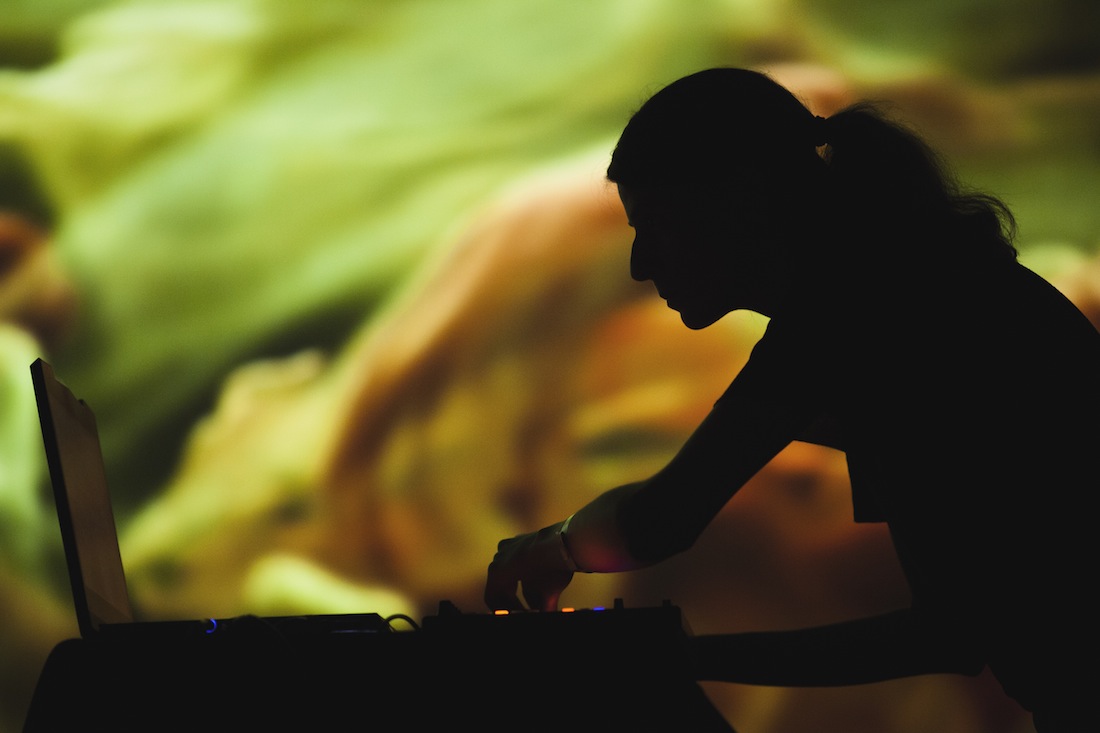
Barcelona’s MIRA Festival aims to provide a platform for live acts and visual artists alike by helping them find engaging new ways of combining their two art forms. For the 2015 installment, which ran from October 30 through November 7, XLR8R made the trip down to Barcelona for the fest’s fifth year of operation. The main festival again took place at the Fabra i Coats venue (an old coat factory located in the north eastern part of the city, in the Sant Andreu district), with the latter part of the closing night taking place at the famed Razzmatazz club. As with previous editions, workshops and other small events were offered throughout the week preceding the two main music nights—featuring left-field, drone, electro and experimental sounds—that took place on Friday and Saturday in the Spanish city.
The Fabra i Coats venue was set up with different areas spread throughout the former factory, where an assortment of visual-art installations by artists of both Spanish and international backgrounds could be found. The MIRA dome, erected by Adidas in collaboration with the SAT Montreal, stood outside the factory’s main area. Inside the dome, artists captivated the audience with remarkable audio-visual projections that delightfully undulated and created geometrical shapes against the dome’s ceiling. Although many of the shows inside the dome were impressive, none was more so than “Entropia.” The live, immersive music production, executed by the performer inside a custom LED dome, was one of the most breathtaking and interesting presentations we’ve had the pleasure of witnessing in a long time. The spectators, laying down on the dome’s floor, looked up at the ceiling while mind-bending visuals and music, working in perfect synergy, transported the spectators away into a sci-fi–esque universe. It was, perhaps, the pièce de résistance of the entire festival.
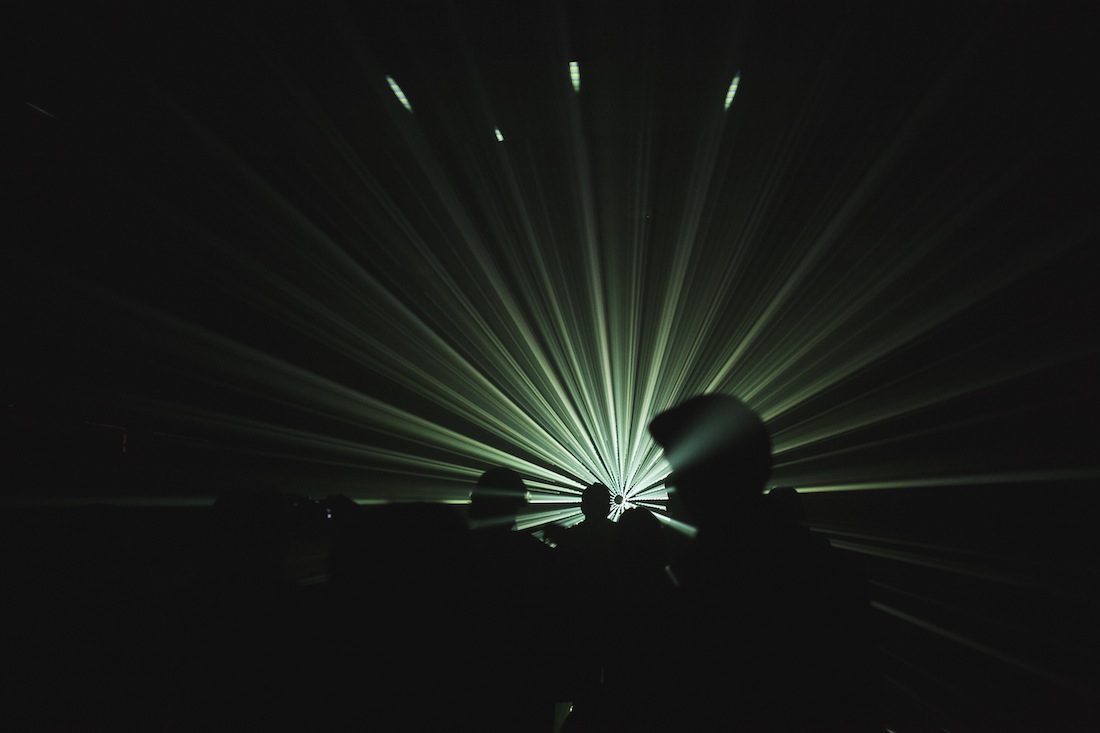
In terms of art installations, the festival knew how to pique our interest.“Timée,” by Guillaume Marmin and Philippe Gordiani, inspired by Plato’s “music of the spheres” theory, was another one of the festival’s coups. Upon entering the installation’s room, the audience was engulfed in darkness and transported into an improbable, kinetic world, where rotating spheres projecting beams of light created both chaotic and harmonious systems that were triggered along with sounds, leaving us genuinely impressed.
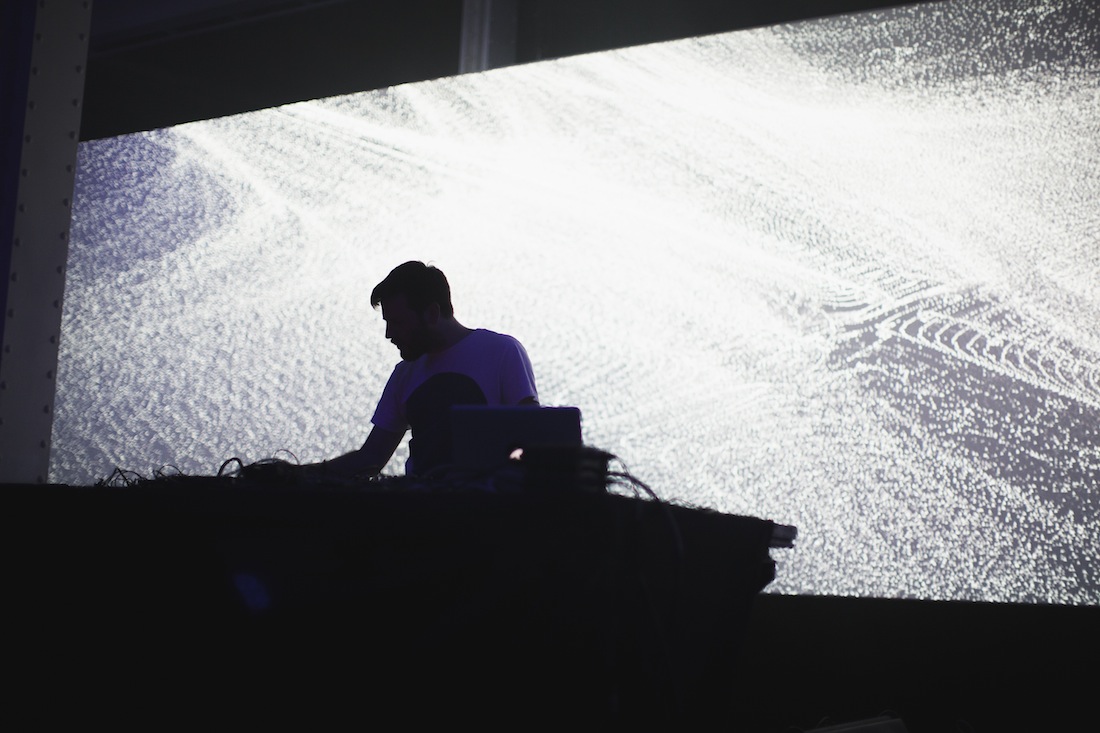
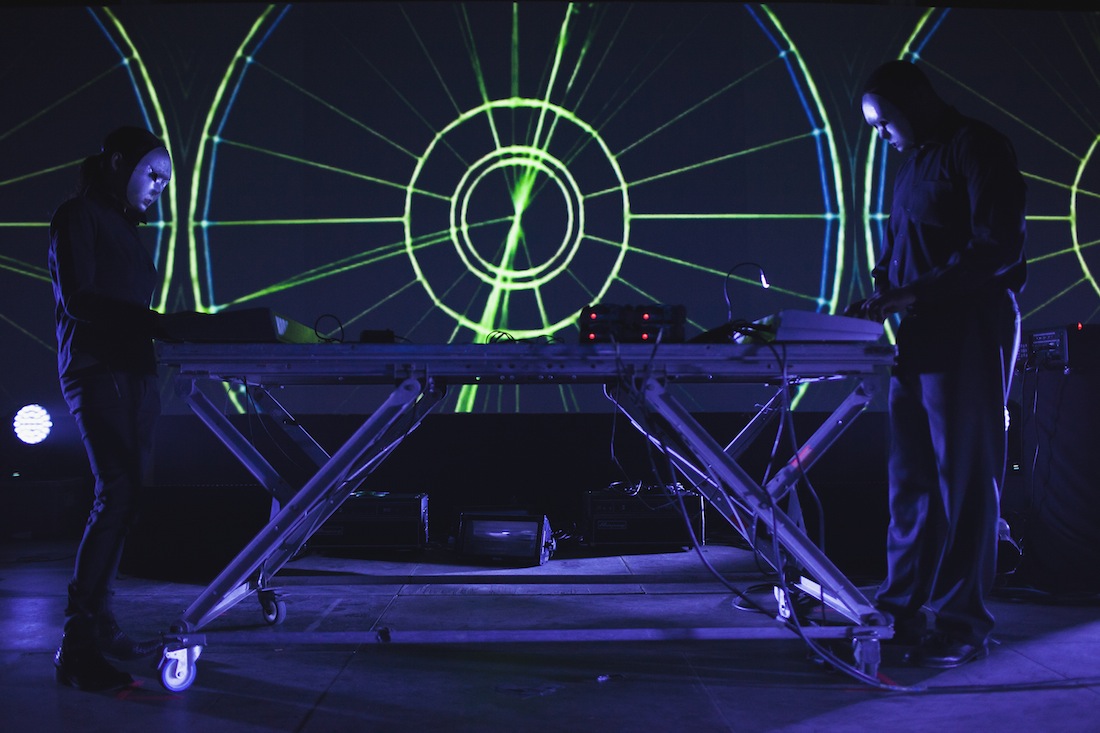
There were also highlights among the main stage’s musical offerings, the primary one courtesy of Ryan Lee West (a.k.a. Rival Consoles). The London-based producer managed to deliver a wonderfully executed set; aided by his synths, he created organic and otherworldly atmospheres with a sound that was both delicate and rousing. Los Angeles beatmaker Nosaj Thing, with his trademark ethereal and upbeat rhythms that kept the crowd dancing, was another favorite—albeit with less-than-exciting background visuals. Detroit’s Dopplereffekt was unequivocally another high point, as the enigmatic duo’s Kraftwerk-style synth melodies and equally appealing visual elements elevated the performance.
For all these successes, however, the MIRA experience couldn’t help but leave us with mixed feelings. While there were certainly enchanting moments, we question whether the bridge between live acts and visual artists was successfully established; the visual accompaniments to the performances on the main stage sometimes paled in comparison to the beauty of the music happening on it. The art installations, in contrast, were often stronger—thus taking the spotlight away from the music showcases. The lack of harmony between art forms resulted in a certain disconnect that was particularly felt on the first night. Despite this, MIRA assuredly managed to provide stand-out moments—whether it was enough to keep us intrigued for the upcoming editions remains to be seen.
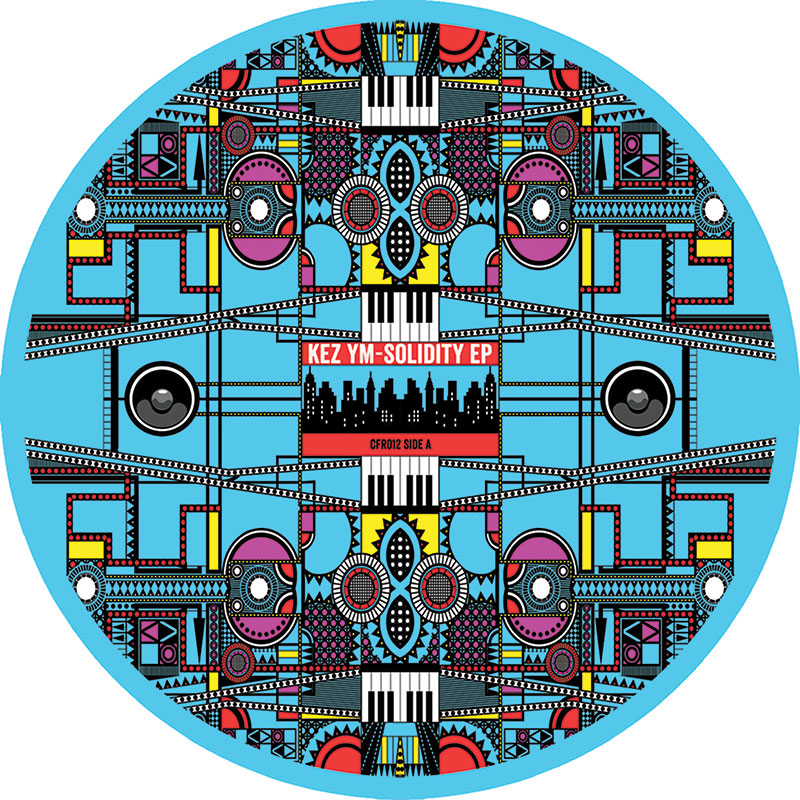
Japanese producer Kazuki Yamaguchi (a.k.a. Kez YM) will return to UK imprint City Fly at the end of this month with his Solidity EP.
Following on from releases on Yore Records, 4Lux, and Faces Records, Solidity features four high-quality classic deep house cuts from the Red Bull Music Academy alumni. The EP is already receiving nods of approval, and dancefloor rinsing, from some of the scenes most renowned tastemakers, including Seven Davis Jr, Mr. G, The Black Madonna, and Mr Ties.
Setting the tone for the EP is the beautifully deep opening cut, “Bump Into The Sky,” a low-slung affair that perfectly flows into the more energetic and percussive “Eagle Eye.” From there, Yamaguchi keeps the pedal to the floor with “My Joy,” a a vibe-filled jazz-tinged cut, before “Spiral Traffic” closes the EP in style with its looped vocals and spiralling pianos.
Ahead of the November 30 release, you can stream “Spiral Traffic” in full below.
Copenhagen meets Berlin as headphone makers AIAIAI and critically acclaimed electronic music duo, Modeselektor, join forces for a special edition headphone. Configured and designed in collaboration with one of dance music’s biggest duos, the TMA-2 Modeselektor Edition gets its worldwide release today. The TMA-2 Modeselektor Edition will be a 500 limited edition version.
No one does versatility quite like Gernot Bronsert and Sebastian Szary (a.k.a. Modeselektor). Heavily steeped in the rich, consistently shifting, diverse electronic tradition of Berlin, the they now lend their inimitable skills and knowledge to AIAIAI’s modular headphone system. As they frequently switch between producing, DJing and playing live with co-conspirator, Apparat, Modeselektor make the perfect operators of the wide range of options and possibilities that the interchangeable headphone system offers.
Gernot Bronsert, Modeselektor:
“We played around with all the components and ended up with this model, which is a really good sounding headphone which can cut through the noise in a club environment. These are true club headphones.”
The TMA-2 Modular headphone system was launched to accommodate a growing need for versatility within headphones. Following an extensive development process, involving the input from some of the world’s leading artists, DJs and producers, the final outcome was a versatile system that lets you choose between 500 different headphone combinations.
Getting its start as a weekly party at the Belmont Lounge—a reggae hangout in Manhattan around 2008—Julio Santo Domingo’s (a.k.a. Julio) Sheik ‘N’ Beik label, with a considerable amount of hustle and dedication, has managed to grow organically into a “multi-faceted sonic and visual creations operation” that continues to gain traction and a loyal following in the Big Apple.
Julio’s three-track debut EP, Ü, which is set to drop on November 27, will also be the first time the respected NYC DJ and producer will have used his new Rechulski moniker. The sounds coming from the Sheik ‘N’ Beik label boss contain a classic, dark techno influence with a sophisticated, wayward inflection that gives his release a considerable amount of power and movement. The EP’s opening cut, “Jürgens,” which is being featured as today’s XLR8R premiere, comes right out the gate with a scintillating rhythmic shuffle that keeps pace and drives the track from start to finish. The track amasses into a arrangement of obese basslines and spell-binding repetition that is all too often missed (but needed) when producing such dark, propulsive techno.
Ahead of the release, you can stream “Jürgens” in the player below. Be sure to check out more releases from Sheik ‘N’ Beik by going to their Soundcloud page here.
Irish electronic musician, Jack Colleran (aka MMOTHS,) has a new album dropping next year via Because Music sub-label, OYAE, marking his biggest project to date. Having previously opened for acts such as Aphex Twin and The XX, Colleran has been making a mark in the industry with his beautiful ambient sounds, that often feature a blend of echoing vocals and percussions. The results are the trademark, dreamy and shoe-gazey sound, he has come to be known for.
The Luneworks LP precedes MMOTHSand Diaries, the musician’s first two EPs, released in 2012 and 2013.
You can view the new video for Luneworks’ first single,”Deu,” directed by Hassan Rahim and Scott J. Ross, on the player above.
Luneworks will drop via Because Music/OYAE on March 11, 2016.
TRACKLISTING:
1 You 2 Deu 3 Phase In 4 Para Polaris 5 Verbena 6 Scent 7 Eva 8 Lucid 9 Body Studies 10 1709 11 Phase Out 12 Ohm 13 Naoko Pt. 1 14 Naoko Pt. 2