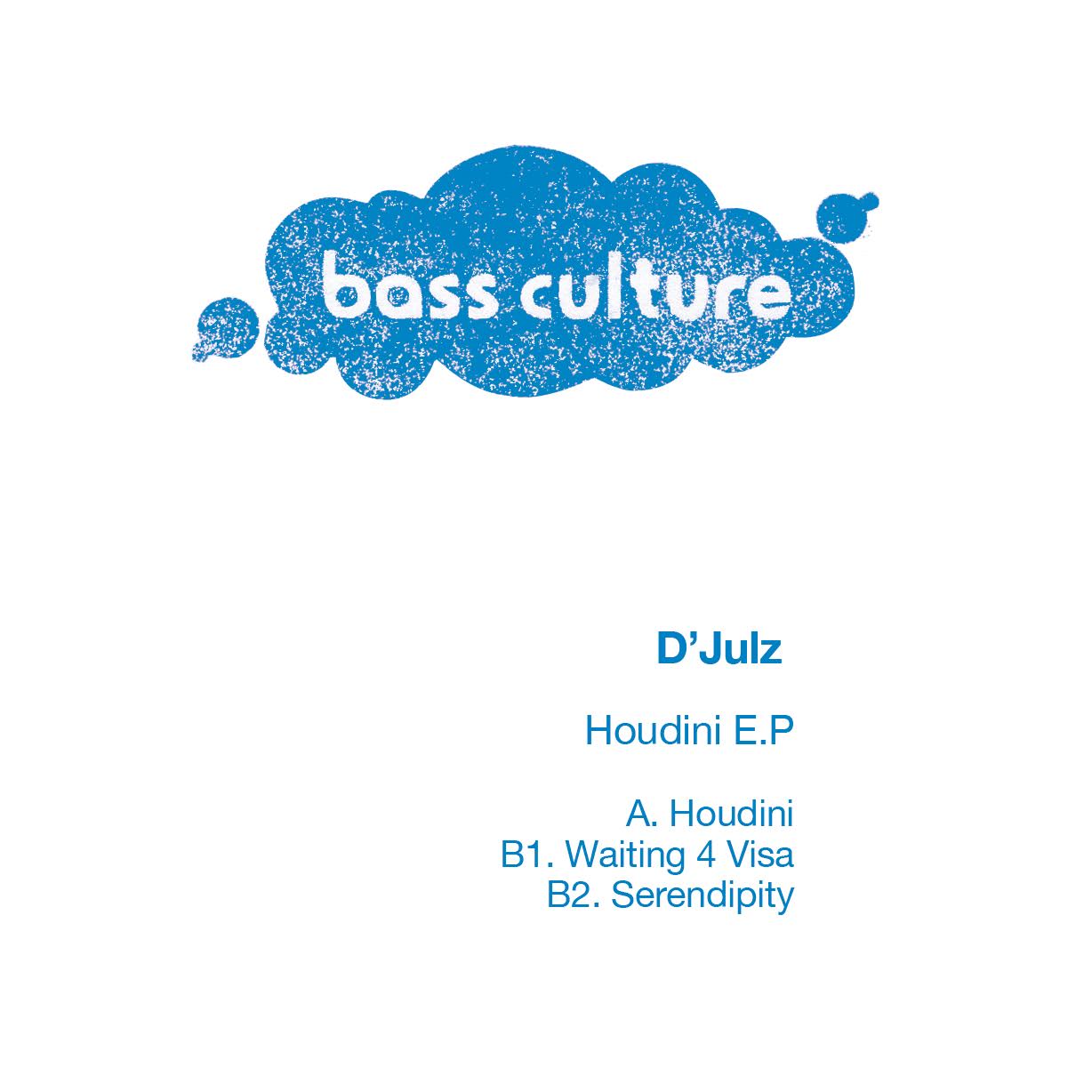
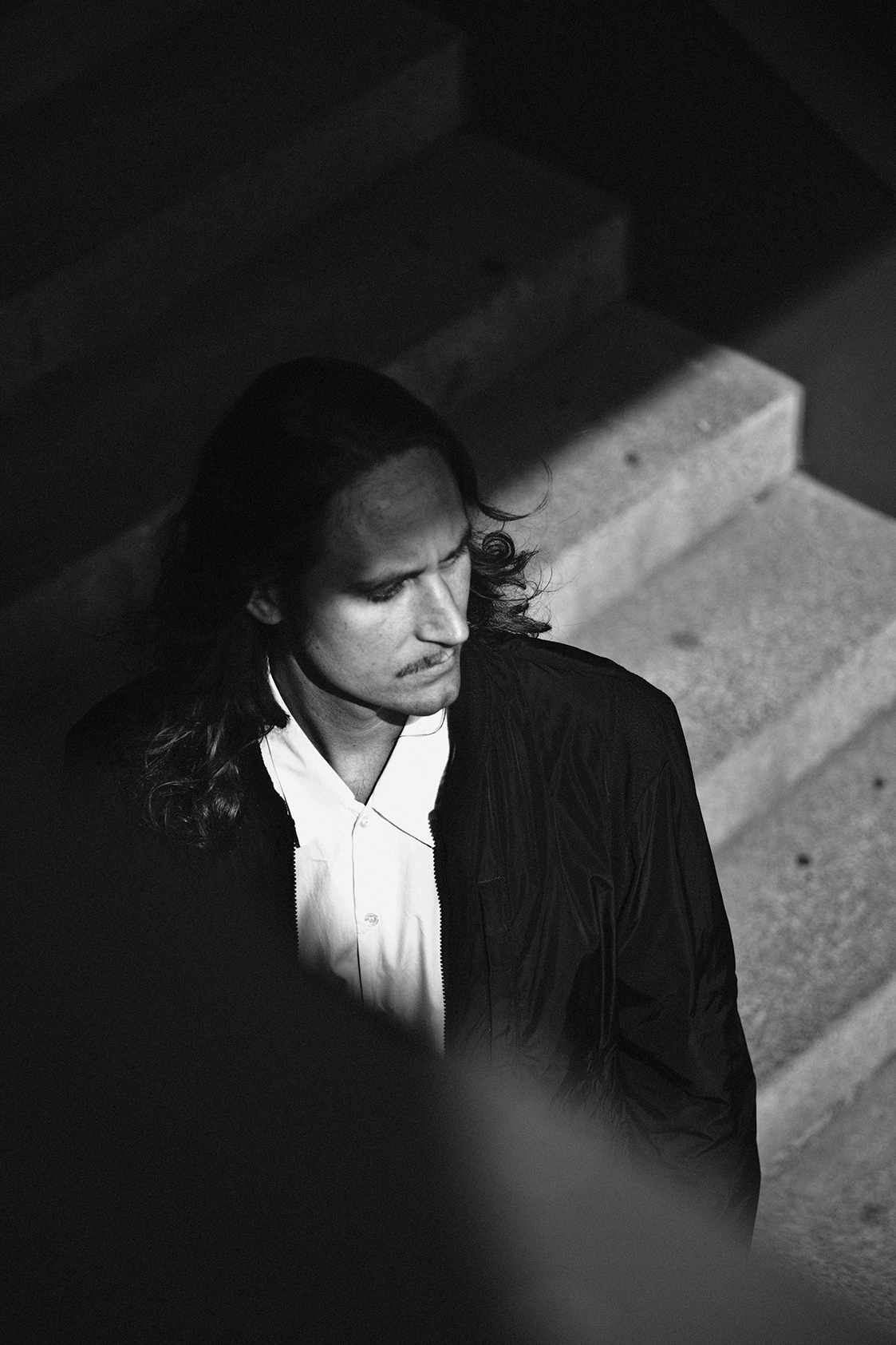
Born from the ashes of the Parisian rave scene, the Bass Culture party at Rex Club has been a pillar of club culture there for little short of two decades now. Presided over by Julien Veniel (a.k.a. D’Julz), the label of the same name is an outlet for the distinct functional house sound they have carved out over that time, propped up by the likes of Mr. G, Cassy and Franco Cinelli. With only his fourth release at home on the imprint, the label boss delivers three cuts that fit neatly into that tried and tested sound aesthetic.
It is business as usual for D’Julz with title track “Houdini,” a chunky, peak-time tech-house tool that smacks of Ibiza terraces—built within the classic four-to-the-four scheme, a bold chord progression and frisky yelps generate a few rapturous moments. “Waiting 4 Visa” serves similar purposes, with shuffling percussion and rising chords building up to a prolonged breakdown, but a relatively understated drop. The most rewarding moment is “Serendipity,” a low-key take on the sound, with a gentle bassline that could fit just as easily into home listening as it would club sound systems. Houdini is the work of an experienced tradesman—a selection of well-constructed, polished tracks, that are bound to have a transient spell in multiple record bags.
Offermann stamped his name on the electronic music landscape in 2005 when he co-founded the White imprint. This was followed closely by the launch of Rimini—a label he created for special edits—and Offermann’s first original productions, which found home on White. His latest LP follows on from Do Pilots Still Dream of Flying, his 2012 full-length, with 10 varied and eclectic cuts that were mostly produced in 2014. Infused with his love of hip-hop, Le Grand To Do has a raw, swinging vibe to it, equally suited to home listening as it is to club use. Offermann’s past as a drummer, as well as his deft touch as a producer, is evident across the entire release, which finds him employing beautifully intricate and left-field rhythms and melodic percussion.
Le Grand To Do can be preorded on CD here, or vinyl here, with the entire release streaming below up until the November 13 release date.
From January 9 next year, XOYO will throw 12 weekly techno parties, with a special resident hosting all shows.
XOYO’s first quarterly residency of next year will be devoted to purely techno sounds—the curator for this particular series will be announced on November 26. It is now the third year in which the London club has run the 12-week residency program. The series follows on from similar ones hosted by the likes of Bicep, Skream, Busy P, Simian Mobile Disco, Eats Everything and Benji B.
Check out the 12 Weeks of Techno site here to sign up for more information, and an exclusive mix by the mystery resident.
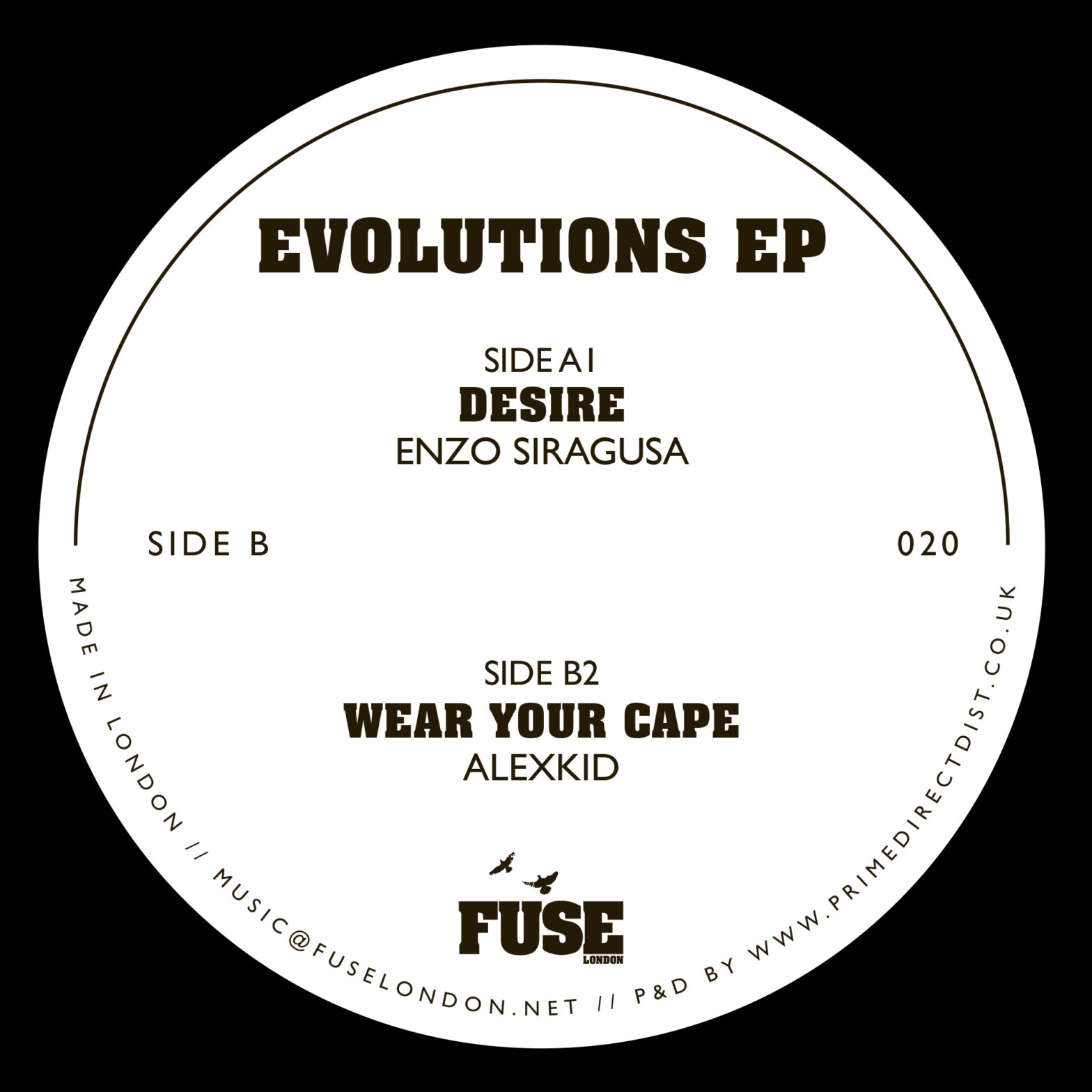
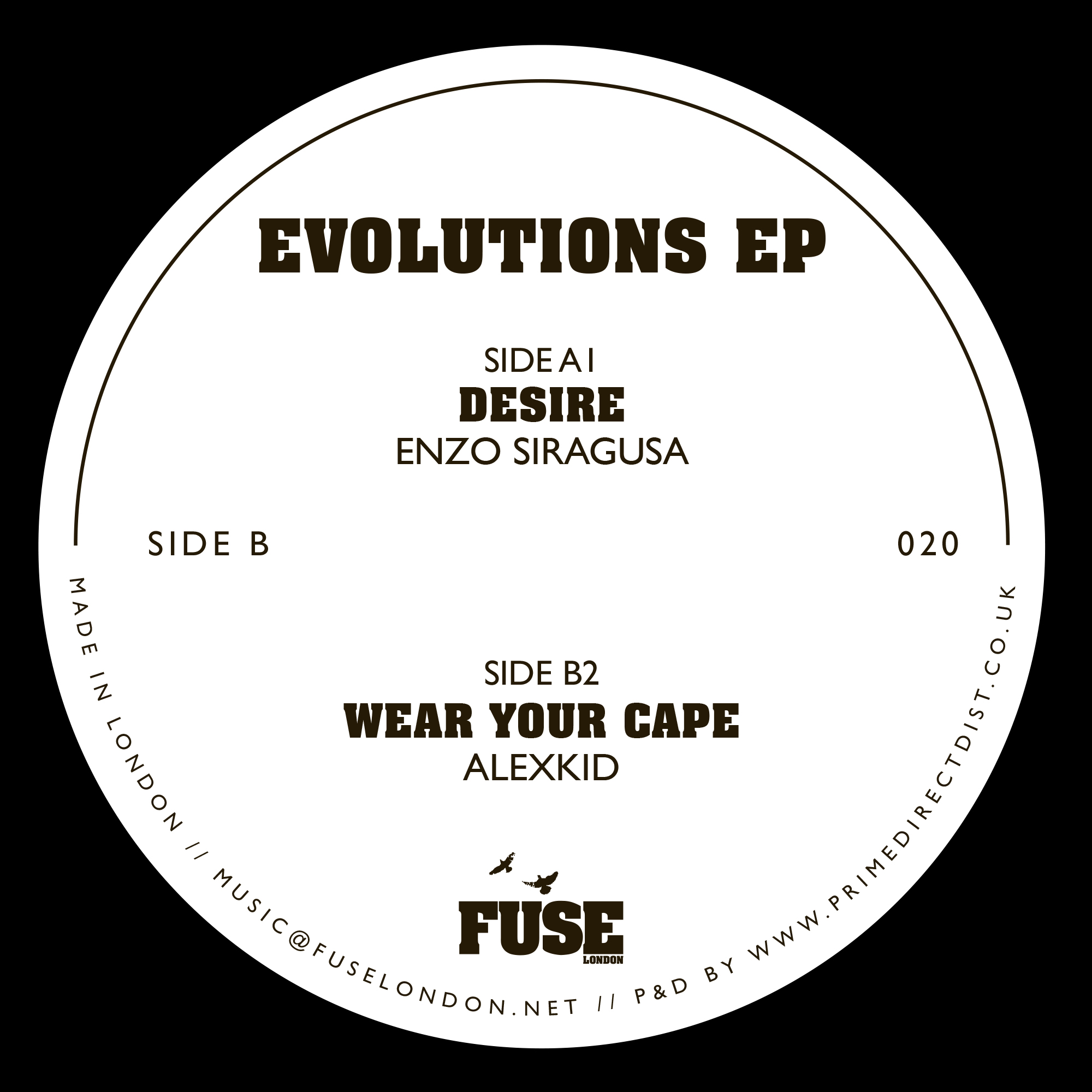
Fuse label head, Enzo Siragusa, will return to the imprint with his Parisian sparring partner Alexkid on November 16 with the Evolutions EP.
The split EP features the atmospheric, fathoms-deep sound the pair of producers, and the label, have made their signature. Held together with wall-shaking bass, Evolutions is another world-class outing and a logical progression from 2013’s club-destroying Killamanjaro, as Siragusa states: “We started the Kilimanjaro project together which was to making house inspired by our drum and bass pasts. This is an evolution of that. These are our own individual takes influenced by that sound.”
Evolutions is another notable notch in the belt for Fuse, which just finished its fifth year in Ibiza—featuring a three-date run at Space and an outdoor event at Benimussa Park. Evolutions will be released on vinyl on November 16, with digital following on December 14, with the tracklisting below.
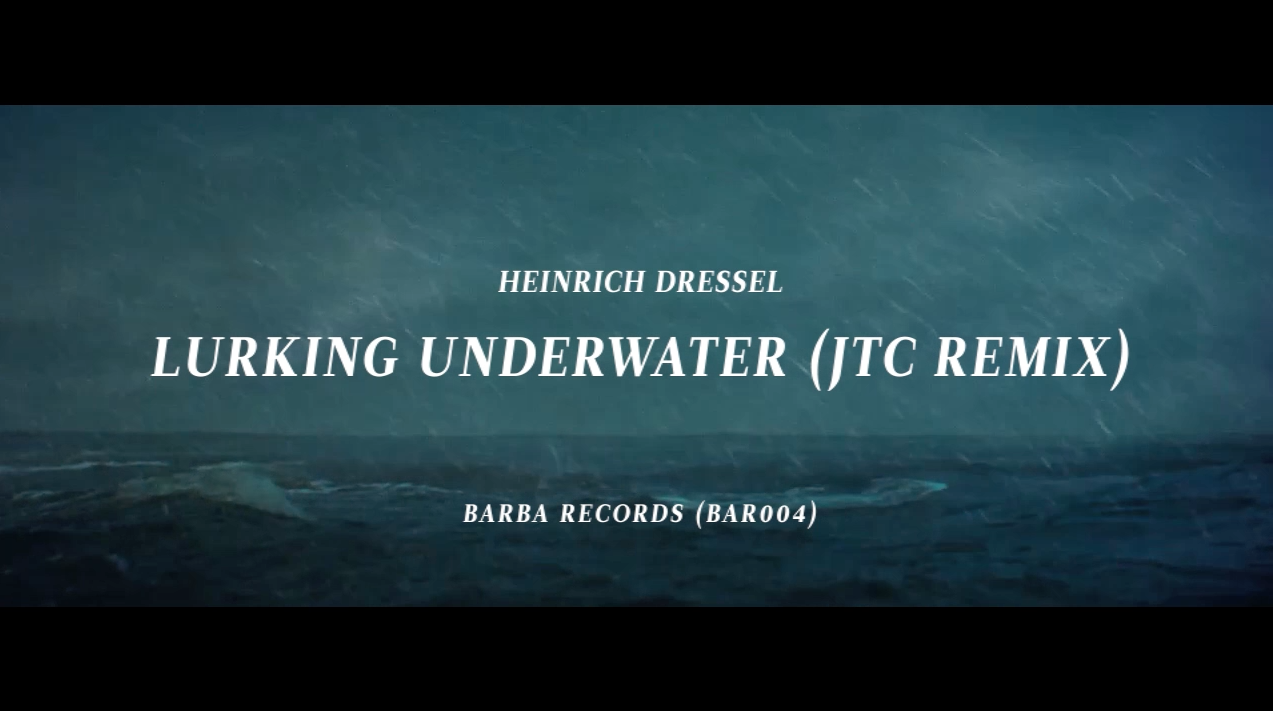
Now on its fourth release, Burek sister label, Barba, welcomes Italian producer Heinrich Dressel to its fold, with his Detroit-inspired electro EP Lurking Underwater.
The MinimalRome label head has been a standout in electro circles for years now, releasing on labels such as Mannequin, Strange Life Records, Cyber Dance Records, and Bordello A Parigi, among others. His latest, an exquisite four tracker, is a groove-filled, cinematic journey through Dressels’ signature machine funk.
The EP’s sole remix arrives via Michigan producer JTC, who refits the original into a more club-friendly 4×4 framework, complete with his signature acid grooves and drum-machine rhythms. The remix also drops with a fittingly trippy video, featuring a cult-like ensemble of underwater characters who traverse the sea bed in mind-bending fashion.
You can check out the video for the JTC’s remix of “Lurking Underwater” below, with the EP available for purchase here.
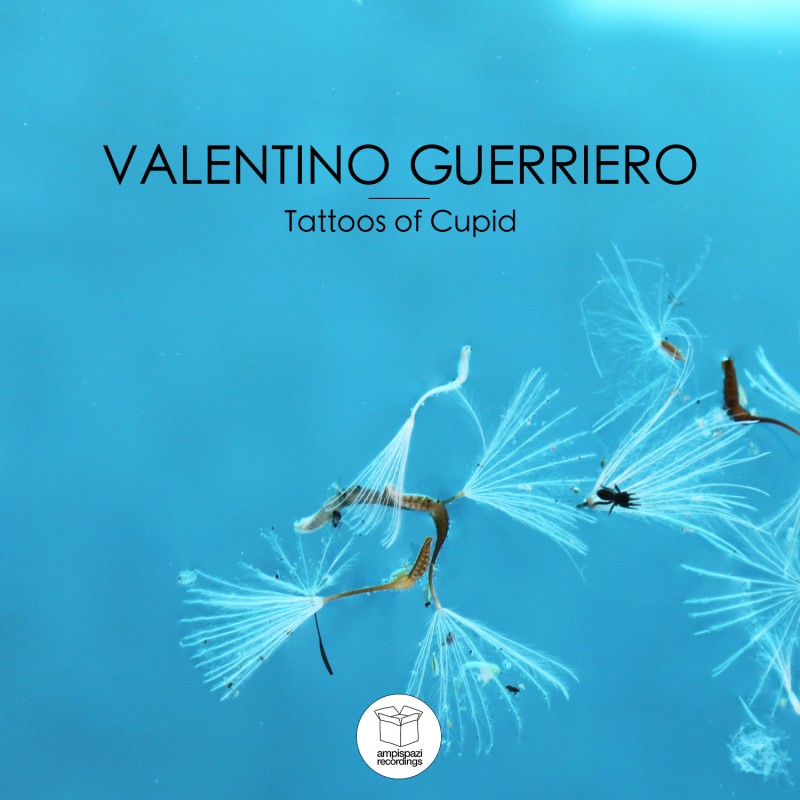
Valentino Guerriero is a house music producer out of Italy whose deeply-rooted artistic ambitions have been constantly evolving over time. Guerriero started his career as a producer over five years ago when he began using his talents to create timeless sounding tracks that are layered with dreamy pads and unstoppable rhythmic loops, lending themselves to atmospheric moods. Growing up with a keen sensibility towards the music production process, Guerriero started off his music career right by infusing all of himself into his music production, creating tracks with a unique sound and a sleek and futuristic finish.
Recently, Guerriero made his return to Mik Santoro‘s Berlin-based Ampispazi Recordings with his latest EP, Tattoos of Cupid, which is backed up with two outstanding remixes from label favorites Mess Me and Ercos Blanka. The EP opens up with the title track, where Valentino showcases his productions prowess by creating an atmosphere very close to something you might hear from SBTRKT. In the background, you can hear two bass-lines that are merged, one rough and raw, the other one melodic, wobbly, and for the heart. On the flip-side, “Shadows” is a much harder cut compared to the opener, starting off with a beat that sounds closely related to italo-disco, and is instantly followed by a melancholic synth melody and a progressive bassline underneath. For today’s XLR8R download, Ercos Blanka, who knows the UK scene very well having released on Kerri Chandler’s MadTech, offers up his version of “Shadows.” Blanka perfectly recreates the nocturnal idea behind the title, mixing broken beats with sampled vocals and guitars, before the track drops into place with a superbly profound groove.
You can find out more about Tattoos of Cupid from Valentino Guerriero by visiting him here, and you can download the Ercos Blanka remix of the track “Shadows” by clicking on the media player below.
Known for his bass-driven sound, KRTS takes inspiration in anything from jazz to hip-hop, dubstep or indie. Following on from a handful of EPs and an album on Berlin-based experimental imprint Project: Mooncircle, KRTS is returning to the label with his second full length, Close Eyes To Exit. The 12-track album is influenced by the current state of the world we live in, a reaction to recent global events.
You can listen to the jungle infused beats of “White Privilege” below.
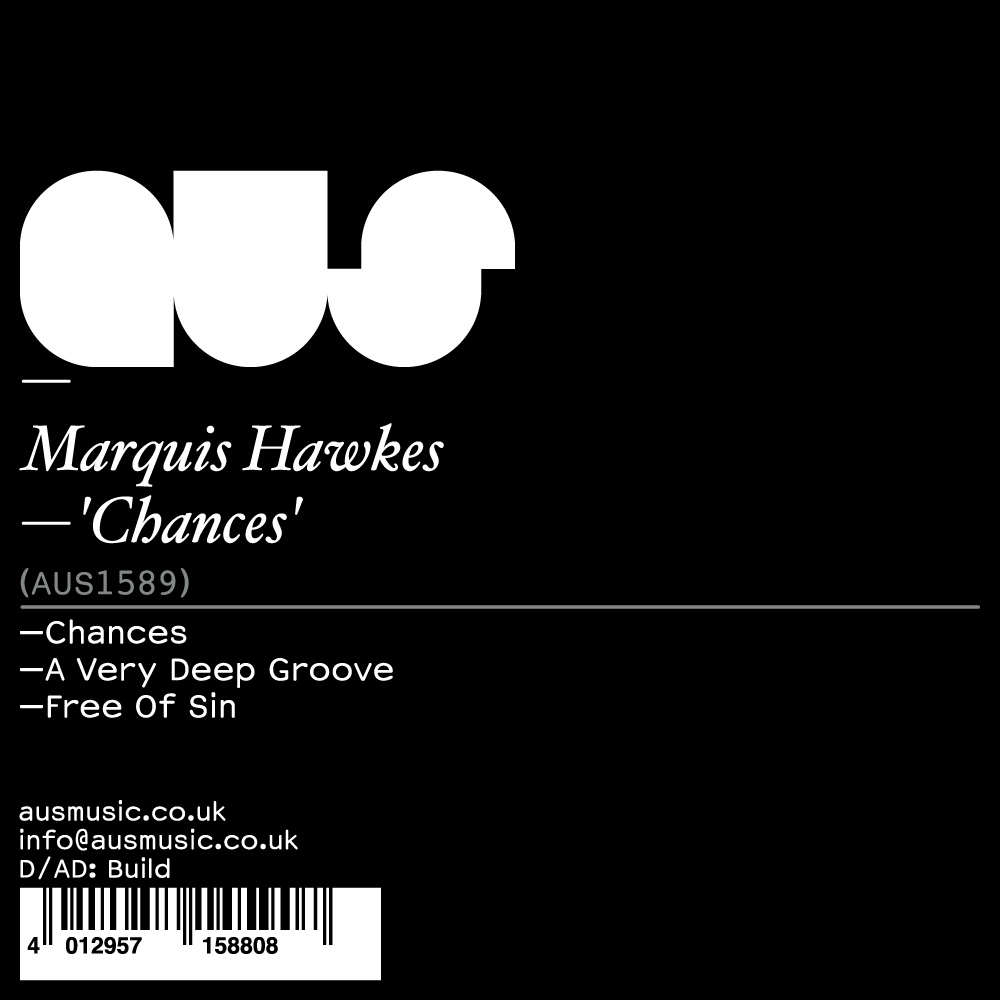
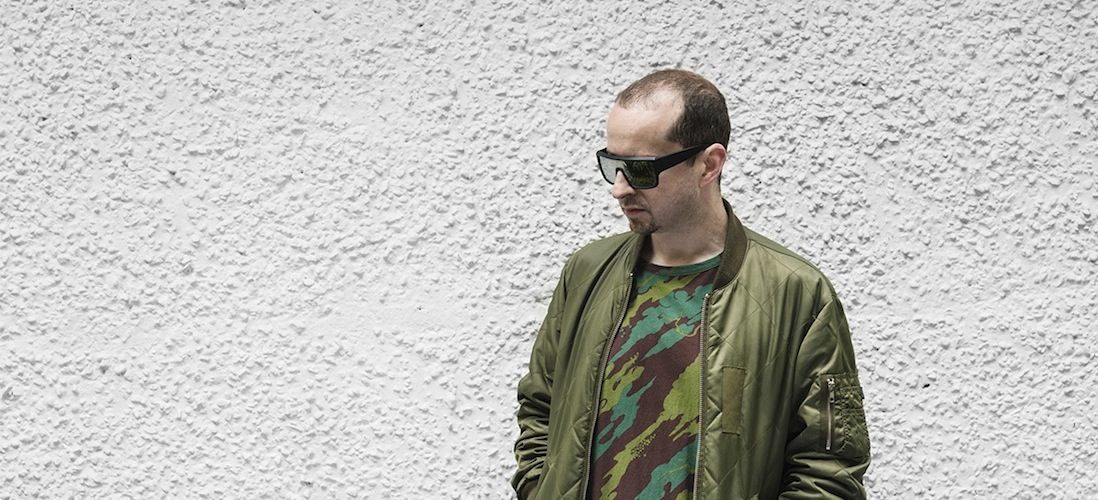
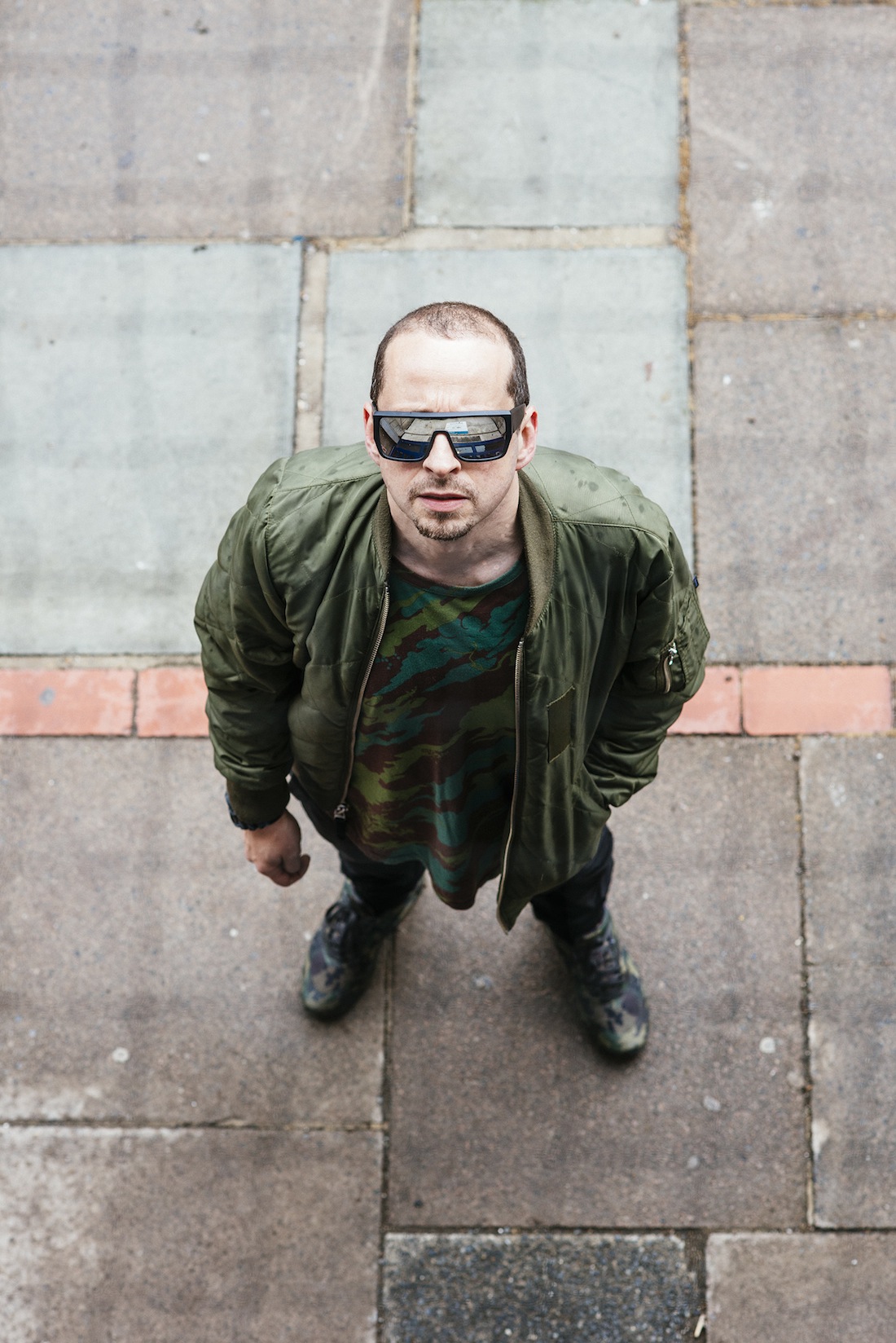
Mysterious Berlin-based producer Marquis Hawkes has joined forces with the profoundly influential imprint Aus Music. ‘Chances’ will be Hawkes’ third EP of 2015, having previously released two stunning EP’s, Sweetand Raw Materials, earlier this year via the Fabric-affiliated imprint Houndstooth.
The EP emits a pulverulent, old-school vibe that is consistent with his repetitive, disco infused style. The modish, funky loops that set the groundwork for his production are given considerable spark and flux when put alongside Hawkes’ brawny analogue drum work.
Aus Music has had a fantastic year, putting out a plethora of top-notch releases and ‘Chances’ is by no means an exception. You can listen to Marquis Hawkes previous EP, Sweet, below and be sure to check out more from Aus Music by going to their Soundcloud page here.
On New Years Eve of 2014, Kode9 scrapped almost all the music he had been working on for the past year. “Everything I was making was really synthy and didn’t capture how I was feeling,” he explained. “I wanted it to be colder, more isolated, emptier.”
2014 was a bipolar year for the man born Steve Goodman. Hyperdub, his label and brainchild, celebrated its ten-year anniversary with an extensive four-volume compilation that highlighted a discography at the forefront of shifting sounds in electronic music. However, 2014 was also a year of significant loss, with the sudden passing of DJ Rashad in April, and Spaceape succumbing to a long battle with cancer in October. Hyperdub’s first releases were Spaceape-Kode9 collaborations, and he had been a mainstay on the label ever since. DJ Rashad, meanwhile. was perhaps the label’s most promising artist; his Double Cup LP was massively influential, and one of the most memorable records in recent electronic music. The pain of loss was felt for the label—and even more so for for Goodman himself.
Born in Glasglow and raised on the original wave of jungle that swept over the U.K., Goodman has had an incredible career as a musician, label head, and academic. Although he’s no longer teaching at a university level, he holds a doctorate in philosophy, and published a book through MIT Press, Sonic Warfare, on the historic use of sound as a weapon. He was at the forefront of the dubstep movement, and comes from a class of originators out of Plastic People’s seminal FWD>> nights. As a label head, his promotion of music from the Teklife crew helped to export Chicago’s footwork sound around the globe. With releases from Burial, Zomby, DJ Rashad, Darkstar and Hype Williams, in addition to the two LPs he released with Spaceape, Goodman has lead Hyperdub to be the gold standard for electronic-music record labels.
But in January this year, “I had to draw to a line on everything—it was too fucking intense,” he admits. “First with the disappearance of Rashad, my biggest recent influence, and then with the death of Spaceape, one of my closest friends and longest-term collaborator. I had to go into complete sensory deprivation.” After scrapping almost all the warmer synth material he had made in the last year, he began working on a new album, trying to channel everything that had happened in 2014 into music that reflected how he was actually feeling—something icier. “I didn’t let anyone hear it,” he says. “I didn’t share it with anyone. I didn’t get any feedback. I didn’t even test-drive it on audiences. I don’t really remember talking to anyone in the month of January.” That LP, Nothing, (coming out November 13) serves as his first true solo album, the first he’s made without Spaceape.
“I have to start with some sort of concept, and the one I came up with on New Year’s Eve was nothing—nothing as a placeholder, an anti-concept. But when I started to research the concept, I started to realize what ‘nothing’ really was.”
“I felt that the most honest way I could have a concept that related to the music would be an empty concept,” Goodman explains. “There was so much going on in my head when I started the record, that I couldn’t really put it into words.” For him, Nothing is a catharsis, the result of accepting the effect subtraction has on our lives. Each track title is a different iteration of how the idea of void or space plays out in everyday life, ranging from Taoist philosophy, to Marxist economic theory, to quantum physics. “I have to start with some sort of concept, and the one I came up with on New Year’s Eve was nothing—nothing as a placeholder, an anti-concept. But when I started to research the concept, I started to realize what ‘nothing’ really was.”
The first six months of 2015 were the slowest in Hyperdub’s history, as Goodman had to put his A&R duties for the label on hold while making the album. He was reluctant to listen to anybody else’s music during the recording of Nothing, and the use of outside samples was limited. Whereas his last LP, Black Sun, took three or four years to come together, Nothing was composed almost entirely in the month of January. The album became a synthesis of all Goodman’s previous work, with little regard for any current trends in music. “It was sort of inevitable with the anti-concept of nothing that the album would wind up in the vanishing point between grime, dubstep, footwork, a film soundtrack,” he says.
Thankfully, Goodman eventually came out of his isolation, and Hyperdub’s release schedule has picked up again. He spoke enthusiastically of one of their most recent releases, the Break it Down EP from Teklife’s DJ Taye. There’s a sample on the EP’s third track, “XTCC”: “There’s a void where there should be ecstasy.” “I don’t know if it’s the death of Rashad that’s put us all in that head space,” Goodman says of that vocal snippet, “but something that was important to all of us has been subtracted, and we’re dealing with that void.”
DJ Rashad’s presence on Nothing is tangible through the footwork rhythms on many of the album’s cuts— Spaceape’s place on the record, however, is less obvious. The track “Void” was the only one composed before January of this year, and it was intended to include Spaceape’s vocals. “Third Ear Transmission” gives a taste of the MC’s snarl, but it’s not till the album’s conclusion that Spaceape’s loss is really felt. Nothing ends with nine minutes of almost total silence, and that final track is the only one on the album that lacks a firm philosophical grounding. Goodman said of the closing silence, “I just wanted to carve out room for Spaceape to come back in, his presence felt again.”
Even though the process of composing Nothing came out of deep loss, the album doesn’t resonate as a particularly emotional or overwrought. With Black Sun, the diagnosis of Spaceape’s cancer lingered over the production process, and part of the challenge was channeling Spaceape’s battle with cancer into the concept of a post-nuclear science fiction story. The process of composing Nothing was similar. As Goodman puts it, “It’s come out of something quite personal, but its become something that really has nothing to do with my emotions at all. I’m not interested in music being an expression of my emotions, or a biography of me because I don’t think it’s important or interesting.”
Much of the producer’s work has dealt with the concept of the future, and Nothing is no exception. On the surface, this future is bleak. The first few tracks show a cold indifference to the world, as the album survey’s the landscape of an automated future—but the indifference slowly thaws into acceptance. You can feel Goodman beginning to emerge from his isolation with the wavy fuzz of the album’s later tracks, like “Mirage.” Whereas much of his older material communicated a sense of dread common in early U.K. dubstep records, Nothing has no tangible sense of anxiety about the future. The process of robots automating our lives is something he’s actually quite excited about, saying, “I’m very positive about the possibility of machines making humans redundant.”
The physical manifestation of this idea of nothingness seems to be the impetus to Goodman’s Nøtel concept. Sitting in the courtyard of his hotel, he pointed to our surroundings: the pseudo-disposable modern furniture, repeating identical rooms, the coldness found in hotel hospitality. “It’s in staying in places like this where the Notel concept comes from,” he says.
Next year, Goodman will take the Nøtel concept on tour with Lawrence Lek, a visual artist whose work plays upon the themes found in neoliberal architecture, and the wealth that surrounds it. The concept is still in a prototype stage, but the vision is that Lek will control a virtual simulation of a walk-through environment as Goodman plays live. The premise is a wildlife documentary approach to a fully-automated luxury hotel where all the humans have been evacuated. “We don’t know why there are no humans there, could be an apocalyptic event, could have been a virus,” he says. “Who knows? The reason why there are no humans isn’t the relevant aspect.”
Compared to previous Goodman releases, Nothing has a relatively small number of outside samples, and the majority of the record was created with from original patches. But one of the few familiar sounds is taken from the film Seven Samurai. The sample first appeared as part of Goodman’s Spaceape collaboration, specifically the track “9 Samurai,” and it’s reprised on Nothing‘s penultimate track, “9 Drones.” The new song links Goodman’s contemporary footwork-influenced work with his early material, and highlights one of his preoccupations: full automation. The idea of drones replacing samurai brings up the question of what happens to us, or what will we do, when our presence in no longer required on this earth.
Goodman speaks frequently about a world where humans are no longer required, or no longer present—and, as noted earlier, he doesn’t dread the idea. Instead, he contemplates a post-human world with curiosity. If we all left tomorrow, what would remain? What would be left in the presence of our void? One of his favorite films is the Philip Glass–scored documentary Koyaanisqatsi, a film that shows life on earth’s accelerating trajectory. In Koyaaniqatsi,, the movement of our man-made systems becomes so fast that they collapse in on themselves, with humanity’s future remaining open-ended. Goodman describes the Nøtel as what exists on the other side of that collapse. “Maybe the Nøtel is where Spaceape and Rashad are now,” he says. “Their presence being felt as holograms.”
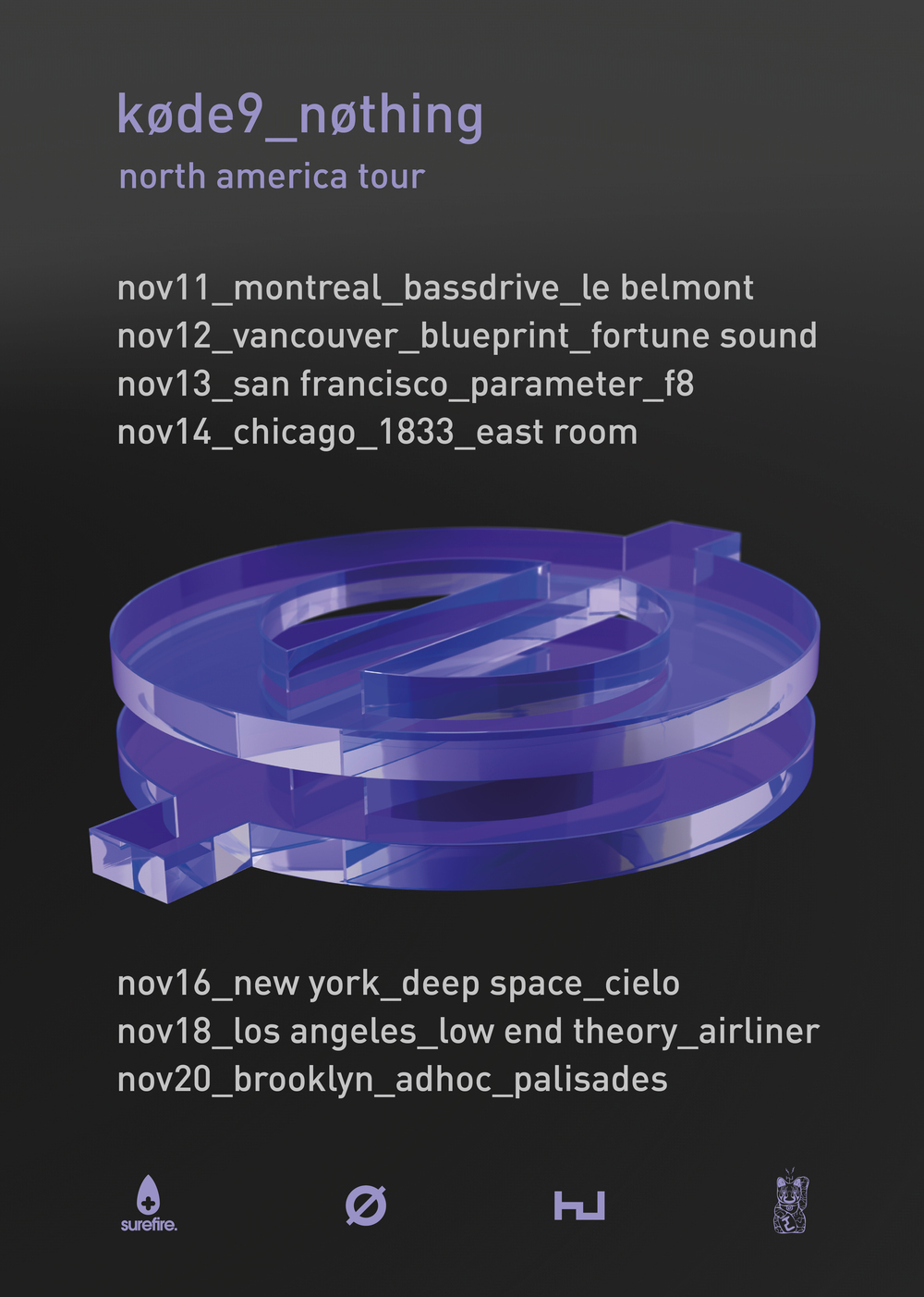
Nothingis released on Hyperdub November 13; see below for Kode9’s upcoming North American DJ dates.
Boutique festivals are blooming in Europe. For every stadium-sequestering headliner event, there’s a cluster of more nuanced gatherings springing up—fests that focus less on bombast and more on refined tastes. There’s Poland’s Unsound, for instance, which has become one of the hippest fests around of late thanks to its left-field, cooler-than-thou electronic lineups, or Amsterdam’s Dekmantel, a discerning dance fan’s idea of heaven.
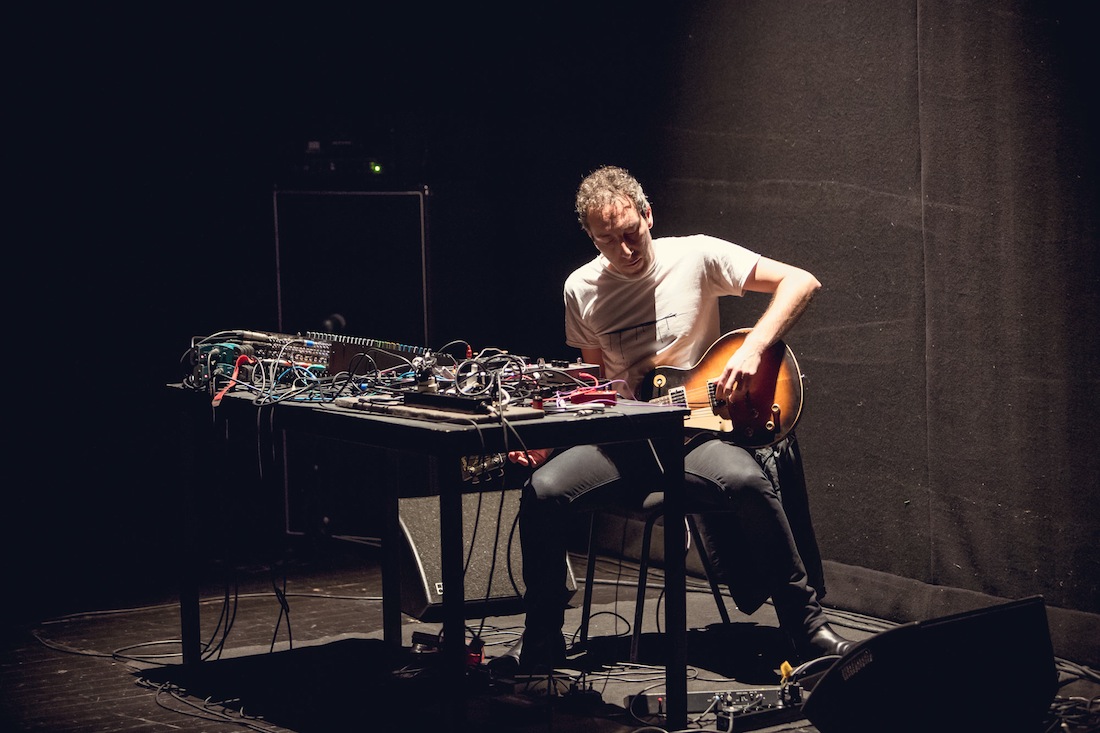
But Portugal’s Semibreve festival offers something unique. Five years young in 2015, it takes place in the historic environs of northern Portugal’s Braga, a city located 40 minutes from the better-known Porto. Amid the many churches and cobbled streets of the town, Semibreve—meaning “whole note,” or four crotchets in technical parlance—puts on a cutting-edge, experimental and avant-garde line-up with a heavy tilt towards electronics. The bills are never less than compelling, previous years featuring Mouse on Mars, Fennesz and Jon Hopkins, but in this writer’s view at least, this is the year Semibreve went next-level. Here are four of the festival’s most memorable moments.
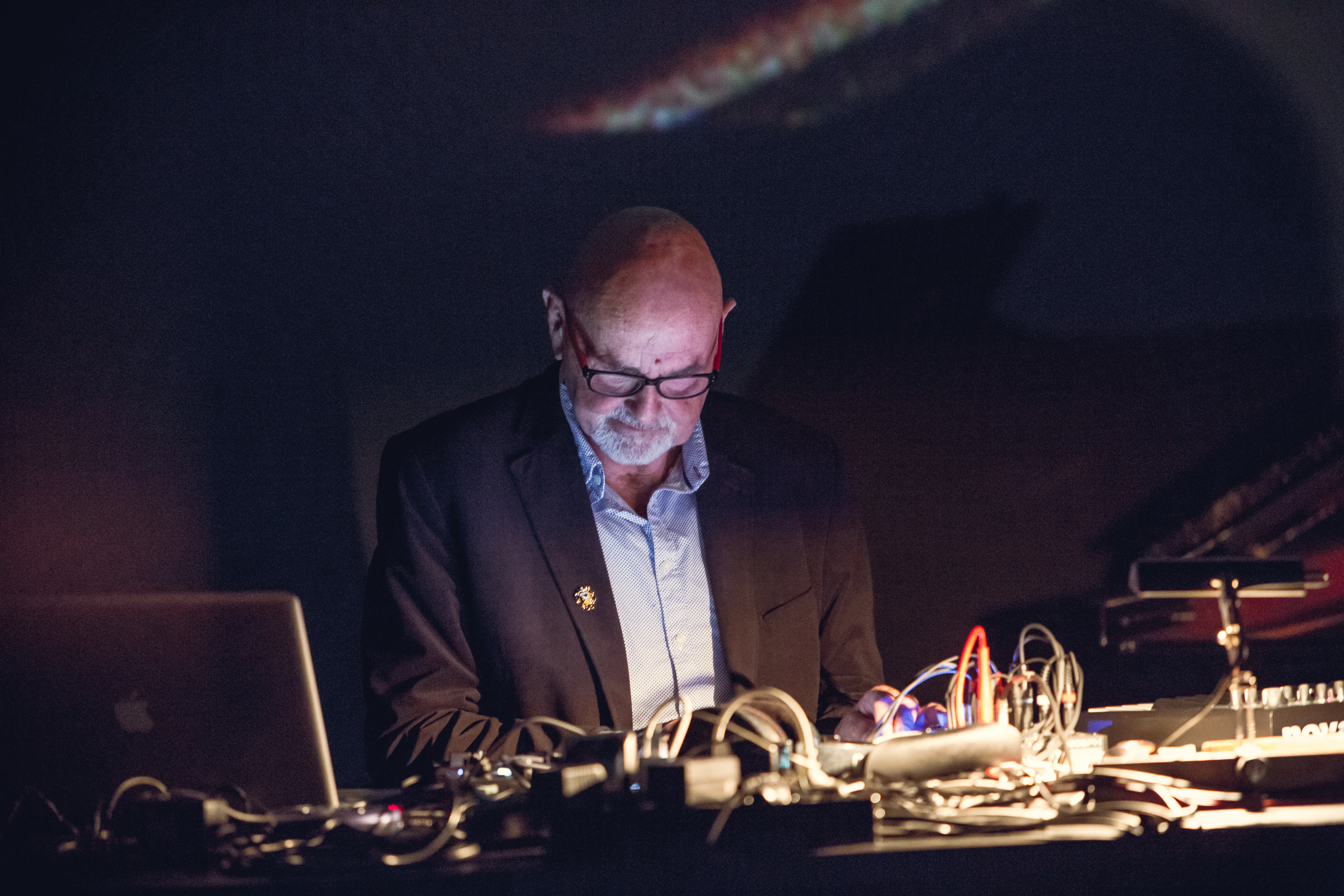
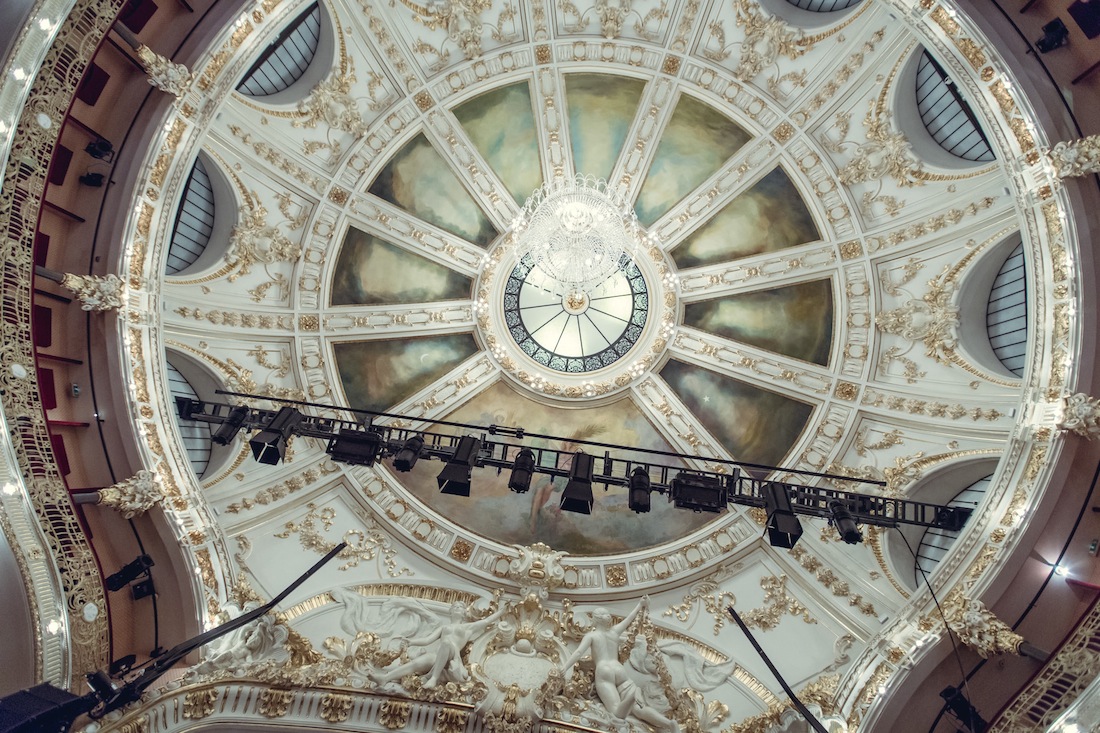
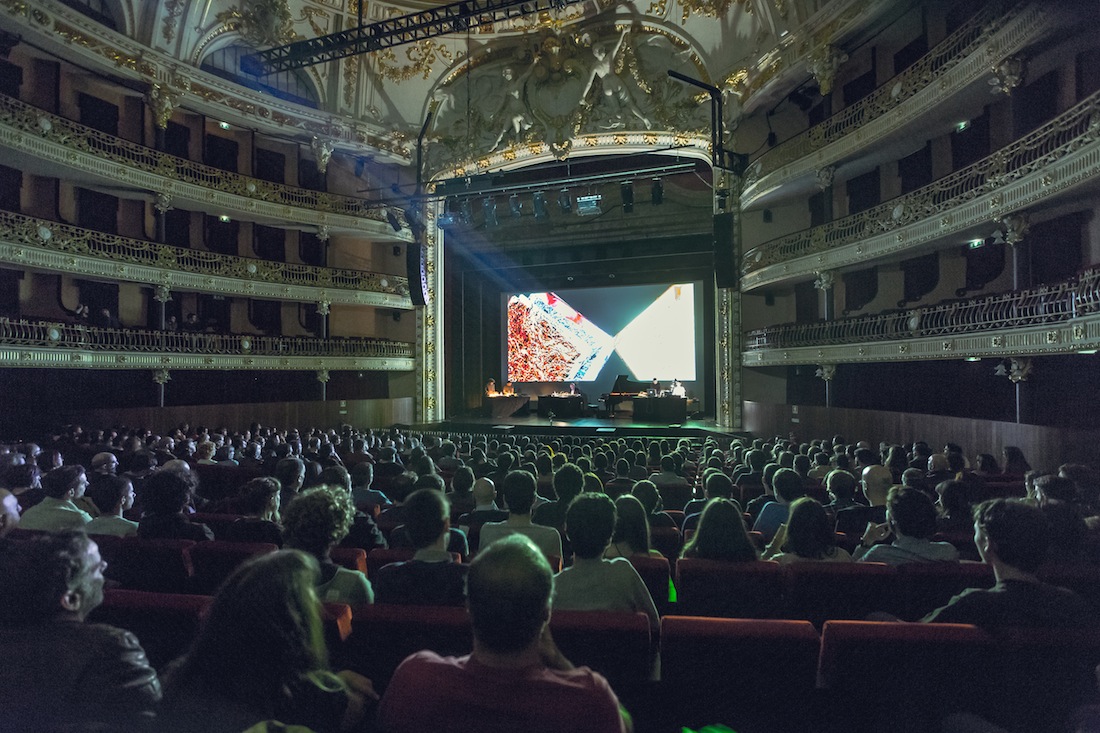
At an age where most are well into retirement, Roedelius is still a musical force to be reckoned with. Hans-Joachim Roedelius is the genius that played in two of the most influential kosmische bands of Germany’s early ’70s, Cluster and Harmonia. He has a labyrinthine discography that would make most supposedly prolific artists weep into their Kraftwerk collections—an electronic maestro that paved the way for today’s dance music, using drum machines out of necessity but sculpting hypnotic loops and modular phrases thanks to his singular approach. A sprightly octogenarian, he played in the grand surrounds of Theatro Circo on the first night of the fest, where many of the festival live shows are staged. Roedelius was accompanied by three Portuguese electronic musicians—Andre Gonçalves, José Alberto Gomes and Rui Dias—and what they accomplished is mesmerizing. Sitting in the plush seats of the theater beneath a sparkling chandelier, we witnessed the innovator himself introduce the performance, saying they will start with a tribute to Beethoven and Mozart. As thumb pianos gently tinkled out a familiar Beethoven melody, Roedelius sat at a grand piano in front of a screen projecting recondite images from visual artist Maria Mónica; he followed the melody on the piano, but then things abstracted, his notes drifting off, and we’re a boat loosed from its moorings floating out into an icy lake of burbling, echoing electronics as he moves over to another seat and the tools of his trade. One long piece: It was captivating, vacillating between psychedelic flights of fancy and noisy blurps and crackles, to frosty, deeply moody widescreen moments of machine-enabled reflection.
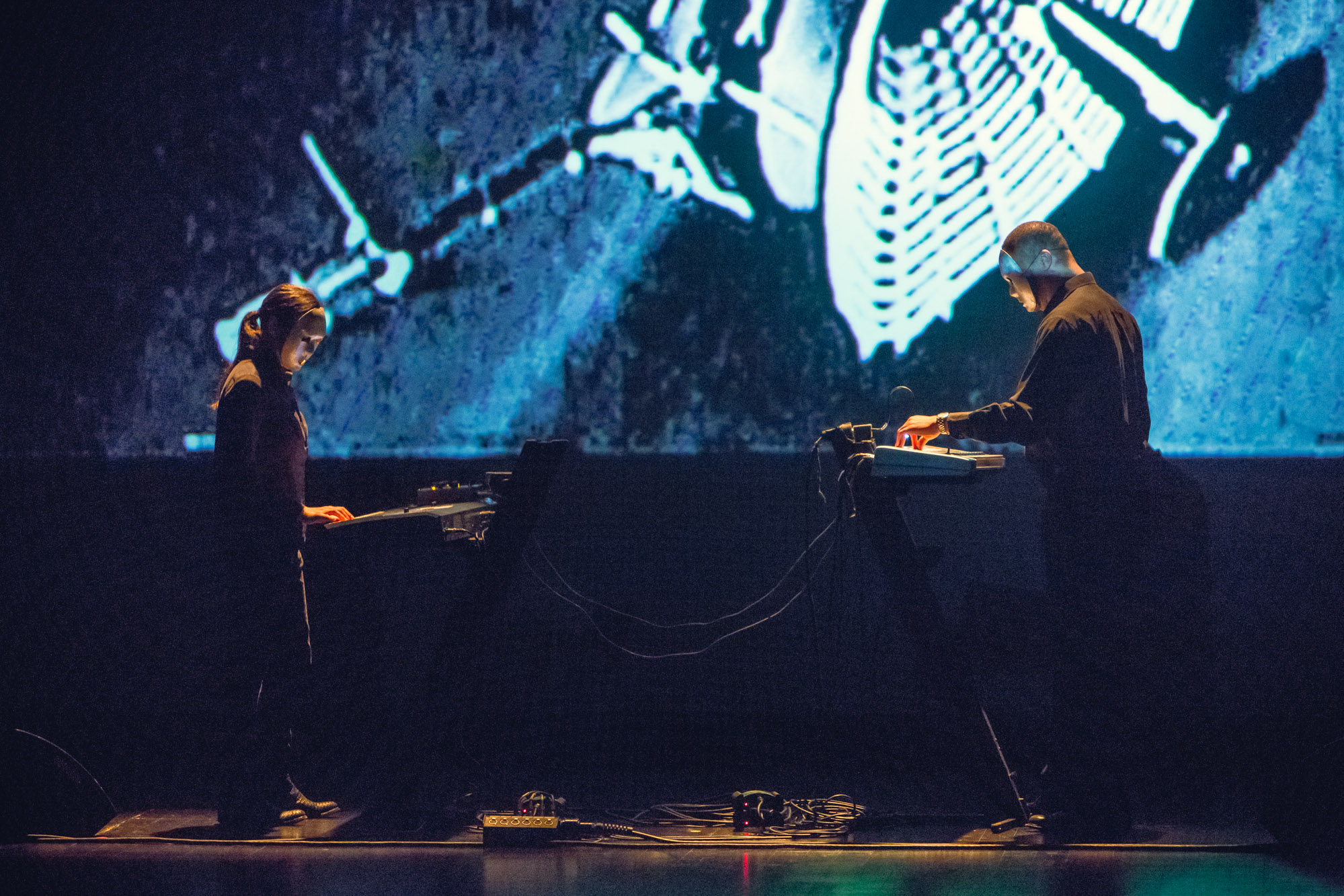
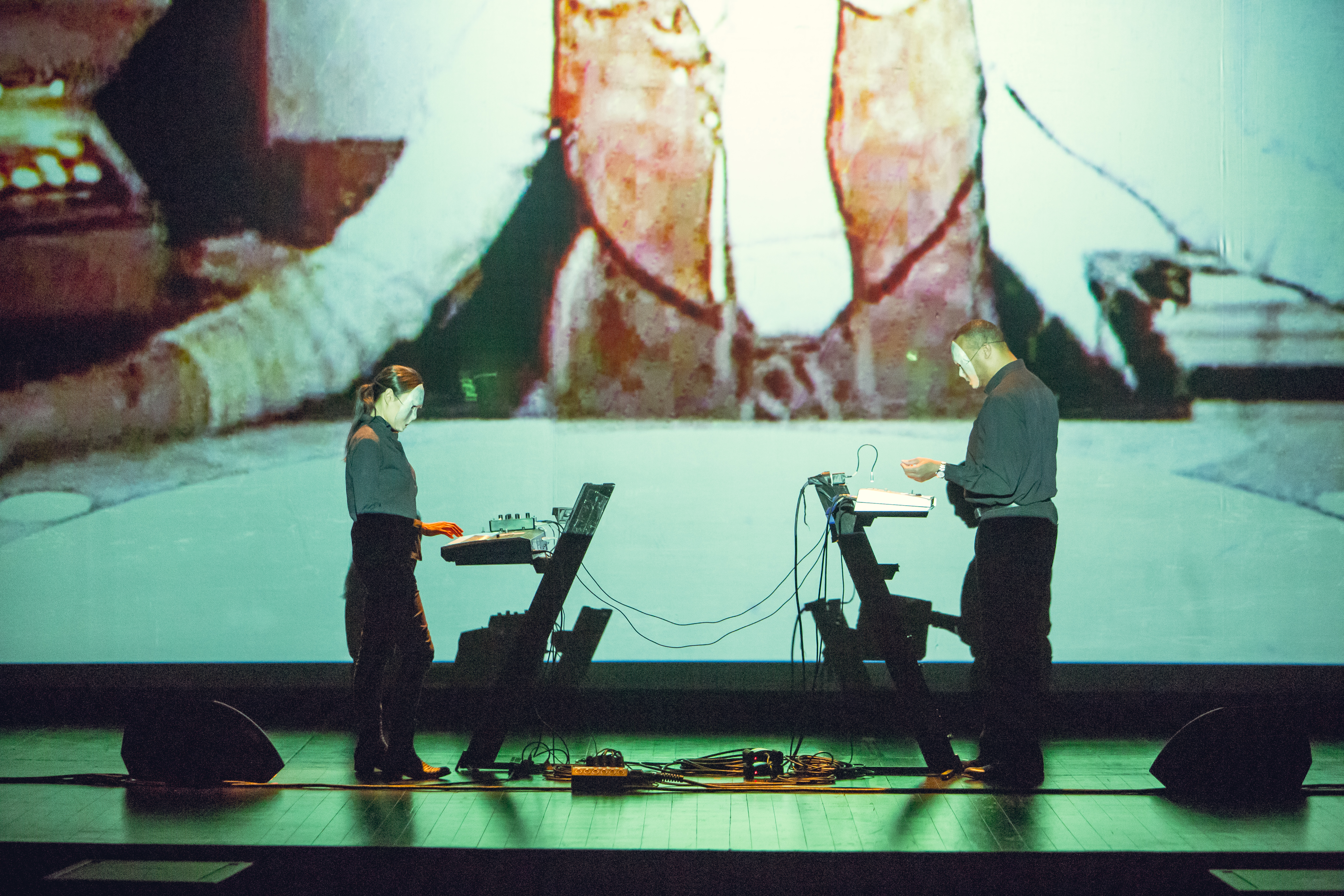
Stick the duo behind a few machines, and Gerald Donald’s Dopplereffekt never fails to amaze. We’re disappointed to hear that one of the headliners, Tim Hecker, has had to cancel his appearance over the weekend, but it doesn’t really matter when you have a rare live show from Gerald Donald and his Dopplereffekt project. The Detroit man, now based in the Bavarian Alps—so he informs us at dinner when we break bread with the artists and festival organizers before the show—was part of Drexciya, and also Der Zyklus, Japanese Telecom, Elecktroids and many other incarnations. He’s not just one of the greatest acts in electro, but of music made with machines, period. So it’s a real privilege to watch him take the stage with production partner Michaela To-Nhan Bertel, the latter wearing a spooky mask. Facing each other, standing in front of their synths, they perform a set of Dopplereffekt cuts that were for the most part completely involving—their brooding, dark synthscapes, Kraftwerkian melodies, cascading arpeggios and warm bass bumps activated our pleasure centers against a backdrop of film depicting them dressed as scientists in a mock silent movie, alternating with odd, very ’80s-looking computer animation of nuclear reactors and rocket components.
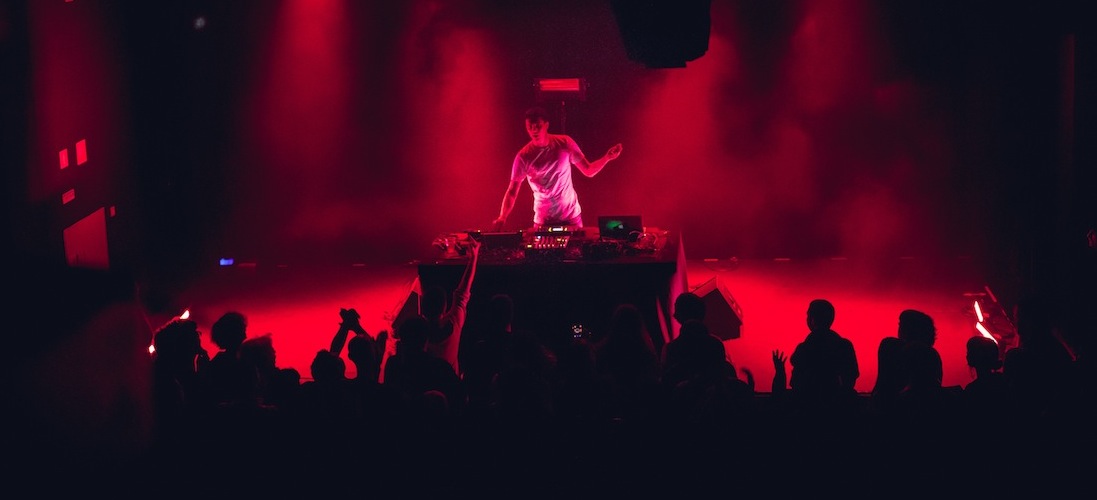
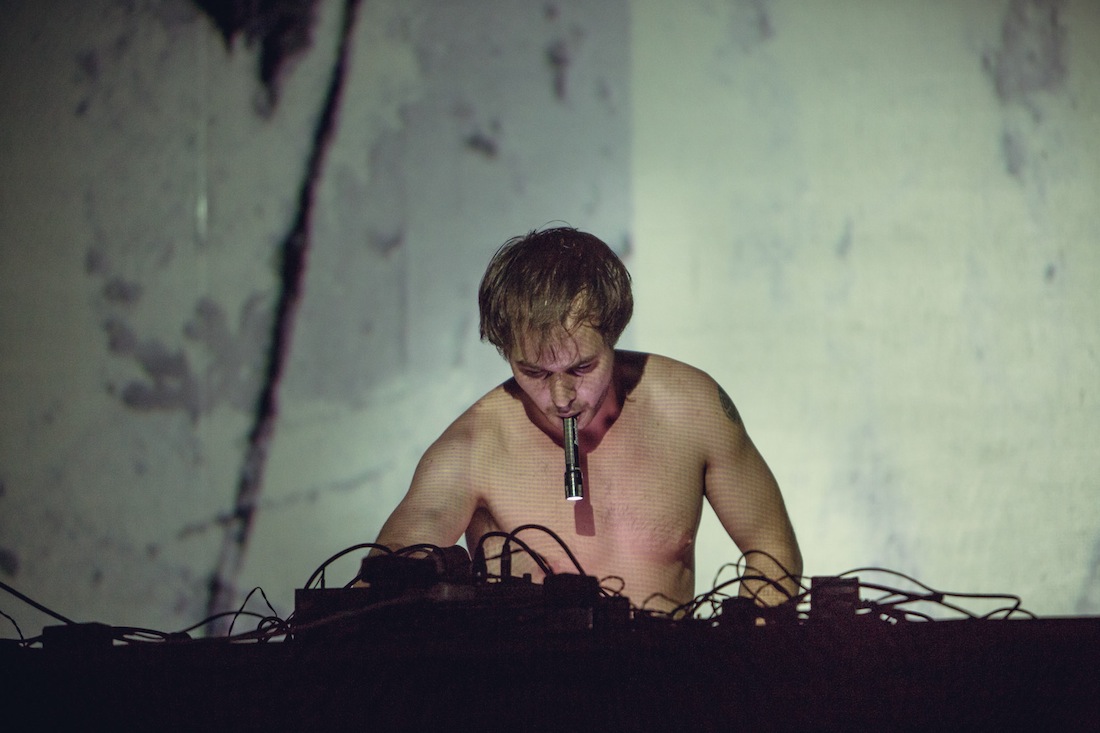
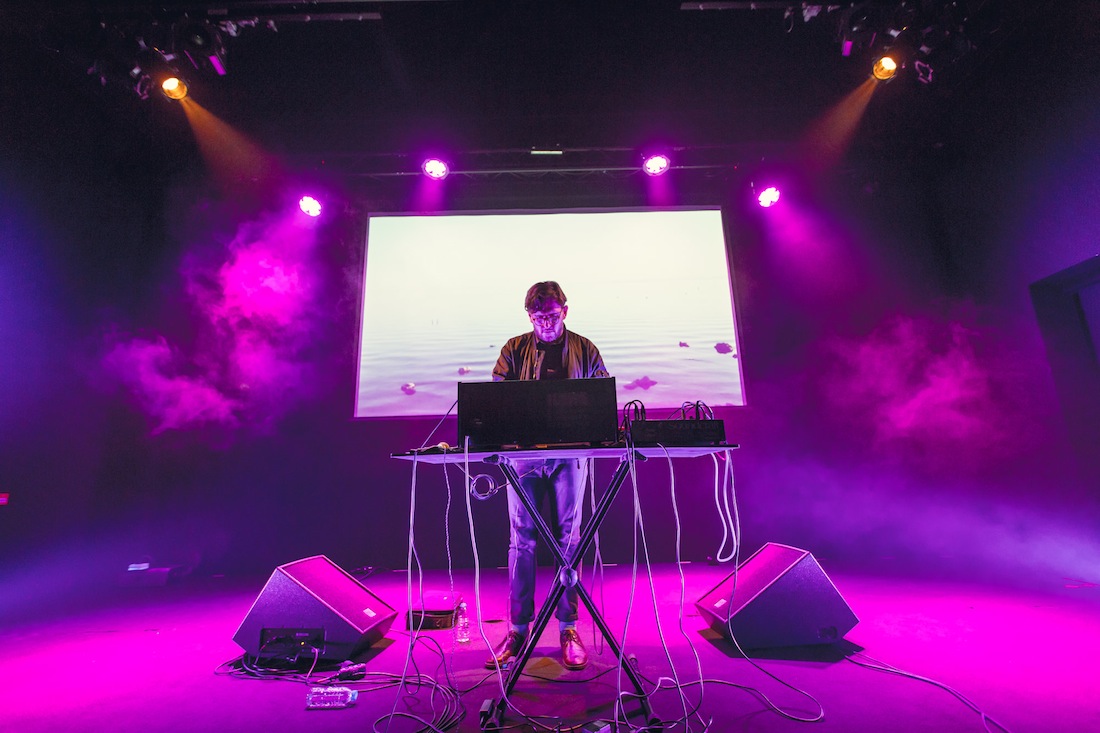
Powell: Believe the hype. There’s a swell of hype building around him at the minute—but after witnessing a live set from XL-signed Diagonal Records boss Powell at Semibreve’s late-night club event at the newly-built venue GNRation, we believe every word. Oscar Powell has made a mighty racket lately by soldering components of post-punk, techno and disco together in an inimitable mash, and dressed in his customary white tee and bathed in red light, he leads the packed, intimate room on a merry dance—whooping, hollering, smoking his weight in cigarettes. Tough beats are piled up with an early-’80s hip-hop flavor, giving way to mangled Italo and video-game bleeps via steely, crunching techno with lots of weird sounds. It’s both experimental and a barrel of fun—surely a hard balance to strike. Though he’s a darling of the techno underground, at times his beats are reminiscent of Ed Banger’s best, before morphing into something Surgeon might play.
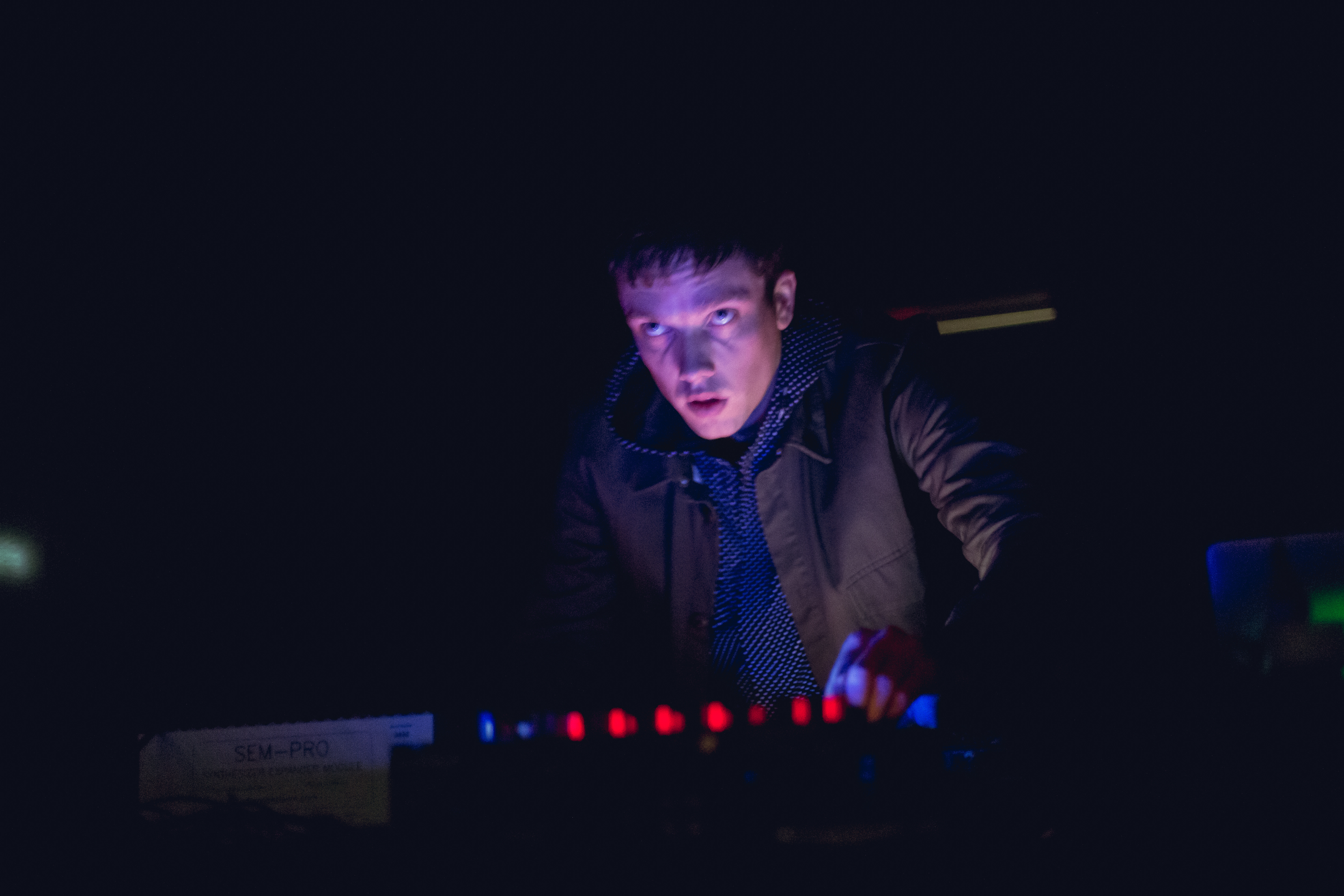
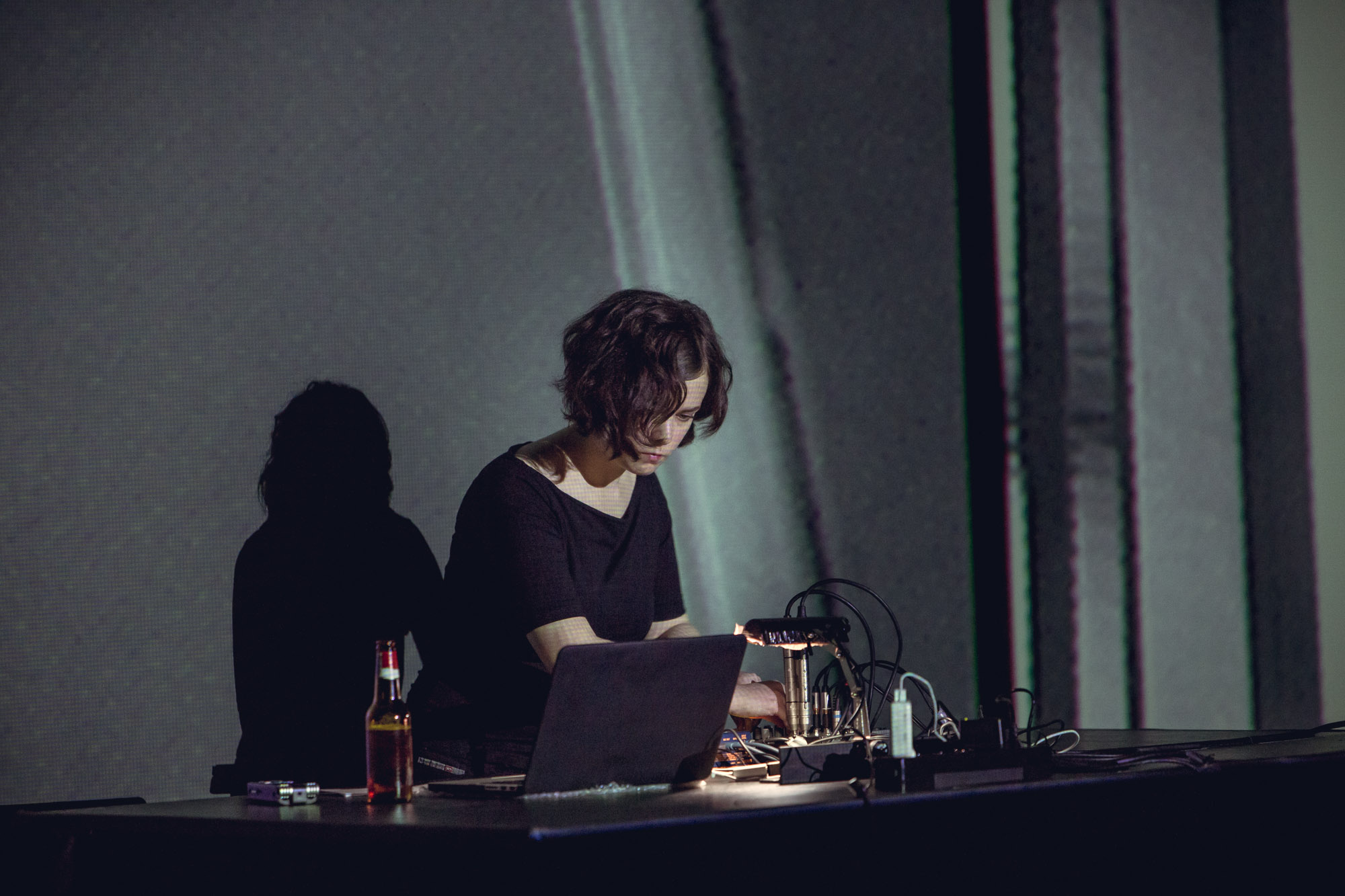
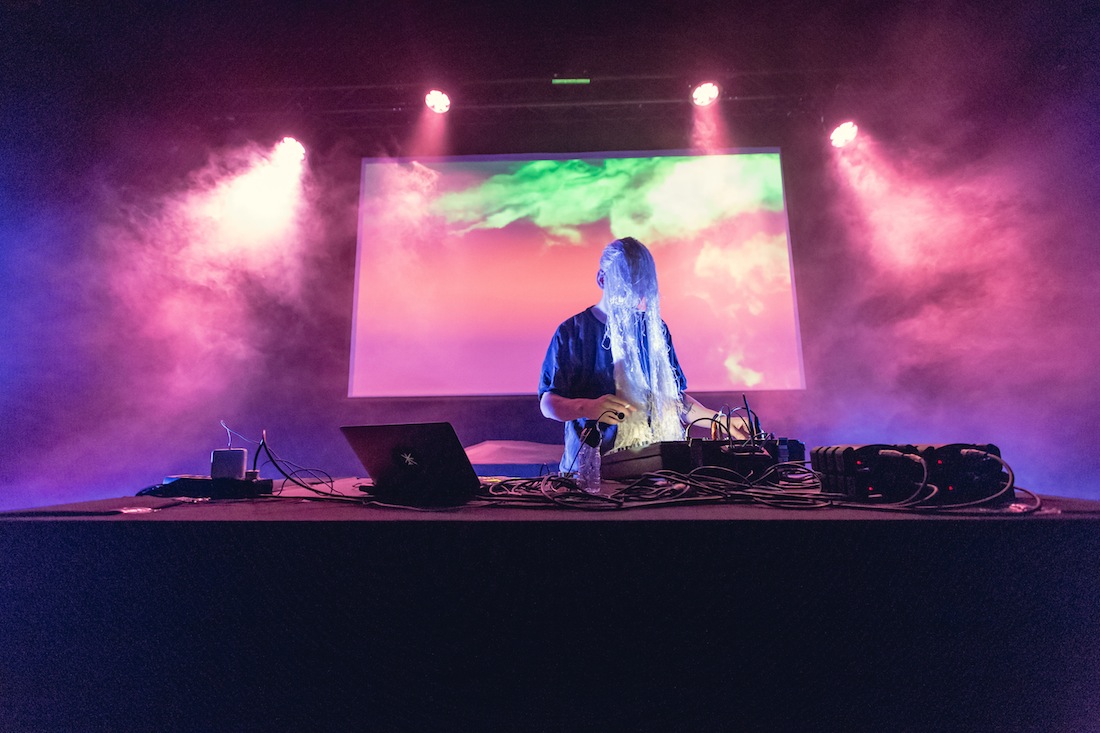
Klara Lewis’s set was, perhaps, the best of the fest. We expected that show to be impressive, but we were still not prepared for Klara Lewis and her face-melting brand of experimental electronics. The Swedish artist, who made waves with her debut album, Ett, on the well-regarded Editions Mego, may have been pigeonholed as an avant-garde experimentalist—and it’s true, her stuff is way out — but it’s also accessible, and would surely flip the wig of any dedicated electronic explorer. Her show in Theatro Circo is devastatingly intense, physical, even a little frightening in places—and utterly vital. Crafting her own visuals, all abstract explosions of color, line and fragmented waveforms, surges of serrated mechanical noise burst from the stage at times; at others, she slows the pace with entropic techno, thudding four-fours, and chords from the dancefloor at the end of the universe. Making her weird noises from found sounds, but manipulating them to the nth degree, she was probably the highlight of the whole Semibreve festival —an event that’s rapidly becoming one of Europe’s must-have festival tickets.