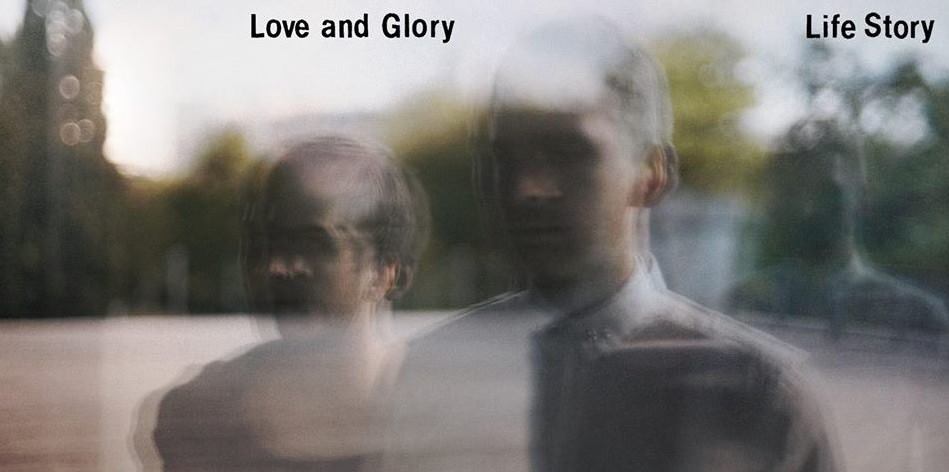
Acclaimed neoclassical composers, Nils Frahm and Ólafur Arnalds, have officially announced today the release of a new collaborative effort titled: Life Story, Love & Glory. The announcement comes after the pair recently launched a joint website in honor of the partnership.
The latest 7″ surprise release will feature two piano duets and will be available as of tomorrow for an exclusive two week period in selected record shops.
This marks the duo’s first collaboration since the release of their 2012 Stare EP, which got re-issued earlier this year via Erased Tapes.
Frahm and Arnalds first paired up in 2011 and have since garnered a great deal of praise and recognition, both for their collective and independent projects.
Erased Tapes Records will release Life Story, Love & Glory on August 21, 2015.
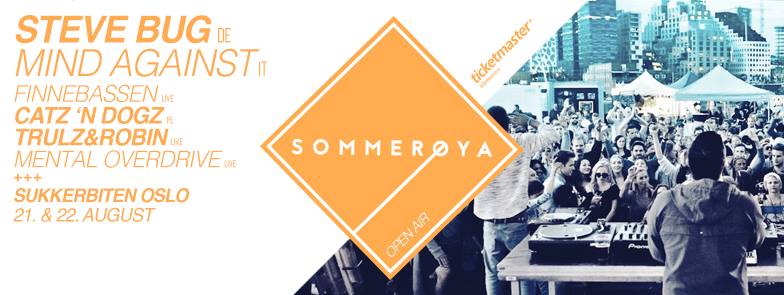
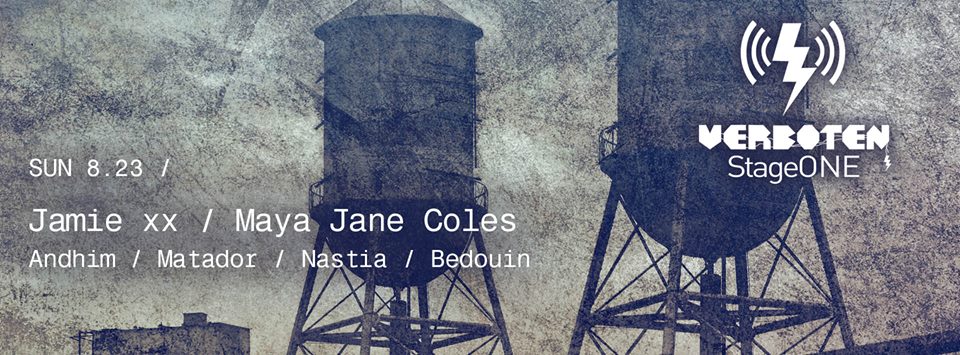
In Scandinavia, Oslo festival Sommerøya will treat its guests to a day and a half filled with music, art exhibits and work shops, including performances by house and techno acts such as Poker Flat main man Steve Bug, Norway’s own Finnebassen, and Italian Life & Death duo Mind Against. Over on the Brooklyn waterfront, this summer’s second edition of Verboten StageONE festival takes place on Sunday featuring Young Turks‘ Jamie XX, UK’s Maya Jane Coles and others. Kicking off Wednesday next week is another Croatian extravaganza Dimensions Festival which will take place at the same the location as Outlook Festival at the Fort Punta Christo. Some of this years anticipated performances include UK dubstep and rhythm master Mala, XLR8R favorite Ben Klock, and Underground Resistance presents Timeline live where UR founder Mad Mike teams up with Mark Flash, Galaxy 2 Galaxy saxophonist DeSean Jones, and keyboardist Jon Dixon for a techno and future jazz sound exploration.
As always, for more information, to search events in your city or to submit your own events, visit our events page.
After a decade of prodigious releases, the lifespan of 50Weapons has expired. It’s a sad state of affairs, but this intrepid label has refused to simply fizzle out and disappear: In anticipation for its final eleven releases, the label has announced an “R.I.P 50Weapons” worldwide tour and the creation of a special collector’s box set containing the label’s final twenty-two tracks which are set to release October through December.
While lineup, dates and specific locations are still to be announced, we know that the tour will include artists and guests from 50Weapons, as well as label heads, Gernot Bronsert and Sebastian Szary of Modeselektor and Moderat. The tour will make its way to London, Paris, New York, Berlin, Amsterdam, Montreal, Manchester, Lyon, Gdansk and Hamburg. To keep yourself updated on the tour, check out the Monkeytown website next week.
The beautifully crafted box set contains eleven colored 12”s with colored sleeves, an “R.I.P 50Weapons” sticker, and a customized USB with all twenty-two digital files on it.
Boiler Room shall be premiering each release one week prior to each record’s release date on Boiler Room TV starting on October 5. In addition to this, Boiler Room has debuted Modeselektor’s track “50 Trees,” which can be streamed below, along with a homage created by the label which pays tribute to their previous thirty-nine releases. You can pre-order the beautifully crafted box set at the Monkeytown website here.
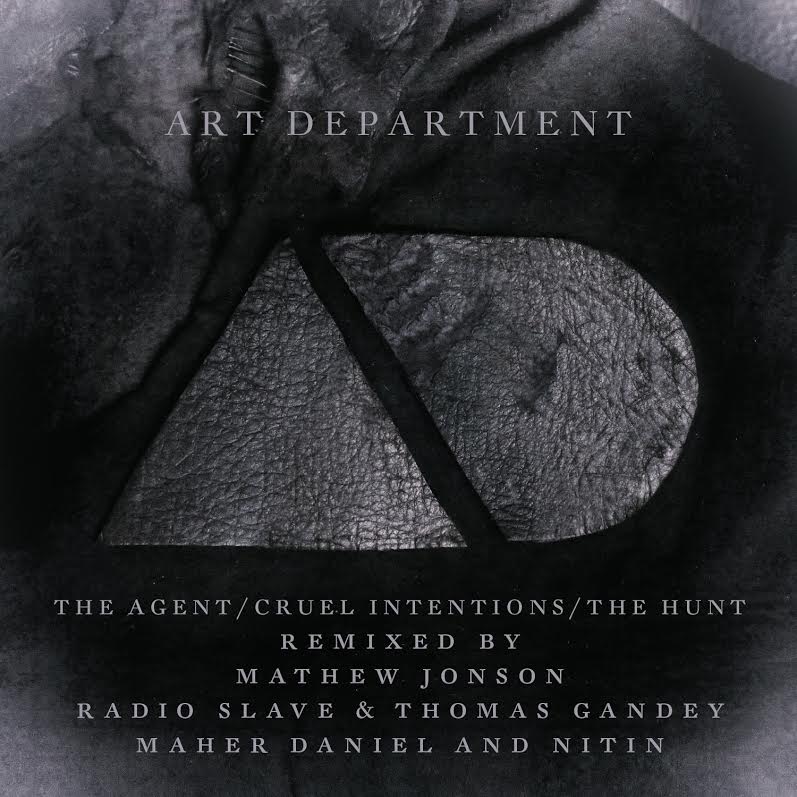
Art Department has just announced that they will finalize the remix series for its second studio album, Natural Selection, by issuingThe Final Remixes EP on September 11 on No.19 Music.
This release is to be the last of the four Natural Selection remix packages that have come out this year. Past remix EPs include The Walls by Dj Tennis, and Crazy by Jamie Jones and Dennis Ferrer.The EP will include remixes of “The Agent” by both Canadian producer Mathew Jonson, and by No.19 music co-owner and producer, Nitin.The EP also includes a remix of “Cruel Intentions” by Radio Slave in collaboration with Thomas Gandey, and reworking of the track “The Hunt” by Maher Daniel.
You can listen to the previous remix packages for Natural Selection by clicking on the Soundcloud players below, and you can find full tracklist for The Final Remixes right here on XLR8R.
1. Art Department – The Agent (Mathew Jonson Remix) 2. Art Department Feat Seth Troxler – Cruel Intentions (Radio Slave and Thomas Gandey’s Last Communication remix) 3. Art Department – The Hunt (Maher Daniel Remix) 4. Art Department – The Agent (Nitin Remix)
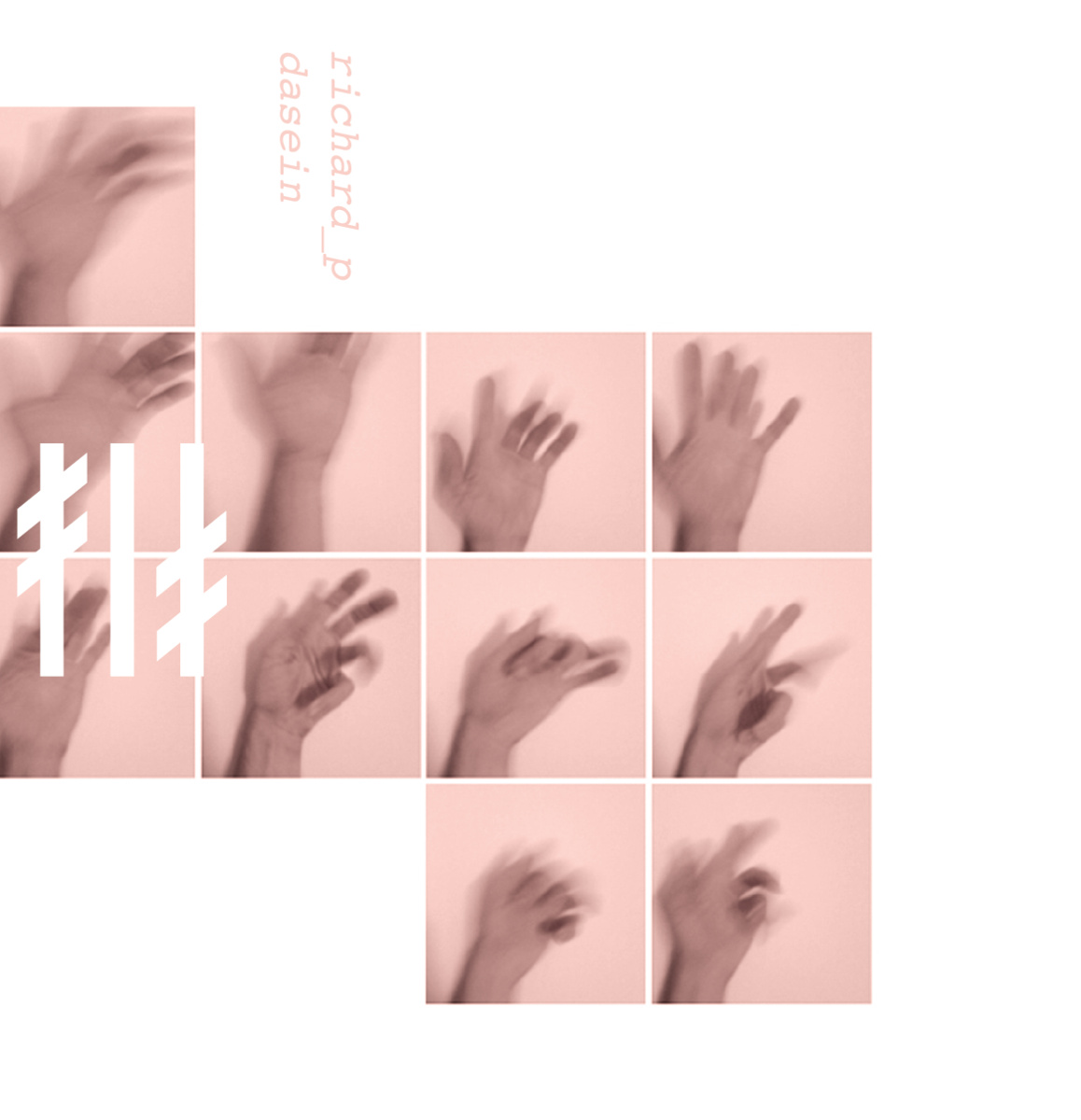
Hailing from New York, covert producer richard_p is an artist who has decided to keep his real name undisclosed for “purely ambiguous reasons.” Releasing his EP Dasein—loosely translated as ‘presence’ in German—via the Pastel Void label, this mysterious producer’s techno is heavy, shrouded in mystery, and highly conceptual. EP cut “modal_logic,” contains an atrociously tough 4-by-4 underlining that is accentuated by the wide variety of burgeoning soundscapes and emphatic yet minimal bass tones. The spoken word scattered throughout is either spoken word from richard_p himself or passages taken from the philosophical work of Martin Heidegger, “Being and Time.” You can download “modal_logic” for free below, with Dasein available over at Pastel Voids’ bandcamp here.
Norwegian electronic producer Klunks will debut on Seattle’s Hush Hush Recordings on August 21 with the release of Elastic Forest.
The seven-track release is a unique and floating assortment of downtempo electronics that transport the listener to Klunks’ beautiful maze of sound. Whispered vocal samples converse with organic-tinged synthesis and faint, airy field recordings, all driven along by jazz-like percussion. It’s obvious this deep tapestry of sounds is a well thought out process, further highlighted by the Norwegian’s insight: “The compositional process is about making already encountered sounds more potent and unfamiliar. There is something very interesting when materialities unleash there own imperatives towards the body, it’s nothing more than a question of following sounds urgencies and what they summon, a sonic directiveness…”
Elastic Forest will be officially released on August 21 via the Hush Hush Bandcamp page, with the full release streaming exclusively below.
For anyone remotely involved in bass music or dubstep, the last few years have no doubt been something of a challenge. Faced with your favorite genre falling out of fashion, you can either carry on regardless, follow the masses back towards straight 4/4, or try something entirely different. Low-key U.K. artist Spatial (a.k.a Matt Spendlove)—who wasn’t strictly dubstep, but certainly operated on its fringes—did none of those things. Instead he slowed his release rate to a crawl, and in two years has put out just one EP on Jimmy Edgar’s Ultramajic label and an experimental 12″/DVD offering on Broken20.
Now that the dust has settled on the dubstep fallout, though, both he and his Infrasonics label are back from hiatus. And for that we should be thankful, because what the occasional Well Rounded and West Norwood Cassette Library alumnus offers up on Emergence #1 (the first of a triptych of new EPs lined up for this year) sounds fresh and compelling. Though his discography is indebted to techno and the so called hardcore continuum, this brace of tracks comes off as punchy, cavernous and floaty-light as the best bass hybrids you could wish to hear.
Perfectly physical opener “HeLa” is the one here: elastic, long-legged beats brush up with elegantly smeared synths to create a perfectly swelling groove that sweeps you up from the start. Every surface is buffed and metallic, which lends the whole thing a certain sense of crisp futurism—but pricks of 303 and more pixelated chords rough things up later on, reminding us that Spatial can do the minutiae as well as he can do the muscle. That is even more obvious on flip-side effort “Referent.” Here, the synths are more like twisted stabs than graceful smears, as they cut in and out next to claps full of attack and above loose broken beats. Rising, falling, and threatening to collapse at any moment, barely-there sirens and spaceship reverb add depth and character to what is a zoned-out and brilliantly intergalactic affair. Spatial and his space-bass sounds, then, still offer lots to love.
DJ Spinn, a founding member of Chicago’s Teklife crew, has a new EP on the way for the Hyperdub imprint. Spinn was a frequent collaborator with the late footwork innovator DJ Rashad, but Off That Loud marks his first-ever solo record. Its four tracks are said to “effortlessly consolidate energies from all over into footwork’s 160 BPM grid,” with closing cut “Dubby” co-produced by Rashad and featuring Detroit rapper Danny Brown. The EP lands on October 2, and until then, the video for “Dubby” (created by Ashes57) is streaming below.
1. Throw It Back feat Taso & Mimosa 2. The Future Is Now 3. Off That Loud 4. Dubby with Rashad & Danny Brown
Onetime XLR8R podcast contributor Oneohtrix Point Never has divulged that a new album, entitled Garden of Delete, will see a release in November. In a .pdf uploaded to his website yesterday, the Brooklyn producer (a.k.a. Daniel Lopatin) addresses his fans and tells a tongue-in-cheek version of the LP’s inception, which involves an alien collaborator named Ezra. Tentative track titles include “Sticky Drama” (also due for a video), “I Bite Through It,” and “Animals,” with Lopatin taking influence from “cybernetic rock” and his touring experiences with Nine Inch Nails and Soundgarden.
Garden of Delete will arrive via vaunted UK label Warp and follows Lopatin’s celebrated 2013 album R Plus Seven. An alleged interview between Lopatin and Ezra is on view here, and the pair’s Twitter exchange can be found here. (via Resident Advisor)
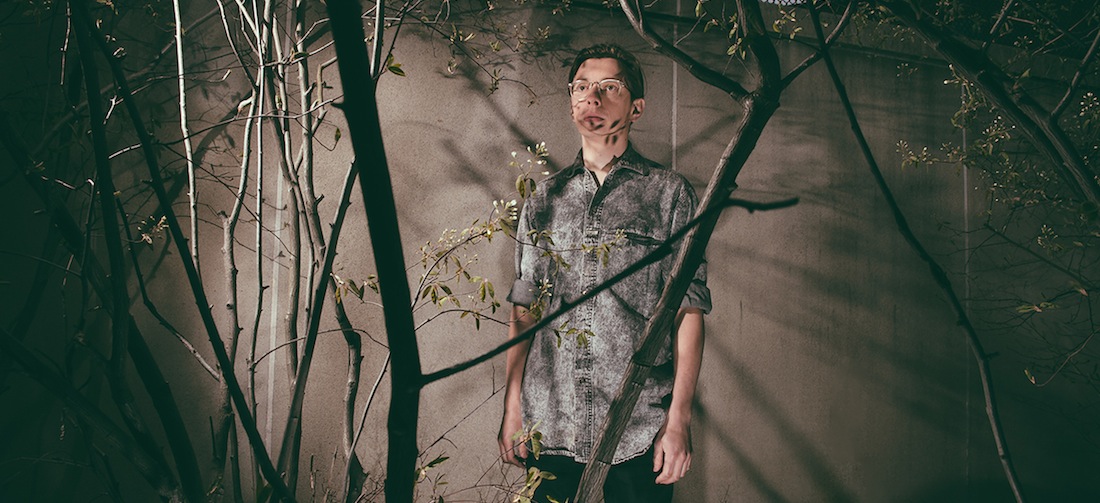
“I’m always wanting to make music that I can play when I DJ,” Jakub Alexander, the producer better known as Heathered Pearls, says. “And I try. But people are always like, ‘Oh, your music is great! It’s so nice, so repetitive.’ I’m like, ‘Oh, thanks.…'” There’s a hint of exasperation in his voice, and you can’t really blame the Ghostly International recording artist: In the musical world, the term nice often refers to work that exists more for its decorative qualities than for its substance or depth. And while Heathered Pearls’ music is undeniably beautiful—he’s described the electronic ambience of his first album, Loyal, as “indirect, huge, heavy, slow ocean waves off in the distance at night”—there’s always been a bit more than prettiness at play in Alexander’s sound. Just maybe, underneath the placid shoals, there are roiling waters, an undercurrent that belies the serenity.
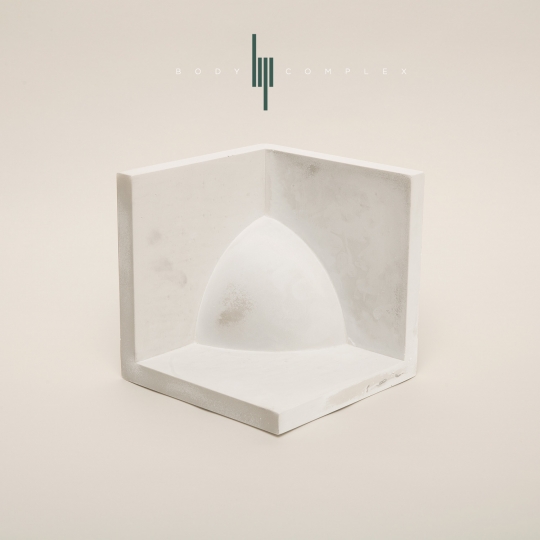
That vague sense of unease comes closer to the surface on the new Heathered Pearls album, Body Complex, just released on Ghostly. Alexander, who cofounded the Moodgadget label and curates Tycho‘s great ISO50 blog, has replaced some of Loyal’s shimmer with something a bit murkier, adding an layer of emotional resonance to the looped swells and drones. Still, Body Complex never strays far from the elegant beauty of Alexander’s best songs—this is spine-tingling music of the highest degree. As for music that he could use in his DJ sets—well, there are a number of tracks, “Sunken Living Area” and “Interior Architecture Software” among them, that could be thought of as “dance music,” albeit dance music of a particularly exquisite nature. “I think the next record might actually be more full-on,” the Poland-born, Detroit-area–raised, Brooklyn-based producer confides. Perhaps he will—but don’t expect Heathered Pearls to ever fully forgo the sumptuous refinement that’s gotten him to where he is.
What were your influences? I’ve heard you name-check labels like Dial and Mille Plateaux in the past. Yes—and early on, Traum had some really good records, and I really liked stuff like Lawrence on Kompakt. I used to DJ with Ryan Elliott and Matthew Dear—this was around 2002—when we had a weekly at this weird place called Goodnight Gracie. Every Tuesday we would go out to Neptune Records, which was this very German-specific store in Royal Oak. It was very odd that there was a store with that kind of specialty round then, but I guess that was when those kinds of records could still sell like six or seven thousand. Anyway, I found myself getting into…I don’t want to say delicate, but the more melodic end of things. There was a lot of that kind of vibe back then, with people like Efdemin and Carsten Jost, and a bit later people like Pantha Du Prince, doing this really cool stuff.
The early-through-mid-’00s were a great time for that kind of pretty-techno material. Definitely. Kompakt had a lot of the moodier, softer stuff as well. Those were the first things to really grab me after Detroit techno and the harder stuff that was around in the ’90s.
Do you feel that the Detroit techno or the harder stuff, has any bearing on the direction in the direction you took? They might have been the things that kind of got me into electronic music. When I was really young, in the ’90s, I was getting those X-Mix compilations, and I loved them. But I wouldn’t say I’m really influenced by that—they certainly don’t sound anything like what I make. (laughs) It did open up the doors for everything else, like Dial and Traum, though.
You’ve said in the past that some of that music provided inspiration for your own “visions of interior architecture.” Could you elaborate on that a bit? My mom’s an artist, and there was always a lot of art around me. I’ve always been into these kinds of minimal, DDR, cold war–design homes and installations. I was born in Poland and had been visiting communist Poland for a lot of my early life, and that kind of brutalism stuck with me—I never thought of it as this dark, stiff kind of architecture, though. I just liked it. And when I would daydream around music, or around designing stuff, it would always lean towards that sort of imagery.
Was that the inspiration behind the artwork on the album? You designed that, right? Yes, that’s mine. I’ve always had the dream of building one of those minimal homes, but with what I’ve chosen for a lifestyle, I don’t see that happening. (laughs). I’ll never have a couple of million dollars. So the next best thing is to create miniature versions, or my own reinterpretation. I’m trying to take what living inside a brutalism-designed home would be like, and make it into something else. You know those people who have like train-station cities in their basement?
You mean model-train obsessives? Yeah. I always imagine doing something like that—making my own little city of mini-cement homes, which are obviously not meant to be lived in, but are there within the landscape. And I’m lucky enough to be with Ghostly, and they give me a little bit of a budget for album-cover art, so I was able to do a design and have it made by someone. And I want to keep doing it, so this is a good way to start it off. I was actually thinking of doing a bunch of these things and make a cement sculpture garden. Not a Stonehenge—I’m not into anything like that—but just a place of my own.
A place where you can just relax? Yeah.
Speaking of relaxing, you’ve described Heathered Pearls as a project that enables you to take a break from your personal anxieties. Well, earplugs are very important to me now.
I guess you better explain that a bit. When I was about 28, I went to a Gang Gang Dance show with my friend Ben Curtis, who has since passed away. We had had one beer, and I was standing right by the speaker when this high-pitched sound started coming out of it. I remember saying to Ben, “Man, I feel so drunk I can barely walk!” Ben was like, “We’ve had one beer. What are you talking about?” But something about that sound had just hit me. And when I woke up the next morning, the whole room was spinning. I got labyrinthitis, which is damage to the inner ear. There’s this gyroscope that helps you keep your balance, basically, and that got messed up. And ever since that show, for like five years now, I’ve felt like I’m on a boat.
Yikes. My hearing is fine, but I always feel like I’m going to fall over. When I DJ, it can get really weird when the music gets intense, and I have to hold on to something. It took the doctors three years to figure out what was going on. And now I tell everybody to wear earplugs.
Well, that would explain the anxiety. Before that happened, I was way more rowdy. Now I am riddled with anxiety. A lot of things can trigger it—but my music actually helps. With the first record I made, I was trying to mimic the feeling I had, using repetition to try and recreate what the ocean feels like, and what anxiety feels like.
I guess it’s surprising, then, that your music can sound so soothing. Some people tell me it’s soothing—but some people tell me its really intense ambient music. Well, I never wanted the music to be minimalism, and I didn’t want it to sound like field-recording ambient, or sound too digital or dark. I just wanted to make something I could listen to on repeat, and those melodies on that first record are my favorite ones that I make back at that time.
What’s the Heathered Pearls production process like? I’m mostly all Reason. Com Truise and Shigeto work that way, too. We sample into Reason, but then that’s the main tool. I use guitar pedals a little; I like to create really nice swells. I love the Space Echo, too— I only used it on one track, but I use it a lot when I play live. And I always want more pads—the deep, warm kind of pads. And the great thing about Reason is that the pad library is huge, and that’s really the main reason that I use it, I think. I love adjusting the pads through the VSTs that they have.
Repetition plays a large role in your music. What’s your theory on why repetition is such a powerful force? I don’t know…but I know there is a lot of bad repetition. It’s hard to pin down exactly what makes good repetition good. But when I think of good repetition, I think of the kind of music I’d want to hear for 20 minutes, or for 45 minutes. I think of the the kind of music that someone like William Basinski might make, though I don’t know if I could explain why I like it. I actually have on a track on the last album, which is one four-second loop without one adjustment for six minutes. I think it’s the longest track on the album. I was just trying to prove the point that “this is my favorite loop, and I think it can go on forever.” Repetition is so important to me, but its hard to say why.
You just plain old enjoy it, maybe? I do…but I want to try and tell you why I enjoy it. When I find a repetitive piece that I love, it’s a really special feeling. I guess I can’t really explain why I enjoy it so much.
Perhaps it’s simply the meditative nature of repetition. The funny thing is, when I first started making music, I was like, “This is all meditative! Everything I make is meditative!” But people who I knew who were really into meditation said, “Well, usually people just meditate in silence. I don’t know what you’re talking about.” (laughs). But I think it is meditiative—though with my anxiety, I can never clear my head. So for all I know, maybe silence is more meditative than repetition for other people.
Are there any contemporaries who you feel a real affinity towards? I see you are playing with the Field in October, for instance. Oh, man, yeah—when I do a remix, especially a remix of a band, I try to make it like a Field track. I don’t want to say this because it sounds so goofy, but it would be amazing to be considered the American version of the Field. He has a very specific way of sequencing samples that I can really relate to. Him and Terrence Dixon—my music isn’t nearly as digital or dark speedy as the stuff that Dixon does, but I love him. Those are the two guys…along with Markus Guentner. There are a bunch of other people, too, but we’ll just leave it at that.
Both of your albums have come out on Ghostly International, and you serve as the label’s A&R guy. A lot of people who have worked with Ghostly seem to have a real reverence for the label—do you feel the same way? Yeah, I think so. Sam [Valenti IV, the head of Ghostly] is one of my best friends, and I just really believe in the label. When I met Sam, when I was maybe 20, I was just this guy doing these little events in Ann Arbor, and I started interning there full-time, for free. I dropped out of school! Ghostly isn’t this cooperate kind of thing—it’s a beautiful home for moody electronic music. And there’s a focus on design and art—Ghostly exposes all these great visual artists. It’s such a good home for me that I couldn’t even imagine leaving. And Sam keeps pushing forward, so why would I?