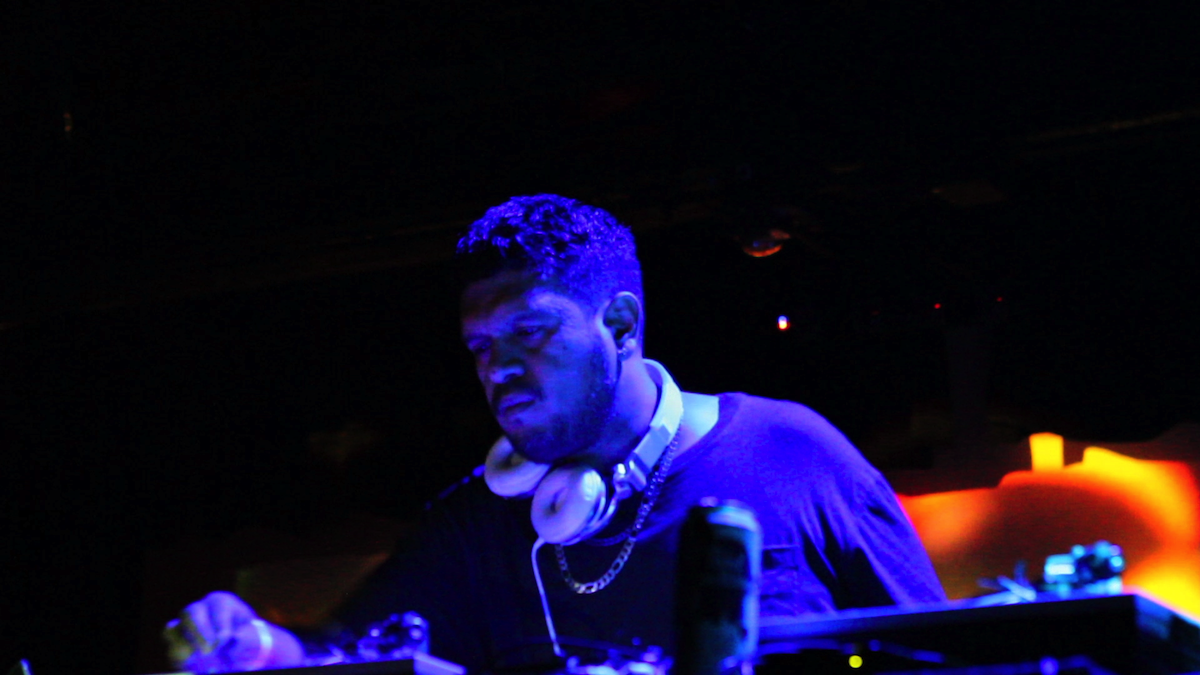
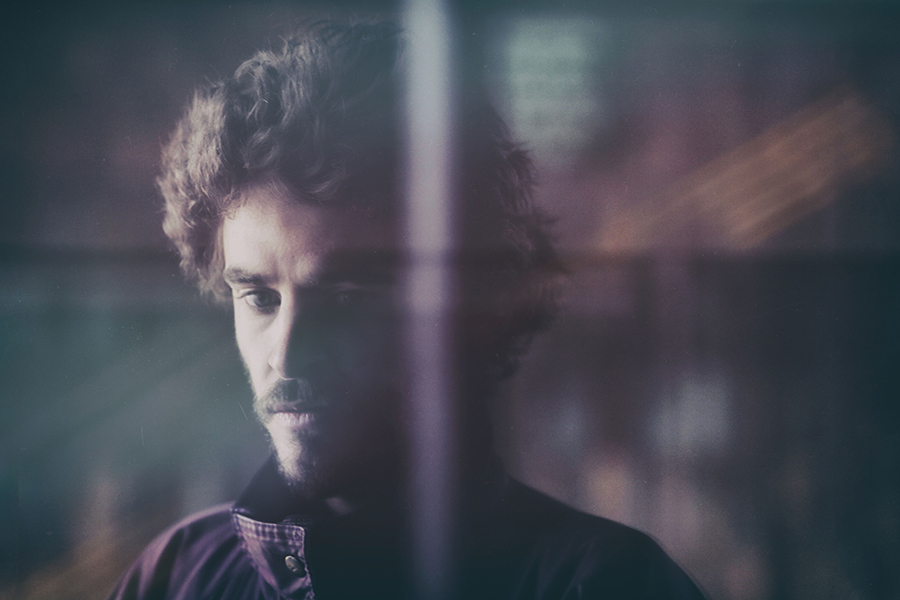
Smart Bar resident DJ and Electric Deluxe artist Jeff Derringer has produced numerous tracks for record labels such as Perc Trax, L.A.G., and Blank Code. Jeff also hosts his own event series at Smart Bar called Oktave,a monthly techno gathering that is regarded as one of the most respected club nights in the USA.
Derringer also performed earlier this year on the infamous Underground Stage at Movement in Detroit, which also saw performances by Steffi, Cell Injection, and Regis. Now that the dust has settled on Movement 2015, we finally have the opportunity to debut the live recording of Jeff’s set from the festival exclusively on our Soundcloud. In addition to hosting the mix, we would like to extend a special thank you to Jeff, everyone involved with Oktave, and all of the staff over at Smart Bar for their continued support of XLR8R over the years.
You can find Jeff Derringer’s upcoming tour dates, and the confirmed dates for Oktave, below; along with his mix from Movement Detroit.
Tour dates:
09/05/15 – Oktave with DVS1 and Jeff Derringer at Smart Bar, Chicago
09/18/15 – Oktave with Drumcell, Project 313 and Jeff Derringer at Smart Bar, Chicago
09/26/15 – Pitch Black showcase with Function, Jeff Derringer, Bryan Black, Cold Cave 10/09/15 – Great American Techno Festival with Shawn Rudiman, Israel Vines
Tracklisting: Miss Kitten & The Hacker – PPPO (Sandwell District Remix) [Nobody’s Bizzness] Kessell – Kelva [Pole Group] Peter Van Hoesen – Drift [Time To Express] Jeff Derringer – Ballorama [L.A.G. Berlin] Shifted – Unveiled [Avian] Planetary Assault Systems – The 808 Track [Token] Norman Nodge – Signal Response [MDR] Mike Parker – Spitting Electricity [Mote Evolver] Bjarki – I Wanna Go Bang [Trip] Antigone – Enter [Token] Post Scriptum – Gliese 581 [Infrastructure NY] Antigone – Artefakt [Token] Rrose – Signs [Eaux] Shed – Boom Room [Ostgut Ton] Peter Van Hoesen – Terminal [Time To Express] Planetary Assault Systems – Future Modular [Mote Evolver] Jeff Derringer – The Stranger [Electric Deluxe] Distant Echoes – Master Blaster [Dystopian] Markus Suckut – False [Edit Select] Jeff Derringer – Further [Prosthetic Pressings]
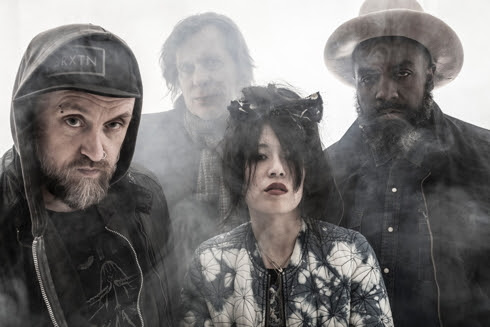
After a six year hiatus, King Midas Sound (a.k.a. The Bug, Rodger Robinson and Kiki Hitomi) have reunited and begun its work on a new, four-part collaborative album series.
The group’s last album, Waiting For You, released on Hyperdub in 2009, was widely celebrated as a one-of-a-kind sonic conquest. The first LP of the new collaborative series, Edition 1, features Austrian electronic musician and guitarist Fennez, whose distinct ambient tone makes him an ideal participant for King Midas Sound’s latest musical endeavor.
You can check out album cut “Waves” below, along with the album tracklisting. Edition 1 is set to drop via Ninja Tune on September 18, 2015. Pre-order the album here.
Tracklisting:
1. Mysteries 2. On My Mind 3. Waves 4. Loving Or Leaving 5. Melt 6. Lighthouse 7. Above Water 8. We Walk Together 9. Our Love
AUS Music are set to release Huxley‘s latest EP, 2.0, on September 4.
Following on from standout releases from DJ T., Youandewan, and Geeman, 2.0 finds the Saints & Sonnets boss dropping four scorching cuts of slamming house for the renowned UK label. Filled with chest thumping drum work, meticulously placed vocal samples, and driving synths, it’s another brilliant EP from Huxley, adding to his already stellar back catalogue.
2.0 will drop September 4, with the tracklisting available below.
“We call it church,” says Daddy Kev, cofounder of the now-legendary Low End Theory weekly in LA’s Chinatown, and patriarch of the extended family of artists clustered under its vast sonic umbrella of experimental broken beat, hip-hop, jazz, bass music…and everything in between. “We approach it with a religious mentality,” he says. “It’s regular, it’s once a week, we all come together.”
Now in its tenth year running as a weekly (that’s 520 some-odd parties, for those counting) at the Airliner on North Broadway, a certain amount of zealotry is required on the part of the artists who keep it fresh week in and week out, and by the fans who routinely stand in a line that snakes around the block before doors open in order to hear what off-kilter direction the likes Kev, the Gaslamp Killer, DJ Nobody, Flying Lotus, Nocando and many others in the regular rotation are going to take that particular Wednesday. Hitting the 500-person capacity at their grungy (yet oddly charming) home every week is a matter of when, not if.
But to call them zealots and leave it at that would be a superficial read of what has steadily and organically grown into a night where no less than Radiohead frontman Thom Yorke might drop by for a guest DJ spot. There’s a raw passion for the music, and a mutual respect—not just for each other, but also for their burgeoning community of fans—that fosters a two way, ever-evolving dialogue between performer and patron.
This much is evident after spending an hour talking to a few of the central figures of Low End Theory, or by speaking with members of the broader family who have nothing but reverence for what the night has become. On August 8th, Low End Theory makes its second annual foray into the festival world at the Shrine, featuring many of the same people who got them to this point. That they’ll be playing to 5,000 people instead of 500 is secondary to doing what they’ve always done: push boundaries and include their fans wherever and however possible.
As they gear up for their biggest weekend of the year, we got Daddy Kev, the Gaslamp Killer and DJ Nobody to wax poetic about how this all came to be from the night’s humble beginnings.
What were your ambitions the very first time you opened up at the Airliner with Low End? Daddy Kev: Very limited. I mean, at that point, for me, it was just about getting to the next week. Trying to get through that first month and seeing if people were going to turn out for this. Was this going to be something that people wanted to do and keep doing? At that point in my career, I’d already done several weekly parties, some that went well like Concrete Jungle LA, and some that didn’t…some that only went for a month or two. To be honest, I wasn’t able to imagine it past the first 30 days, just knowing how it goes and how fickle clubs are here. I mean, doing clubs in LA, it’s one of those things where you’re not really allowed a slow night. I think that’s a misconception that people have when they start doing events out here, that the venue will just say “Okay, we get it, we want to see it grow, we’re down.” In actuality, if you have a slow night, the very next conversation you’re going to have with the venue is “We’re not doing this anymore.”
At the same time, it’s sort of careful what you ask for, right? Doing a weekly for this long, you have to get creative to find ways to keep it from being a grind and to keep your sound fresh from week to week. Daddy Kev: Yeah, right? Keep in mind, our first year was pretty slow. I wanna say of those first 52 weeks…maybe five were really crackin’. So you got like 47 other weeks where it’s kinda slow, with maybe only 100 people. It’s not easy. So for me, the real hard part of Low End Theory was those first few years, keeping everyone inspired and dedicated. As you said, doing something every week gets old quick—even for myself. How do I keep them interested, but also how do I keep myself interested?
We meet on a regular basis to critique each other and what we’re doing—and to me that’s a vital part of our existence, because I’m never 100 percent pleased with the night. Maybe sometimes—maybe one or two nights out of the year we execute perfectly. But usually there was something that was a miss; either someone had a set that wasn’t technically perfect, or we had a set change that was a minute late. We try to run the club on the dot, like a Japanese train. I’m very observant and cognizant of it all. That idea of perfection, trying to execute perfectly both technically and artistically…we’re all on the same page with that. And that’s not just me and the residents: That’s our staff, that’s our production team, and we’re all about perfect execution every single time. Sometimes it can be counterproductive, but I think you can do it in a way that’s nurturing. I don’t think it’s a bad thing to strive for.
So what does it mean to you, after ten years of doing Low End every single week, to be putting on something of the size and scope of your own festival at the Shrine? Daddy Kev: To me, it’s a culmination of many years of hard work and dedication—and believing that we could do a festival on this level with predominantly Los Angeles–based artists. Ten years ago, it seemed like a tall order. Today, it’s more than possible and it’s happening—and I think really if anything, it’s a testament to the growth that we’ve seen from the artists involved in Low End Theory, and how they’ve grown in tandem with our reach. It’s a beautiful thing.
What sort of factors have come into play in 2015 that are allowing you guys do an event of this scale? Gaslamp Killer: Continued, relentless work for our fans—our kids who come every Wednesday. We treat it like as serious as we would treat a festival. Every week Daddy Kev, DJ Nobody, D-Styles and I, we run a very tight ship and we’re very disciplined and focused and that’s how it is every week. I think that kind of work stands out among a lot of our peers, maybe. And that type of thing doesn’t go unnoticed after almost ten years.
DJ Nobody: I think it has to do with the people from the scene eventually putting out their own music, and becoming loved and respected artists in their own right. When we started the club, there weren’t that many people doing Ableton sets with their own music; it was mostly just DJs. Now it’s a lot more common, and I think the development of the live aesthetic has helped. Even though it’s far more popular now, we’ve also always held on to our niche, hard-core market and fans. Because electronic music is kind of a mainstream thing now, people still want our little niche because it’s the most raw version.
Nowadays, Flying Lotus has massive crossover appeal, and Thundercat is producing albums for Kendrick Lamar. Why do you think that musical tastes have finally caught up with the sounds you guys have been putting out there for more than a decade? DJ Nobody: I guess it’s a culmination of it catching up, but Kendrick definitely has a lot to do with it. People are just getting sick of rap for the past few years, and have finally hit a wall with it. I love getting crazy in the club as much as anyone, but I think more and more people are just wanting to hear some shit where they can think again. Simultaneously, like you said, we’ve been on that—we’ve been getting more lyrical with our shit out here on the West Coast for a long time. I think it all finally coincided.
“People are going to come our way eventually, because we’re spitting truth and we’re spinning truth.”
Gaslamp Killer: I always say this when I get this question: As the world turns and gets a little bit darker, people are looking for a different kind of freedom and a different kind of salvation through music—and whether we know it or not, we are all going to the concerts and to the clubs and to the festivals to be around each other. It’s not just about the music. Like, anybody who is willing to brave Low End and get in the middle of that crowd of sweaty kids going apeshit is not just a fan of the music, they’re also a fan of that experience that you get with each other. That tribal vibe, you know what I’m saying? So as times get a little bit darker, people want a different kind of release, of entertainment, one that’s a little less…just not that bottle-service shit, man! You know what I mean? That’s not cool, that’s not what you should be spending your money on. That’s a really tacky way to live, in my opinion, even if you have that kind of money. So for me, this is inevitable. People are going to come our way eventually, because we’re spitting truth and we’re spinning truth. Producing truth. It’s all from the heart, and it’s all super-raw, and it’s the same shit we’ve been doing. It’s dark, it’s instrumental, it’s dirty psychedelic music. Now people are starting to come around because the times have changed. It’s more suitable for now, I guess.
Daddy Kev: Having people like Flying Lotus as a champion of the movement is big, but to me, there’s really certain intangible elements here that have made it as successful as it’s been. When I try to explain Low End Theory to people who don’t know what it is, the first thing I’ll say is that it’s a community event, it’s meant to be inclusive of people and anyone that’s interested in making beats and producing. It’s not just one or two or three or four dudes, it’s like everyone that wants to be involved.
There’s a lot of criticism today of the big festival scene, that people are less concerned with who is playing as long as it’s a decent backdrop to get wasted to with their friends. How are you guys trying to maintain the same intimacy you had at the Airliner while putting on a festival at the Shrine? Gaslamp Killer: Well, nobody has a one-room festival. It doesn’t happen. For right now, ours is still one room, and we are going to be addressing our audience as if it were the 500 that we talk to every week. Even if it’s 5,000, it’s pretty much the same for us. It’s gonna be interactive; we’ve invited youngsters from the scene to submit beats to get on stage with the crew, with me and FlyLo and everyone else. We invite people in to actively participate with us.
Also, I feel like Low End has two hosts. Nocando is hosting, but I am also hosting in a different way—it’s not as much as entertainment as it is I’m trying to show appreciation for people coming out. It’s a different kind of thing that we each do—but together, we keep the crowd engaged and honor them and give them a lot of love and respect. I know that they feel differently than at other festivals when there is no host and changeovers aren’t filled with jokes and fun anecdotes and interesting vibes that we share with the kids, you know what I’m saying?
‘You turn on the news if you want to see how fucked things are. Don’t come to Low End Theory to check that out.”
What does this festival represent as far as the Low End ethos and how is it helping that evolve? Daddy Kev: We’re there to kind of exist outside of reality—and we try to provide that for our audience, too. We want to take people to a different place and make them forget how fucked up the world is. You turn on the news if you want to see how fucked things are. Don’t come to Low End Theory to check that out.
The festival ultimately represents our evolution, and the idea that we’re trying to introduce ideas that are grander than the last one. Something like a festival initiative with Goldenvoice—it’s hard to think of a grander destination. I’ve been a fan of Coachella and everything they’ve been doing for years, so for them to even be interested and want to grow this with us—which is very much the plan—is almost beyond my comprehension. A part of me still stays rooted in where all this started, and the idea that we could operate on this level is still…I can’t process it. It’s a blessing and I’m just glad the guys are down for it, and want to take the chance.
The final and most important bonus round question: What is your favorite burrito in Los Angeles? Daddy Kev: Tacos Via Corona for breakfast burrito. I’m not a meat eater, but I like a shrimp burrito and if I’m in that mood, I would probably drive all the way to Tacos Baja Ensenada in East LA.
DJ Nobody: I’m gonna have to go with the medium chicken burrito at My Taco. That’s my favorite place, but none of my friends want to try it because it’s called “My Taco.” Al & Bea’s bean & cheese, also.
Gaslamp Killer: Four Cafe breakfast burrito. They only serve it on the weekends. Exclusive, brother!
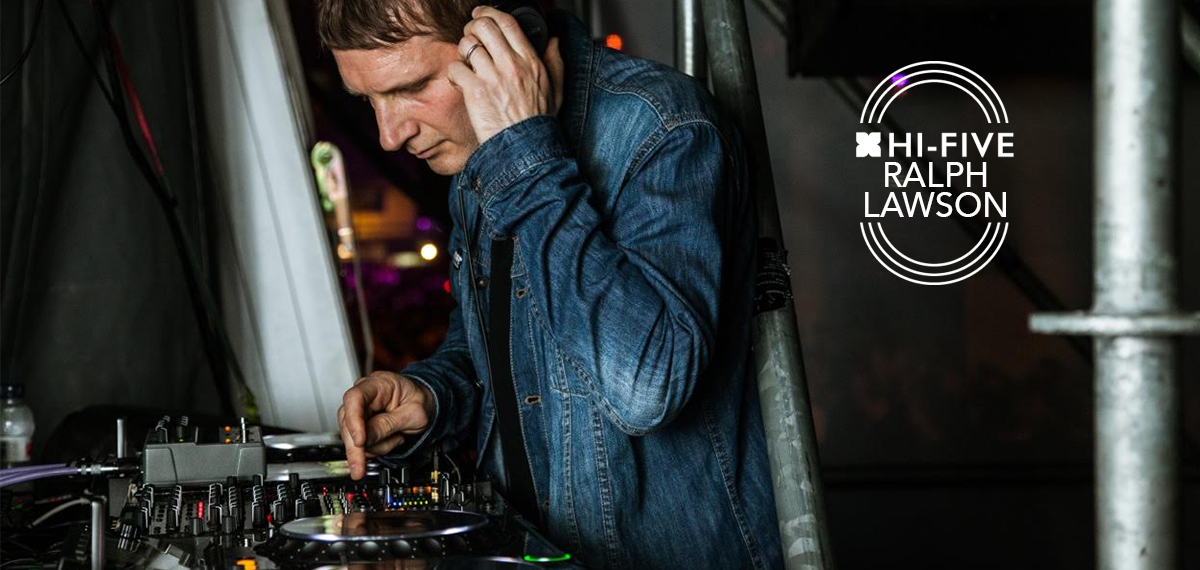
Ralph Lawson has a bit of history behind him—a history that parallels the past quarter century of British house. For instance: As a rising young DJ in 1991, the London-born, Leeds-based DJ dropped the very first record ever played at one of four-to-the-floor dance music’s fabled shindigs, Back to Basics—and if you’re curious, the track was, rather fittingly, “Open Our Eyes” by Marshall Jefferson. “I know exactly why I played it first,” he’s admitted in the past. “Back then, I could just about beatmatch two 4/4 beats; I couldn’t really mix basslines or strings, or intros of any sorts. And that song starts with a synth and a vocal, with a bassline coming in slightly on the offbeat. There’s no way I could have mixed that track in later in the set!”
Since then, the clubland lifer has obviously perfected his craft: He’s enjoyed residencies at We Love Space,the Loft in Barcelona and, of course, Back to Basics, and hit just about every major club worth playing in the world, including such hallowed names as Watergate and Fabric (he mixed the latter’s Fabric 33 compilation back in 2007). He’s also a respected producer, working both solo and as a member of 2020 Soundsystem, Chuggles, Urban Farmers, Wolf n’ Flow, and Wulf-N-Bear, just to name a few. That’s all great, needless to say—but we’d wager that what Lawson will be most remembered for is his label, 20/20 Vision, which in its 21 years of existence has released music from Maya Jane Coles, Alton Miller, Paul Woolford, Spirit Catcher, Moodymanc, Simon Baker, Crazy P and many, many more. The label is still going strong, with recent EPs coming courtesy of PBR Streetgang, Whitesquare, Forrest and others. On August 15, Lawson and 20/20 Vision head to London for a massive day-into-night bash at Studio 338, and to mark the occasion, the veteran selected five essential 20/20 Vision tunes—not an easy task, considering the dozens upon dozens of high-grade releases the label’s discography boasts. But first, a few words from the esteemed Lawson himself.
This will be one of your biggest 20/20 Vision parties yet, right? Numbers-wise, it probably will be. It’s definitely the biggest day-night party we’ve done in London. We’ve been doing this for a while, and they just keep growing. We’ve never really been about “bigger is better”—but at the same time, if you want to get some tasty lineups together, it helps to have a big space.
And the lineup is indeed tasty, with you, Steve Bug, Axel Boman, Dungeon Meat.… And there’s still a special guest to come. It’s gonna be hot, hot, hot.
You also have Whitesquare, who just released that great Peaks EP on 20/20. What can you tell us about him? Well, he’s an Italian producer. And he’s very prolific—he sends me about five tunes a day. [laughs] He just really wants to get his current stuff out there. He wasn’t really on my radar; he used to produce bigger-room music. I mean, Peaks would work in a big room, but it’s music that sits comfortably on 20/20.
How do you go about finding new artists? We basically get sent a ton of stuff, every day, more than we can possibly get through. It’s a lot of work. I do have A&R guys helping out, and they’re out there actively looking—trawling Soundcloud, going to gigs, getting tip-offs. Sometimes someone will just come to one of our gigs and hand us music…you know, I don’t know how we do it, to be honest! There’s just so much music flying around nowadays, and you need something to help your tracks stand out. But somehow, good music finds us.
The label is now 21 years old. Do you find it a challenge to remain relevant—and not only relevant, but vital? When we got to 20 years, we did start questioning ourselves a bit. Like, am I going to keep doing this forever? Is this a good time to quit? I mean, 20 years of 20/20 does seem to fit. You start to wonder about your energy.
But obviously, you chose to keep 20/20 going. Yes, but it became clear that a change needed to come. We celebrated the 20th anniversary by putting out the Content album, which was 20 exclusive tracks by some of the producers who we really wanted to have on the label. After that, it was time to draw a line through it. No more looking back. Now, it’s all about new-new-new, fresh-fresh-fresh. We had a total makeover—rebranding, new logo, new design and lots more. We really proactively went out there to grab diverse, fresh and exciting talent. It feels new—I actually feel like we’re a start-up now! [laughs] So even though we’re at 21 years, I feel like we’re actually at year one.
You sound reenergized. Oh, you need energy to do this. If that runs out, you’re nowhere. I mean, it might be different if you’re in the superstar-DJ game and it’s all about money. But we’re not in the superstar-DJ game. We’re in the underground-dance-music music business. And as everyone knows, in that world, you’re only as relevant as your last record and your last gig. You can’t just demand relevance, or demand respect. You’ve really got to earn it. And that’s what we try to do, first and foremost by the music we put out.
I assume you have that same ethos about your personal relevance as well. Definitely. As a DJ, I try to play as good as I can, every single set. If I don’t do well, I feel pretty bad. But that doesn’t happen very often, to be honest. [laughs] I still practice—and still go to gigs with the idea of smashing the shit out of it.
Do you foresee another 20 years of 20/20 Vision? I actually thought about things like that when we hit 20 years. I was reminded of that Adonis song: “We’re too far gone, there’s no way back.” I kind of feel that way about house music in general: It was all a big party, and when the party’s over, and you’re older and you’ve got responsibilities, it’s time to make some decisions. If you want to keep doing it, you’ve got to turn it into your life. And after that point, there is no way back. It’s as simple as that.
So should I take that as a yes? Who knows? But I mean, try and get a CV together and get a job at a bank—and see how we get on. We wouldn’t!
Ralph Lawson’s Five Essential 20/20 Vision Tunes
Paul Woolford “Erotic Discourse” There’s no denying this is one of the most influential and important tracks on 20/20 Vision, if not in electronic music itself. Stripped-down, raw, harsh, and abrasive sounds shattered over just a single kick drum: no snare, no hats, no bassline. Instantly recognizable, instantly original and copied many times—but never bettered.
Maya Jane Coles “Senseless” The whole MJC EP on 20/20 is classic material, and I actually played “Little One” more in DJ sets—but I think ‘Senseless’ now stands the test of time as the standout track. I first met Maya in the Book Club on Leonard Street in East London. She was diminutive in stature but large in presence. Anyone meeting her could tell she was a future star. These days stars shoot so fast in dance music, and Maya is off on her own transgalactic trip—but I am so happy we helped build her rocket ship.
Wulf-N-Bear “Raptures of The Deep” The third-ever single on the label and the one that launched us internationally, especially in the States. In those days, 1994,there was no e-mail or mobile phones, so we communicated by something called a fax machine (yeah, I know—right!). They were basically photocopiers stuck onto phones that would spit out really low-quality paper but they were high-tech at the time! Anyhow, we received a fax from Stacey Pullen in Detroit saying he loved the track—and we stuck it on the studio wall, we were that buzzing! Then Derrick May came to play in Leeds, where we lived, and he played it, and Derrick Carter came to play our club Back to Basics and he also played it. I still really like it too.
The Youngsters “Third Knife” This was one of those tracks where there was a really cool section—but then it went a bit weird. It’s your job, if you run a label or DJ, to hear that great part and say to the artist,”Yo, just loop that part up and keep it rockin’,” which is exactly what we did with the Youngsters. Cool producers will believe you and try it. The Youngsters did—and what’s more, they added spiral space FX over the top, which was even better. This became a real hit in Panorama Bar in Berlin, which really helped us all out.
Motor City Drum Ensemble – Lonely One EP Danilo Plessow was another artist we were on super early. We had a record of his called “Breath Control” that blew us away, and so my main man at the label A&R back then, Tristan Da Cunha (now part of Dungeon Meat), got in touch with him and asked for some new stuff. Lonely One was the EP that came out of it. It’s just timeless house music. Danilo is another one who became a big star after this EP, but I think it was manly his Raw Cuts series and great DJ sets that did it. We will claim an assist again, though!
Beatport has put payments to artists and record labels on hold while its parent company, SFX, transitions from its standing as a publicly-listed entity to a private one. In an email to music-rights holders, the popular online retailer writes:
“Since inception over 10 years ago Beatport has paid almost $200,000,000 to its label partners. Beatport’s parent company, SFX, is currently involved in a ‘going private’ process that has trapped certain earned label payments. This process will be coming to an end in the next few weeks, at which time all payments will be able to be made. Beatport prides itself on being the broadest and original friend of the makers of electronic music and will clear this one time obstacle very shortly. In the meantime, feel free to contact your label manager with any questions. Thank you for your patience and continued support.”
According to Resident Advisor, Beatport recently inked a deal with Spotify around streaming services, and is currently in the midst of corporate restructuring; chairman and CEO Robert Sillerman will be the company’s new owner.
Minimal Effort LA returns this Halloween to present a one of a kind dance music experience in one of Los Angeles’ most elegant and historic buildings, the Belasco Theater in DTLA.
Hosting a plethora of well respected artists on three different stages—hosted by Jukely, Mixmag, Deep House Amsterdam, and Rolling Tuff—this years show includes big name techno artists including Agoria, Miss Kitten, Hunter/Game, Blond:ish, Finnebassen, Adana Twins, and more. The event will run from 8pm to 5am on October 31.
To get more information about tickets, venue and the lineup, head over to their website. Check out the recap video of last years party below.
Drawing the listener in with gorgeous piano work and faint, haunting strings, Bendejo‘s “Unravel” is a smooth, slightly unconventional, slice of techno which gracefully unfolds across its 13-and-a-half minute run. The Austrian producer layers in raw, drum-machine rhythms and an assortment of deep synth work, perfectly showing off his sonic mastery. “Unravel” is the title track of Bendejo’s latest EP on Adjunct Audio. The five-track EP is comprised of two more originals and four remixes—two by Adjunct label head, Reverse Commuter, who is joined on rework duties by Freaky Chakra and Stefny. The EP is out now and can be purchased here, with “Unravel” available as a free download below.
BKR Projekt is the new project and label of Simon Baker, the acclaimed British producer who first broke through with the writhing monster that was “Plastik“. Ensuing efforts like the Lip Trick EP, remixes of Crazy P and Simian Mobile Disco plus collaborations with Jamie Jones have all helped to cement his reputation as producer with lots to say and the skills to say it.
Now based in London, and following the acquisition of some new studio equipment, Baker has been inspired to pursue a more stripped-back techno sound. To do so, he has started the BKR Projekt imprint and adopted BKR Projekt as a moniker. His first EP, a beautiful three-tracker that captures this new sound perfectly, can be streamed in full below.
The Ebony EP is out on digital and vinyl now via Baker’s own BKR Projekt imprint.
Paris-based artist Will Archer (a.k.a. Slime) will drop his debut album, Company, on Weird World on August 14.
Reportedly culled from around 400 cuts, the 10-track album is a beautifully mature and, at times, otherworldly sounding debut LP. Archer has crafted a timeless and intimate sound with Company, one propped up by head-nodding beats, organic textures, and flowing, live instrumentation. Of the 10 tracks, three are with featured vocalists including the one in question here, “At Sea Again Ft. Selah Sue,” which is a tightly wound slice of electronics driven by Archer’s sound-design and the crooning vocals from the Belgian singer/songwriter.
Ahead of the August 14 release, you can stream “At Sea Again Ft. Selah Sue” in full below.