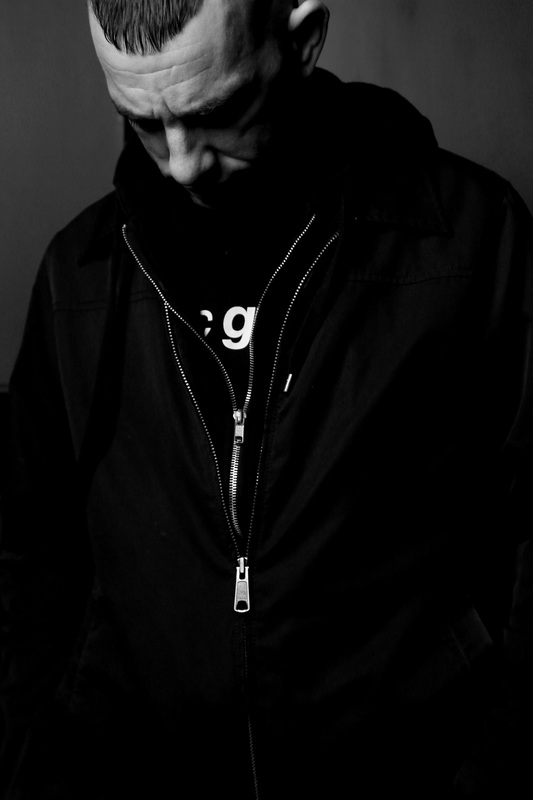
A powerhouse who needs little introduction, Kim Ann Foxman’s divergent path from Hercules & Love Affair has proven to be creatively fulfilling and professionally fruitful. Years after closing the nu-disco chapter of her life, Foxman has manifested her own mellifluous journey, and is staking a claim for herself in the music scene as DJ, producer, and label owner. Her highly sought-after sets, continuous creative collaborations and array of vinyl releases has her on everyone’s radar… again. Prior to her set at YAAASSS, we crossed paths with Foxman at The Well—a creative space connecting the Los Angeles demiurgic demographic—to discuss her aesthetic and philosophy on mixes.
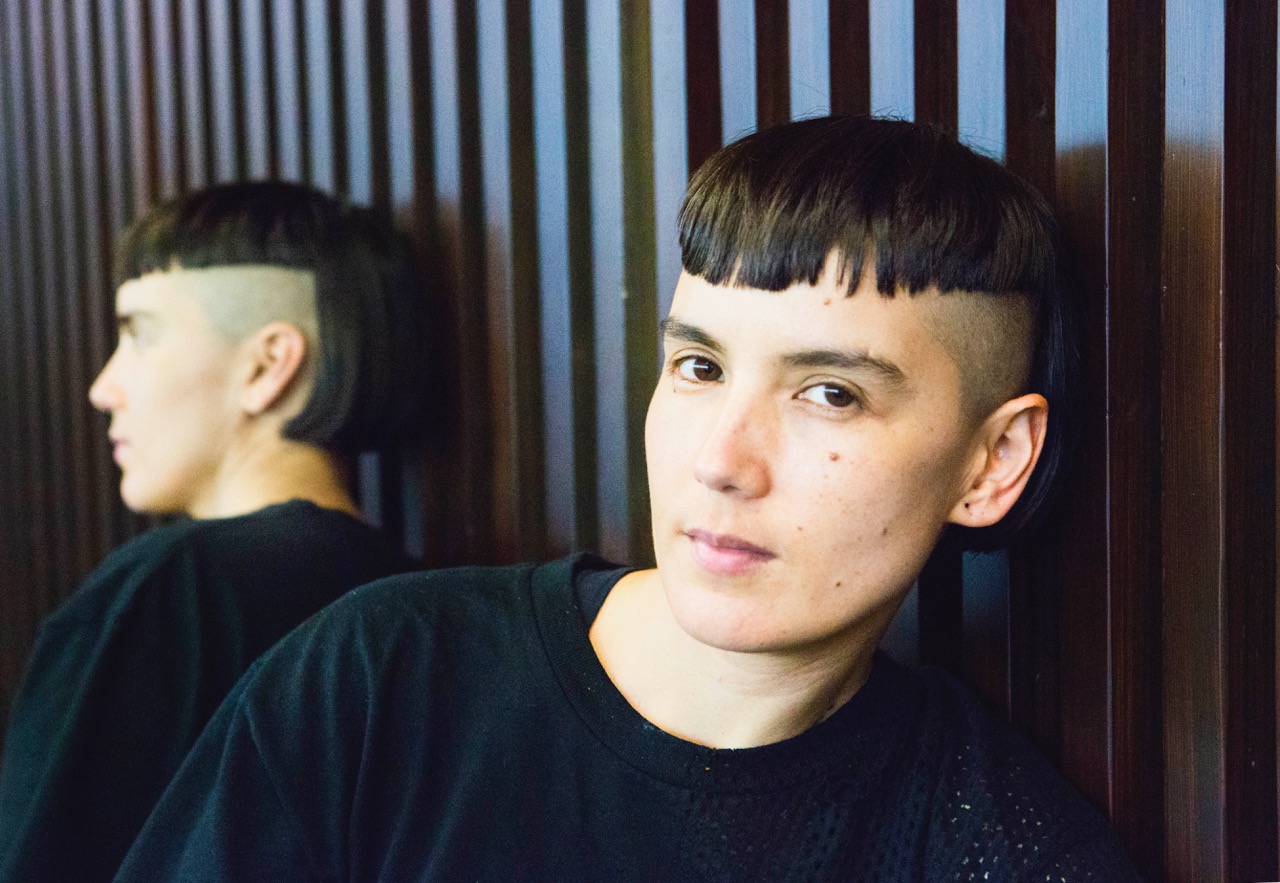
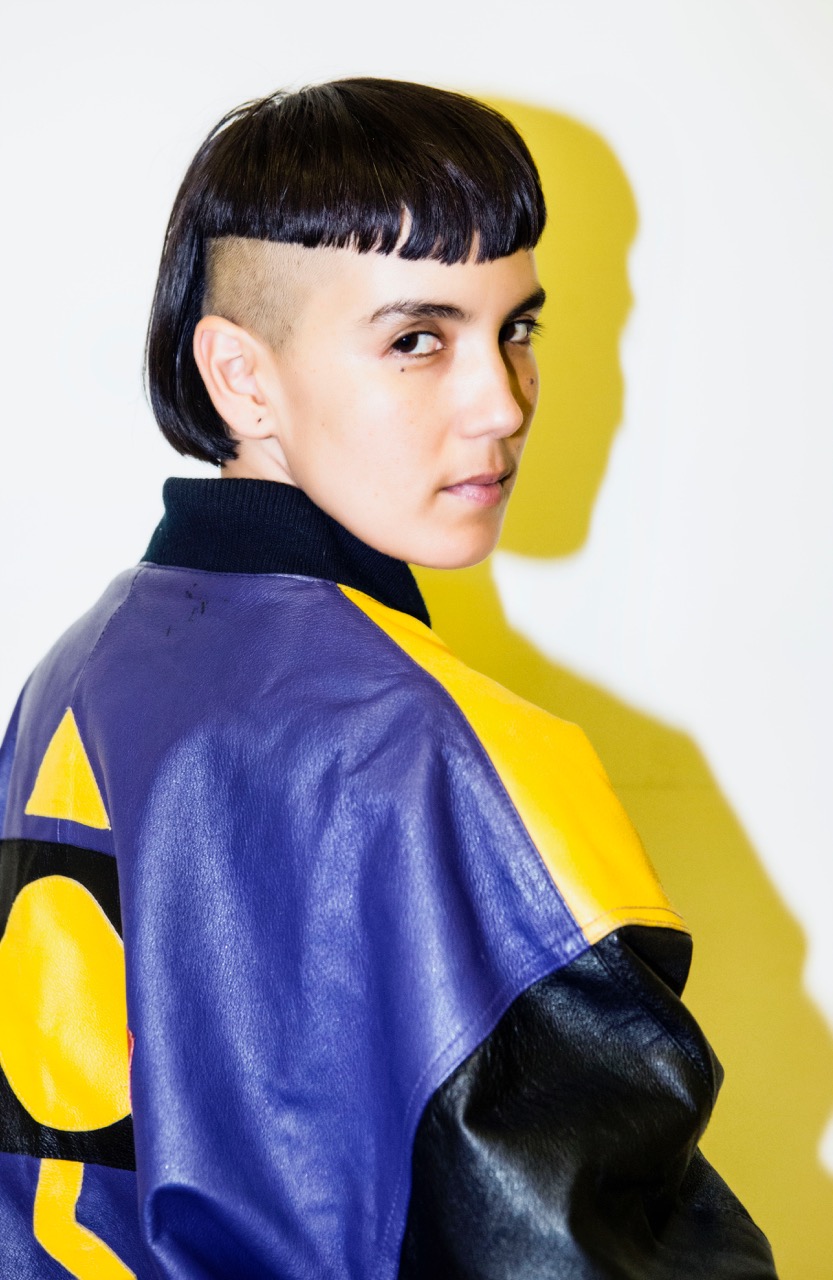
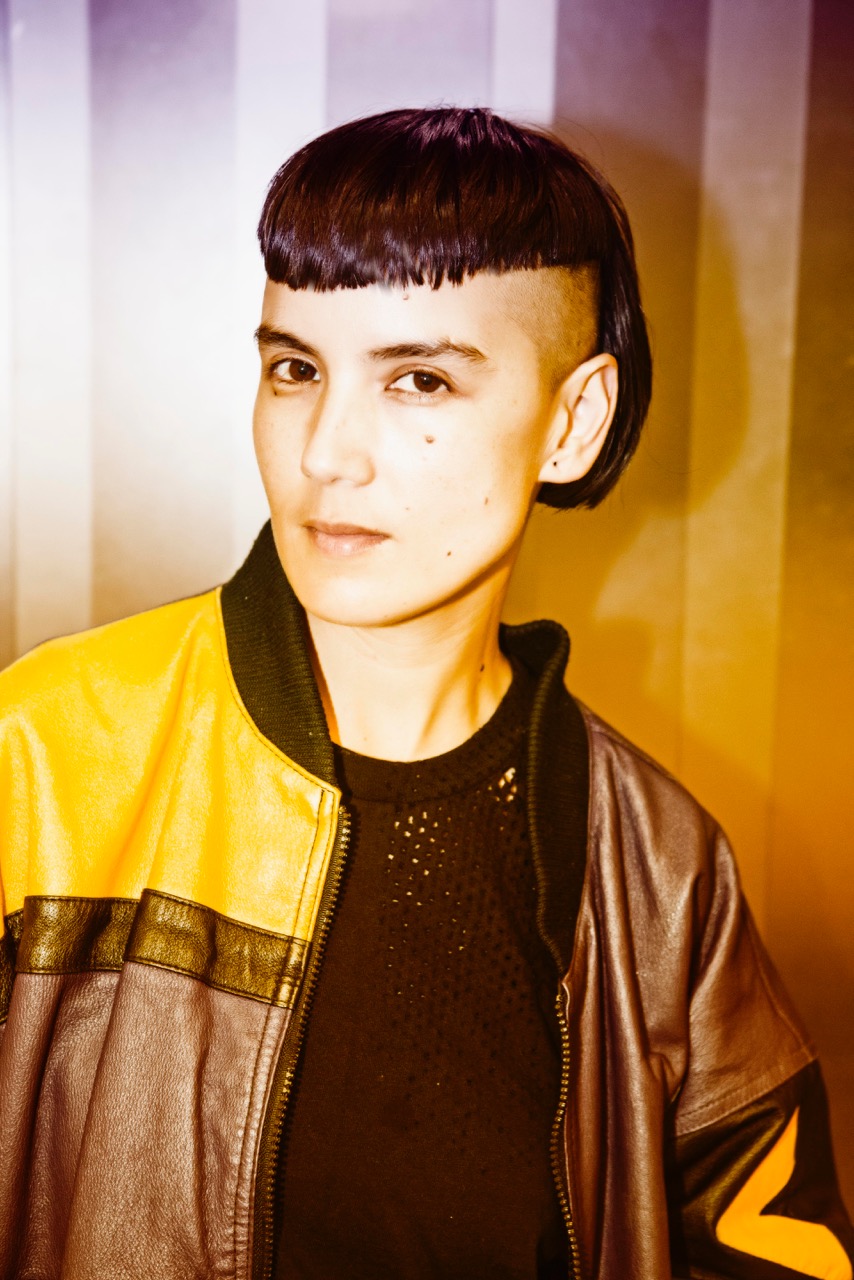
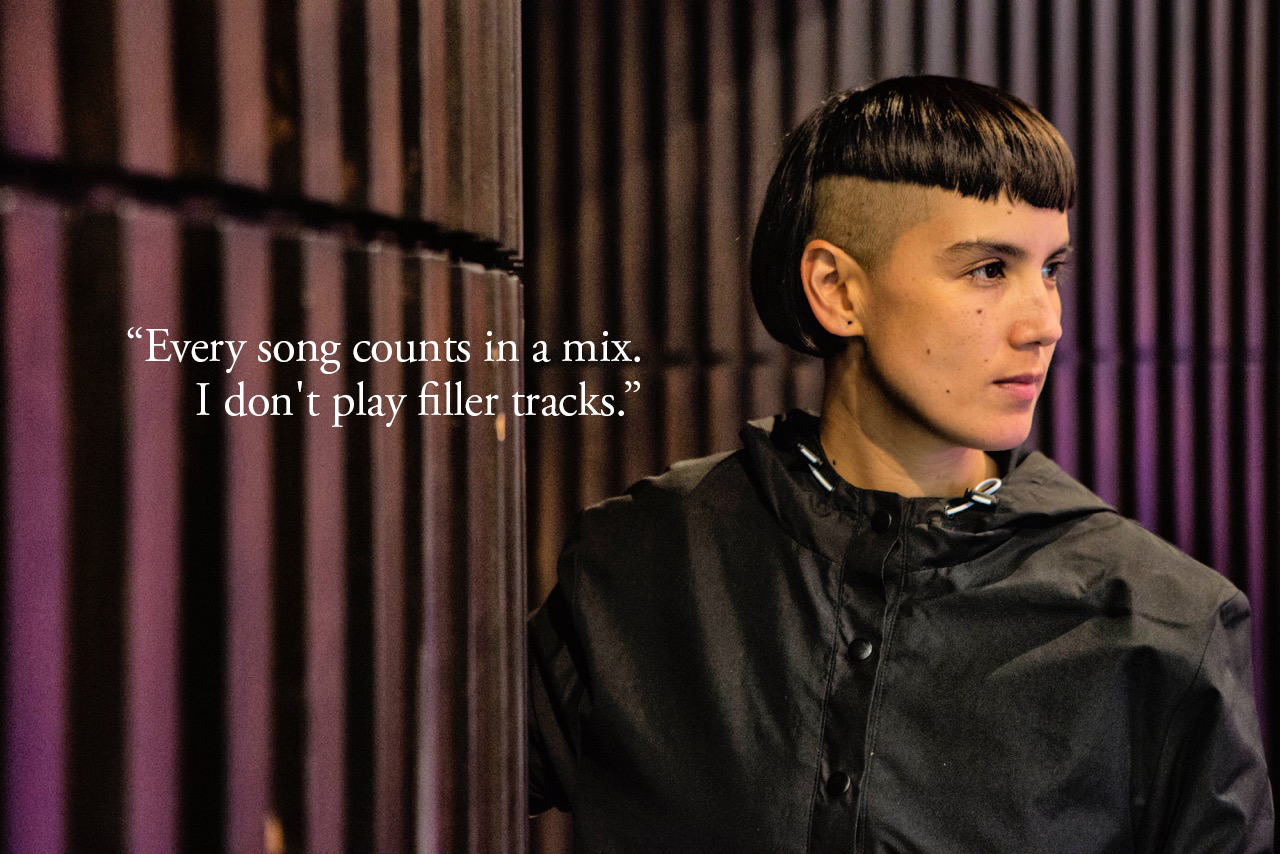
When you meet Foxman, it’s hard not to be enchanted by her effortlessly edgy style and boyishly handsome looks—but it was her soft-spoken voice, laugh, and quirkiness that set the stage for an engaging evening. Sporting the “androgynous with an edge” look, Foxman’s urban street style was accented by her notable, neoteric bob. As a former hairstylist, I couldn’t refrain from asking her about her hair. “My best friend has been cutting my hair for over 16 years, non-stop, she explains. “Her name is Holli Smith, she is really amazing, and does mostly editorials and fashion shows. She’s major and I just happen to be the lucky best friend. She knows me so well, and I never ask her for a style. I always sit down and let her do whatever she wants, it has always been that way. I trust anything she does, even if she left only one hair on my head, I’d wear it with confidence! It feels good for me to have something with some edge. If I have a cool haircut, I feel good, whether it’s messy or not. It has become a big part of me. It may not be for everyone but that’s the whole reason why I love it so much.”
Foxman’s urbane personal style is largely reflective of her years of living in New York, yet her music remains deeply influenced by her earlier and formative days in San Francisco. She attributes much of her musical influence to that identifying era and “sound as part of my vibe and the heart of my sets.” Drawing on her eclectic taste in music, she builds sets with a heavy dose of house, mixed with jacking acid, techno, jacking, and rave jams.
Since birthing her baby, Firehouse Recordings, with baby-making partner, the Vinyl Factory, Foxman largely focuses her time and energy into her label, turning the creative outlet into a labor of love. “I love being able to release things on my own schedule and not having to wait a zillion years on another label for my turn. I like to be in creative control and the artwork aspect makes it really enjoyable for me. Firehouse has been a really fun project, and The Vinyl Factory has been nothing but an amazing label partner. When it’s all done, I get to hold my beautiful heavyweight vinyl baby in my hands.”
Euphonic exploration is often rewarded by the discovery of “hidden gems,” yielding an instant gratification for collectors as they are added to a repertoire of rare records. In order to preserve the sacred nature of her findings, Foxman has developed a system to keep them concealed from the uninitiated. “I get pleasure out of watching people trying to train-spot when I’ve coded my record rips in my own language that only I can understand. If it’s available online in digital format, I don’t mind letting someone know—but if it’s a record that took me 20 years to figure out what it is, then I’m gonna hold onto it a lot tighter, of course. Everything is so accessible now—I think mystery is sexy.”
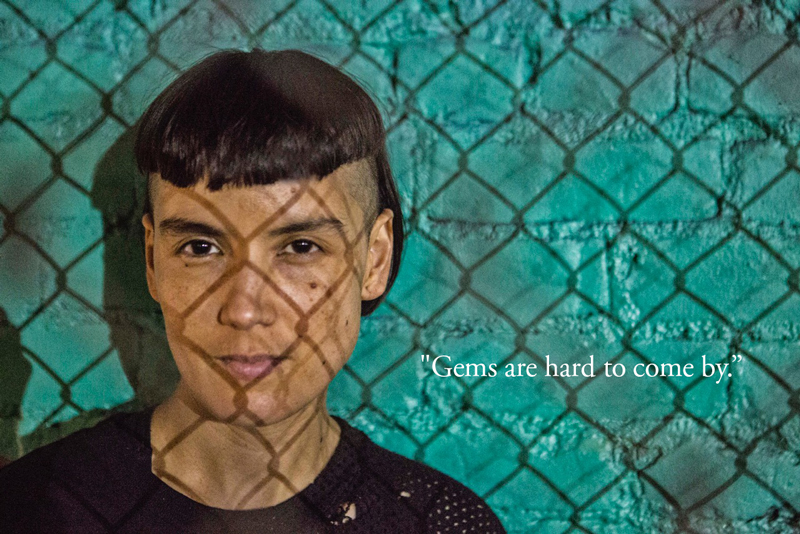
To conclude the evening we learned about her philosophy of mixes and the importance of her track selection. “I like to space them out and try to pick and choose them wisely,” she says. ” I always include some secret weapons that have value to me. Gems are hard to come by, and I love to share them with the dance floor in the moment and get that live feedback. I feel like it’s hard enough to pick out the diamonds when there is such an over saturation of mediocre stuff in the market. Every song counts in a mix. I don’t play filler tracks.”
Quality Time Recordings is a new LA-based imprint that kicked off its catalogue last week with London-based artist Count Counsellor‘s debut EP, & The Childhood Heroes—which was co-produced and co-written with Fred, Red Bull Music Academy alumnus and one half of the Brian Eno- approved duo Sylas. The four-track EP was inspired by Count’s childhood, “the moments that shaped him and the heroes who elevated him.” This childhood wonderment is ever apparent in closing cut, “AKidOutThere.” Opening with an undeniable nostalgic feel, the track floats through whispered field recordings, organic textures, and pensive vocals, unpinned by a thick, gurgling bassline and with colorful synths riding up top. “AKidOutThere” can be grabbed for free below, with the full EP available here.
For over 22 years, the XLR8R brand has been synonymous with nonstop, ear-to-the-underground electronic-music news. The name is tied to an uncompromised history of quality artistic output, from the long-standing print magazine and its iconic design to the present day online platform. In December, the San Francisco-based company debuted its brand-new website, and officially moved its offices from San Francisco to the recently burgeoning Los Angeles Arts District. With a new home base and a freshly updated website, the XLR8R team has been hard at work to bring its readers the latest in music news, and create feature content that the electronic music world needs.
XLR8R is proud to announce its two new additions: XLR8R TV and The Factory.
Kicking off with our forthcoming documentary film on MUTEK Montreal, the new XLR8R TV will be documenting and showcasing forward-thinking festivals, events, artists, and studio gear, as well as premiering music videos and highlight performances within the XLR8R universe. ‘All Access: MUTEK’ will be launched Thursday, July 30, with more stand-alone artist features, gear reviews, and music news arriving on XLR8R TV shortly thereafter.
Additionally, XLR8R will be launching The Factory, an editorial series exploring how music influences artistic expression. The Factory will highlight prominent artists, designers, festivals, producers, and others, discussing the relationship of music and how it permeates into the aesthetic of their work.
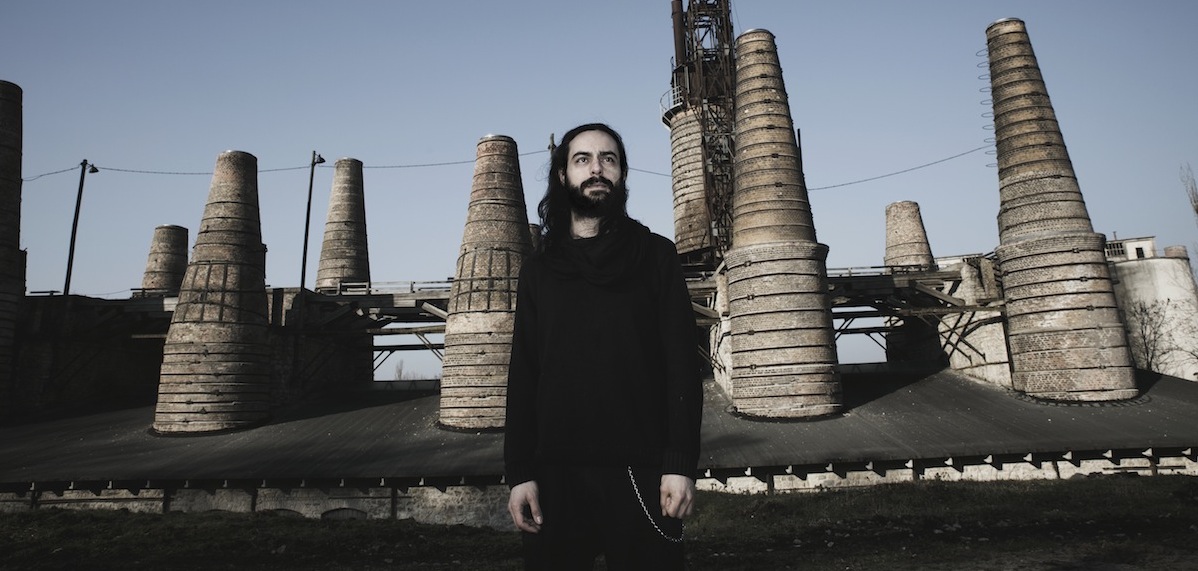
Inner8 is the solo project of Daniele Antezza, the Berlin-based, Italian-born producer who is best recognized for his work alongside Giovanni Conti. The pair run the Artefacts Mastering studio together, and also produce their own brand of dub techno under the Dadub moniker, a key component of Lucy’s Stroboscopic Artefacts imprint.
Born in 2007 as a stamp for the more experimental sounds that Antezza was composing at the time, the Inner8 project has evolved to become an essential channel for his self-expression—a tool to release the emotions that he holds deep within. His self-titled album—a beautiful 12-tracker—is his first release barring a couple of tracks around the project’s origination, and was made available just last week on Undogmatisch, an art collective–music label he co-runs alongside Mirco Magnani (a.k.a. T.C.O.) and Valentina Bardazzi.
Following the album’s release this week, and in anticipation of the Inner8 live show, XLR8R sat down with Antezza to investigate his improvised production processes, the sociopolitical inspirations behind the release and his visions for the future growth of the Undogmatisch imprint, the Inner8 project and the live show.
Where do your earliest musical origins lie? Music has always been part of my life because my family has always had a passion for it. My first ever connection with musical instruments was when I was around ten years old. I studied piano, but the school I attended was not one that I liked, so I actually found that period very difficult. Their fascist way of teaching music became a nightmare for me. I didn’t actually start playing again until I was about 14—I began playing rock and then metal, playing bass guitar and keyboards. At 16 I started playing drums and then percussion until I was about 23. At 23 I was struck by this profound love for electronic music and my productions started at about 25 years old, using software only. I was studying economics at the time so it was nothing more than a hobby.
A move to Rome was inspired by a desire to develop my knowledge of electronic music—to study it and understand why it works. I started Dadub as a dub-ambient project in 2008 with a release on the label A Quiet Bump before I moved to Berlin in 2009. Giovanni had been drawn to Berlin to work on an interactive digital arts project, and when we met, Dadub became a two-man project.
What was behind the move to Berlin? Berlin always felt like the best place for me to develop my music and my artistic personality. It is still one of the most liberal places around the globe. It was the perfect place to test my skills, because London and other places were too business-orientated, so they didn’t allow me to develop artistically.
From the outside, it seems that music has always had this special meaning for you—far deeper than just something you enjoy. Would you agree with that? Yes. Music has, and always will have, a very deep meaning for me. Making music allows me to survive from a psychological point of view; there is absolutely no other option for me. It keeps me alive, and at a certain stage I just realized that I had to make it my life.
Your debut album as Inner8 was released just this week. How are you feeling about it? I am super excited. I have invested so much time and money into it, so it feels like the start of a really great adventure. I am curious to see how the projects will work—not only Inner8, but also Undogmatisch. How will people interpret these projects?
In 2008, when you were producing as Dadub, you also were making sketches as Inner8. How did you distinguish between the two? Dadub was always related to my passion for sound engineering. It was a very defined project with a very precise intention. Inner8 at the time was the opposite: there were no goals besides just having fun and experimenting with different sounds.
At what point did you decide you wanted to take the Inner8 project further? I think the change came in 2014—very recently actually. It happened because in the moments after You Are Eternity, the album with Dadub, Giovanni and I started to explore new paths of sound design because we didn’t want to reproduce the sounds we had already been making. During this process of looking for new sounds and textures, I found out that I had these tracks, but they weren’t properly Dadub tracks, and so I realized it might be a good idea to give a good identity to the project. I also wanted a new way to express myself live, which is something that is really important for me. Having Dadub and Inner8 is perfect for me because I can express myself in so many ways.
Is it true that the album features loops that were made as far back as 2008? I did use loops produced many years ago, but the process I used to treat the sounds is common and has been done far more recently. My decision to limit the album to 12 tracks came because I was listening to these loops and I realized there are currents behind each one. I then worked hard to create a system to harness all these currents using a number of feedback-generation techniques.
So how long did it actually take to put together? It’s hard to put a timescale on it because I had to change studios, so I had to arrange the acoustic treatment of the rooms. But in total I would say it took about one year. I spent time collecting the material, and then I needed a lot of time to arrange the tracks, because I had to process them all through the same sound design techniques. The post-production was also very time consuming, because I did all the mastering and post-production myself. Fortunately I had some help from some friends who are sound engineers, like Federico Nitti (a.k.a. sYn) and Giovanni, which helped a lot. I think the post-production alone took about six months.
Did you actually have an intention to create an album, or did it just materialize? I did not plan to produce a debut album. I just had lots of material and it just formed an album over time. To begin with, the Inner8 moniker was just the signature I used for these sonic experiments. I had no intention to release anything; I was just experimenting with sound design, and collaborating with an Italian label called Farmacia 901, the imprint run by my friend Fabio Perletta. As Inner8, I released two tracks on Farmacia 901 before Undogmatisch. But in the future I think it is going to be different. I am already working on new tracks for Inner8 and I know it is going to be an album. It has gradually become more organic. All my sound design processes have changed. For me, this debut Inner8 album is part of my transition to my personal vision of sound and performing.
How does producing as a solo artist compare with working as a duo with Giovanni in Dadub? It is a different dimension because you are dealing just with yourself. Sometimes it is more difficult, because the beautiful thing about working with another person is that you have feedback all the time, which allows you to grow. When you are alone you have to be just with yourself, but this keeps your ideas closer to what you want. This is another one of the reasons why having both Dadub and Inner8 is one of the best things for me now.
Where does the name Inner8 come from? It is strictly linked to the idea of infinity. It comes from my fascination with looping and self-generating sounds, but it also reflects my philosophical view: in my opinion, we can see ourselves as a whole set of structures, which means we can observe the same structures from the quantic to a macro level. This is similar to fractal geometry, and it’s something that shows how we as human beings are used to behaving in a certain way and reproduce certain kind of structures and mechanisms within the society.
Sometimes there are kinds of actions in art and culture which are the exact opposite of the issue itself. So the main thought for Inner8 was, if I think about certain kinds of structures, why do I tend to use and reproduce their exact opposite? This question inspired me to investigate the idea and discover that a huge part of our actions are just preprogrammed to achieve an aim that it is far away from what the system tries to tell us. I see it as a process of liberation.
Let’s discuss the artwork for the album. I understand this was done by Valentina Bardazzi, your partner at Undogmatisch? Valentina is responsible for all the artwork at Undogmatisch. In my opinion, she has truly captured the aesthetic identity of the label. When we ask her to make a flyer or whatever, she has visions. For the artwork, she literally translates what she sees in these visions. I find it extremely beautiful. Referring to my album, she took the tracks and she gave her own personal visual interpretation. She’s a true visionary artist. For my new collaboration with Mirco, however, she sits in and draws when we are recording and listens to the music. I think this is important because it keeps the visions fresh. I want the music and the artwork to grow together. With my album the music was recorded first and then the artwork.
Moving forward with Inner8, I’m working with Valentina and Federico Nitti to keep the visual aspect close to the production process. I want to inspire the visual and get inspired by it. I’d like to avoid working on the visual content only after the sounds are made.
“Routing the signal flow is the same thing as creating a thought.”
Inner8 sounds like little else out there and is quite unique. How do you go about creating such a singular style? I spend a lot of time silently observing my setup, just focusing on the techniques I use to make the sound. For me, routing the signal flow is the same thing as creating a thought, and I prefer to be silent instead of saying meaningless words or just reproducing something thought by somebody else. After that, it is really just experiments, and often the results are completely different to the sounds that I actually intend to make.
However, having a personal signal-flow engine ensures that I create unique textures. I always try to keep a totally organic way when I build my sound design architecture, so while the framework is well designed, I am also free to improvise. It gives a unique touch to the result, because when you don’t think too much about how the different sounds should be interconnected between currents, then you can achieve textures that are completely unique. If you base your mental setup on something that is thought up by somebody else, then your sound will be similar to all the others.
Do you ever have sketches in your head when you go in the studio or is it complete improvisation within this framework?
Almost all of the time it is just improvisation. It does happen sometimes where I have a firm vision in my head but this is very rare. I do not think it is good to plan too much. My role is not to give rules to sound. I need just to express my deepest emotions, and that’s why I like to use the term anarchist for this creation process.
Has the sound evolved from when you first started working on Inner8 material in 2007? Yes, definitely. At that time I was very focused on studying music and had a very nerdy approach, so I was very focused on the techniques. Now I think it is slightly different; the technical side is reserved for the postproduction, and for when I study the technical details of the gear I need to use. All the rest is pure instinct and improvisation, so the sounds I make now are more artistic.
Do you ever wonder why you produce this sound? I’ve thought about this topic a lot, but I still have no answers. I was once reading this really beautiful interview with Autechre, and Sean was being asked about their composition techniques. The answer was this: “Have you ever asked a kid why he is climbing a tree?” I have to be very careful not to open up my rational side too much when I am working. When I feel that a sound is ready it is because it has something to say, and I know even though I am not thinking about it. Making music must not be a conscious thing. I must just be in the moment. The rational side represents just a small part of our brain and. in my opinion, it is not the main tool during an artistic process.
“We all talk about love and respect, but practically everything is based on sophisticated forms of violence. It’s a big paradox, isn’t it?”
An album is a big thing for an artist. It’s more than just an EP; it’s a statement. What do you want to communicate with the album? Is there a particular message that you’re trying to get across? I agree regarding your description of an album as statement, even though I perceive this album as a transition because the idea of sound I have in mind needs still to mature. Talking on a more abstract level, the main message for the album is that the humans should start to seriously consider their practical actions, without forgetting the theoretical purposes, that are often exactly the opposite of the result of our actions. For example, we all talk about love and respect, but practically everything is based on sophisticated forms of violence. It’s a big paradox, isn’t it? If we continue to get stuck on it we will be never able to radically change the status quo.
A major motivation behind the album was your fascination with paradoxes. Can you elaborate on that? In truth, this isn’t exactly the major motivation of my album composition, but it is the main conceptual framework that led me to give a theoretical organicity to my work. The research of paradoxes is one of the approaches I like because it reveals how a system—political, social, cultural and so on—can be really distant from its theoretical status. If we want to analyze something we find fake or hypocritical, we just need to show the conceptual paradox of it. If we want to translate this approach in sound design, I can say that it is exactly the reason why I am endlessly researching for unique textures. I mean, if we act in an underground and alternative domain, I do not see the point to reproduce the paradox to use standardized techniques. Standards are just useful to managers and market—but art does not need that.
You previously released on Farmacia 901, but why did you decide to start your own label, Undogmatisch, to release this material? The motivation behind the label was related to an idea I have for artistic production. I want to keep part of my production a little bit detached from market rules and timing, so creating my own label makes me feel less controlled by other people’s schedules. Managing my own label also gives me the opportunity to experiment with my own ideas of organization—mainly based on the concept of horizontal relationships rather than vertical hierarchy—through alternative decision processes with my collaborators, or by writing contracts in a bit different way than the usual ones. These are just examples. In this way, if I always have a room where I can have my toys, I can play around with them and then when I find good ideas I have the possibility of doing something with them, but without the pressure. With Inner8, this aspect has been extremely important—having my own label gives me the possibility of achieving a more professional level for my productions.
Your partners, Mirco and Valentina, were running Undogmatisch as an event series before it became a label, right? Undogmatisch was founded by Mirco and Valentina. Their first Undogmatisch event was about three years ago, and then I met them at the third edition of the event. I was really impressed because, besides the party itself, they had a really big art exhibition and there was a beautiful aesthetic behind all this. They are both very talented, experienced artists, and so we started to collaborate for the events.
At the time when the events started to do really well, we realized that we were surrounded by some extremely skilled people so we just started to evolve Undogmatisch into a platform for artists. We have plans to have Undogmatisch showcases outside of Berlin, and we are going to have some Undogmatisch residents apart from Mirco, Valentina and I, like Federico Nitti, Justinas Mikulskis (a.k.a. S13), the writer Thomas Bey Williams Bailey, and the photographer Kiril Bikov. It’s a label-platform that we hope is going to grow with more and more artists.
And as for the music-label side, do you envisage taking other artists on? Yes, that is certainly the plan. I am currently looking to develop a core roster of artists. At the moment it is myself and Mirco, and as a collaboration we have plans to release our own album on the label. I believe sYn, who also does the visuals for Inner8, will be releasing too. It is very important that all the artists on the roster have a common vision and this is something I am looking at developing.
I can also confirm the first Limited Undogmatisch release in November or December which will be a collaboration with T.C.O. It’s also an experiment we’re making with our artwork curator, Valentina. We’re composing music while she draws, and from that we get inspiration for our jam sessions. The artwork will be very special.
It seems far more like an art collective than just a music label. That’s true. Besides music, it covers events and other art forms. It is a lot more than just music.
How do you intend to balance all the projects going forward, especially with the label now too? For me, managing all these things is like planting seeds. If these seeds grow then somebody else is going to take care of it. I am a musician, and of course I want to build something that is mine and that can inspire people—but if these things grow, then somebody else will have to take care of them. My input will always be there but it is not my aim to be a label manager.
How do you perceive the Inner8 project working alongside Dadub? Dadub and Inner8 are parallel. Dadub has its own identity; it is a really special project. It is something that is not going to end anytime soon. To make the project grow, we need time, and during that time I can work on Inner8. At any one time I will be working on one of the projects and, by doing this, I will be richer and refreshed in thoughts because I have let the project breathe a little bit. If I am not greedy, then I think I can manage both projects.
You said that you’ve already started working on a second Inner8 album. How much progress have you made? I plan to release the new album middle or late 2016. I’ve also decided to move Inner8 into the techno scene, so I’m also at work on two EPs. Regarding the album, I already have about six or seven basic track structures, but I have frozen the project for now. I don’t want to overwork on it, because I am afraid of it losing the Inner8 identity. So for now I am working more on the collaboration with Mirco, and also a more dancefloor-orientated EP. I need to keep my ideas fresh, which is definitely true right now—but I know that wont be the case forever.
“I really like to think about how I want to perceive the sound, like on a rational and emotional level.”
Do you have a particular vision behind the second album, similar to that of paradoxes with the first album? I really like to think about how I want to perceive the sound, like on a rational and emotional level. The first album talks mainly to a rational dimension—even if composed from not only my rational side—and that is why I have used contemporary philosophy. I have used rational drum patterns: they are well ordered—4, 8, etc. But this time, with the second album, I am pushing more into the spiritual domain. It is going to be a little bit more inspired by other sources, like shamanism and so on.
Earlier, you mentioned a joint project with Mirco. What’s the name of the project, and how did it come about? The moniker is just Inner8 + T.C.O—it’s that simple. We decided to develop the collaboration after we produced the track “Ataraxia” on the Inner8 album. In making the track, we found out that we had actually made some really exciting loops and so Mirco started to give currents and orders to these loops, and then I started to process them with my feedback system and through my sound design techniques. The project is entirely improvised using a clarinet, the main instrument played by Mirco. So far we have no concept or anything—we are just playing around, but we do wish to take the project further.
You’ve been developing a live Inner8 set. What are your expectations for it? The proper Inner8 live set is audio-visual, and my goal is to grow it as much as possible. My idea is to create a live show, which is a proper experience for the listeners, through the synesthetic approach I’m developing with sYn. As a live act, it is a lot more improvised than the Dadub live show. I don’t use a lot of software because I want something more physical. I am working to develop the technical and performative side of it, and sYn is digging more and more to give a proper visual identity to it, with the aim to develop the complexities of the performance. It is not as hard as it seems, because we love to improvise and create using our technical skills.
The live show is the best way for me to express the feelings that I have when I produce and think about my music. The aim is to really create a connection with the crowd and share these emotions with them. I think that by engaging with the crowd, I can connect on a deeper level. I think also that the live act is a great way of testing my music. By playing it in front of a crowd, I can see whether a sound works or not—or the opposite, of course.
Scheduled for August 14 release, the Lakker Tundra remix collection features a group of very talented producers bringing us their personal interpretations of the original album tracks.
Ahead of the album’s August release, Mark Fell’s amazing reductive version of “Oktavist” can be streamed in full below.
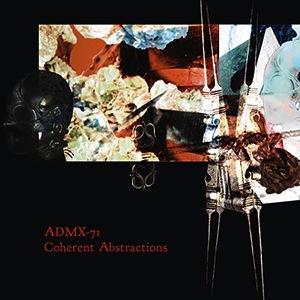
New York techno veteran and Sonic Groove label head Adam X (a.k.a. Adam Mitchell) returns to L.I.E.S. this fall as ADMX-71 with the Coherent Abstractions LP. According to a press release, the forthcoming album traverses “breakbeat noir, anxious electronic dub [and] reflective industrial modes,” in keeping with the more experimental profile of Mitchell’s ADMX-71 project. (He appeared under the alias on L.I.E.S. last year as well, on the Redacted Files EP.) Resident Advisor reports that Mitchell also incorporates vocals into a handful of tracks, notably delivering a “frantic vocal performance” on LP cut “Nearing Obliteration.”
Coherent Abstractions will see an official release on October 15. Opener “Virtuality Continuum” is streaming here, and the record’s artwork and complete tracklist have been posted below.
01. Virtuality Continuum 02. Arrival Into Uncharted Territory 03. Neutralize & Eliminate 04. Phenomenalist 05. Conjectured State 06. Nearing Obliteration 07. Bound & Broken (feat. Janina) 08. My Theme Song 09. Anxious Solitude 10. Mystical Ascent 11. MGM_41-85
Vancouver collective and label Mood Hut has unveiled details of its tenth release: Slow Riff‘s Gong Bath / Virgo Dub / Peace Arch EP. The producer born Ian Wyatt made an ambient cassette for the imprint back in 2013, and played with Pender Street Steppers’ Jack Jutson and Liam Butler as No Gold. Elsewhere, he’s appeared as Local Artist on Rhythm Section International and Anthony Naples’ Proibito imprint. No official release date has been shared as of yet for the upcoming 12″, which the label recommends “for healing use only,” but clips from all three tracks can be previewed below. (via Resident Advisor)
Electronic music producer and multi-instrumentalist Koloto released the Mechanica EP via Abandon Building towards the end of last year, with Alpha Pup affiliate Dot’s remix of the title track getting a feature in XLR8R’s downloads section around the same time. Now, EP cut “Kill Screen” gets the rework treatment from UK artist Ekoda Map. Keeping true to the original’s hauntingly beautiful quality, Ekoda Map winds together tight layers of skipping percussion and swirling synth tones to create a grandiose slab of sonics. Ahead of Ekoda Map’s forthcoming EP, Fathers and Sons, which is slated for release late August, you can grab his remix of “Kill Screen” for free below.
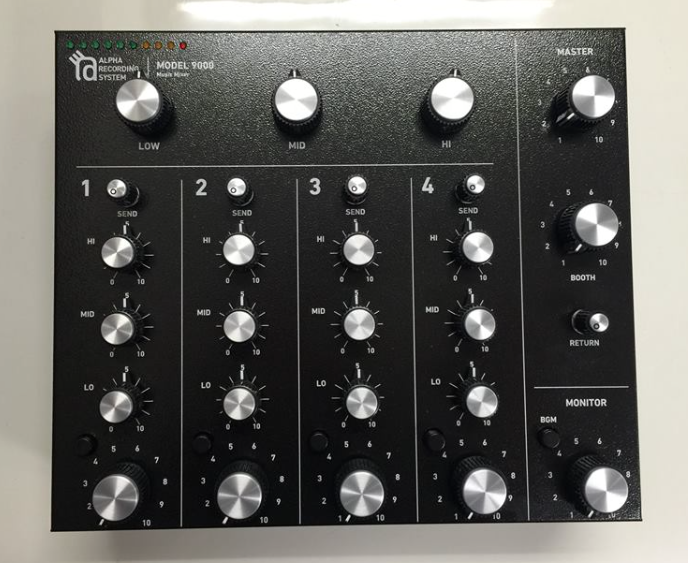
Following on from the news of the feature-rich ARS MODEL 6700, Alpha Recording System has teased out a new “table top DJ mixer,” the ARS MODEL 9000.
Alpha Recording System shared a photo gallery on its Facebook page stating that the ARS MODEL 9000 is a Japanese made, all-hand-crafted DJ mixer. The unit features four channels, each with a three-band isolator and send/return for effects, as well as an overall master isolator and master and booth levels.
No price has been set yet but Alpha Recording System has stated it will announce that next month. You can check out more photos over at Alpha Recording System’s Facebook page.
The remixes for Nick Höppner‘s debut album, Folk, will hit the shelves of your favorite record store on September 11. The vinyl includes remixes by The Black Madonna, Liit, Aardvarck, and Herva.
If you are looking for a mature, no-nonsense direction when it comes house and techno, you don’t have to look any further than Nick Höppner and his debut full-length that dropped on Ostgut Ton earlier this year. The album truly shows the technical scope of Höppner as a producer, and we are thrilled to announce a stellar list of artists for the remixes. As for The Black Madonna, this will be the first production by the Smart Bar Music Director—and regular Panorama Bar fixture—to come out on Ostgut Ton. There are no preview clips for the release as yet.
You can listen to some of the original tracks below, and you can check out more about Nick Höppner over on the Ostgut website.