Charivari Detroit, Then and Now

Photo: Marie Staggat

It’s no coincidence that one of the first ever techno tracks shares a name—although not the spelling—with party brand Charivari Detroit. Event organizer and original Charivari Detroit brand promoter Todd Johnson explains, “[A Number of Names] had approached some of the guys in [Charivari] as far as seeing if it was okay. And nobody had a problem with it. Nobody even understood, like, making records back then. It was pretty much just some kids throwing parties. So it was more of a feeling honored thing than it was like someone was trying to co-opt your name.” Released in 1981, the first time he heard the track was, appropriately, at a Charivari shindig.

Named after a popular clothing store in New York City and canonized in Dan Sicko’s Techno Rebels, Charivari was a brand of high-school social club that preempted the formation of techno in early-’80s Detroit. Possessing marketing savvy beyond their years and casting a wider promotional net than their rivals, the Charivari brand was one of the more successful social clubs of the pre-techno era. The parties mostly took place in backyards, or spaces like the Y.W.C.A., the Park Avenue Club and the Rooster Tail. Averaging 400 to 500 kids at their parties, Johnson describes it as something out of a Charlie Brown episode, mixed with the mischief of Little Rascals. “Whenever you hear an adult in Charlie Brown it’s just wah-wah-wah-wah. Like they didn’t really exist. And that’s how our parents were—the occasional adults were almost like cardboard cut-outs.It’s like, where are the grown-ups? There are no grown-ups here!”
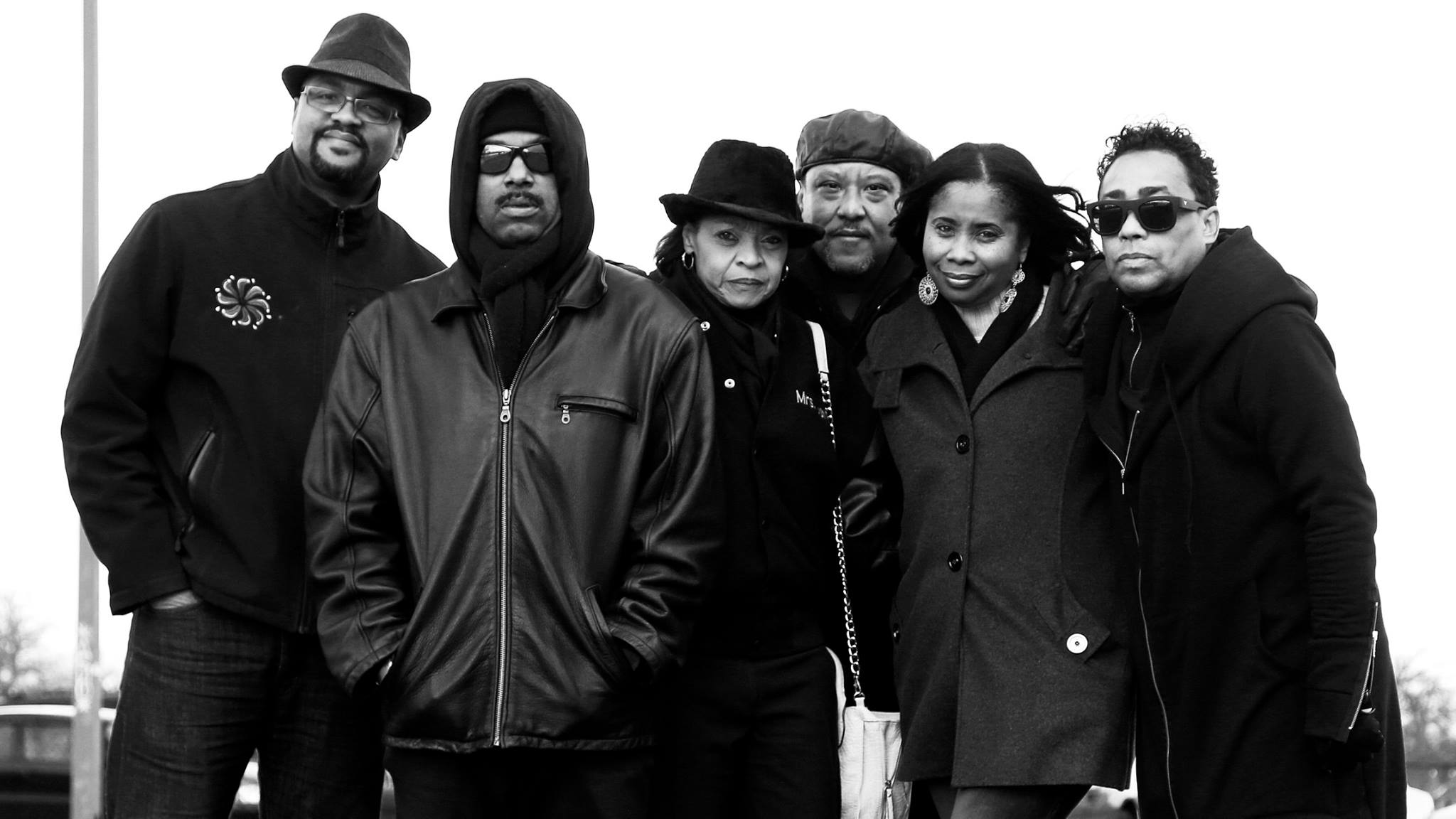
 From left: Todd Johnson, Eddie Fowlkes, Chaunceia Dunbar, Charivari co-organizers Steve Dunbar and Theresa Hill, Delano Smith.Photo: Marie Staggat

When venues like the Park Avenue Club would provide their own security, the ingenious youngsters would post them at the bottom of the stairs. Multiple floors up and directly outside the party hall, they would have their own hired guy holding things down. “[We were] mimicking what we thought ‘being grown’ was. You know, there were real clubs. I mean Studio 54 and all the New York stuff was happening then and all that. It was a group of kids being grown-ups,” Johnson explains of their motivation.

The first party Eddie Fowlkes ever attended was one such soirée at the Park Avenue Club. An all-black crowd, Charivari tended to attract kids from more affluent factions of the city. “I call it the black buppy kids. Like polo up. Extreme preppy. That was the scene,” Fowlkes recalls. It wasn’t uncommon for fathers to be judges, lawyers, or members of Motown groups. He paints for us an exuberant picture of a particularly successful backyard bash, during which the core Charivari crew wound up dancing to Devo’s “Whip It” on top of the garage, complete with plastic-tiered hats adorning their heads. “Back then, that was the beginning of blending,” he informs of those early ’80s affairs’ musical influence.

“It’s like we’re all a bunch of Peter Pans, and the party business is like Neverland.”

With Fowlkes, Johnson, and many others from Charivari’s original lineups still playing in more or less the same sandbox as they did back then, Johnson suggests, “It’s like we’re all a bunch of Peter Pans, and the party business is like Neverland. Some people never grow up…I mean look how many 60-year-old DJs are out there still [playing] for 20-year-olds. The music is timeless.”

 A scene from last year's Charivari fest.Photo: Courtesy of Todd Johnson

Having revived the Charivari name last August for a free two-day event in Detroit’s Milliken State Park, Johnson tells us, “I have something that I have always felt can exist, and I’ve never seen it and I’ve been chasing it for 30 years, 40 years now…I’m still chasing it. I’m chasing—this is gonna be sounding very corny—I’m chasing unity.” Asked whether he thinks it’s actually attainable. “Wow, I sure hope so,” he exhales, with a glimmer in his eye and a grin on his face. “It’s kind of like our unicorn.”

His admirable ambitions are evident over the course of the conversation, which leads back to discussions of how to improve Detroit’s electronic-music scene and the ways in which local DJs can capitalize on the now multi-billion-dollar dance music market. “Why are there other DJs around the world making millions of dollars, but these guys still don’t have cars?” he demands. “Some of them are still living with their moms! It doesn’t make sense to me. We created some of this stuff. But yet, we’re the lowest paid.”

Twice in the last year Johnson has organized group photographs with as many of Detroit’s DJs in one shot as he could muster. A simple and no-strings-attached effort to bring them all together, he has cultivated images as iconic as the music spawned by their subjects. “This particular culture, it’s going to be extinct if we don’t curate a little better and treat it a little better and bring more information,” he says. “I think this has to be treated like jazz and like country, everything. They really cultivate their stuff. And they treat it with reverence, shall we say. We’re not treating it with reverence. We’re treating it like this is some stupid subculture that just needs to go away.”

After more than thirty years of chasing his elusive unicorn, Johnson says he does it because he “likes the kill.” He goes on, “I like to see a plan come together. It’s all about vision to me.” Right now that vision entails 10,000 Detroiters (and visitors) dancing and celebrating together on Belle Isle over the weekend of August 1 and 2—twice as many as are estimated to have attended last year’s inaugural Charivari Detroit.

 Father Abraham at last year's Charivari fest.Photo: David Shanaman

The upcoming event boasts the most Detroit DJs ever in one place, and includes multiple “Fallout Shelter” after-parties each night. Similar to last year, it embraces both old guard local legends that have been with Charivari since the early days, like Delano Smith, Al Ester and Fowlkes, as well as newer names like Loren, Aran Daniels and Pontchartrain, and even a few out-of-towners. Free and family-friendly, it’s shaping up to be a fun-filled, no-frills weekend of the utmost electronic acoustics and, dare we say it, an opportunity for true unity in the Motor City.
Premiere: Stream Track from New Robert Logan LP

Composer and producer Robert Logan’s first album Cognessence prompted an array of rave reviews and favourable comparisons to some of the giants of electronic music. Still only 19 at the time, he was described as “…something of a prodigy… a man that is already showing a maturity and a musical/textural understanding that many simply never find.” [BBC]. A second album Inscape and a clutch of EP’s garnered yet more praise and cemented his reputation as an artist with immense talent.

Following the success of his recent Extasis EP, his first solo release in five years, Logan now returns with Flesh, his third full-length album that sees him further develop his idiosyncratic sound whilst continuing to open up new possibilities within the field of electronic music. As ever, Logan’s methodology is rooted in an obsessive desire to push the technology at his disposal to the limit – all his sounds are created from scratch or are created by deconstructing found sounds and acoustic instruments through extreme digital processes.

In advance of the album’s September 21 release date, “Phrack” can be streamed in full below.

Tracklisting:

01 Spirit Wars

02 Phrack

03 Viker Raver

04 Lenticel

05 Vespine Domain

06 Solanoid

07 Goose Chatter

08 Straighten

09 Dendrite

10 Playground

11 Photovoltaics

12 Cyborg Horn

13 Glad Centipede

14 Transfigure

Watch the Video for Disclosure’s Latest Single

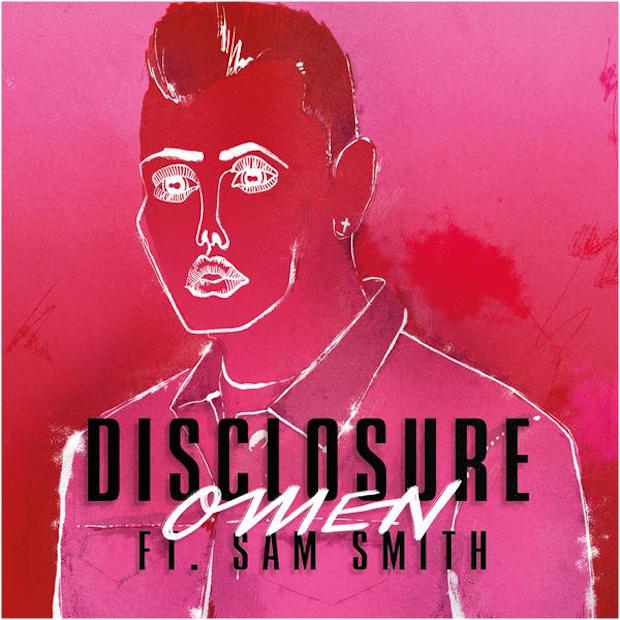
UK duo Disclosure has revealed a video for their latest single, “Omen.” Slated for release on August 21, a month ahead of the pair’s sophomore full-length Caracal, the track features vocals from Sam Smith, who first teamed up with the brothers on their 2012 breakout single “Latch.” The video for “Omen” was directed by Ryan Hope, and is said to continue the storyline introduced in Disclosure’s video for “Holding On.” Watch it below, and find more complete details of Caracelhere.

XLR8R Couldn't find the embed function for type: "vevo" and source: "<iframe src="http://cache.vevo.com/assets/html/embed.html?video=GBUV71500656&amp;autoplay=0" width="575" height="324" frameborder="0" allowfullscreen="allowfullscreen"></iframe>".

Premiere: Stream a Track From Nervous Horizon’s V/A Vol. 1

On July 27, fledging UK label Nervous Horizon will release its first various artists compilation, V/A Vol. 1.

The label puts a heavy emphasis on bass-heavy house and techno, and continuing the trend set from its debut EP, Wallwork and RZR’s Don’t Panic, all 10 tracks presented here trade in a no-nonsense approach to dancefloor-focused beats. From the stripped back, deep melodic house of Tvsi’s “Acquaflush,” to Lemonick’s wild drum workout “Crash Cove,” each track on the compilation is set to do damage on the floor.

Before the release drops next week—which will be available for purchase here—you can stream Luru’s raw and heavy steamroller “Grunge Things” in full below, along with a preview of the compilation.

XLR8R Podcast Extra: Moomin B2B Smallpeople

Hamburg, Germany’s Smallville has good reason to be excited: The beloved imprint, an offshoot of the record store of the same name, is in the midst of marking a full ten years of deep beats, surviving a decade that saw worldwide economic collapse and changes to the music business that made label life harder than ever. Of course, a few good things happened as well—for one, plenty of great house music was released, and a ton of it ended up on the little super-label. With an emphasis on dreamy, low-key, yet spacious four-to-the-floor material—and a roster that includes Move D, Benjamin Brunn, Lawrence, Christopher Rau, Thomas Melchoir and Bruno Pronsato, among many other notables—Smallville’s rarely taken a wrong turn over its long lifetime. The label will be releasing an anniversary compilation, 10 Years—Smallville Ways, in September—but why wait till then to celebrate, especially when a crew of Smallville stalwarts have bestowed such a groovy set upon us? This mix come courtesy of label founders Dionne and Julius Steinhoff, together known as Smallpeople, and Moomin, who also happens to have his second album coming out on Smallville soon—and it’s an spine-tingling beauty, needless to say. Oh, and look out for a new Smallville imprint, the aptly named Fuck Reality, coming your way soon.

[infobox title=”Downloads”]Download MP3
Download M4A (iTunes enhanced)
Subscribe to Podcast (RSS)
[/infobox]

01 Theo Parrish “Shadow Dancing”
02 Smallpeople “Unreleased’
03 Jonas Palzer “Salt Shores” (Royer remix)
04 Moomin “Room 207″
05 Laguna Ladies “Egyptian Bag” (Moomin remix)
06 Francis Inferno Orchestra “Unreleased”
07 Smallpeople & TV.Out “Unreleased”
08 Berg “Montag”
09 Osunlade “Night Of Music”
10 Mike “Oi Van Voi”
11 Groove Magnifique “De Da”
12 Christopher Rau “A People See”
13 Nick Holder “Get Away”
14 Maus & Stolle “Adore
15 Berg “Melodien”

SoundCloud Confirms Subscription Service is Coming

Eric Wahlforss, SoundCloud chief technology officer and co-founder, has confirmed plans to launch a paid subscription service on the social sound platform later this year according to Tech Times.

This announcement comes after documents were leaked last month showcasing SoundCloud’s plans to join Apple Music, Spotify and other similar music platforms with a two-tier subscription service.

In the past, SoundCloud has been criticized for not paying royalties to artists and labels accordingly.

Gossamer “3d Relief”

Evan Reiner (a.k.a. Gossamer) turned to electronic music production after attending Boston’s Berklee School of Music and, we have to say, we’re glad he did. Reiner trades in beautiful, nostalgic-tinged beat music, with a focus on field recordings and guitar work. His debut LP, Automaton, landed on the always-on-point Innovative Leisure imprint on July 10, and is a gorgeous collection of tracks driven by floating atmospherics and field recordings—from Tokyo to Pasadena’s eerie Devil’s Gate Dam. Like a drifting daydream, the LP wanders into your subconscious with a warm embrace, taking you into Reiner’s delicate world and before you know it, the LP is on its third repeat through. In support of the release, Reiner has offered up LP cut “3d Relief,” a four-and-a-half minute slice of electronics highlighting Reiner’s Asian influences. You can grab “3d Relief” for free below, with the full LP available here.

3d Relief

Hi-Five: DJ T.

Raised on disco and funk, steeped in Teutonic electronics, Germany’s Thomas Koch—better known to clubland citizens as DJ T.—is one of the founding fathers, along with the Booka Shade and M.AN.D.Y. duos, of Get Physical, the label that first came to prominence in 2002 through a series of releases that tended to focus on steely and spacious electronic house. But to some degree, Koch’s sound stood apart from his labelmates: His productions tended to add plenty of boogie and bounce into the equation, and tunes like 2003’s “Philly” sounded as good in the headphones while rollerskating down the boardwalk as the did on a dark dancefloor. Get Physical, of course, went on to be one of the millennium’s defining clubland labels, and Koch is going as strong as ever. And now, there’s this: Not only has Koch just released a splendid new EP, The Growing, on Moon Harbour, but Koch and Classic cofounder Luke Solomon (currently serving as the Defected label’s A&R guru) have put together the three-disc compilation Defected Gets Physical Mixed by DJ T. and Luke Solomon, coming out in late August. Koch mixes disc one, a selection of tracks from the Defected vaults; Solomon tackles the second disc with tunes from the Get Physical discography; and the third sees Koch and Solomon contributing eight exclusive (unmixed) edits to the comp. In the run-up to the album’s release, we tapped Koch to give us five of his favorite…well, we’ll let the man himself explain.

“The older I get and the longer I work as a DJ (currently 27 years) the more discerning my ear gets when it comes to listening to club music. In the past five years, I put more time than ever before into listening to music and digging around for new gems. In the process, I realized that I generally divide club music (all styles as well as each individual track) into two large groups; timeless music that transcends decades and short-lived trends, and what some would call fashion music. You can’t miss the styles in the latter category; they completely dominated the scene for one to two years before inevitably turning into a formula that has been copied to death, then vanishing from the scene. The type of nu deep house with its bouncing baselines and deep-pitched ’80s R&B samples suffered this fate, and new Minimal progressive house (or whatever you want to call it) that has dominated Beatport’s charts in the Deep House genre for the past 12 months is in for a similar fate. I have focused on timeless music more than ever before in the past three years, and I am increasingly losing interest in trendy fast-lived music formulas. Some of my most important roots are in ’80s Chicago and acid house, which, in part, only needed a handful of elements, but this is exactly what made it sexy and funky, there’s just no other way to achieve this. Of course, hardly anyone today produces music that sounds exactly like it did back then, but old school house and techno have never fully vanished from the scene. Countless producers draw on these styles from the ’80s and ’90s and preserve the legacy of this music. That’s exactly that I wanna tell in this Hi-Five piece: the funk of reduction, simple drum machine madness all represented by five tracks that cite the old, but are still very much a product of the here and now.”

Makam “What Ya Doin” (Dekmantel)
I’ve always liked it when tracks elude categorization. Makam is an underrated Dutch producer, a resident DJ at Trouw and a gifted DJ in general. His love of ’90s house and techno emanates from all his tracks. “What Ya Doin” is a mixture of jacking Chicago beats, New York house, and a powerful shot of R&B all combined in a way you’ve never heard before. A track that definitely polarizes the dance floor, I’ve seen all types of reactions, from total indifference to collective orgasm.

” width=”750″ height=”400″ frameborder=”0″ allowfullscreen=”allowfullscreen”>

Anthony Collins feat. Big Willy “Lie To Me” (HAKT Recordings)
What the hell was Anthony Collins riding when he produced this track? At least as far as I see it, “Lie To Me” is the complete opposite of everything the Frenchman has stood for in past years: elegant, minimal deep house. The vocalist Big Willy obviously must have had an influence here. The simple electro-funk of the piece reminds me of Detroit bass à la DJ Deeon or DJ Assault. If I had to categorize it, I’d call it minimal booty house. An obscure track on the obscure HAKT label, an enterprise of ex-DFA Records manager Justin Miller.

” width=”750″ height=”400″ frameborder=”0″ allowfullscreen=”allowfullscreen”>

Blaze “Do You Remember House” (Flashmob Edit) (unreleased)
Ever since the two Italians carved out their own sonic niche four years ago with their first two critically acclaimed releases on Get Physical, they’ve held that spot. Reduced to the bare minimum, they produce old school Roland drum-machine house—sometimes suitable for the big room, sometimes deep and dreamy. My favorite track of theirs is “Do You Remember House,” which was never released; they only gave it to DJ friends as an edit of Blaze’s track of the same name. It always goes through the roof no matter where and when I play it.

” width=”750″ height=”400″ frameborder=”0″ allowfullscreen=”allowfullscreen”>

Serge & Tyrell “Pump-o-Matic” (Clone Jack for Days)
What would the legacy of Detroit and Chicago be without all the people from the Benelux countries, who with unflagging zeal and burning reverence continue to fly the flag? One of the holy-grail epicenters is Rotterdam’s Clone—not just a label, but a store and a distribution company with a lot of related artists who all have one thing in common.: They make retro music that doesn’t just cite older music, but that strives to preserve the vibe of the past as authentically as possible. My favorite of all the sublabels is Jack for Daze, and my favorite track of theirs is “Pump-o-Matic.”

” width=”750″ height=”400″ frameborder=”0″ allowfullscreen=”allowfullscreen”>

DJ T. “Dis” (Kink (909 Tool) (Get Physical)
Although his sound doesn’t embrace any of the current formulas in music, Strahil Velchev, a.k.a. Kink, has blossomed into one of the world’s most popular live acts over the past five or six years, to give him credit where credit’s due. His creative, sporty show offers the eyes and ears exactly what most of the others are missing. Kink seems to feel the way I feel: His heart beats for both Detroit and Chicago. That’s why his productions always sound like a mixture of both. His remix of my track “Dis” is one of the hardest productions I’ve ever heard him do; it’s just total drum machine madness.

” width=”750″ height=”400″ frameborder=”0″ allowfullscreen=”allowfullscreen”>

Event Review: Mike Servito B2B Derek Plaslaiko at Fine Time

Photos By: AJ Calzada

Back to back is a term that’s become watered down over the last couple of years, mostly because promoters and DJs were using the phrase to describe the work of one man, done by two people.

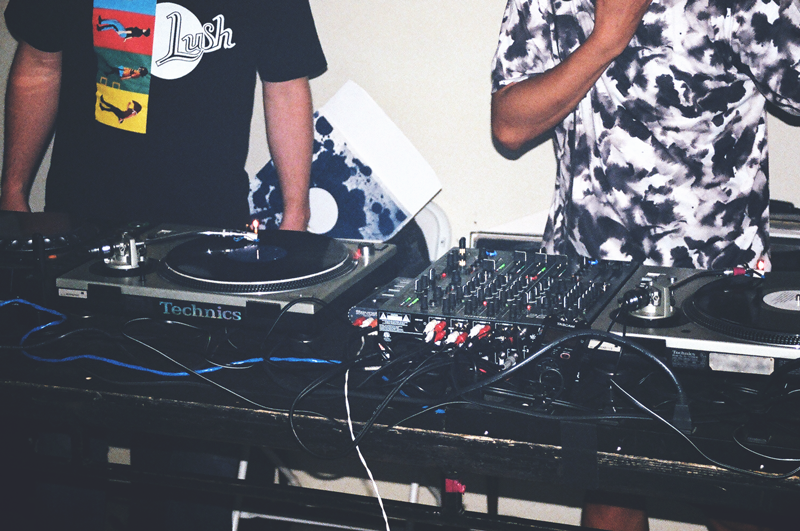
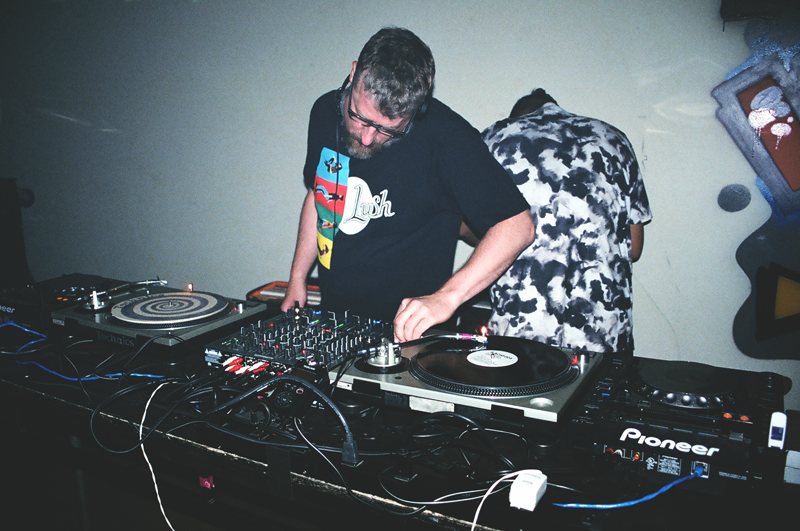
Quite often you will see these words used on party flyers that are trying to double-stack a lineup with way too many unknown names, and other times its used carelessly to describe the transitional time between two DJs who happen to be using the same setup (weird, I know.) But every now and then, when two authentic DJs who share more than a decade of friendship decide to tag-team the decks for four hours and go double-duty on mixing between acid and techno and all the weirdness in between, you know you are in for something much more than two dudes who look like they are checkin’ their emails together. If you look around hard enough, and keep your ear to the ground, you will find promoters like Fine Time who understand this concept and strive to showcase incredible DJs like Mike Servito and Derek Plaslaiko to show us how a back to back set is really handled.

 Mike Servito

Mike Servito has recently become known as the uncompromising vinyl DJ that played four major gigs in less than 48 hours in Detroit this year for Movement— including a sub-headlining slot at the festival itself and a 3 hour slot at Need I Say More with long time friend, Carlos Souffront. Mike and Derek share a long relationship that goes way back to Detroit more 10 years ago, and continues to be something very special that translates into their music when they are playing together for their home label at The Bunker New York. As for Derek Plaslaiko, he proved his marathon worthiness as a DJ years before he was immortalized on the internet by Boiler Room for his 12-hour-mostly-vinyl DJ set that he performed from his house in Berlin. These guys are no strangers to putting in work when it comes to dance floors, and they truly defended the back to back title in what some people would call a Los Angeles techno title fight.

 Fine Time

When Mike and Derek are on the decks, there are no breaks going on at the turntables. Mike is constantly checking every variable degree of the record playback process and dialing in his tracks with druggy, filtered precision. Derek is working the CDJs, cueing up channels of perfectly crafted heady techno and hammering in classic slabs of acid house. Mike is digging through his overstuffed vinyl bag, looking for his next selection with an analog cigarette in his mouth, while Derek takes another pull from his e-cig. Mix after mix after mix the records do not stop coming out of Mike’s mystery bag. Groups of newcomers are showing up to the party in swoths, and they are immediately crowding the area in front of the DJ booth, dangerously flailing themselves around to the booming bass, getting ever so close to disrupting the delicate yet volatile lifeblood of the party. Dedicated dancers begin to pray that none of these muppets bumps into a turntable. We close our eyes and continue to soak in the frequencies that are crafted from needle and groove, and we give praise to our higher powers for bringing together two DJs who are willing and able to put in the elbow grease that it takes to truly execute a back to back set.

 Derek Plaslaiko

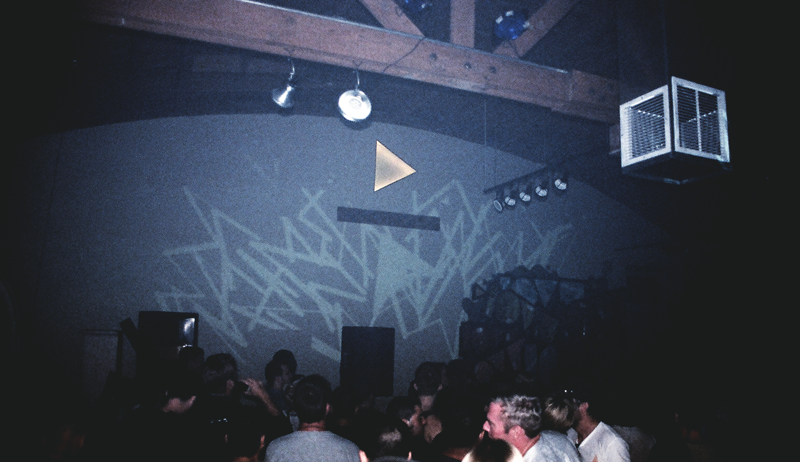
Mike Servito and Derek Plaslaiko are not two DJs doing the job of one person, but rather, they are the managers of an acid and techno disposal site and they wanna know if you punched your time card. The room continues to swell with dancers all the way to the back to the bar, and the one singular bathroom in the entire venue eventually gives way to many of the dancers hanging around out front and pissing in the streets. The night concluded with long whistles and cheers that were nearly indeciferable to my ears after almost 5 hours of hard-pounding music. People ended their nights twirling and staggering off of the dancefloor. The sidewalk out front has become littered with beer cans and cigarette butts, and the cars parked down the side streets are now covered in flyers that, when left on the windshield, say “Pull me over, it’s 4AM and I’ve been out all night.” By the time I got home at 5am, I could barely hear myself breath in complete silence, due to the state of my blissfully ringing ears. Thank you to everyone at Fine Time for putting together this night. Check out the next dates that Fine Time has lined up for us. 

Friday, July 31, with Octo OctaMASHA b2b Alison SwingChannel OneTahl K

Saturday, August 15, with Carlos Souffront, Laurel Halo, and Los Angeles local consultant Matt McDermott.

Tuesday, August 25, in Echo Park with BalmsMedia Jeweler, and mAsis.

Ed Rush & Optical Fabriclive 82

No one can question Ed Rush & Optical’s legacy in the world of drum & bass—after all, they’re the undisputed godfathers of the neurofunk buzzsaw that sliced through the scene at the turn of the millennium. By emphasizing backbeats over breakbeats, they teased out the funk hiding beneath the surface of techstep, creating a growling roll that took the genre by storm. However, one might reasonably ask why Fabric offered them a turn at their venerable live mix series, nearly 15 years after their heyday. The relentless snares of the duo’s signature Virus sound helped kick off the rinse-out arms race that pushed drum & bass over the distorted edge, alienating all but the most tweaked-out fans by the mid 2000s—and only after lumbering in hibernation for a period of years was the genre revived with a renewed emphasis on melody and songwriting. There could be an argument made for Fabriclive 82 as a nod towards nostalgia, but there is little evidence that the public at large is clamoring for such a throwback. And while there are moments of the mix that pummel you into appreciation on force of will alone, the project comes across as a reminder of past excesses that feels out of (half)step with the current direction of the sound.

There is no mistaking the ride you are in for from the moment the album begins: It’s nonstop arpeggio synth stabs and time-warped bass as far as the eye can see. This makes sense, considering the tracklist is stuffed with Ed & Rush and Optical cuts both new and old, along with a cast of producers who are their undeniable progeny: Noisia, Teebee, and Konflict, for example. Of course, on one level, the way they stick to their guns is commendable. This is their sound, and the album plays as something of a victory lap in honor of their accomplishments—and tracks like “Chubrub” and the Noisia remix of “Messiah” still pack a punch. Unfortunately, the effect is weakened over course of 39 tracks, as they grab the music by the throat right out of the gate and almost never let it breathe. An increased focus on pacing and a moment or two of cerebral escape would have benefited the album well; instead, we are left with a tale told by respected veterans, full of sound and fury, but signifying stagnation.

Page 1030 of 3781
1 1,028 1,029 1,030 1,031 1,032 3,781