Tensnake Glow

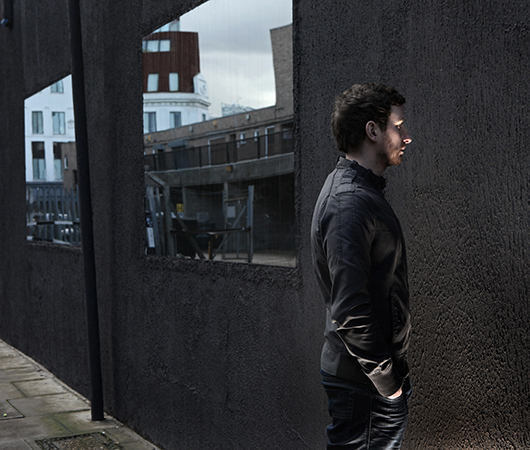
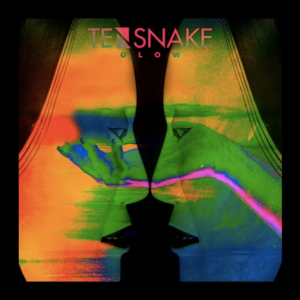
With the recent commercial success of acts like Disclosure and Duke Dumont, the lines between “underground” and “mainstream” dance music have continued to blur at an accelerated rate. At the same time, the critical tones emanating from those who wish to keep the two camps as separate as possible have only become more rash and dismissive. Glow, the debut LP from Tensnake, is bound to elicit some “gone commercial” flack, as the veteran German producer has tapped guest vocalists for more than half of the record’s cuts and moved his output to Astralwerks, a subsidiary of Universal Music Group. Still, those familiar with Tensnake’s discography are likely aware that he’s not someone who’s been afraid to dabble in the more carefree ends of house and disco, which helps Glow feel less like a blatant stab at mainstream appeal and more like a natural evolution of his sound. However, that doesn’t prevent the LP from coming off as a misfire, one where its creator’s ambition seems to have outstripped his abilities.

Glow does reaffirm one thing: Tensnake can write a hook. Virtually every cut here finds a way to burrow its way into the listener’s head, whether it’s on the back of an inviting chord progression, a sticky melody, a perfectly swung bassline, or—in some cases—all of the above. Given this, Glow is largely a solid endeavor in terms of its songwriting; Tensnake has clearly spent time studying pop structures and has done his best to meld that knowledge with his understanding of club music. In truth, there are moments on this LP where things fit together rather well—moody efforts like “See Right Through You” and “No Relief,” are standouts, as is the Nile Rodgers-featuring “Love Sublime.”

Still, for all the catchy hooks and easy melodies Glow has to offer, the record as a whole ultimately makes for an exhausting listen. Much of this comes from the fact that Tensnake pulls his LP in too many directions across its 16 tracks. From the opening, SBTRKT-reminiscent instrumental “First Song,” Glow jumps to the island disco of the aforementioned “Love Sublime,” then to the lackluster indie soul of “Pressure,” and onto “Feel of Love,” a cut which finds Tensnake, featured producer Jacques Lu Cont, and guest vocalist Jamie Lidell pulling a bit too obviously from Prince’s bag of tricks. This type of unfettered direction-changing characterizes the rest of the LP, making the album a disorienting listen, especially when the music is packaged with what is—for the most part—rather frivolous lyrical content that is hard to latch onto in any substantial way. Really, there’s just not much that sticks out above the fray (and there’s a lot of fray) during the course of Glow. The single thread that does manage to hold the record together a bit is the semi-regular presence of Fiora, who delivers vocals on four tracks, including the coyly clever and gorgeously half-timed “58 BPM,” which provides a glimmer of light during the LP’s final stretch.

For those who have been fans of Tensnake’s previous work, Glow can be particularly frustrating. Listening to the record, it is clear that the German artist has not lost any of his touch as a producer—the songs here still sound sharp and always seem to hint that something great is just around the corner; the trouble is, we never quite get there. In the end, there is little in the way of personality on Glow, as Tensnake’s artistic voice has been lost beneath the bevy of guests and his eagerness to show that he can adeptly craft a variety of dance-pop hybrids. While there very well could be a single or two from this record that eventually does break through to join the current wave of club crossover hits, Glow, as an album, does not live up to its promise, regardless of whether it’s evaluated in “mainstream” or “underground” terms.

Artist Tips – Max Cooper Details Five Ways to Focus Your Artistic Vision and Tighten Up Your Productions

Max Cooper is a quiet artist. While some producers garner acclaim that’s based as much on their personas as their tunes, Cooper has been content to hone his craft and steadily build a following by issuing a stream of cinematic, glitch-infused creations. In recent years, his output has occasionally been lumped in with that of the “bass music” crowd, but the UK producer’s reach extends much further than that, and his freshly released debut LP, Human, is even prompting comparisons to the likes of Jon Hopkins and Pantha du Prince. Of course, some of these similarities can be traced to the fact that, much like those revered artists, Cooper is someone who more or less lives in the studio. His productions are precise, mutilayered, and full of nuance, which makes him an excellent candidate for our Artist Tips series. When asked to share a bit of his knowledge, he chose to focus on maintaining clarity, both of artistic vision and sound itself.

Beware of the wild goose chase.

The electronic music scene now is an amazing thing—new genres, fashions, fads, and ideas are constantly evolving, blowing up, disappearing, and being reinvented in shorter than ever timeframes. It’s an exciting thing to get involved with, but there are also dangers—people blow up one month, and seem to disappear another, with music being treated like some sort of disposable item.

If your sole aim is to DJ in packed clubs, then making the most fashionable music is a logical thing to do, but with some scenes coming and going so quickly, too tight an association with a particular scene can mean a career is short lived. Or even worse, you can get stuck with a long career making one type of music that you don’t even really like!

People seem to have such strong opinions on what music is great and what is crap too, without much consideration for the fact that music is something subjective—if you like it, it’s good to you, whether or not someone else agrees. So if you’re trying to follow what is fashionable and what people think, you can easily end up on a bit of wild goose chase, losing sight of what is important and what might actually generate meaning and longevity musically. What do you actually like? What really makes you feel something? What makes you want to dance? What makes you want to throw up? What makes you passionate about music? If you can identify those things and work with them, I think it gives the best chance of making something special.

Fill the frequency range.

Most people want their tracks to be loud and fat, and compression is a standard answer. But a lot of my older tracks have no standard compression, just a small amount of limiting (a particular form of compression that won’t let the signal past a particular dB value) on the master channel, and a frequent use of sidechain compression in a subtle manner to make one sound duck around another. When you have the right choice and design of elements, a track can be punchy and loud without needing much normal compression. I do often compress the drum or hat bus now and rogue elements like field recordings which aren’t possible to tame otherwise, but the old pains of how to get tracks loud enough has disappeared with the learning of what sorts of sounds will combine to fill the frequency range, how to shape and layer sounds properly (such as by adding short click versions of synths at higher octaves to increase their cutting through the mix), use of sidechain compression for clearing space for any punchy sounds, and by the frequent use of subtle saturation/distortion on individual elements to boost overtones and fill the range further without noticeably changing their character.

Probably the most common issue with demo tracks I receive is that the sounds chosen don’t cover the frequency range (from around 30/40Hz up to around 20KHz) properly, but that’s also because it’s a very hard thing to get right. It just takes a lot of listening and analysis time to get your ears tuned in properly to be able to spot what might be missing and how to choose the right sounds. But you can certainly aid the process by A/Bing your mixes compared to other tracks you like, and looking at both mixes in a spectral analyzer to see if you can spot any differences.

Sort out your bass troubles.

We hear music on a logarithmic scale, with bass frequencies separated by 10s of Hz, mids separated by 100s, and highs separated by 1000s, roughly speaking. That may be part of the reason why bass needs such careful attention, as there’s less bandwidth for separate elements to sit in, and we can really hear when things are interfering with one another—the bass elements need to be clean and simple. Obviously, a lot of work goes into bass elements, but a lot of the character you can hear in different tracks is more a result of the higher bass and mid frequencies giving basslines their timbre—the low frequencies alone are usually simple.

I’m probably one of the worst offenders for trying to cram too much information into my bass frequencies, and with the wrong system or acoustics, I’ve made some pretty weird noise in the past. There are a few things you can watch out for. Firstly, again, coverage of the frequency range is important, starting from around 30/40Hz at the lowest. It’s handy to have your kick and bass elements creating a few peaks up to around 200Hz—often you can layer a duplicate octave up of a bassline without much of a noticeable change in character to fill a higher peak if needed. Or, if the fundamental frequency is too high, pitch the bassline down an octave. It’s very useful to check your bass peaks in a spectral analyzer, and compare to other tracks too, particularly ones you think sound great on club systems, to see how they’ve set up the relative loudness of each bass peak and where they sit.

Anything which regularly sweeps the bass frequency range is very handy, as it’s bound to hit the sweet spot for any venue. That’s why all of that sweeping bassline techno always sounds fat, even if you don’t like it. If you look at a kick, most have a range of frequencies across their short timespan too, which is the same reason why kicks come through on all systems so well and are so fundamental to standard dance music. Sidechaining bass elements to one another is a useful way of clarifying each element, and there’s no need to make it noticeably pump. I like the fast-release sidechaining, which forms a tight pocket around each hit and just adds a lot of punch without much of a noticeable change to the element being compressed. You should hi-pass filter every element in your track which isn’t specifically a bass element; this will tidy up any stray lows that you hadn’t noticed, and ensure you’ve got a low end to work with that’s as simple as you want. And of course, separating different bass hits in either time or frequency is a basic way of ensuring clarity down there.

Be brutal.

Sometimes I sit there for ages working on a particular melody or synth patch, eventually landing on something I think is good. I carry on with the track for more hours, days, or weeks, but I often get this little niggling feeling in the back of my mind that something isn’t quite right with the element, or maybe even the whole track. That usually means it’s crap, and it needs to be thrown out. But after working on something for a long time, it can get very hard to do that, and somehow, the time investment starts to cloud over the quality assessment. It’s not easy to do, but no matter how long you’ve worked on something, you have to be prepared to throw it away and start fresh. I find that when something is really right, it keeps feeling really right, and you have to fight for that if you want to keep the quality up.

A big part of the problem is that after listening to the same loop for 50 hours or something, you sort of go a bit mad, and having any type of good objective judgement goes out the window. That’s why I have to rely on these little subconscious thoughts giving me an inkling that something isn’t quite right, as all of my conscious thoughts are long gone into the infinite, loop-induced stupidity. Leaving a track for a few days and coming back to it usually helps a lot, but of course, sometimes you have to get something done sooner than that.

I know that some people take a view that if something isn’t feeling totally right and flowing and all coming together seemingly without effort (usually the signs of a good piece of music), then they just bin it. But personally, I find that good pieces can come from a hard grind as well, leading to my next point.

Persevere like an infinite monkey.

If you have a strong opinion on what music you do and don’t like (and most people do), then you can ignore all the points above, because perseverance is the only other thing you need to make good tracks. All you need to do is sit at your computer, randomly changing things in your DAW until the hit tune comes about by chance. It might take a few decades, but in practice, after the first few weeks and months, you start to learn how to make shortcuts. The important point is, getting to any decent standard of writing/producing music takes fucking ages, and you have to put in the time—unless you’ve got a load of spare cash to pay ghostwriters and engineers, but where’s the fun in that?

Rigas Den Andre “No Sense of Feeling”

From his recently released Ephedrine Skies LP for Ausland, Rigas Den Andre has shared floaty cut “No Sense of Feeling,” an aptly titled track which offers a curiously spacey aesthetic that is as pleasantly airy as it is unsettling. Opening up with a piercing and somewhat ominous shriek, Rigas Den Andre’s tune gradually transitions into a slow-moving and uplifting synth melody. Blips of bizarre UFO-like sounds and dark synth chords appear throughout “No Sense of Feeling”‘s steady course, giving the production a unique range of textures.

No Sense Of Feeling

Watch the Video for Clark’s “Riff Through the Fog”

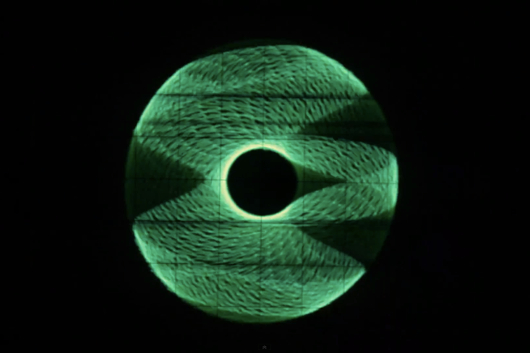
Time-tested Warp affiliate and one-time XLR8R podcast contributor Clark has today released his “Superscope” b/w “Riff Through the Fog” single. To mark the occasion, a video for the new single‘s b-side cut has surfaced. In many ways mirroring the recent piece for “Superscope,” the visual accompaniment for “Riff Through the Fog” focuses on a single oscilloscope, which the video’s directors, Vincent Oliver and Steven Bliss, manipulate in time with Clark’s detailed and beat-focused production to create another simple, mesmerizing video.

The Lowdown – This Week’s XLR8R Top 10 with Untold, Tycho, Jam City, and More

Throughout the week, a whole lot of material gets posted here on XLR8R. And while we know—and love—that some hardcore readers will eagerly pour over every single news story, interview, podcast, video, and MP3 download that appears on the site, we also realize that for most people, it’s impossible to see everything, which means that some quality XLR8R content is likely to get missed in the hustle and bustle of everyone’s daily lives. In the interest of making it easier for everyone to catch up, every Friday we present The Lowdown, a weekly wrap-up of the top 10 tidbits from our site.

1. Fresh off the release of his new LP, Untold (pictured above) shared five essential modular synth components from his new live set-up.

2. South African-born, Berlin-based artist Portable put together a rich, full-bodied mix of house and techno for this week’s XLR8R podcast.

3. Another DJ Koze remix 12″ will soon be released, this one with reworks from Robag Wruhme and Roman Flugel.

4. Tensnake will be releasing his debut LP, Glow, next week, but a stream of the full album surfaced online this week.

5. Experimental Brooklyn producer Fatima Al Qadiri unveiled all of the details surrounding her forthcoming debut album for Hyperdub.

6. Veteran producer and noted studio wizard Matthew Herbert put together a half-hour radio segment for the BBC in which he explored the art and science of the loop.

7. Awake, the much-anticipated new album from Tycho, is due to arrive on March 18, but a full stream of the LP appeared online this week.

8. Knowing that he had grown up in Washington, DC, we asked LA producer P. Morris to dig into his past and select his favorite go-go tunes for our latest Hi-Five feature.

9. London artist and Swamp81 affiliate Mickey Pearce dropped a free beat tape.

10. Night Slugs standout Jam City issued Earthly II, the latest installment of his own mix series.

An expanded version of the The Lowdown is also available via a weekly email newsletter. Those interested in an even more in-depth round-up of XLR8R content, including a complete listing of all the free downloads we’ve offered in the past seven days, should sign up by entering their email address below.

Subscribe to the XLR8R Lowdown

Listen to Bodhi’s New Single for Ten Thousand Yen

Announced early last month, the next EP by rising Cardiff duo Bodhi, I Need You, is just over a week away from dropping via Doc Daneeka’s Ten Thousand Yen label. And to whet our appetites in the meantime, DJ/producers Luke Welsby and Olly Howells have unveiled a full stream of the record’s title track. “I Need You” is an atmospheric and soulful house jam that fully represents the kind of tastefully buoyant, lovingly produced dancefloor music Bodhi’s upcoming three-track record will offer when it drops on March 17. Ahead of its release, “I Need You” can be streamed in full below.

APEX Tour to Debut in North America with Magda, Maya Jane Coles, Maceo Plex, Dixon, Joy Orbison, James Holden, and More

Next month, a new tour is set to tackle North America, with an all-star assemblage of DJs in tow. Dubbed APEX, the 10-city jaunt will feature a rotating roster of DJs, including Magda (pictured above), Maya Jane Coles, Maceo Plex, Joy Orbison, James Holden, Michael Mayer, Danny Daze, Justin Martin, Tale of Us, and several others. The tour is being put together by San Francisco-based booking agency Liason Artists and Toronto promoter Embrace; the latter has been responsible for numerous large-scale EDM events and tours, including series like the Mad Decent Block Party. APEX, however, is designed to be a more mature, DJ-centric experience. In an article on Billboard, Embrace’s Adam Gill says, “EDM draws a younger crowd and I think as the EDM fans get older and explore dance music more, some of them will gravitate to APEX. There is big demand from music fans to see artists in venues that aren’t traditional clubs.” With promises of “fluid, unstructured set times offering DJs considerable freedom and fans an opportunity to experience something unique,” it appears that APEX will attempt to bring something resembling a more authentic and/or underground DJ experience to a more mainstream crowd. Tickets are on sale now via Resident Advisor, and the complete rundown of APEX shows is below.

April 12 – Chicago (Lacuna Loft)
Maceo Plex, Dixon

April 19 – Vancouver (Electric Owl)
Thugfucker, DJ Tennis

April 24 – Toronto (Hoxton)
Magda, James Holden

April 25 – Montreal (Telus/Stereo)
Maya Jane Coles, Magda, James Holden

April 26 – Denver (Gothic Theater)
Maya Jane Coles, Magda

May 2 – Brooklyn (Verboten TBA)
Justin Martin, Catz n Dogz, Kill Frenzy, Harvard Bass

May 8 – Seattle (Q)
Justin Martin, Danny Daze

May 9 – Los Angeles (Lot 613)
Tale of Us, Joy Orbison, Blond:ish, Danny Daze, special guest

May 10 – San Francisco (525 Harrison)
Tale of Us, Joy Orbison, Thugfucker, Blond:ish

May 16 – Miami (Treehouse)
Michael Mayer, Danny Daze

Watch Goth-Trad Make a Beat with Ableton Live

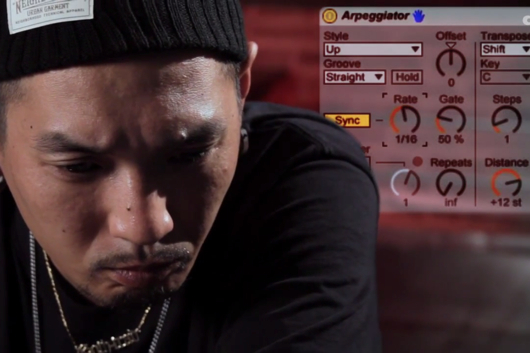
In a new video from Dubspot, Japanese dubstep specialist Goth-Trad builds a new track piece-by-piece in Ableton Live, and we get to watch it all happen in real time. The wordless clip finds the veteran artist staring intently at his computer screen as he builds textures, programs drum patterns, and conjures up deep-reaching low end, using Ableton Live, Native Instruments’ Battery, Spectrasonics Stylus RMX, and a few other digital tools in the process. In an excellent use of visual FX, the sections of the computer screen that Goth-Trad works in are superimposed onto the video, allowing us to see the man at work while also seeing exactly what he is working on. Dubspot’s new piece can be watched in full below.

SFV Acid Details Sophomore LP, Streams New Single

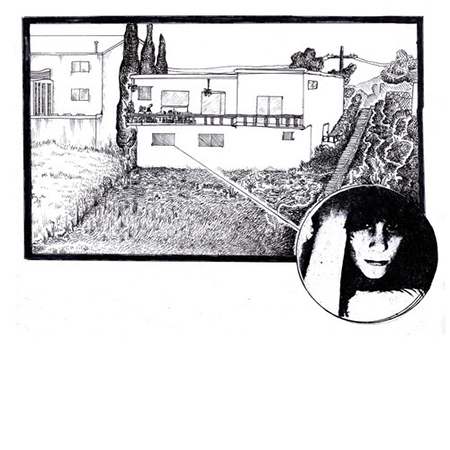
Oddball LA producer SFV Acid (a.k.a. Zane Reynolds) has sent over the details of his sophomore LP for UNO, titled Amber’s Songs. Following a year after his 2013 debut album The Dwell, Reynolds’ next record features 10 tracks which delve into the softer realms of his production work, having been created in the week following a breakup. Named after Reynold’s former lover, Amber’s Songs is said to be “proof that love with someone is a bad excuse for not wanting to feel alone.”

Our first taste of the album comes from “Cheddar Mercedes,” a minimal tune topped with bubbly synths and relaxing drum breaks that stands as one of the few “high tension” tracks from Amber’s Songs. Before SFV Acid’s next LP drops on April 25, its lead single and tracklist can be found below.

01. Fage Kisses
02. Cheddar Mercedes
03. Pink iPhone
04. Dirty Martini
05. Art & Drawings
06. Bejeweled iMac
07. Vanilla Musk
08. Video Journeys
09. Pillows
10. And No Stress

RUMTUM “Floating Into”

Denver-based producer RUMTUM (a.k.a. John Hastings) has given us the premiere of his new “Floating Into” single for the beat-focused 1320 label. Hastings’ airy tune features the same kind of effervescent, dream-like quality pushed by artists like Teebs, a vibe which is interspersed with the occasional funk-laced guitar riff. RUMTUM glides through his therapeutic soundscape as bursts of calculated clicks intertwine with the spiraling hum of a natural ambiance, coasting on a laidback beat that effectively validates “Floating Into”‘s implication of a weightless journey.

Floating Into

Floating Into

Page 1407 of 3781
1 1,405 1,406 1,407 1,408 1,409 3,781