Just before we all turn the calendar to 2014, electronic-minded online music shop Bleep will release its annunal Top 100 Tracks compilation, pulling together what the Bleep staff has deemed the best 100 tracks to surface this year. (That full compilation, along with a vinyl copy of Oneohtrix Point Never’s spellbinding R Plus Seven LP, is up for grabs in this week’s contest.) But before Bleep’s comprehensive end-of-the-year collection officially lands on Christmas day, we are pleased to announce which artists have made the grade.
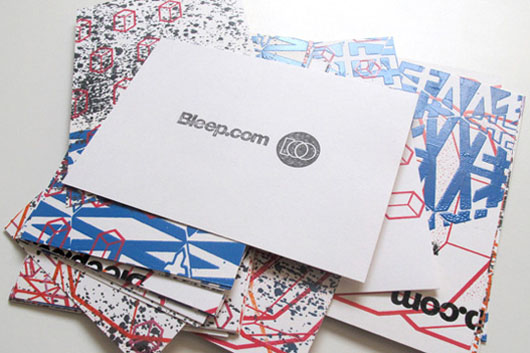
Below, the 100 artists who will be featured on the upcoming compilation are listed in alphabetical order, including notable names such as Four Tet, Boards of Canada, Clark, Sampha, Tim Hecker, and Sophie (the producer behind our favorite track of 2013), among others. Bleep’s full list of featured artists can be perused below, and for those who don’t win the online outlet’s Top 100 Tracks of 2013 bundle in the contest mentioned above, the whole set can be grabbed with its handmade, limited-edition artwork for $45.00 starting this Christmas.
Agoria Ancient Methods Atom TM Autechre Beautiful Swimmers Boards of Canada Clark Connan Mockasin Darkside Darkstar Deerhunter Demdike Stare Dense & Pika Diamond Version Dirg Gerner DJ Rashad Doc Daneeka Donato Dozzy Ducktails Factory Floor Falty DL FKA Twigs Floorplan (Robert Hood) Forest Swords Four Tet Fuck Buttons Function High Water Holden J. Tijn Jackson And His Computer Band Jacques Greene Jaisu Jessy Lanza John Roberts John Wizards Jon Hopkins Julia Holter Julia Kent Julianna Barwick Karen Gwyer Katie Gately Kelela KMFH (Kyle Hall) Lilacs & Champagne Lone Machinedrum Majical Cloudz Mala Mark Pritchard Meatbingo Mika Vainio Moin (Raime) Mount Kimbie Mu-Ziq New York Transit Authority Nightmares on Wax Objekt Olsen Om Unit Omar Souleyman Oneohtrix Point Never Palm / | Highway Chase Pangaea patten Peaking Lights Peverelist & Kowton Queens Rabih Beaini Raspberry Bulbs Raudive Recondite Ron Morelli Sampha Seams senking Sensate Focus Shit And Shine Si Begg SOPHIE Sparky Special Request The Asphodells (Andrew Weatherall & Timothy J Fairplay) The Durian Brothers & Ensemble Skalectrik The Haxan Cloak The Last Skeptik The Listening Center The National The Stranger These New Puritans Thundercat Tim Hecker Unicorn Hard-On Vatican Shadow Volcano Choir Walton William Onyeabor Wolf Eyes Young Echo Zed Bias
For the past few weeks, XLR8R has devoted itself to highlighting the Best of 2013, and although we’re not done yet—our favorite releases of the year will be posted on Thursday and Friday, with the results of our Readers Poll to follow on Monday—all of our year-end listmaking has also reminded us that not everything which landed on our desks in 2013 was as good as we hoped it would be. While it’s obvious that many, if not most, of the releases sent our way weren’t going to be particularly memorable, let alone good, a handful of records fell notably short of our expectations. The reasons were many; sometimes, it was a matter of an established artist taking an ill-advised stylistic detour; other times, we were disenchanted when a budding talent fell flat in the album format or someone simply didn’t bring their A-game to the table. Regardless of why, these 10 releases all stuck with us; more importantly, they left us thinking that they could have, and should have, been better.
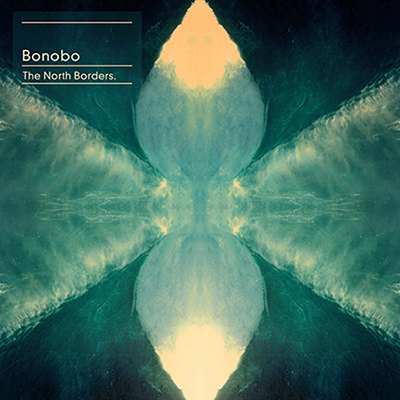
10. Bonobo The North Borders (Ninja Tune) Most people occasionally crave a nice, unobtrusive record that works best in the background, but there is a point where an album goes from being quietly amiable to borderline obsequious. For Bonobo‘s The North Borders LP, his fifth full-length album, that point was approached when the producer born Simon Green turned his soft-focus jazz inclinations into an affection for loungy chillout music. Sure, the record isn’t without a highlight or two (some of the beat-heavy instrumentals are even pleasantly reminiscent of Brainfeeder’s young artists), but the majority of its tracks are proof that Bonobo seems to only grow more tepid with time. So even though Green may not be releasing offensively bad music per se, we’re not entirely sure how a record this safe and patently bland could be so widely popular. James Eaton
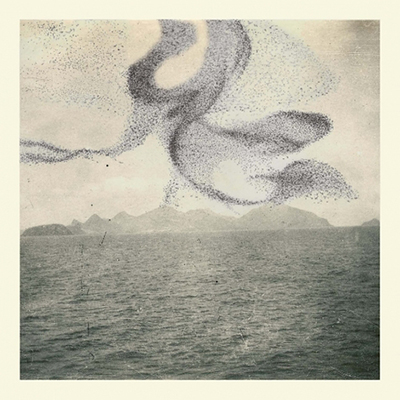
9. Snow Ghosts A Small Murmuration (Houndstooth) Though he’s been producing for many years, Ross Tones first “broke” in 2011 and 2012 with a string of releases as Throwing Snow that largely focused on melodically tinged, mood-filtered UK bass and house. In contrast, 2013 often found Tones lending his talents to a number of diverse electronic projects, both solo and collaborative. Considering his prolific nature and his work’s increasingly divergent path, it’s not so surprising that one venture in particular missed the mark. Snow Ghosts, Tones’ collaborative effort with vocalist Augustus Ghost, was that misstep, and the pair’s debut album, A Small Murmuration, was one of the only blemishes on the generally stellar run that the Houndstooth label put together in its first year. (After all, the London outpost still managed to land at the top of our Best Labels of 2013 list.) A Small Murmuration isn’t a terrible record, but it nonetheless stuck out as one of the more misshapen endeavors to appear on the XLR8R radar in 2013, as its overwrought productions and theatrical vocal performances (featuring lyrics unafraid to discuss topics such as secret gardens, murder cries, and the hunter becoming the hunted) yielded an awkwardly overdramatic LP that was best avoided. Glenn Jackson
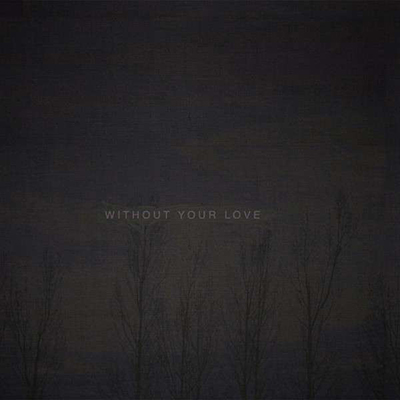
8. oOoOO Without Your Love (Nihjgt Feelings) San Francisco producer oOoOO has spent much of his career doing his best to evade being lazily assigned the “witch house” tag while still existing within a murky world of streetwise, goth-streaked production. To his credit, the former Tri Angle affiliate triumphantly managed to do so on his first two EPs, helping to make the case that with some ingenuity, the combination of refracted hip-hop tropes and ghostly soundscapes could be pushed well beyond its initial fad status. But with his debut LP, Without Your Love, oOoOO hit a speed bump of sorts, delivering a full-length that simply reorganized his past ideas instead of building on them. Moreover, it’s a record that feels especially clumsy when it attempts to incorporate fuller vocal performances or faintly dip its toes into more experimental waters. For a producer who had previously been able to confidently move forward—even as he was being lumped in with an unimaginative and overcrowded crop of artists—Without Your Love inexplicably finds oOoOO laboriously spinning his wheels. James Eaton
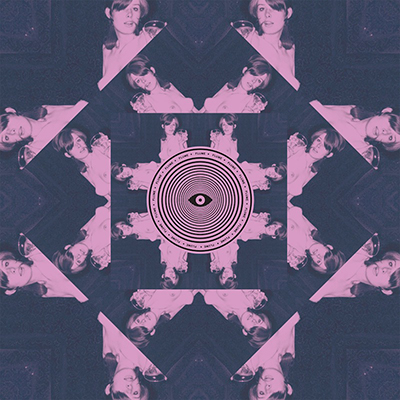
7. Flume Flume (Future Classic/Mom + Pop) It may be a bit much to say that we were disappointed in the self-titled debut album by Australian beatmaker Flume, especially since we’d really only heard a track or two from the guy back in 2011 before his LP made him the new posterchild for pop-sensible EDM. What we should probably say is that Flume was more frustrating than anything else. Young artist Harley Streten is undoubtedly talented when it comes to production and songwriting, but he uses those skills as much for evil as he does good. Though the album contains gauzy and likable tunes like “Sleepless” and “Change,” listeners also have to contend with insufferable beat-pop cuts (such as party-rap anthem “On Top”), Aussie singer Chet Faker’s alt-rock slurring (“Left Alone”), and bouts of twee electronica (“Bring You Down”). Flume may not have explicitly disappointed us in 2013, but the current path towards MTV2-friendly sounds he seems to be traveling doesn’t bode well for the integrity of his musical future. Patric Fallon
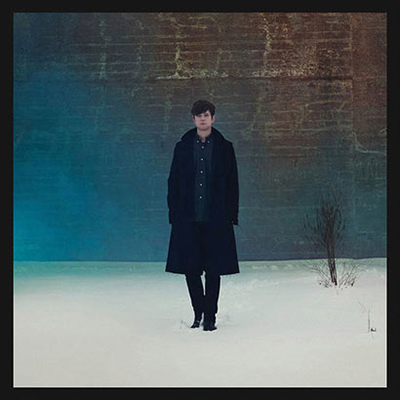
6. James Blake Overgrown (Republic) Over the last few years, James Blake has elected to move beyond his roots in dancefloor production, and that crossover into the world of murky, electronic-tinged singer/songwriter fare has brought him far more commercial success than his work for R&S and Hessle ever did. Still, our beef with Overgrown, Blake’s sophomore full-length, has less to do with his decision to continue moving beyond his post-dubstep past, and more to do with the fact that even after hearing two albums’ worth of material in this vein, we still are not convinced that Blake knows exactly what he’s doing in this new territory. Surely, the man has some obvious talents that cannot be denied—mainly, his knack for sinking, gospel-like chord progressions and his uniquely smoky vocal abilities—but on Overgrown, these facets struggle to culminate into substantial musical moments. At times, one can hear that Blake is tinkering around with some interesting and melodically rich ideas, but on songs like the Brian Eno-featuring “Digital Lion,” the slinking “Life Round Here,” and “Voyeur” (an effort somewhat reminiscent of the Blake’s earlier production habits), the album feels stagnant, unable to push beyond its initial creative spark and present a wholly engaging piece of work. Overgrown does have a few bright moments (although RZA’s appearance on “Take a Fall for Me” is most definitely not one of them), but on the whole, the album makes for a rather shaky and lifeless collection of downtrodden electronic hybrids. Glenn Jackson
5. Close Getting Closer (!K7) In retrospect, it might have been better for Will Saul if his Close project had remained anonymous. After all, if he hadn’t announced that he was the masked producer behind Getting Closer, it would have been hard to guess. But that’s a part of the problem, as the LP dispenses with much of the spirit that has informed his well-curated Aus and Simple imprints. Rather than continuing with the underground UK house and techno that he built his name on, the album finds Saul embracing a more populist, vocal-oriented approach that feels awfully thin in comparison. Derek Opperman
4. Skream “Rollercoaster” (Rinse) Skream‘s transition from dubstep kingpin to disco enthusiast has certainly concerned many of those who once looked to him as a cornerstone of one of the UK’s most formative sounds. To his credit though, Skream’s initial movements in this new direction signaled that perhaps the doubters were wrong; his remix of Duke Dumont’s “Need U” was at the very least unoffensive, and his various disco-minded DJ sets that surfaced throughout the year showed him to be an artist with more than just a surface-level appreciation for the sound. Ultimately though, those promising efforts would only make “Rollercoaster,” his first official “disco single,” all the more confounding. On paper, it hits the neo-disco checklist pretty squarely—there are catchy guitar licks, gushing chords, a playful bassline, and a half-robot vocal performance from Sam Frank that hits on a number of the requisite dance-party phrases, including calls to shake booties, throw hands up in the air, and party until the morning light. The song is undoubtedly light-hearted, almost jokingly so (check the closing guitar solo for proof), but it’s also hopelessly unimaginative, trotting down a well-beaten path in terms of pop-aimed dance music. Lacking any real substantial hook, “Rollercoaster” made for a rather unremarkable blip in the overpopulated field of rehashed disco ideas. Glenn Jackson
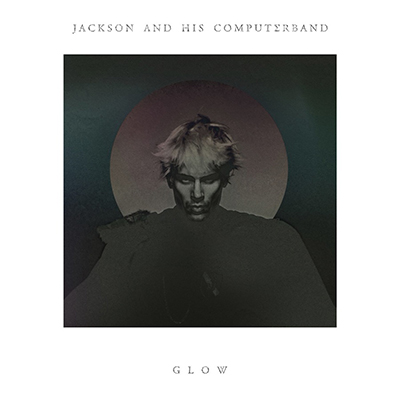
3. Jackson and His Computerband Glow (Warp) 2013 might as well be deemed The Year of the Comeback, as a surprising number of beloved artists crawled out of long hibernations to unleash brand-new studio albums onto their adoring audiences. And though his return to the music world wasn’t as highly anticipated or widely publicized as, say, that of Daft Punk or The Knife, French producer Jackson Fourgeaud, the mastermind of Jackson and His Computerband, undoubtedly had a fair number of lingering fans who were enamored with his decidedly forward-thinking and impeccably produced Smash LP when Warp released it back in 2005. Unfortunately, after Glow dropped eight years later, his comeback turned out to be more of a slap in the face for anyone hoping to hear even a semblance of the Parisian’s debut.
Like many of his fellow artists returning from long hiatuses, Fourgeaud took the opportunity to give his musical identity a complete overhaul. The painstakingly detailed, hyperreal beats and funky irreverence that had initially made Jackson and His Computerband such a fun project were nowhere to be found on Glow, and in their place, some kind of “futuristic” tribute to classic rock and alt-radio anthems was instated, a move which we can only describe as being terribly misguided. It’s nothing short of laborious to suffer through the overwrought Britpop aberrations which comprise the album’s hour-plus runtime. Opening track “Blow” basks in its computer-processed psychedelia and sugar-free-bubblegum hooks, while singles like “Dead Living Things” and “G.I. Jane” seem hell bent on competing for the Most Obnoxiously Kitsch award (though the latter definitely wins Worst Cover Art of 2013). We could spend quite a long time listing all of Glow‘s shortcomings, but perhaps it’s more effective to simply say that Fourgeaud’s sophomore album was a massive failure. Patric Fallon
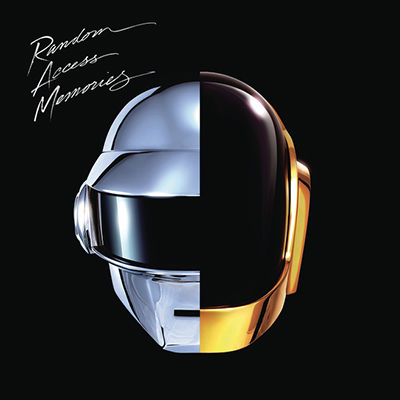
2. Daft Punk Random Access Memories (Columbia) The hulking beast that was the Random Access Memories marketing campaign will undoubtedly be talked about for years to come. After years of percolating, the hype culminated in a torrent of advertising across all forms of media—including billboards, SNL TV spots, and even a teaser video at Coachella—that made it seem like Daft Punk was everywhere at once. The genius of this Michael Bay-sized production though, was that there was almost no focus on the lackluster music. A single 15-second clip that could’ve evolved in any number of ways was ultimately just a preview of the vaguely summery “Get Lucky,” a disco-riffing pop tune that would eventually be burned into our collective psyche via ad nauseam play on mainstream radio. There’s little question that Random Access Memories marked a major change in direction from the robotic French duo, something that was sorely needed, especially when one considers that pretty much all of the pair’s original output since Discovery, which came out in 2001(!), has been forgettable. Still, even with its litany of all-star collaborators and much-discussed focus on “real” music, no amount of media saturation could conceal the fact that Random Access Memories was in reality a pretty dull record. Zach Gunsel
1. Zomby With Love (4AD) It’s not hard to pinpoint what went wrong on Zomby‘s With Love—it’s editing. That might seem like a strange statement considering that many of of the double LP’s songs clock in at less than three minutes. Despite this, there’s no escaping the fact that the album is a meandering, 33-track exploration which strives to use brief, Aphex Twin-like sketches to draw a connection between the spastic bombast of UK jungle and the gangster shuffle of American trap. It’s an artistic premise that Zomby almost realizes on the LP’s first disc, which finds the UK producer hurtling through genre at rapid pace: he begins with 2-step wood blocks and soul vocals (“If I Will”), slips into Where Were You in ’92-style hardcore (It’s Time” and “Overdose”), and later reveals his hand by augmenting hoover stabs with strutting hi-hats and marching snares (“Orion”). Where it all gets wearing is on With Love‘s second disc. Although Zomby’s trap experiments had previously been introduced within the context of his work, he focuses on the genre almost exclusively here, with what feels like an endless procession of half-baked attempts to capitalize on a trending sound. Tracks like “Entropy Sketch,” “Glass Ocean,” and “How to Ascend” all pass by forgettably. They have the right sonic elements, but their lack of structure makes the music seem devoid of emotional investment and feeling. It’s a much too long and totally disposable end to a record that at the very least had an interesting, if not entirely unique, premise. Considering the visionary work Zomby has done in the past, we expected a lot more. Derek Opperman
XLR8R’s Best of 2013 coverage will continue through the end of this week, so check back each day for additional year-end round-ups. In the meantime, don’t forget to take a look at the other Best of 2013 pieces we’ve posted already:
Signed to the young GetMe! label, Manchester-based producer Pále is a budding talent whose Playing Truant EP from earlier this year saw him collaborate with vocalist Joshua Idehen (possibly best known for his work on LV‘s Routes LP for Hyperdub). Left off of that release is a hazy collaborative cut with Idehen called “Let Them Talk,” a production which rides an ambient burst into thick kicks and circulating ride cymbals to build up its dusty and emotive sound palette. Plaintive piano lines, a funk-laden bass groove, and chiming synths phase and weave together as the track escalates its soothing finish.
Osaka-born artist Kouhei Matsunaga has been releasing experimental electronic music for nearly two decades under various aliases, many of them using some variant of the initials for Japan’s public broadcasting organization, NHK. As NHK’Koyxen, he seeks to deconstruct techno with his own perverse logic. Following a similar mission statement as its previous volumes, Dance Classics Vol. III rarely sits still, instead shifting through as many permutations of techno as Matsunaga sees fit.
Opener “629” employs synth stabs, analog gurgles, and other odd fragments in a seemingly random assortment that eventually converges into a coherent rhythm. This segues into “501,” a slightly awry, trip-hop-evoking cut whose glinting synth loops play atop a sturdy 4/4 cadence but never really settle into the groove. Similarly structured is LP standout “768,” which harnesses panned, insect-like buzzes and a flat, analog drum pattern that swells into an acid-techno refrain, spontaneously gliding up and down the notes like a finger tracing a piano. As Dance Classics Vol. III continues, it becomes increasingly apparent that the album’s cuts are all volatile, challenging shapes. Improvisationally performed, the songs skirt accessibility only to subvert it, like someone repeatedly setting a table and then pulling the tablecloth away, along with the place settings. And though the styles on the record do vary—there are forays into redlining hardcore techno, stark drum frenzies, sleek minimalism, and more—NHK’Koyxen’s methodology stays consistent throughout.
Despite this consistency, Dance Classics Vol. III still sees Matsunaga using a slew of evasive maneuvers to avoid predictability, including polyrhythms, the aforementioned glide effect, bouts of glitchiness, and several other techniques. “766,” for example, seems to veer through countless configurations, but it does so in an intuitive, human fashion. Rather than focusing on simple, streamlined emotions, Matsunaga’s music captures the enormously complex human experience, something far too eccentric to be conceived by a computer’s processing power. As such, it takes a particular kind of listener to join Matsunaga on his impulsive journey, but those who follow along are sure to find wisdom and reward.
In collaboration with music blog Neo Violence, Prague-based electronic label Beef is releasing the Neo Violence compilation on December 23, featuring 10 globe-spanning cuts from the likes of New York’s Policy, Serbia’s Reblok, Italy’s Kid Mark, and others. “Perc”—a stripped-down house offering from Chilean producer Daniel Klauser—marries a processed, swirling synth with an unabashedly cheesy bassline, as crisp percussion drives the skeletal production forward. Ahead of Neo Violence‘s official release, a sampling of the compilation’s other tracks can be heard after the jump.
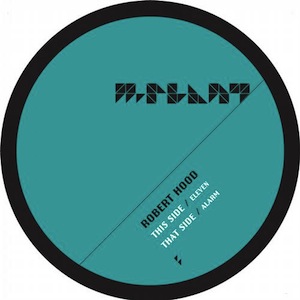
Techno veteran Robert Hood has had something of a banner year, releasing two singles from his Motor: Nighttime World 3 album, dropping several ace remixes, and, most notably, issuing the acclaimed Paradise LP and follow-up Phobia EP under his more soulful, house-oriented Floorplan moniker. Even after all of this activity, Hood has managed to slip in one final 2013 release via his own M-Plant imprint. The Eleven EP is almost diametrically opposed to his two most recent, aforementioned full-lengths; where Paradise was geared towards the dancefloor and indebted to the sonic tics of classic house and techno and Motor: Nighttime World 3 was thick with rich, neo-noir atmosphere, Hood’s new EP serves up two tracks committed to austere, bare-bones functionality.
A-side “Eleven” is an intricately textured slice of driving techno. Opening with skittering hats and a steady, lurching melodic undertone, Hood deploys slowly building chords to create a feeling of friction and urgency. Like much of his best material, it’s the kind of track where everything seems torn between a state of entropy and flux, creating a sense of permanent momentum that has somehow been arrested and become stuck. On the flipside, “Alarm” has more of a straightforward techno pulse, but its sci-fi synth line gives the track a dystopian edge. Beginning with little more than a beat and oscillating textures, Hood gradually introduces an abrasive synth line that in turn gives way to glittering, noirish melody. It’s deep, dark, and emotionally resonant, and as such, proves to be the highlight of the EP’s two tracks. While the EP is arguably nothing exceptional in the context of Hood’s prolific output—and perhaps pales slightly when compared to his remarkable work as Floorplan this year—Eleven is a nonetheless exceptionally well-crafted release from a producer who almost seems to be incapable of making a truly bad track.
Synth-obsessed experimental producer Oneohtrix Point Never (a.k.a. Daniel Lopatin) has shared a strangely mesmerizing new video for “Boring Angel,” the opening track for this year’s XLR8R Pick’d R Plus Seven LP. Directed by internet-focused artist John Michael Boling, the clip is another example of the warped tech-isms that have been through Lopatin’s previous videos, Nate Boyce’s visuals for the OPN live performance, and his two-hour-long, divergent XLR8R podcast. Boling’s video is incredibly minimalist, using only a blank, white field on which an assortment of Emoji flash and change in rapid succession with the vibrant music. Through the ecstatic montage, a feeling of extreme anxiety overlays Lopatin’s highly emotive synth arpeggiations and choral melodies.
Lucretio and Marieu, the Berlin-based pair behind the gritty techno of The Analogue Cops, have announced that they’re reviving their Xenogears project for a new album entitled Lost Artemis, which will be preceded by an EP of remixes for lead single “Multiverse.” Xenogears’ forthcoming Multiverse Remixes 12″ will feature versions of the titular track from Madteo, EMG’s and John Swing’s collaborative moniker Vinalog, and Third Side (a.k.a. Lucretio, Marieu, and Steffi). We currently have no details for the forthcoming Lost Artemis LP, but we do know that the preceding four-track EP is expected to drop sometime in January via Restoration. Before then, Mutilverse Remixes‘ three reinterpretations and Xenogears’ original single can be previewed below.
In support of his noteworthy contribution to !K7‘s DJ-Kicks mix series last month, John Talabot has announced an upcoming US tour which will find the Barcelona producer/DJ hitting 11 cities this coming February. Due to the fact that the upcoming string of dates is slated to coincide with the release of his recent mix CD, the tour will find Talabot operating as a solo DJ, rather than performing live alongside Pional. Still, a John Talabot DJ set has many times over proven to be as essential as the man’s live show, and the 10 US cities and single Canadian destination set to be part of the tour should consider themselves fortunate to be able to host the man as their selector for an evening. John Talabot’s complete list of February US DJ dates are included below.
February 4 – Miami, FL @ Bardot February 5 – Washington, DC @ U Hall February 6 – Montreal, QB @ SAT February 7 – New York, NY @ SRB February 8 – Toronto, ON @ Footwork February 9 – Vancouver, BC @ Fortune February 11 – Seattle, WA @ Q February 12 – Austin, TX @ Kingdom February 13 – Costa Mesa, CA @ Mesa February 14 – Los Angeles, CA @ Club Called Rhonda February 15 – San Francisco, CA @ Icee Hot
Even with his “Deep Undercover” tune landing as one of our favorite tracks of 2013, Cardiff producer The Organ Grinder has had a somewhat quiet year, issuing the Dancing Angel EP for Gerd’s 4lux label early on and sneaking in the Another Process EP under the radar this month via the Heist imprint. But before 2013 comes to a close, The Organ Grinder has elected to make one last appearance in our Downloads section—offering the characteristically tech-minded, bass-obsessed “In the Beginning There Was Jack,” an expectedly jacking tune which focuses on a handful of chords and a particularly playful bell melody during the course of its five-plus-minute run. After giving “In the Beginning There Was Jack” a spin, those interested can grab a ZIP file of unreleased tunes from The Organ Grinder here.