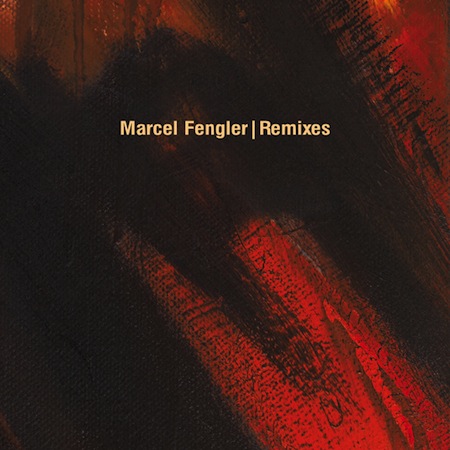
To kick of the new year, Berghain’s Ostgut Ton label will release a new remix EP of tracks lifted from one-time XLR8R podcast contributorMarcel Fengler‘s XLR8R Pick’d Fokus LP. The four-track EP sees seminal techno producer Dave Clarke and labelmate The Traveller, among others, offering their takes on Fengler’s vision of raw and intoxicating dancefloor music. Remixes will be released on January 27, but before then, its four productions can be previewed below.
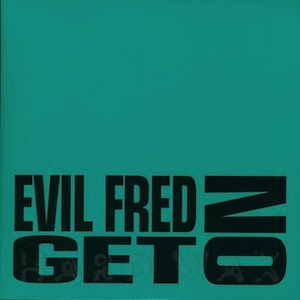
Berlin’s ever-prolific, moniker-hopping DJ/producer Shed (a.k.a. Rene Pawlowitz) has returned with a new single under his latest identity, Evil Fred. Pawlowitz has paved a path of beautiful and blurred techno over the years, showing off his many faces with varying releases across labels like Ostgut Ton and 50Weapons. As Evil Fred, the veteran artist just released a two-track “balearic-rave” 12″ via the H2 imprint, which is available for purchase at Hard Wax, where the music can also be previewed. The artwork and tracklist for Pawlowitz’s new record can be seen below. (via FACT)
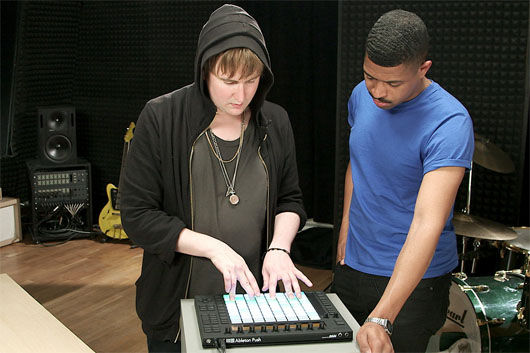
Berlin-based American expats Machinedrum and Lando Kal are the subjects of a new video put together by Ableton, which features the pair of talents sharing insight into their production processes, as well as collaborating together using Ableton’s Push controller (a piece of gear promiently featured in today’s Best Gear of 2013 list).
The first of the two, somewhat overlapping videos, finds both Machinedrum and Lando Kal diving into the initial inspirations which made them want to start making music before discussing their current studio set-ups and offering some bits of production wisdom along the way. The second video finds the two using Ableton’s Push controller to collaborate on a new track while in the studio for the day. Both Ablteon-provided clips can be watched in full below.
As a part of LuckyMe‘s ongoing advent calendar, in which the imprint teases out 25 tracks between the beginning of December until Christmas, Glasgow-based producer Rustie closes out a year filled with surprise singles and “heartwarming videos” by releasing a brand-new track as a free download. Following unreleased cuts shared by the likes of Jacques Greene, Obey City, CFCF, Ango, and many others, Rustie’s playfully sinister “Terra Star” tune can be nabbed at no cost here.
Celebrating the holiday spirit with a free collection of remixes titled Club Cosmos: Volume Two, incognito producer Druid Cloak offers a soaring, drum-focused take on Four Tet‘s Beautiful Rewind highlight “Parallel Jalebi” (which, incidentally, is one of our favorite tracks of the year). Contrasting the original version’s sensual vocal lines with a mellow hip-hop swagger, Druid Cloak’s shuffling rhythms eventually morph into an onslaught of warm jungle percussion. The rest of Club Cosmos: Volume Two—which also features bootleg remixes of tracks from Special Request, Kelela, and others—will be available to download on Christmas Eve via Druid Cloak’s Facebook page.
The Gear section has quickly become one of the most popular parts of XLR8R, and we like to think that’s because many of our readers are as interested in the tools for creating music as they are in the music itself. Whatever the reason may be, our In the Studio, Artist Tips, and From Studio to Stage features, as well as the assorted gear reviews, continue to dominate XLR8R‘s publishing schedule, so we figured that gear coverage should make it into our Best of 2013 content as well. As such, we’ve put together a countdown of our five favorite pieces of hardware and software that appeared throughout the year; if we’ve calculated correctly, there’s a good chance that these tools will be shaping the sounds of 2014 and beyond.
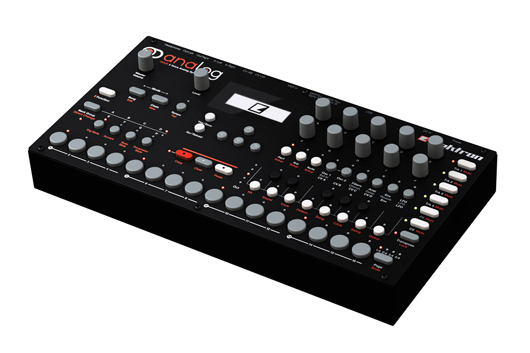
5. Elektron Analog Four Despite the ever-growing proliferance of software synths and sound-sculpting iPad apps, many producers still rely on the tactile response that only hardware can provide. This year, Swedish boutique instrument maker Elektron released the latest in its line of desktop electronics with the Analog Four, a synthesizer that marries an analog, four-voice engine with the extensive sequencing capabilities the Swedes are renowned for. The Analog Four includes rich effects and gives users the possibility to communicate with other gear via MIDI, CV, DIN, and USB connections, making it ideal as the centerpiece of a home studio. Though the synth has already racked up a slew of acclaim, Elektron has already announced the brand-new Analog Keys, a feature-packed, 37-key synthesizer that makes use of Analog Four’s sound engine and provides even more tweakability for live use. Leo Maymind
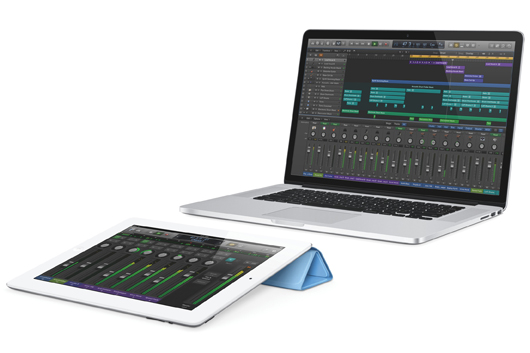
4. Logic Pro X Before Logic Pro X arrived, there was a lot of talk about Apple wanting to gear its flagship DAW more towards GarageBand users or, in other words, those who merely dabbled in production as a half-hearted hobby and not as a serious passion or career. This, however, did not turn out to be the case (although there admittedly are a few new features that seemed to be aimed at that crowd), and when the dust settled, Logic X proved to be a welcome improvement on the professional audio program many electronic artists had come to know and love over the years.
Aside from adding some useful new features and intriguing sound generators, the bulk of what made Logic X a success was the retooling of its GUI and the added availability of iPad remote control, both of which made for a more fluid workspace within the program. In a word, Logic X was just smarter than its predecessor. The fact that Apple found a way to package the retooled program as a $199.99 download made it an essential update for existing Logic users, and a serious consideration for those looking to expand the canvas upon which they make their productions. Glenn Jackson
3. Native Instruments Traktor DJ App German software giant Native Instruments has long since secured its stake in the world of digital DJing with the ubiquitous Traktor software, but this year, NI upped the ante by introducing a slimmed down version of Traktor built for the iPad. Though many DJs thumbed their noses at the idea of a $20 app replacing their prized pair of 1200s, the novel implementation of Traktor DJ was a big step towards the democratization of DJing. Eschewing the dual deck view of the desktop version, Traktor DJ displayed each track as a horizontal waveform, allowing the user to take advantage of the iPad’s multi-touch surface by grabbing loops live, creating cue points on the fly, and using a multitude of EQ, FX, and filter functions. Further adding to the app’s usability was its tight integration with a selection of NI’s DJ controllers—including the new Kontrol Z1 and the popular S2 and S4 decks—and the ability to work as a third deck when paired with the full version of Traktor. Though a setup using the Traktor DJ app couldn’t exactly replace a proper turntable/CDJ/mixer combo, it nonetheless offered a viable and dynamic option for nascent DJs and any mixmaster who’s always on the go. Leo Maymind
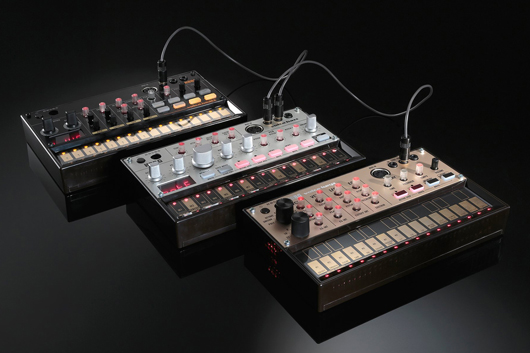
2. Korg Volca Series / MS-20 Mini More than any other gear company this year, Korg just seemed to “get it.” Granted, it can sometimes feel like there’s a new synth or controller claiming to “change the way you make music” every other week, but Korg’s success in 2013 wasn’t about overhauling producers’ workflow, but rather supplementing it with focused tools that came in compact and—best of all—affordable packages. The two primary examples of this were Korg’s relaunch of its legendary analog synth, the MS-20, as the MS-20 Mini and the introduction of its Volca series of micro-synths and grooveboxes (pictured above).
In the case of the MS-20 Mini, Korg answered the growing demand to revitalize one of its flagship units, not by simply slapping the name onto some barely related new unit, but by putting together the MS-20’s original designer with a new team in order to create a hybrid synth that remained faithful to its predecessor while also including updated features vital to modern studios. Furthermore, Korg’s three-piece Volca series made great strides towards putting the power of analog synthesis in the hands of those who could not afford more robust units. Recognizing that most producers already have the components necessary to control and play a synth, Korg’s Bass, Keys, and Drums units offered what is harder to make on one’s own: the actual electronic guts that produce the analog waveforms we all crave. With most at-home producers pressed for time, space, and cash, the Volcas offered a smart and attainable entry point into the analog world. Glenn Jackson
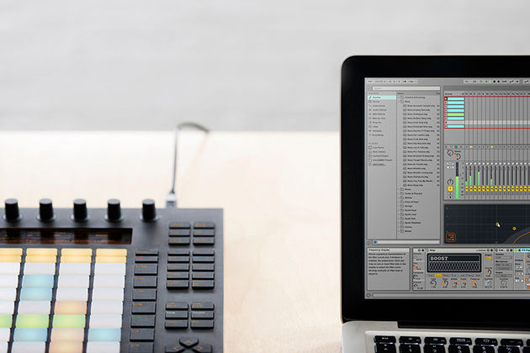
1. Ableton Live 9 / Push In its rise to the top of a perennially crowded category, Ableton Live has become many musicians’ DAW of choice since its debut in 2001. This year was a big one for the company, which released not only the newest iteration of its software in Live 9, but also the first official Live hardware controller designed in conjunction with the program, Push.
At its heart, Push is a device built for musical composition. The 64 input pads can be played like a proper instrument, in a way that the traditional 16 cannot; the brilliant white and blue LEDs indicate the user’s position in the scale when writing melodies, and provide plenty of room for creative expression. Add a Drum Rack, and both a series of pad triggers and an interactive step sequencer are simultaneously incorporated, while moving a finger along the touch strip navigates through the array of drum sounds. In many ways, Push goes beyond what we’ve seen from hardware controllers and a new approach to melody and song structure. Furthermore, everything generated with Push is integrated into Live in a way that’s tough for plug-ins to match. The beautiful, minimalist hardware is built like a tank, and provides the best entry point yet to physically interfacing with the deservingly ubiquitous Ableton Live. Evan Shamoon
XLR8R’s Best of 2013 coverage will continue through the end of this week, so check back each day for additional year-end round-ups. In the meantime, don’t forget to take a look at the other Best of 2013 pieces we’ve posted already:
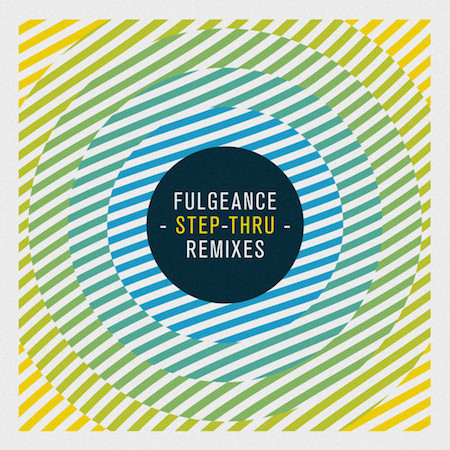
Prolific French artist Fulgeance dropped the solid Cubes LP via his own Musique Large label back in October, but now the beatmaker has decided to revisit Step Thru—a full-length released via RX:TX in October 2012—and collect four remixes from the record for an upcoming 7″, simply titled Step Thru Remixes. Slovenian producer Oknai offers a chilly, skittish take on “Square,” grounding the cut’s meandering percussion with a downright filthy bass synth. Reserved, yet never lacking in sonic diversity, the rework brims with fluttering chimes, ambient pads, and other odd flourishes, while leaving itself plenty of space to establish a mood. The rest of Fulgeance’s Step Thru Remixes is set to drop on January 20, 2014.
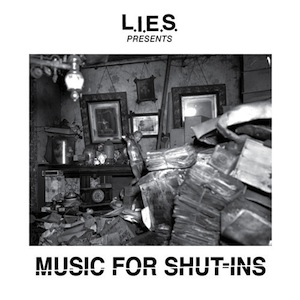
Ron Morelli’s Long Island Electrical Systems label has become a critical darling over the past couple of years. Essentially the focal point of a certain brand of largely hardware-driven underground house and techno coming out of New York City (although the label includes artists from Paris and Berlin, among other locales, on its roster as well), the imprint’s image has been bolstered by Morelli’s singular, uncompromising vision—which includes a marked reticence to embrace digital formats and a passion for murky, lo-fi sonics. The label boss is also something of an ideological mouthpiece for the label, which he often defines in opposition to prevailing dance-music trends; it’s all there in the title of this latest release, Music for Shut-Ins, which Morelli elaborates is “club music for people who hate going to the club.” Continuing what will hopefully be an annual trend of releasing a double-disc compilation of the year’s highlights along with previously unreleased material from the label’s artists, Music for Shut-Ins follows last year’s acclaimed American Noise compilation, and while that release felt like something of a coming of age and a reflection of the label’s growing legitimacy, this latest collection digs deeper, highlighting the diversity and experimental tendencies of the L.I.E.S. roster.
Those who have been keeping track of the label’s output over the past year will be unsurprised by the high bar Music for Shut-Ins‘s first disc—which contains previously released material from the year—sets for quality. Recent releases such as the chugging ominousness of Shawn O’Sullivan alias Vaputeen’s “Basilisk” easily stack up against some of L.I.E.S.’ biggest cuts from earlier in the year, such as Florian Kupfer‘s “Feelin,” which is easily one of this year’s most affecting house tunes. Other notable highlights include Legowelt‘s “Teen Romance,” which sees the Dutch producer adopting a far more distressed fidelity level than has been the norm for his recent material, with results that are both minimal and pleasingly starry-eyed, and Brooklyn producer Terekke‘s faded, underwater vocal house masterstroke “Amaze.” It’s the tracks that were overlooked upon their initial release that pay the greatest dividends on the first disc though, as is the case with Daywalker + CF’s “You Only Live Once.” An alias of Willie Burns and Entro Senestre, the track is a slow-burning distillation of L.I.E.S.’ hardware-obsessed approach, a sensibility that is by turns primitive and restlessly psychedelic.
For all the highlights to be found on Music For Shut-Ins first disc, it’s heartening that a label like L.I.E.S.—which already has a fairly frequent release schedule—is able to find enough great material at the end of the year for an entire disc’s worth of previously unheard cuts. The second disc leads with a new track from Marcos Cabral, whose double-LP False Memories was one of the unexpected highlights from the L.I.E.S. catalog this year. Entitled “Dancing on Manhattan,” the 12-minute-long tune is an expansive take on analog-synth pleasure zones, featuring one single, repeating melodic motif with layered, moody synths on top and an oscillating, jacking beat below. Beautiful Swimmers‘ “The Zoo” provides a buoyant dose of upbeat, loopy house, where a prominent vocal sample and swirling synths play off of a scuffed, staccato breakbeat. On the more uncompromising end of the spectrum sits Jahiliyya Fields‘ “White Lighter,” whose ghostly synth missives are here framed by a pulverizing 4/4, fuzz-encrusted synths, and a relentlessly dark vibe. With over 30 releases this year alone, L.I.E.S. isn’t always an easy label to keep up with, but the embarrassment of riches contained within Music for Shut-Ins suggests that the effort may well be worth it. Furthermore, as L.I.E.S. grows and develops as a label, it seems that instead of succumbing to a formula, it’s instead getting deeper and weirder, something which undoubtedly bodes well for the future.
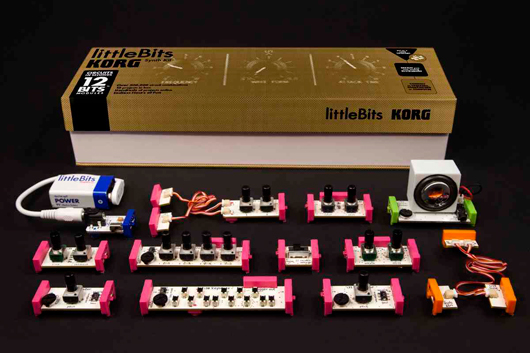
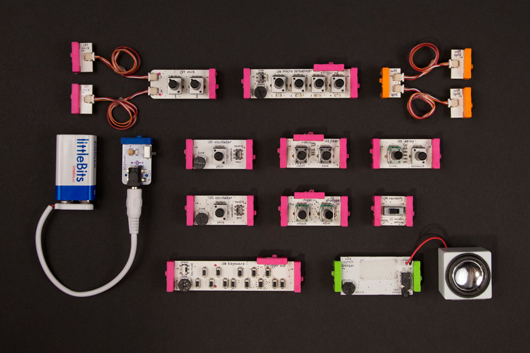
littleBits, a New York-based outfit started by MIT Media Labs graduate Ayah Bdeir, is based around a very basic idea: creating “simple and sophisticated electronics for learning, prototyping, and play.” The company has designed and produced a wealth of small components that snap together with magnets, therefore bypassing any sort of soldering or delicate electrical work and opening up the world of electronics to children, curious adults, and anyone who wants to unleash some nascent creativity. Its most recent product, the Synth Kit, has already caused quite a stir, as it comes with the seal of approval from co-designer and music-technology giant Korg. The Synth Kit follows littleBits’ modus operandi in that it’s a fully analog modular synthesizer the user can construct from 12 separate, snappable components—including a tiny keyboard, four-step sequencer, a small speaker, a battery power source, and a host of circuits which help manipulate the sound.
How It Looks
Each component of the Synth Kit has been carefully manufactured to optimize ease of use, and this ethos extends to the visual aesthetic. The modules are incredibly small and have a playful appearance, using bright colors and child-like fonts with the absolute minimum amount of controls and knobs. It’s easy to see why kids would be attracted to getting their hands on the Kit, even without knowing what the various pieces do. Furthermore, each module is color coded based on its function, which expedites figuring out the right order to snap each piece together to make sound-producing circuits.
How It Works
Despite the fact that creating a working modular synthesizer from discrete pieces seems like a complex and possibly overwhelming task, using the Synth Kit could not be easier. littleBits has prevented any confusion by providing a detailed and incredibly well-organized instruction booklet that not only details how each module works and suggests circuits to build, but also gives a brief history of the role of synthesizers in popular music and how a synthesizer actually produces sound. The various knobs and buttons on the modules feel firm and respond easily, and getting the modules to snap together is, well, a snap.
Larger fingers might have a bit of a hard time playing precisely on the Synth Kit’s minute keyboard, as its buttons are fairly small. But this certainly isn’t a dealbreaker; the Synth Kit is hardly meant for playing a Bach sonata. Since it quickly allows the creation of random melodies and rhythms that would be practically impossible to play otherwise, the four-note sequencer is particularly fun to use, especially for those new to analog sequencing.
XLR8R Couldn't find the embed function for type: "vimeo" and source: "<iframe src="//player.vimeo.com/video/78385872" width="530" height="298" frameborder="0" webkitallowfullscreen="" mozallowfullscreen="" allowfullscreen=""></iframe>".
How It Sounds
The sound of the Synth Kit is where littleBits collaboration with Korg most reveals itself. The two available oscillators utilize square and sawtooth waveforms and have a raw, buzzy sound that is very reminiscent of Korg’s popular Monotron modules, albeit with an even raspier tone. Similarly, the filter (which is actually based off the famed Korg MS-20 filter) has a pleasantly squelchy quality and is capable of all the wonderful resonant sweeps expected of an all-analog design. Another highlight is the delay, which—despite not having a huge range of repeat times—quickly lends itself to the kind of squealing, warbly feedback that a much higher-priced pedal would provide. Combining the Synth Kit’s noise module with a short, percussive envelope produces some very unique drum sounds that would certainly sit well in a smeared, gritty techno production.
The Bottom Line
With the ability to spend hours rearranging its modules in every possible order imaginable, littleBits’ Synth Kit has the potential to be a very addictive piece of equipment. The combination of its modular capabilities, small size, and playful visual aesthetic is a welcome relief from the complex, technical boundaries that many high-quality electronic instruments have, and will undoubtedly appeal to a range of users across all ages. The somewhat limited sound palette of the Synth Kit isn’t likely to be a game-changer for any seasoned producer, but it’s nonetheless easy to conclude that littleBits has come up with a special reimagining of what an electronic instrument can be.
Rising Canadian singer/producer Jessy Lanza—who appeared on our Best New Artists of 2013 list earlier today—has shared dates for a brief US tour to support her solid Pull My Hair Back LP for Hyperdub this coming January. After performing at Montreal’s Le Divan Orange on January 15, Lanza will make her way to the states for just over a week, hitting New York, Chicago, Los Angeles, and San Francisco on her path. The full list of dates for the Hyperdub affiliate’s short-but-sweet US tour are included below.
January 15 Montreal – Le Divan Orange January 17 Brooklyn – Glasslands January 18 New York City – Mercury Lounge January 23 Chicago – Smart Bar January 24 Los Angeles – Bootleg Bar January 25 San Francisco – Amnesia