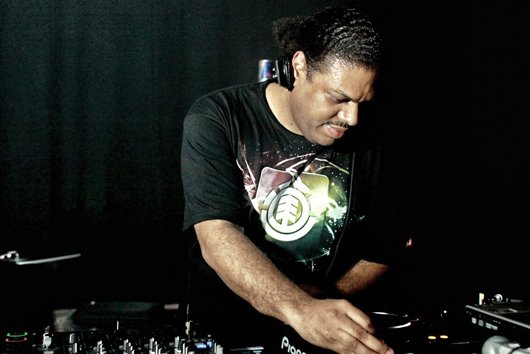
2013 may not have been the most prolific year for Glaswegian label Numbers, but just about every tune it has released—like, say, Sophie’s “Bipp,” Doc Daneeka’s “Walk On In,” and the XLR8R Pick’d Blaquewerk EP by Deadboy—has been a bonafide stunner. So it’s not too hard to say that the label has had one hell of a tenth year in operation, and now its looking to cap things off with a three-part event series in London, New York, and Glasgow, all of which is preceded by a brand-new mix from co-founder Jackmaster (pictured above).
First, the party details: In New York, label heads Jackmaster and Spencer will be joined by DJ Deeon and Anthony “Shake” Shakir on November 29; London will feature performances from Hudson Mohawke, Optimo, Redinho, the Numbers crew, and “very special guests” on December 7; the details for Number 10 Glasgow are still unspecified, but we do know it will take place on December 13. Time, location, tickets, and full line-up information for each party can be found here.
As for the new mix—which, of course, has no tracklist—Jackmaster has delivered a 97-minute excursion into funky and forward dancefloor sounds as a stream or free download. The DJ says of his annual offering, “Thanks to Twitch, Dom Capello, Yasmin, John Talabot, Joy, Alex Peden, Big Andy, Lee Smart, and anyone else I pinched tunes off for this mix.” Jackmaster’s Mastermix 2013 can be found below.
Resuming his self-titled white-label series, Berlin-based producer Objekt has issued the follow-up to his excellent 2012 single for Hessle Audio, “Cactus” b/w “Porcupine.” While that record traded in a heady blend of dubstep wobble and stepping rhythms, the Objekt #3 single changes things up with two far more aggressive, considerably more techno-influenced cuts. This is not say Objekt #3‘s two tracks are any more straightforward, as both exhibit unique and unpredictable convergences between skittering, syncopated rhythms and raw techno.
A-side “Agnes Demise” is undoubtedly the more aggressive cut. Opening with an agitated, skittish beat, the track is premised on a suspenseful, heavy-hitting beat that bores its way into the listener’s head with all the subtlety of a jackhammer. The track’s punishing rhythm is complemented in the first half by an ominous, factory-like scree, before the beat drops away in the middle of the track’s seven-minute run, revealing a dense cloud of textured noise that was arguably the heart of the tune all along. When the beat returns, it seems to do so with a renewed intensity, sounding at once aggressive and controlled. This sense of dynamics, which is highlighted as the beat continually stalls and jumps throughout the second half of “Agnes Demise,” is ultimately what steals the show on this undeniably massive track.
Perhaps the more interesting cut is the incredibly textured b-side, “Fishbone.” The track falls more on the cerebral side with its oscillating, sci-fi synths and distorted, spoken-word vocal sample. Before long, skipping beats enter the picture; they’re quickly complemented by half-time claps, which inject a more overt dubstep and 2-step inflection into the proceedings. Stuttering and rhythmically off-kilter, the track nonetheless has a crispness that is reminiscent of early Warp techno. Like the a-side, “Fishbone” exhibits a compelling sense of dynamics, featuring a symphonic, string-laden break that is then built back up with deep pads and the return of the track’s infectious stepping drums, by which time the rhythmic dynamics of the track have been fundamentally changed. Objekt #3 is the sound of a producer streamlining his sound without losing any of the unpredictable tangents that made his earlier work so compelling.
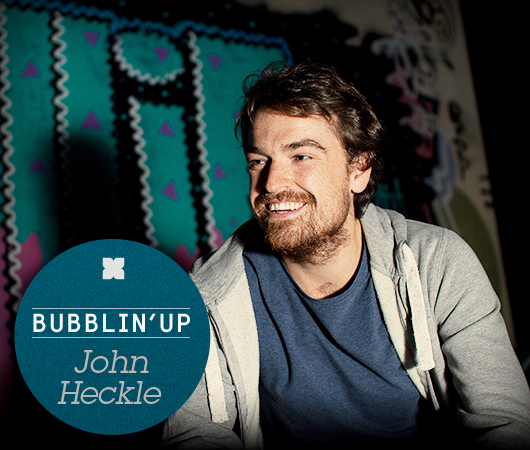
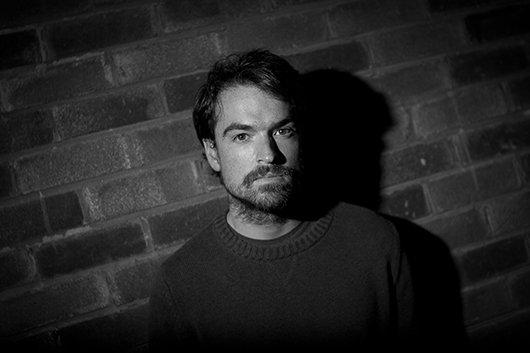
The easiest way to pigeonhole John Heckle is to talk about how “raw” his productions are, but the term means less and less in the context of house and techno with every passing day. In 2013, releasing hardware-only live jams is hugely trendy, and the “raw” or “rough” descriptor is applied to virtually anything that isn’t dazzlingly polished. Barring his early work as Hek, the young producer from Liverpool has always tended toward the overdriven, but it seems a little reductive to place him in this context. Naturally, his relationship to hardware and, more importantly, somewhat reckless EQing, comes up repeatedly in conversation.
“I still don’t really know the ins and outs of sound mixing, or how to actually make a record sound clean,” he insists. “I guess that raw is the only way I know how to make tracks at the moment, with the gear I’ve got. I’ve only got a little Mackie effects mixer, with eight channels, and what I usually do is record into the line-in, onto the computer to capture the audio. When I first started using hardware, I noticed that when I recorded a track with all the gains down, it sounded pretty shit—glued together, almost. Pushing the gains made the sound tighter, and whether or not that’s beneficial to the actual sound of the track in the end is anyone’s guess. It can be quite overdriven, but that’s the aesthetic of the music anyway.”
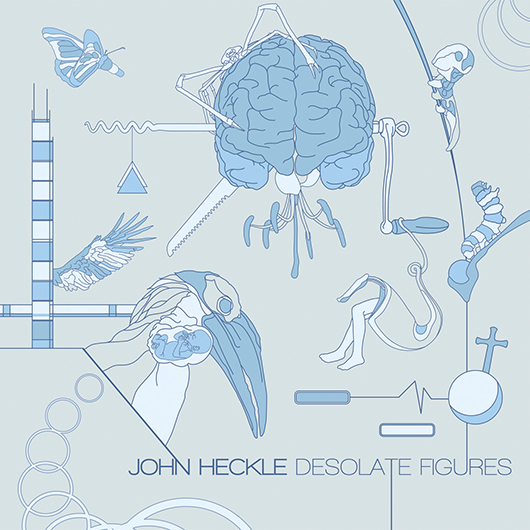
Heckle peppers his talk with references to his gear. His past releases on labels like Mathematics, Tabernacle, and Crème Organization have all come with a visceral bluntness, and beyond their sometimes scratchy, distorted sound quality is an insistence that the instruments do the talking. Heckle obviously uses his share of effects, but he is keen to keep his compositions undisguised. This carries over to his newest work as well, including the Desolate Figures LP for Tabernacle—which dropped this week—and the forthcoming Baiyun Mountain EP for respected Dutch imprint M>O>S. However, not everything has remained the same; conspicuously absent from stretches of both releases is the producer’s Juno-6 synthesizer, which strongly marked his early work. The machine’s telltale sounds lent Heckle’s tracks a typically Chicagoan tinge, and no doubt helped endear him to Jamal Moss (a.k.a. Hieroglyphic Being), head of Mathematics and one of his heroes. “I actually sold my Juno-6. I think it must have been halfway through recording [the album], so that’s probably why it doesn’t pop up on all the tracks,” he says. “But I’ve got a reasonable selection of stuff: a few Kawai synths, a few Korg bits. With each different track, there must be a different combination of machines, for a bit of variety.” With disparate approaches to jamming out tracks, Desolate Figures can feel like a compilation at times, but Heckle attributes its reasonable coherence to the work of the label, and the fact that he made “90 percent of it over a fortnight.”
The tracks, meanwhile, owe some of their interior balance to the producer’s Juno-G Workstation keyboard, which has been a mainstay for him from the beginning. “It has a 16-channel MIDI sequencer actually on the keyboard, so you can run 16 different machines off this one keyboard and basically build a track inside the keyboard itself. The sounds on the Juno-G aren’t the best—there are some good sounds on there, but for the most part they can sound quite thin. But being able to run the MIDI sequences out of it, and then into some more beefy synths and keyboards, that’s pretty much all [the album] was. I don’t have a sampler or an MPC or anything like that, and I don’t use a computer to make the tracks, so it’s just still all on the same system.”
Perhaps owing to this, neither new record signals a major departure. “I’ve only been making records seriously for the last three or four years, so it’s hard to see how I’ve changed,” Heckle says. “There are still some elements from the first record for Mathematics (2010’s Life on Titan) that I try and keep, but there are a couple of tracks on the album that are more full-on techno—the first full-on techno records I’ve been able to make. Through having gigs, I’ve been able to bulk up my studio a bit, so I can make different styles of music that I wasn’t able to make originally.”
Although Heckle’s music probably lands closest to the experimental “jakbeat” of Rust Belt producers D’Marc Cantu, Traxx, and JTC, it’s this relationship with traditional, “full-on” techno that gave him his start. The producer’s lone 12″ as Hek, 2006’s “Poppadom Preach,” was forwarded to the RSB label via UK techno luminary Regis, their meeting a result of Heckle’s DJing in Liverpool. “I started DJing in clubs when I was 15,” he remembers. “My brother used to throw techno nights in Liverpool and I used to love Birmingham techno—I still do—and [I also played] a lot of European stuff, [plus] a lot of Mills and Hood. It was pretty four-to-the-floor, banging techno through all my sets, up until I was probably about 19.” The artist has developed interests in other areas now, but he still takes influence from this “all guns blazing” approach, as he describes it, in his current DJ sets. “I don’t play full-on techno sets anymore, [but] I try to keep the same kind of energy, while still playing house, Italo, or industrial records. I try to mix pretty quickly, and throw a drum machine over when I can. I don’t set a record on for six or seven minutes. I guess there are records that suit being left on for that long, but I try to cut it up as much as possible.” The drum machine he speaks of is an integral part of these performances, an idea inspired by Jeff Mills. His choice in machinery has also shifted along with the makeup of his sets. “I used to use the Novation DrumStation and the 505, but [both have broken],” he says. “I do use the 707, which is a really straightforward drum machine to use in DJ sets. It’s literally just a box with 16 noises, and the volumes—there’s no molding the sounds at all, so as long as you’ve got the tempo right, it’s easy just to throw drums over the top. It makes a nice little addition to DJ sets.”
Heckle also tours a live set, and he is palpably enthusiastic about it. “Again, it’s with the Juno G keyboard,” he begins. “I’ll have that on stage with a 707, and recently one of the Acidlab Miami drum machines—I don’t know if you’ve heard of them, but they’re like an 808 clone, made in Germany, and they’re absolutely brilliant. I’m pretty sure they’ve got a bit more range than the original 808, so if you mess around with the decay, it goes further back than the original drum machine did. And then a few other pieces, like little desktop synths, rack synths, and effects units. I take anything that can fit inside my suitcase, cuz otherwise I’d be taking about five keyboard cases away with me, and that’s not really doable.” He might perform with smaller machines onstage, but he’s been able to work around not having his home studio with him: “for some of the sounds, say off the Juno-106, I can use a Waldorf Blofeld desktop synth that makes similar sorts of pulse-based sounds for basslines. When you turn it up really loud, no one can tell the difference, and it does the same job.”
By all accounts, Heckle’s live show is as punishing and intense as his DJ set, but the producer’s records are often cut with beguilingly beautiful ambient pieces, like his tribute to Aphex Twin’s Selected Ambient Works on 2012 EP Voices and Visions, or the floating, Eno-esque “So Far” on the aforementioned Life on Titan. He is, of course, casual about how he comes up with them. “I’ve found it normally easier to start and finish them within an hour or two, because it’s just a case of getting the notes right, getting the effects right, and setting a mood for the piece,” he attests. “But with making a techno record, there’s a lot more structuring that goes into it, and you have to sort of build tracks around a melody rather than just having a melody as the centerpiece of a record.” Fans of those tracks will have to wait to wait to hear more, though, or maybe commission it themselves. “I’ve only ever really made it when someone’s asked for it, beyond maybe ‘Ode to SAW,’ which I just did off my own,” he says. “The rest [came from] suggestions. If I had my choice at the moment, I’d always be making stuff with beats. I’m just not as passionate about [ambient] as I am with the other music that I try and make. I guess there’ll be a stage in the future where it might be something that I think about, but for the moment, it’s just the odd one, I reckon.”
Expect Heckle to move deeper into techno territory. Phantom Planet Outlaws, his project with fellow Liverpool residents Mark Forshaw and Binny, is set to release a new EP on Dublin label Apartment Records. The three know each other from being fans of Jeff Mills and Underground Resistance, and these are their primary influences as well; it’s “full-on techno,” Heckle says. The producer can get downright Millsian in his track titles as well: “If One Second Were a Million Years,” “Birds with Vertigo,” “Life on Titan.” These come from a notebook where he simply writes down phrases he likes. “I’d never say no to try some sort of concept project, but it’s never been something I’ve been in the position to do, and it hasn’t been necessary yet either,” Heckle says. “I am just making whatever I feel like on the day. That’s all they are really—just jams, and for the foreseeable future, they’ll probably continue to be that.” His approach may not be high-concept, but his tracks routinely manage to sound accomplished anyway.
Just released by New York-based producer Feral is the five-track Haymaker EP, proof that there is still plenty of room for fresh voices in bass music. “Rollercoaster,” a cut pulled from that release, is as exactly as gut-wrenching as the name implies; Feral runs a Middle Eastern-referencing sample through the grinder and splashes the results over a grimey bass riff that bounces around the room like a hungry panther. The beat weaves in and out of the production methodically, creating a tension-filled track with the type of low-end you need to feel to understand.
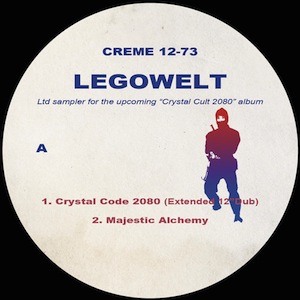
Legowelt (a.k.a. Danny Wolfers) has been enjoying something of a hot streak recently. Between last year’s excellent full-length for Clone Jack for Daze, The Paranormal Soul, the Unknown to the Unknown-released Star Gazing EP, and a brand-new 12″ on L.I.E.S., the prolific Dutch producer seems to have settled into his latest incarnation as someone who explores the deeper strains of Chicago and Detroit house and techno. The only downside of this is that it’s now easier than ever to predict what a new Legowelt release will entail—usually some combination of brittle drum programming, chugging, acid-informed basslines, and a cosmic, iridescent synth sheen. All of these elements are present on the limited-edition 12″ that precedes the producer’s forthcoming Crystal Cult 2080 full-length for Creme Organization, the Hague-based label that boasts Legowelt’s 2003 Reports from the Backseat Pimp LP as one of its early releases.
With LP cut “Crystal Code 2080” alongside three exclusive, non-album tracks, the sampler EP marks a solid outing for Wolfers, even if it is defined by his increasingly recognizable style. “Crystal Code 2080” opens with almost comically spooky organs and features crisp, muted drums, a pulsating acid line, and reverb-soaked vocal samples. The effect is one of melodic but strangely cerebral distance, and is a perfect example of what Legowelt seems to do best these days—dark, sci-fi-inflected, 120-bpm, Detroit-influenced house. The remaining tracks follow a roughly similar template with no less impressive of a result. “Majestic Alchemy” is a tension-filled cut built around effects-laden vocal samples and an irrepressible sense of longing. “Mistral” features scuffed dub-techno beats, while final track “Do What U Gotta Do” adds a bit of ghetto-house grit to the formula, upping the tempo with its robust kicks and claps. While the Crystal Cult 2080 Sampler EP has a ring of ‘same old’ to it, there’s no doubt that Wolfers is making some of the most solid tunes of his career. As a preview of his forthcoming Legowelt album, it’s more than promising.
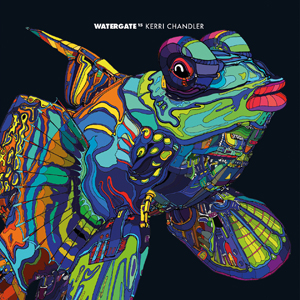
Famed Berlin club Watergate has tapped seminal New Jersey deep-house artist and MadTech label boss Kerri Chandler to deliver the latest installment of its ongoing mix album series. Chandler built his name on jazz-infused house music, but for his work on Watergate 15, which was recorded live, the DJ/producer relies on more contemporary sounds—including tracks from Huxley, Jamie Jones, The Martinez Brothers, and Detroit Swindle. Chandler also drops two of his own exclusives in the 18-song tracklist; the first is a solo production called “Think of Something” and the second is “Mama,” a collaboration with Ibadan label head Jerome Sydenham. Before Watergate 15 drops on February 10 of next year, its tracklist and artwork can be found below.
01. Detroit Swindle – Guess What 02. Headless Ghost – Basic Fire 03. Huxley – Like One (Chris Lattner Remix) 04. No Artificial Colors feat. Alex Mills – Crying Wolf 05. Kerri Chandler – Think Of Something 06. Alix Alvarez – Fayall (Nathan Barato Edit) 07. Clé – Feel It (Don’t Cha Know) 08. Italoboyz Vs Blind Minded – Sti Drumsy 09. Johnny D – Point Of No Return 10. Nu feat. Jo Ke – Who Loves The Sun 11. D’Julz – Madness (The Martinez Brothers Feat. Phil Weeks Edit) 12. Kerri Chandler feat. Jerome Sydenham – Mama 13. Renato Figoli – Underpool (Losoul Remix) 14. Subb-an – This Place (Nick Fanciulli Remix) 15. Real Cool – U Know, U Know 16. Tom Demac – Crewcuts And Curls (Jamie Jones’ Water Cooler Remix) 17. DJ W!ld – Gorilla 18. Shonky – Le Velour
Romanian producer Silviu Badea has been crafting hyper, bass-informed cuts as Montgomery Clunk for a while now, but is rebranding his latest work with the abbreviated moniker C L N K, as it finds him going into darker, dub-inspired techno territory. “Dristor”—taken from the forthcoming Black Ecstasy LP (out on December 2 via Error Broadcast)—starts with cavernous bass blasts and ripping static that emerges as a resounding, textural slab of techno meant to overwhelm the senses, but somehow manages to never sound overcrowded. Near the halfway mark, a biting acid synth pierces the murky layers and the piece achieves its final phase in dancefloor metamorphosis.
White Visitation (a.k.a. Nicolas Guerrero) is an artist from Mexico City whose music is not especially classifiable. Guerrero offers elements of dub techno, but, crucially, executes them with a refreshing simplicity. (Dub techno is frequently maligned for being plodding and overproduced.) He also spices his tracks with organic instrumentation, often in unlikely (but rarely jarring) ways. The producer surfaced on the Opal Tapes compilation Cold Holiday last winter, and had his self-released cassettes Tape 1 and Tape 3 sold through the RVNG Intl. online shop (there’s a third called Dubs), but Ancestors is the first time he has actually put out a record on a label. Its three tracks are in line with the material on those prior efforts.
The Opal Tapes connection is a bit of a red herring, as Guerrero’s music is generally smoother and more expansive than that label’s signature crusty sound. The RVNG connection makes a bit more sense. That label’s Blondes offer perhaps the closest contemporary analogue to this music, best evidenced on Ancestors‘ slow-burn finale “Blood Revision.” Building on a framework of unpolished kick drums and languid, elongated lines, Guerrero steadily overlays chords and simple percussive flourishes. It is only when he introduces an open hi-hat halfway through that one realizes how much is roaring at once. Using an easy switch to catalyze a teeming foundation is a very Blondes technique, and so is the way Guerrero pushes the track thrillingly further, toward a climax that is more suggested than attained. “Permanent Swing” is more subdued, and everything seems to echo from its pulsing center: drowsy organ, oscillating hi-hats, splinters of guitar. Again, all of it seems to be awaiting a force, namely a kick drum, to culminate, but Guerrero dashes expectation by tailing it off into a foggy, unrelated hip-hop loop. “Home” hits on a different touchstone—Burger/Ink’s seminal Las Vegas LP. It’s a sustained, trance-inducing thruster, marked by the rustling of a twangy, dusty guitar, the type of which popped up several times on that LP. With its linear plotting, “Home” sounds like a track that was made for the open road. That said, much like its counterparts, it’s an accomplished piece that speaks to Guerrero’s potential as a purveyor of the driving, visceral, and sensual.
Pulled from Bonobo‘s recent The North Borders LP, “First Fires” has been treated to a new remix by restless UK producer/DJ Maya Jane Coles, which can now be streamed in full. First appearing as a Mixmag Exclusive, it is unclear if and when Coles’ remix might see an official release, but the low-swung, growling rework can be heard in its entirety via the player below.
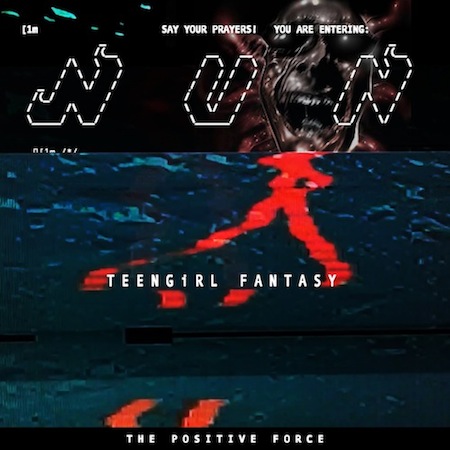
Ahead of its release on November 26 via This Is Music, the latest EP by artful house duo Teengirl Fantasy, Nun, is now available to stream in full. The four-track EP is said to be a teaser for the producers’ third album coming in spring of next year, and sees them continuing to explore their free-form brand of electronic music by stretching themselves across many genres, even touching on footwork, jungle, and drum & bass. Teengirl Fantasy’s Nun can be heard in its entirety over on Pitchfork Advance.