All week long, XLR8R is presenting its annual focus on Labels We Love. Click here to check out the rest of the series.
Comeback stories in music are rare. Burnout and obsolescence, especially in techno, are the norm. So what explains the improbable rise, fall, and rise again of Tresor, the German brand that includes a label, a club, and a signature vibe that stretches across the Atlantic and binds the two most important cities in the history of 4/4 dance music?
Photo by Tofa
The story is classic, filled with personalities and passion, and stretches from Berlin to Detroit and back again.
It begins in mid-1970s West Berlin, where it was incubated and flavored by post-punk and acid house in the 1980s, given a significant related push by the advent of the Love Parade in 1989, and became an unlikely social and cultural unifier during a period of sweeping political change in Europe in the early 1990s.
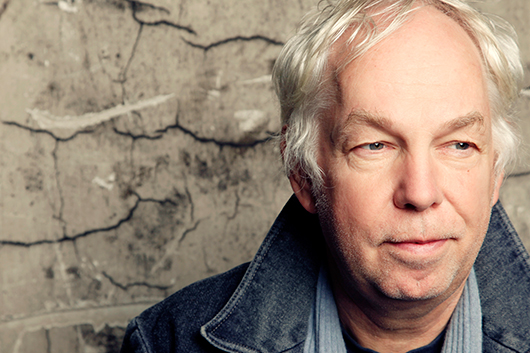
Tresor launched in 1991, a year after the Berlin Wall was demoed and East Germany was dissolved. The Iron Curtain, which had divided West and East Europe since the end of World War II in 1945, was no more. It was a time of unbridled euphoria for Berliners, says Tresor founder Dimitri Hegemann, who came to West Berlin in the 1970s from the Westfalen region of what was then West Germany.
“Kids from the West met kids from the East for the first time. Everybody was coming to Berlin, everything seemed possible, but we didn’t know how to communicate with each other,” says Hegemann. “Common language was not enough. We needed something more. We found the answer for communication through techno.”
Dimitri Hegemann (Photo by Marie Staggat)
Hegemann and other tastemakers in the city, including Mark Ernestus and Moritz von Oswald, who opened the Hard Wax record shop in 1989 and started their Basic Channel group and label project four years later, were paying close attention to tracks being produced in Detroit. They embraced the sound, and began cultivating relationships with Motor City artists.
“Detroit was fresh. We thought the best new music was coming from there,” Hegemann says. “I first heard a Final Cut white label in 1988, then Jeff Mills came here for the first time in 1990. Everything really started coming together in Berlin because of Detroit techno. It was the soundtrack that we could all agree on.”
Mills played an important part in the Tresor story. When he left Final Cut, Mills joined Mike Banks and Robert Hood to form Underground Resistance, arguably the most influential techno group in the 30-year history of the scene. It was UR, under the alias X-101, that delivered Tresor’s first release in 1991. That same year, Detroit’s Blake Baxter released a full-length, Dream Sequence, on Tresor. A year later, an LP by 3MB, a collaboration between Berliners Thomas Fehlmann and von Oswald, along with Detroit’s Eddie “Flashin” Fowlkes, was released. Another 3MB release, this one with “Magic” Juan Atkins, was released in 1992.
Expanding the Reach
Meanwhile in London, Daniel Miller was also paying attention to what was happening in Berlin. Miller was familiar with the gnarly post-punk scene of the 1980s—his label Mute had released records by the Birthday Party, Nick Cave & the Bad Seeds, and Crime & the City Solution—but Hegemann began sending him “all this hot new shit we were listening to now.” Miller started flying in on weekends to check out the euphoria for himself and ended up licensing several key early Tresor releases, including comps featuring original tracks by Maurizio. He also picked up remixes by UR and a fledgling artist from across the Detroit River in Windsor, Richie Hawtin. “That immediately expanded our reach beyond Berlin, beyond Germany,” Hegemann says. “Most of Europe knew something big was going on here.”
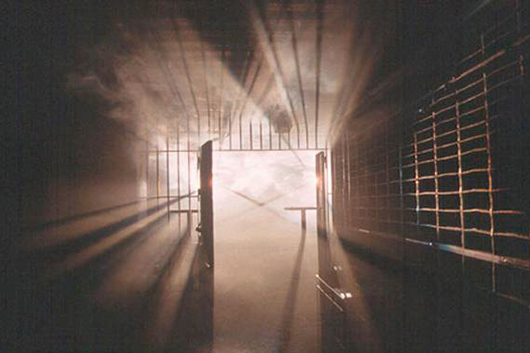
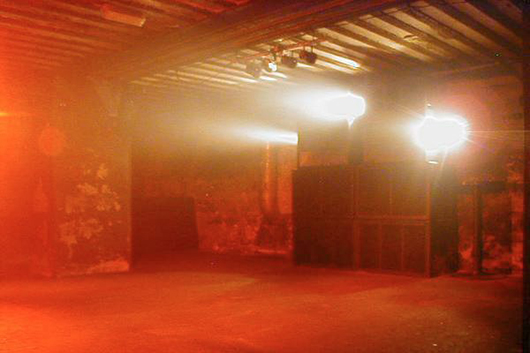
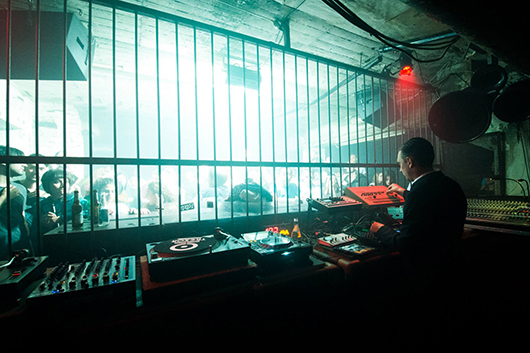
Tresor Floor, original location
But what really distinguished Tresor was that it had a club, which had opened in March 1991, a few months before the label issued its first record. The space was in the vaults of a closed department store in Mitte in the former East Berlin.
Hegemann had plenty of experience with clubs and live performance spaces. Soon after he arrived in Berlin in the mid ’70s, he opened a Dada club. In Kreuzberg in 1982, he founded Berlin Atonal, a trailblazing festival of experimental electronic music that featured Psychic TV, Einstürzende Neubauten, and Test Dept. (The festival was re-launched this past summer at Tresor’s current location.) And in 1988, he was behind the Ufo Club, which featured acid house and early techno. With a capacity of about 100 and a ladder for access to the basement dancefloor, it was there that the afterparty for the first Love Parade was held in 1989.
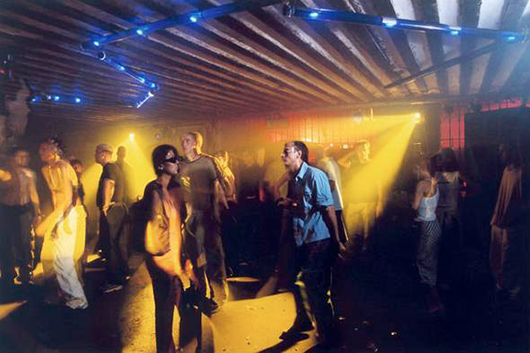
“It was a challenge back then to get people in Berlin to dance,” he says. “They would come and just stand around. But that was changing by the late ’80s.” By the mid 1990s, Tresor was considered by many purists to be the top techno club in the world. DJs and fans raved about the power and clarity of its sound system. People came for hard, punishing, sweat-inducing sonic beatdowns and got exactly what they wanted.
Tresor Floor, original location
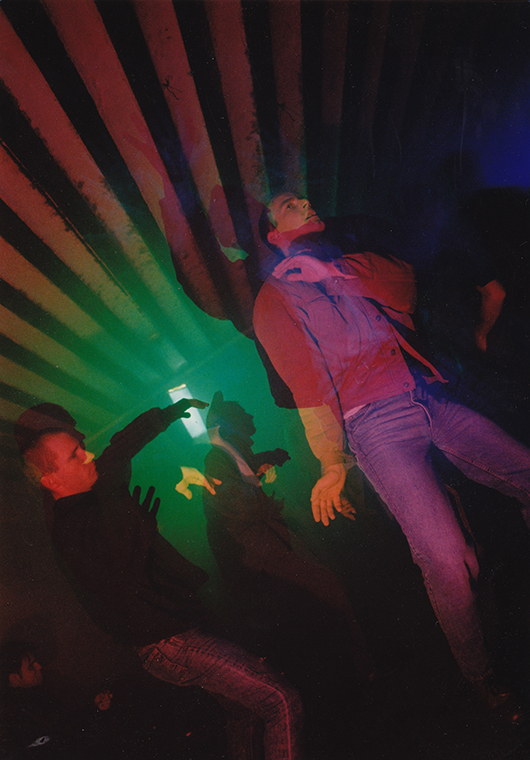
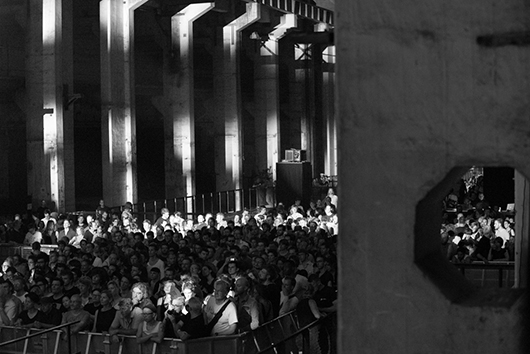
Tresor crowd, original location, 1991
But by the late ’90s and early ’00s, German techno was moving on, with new scenes developing in Frankfurt and Cologne. Labels like Force Inc., Mille Plateaux, Traum, and Kompakt were competing for the same audience. Or, in many cases, creating an entirely new fanbase that had no interest in Tresor or even Detroit techno. As a result, after a more than respectable 14 years in business, the original Tresor club closed in the spring of 2005.
Hegemann has this take on what happened: “The spirit was different in Berlin. Other clubs were opening that had exclusive bookings. The electronic-music business was changing,” he says. “We were all about the music; but as a business, it was a disaster. When we started, Berlin was full of open spaces; now it was getting fully booked every weekend, 25 million visitors coming here each year. The party never stopped, which is fantastic, but dangerous, too.”
Detroit Responds
Back in Detroit, Detroit DJ/producer Mike Huckaby, who became part of the Berlin-Detroit connection when he worked at the Record Time shop from 1992 to 2005, has a different take on Tresor’s fall from techno grace. “It came to the point where all the newer heads in Berlin and Europe had turned their noses up at Tresor,” Huckaby says. “Minimal culture changed the scene, man. The music, the length of the parties, even the clothes began changing at the beginning of the ’00s.”
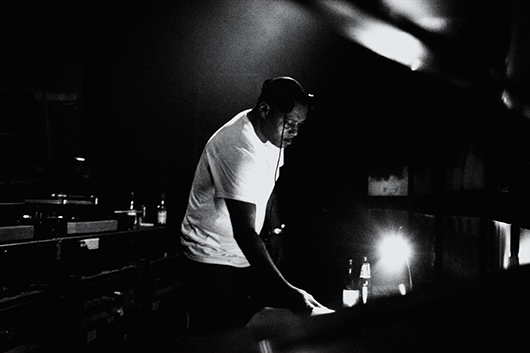
Mike Huckaby at Tresor (Photo by Tofa)
Still, according to Huckaby, Tresor’s decline did not alter the strong ties that Detroit artists had with the company. He notes that from the beginning, Detroit techno producers and DJs had the benefit of personal attention from Hegemann, Ernestus, and von Oswald—all of whom came to Detroit in the early ’90s slinging white labels of the latest tunes on Tresor and Basic Channel.
“They came all the way over here looking for us, hoping we’d like their records. Some of the guys internalized it right away, like Alan Oldham, who was already doing art and design work for Djax Records in Holland,” Huckaby says. “Claude Young was working [at Record Time] then, Daniel Bell would come in. Everybody did. I remember when [Basic Channel] came in with ‘Domina.’ They were actually relieved when we liked it. They kept coming back with more product. Dimitri was bringing in tracks by killer artists. The German stuff was so good Detroit DJs wouldn’t even listen to ’em first. It was like, ‘Just give me 10’ and then out the door. We got tight with them because they were sincere in their appreciation of what we were doing over here. They treated us like royalty over there. We never forgot that.”
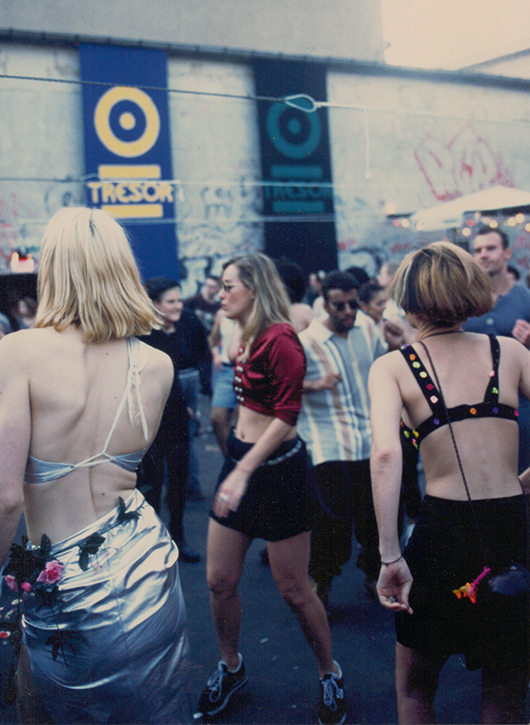
’90s Tresor crowd, original location
Huckaby says his first time at the original Tresor club was in 1997, when Detroit techno in Berlin was still raging. Basic Channel had expanded its dub aesthetic and now included sub-labels Burial Mix, Chain Reaction, Main Street, and Rhythm & Sound.
“Berlin was booming when I got there. I remember thinking how free it was. I mean it was cheap, you could pick a house or a building [to squat in] and call it yours, you could party for seven days straight,” he says.
But by the early oughts, that had changed. “How do you compete with Ricardo (Villalobos) playing three-day parties? Richie (Hawtin) relocated to Berlin and identified more with emerging minimal culture than with his Detroit roots,” Huckaby says. “He took a lot of people with him. New clubs catered to that, and people just didn’t want what Tresor had to offer any more. It wasn’t sophisticated. It attracted ordinary folks wearing black t-shirts. To be honest, I thought it was over for Tresor.”
Retooling
So then, how did Tresor claw its way back from the dead?
Hegemann says that new people were brought on to spark a revival in the company’s fortunes. “I never stopped believing that in Berlin we have the opportunity to do mostly anything we want. There is space for creative industries like ours in no other city in Europe. We could not do our kind of business in London or Paris,” he says. “It is impossible to even consider it. There’s no room, it’s too expensive. In Berlin, it’s still [comparatively] cheap. You can do it here.”
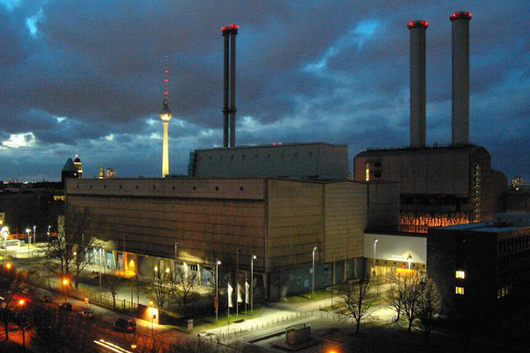
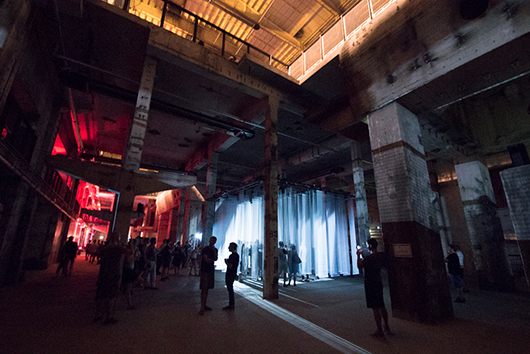
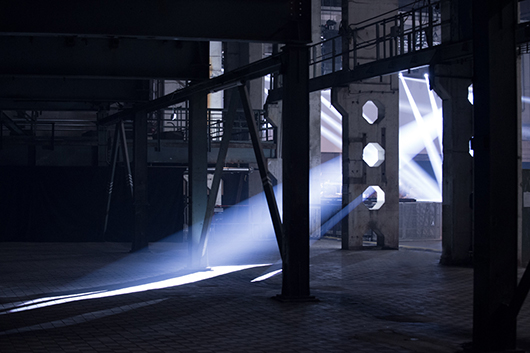
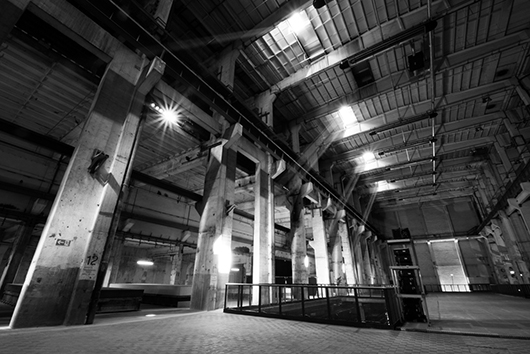
Kraftwerk, Tresor’s new location
Peter Van Hoesen at Tresor 22-Year Anniversary, 2013 (Photo by Camille Blake)
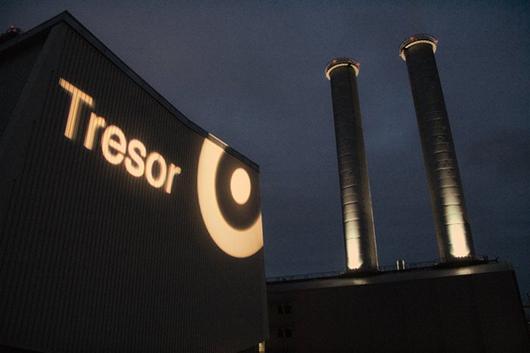
And he believed the new energy for the company had to come via a new club, because he says, “the club is the perfect platform for new ideas.” Hegemann began looking for a new space and found it in 2006 in another part of Mitte, in a building that once contained a power station. He wanted a place that would appeal to people seeking “adventures in contemporary and classical art, music, and dance; for some, a place for romance and fantasy, where you can have an experience that just says ‘Wow!'” The new Tresor club opened in 2007, but takes up only 10 percent of the space in its massive building. More projects are planned for the additional space.
“I’m currently most excited in getting young people involved in developing skills to do creative work. I see the club as more than just a place for a party,” Hegemann says. “I want the music to stimulate discussion and new ideas. This is what it’s all about for me now. You rarely see me in the club these days. There is too much else to do.”
Hegemann has left the running of the day to day details of Tresor to new, younger talent. The club bookings are handled by Diana Alagic, while the A&R and label management is the domain of Paulo Reachi, a French national who moved to Berlin four years ago and took on his role at Tresor in the summer of 2011. Reachi replaced Carola Stoiber, who had handled the label since its inception in 1991.
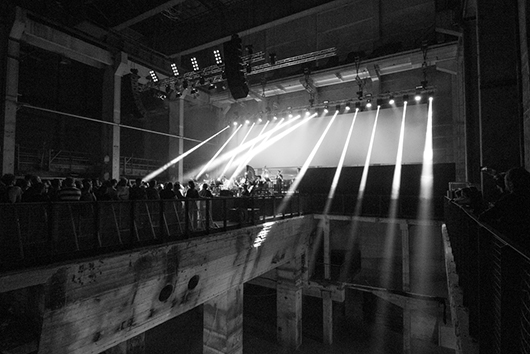
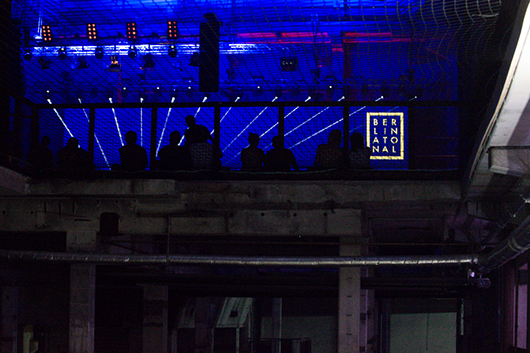
Berlin Atonal at Kraftwerk, 2013 (Photos by Camille Blake)
The fundamentals of the company are not lost on the new team. “The inspiration remains the same. The history of techno goes back a full generation and we respect our roots,” Reachi says. “The relationship between Detroit and Berlin never went away. We never [strayed] from underground techno and house. The influence is still there.”
Reachi says it was in fact Mike Huckaby who helped steer the Tresor brand back on track when he created a 20th Anniversary label mix in 2011. Along with songs by Jeff Mills, Drexciya, Robert Hood, and Surgeon, the mix featured Huckaby’s own homage, which he called “The Tresor Track.” “What Mike did was make our relationship with Detroit even more solid,” says Reachi. “It was an important piece in rebuilding the label, and renewing the energy. Big, big respect to him.”
Berlin Atonal at Kraftwerk, 2013 (Photos by Camille Blake)
But the renewal actually started a year before, in 2010, when Reachi began a reissue project that brought classic releases (Herbert’s “Mistakes” 12-inch, Scion’s Arrange and Process Basic Channel, Jeff Mills’ Metropolis, Drexciya’s Harnessed the Storm, and Daniel Bell’s The Button Down Mind of Daniel Bell) back into circulation.
Reviving Tresor’s glory days helped reinvigorate the label, but new releases have been just as important. Since 2012, Tresor has been on a tear, releasing tracks and full-lengths by Marcelus, Sleeparchive, Terrence Dixon, and a collaboration called Borderland from two old techno lions, Detroit’s Juan Atkins and Berlin’s Moritz von Oswald. “Getting Juan and Moritz together was a way of coming full circle with our Detroit-Berlin roots,” Reachi says. “Those are two guys who were swapping gear in the ’80s, now playing together in 2013. That’s perfect for what Tresor is about.” The new music hasn’t stopped there. The label has also launched a series of compilations called Kern, and the first participating artists include DJ Hell and DJ Deep.
Berlin Atonal at Kraftwerk, 2013 (Photos by Camille Blake)
So what’s next for Tresor? Hegemann appears to get even a bit more excited as he mulls the question. “There is a lot of work to be done on the building. The club is just the beginning of the future of Tresor,” he says. “I also have some interest in projects in Detroit. I see many of the same possibilities as I did in Berlin when I came here. My main interest now is providing young people with some structure, then giving them the freedom to create for themselves. It’s a very good strategy for growth. We’ll see what happens.”