
After an eight-year hiatus, Jackson Fourgeaud’s electro-touched alias, Jackson and His Computerband, is back this week with the release of its sophomore LP for Warp, Glow. To mark the occasion, the producer unveiled a video for “Dead Living Things”, an album cut featuring vocals from Planningtorock. The visual piece is a morbid dinner party seen from a variety of film noir perspectives, all of which pairs well with the track’s ominous synth growls and classy, daydream vocals. Director Alexandre Courtès, who has crafted videos for artists like Daft Punk and Justice, says of his latest endeavor, “This project is a direct reference to the works of Fellini and David Lynch. It is a juxtaposition of life scenes and actions that have nothing to do with each other in particular, that however create a fantastic dynamic and resolutely surreal experience.”
Slackk Preps New EP for Local Action, Shares Lead Single
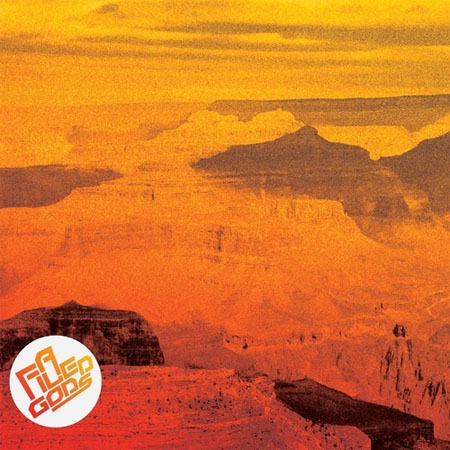
Later this month, the UK producer and dedicated purveyor of grime known as Slackk is set to return to the Local Action imprint with the new Failed Gods EP. The six-track record is said to pack “everything from ninjaman club destroyers to beatless synth pieces, with a healthy dose of weed and Twin Peaks in the mix,” as the rising tunesmith continues to spin instrumental grime in his own unique direction. Before Slackk’s EP drops on September 23, Failed Gods‘ tracklist can be found below, along with a stream of the effort’s machine-minded lead single, “Shogun Assassin.”
A1 Empty Bottles
A2 Algiers
A3 Shogun Assassin
B1 Silk Robe
B2 Room Made Vague
B3 Jackpines
B4 Locked Groove (vinyl only)
Check Out a New Mix by Jam City

Restless Night Slugs affiliate Jam City has shared a new mix on his SoundCloud, presenting a whiplash 36 minute session during which he packs an eclectic 22 tracks. Moving between a handful of his own tunes and on through a diverse list of artists—which includes everything from the Cocteau Twins to Dizzee Rascal to Helix and even a brooding remix of Whitney Houston—the UK DJ/producer’s so-called Earthly mix boasts the kind of forward-thinking hybrids the man has built his name on. Still, the results are just as wonderfully unexpected and gleefully exciting as ever. A full stream of the mix and its accompanying tracklist can be found below.
01 Cocteau Twins – Lorolei (edit)
02 Beek – Ckuntie
03 Suku – Barb Wire Riddim
04 EDMX – Ragga Clash
05 Beek – Higher
06 Jam City – Bird
07 DJ King Tiger-Z – Celebrate (JC edit x MikeQ drums)
08 Dizzee Rascal – Trapped
09 Jam City – Worst Illusion
10 Fiedel x J Holiday – Andreas It’s You
11 Helix – Untitled (E Mix)
12 Spooky – Nightcrawler
13 Divoli S’vere – Ckunt Pressure x Pass The Dutch
14 DJ King Tiger-Z – Shake It Fast
15 DJ K Millz – That Ass Fat pt.II (feat DJ Uniique)
16 Neana – Jaw Breaker
17 Jam City – Garlands
18 Frett – Bark
19 Whitney Houston x Danny Weed – It’s Not Creeper But It’s Ok
20 Rihanna – If It’s Lovin That U Want (Spooky Refix / JC edit)
21 Buddah – #WorkHa
22 Sleetmute Nightmute – Night Of The Long Knives
Video: Kingdom “Bank Head (feat. Kelela)”
Kingdom‘s collaboration with up-and-coming vocalist Kelela, “Bank Head,” was arguably the most striking track from the Fade to Mind co-founder’s recent Vertical XL EP, and now the lavish track has received a video treatment. Directed by Jude MC, the clip mixes verdant imagery with shots of Kelela against a celestial backdrop, giving the video a religious and apocalyptic bent that perfectly complements the tune’s nuanced blend of beauty and darkness. The appearance of the video is a welcome reminder of Kelela’s vocal talents—which we got a taste of last month when Bok Bokdropped a live grime mix featuring her singing—before she drops her forthcoming mixtape, Cut 4 Me, on October 1.
Download a New Free Album from Joker

Bristolian dubstep mainstay Joker has been practically off the map since his debut LP for 4AD dropped in 2011, but just yesterday, he quietly released an album of nine Sega-inspired tracks as a free download. Appropriately called Sega Joker Drive, the collection plays out in “stages” like the arc of a classic video game soundtrack, incorporating familiar 8-bit effects and saccharine pads. There’s no word yet on Joker’s next full-length, but his curious batch of new productions can be streamed and downloaded below. (via High on Beats)
Huerco S. Shares New Track from Debut LP

Up-and-coming house experimentalist Huerco S. still has a few weeks before the release of his debut LP for Software, Colonial Patterns, and is using the time to let loose with one of the album’s intriguingly enigmatic tracks. Called “Prinzif,” the cut is lifted from the middle of the DJ/producer’s forthcoming record, and finds him straddling a few different strains of grainy and concussed dancefloor music throughout its five-plus minutes. The song can be streamed in the player below, before Huerco S.’s Colonial Patterns drops on September 24.
Review: Logic Pro X
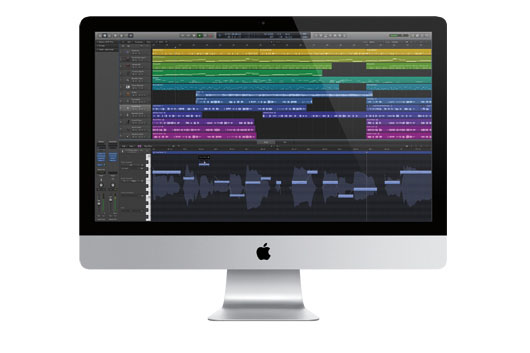
In the four years before Apple made the surprise announcement that it would release the next generation of its flagship audio program, Logic Pro X, there was much internet speculation (and even a little bit of fear) that Apple had planned to completely reconfigure Logic to act more like a beginner’s music production software—such as GarageBand—than a professional audio program. While Logic X does come with some new features aimed rather squarely at home songwriters and GarageBand graduates, this ultimately does not prove to be the case. With its latest update, Apple has made this version of Logic the smartest one yet, retooling the GUI, adding iPad remote control, and making for a more fluid workspace overall.
How It Looks
The refined graphic interface is the first immediately noticeable difference between Logic Pro X and its predecessor, as the updated program now sports a darker hue along with bolder icons and lettering—details which not only make it more pleasant to look at, but also somewhat easier to visually navigate. Furthermore, a few of the program’s key components have moved to new, largely more intuitive locations; the Transport now appears at the top-center of the screen, while the Library has moved from the right side to the left side of the screen. There are many other smaller changes that help make a more fluid workflow, such as volume and pan controls being accessible in the arrange window (in a similar fashion to GarageBand) and channel strips arranging their components to automatically reflect each channel’s signal flow. A new overlay has also been added to these channel components which makes bypassing a plug-in or opening its controls possible with a simple single click.
A session in Logic X
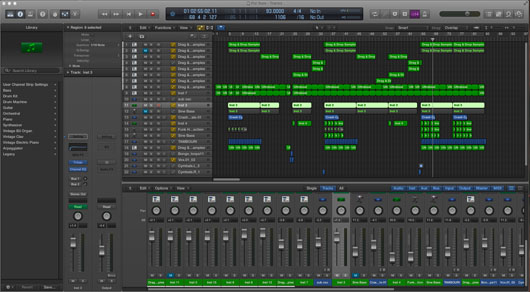
In truth, Logic X’s visual arrangement is largely identical to Logic 9 except for the modernized color scheme and the handful of other seemingly small changes already mentioned. Still, when taken together, they do make using the program less cumbersome, especially for any users who are more familiar with programs that accomplish many of the same tasks with less collapsible windows. Also useful to new Logic users is the Quick Help window, which serves as a concise and immediate reference for just about every feature the program has. Like Quick Help, a lot of these “new” visual features are a bit overdue in Logic, as they’ve existed in other programs for some time now, but they are nonetheless welcome improvements which make for a more productive user experience.
How It Works
In a similar fashion to the small-but-effective visual enhancements of Logic Pro X, the program offers some slight-but-useful updates to workflow, including the ability to create Track Stacks (multiple tracks grouped into a single, foldable track) and Summing Stacks, which sums all of a Track Stacks’ audio through one main channel. Another useful new feature is the Smart Control panels, which act similarly to the Macro Controls in Ableton, allowing users to adjust multiple parameters in a processing chain using one knob or button. For all of Logic’s included presets, existing Smart Controls arrive ready-to-use, but each one can be fully customized by the user or built from the bottom up using a number of templates.
Top: Drum machine controls on remote iPad app; Bottom: Mixer panel on iPad app
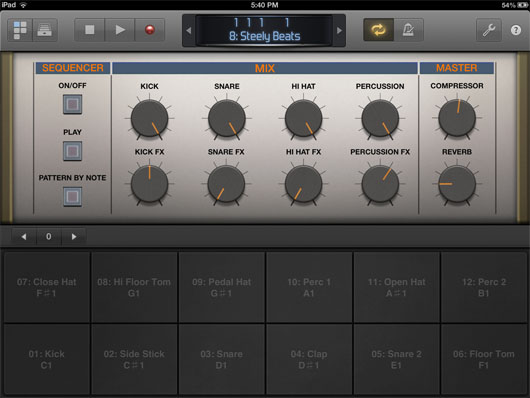
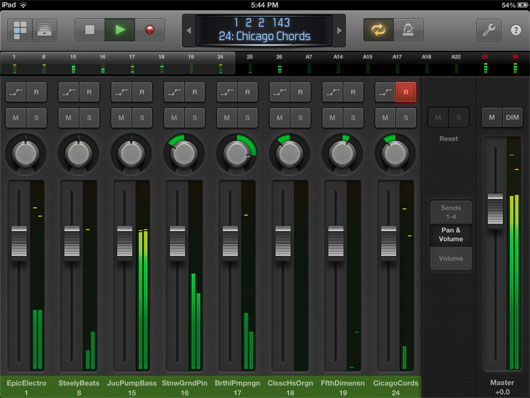
The Smart Controls become increasingly useful within the Logic Remote iPad App (free from the iTunes store), where these various controls can be manipulated by touch. Logic X’s accompanying iPad app is one of the most attractive features of the new program. Though it’s not incredibly precise for playing in synth lines or tapping out drum patterns (although it does get the job done), the app can be very helpful for adjusting instruments and channels, recording volume automation, or any similar action done during the mixdown process. The option to do simple tasks like adjust volume and panning, control the Transport, and toggle the metronome while not sitting directly in front of the computer is surprisingly liberating, and the fact that the app is completely ready to go out-of-the-box is a huge timesaver. Still, some sort of “advanced” Logic Remote app would be equally useful if it ever arrives down the line, as not having the ability to adjust the details of Logic’s stock plug-ins directly from the iPad seems like a rather major oversight.
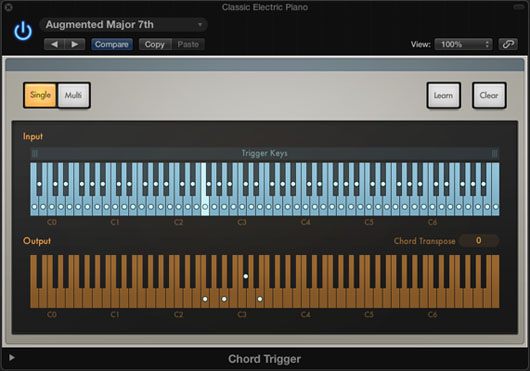
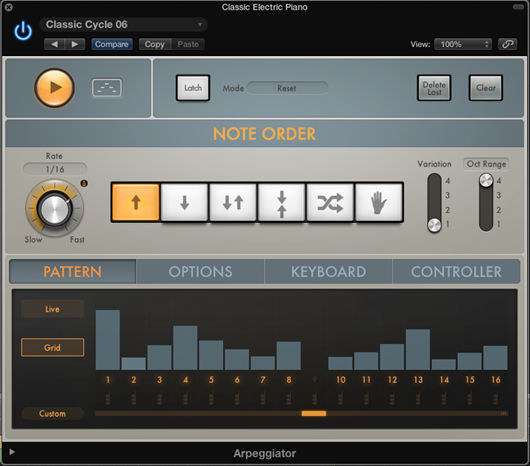
There are two other standout new features that are worth mentioning. First is the new inclusion of the Arpeggiator and Chord Trigger MIDI plug-ins. Again, these are features that many other programs have had for some time, but are smartly implemented here nonetheless. In essence, the Arpeggiator and Chord Trigger plug-ins are simple enough to understand; what makes them special, though, is the depth of options available. And furthermore, the design of each plug-ins’ interface facilitates interesting note combinations while also making the process easy to understand and repeat. For those users whose depth of music theory knowledge is not all that, well, deep, these tools will likely prove to be invaluable. The other notable new feature is Flex Pitch. Essentially a step from Logic’s existing Flex Time function towards plug-ins like Melodyne and Auto-Tune, the Flex Pitch function allows users to adjust the pitch of monophonic audio, doing so—within reason—with a respectable, mostly transparent sound quality. Using Flex Pitch within the Audio Track Editor window allows for more detailed control of the audio, giving users control over the timing, pitch, vibrato, and formant (ostensibly a tone control). Though the algorithm used to render these changes may not result in absolutely pristine audio, its sound is at least up to the standards of comparable programs.
Top: Chord Trigger MIDI plug-in; Bottom: Arpeggiator MIDI plug-in
How It Sounds
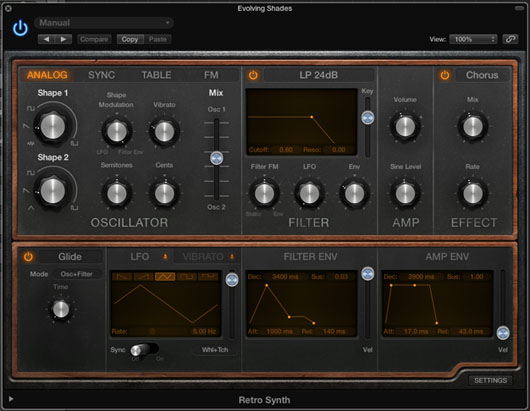
Like any audio production program, Logic only sounds as good as the person using it. With that in mind, Logic X does give users everything they need to make dense, unique, and professional-sounding productions. Its stock EQs and compressors are not the most hi-fi options, but are more than enough to get the job done well. And the long list of software instruments and FX which come with the program are not simply there to look cool, they actually can sound nice, and—especially with a bit of extra work—can result in rather unique tones. In particular, the electric piano, acoustic piano, and organ-modelling virtual instruments can be extremely useful for producers who would like to include such sounds in their productions, but don’t have the means to record in a studio. Maybe the plug-ins won’t sound exactly like a B3 or a Steinway, but they will certainly work fine in a simple house track. Furthermore, Logic X’s new instruments and FX—like the Retrosynth, Bass Amp Designer, and newly added FX boxes found on the program’s virtual pedal board—add fresh and interesting sonic flavors to the program.
A Retrosynth preset
The Bottom Line
Logic X costs about $200, putting it well below Live 9, Reason 7, and Cubase 7—all programs that essentially aim to accomplish the same tasks. Still, it seems likely that Apple may have kept the price this reasonable to help offset the program’s other costs; users are required to update their Mac to the newest OS, their existing 32-bit plug-ins will no longer work in this updated version, and an iPad is practically necessary to unlock the full potential of Logic X.
In the end, an update from Logic 9 to Logic X seems essential for existing users. Without a doubt, Logic X is an overdue improvement to the program, one that works smarter than the previous version and addresses many issues Logic probably should have dealt with long before now. Logic X may also be an attractive starting point for people who are beginning their ventures into digital music production. While maybe not the most intuitive program, it’s not too difficult to start working on decent-sounding music in a reasonable amount of time, and for those who stick with it and dig into the program, there is a lot of room to grow. That said, there’s nothing totally earth-shattering about Logic X. The “big” new features included with the program—mainly the Drummer instrument (a plug-in which creates a surprisingly natural sounding, human-played drum performance from inside the computer)—may be incredible from a computer-technology-advancement standpoint, but cater to users who aim to make Logic sound more like a traditional “band”—which is to say it likely won’t be utilized by electronic musicians and producers. For those who have spent many days, weeks, months, and years learning comparable production programs, a jump to Logic X does not seem to be an urgent necessity. On the other hand, there is no denying that the program boasts a powerful set of features and sounds unique to its platform.
MSRP: $199.99
Murphy Jax “We and the Machines”
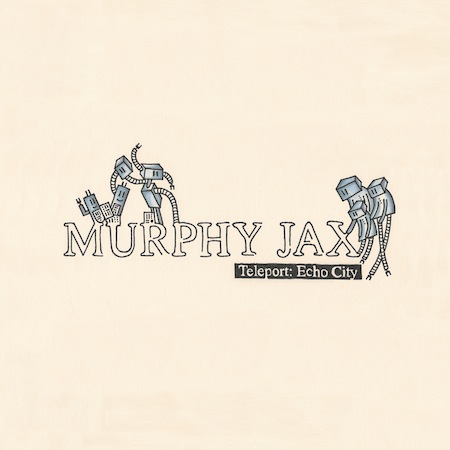
“We and the Machines” is our first taste of Murphy Jax‘s upcoming full-lengh, Teleport: Echo City, which is due out via Chiwax on September 4. The last time we heard from Murphy Jax, he had remixed Headman’s “Be Loved,” grounding it into a dancier, more-classic Chicago house structure. With Teleport: Echo City, Murphy Jax asks us to “imagine a pre-apocalyptic generation of robots on a planet of machines” while he applies house sounds and acid workouts to his sci-fi concept of war and chaos. The conceptual influence only skirts the surface of “We and the Machines,” which stays at a walking pace for most of its five minutes. Once the four-on-the-floor kick pattern finishes, Murphy Jax’s synths and claps have all slowly worked their way into a collective strut, never quite ramping up into a full-blown dance number.
Drumcell Sleep Complex
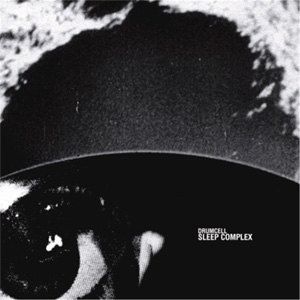
The cover art of Sleep Complex, the debut album from Drumcell (a.k.a. Moe Espinosa) echoes another one of this year’s big techno releases, Function’s Incubation. Juan Mendez (a.k.a. Silent Servant) is behind both cover designs, and it’s hard not to suspect that he noted a few similarities before the general public got a chance to do the same. These are a couple of long-brewing, full-length debuts from established names: Function’s album took nearly 20 years to emerge, Drumcell’s just under 10. Sonically, Drumcell and Function both play off of standard techno tropes, creating satiny, grayscale sound worlds out of familiar, purist sounds. However, the comparison fractures in an interesting way under scrutiny. Sleep Complex leisurely cuts a wandering path through a nighttime world that, like Espinosa’s home base of Los Angeles, is sprawling and unwieldy when seen from afar. It’s not as thematically concise as Function’s album, but even its nondescript moments have a seething, stripped-to-the-bone energy that propels listeners onward.
This album’s centerpiece is “Forgotten Guilt,” a kick-drum dirge minimally adorned with a submerged, electronically altered voiceover. The track isn’t far off from Plastikman’s “Ask Yourself,” which also played mind games with worn-down ravers—it’s a braindance for people whose brains are struggling back to full functionality. Espinosa leaves open the question of whether it’s a pitiless taunt or a psychic road to redemption, and this ambiguity infuses the remainder of the album, which is instrumental save for the creepy police-scanner ambience of “Dispatch.” It’s an old-fashioned touch, and one that lends a certain coherence and drama to interstitial tracks that might otherwise pass by with minimal notice, much like LA’s vernacular architecture of cinder block and stucco housing. These unassuming tracks, in turn, set Drumcell up to do some serious damage with songs like “Behind You” and “Departing Comfort,” which don’t dazzle but nevertheless build up a formidable, locomotive-like inertia.
It’s rare to hear stripped-back machine music audibly preoccupied with such human concerns. The listener hardly needs a title like “Rooted Resentment” to pick up on the internal strife couched in its smoggy, droning background. The kick drum is Sleep Complex‘s protagonist, and it never falls in square four-by-four patterns. Kicks are instead grouped into off-balance masses, but they’re constant in a way that allows us to almost identify with them, as if they were a surrogate maternal heartbeat. Apart from that, we’re lucky to get anything but the most subtle hi-hats rising out of the murk, while the LP’s synth lines maintain a steely alienation from their surroundings, even as they stay in lock step with the rhythm. It’s a good sign that such tightly controlled sonics rarely feel limiting, promoting instead a hypnagogic state. Protected by its hammered-metal contours, Drumcell’s Sleep Complex finds sly ways to express its earthly concerns. It’s easy enough to make machines sound alienating, but allowing a breadth of emotions to play out amid pounding kicks is something special.
Ricardo Tobar “If I Love You (Low Jack Remix)”

Chilean producer Ricardo Tobar first appeared back in 2007 with two EPs for James Holden’s Border Community label. Those releases explored a strain of detail-oriented techno, but Tobar has continued evolving his sound. His new full-length, Trellis, is set for an October release via French label Desire, and was preceded by lead single “If I Love You,” which dropped last week with a remix by Parisian producer Low Jack. The French artist turns Tobar’s track into a dark burner that builds on a barrage of resonant kicks and a swelling siren that seems to hint at oncoming disaster.
