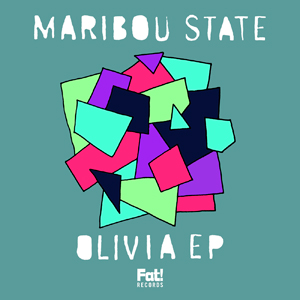
London duo Maribou State—who we heard from a bit towards the end of last year—just unveiled this video for “Olivia,” the title track from its forthcoming EP for the Fat! label. Throughout the course of the video, a story unfolds that is akin to a bad trip or some sort of waking nightmare, but the track itself is more of a moody affair, one marked by melodic percussion, an almost tribal drum pattern, and an instantly memorable combination of vocal chops. The Olivia EP will drop on Feburary 6, but in the meantime, you can check its artwork and preview clips from the two-track endeavor, below.
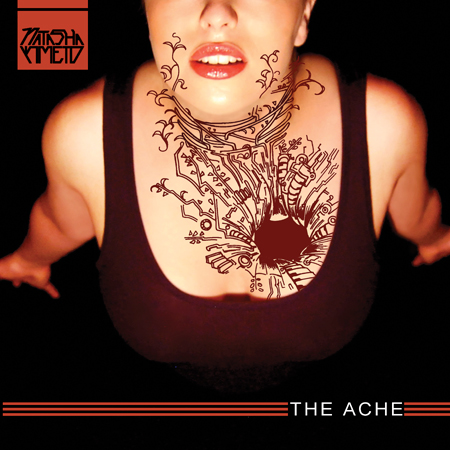
After contributing a standout track to Dropping Gems’ recent Gem Drops Two compilation, Portland producer Natasha Kmeto has revealed plans to return to the label with a new EP, The Ache (artwork above). “Detox Saturday” appears towards the end of the forthcoming endeavor with a bouncing beat, space-age synths, and some deliciously buzzing low-end glides. The heavenly vocal harmonies which float atop the beat are Kmteo’s own, side-chained and looped in order to add an extra sense of rhythm and movement to the three-minute endeavor. We’re told to expect similarly vibrant efforts that combine bass-centric productions with hearty helpings of soulful vocals when The Ache drops on February 14. You can peep the full tracklist for the forthcoming EP after the jump.
The Ache Tracklist: 01 Big Face 02 This Is For You 03 Not Perfect 04 Snake Charmer 05 Ouzo Fade 06 Valley 07 The Ache 08 Detox Saturday 09 Snake Charmer (The Great Mundane Remix) 09 The Ache (Letherette Remix) 10 Detox Saturday (Danny Corn Remix)
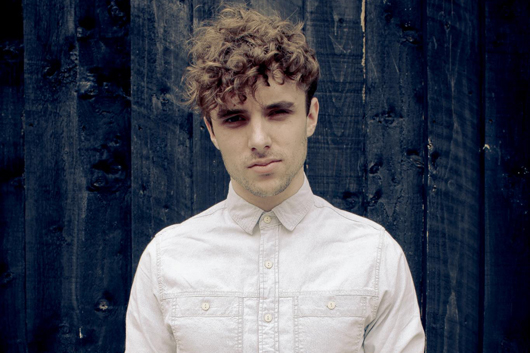
Mickey Pearce, the now official handle of the artist formerly known as Shortstuff, has announced the imminent release of his “Don’t Ask, Don’t Get” b/w “I Am” 12″ via Swamp81. The London producer’s forthcoming single—which was originally scheduled for release last fall—boasts two dark, rhythm-focused cuts and is sure to see its share of rinses once it finally drops one week from today on Februrary 6. You can check out the cover art and stream both tracks from Mickey Pearce’s upcoming record below. (via FACT)
XLR8R Couldn't find the embed function for type: "soundcloud" and source: "<embed allowscriptaccess="always" height="225" src="https://player.soundcloud.com/player.swf?url=http%3A%2F%2Fapi.soundcloud.com%2Fplaylists%2F1548968" type="application/x-shockwave-flash" width="100%">".
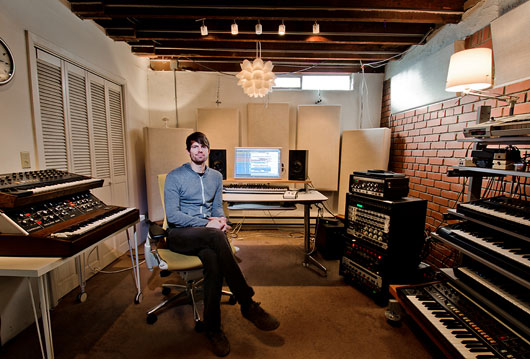
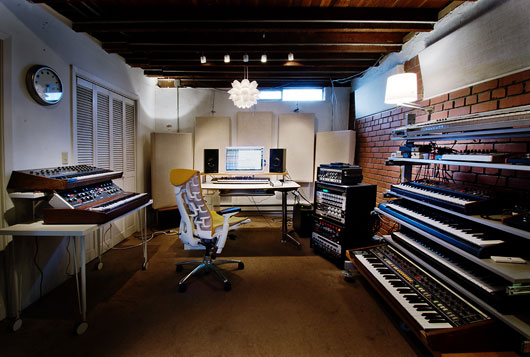
For much of the past decade, Scott Hansen has been piling up accolades as an artist. But prior to last year, it’s fair to say that he was often thought of as an amazing graphic designer who also happened to make some nice tunes under the name Tycho. In 2012, following the widespread acclaim surrounding Dive, his most recent full-length, Hansen’s musical chops have moved to the forefront, and it’s likely that a certain portion of Tycho fans now know a lot more about his songs than his design work. Questions of perception aside, there’s little doubt that the San Francisco-based Hansen is an incredibly talented individual. But given that the recent spotlight has shifted toward his musical output, we figured now would be a good time to delve into Tycho’s studio and find out a little more about exactly how he creates his rich, synth-laden soundscapes.
XLR8R’s In the Studio series is sponsored by Dubspot.
Has your production method evolved much over the years? No, I’ve pretty much always had the same process. It’s always been hardware. Actually, when I started out [in 2001], I’m sure there were some people doing stuff with computers, but there weren’t really virtual effects and virtual synths and all that. All my initial gear was outboard and I did all the sequencing and recording outboard too. Basically, I didn’t use the computer for anything. I started using the computer in a limited sense for The Sunrise Projector (Past Is Prologue). Now, everything is outboard except for the arrangement, and that’s all done in Reaper. Actually, not everything. I definitely use quite a bit of compression and EQ plugins. The effects I’m using are for color and to try to get the vibe of the unit. I’ll use outboard stuff, and then I’ll do the technical/surgical stuff in the box.
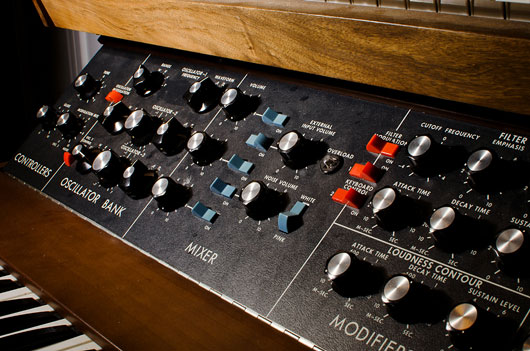
You’re pretty heavily analog in terms of the sounds and equipment you favor. As far as tone generation, it’s all either analog or virtual analog. It’s mostly outboard. I just feel like no matter what is generating the tone, if it goes through all the transformers and circuitry of analog hardware to get it into the box, that’s where I feel like it adds that kind of magic. And if you have an analog synth to begin with, there’s a little bit more.
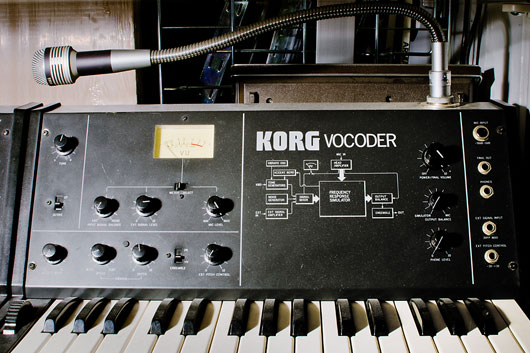
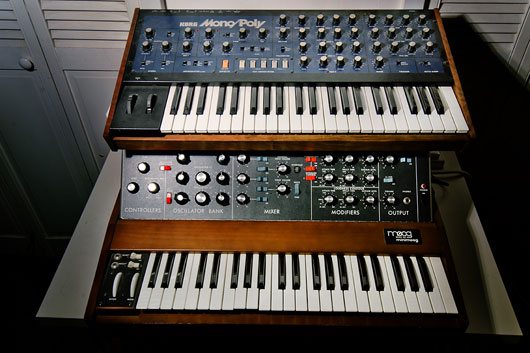
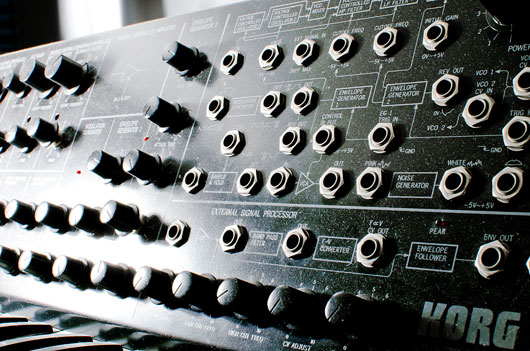
When did you start collecting gear and synths? When I started, the first thing I got was a drum machine and a little synth. I moved up to a sampler/drum machine, the Ensoniq ASR-X Pro. I just started [collecting gear] after that. I think my first real synth was the Korg Triton. It’s a workstation. I got it because it could also do sampling and sequencing, so I knew that I could use that instead of a computer. Then I learned about analog. I really didn’t understand the difference between analog and digital and virtual analog and all that. I got a Korg Mono/Poly, and that’s when I realized what everyone was talking about. That was right when people were figuring out that the old synths were kind of better, anyways.
Would you say that you have a gear fetish? I like tweaking the studio and wiring things up almost as much as making music, so that’s kind of a hobby of mine, in and of itself. I don’t like to collect gear that I know I’m not going to use, though. I don’t like the idea of unused gear laying around. Right now, I think I’m kind of in that spot inadvertently, just because there isn’t enough to space to have everything always hooked up. I’m trying to keep it slimmed down, so I keep the ones that I’m really using at the moment here, and the rest of the stuff is all stored away.
Do you have a favorite or most essential piece of gear? Absolutely. I feel like I think about that a lot. I don’t like the idea of being tied down by all this [equipment]. I really love the idea of just being able to go with a laptop, but with my process, it’s not really possible, so I kind of fantasize about what I would take. I think it would be the Mono/Poly and a Virus Indigo. If I had those two, and maybe my little Sequential Circuits, I could probably get away with it. Then I’d probably bring a little rackmount Moog. Also, my preamps and compressors, I would definitely need that. It wouldn’t be light, but I could probably get away with just a set of favorite stuff.
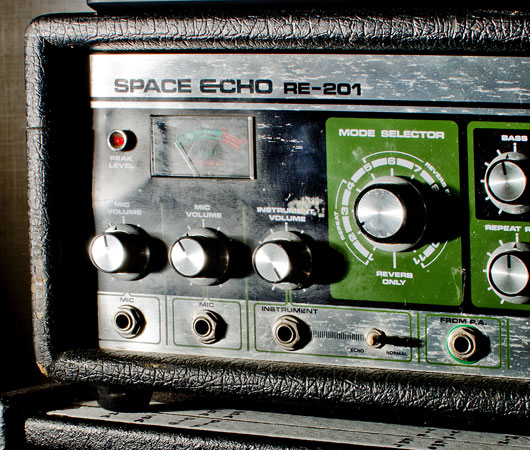
How do you make such a rich, warm sound? I think it’s an artifact of several levels of effecting. You’ve got a synth, and you’ve got a pretty warm tone to begin with, and then I’ll hit an analog delay. That will impart its own character. I use my Roland Space Echo a lot, because it’s tape, so you get the tape saturation and warmth. And then you run it into the preamps, and those are transformer based, which gives its own kind of harmonic distortion. Then I’ve got these things called Distressors, they’re these Swiss-Army-knife-type compressors. They’re kind of tape-saturation emulators, so that’s another layer of tape and harmonic distortion. Usually, after that, I go into the box, and there are a few techniques to warm things up or give [the tones] this rich sound. [Those techniques are] usually convolution reverbs and delays, things like that.
Did you have formal music training or are you self-taught? When I was 22, I just started messing around with drum machines and approached it from a producing standpoint. Slowly, over time, I learned enough that I started considering myself a musician, where I actually knew how to play instruments. But still, when I talk to my real musician friends, they’re calling chords out and I have no idea what they’re talking about. It’s more about playing by feel [for me].
You do incorporate some organic instrumentation though. Yeah. As synth driven as Dive is, if you really break it down into percentages, it has quite a bit of sampled drums. Almost all the songs were either originally written on guitar or feature a guitar in them. Almost all the basslines are normal electric bass.
How do you go about melding traditional/organic instrumentation with electronic music without it sounding forced? That’s never been that difficult. I think it’s because I use so many effects on everything. At the end of it, sometimes the guitars end up sounding indistinguishable from a synth. Once you put enough reverb, compression, and delay on things, you can start to get things into the same space, no matter where the original tone came from. Basically, I’m kind of applying the same ideas to all the sources, so at the end of it, it becomes cohesive.
Do you have a set songwriting process? It’s almost always melodic, like [I start with] a 16-bar melody. Usually, I immediately throw in the bass. Those are the important parts for me to set the mood of a song. The melody has this one-dimensional thing going on, and then you throw the bass in and it can open it up and change things. From there, I start working through all the strings. For percussion, I’ll usually start with some [kind of template], just a loop to give myself an idea or a grid. That’s the last thing I do, go in with a fine-tooth comb and arrange the beats to serve the music.
How much does graphic design play into your music-making process? I drew my whole life, and then I found out about computers in college and what they could do—[before that], I didn’t really understand what design was. I started working on design, but I knew there was some missing piece. I feel like music and design complete the idea of each other for me. So, it’s like whatever I’m trying to express in one really can’t be fully expressed without the other. I’ve always seen them as the flipside of a coin and bounced back and forth. That’s the whole idea behind the music and really the design. I feel like my whole design career has been built up creating these storyboards for what will eventually be motion. That’s the next phase. I want to take the visuals to another place, where it’s taking that vision and fully fleshing it out. I see motion and sound as very related, so that’s the final thing. I feel like all the design has been little ideas and things to choose from for what will become a film-type thing.
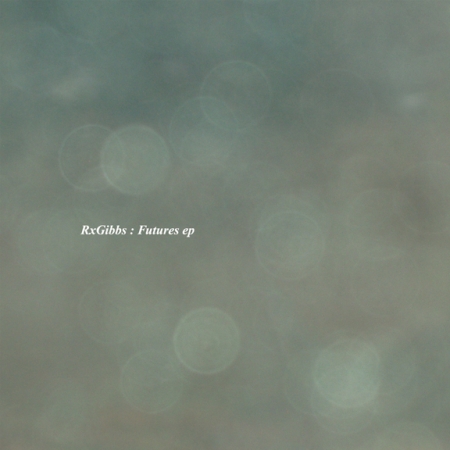
First up on the 2012 release schedule for the burgeoning, multi-national Cascine imprint is a digital EP from Michigan producer RxGibbs. The title track from that six-song release perfectly encapsulates the cool energy and lush ambiance found on Futures, all of which evokes the expansive dance music of Blondes or The Field, but maybe with a subtle nod to the kinds of retro-futuristic synth-pop and Balearic vibes that Cascine has built its reputation on. Look for the rest of RxGibbs’ solid EP when it drops on Feburary 21.
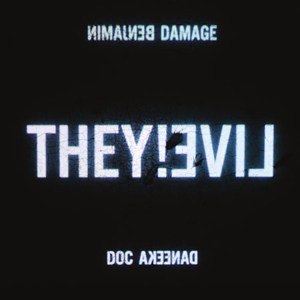
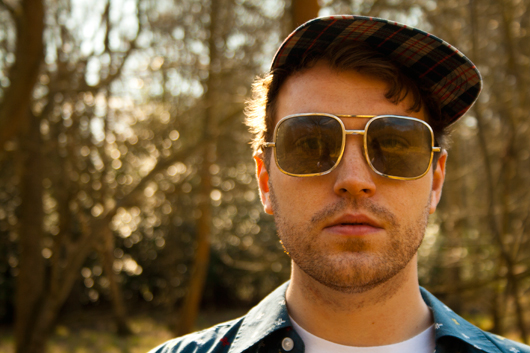
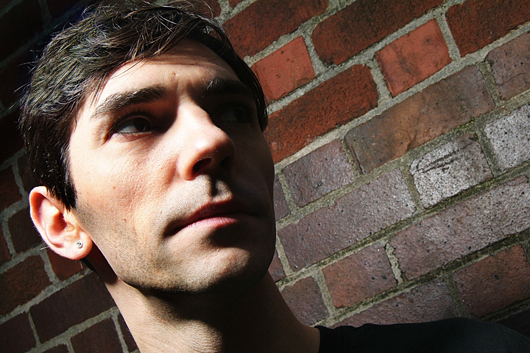
On They!Live, UK producers Benjamin Damage and Doc Daneeka continue to find the point at which the former’s rolling techno sensibilities meet with the latter’s percussive house inclinations. Expanding on the “Creeper” b/w “Infamous” single, the pair’s first collaborative LP presents eight new tracks (and one album edit of the aforementioned “Creeper”) that voyage into continually deeper territory, and, surprisingly, the results are not always aimed at the dancefloor.
From beginning to end, They!Live is impeccably produced—the synth tones are rich and distinct, the bass full and heavy, and the drums so precise that the music takes on a truly textural quality. As the album unfolds, one thing becomes clear—when this pair hits the right mark, the results are just about as good as that of anyone currently crafting techno-infused bass music. “Creeper,” which originally saw a release back in March of last year, is undeniably still a banger, and the new album edit weaves even more crescendoing sequences amongst the shimmering hats, bouncing toms, and swinging snares. In the same vein, They!Live offers tracks like “Juggernaut” and “Elipsis Torment,” both of which rely on relatively simple patterns and collections of propulsive drums to angle them towards the futuristic side of the dancefloor.
Damage and Daneeka manage to place an unexpected moodiness between these more club-oriented offerings, putting together a number of tracks that land somewhere within amorphous post-dubstep territory. Fortunately, this yields only one major misstep on the yawn-worthy “Battleships,” a cut that features an adequate vocal performance from Abigail Wyles (who contributes to a total of three songs on the record), but fails to culminate into anything substantial and appears way too early in the track order (second) to really make much sense. That said, Wyles and company do connect on the LP’s opening track, “No One,” which utilizes a slow, somber build before transforming into a deep, rolling techno/bass-music hybrid, ultimately making for They!Live‘s standout new offering. The other mood-tinged productions vary in their aim, but nonetheless add to the record. “Charlottenburg” employs a glorious procession of sticky synths for a skittering UK-style tune that, to its credit, never fully erupts. “Halo,” which again features the processed vocals of Wyles, is the LP’s only true “song,” and the subdued feel, and light, cloud-like production makes for a enveloping experience.
As the album’s far-too-short closing number, “Bleach & Penicillin,” takes the listener through one last run of emotive house, They!Live reveals itself as more of a collection of tracks than a proper album. And although those tracks are, for the most part, quality undertakings, and the LP does maintain a consistently stark and somber mood, the shifting tempos and styles on They!Live do detract from its natural momentum. It’s a solid effort, and one with some ace tunes that will certainly be snapped up by intrepid DJs, but as a full-length, it might be better with a reorganized tracklist in your iTunes music folder.
This cut of gritty, futuristic hip-hop is the result of a collaborative effort between one Jon Phonics (pictured above) and LuckyMe cohort S-Type. Together, the two producers have amassed a litany of blistering synths, skittering hats, rolling toms, crisp chords, and ascending arps to qualify “Swamp Donkey” as a full-to-the-brim head-nodder. But this collaborative effort is not merely a one-off for Phonics, as the up-and-coming Londoner has turned in a total of three original tunes for his upcoming Grid Games EP, which showcases the young man’s talents alongside fellow beatsmiths BUG, Pete Cannon, and Jeeks. After giving “Swamp Donkey” a spin, you’ll find the artwork and tracklist for that forthcoming EP—which, incidentally, marks the inaugural release of the PRISM label—after the jump. (via Earmilk)
A1 Jon Phonics x BUG “Jack Duckworth” A2 Jon Phonics x Pete Cannon “ROMES” A3 Jon Phonics x Jeeks “Double Vision” B1 Jon Phonics x S-Type “Swamp Donkey (Kidkanevil Remix)” B2 Jon Phonics x BUG “Jack Duckworth (Ghost Mutt Remix)” B3 Jon Phonics x Pete Cannon “ROMES (Pedestrian Remix)”
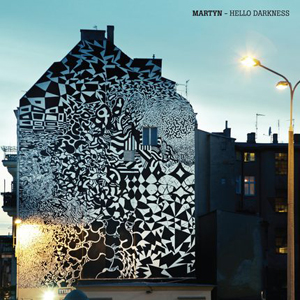
Martyn has announced plans to return to FlyLo’s Brainfeeder imprint with the release of a new 12″ in the coming months. Alongside a brand-new track from the bass-music veteran himself entitled “Hello Darkness”—which we’re told finds Martyn existing somewhere between “2-step, driving techno and old rave”—the single comes backed with two remixes of cuts from his 2011 Ghost People LP. The first will see Night Slugs’ head honchos L-Vis 1990 and Bok Bok taking on “Bauplan,” while the mysterious Berliner Redshape has been given the task of reworking Ghost People‘s standout closing tune, “We Are You in the Future.” The single is set to drop March 19, but for now, you can check the artwork below and preview each track via some rather short streaming snippets here. (via FACT)
Taken from the They! Live LP by Benjamin Damage & Doc Daneeka (which was just released today via 50Weapons), “Halo (feat. Abigail Wyles)” is a somewhat uncharacteristically somber track from the pair of producers, who are likely known best for propulsive, bass-driven club tunes. And the video featured here is equally as poignant and heartfelt. The piece, directed by Lewis Watkins, mixes old reels of 8mm film and more recent and crisp footage of a young woman going about her day all alone, though she is intermittently joined by a few creepy dudes with suits and masks on. Watch the beautifully surreal music video up top, and check out more of the They! Live album here.
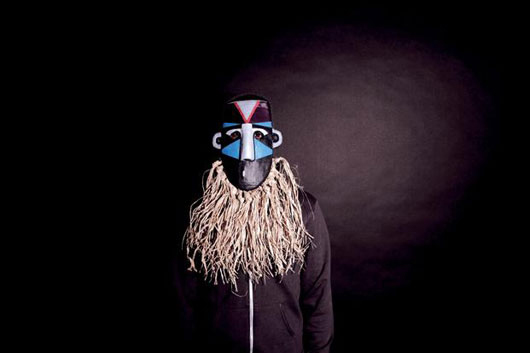
Mask-wearing UK producer SBTRKT has announced plans to make his way around North America for the better part of March and April. Beginning with a stint at Austin’s SXSW festival, SBTRKT (and his live collaborator Sampha) will be making appearances on both coasts, joined by Sepalcure, or alternately just Machinedrum, at select shows throughout the two-month voyage. In addition, the South London resident has announced a forthcoming “Wildfire” 12″, which will see a release on February 21 and come with an instrumental version of the tune along with the Drake-featuring “OVO Remix.” You can check the full list of tour dates and stream the aforementioned remix below.
SBTRKT US Tour Dates: $ = with Sepalcure % = with Machinedrum March 14 – 18 SXSW, Austin TX March 21 Mercy Lounge, Nashville TN % March 22 Masquerade , Atlanta GA % March 24 The Orpheum, Tampa,FL March 25 Ultra Music Festival, Miami FL March 27 Georgia Theatre, Athens GA % March 28 The Orange Peel, Asheville NC % March 30 930 Club, Washington DC March 31 TLA, Philadelphia PA April 2 Music Hall Of Williamsburg , Brooklyn NY (DJ Set) $ April 3 Webster Hall, New York, NY $ April 4 Paradise Rock Club, Boston MA % April 6 House Of Blues, Cleveland OH April 7 House Of Blues, Chicago IL April 8 Majestic, Madison WI April 10 Fox Theatre, Boulder CO April 11 Belly Up, Aspen CO April 13 House of Blues, San Diego CA % April 14 Coachella, Indio CA April 16 The Independent, San Francisco CA % April 18 Wonder Ballroom, Portland OR % April 21 Coachella, Indio CA