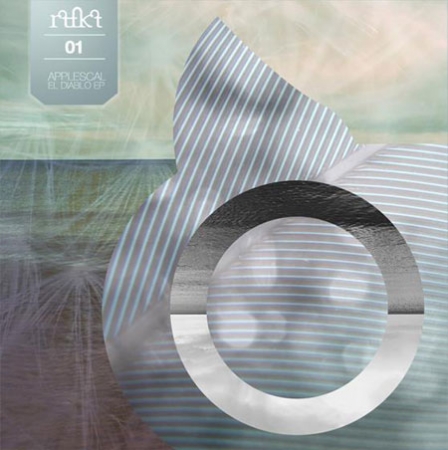
Amsterdam producer Applescal‘s El Diablo EP (pictured above), released as a free download yesterday via the brand-new RTFKT imprint, offers about as much variety as a three-track release can hold, from the pensive repetition of “Mr. Cold” to “No Offence”, an aggressive and heavily distorted piece that seems doomed to fall apart at any moment. Featured here, the title track is replete with the 8-bit coloration of a retro video game soundtrack. Thankfully, Applescal skirts the shallowness that can so easily result from such sounds, and chooses instead to employ a central melody with a surprisingly emotional tug. You can stream and download the full EP after the jump.
XLR8R Couldn't find the embed function for type: "soundcloud" and source: "<embed allowscriptaccess="always" height="225" src="https://player.soundcloud.com/player.swf?url=http%3A%2F%2Fapi.soundcloud.com%2Fplaylists%2F1308760" type="application/x-shockwave-flash" width="100%">".
When XLR8R took a closer look at modern ballroom and vogue house earlier this year, the music appeared prime to break out in a major way. Largely built upon raw, upfront drum sounds, recycled snippets of hip-hop and R&B, and, most importantly, the ever-present “Ha” (itself a repurposed Masters at Work sample), vogue house seemingly offered the sort of sound that tastemaking and blog-reading DJs would snap up with aplomb. Hell, even Diplo championed the ballroom scene. Yet, for whatever reason, the expected vogue-house explosion hasn’t really happened. While a handful of non-ballroom producers and DJs (most coming from the world of bass music) have experimented with the genre, the music essentially continues to hum along in the underground.
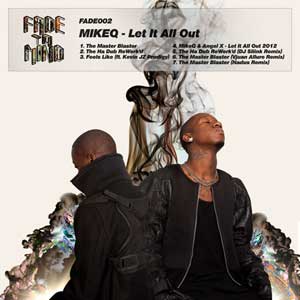
So what does this mean for Let It All Out? The seven-track EP is the first “official” release from New Jersey’s MikeQ, one of the unquestioned leaders of the current vogue-house scene, and follows in the wake of a slew of self-released tunes he’s dropped over the past few years. Let It All Out is also the second record on Kingdom’s Fade to Mind imprint, which has already received mountains of praise despite its short discography. Given the EP’s high level of quality, the acclaim is unlikely to cease in the near future. Eschewing obvious hip-hop/pop/R&B samples and employing a greatly refined approach, it appears that MikeQ has made the proverbial “leap” as an artist.
Early ballroom adopters might initially groan at the inclusion of the title track, which has been the closest thing to a vogue-house crossover anthem in 2011. That said, the song, produced in collaboration with MikeQ’s best friend/nemesis Angel X, is undoubtedly still new to most of the electronic-music world. Furthermore, the “2012 Version” included on the EP does change things up from the prior versions of the song that have been circulating on the web. The track keeps the potent Ha drops front and center, but MikeQ switches up the drum patterns while adding in some jacking, ravey synth stabs. In all honesty, “Let It All Out” sounds better, and, yes, more polished than than ever. That sort of tactic isn’t often encouraged on XLR8R, but given the blown-out, ultra-raw sound MikeQ was offering up less than a year ago, this kind of growth is a very good thing.
To its benefit, the entire EP displays that same polish. Opening cut “The Master Blaster” is undoubtedly MikeQ’s most accomplished work to date, a big-room house tune punctuated by sleek, angular synths that swiftly fly through the song. It’s obvious that MikeQ has been taking production notes from the rest of the Fade to Mind crew, making these productions equally suitable for the basement, the ball, and the club. “The Ha Dub Rewerk’d” is another potent and remarkably mature effort, as the producer delivers a nearly nine-minute track that liberally reformats Masters at Work’s “The Ha Dance” without losing steam or growing stagnant. Those craving something a little edgier can find solace in “Feels Like,” a hard, attitude-soaked tune dominated by a fierce MC turn from Philadelphia’s Kevin Jz Prodigy. It’s not subtle, but the song bangs harder than anything else on the EP.
The release is rounded out by a trio of remixes, the best of which is the Jersey club rework by the up-and-coming DJ Sliink. The Newark-based artist takes “The Ha Dub Rewerk’d” and gives it the club treatment, giving the percussion some serious stutter and infectiously repeating the MAW samples again and again. The closing remix from Nadus flips “The Master Blaster” in a similar fashion, only utilizing footwork as a baseline instead of club music. The only ballroom-styled remix comes from one of MikeQ’s fellow vogue-house heavyweights, Vjuan Allure, who interestingly sidesteps the Ha and transforms “The Master Blaster” into a hyperactive house monster loaded with swooshing synths and a seemingly endless series of crashes.
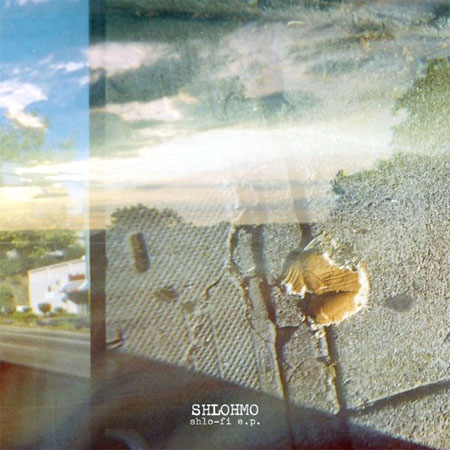
You may remember a recent download we posted from Glaswegian producer Soosh, who offered a delicate and subdued take on Shlohmo‘s “Couch” that was snagged from the California beatsmith’s forthcoming re-issue of his debut effort, the Shlo-Fi EP. Now, you can stream the entirety of the new deluxe edition of that record. Scheduled to drop on December 5 via Error Broadcast, the re-release gives buyers the choice between vinyl and digital copies of the original or the new deluxe edition, the latter of which features Soosh’s remix alongside fresh contributions from Anenon, S. Maharba, Wanda Group, and Jameszoo. Check out all of the available tracks in the player below. (via The FADER)
XLR8R Couldn't find the embed function for type: "soundcloud" and source: "<embed allowscriptaccess="always" height="360" src="https://player.soundcloud.com/player.swf?url=http://soundcloud.com/fadermedia/sets/tk/s-Nazrm" type="application/x-shockwave-flash" width="100%">".
Brooklyn duo White Ring recently released a new 12″ via Texas-based label Handmade Birds. The single features a cover of Neil Young’s “Hey Hey, My My” alongside original track “Felt U,” the latter of which is of particular importance to White Ring, both as a favorite track amongst fans and as the closer to the outfit’s live sets. Placing an emphasis on space, “Felt U” finds White Ring working in a style similar to that of spacey hip-hop producer Clams Casino—or just about any other Tri Angle-signed artists, for that matter—as echoing claps and soaring synths contrast with a hi-hat pattern that would just as easily be at home in the world of Southern rap music.
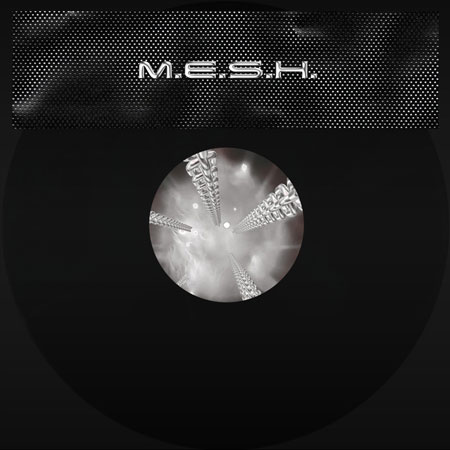
James Whipple (a.k.a. M.E.S.H.) has put forth a handful of remixes for the likes of Teengirl Fantasy, Amerie, and o F F Love, and now the Berlin-based producer has focused his talents toward the realm of original productions with the recent release of his Share The Blame EP (pictured above) via German label Dyssembler. “On My Body” is taken from that record, and blends a brooding rhythm with a tense, ravey synth melody—seemingly drawing inspiration from both hip-hop and the R&B-saturated current that runs through much of contemporary electronic music. Share The Blame is available as a digital download or on 12″ vinyl at Dyssembler’s webstore; the 12″ features three M.E.S.H. originals and a remix from Teengirl Fantasy, while the digital version includes additional remixes from Craxxxmurf and Arca. You can listen to the full release after the jump.
XLR8R Couldn't find the embed function for type: "soundcloud" and source: "<embed allowscriptaccess="always" height="225" src="https://player.soundcloud.com/player.swf?url=http%3A%2F%2Fapi.soundcloud.com%2Fplaylists%2F1155088" type="application/x-shockwave-flash" width="100%">".
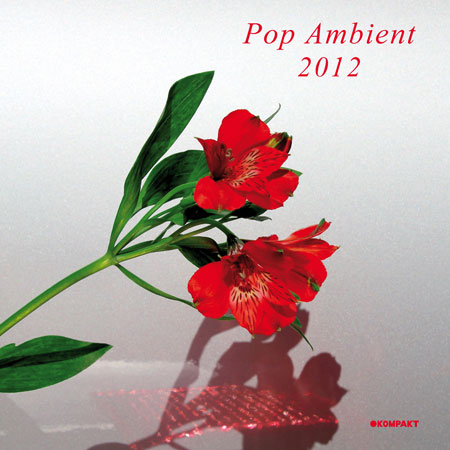
Kompakt‘s Pop Ambient compilation series has already spanned over a decade of music, with 11 releases so far. Pop Ambient 2012 (pictured above) marks the latest installment, and is slated to drop on January 31. The release will feature 10 new tracks from a handful of talented ambient-leaning producers, including the likes of Kompakt co-founder Wolfgang Voigt, the “sensitive musical signature” of repeat Pop Ambient contributor bvdub, and The Field, who contributes a new tune under his Loops of Your Heart alias. Before the record drops at the end of the year, you can check out the full tracklist below.
01 Mohn “Manifesto” 02 Superpitcher “Jackson” 03 Morek “Pan” 04 Magazine “The Visitor’s Bureau (Magazine Edit)” 05 Triola “Richmodis” 06 Wolfgang Voigt “Rückverzauberung 5” 07 bvdub “Your Loyalty Lies Long Forgotten” 08 Marsen Jules “Swans Reflecting Elephants” 09 Simon Scott “For Martha” 10 Loops of Your Heart “Riding The Bikes”
Multi-faceted techno producer Rene Pawlowitz (a.k.a. Shed) has announced he is preparing to drop a retrospective of music he released under the name EQD via his Equalized imprint, called Equalized #111. Originally an anonymous project beginning in 2007, EQD and the Equalized label have since been revealed to be an outlet for Pawlowitz’s more dancefloor-minded work, with five 12″s having seen the light of day so far. Though no official date has been announced, the discography-spanning compilation is reportedly due some time in December. Below, you’ll find a video showcasing a couple previews of the kinds of driving, dancefloor-oriented sounds that will be featured on Equalized #111. (via FACT)
Kwame Safo is the Londoner behind Funk Butcher, the moniker he’s used for his various producer/DJ endeavors, which includes running his Sunday night Rinse FM show, Houseology 101 (you can tune in 6-9 p.m. GMT), and helming his very own Houseology imprint. Here, we have a track from the man himself. “Up and Down” employs rolling low-end, tasty percussion, and an unexpected-though-welcome amount of jazzy flutes, which results in—you guessed it—an infectious and funky house number.
While Sol Republic (a relative newcomer to the audio electronics game) has built a considerably solid and rich-sounding pair of headphones with its Tracks On series, the most impressive part is no doubt the price point—selling for a mere $100 at most retailers. From the design and look of these headphones, it’s clear that Sol Republic subscribes to a “less is more” ethos, choosing to keep things clean and minimal with no effort wasted on superfluous bells and whistles. And why not? These are headphones, devices that from the onset of their creation were meant to be portable, easy, and simple. Yet Sol Republic’s ideals have not made the Tracks On headphones any less comfortable, as the single cushioned headband and easily adjustable speakers yield a relaxed fit (not to mention are easily replaceable if broken or in need of upgrading).
But, of course, sound quality is king in the land of headphones, and in this price range, the Tracks On are virtually unparalleled. There’s a noticeable, but not overpowering, bump in the low-end that gives a punch and depth to the bass frequencies, while the high and mid frequencies are clear and remarkably detailed. There’s also a sort of delicateness to the sound these headphones reproduce—the music won’t blast your ear drums, but rather reveal a soft, full sonic picture that allows for a lengthy listening period before any sort of ear fatigue sets in (depending, as always, on how loud you listen). Sure, these aren’t the most amazing sounding headphones known to man. They don’t come with a resounding recommendation for use in mix down or excessively loud DJ environments, as their sound isolation may not be up to the task, but good luck finding a pair of headphones that sound and feel as good as Sol Republic’s Tracks On—and have all its key components readily interchangeable for repair or upgrade—for $100.
Last week, XLR8R was invited to Madrid for a few days to get a behind-the-scenes look at this year’s Red Bull Music Academy. The annual summit is currently in the midst of its second term, and upon his arrival, our editor Shawn Reynaldo was thrust right into the thick of things. Here are some of the highlights of what he saw.
Day 1: Friday, November 18
Literally an hour or so after getting off the plane, I headed over to the RBMA complex, situated in the historic Matadero. Originally serving as the Spanish capital’s primary slaughterhouse, the expansive space eventually fell into disrepair, only to be revived in recent years as one of the city’s principal arts and cultural spaces.
As for the Academy, it’s tucked away in a corner of the giant Matadero complex. Constructed specifically for this year’s event, the RBMA space immediately seems like a cross between Jurassic Park and the various Dharma Initiative facilties from Lost. In past years, the entire RBMA space was encapsulated in a single building, but the Madrid Academy resembles a small village, as the lecture hall, recording studios, and various offices are each housed in separate little structures. The entire RBMA area is also adorned with artwork from a myriad of Madrid-based artists. Although this year’s Academy is obviously the primary focus of the space at present, it’s not going anywhere. Even after the official Academy comes to a close later this week, the recording studios and various structures will remain (for at least three years) and be available for use by the city and its art/music community.
The first activity of the day was a lecture with Barcelona-based producer John Talabot. Academy participants (of which there are 30 for each two-week term) are generally required to attend two lectures every day, each of which features a guest speaker who is an artist, DJ, or some other music-related person. Each guest speaks and answers questions—both from an interviewer and the participants themselves—for approximately 90 minutes. Lecturers this year have included Addison Groove, Erykah Badu, Tom Zé, Matías Aguayo, and several others. RBMA also makes a point to include some Spanish artists in the mix, including John Talabot, who spoke about his creative process, his history as a DJ, his love-hate relationship with remixing, and where his music is headed.
The second lecture of the day featured none other than RZA, the primary producer and de facto leader of the Wu-Tang Clan. Granted, XLR8R doesn’t go very heavy on hip-hop coverage these days, but the excitement in the room was undeniable. RZA proved himself to be a thoroughly engaging figure, colorfully recounting his own musical history and that of Wu-Tang. Over the course of 90-plus minutes, he also talked about production techniques, studio gear, sampling, and his film work, including his time learning the craft from Quentin Tarantino and more recent turn as director for the yet-to-be released Man with the Iron Fists.
After the RZA lecture, the RBMA crew quickly dashed over to the Museo Reina Sofia for Sliver to the Sky, a special live performance showcase in one of the museum’s theaters. Opening the show was LA producer (and current RBMA participant) Anenon. The Non Projects label head showed off his musical chops, constructing largely beatless compositions that nonetheless proved vibrant. Toward the end of the set, he also picked up his sax, which he played live, recorded, and then manipulated samples of on the fly. It was definitely an impressive performance.
Less engaging was the headlining audio-visual set by synth pioneer Morton Subotnick, who was accompanied by Berlin-based visual artist Lillevan. While it was interesting to hear a literal legend at work, the music wasn’t particularly compelling, a fact not helped by the lackluster visuals. To the artists’ credit, they kept their set to a reasonable 30-40 minutes, wrapping things up before serious yawns and in-seat awkwardness could take over the crowd.
The final event of the evening took place at the sprawling Macumba club, where at least two thousand people had come out for an evening to be headlined by a live set from Modeselektor. Before the party-starting German duo took to the stage, the dancefloor was greeted by an extended warm-up set from RBMA participant and Cubic Zirconia member Nick Hook. Keeping things pretty light and upbeat, he slyly mixed in some choice pieces of club-friendly bass music and house while also dropping a whole lot of crowd-pleasing hip-hop tunes, even prompting the audience to sing along by selectively dropping out the fader.
Sometime after 3 a.m., Modeselektor finally took the stage. Although a few people eventually left grumbling that the duo didn’t play “Hyper Hyper,” the pair undeniably rocked it while dropping a lot of tunes from their new album, Monkeytown. After years of playing live, the Berlin outfit has clearly learned how to work an audience, offering a cool visual and light array while consistently shifting tempos and keeping things unapologetically upbeat. Especially during the more techno-ish numbers, the club took on a serious rave vibe, which held strong throughout Modeselektor’s nearly two-hour set.
The final DJ of the evening was another RBMA participant, Welshman Doc Daneeka, who actually calls Berlin home these days and is set to release a new collaborative album with Benjamin Damage on Modeselektor’s 50 Weapons imprint. That said, following Modeselektor in the club is no easy task, but Daneeka did an excellent job, appropriately taking down the energy level and slowly building it back up with a quality mix of UK funky, ’90s house, clubby techno, and bass music. When the lights finally came on around 7 a.m., Daneeka still had a solid floor going.
Day 2: Saturday, November 19
Given the first day’s whirlwind of activity, Saturday’s light schedule was a welcome relief, although the evening would ultimately take an unexpected turn. Upon arriving in the late afternoon at the Matadero, a member of the RBMA team asked me, “Do you want to open up for RZA tonight?” After making sure that the request was serious, I said something along the lines of “Um… sure,” and began freaking out about what exactly I would play, especially because hip-hop is not exactly my forte behind the decks.
A couple of hours later, I found myself behind a makeshift DJ booth inside the Cineteca (movie theater) at the Matadero. While the rows of theater seats gradually filled up for the sold-out show, I played a mix of instrumental grime, hip-hop, R&B, garage, and half-time bass music that seemed to go over alright, even with a Wu-Tang crowd in the building. In all honesty, I barely looked at the crowd throughout my set, but when it was over, I noticed that the place was packed and also received a hearty round of applause. Frankly, it was a relief to simply know that I didn’t embarrass myself.
Next up was the star of the evening, RZA. The concept of the performance was cool. Essentially, he played a mix that included some of his favorite funk and soul cuts, some unreleased Wu-Tang material, a myriad of tunes he’d sampled over the years in his production, and a few random selections. The entire thing was accompanied by live visuals from Spanish artist Alba G. Corral. Unfortunately, the execution was less than stellar, starting with the visuals, which seemed almost entirely unrelated to RZA and his music while also most resembling a cross between MS Paint and vintage screensavers. For his part, RZA did grab the mic and throw in a few interesting factoids, but he didn’t actually do much mixing, instead playing small segments of each track, doing a quick scratch, and then dropping in the next tune cold. And although many of his selections, particularly the old funk and soul cuts, were quite good, others were not, especially the tracks by O.D.B.’s son—who apparently is an awful rapper—and his self-described “new shit,” which essentially consisted of two-year-old hip-hop and R&B songs. Also unfortunate was the portion of the performance where he played live on an OP-1 synthesizer and crafted some subpar electronic tracks which sounded like a cross between poorly produced gabber and ’90s-era Warp Records. Overall, it was a disappointing set, but it’s worth mentioning that RZA is not a DJ and was likely just trying to have some fun up there. Anyways, after his thoroughly entertaining turn as an RBMA lecturer, it’s more or less impossible to be too upset with the guy.