Jóse A. Rodriguez will release his third album as Shax via Mexico City’s Hole Records next month, titled Snacks.
Rodriguez, a Mexican-based multi-instrumentalist, is known for his constantly evolving sound which ranges from slow instrumental pieces to chaotic electronic mantras. He began making music in 2005 before realising his first Shax EP in December 2012, Facts. He followed this up in 2016 with his first album, Death Rock, and his EP Codex Skhediasma.
The Shax project is based on an idea of “personal musicology,” meaning that Rodriguez is always trying to blend his life experience with the sounds that surround him. In 2017, just after competing his second album, 1830-2050 (Man & The Sea), he began working on a series of different musical concepts and from these experiments the first tracks of Snacks were born. He expanded these ideas for two years before realising Snacks, a full body of work that expresses Rodriguez’ electronic side but with dashes of ambient, breakbeat, brain-dance, and even pop-rock.
Hole Records is an independent cassette music label and concert promoter based in Mexico City.
Tracklisting
01. Intro
02. The Water Is Wholly Drunk
03. Foundation
04. Wabi Sabi
05. The Post-Humane Life Cycle
06. A Freak Act Of God
07. They Lurk Under My Skin
08. Gold
09. My Glow
10. Pandæmonium
Snacks LP lands May 15 via Hole Records, with “The Post-Humane Life Cycle” streaming below.
Microhm has shared new single “Espectral,” the first taste of her upcoming second album on Mexico’s Static Discos.
Microhm is a pseudonym of the Mexican artist Leslie Garcia, who has previously shared music through Umor Rex and HyléTapes. As Microhm, Garcia develops electronic music from a perspective of abstraction, improvising to create a continually changing and dislocated sound.
“Espectral” is the first single and title track of a forthcoming album, and Microhm’s first material since her 2018 LP debut, Eternal Night, out now via Static Discos. It explores the possibility of quantum entanglements from the human perspective, a shared experience where, when interacting with others on a profound level, we end up aligned with them and our emotional experiences intertwine, blurring the limits between the individual and the collective.
The album will be released as a series of singles and completed by the fall of this year. It’s described as a “dark journey into the densities of a sound that seeks to explore the narrative of extrasensory experiences.” As with Eternal Night, its cover is a collaboration with Colombian photographer Salome Ramirez.
Static Discos is a Mexican label based in Tijuana. The aim is to bring forward Mexico’s electronic music via releases that encompass ambient, minimal techno, dub, electro, and IDM. Number 100 lands soon from Murcof and Fax.
“Espectral” single will be available digitally on April 26, with a stream available below.
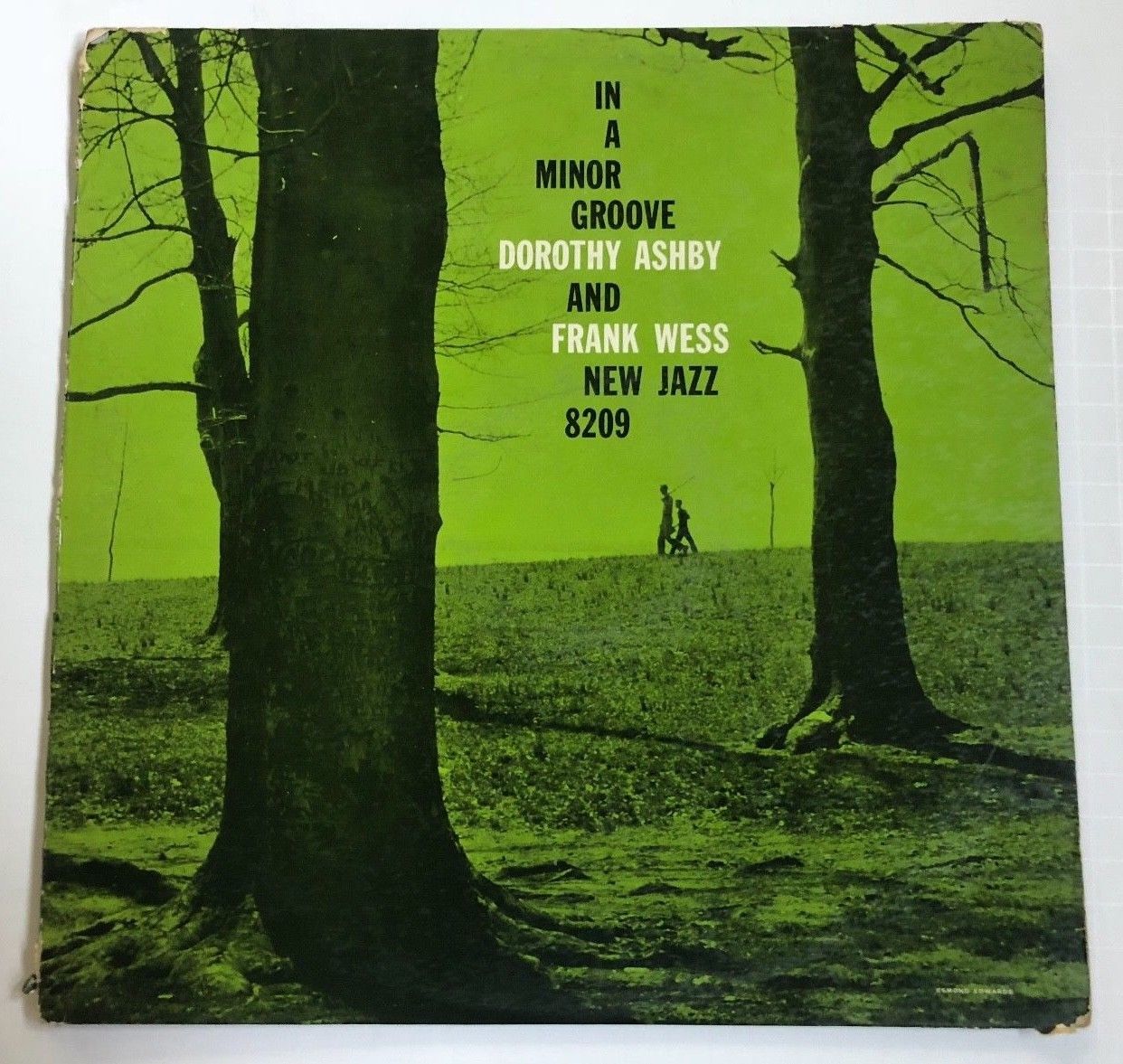
Real Gone Music will release a limited edition vinyl print of Dorothy Ashby and Frank Wess’ In A Minor Groove LP.
In a Minor Groove is one of two albums jazz harpist Ashby made in 1958 with saxophonist Wess, backed by fellow Detroit native Herman Wright on bass and the great Roy Haynes on drums. It first surfaced on the New Jazz label.
This will be the album’s first ever domestic vinyl reissue, and it comes from the original mono sources rather than the re-channeled stereo that showed up on previous reissues. It comes accompanied with the original album art and with Ira Gitler’s sleeve notes. Pressings are limited to 1000.
Stream the track “Yesterdays” below, with pre-order of the limited edition neon green print of In A Minor Groovehere.
Pawel “Paide” Dunajko is a DJ and promoter of footwork culture in Poland, and also the curators of the compilations Szmery (Kanu Kanu, 2015), Doubts 1 and Doubts 2, released on Pawlacz Perski in 2016 and 2018 respectively. His latest work is a one-hour mix featuring three Japanese producers, namely DJ Fulltono, CRZKNY, and Skip Club Orchestra, all of whom are responsible for “inventing a new sound in the Chicago footwork genre,” Dunajko explains. He calls it “minimal footwork” because the music is reduced to only the simplest elements.
Dunajko’s learned of the first footwork Planet Mu releases and began a podcast promoting the genre. As a DJ, he’s played alongside the likes of DJ Rashad, DJ Spinn, DJ Earl, and Traxman. In 2016, he visited Japan where he played alongside some of the most important Japanese footwork producers, including DJ Fulltono, CRZKNY, Kent from Paisley Parks, Hiroki Yamamura, Satanicpornocultshop, Boogie Mann, and Keito. He also runs tape-only label outlines, focusing on the more experimental side of footwork.
Grab the mix via the WeTransfer button below, or here for EU readers due to temporary GDPR restrictions.
Tracklisting
1. Skip Club Orchestra “– -|-” [Dubliminal Bounce] 2. CRZKNY [unreleased] 3. CRZKNY [unreleased] 4. DJ Fulltono “Roganman” [Exit Records] 5. Skip Club Orchestra “{}” [Dubliminal Bounce] 6. Skip Club Orchestra “{{{{-}}}}” [Dubliminal Bounce] 7. CRZKNY “Draping 7” [self-release] 8. Skip Club Orchestra “VA14(fast)” [Dubliminal Bounce] 9. Skip Club Orchestra “{{{{}}}}” [Dubliminal Bounce] 10. DJ Fulltono “Draping 5” [self-release] 11. DJ Fulltono “Draping 7” [self-release] 12. CRZKNY [unreleased] 13. Skip Club Orchestra “|||” [Dubliminal Bounce] 14. Skip Club Orchestra “||||” [Dubliminal Bounce] 15. Skip Club Orchestra “Draping 5” [self-release] 16. DJ Fulltono “Draping 1” [self-release] 17. CRZKNY “Draping 4” [self-release] 18. Skip Club Orchestra “– }” [Dubliminal Bounce] 19. Skip Club Orchestra “Draping 7” [self-release] 20. Skip Club Orchestra vs Alva Noto (Paide clickwerkz edit) 21. DJ Fulltono “Draping 3” [self-release] 22. CRZKNY “Draping 5” [self-release] 23. DJ Fulltono “Draping 2” [self-release] 24. Skip Club Orchestra “{{{-}}}” [Dubliminal Bounce] 25. Skip Club Orchestra “VA06” [Dubliminal Bounce] 26. Skip Club Orchestra “{{-}}” [Dubliminal Bounce] 27. CRZKNY [unreleased] 28. Skip Club Orchestra “VA18” [Dubliminal Bounce] 29. DJ Fulltono “Draping 6” [self-release] 30. CRZKNY “Draping 3” [self-release] 31. Skip Club Orchestra “||” [Dubliminal Bounce] 32. Skip Club Orchestra “VA20” [Dubliminal Bounce] 33. Skip Club Orchestra “Draping 2” [Dubliminal Bounce] 34. Skip Club Orchestra “VA12” [Dubliminal Bounce]
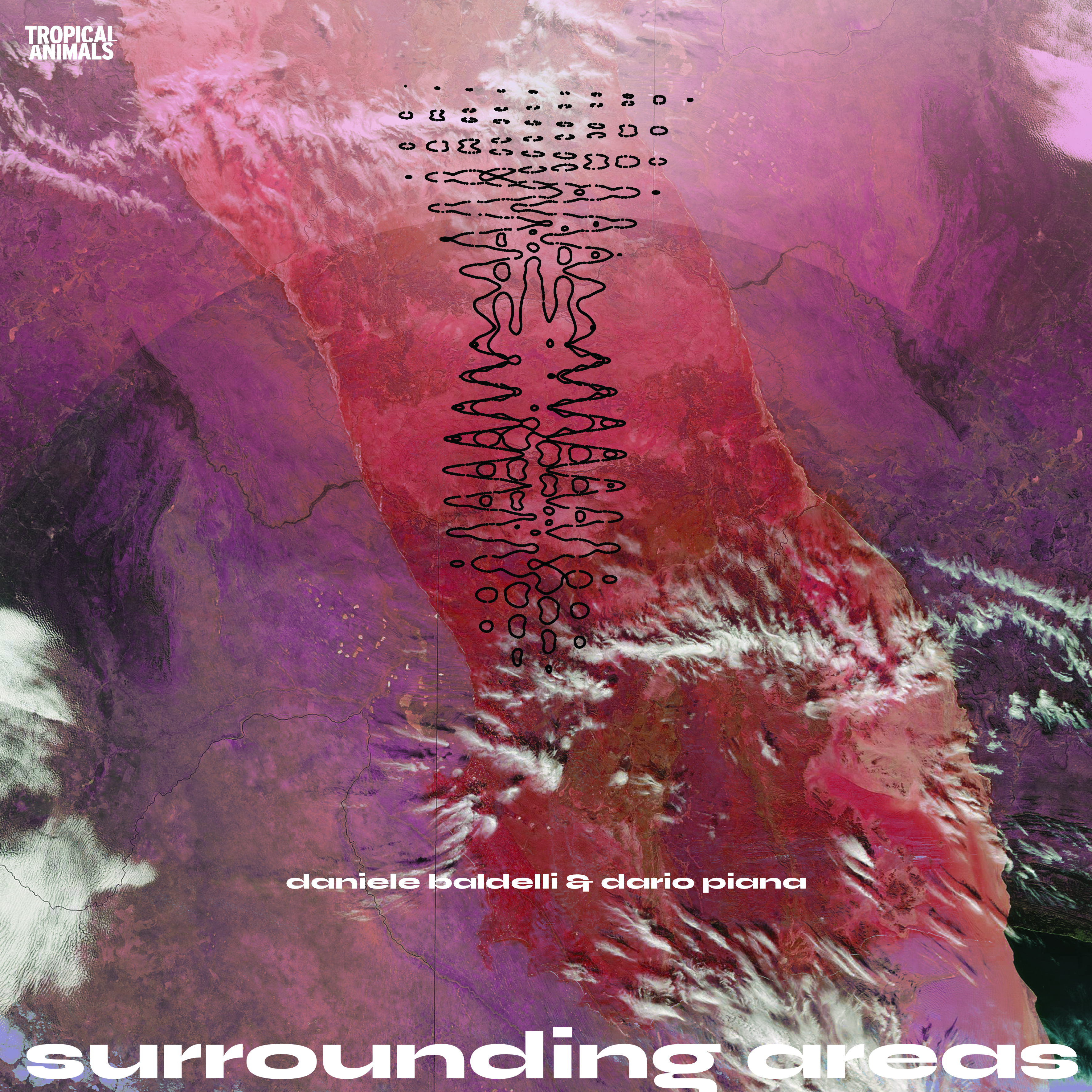
Daniele Baldelli has teamed up with Bluenoises Records founder Dario Piana for a new EP on Tropical Animals, titled Surrounding Areas.
Throughout the ’70s and into the ’80s, Baldelli created the term “cosmic disco,” an Italian dance music genre of his own. He took up residencies at Italy’s Baia Degli Angeli and Cosmic Club and remains much loved for his eclectic mixing style by DJs, producers, and diggers alike.
Florence-based party Tropical Animals has been heating up the Tuscany nightlife for the last nine years, and so the jump to starting up a label was a natural step. In 2018, the label released three EPs from Whitesquare, The Cyclist, and DJ Octopus. Surrounding Areas is their first release of 2019 and their first from these two Italian veterans. The four tracks capture a distinctively Italian spirit, one that was born to soundtrack the warm summer nights of Tuscany.
Tracklisting
A1. Double Yellow Lines
A2. Just the time of a trip
B1. Cosmic Mood
B2. Closer to the Source
In support of the release, out now, you can download “Cosmic Mood” via the WeTransfer button below, or here for EU readers due to temporary GDPR restrictions.
Daniele Baldelli has teamed up with Bluenoises Records founder Dario Piana for a new EP on Tropical Animals, titled Surrounding Areas.
Throughout the ’70s and into the ’80s, Baldelli created the term “cosmic disco,” an Italian dance music genre of his own. He took up residencies at Italy’s Baia Degli Angeli and Cosmic Club and remains much loved for his eclectic mixing style by DJs, producers, and diggers alike.
Florence-based party Tropical Animals has been heating up the Tuscany nightlife for the last nine years, and so the jump to starting up a label was a natural step. In 2018, the label released three EPs from Whitesquare, The Cyclist, and DJ Octopus. Surrounding Areas is their first release of 2019 and their first from these two Italian veterans. The four tracks capture a distinctively Italian spirit, one that was born to soundtrack the warm summer nights of Tuscany.
Tracklisting
A1. Double Yellow Lines
A2. Just the time of a trip
B1. Cosmic Mood
B2. Closer to the Source
In support of the release, out now, you can download “Cosmic Mood” via the WeTransfer button below, or here for EU readers due to temporary GDPR restrictions.
Bjarki—born Bjarki Runar Sigurdarson—is one of of the most intriguing artists you’ll find in contemporary electronic music. Growing up in Iceland, he began making music aged 12 and made a name for himself with the 2015 release of “I wanna go bang” on Trip. Although devastatingly simple, the track struck a chord with the global techno community and transported Bjarki from the Icelandic underground into the spotlight. “I had people from all over the world reaching out, wanting to be my booking agent or manager even though none of them knew who I was or had any real interest to know more,” he recalls. “Everyone was just following hype.” The track has over 2 million streams on Spotify and nearly 5 million on YouTube.
But, typically non-conformist and with a vision all of his own, Bjarki sought his own adventures. Three albums is as many months—B, Lefhanded Fuqs, and AEe—brought him a wealth of bookings on the largest stages, but also evidenced a prolific producer whose artistic repertoire transcended the world of big-room techno. And so he recalibrated and focused his attention on redirecting the spotlight onto the Icelandic scene, firstly by launching his own imprint, bbbbbb Records, a platform for the likes of Volruptus, Lord Pusswhip, and Kuldaboli. The label’s overarching premise is to release music disinterested in conforming to one aesthetic, but it seems to cater to Bjarki’s penchant for 1990s rave and hardcore sounds.
Outside of a few low-profile releases, Bjarki has been keeping his head down, and it wasn’t until February that he returned, releasing Happy Earthday, his first album proper. Much less driving and club-ready than almost all that had come before, it was the most honest portrayal of Bjarki yet—introspective and cerebral, described by Bjarki himself as “a window into my head and even my soul.” It’s a blissful fusion of his eclectic musical skills, ranging from expansive ambient to soft-edged hardcore.
Yet Bjarki is still to really comment on his work and the Icelandic scene from whence he came, opting instead to protect the mystery that has long surrounded him and his origins. In a rare media engagement, however, and to support the launch of XLR8Rplus 10 which he curated, he’s penned a personal essay recalling his earliest memories of the Icelandic scene, all the while pondering how this has shaped him and those around him, musically and otherwise. It’s also a consideration of how our surroundings affect each and every one of us individually.
For those unfamiliar, XLR8R+ is a monthly subscription service supporting XLR8R and independent music and culture. A subscription gets you three exclusive tracks every month, plus a zine, wallpaper artwork, and other goodies such as sample packs, free event tickets, vinyl giveaways, and more. XLR8R+10 is available now. It features three previously unreleased tracks from Icelandic artists. In addition to this, Bjarki has also served up a sample-pack of field recordings, a central component of his latest album, processed loops, percussion, and atmospheres. You can also find a selection of the music Bjarki references in this month’s Spotify playlist.
Somewhere in the early life of an individual, one is exposed to things that might have an affect on them later in life. If you look carefully, perhaps you can find something that can help to explain why I have have found fulfilment in electronic music, which I think is more nature than nurture.
Coming from a cold, isolated land in the north, I’m convinced that nature has had a great impact to my soul, and that music is the perfect way to express myself. It gives me great confidence to stand up and present my music in other countries. Some might say this is all b.s., that music is just music; but I don’t think so, even though I cannot really tell you why.
Maybe it’s best that I tell you about my origins, my thoughts, the people who have influenced me, my idols, friends, and my philosophy. Maybe you will connect with my words, or maybe you’ll think this is another great example of b.s. I don’t really mind. What you are about to read are only my thoughts, an example of a man who tries to think, and I hope you won’t hold that against me.
Growing up in a very small city such as Reykjavik with only 300 thousand inhabitants is special. I’ve also been shaped by three small villages in Iceland, one in the southeastern part of the country, in a beautiful town called Höfn, where I spent a lot of time with my father on the biggest glacier in Europe, Vatnajökull. Years later we were living in the town of Blönduós, in which a mere one thousand people live, situated in the northern part of Iceland. Before I made my way to study in the Netherlands, I was spending time in a village called Skagaströnd. Like every other teenager, I was looking for the soundtrack of life; I was quite open to all types of music while growing up, even if today I’m particular as to what goes in.
During my younger years there were not many people I knew who were experimenting with techno. In 2005, the only DJ who was really known for playing techno was Arnviður Snorrason (a.k.a Exos), whom I was introduced to via a guy from school. Exos was doing his own radio show and throwing parties from 2004-2008, inviting artists like Surgeon, Dave Clark, Adam Beyer, Valentino Kanzyani, and many more. We ended up being good friends, and after fighting like cats and dogs for some years we ran a record label together called Do Not Sleep, where we were set to re-release hidden gems from the ‘90s with remixes. We ended up officially releasing only two records, the first one with DJ Rush, and the second by K Aleksi under his Club MCM moniker.
We weren’t the first to bring techno to the shores in Iceland, but we would probably need an archaeologist to find out who did. However, Ajax (a.k.a Thor and Biogen) and T-world (a.k.a Gus Gus) were probably among those who picked it up first production-wise. There is a great compilation album called EGG 94’ curated by Thor that includes a lot of artists involved with it back in the day and explains the Icelandic rave sound of that time. Apparently Goldie was spending some time in Iceland in ‘92 and the story says he drew his inspiration from Ajax, then later when he returned to the UK he started Rufige Kru.
One of the little details in my surroundings that caught my attention and got me interested in the more forward-thinking side of electronic music is a film titled “101 Reykjavik,” directed by Baltasar Kormákur in 2001, which featured music assembled and scored by Damon Albarn and Einar Örn Benediktsson. I got my hands on a CD with the soundtrack of the film and the discovery I made was a remix of “101 Terror City” by Curver (a.k.a Birgir Örn Thoroddsen), which pulled me into drum & bass and then more into weirder music.
The next milestone for me was discovering a remix album of Sigur Ros’ “Von” (meaning “Hope”) called “Von Brigði” (meaning “Disappointment”) from 1998 with remixes from Biogen, Curver, Plasmic (a.k.a Ari S. Arnarsson), Thor, Gus Gus, and more. Still to this day, for me, this remix album stands out as one of the most interesting records of Icelandic electronic music. Through that record I got to know artists like Biogen and Thor who run Thule Records and have released music since 1995 by artists such as Cold, Yagya, and Exos.
Even though electronic music there was already so rich, there was never any club culture in Iceland that lasted, and most of the time it was difficult to organise a warehouse party. I grew up hearing stories about the infamous Icelandic festival UXI (UXI=You x I), held at Kirkjubæjarklaustur in ‘95, which was the first international festival in my country with over 40 acts. Björk performed among Icelandic bands as well with big names like Bandulu, Atari Teenage Riot, Aphex Twin, The Prodigy, and T-world; and DJs like Chris Needs and Tony Sapiano. The festival had some financial troubles and so happened only once.
In 2008, I moved to the Netherlands to study sound engineering during the financial crisis in Iceland, and I kind of shifted away from whatever was happening musically in my homeland. So it wasn’t until Christmas in 2010, when I briefly returned to Iceland, that I had a chance to hang out with fellow Icelandic artist Biogen. Biogen was known for his hardcore experimental parties called Weirdcore, which my friends and I often used to attend. At the time of meeting him, I was starting to experiment with music trackers like octaMED, and chopping stuff with samplers like the Akai’s, MPCs, and an s950, which made us connect right away.
This wasn’t the easiest time for me because at that time the sound in Amsterdam was either minimal techno or hardcore, which was never purely my “scene,” but it introduced me to new sounds and many people with whom I’m still in contact. We attended many illegal raves that I’d never had the chance to experience before, but it all slowed down in 2011 because the cops started to pay more attention to the parties. I remember once a SWAT team coming in with machine guns while I was DJing. A bit of a scary situation! After that, parties started moving into clubs and stopped being so exciting. That was part of my cue to return home to Iceland in 2012.
It was important for me to come back home and reconnect with people from my past. Techno still wasn’t that popular but it was becoming more widely accepted. And in 2012, the “fall” of dubstep made Icelandic DJs start playing more techno and 4/4 orientated rhythms. In the UK it all got mixed together under a new genre called “bass music,” which was actually a good thing, and Eva808 was the one who stood out in Iceland by creating her own forward-thinking music from the UK post-dubstep era.
The financial crisis was now over, and I reconnected with people who are the closest to me today, and I noticed two things: as a result of the economic crisis, we became more introverted personally but more extroverted within our art form.
I’ve been enjoying the works of Auður Ómarsdóttir, Narfi, Margeir Dire, Ragnar Kjartansson, Sunneva Weisshappel, Kjartan Hreinsson, Stebbi Demon, and other artists in Iceland who became busy making all kinds of art; and some of my childhood friends were doing a lot of graffiti art and photography. I think a big part of our creativity flow is also due to boredom and loneliness rather than pursuing trends. The weather makes us stay inside and locked up in our minds, so it’s possible that it wasn’t all to do with the financial crisis, and that we have always been a bit like this.
You can see this extraversion and nonconformity in the styles of the art we all make, including two of my closest coworkers, Ingibjörg Íris Ásgeirsdottir and Einar Thorbjornsson, lifelong friends of mine from Iceland, both very talented and loyal. Ingibjörg is down to earth, practical, and observing, doing everything that needs to be done with the finance side of things. Einar, on the other hand, is an artist flying high in search of inspiration. He draws, paints, plans gigs, and even performs as a dancer, which is unique because he is more than two meters tall! Together we began a label after I realised there was an opportunity to get my friends together and have some fun in bringing a face to music; we wanted to focus primarily on Icelandic music and give something back instead of being greedy, and that’s how bbbbbb started!
In 2015, I released “I wanna go bang,” and some people ask me why I didn’t take the opportunity I had to tour the techno festivals and start a label especially for big room techno bangers!
Firstly, because it’s funny: I managed to break the internet and earn a career by putting out a track I made while being a little 19-year-old shit-head, instantly having thousands either love me or hate me, and I had all the famous techno DJs playing it out. A dream, right? But I’ve never been interested in that kind of attention; I’ve always considered myself an artist rather than a superstar techno DJ. That latter role suffocated me and at that point my goal became to turn that enormous interest in me towards my Icelandic friends and their unique style of music that I’ve always loved. This scene had never really had any worldwide attention, but it was ready to be discovered and so I wanted to use my powers to make that happen.
“We connect through a special type of music that is not made for a public listening and I treasure that.”
Secondly, it was too easy to go down that road and not what I really wanted to share musically. It’s not like it was me who wanted this track to be out there. Maybe if I had had that same opportunity when I was 17 or 18 years old or right after it was made, I might have gone with it blindly, but I don’t think I would have lasted for long. When I was doing my first summer festival tour after the “bang,” I could feel the pressure because techno people wanted me to play a full-on “I wanna go bang!” techno set. But this isn’t me.
I knew at a Belgian festival that I was going to do the opposite, and so I played a 30-minute set of eight-bit sounds and music from Nintendo games. It pissed a lot of people off but I knew some people out there would find it funny because the lineup was full with serious techno DJs who have been milking the DJ scheme for years. I find it funny when they wake up up one day desperately wanting to be musical, not for themselves but for business reasons, and they become ambient or IDM producers, trying to earn their cool again. I just want to be me. A full schedule wouldn’t mean anything to me if I didn’t know what I wanted to share. I have my own philosophy as to why I write my music, and that is to learn and question myself and my surroundings.
And finally, by that point I’d been making music for so long and had thousands of tracks on my hard drive. I felt self-confident enough to take my career into my own hands. I was done being used for other people’s agendas; I didn’t want them to benefit from my work anymore.
Of course, being part of Trip was an adventure that I will never forget, but I wasn’t ready for that life. Especially when you see how unstable some DJs are inside the industry. The jealousy and anxiety levels are peaking. DJs start to chase each other’s tails on social media to stay up to date, everyone on their toes afraid to expose their true selves. I have the opportunity to connect with people through music, and so I feel responsible to create events for people who want to experience the emotions that hide inside the music I believe in. We connect through a special type of music that is not made for a public listening and I treasure that. It’s a privilege, and I find great value in it.
That’s why the cave party was one of the most valuable experiences I’ve had. In 2015, Exos and I organised the first party in a cave in Iceland. It was a big experiment and a milestone for Icelandic dance culture; and in 2016 I wanted to see how far I could go by doing another cave party, bringing the locals out of the city for a 12-hour rave in a cave. My dad knows the country well and he was the one who pointed me to that cave. It’s an island called Hjörleyfshöfði which was named after Hjörleifur Hróðmarsson who was the brother-in-law of Ingólfur Arnason, the first known settler in Iceland. He found Reykjavik and settled there. A big agenda of ours was not to make profit but to entertain. The reason was also to build up a scene, get people together, and have fun. And the vibe was like nothing else; it was definitely one of those “I can die happy now” moments!
All in all, I’ve learned that patience is everything; the more you start to observe your behaviour, you learn that you actually know less than you think. By being patient, you can find your true self; there is no rush to get anywhere. It was my time to reflect, even at the cost of becoming a bit disconnected from the main techno stream.
Nowadays, I select my gigs wisely. Performing every weekend is not something I choose to do often, in order not to lose my energy and the ability to give each of my shows one-hundred percent. I could do it for the money but I don’t think it’s normal for a musician to tour all the time. To me, it’s about greed and it’s impossible to be creative when you do this. For me, sometimes it’s healthier to decline opportunities when they arrive as they are not always what I truly need. I remember when I had people from all over the world reaching out, wanting to be my booking agent or manager even though none of them knew who I was or had any real interest to know more. Everyone was just following hype. Overwhelmed, I knew exactly where I wanted to go and for some I was definitely a pain in the ass to work with, because nobody understood me!
I think this is based on my belief in what I’m doing, but also knowing my flaws. When you’re aware of your weaknesses it gives you the ability to learn and adapt, and it’s only then that you can start noticing details in your surroundings and feel comfortable letting ideas flow. I respect myself therefore know I my abilities, without being ignorant or arrogant.
Being brought up on an island where you didn’t have to think about locking your front door is privilege. Maybe we didn’t understand when we were kids, but now it interests me how the past affects us, why we think and feel the way we do as adults, and how we become individuals with our own opinions, interests, and our own life perspectives. I used to think as a kid that we are just an image of our parents; that we are their reflection, but with time I’ve realised that we develop into completely new beings, mirroring our upbringings. We become more sensitive to our surroundings; little details in our lives catch our attention and change our perspective, moulding us into the person we later become.
I think it also taught me that people are individuals, but that we can choose not to be an island by working, playing, laughing, and enjoying each other. I am an individual because of my thoughts and works, but I’m part of a village because I work with others, seek inspiration from them, either intentionally or unconsciously, which I find incredible; and I am still part of a village when I connect with people around the world who enjoy my music.
The raw nature in Iceland touches you in a way that those who grow up in big cities and communities in Europe and America often cannot understand. Neither did I until I moved to other countries and could compare my experience to others. When growing up I had to learn some things. During the winter, I did not run out without a jacket on, mittens in my pocket, and a warm hat on my head. This is the reason for the why in my life—why I am who I am, and perhaps also why my music is sometimes dark, melancholy, and introspective. Still now, in my mind, I constantly hear, feel, and see things in nature and all of it affects me deeply.
Have you ever heard the wind in the mountaintops, the bird songs early in the morning when the midnight sun is touching the ocean horizon, or the heavy ocean waves breaking on the cliffs in the dark January night? Or seen the frozen glacier snow look like a porridge when the sun rays touch it? I have—but how does it impact me and my work? You tell me after you have tried and listened to my music.
An edited version of this article appeared in the zine, available now alongside three previously unreleased tracks and a Bjarki sample pack, as part of XLR8Rplus.
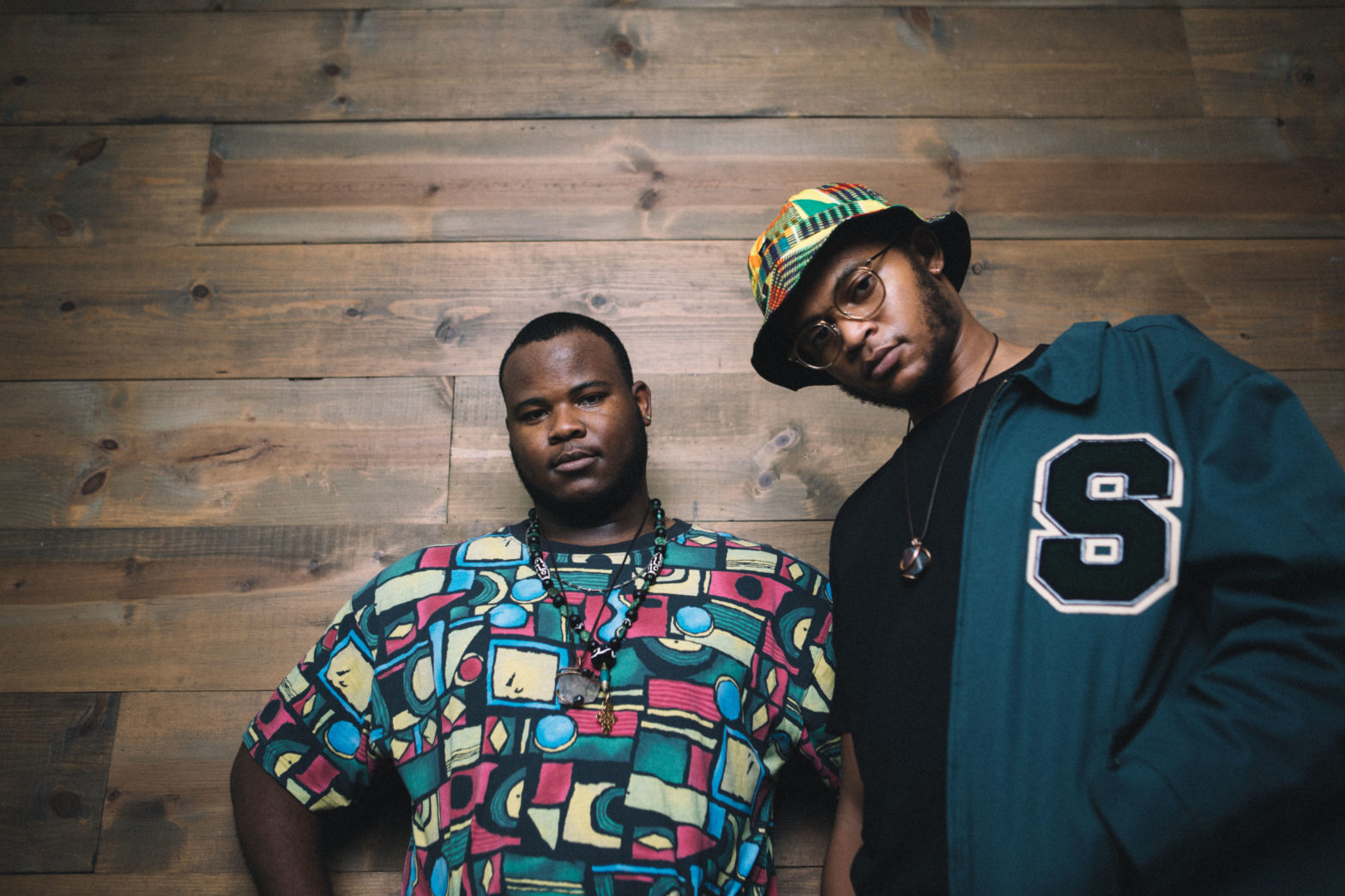
Black Nile consists of brothers Aaron and Lawrence Shaw, two multi-instrumentalists born and raised in LA with an acute understanding of music theory, improvisation, and the foundations forged by the pantheon of jazz giants. They cite Kamasi Washington, T.D.E, Nipsey Hussle, Tha Dogg Pound, Vince Staples, Terrace Martin, and Thundercat as a few of their influences, and label their music “The music of now.”
Sounds of Color LP was recorded, mixed, and mastered at Daddy Kev’s Cosmic Zoo studio. Alongside the announcement, the brothers have shared “Jyro.” The track is dynamic in its compositional framework and experimental in tonality, shading subtle additives over a constantly evolving drum section, with simmering horns and keys.
Sounds of Color LP lands May 17, with a stream of”Jyro” below, and album pre-order here.
Ledger is an Italian multidisciplinary based between Berlin and Rome, with appearances on Dana Ruh’s Brouqade Records, Mayak, and his own CL Series, where he released a collaborative mini-album with Luigi Ranghino’s Trio last year. This is his first appearance on Meander, and we’re told to expect “refined but free-flowing sounds.”
This will be the 27th release of Meander, following on from DeWalta’s own Lyra. It lands on vinyl on May 17, with digital coming on June 14. Meanwhile, you can hear clips below.
The nine-track album comes under Modell’s birth name, one of several aliases he’s used over the years. Much of the Detroit artist’s recent work has leaned towards drone and ambient sounds, but this new album extends Modell’s essential vision within techno. It will be available digitally and on vinyl from June 14, with “Jade” streaming below.