Mexican Institute of Sound “Yo Digo Baila (Shir Khan Remix)”

Camilo Lara (a.k.a. Mexican Institute of Sound welded folk, electronics, and vintage synths together on his recently released Soy Sauce album. For those who take their Latin music with just a bit more kick, here’s the highly danceable remix of “Yo Digo Baila,” in which one of Berlin’s busiest DJs and producers, Shir Khan, transforms the cut from tribal to techno.

Mexican Institute of Sound_Yo Digo Baila_Shir Khan_Rmx 1

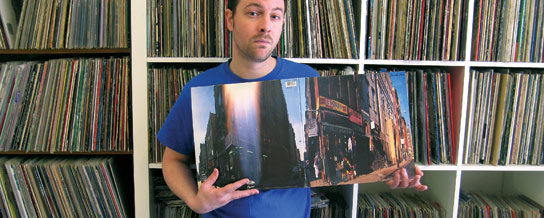
Xrabit on Paul’s Boutique

German hip-hop producer Xrabit finds hope in the form of The Beastie Boys’ not-so-instant classic Paul’s Boutique.

Summer 1989. I was 14, and coasting through a hot Munich summer of graffiti, parties, and booze. I was already obsessed with hip-hop culture—the soundtrack to our lives was a mixture of RUN-DMC, Public Enemy (It Takes a Nation of Millions to Hold Us Back only came out the year before), and, of course, De La Soul’s huge 3 Feet High and Rising.

But even in a year when hip-hop was in such amazing health—opening up, expanding, and diversifying in every direction—Paul’s Boutique exploded into our lives like nothing else.

It was late July and I was at my friend Ivan’s, slumped on his sofa. We spent whole afternoons drawing, bitching about sprayer rivals, talking about all the girls we’d never get, and listening to music. We’d both loved Licensed to Ill, so of course we had to get the new Beasties as soon as it came out. The slinky opening track—calling out “To All the Girls” like we wished we could—was cool, but then, with no warning, the needle gets the shakes as the bass of “Shake Your Rump” rips through the speakers. We couldn’t believe what we were hearing. We were immediately sold.

The beats on Paul’s Boutique were so much more musical than any other hip-hop we’d heard; the production pioneered a dense usage of samples from a wildly eclectic range of sources—from The Beatles to the Jaws soundtrack, through a dizzying cut-up smorgasbord of funk, jazz, and Zeppelin. There was no effective law in place yet to prevent people from helping themselves to music from all over like that. It would be another couple of years until Biz Markie got sued by Gilbert O’Sullivan in a landmark case that’d change hip-hop production forever… but that’s another story.

As well as the Dust Brothers’ killer production, the lyrics are similarly jam-packed with characters, stories, name-drops, and jokes, making the LP so rich in detail it felt like you noticed something new every time you played it.

At first the album flopped. Critics didn’t quite know what to make of it and fans were expecting another License to Ill party record—this was way more rich and strange, in a way. The Beastie Boys reportedly even went as far as saying they wanted to make a record without a hit single.

Listening to it now, with its 20th anniversary reissue imminent, and its position as an acknowledged classic safely secured, it’s hard to believe that it was ever shunned as the runt of the litter. It was such a trailblazing LP—so ahead of its time that it still sounds totally fresh today. We didn’t know we were listening to a future classic; we just knew we had a new soundtrack to the rest of the summer, and proceeded to watch that needle shake, look at the great (nearly) 360-degree view of a cool Manhattan street, and dream of being there and being confident enough to shout out “Hey Ladies” and not get laughed at.

If these three skinny white boys could pull it off, there was hope… even for us.

The Juan MacLean Remixes Chairlift

Chairlift proved itself a darling among indie music lovers the world over last year. The Juan MacLean—whose latest album, The Future Will Come, was released in April via DFA—got his remixing hands on the band’s track “Evident Utensil” and left his disco stamp all over it.

The IHEARTCOMIX blog has the tune streaming right now. Meanwhile, further Juan MacLean remix goodness is rumored to be on the way.

Artist to Watch: Voodeux

Who:Voodeux
Where: Boston, MA / Philadelphia, PA

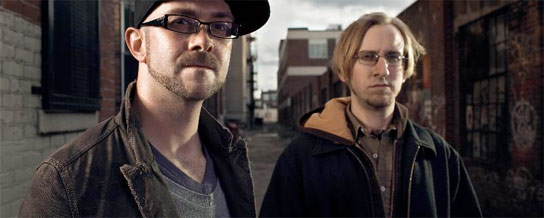
Producers Tanner Ross and James Watts (a.k.a. KiloWatts) met six years ago on a website devoted to music production and have been in cahoots ever since under the name Voodeux. With approximately 300 miles between their respective homes, the M.O. hasn’t changed; the two still exchange macabre ideas and cement their trademark creepy beats entirely over the internet. Voodeux brings listeners into the world of shadowy techno and haunted house—without being too spooky for the occasional funk line or electronic handclap. After hearing the duo’s sinister sound on their 2008 EP, The Curses, Claude Von Stroke commissioned the boys to craft an album and further indulge their inherent dark tendencies. Thus, they set about spinning a disturbed web of edgy, minimal techno that would eventually become their debut full-length, The Paranormal, set to drop this July.

Listen to The Paranormal Promo Mix

Listen: “Just a Spoonful (Edit)”

voodeux

El Michels Affair “Duel Of The Iron Mics”

Retro soul and funk outfit El Michaels Affair tackles the Wu-Tang Clan for its latest release, a collection of 15 Clan tracks the group has transformed into instrumentals and dubbed Enter the 37th Chamber. “Duel of the Iron Mics” originally appeared on GZA’s 1995 solo album, Liquid Swords, to which Wu-Tang members Ol’ Dirty Bastard, Masta Ace, and Inspectah Deck contributed. Here’s El Michaels Affair’s rhythm-heavy instrumental take.

Enter the 37th Chamber is out now.

El Michels Affair -Duel Of The Iron Mics

Meanderthals Desire Lines

Marrying spacious, epic dance production with mellow guitars and taut rhythms, this collaboration between London’s influential Idjut Boys and Oslo’s Rune Lindbæk creates an airy sound that’s both tranquil and richly layered. Opener “Kunst or Ars”—a blend of steel drums, guitar, and wood blocks—is the space-disco driving song of the year. Acoustic squeaks and echoing riffs unfurl across “Desire Lines,” which ends on a synth line Ludovic Navarre would love, while “Collective Fetish” settles into gentle tones, rippling across time. As the title of this collaboration suggests, this music is unconcerned with speed and direction, instead taking a blissful, steady, and spaced-out approach to disco.

Crocodiles Summer of Hate

Crocodiles could be lumped in with the rest of the lo-fi garage-rock acts currently making the blog rounds (Vivian Girls, Wavves, etc.), but none of those bands has written anything quite as infectious as “I Want to Kill,” a reverb-drenched pop gem that sounds like Jesus and Mary Chain infused with a healthy dose of California sunshine. The San Diego duo, which features former members of The Plot to Blow Up the Eiffel Tower, combines a fuzzy DIY aesthetic with a pop sensibility that recalls everything from ’60s soul to ’80s new wave. “Soft Skull” is a brash and stompy standout, while the title track slows things down as the boys craft a beautiful mess of psychedelic guitar squall.

In The Studio: Radioclit

A Frenchman and a Swede search Africa for the perfect beat.

It’s strange to call a room inside a Swedish expat’s London flat a “nexus of pan-African dance music,” but that’s precisely what Johan Carlberg’s home studio becomes in the presence of production partner Etienne Tron. As Radioclit, the duo merges elements of South African kwaito, Angolan kuduro, and coupé-décalé from the Ivory Coast—plus Caribbean dancehall and soca, among other diasporic styles—into their own distinctive electro-tropical sound. Since coming to light through internet radio mixes and their weekly London party, Secousse, the pair has worked on label-commissioned remixes for Britney Spears and Jazmine Sullivan and produced material for Yo! Majesty, U.K. grime MC Trimski, and Bonde do Role vocalist Marina Vello. But it’s their work with Malawian singer Esau Mwamaya under the name The Very Best where they’ve shined the brightest; an introductory 2008 mixtape found them re-imagining tracks as divergent as Architecture in Helsinki’s “Heart It Races” and Cannibal Ox’s “Life’s Ill” as joyous Afro-pop. XLR8R caught up with Carlberg as he tended to some instrumental housecleaning and the final touches on The Very Best’s upcoming LP.

XLR8R: What sort of changes are you making to your studio setup?

Johan Carlberg: I’m only gonna be in this room for another year, so I don’t want to spend too much on equipment I might not be able to use in a new place. But it just doesn’t sound good enough, so I’m moving everything around to get what I need, and get it sounding better. I’m selling my last synthesizers because I don’t use them enough, and they take up a lot of space. Software works fine these days, so I’m just converting back to digital. And we just have a lot of African drums and ethnic instruments we’ve managed to collect.

Such as?

Brazilian congas, African djembe drums, steel drums… Some mbiras, which is the African finger-piano thing that sounds a bit like a kalimba; we’ve got an electric one that’s really cool. Also, weird little maracas, shakers, and small percussion things. If you watch traditional African musicians on YouTube, you’ll see that they take bottle tops, pierce them in the middle and put steel strings through them, and wear them around their legs when they dance. Or they’ll put them between two wooden tin things and strike them with sticks—we made our own. I had to collect bottle tops for a year but it was quick to make.

You’re not playing it all by hand, of course… where do you dig for drum sounds?

We’ve met a lot of players from all over the world through our Secousse club night. For The Very Best’s album, we had a marimba player from Zimbabwe come in. Or there’s a songwriter we work with for more pop kind of things, and his brother is a famous street musician in London who plays on buckets. And there’s field recordings we’ve been making when we’re traveling. I really like working with samples, even though I’ve tried to move away from it. If you take a one-bar piece or even just a single hit from an old ethnic recording, it becomes such a small part when it’s built into the rest of the music. You don’t have to clear a sample like that.

Are there any studio techniques you’ve picked up from, say, kwaito or soca producers, or any of these other styles you’ve incorporated into your own?

Unfortunately, I don’t get the pleasure to meet many of these people, so I just come to conclusions from studying and listening to the music a lot. I may experiment until I find a way, if want my drums to sound a little like somebody’s drums. We like to mix and match. It’s not like we’re trying to make a full-blown kuduro track—that’s not what we do. We’ll take maybe a little drum pattern from that, with these other European or American influences… My biggest thing when I work is creating a mood. My studio’s a bit like a jungle, there’s so much plants and things in here. Music for me is really intuitive. Very seldomly will I say, “This is exactly what I want to do.” I just sit down and start working.

You said you’re going back down to Malawi to work with Esau. Do you have connections for studios there, or are you just going to record off your laptop?

I can get in a studio in Malawi, definitely, but I might not. The Very Best album and mixtape were recorded in just a room. I quite like the chill-out vibe I get when I’m not renting a proper studio, having to work on time schedules. I like the relaxedness you get from recording at home. I’d love to record at least one song or part of one song when I’m down there somewhere in nature, at night, when you get all the sounds. Instead of putting environmental sounds on top of the track afterwards, just recording his voice with these things, all the noises around him. Stuff like that interests me more than renting a fancy studio.

DC Collaborates with Sixpack France

Skateboarding and action sports brand DC will be partnering with Lyon-based company Sixpack France for its upcoming installation of the Double Label™ Project.

DC was founded by Ken Block and Damon Way in 1993. Since then, the company has expanded to include a wide range of active wear and lifestyle shoes, as well as piled on numerous professional skateboarders, snowboarders, surfers, BMX, motocross, and rally athletes to its team of admiring spokespersons. The Double Label™ Project series began in 2001, as a way for the company to reach out to various creative members of the skateboarding community.

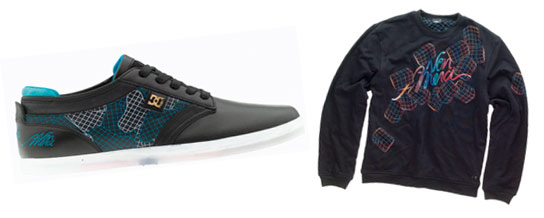
Enter Sixpack. With a hand in the graffiti world and some indie-rock, pop, and electronic influences thrown in, Sixpack started in 1998 as a small storefront housing a creative effort among friends. The DC x Sixplack Double Label collection—nicknamed “Non Merci”—will feature men’s premium footwear and apparel that draws inspiration from concepts that “cross political borders” and “embrace impossible love.” This collaboration is the first of many that will run for several seasons. Look for it July 1, 2009 at DC flagship stores and select boutiques worldwide.

Page 2717 of 3781
1 2,715 2,716 2,717 2,718 2,719 3,781