
Studio Essentials: Lazare Hoche

Lazare Hoche—real name Charlie Naffah—is one of French house music’s most revered talents. Born and raised in Paris, he discovered electronic music through his older brother, a professional pianist and singer who kept synthesisers at his home. Aged 18, Hoche began collecting house and techno music, and then attempting to produce it using samplers, a small mixer, and synths, having learned the tropes by those artists in his immediate orbit. He started his own Lazare Hoche Records in 2011 as a student project, and released I Don’t Sync So Part 1., a collaboration with friend Malin Genie, real name Nick Putman, that quickly sold out. (“Oh Snap!”  is a Zip favourite.)”When you have your first release out on your own label and it’s sold out, you then realise you want to continue,” Hoche recalls.

Fast-forward eight years and the 29-year-old has amassed a bulging discography of the classy, slick house that sounds so simple but so few can execute properly. In there you’ll find modern classics including “Pressure Baby” and “String Theory,” plus his collaborative work, including that with Putman and Samuel André Madsen (a.k.a S.A.M) as Mandar. Together they run the Oscillat Music label through which they’ve shared a string of EPs and a debut self-titled album in 2017. You’d have to look hard to find a more refined collection of rolling, groovy house, and for a producer better skilled in making it. Up next for Hoche is the Time Guard EP, a two-track EP landing February 18. In support of the release, Hoche offered to talk us through the key pieces of studio gear behind it. 

The Lazare Racks
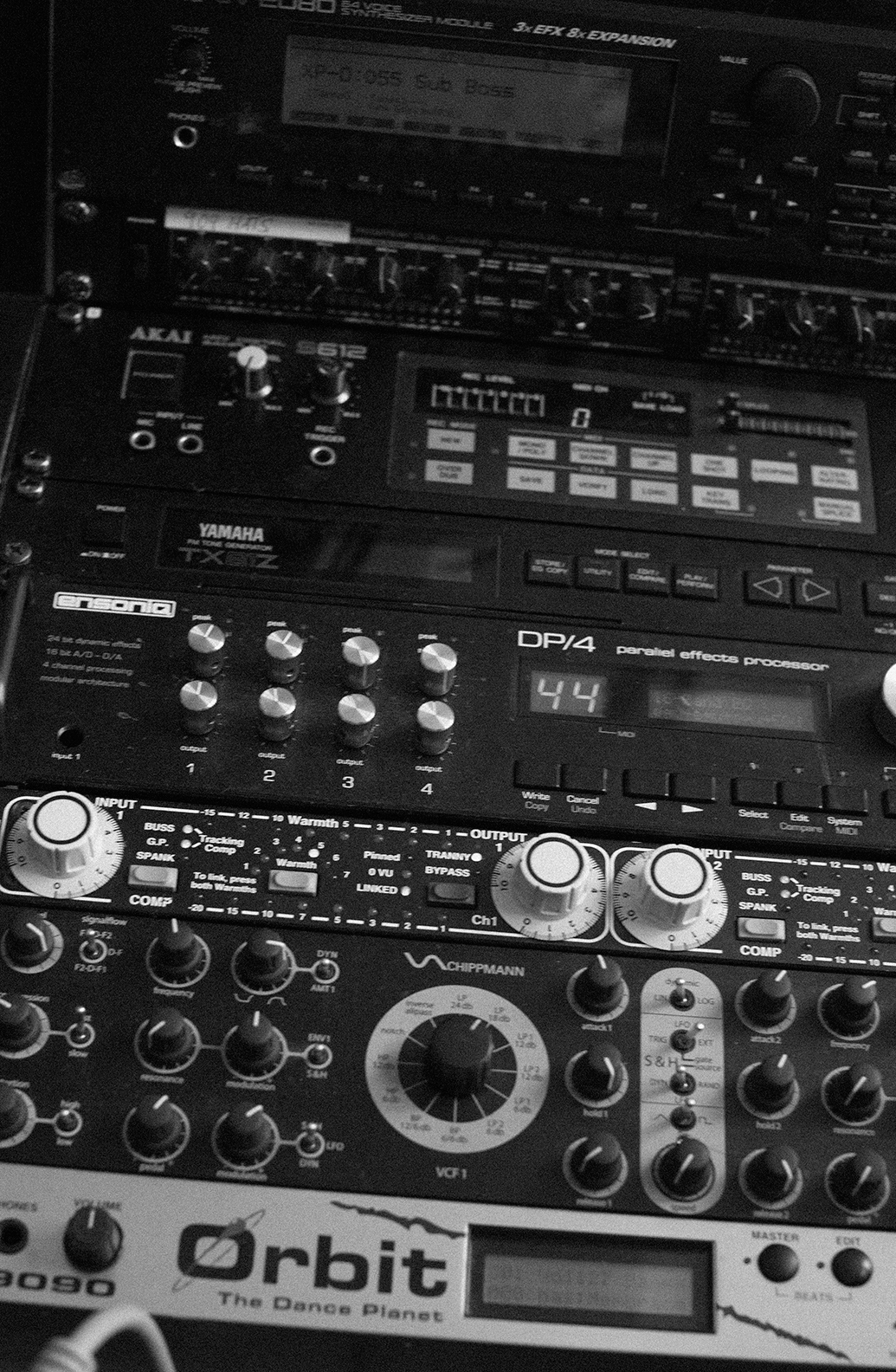
Let’s begin with a look at the Lazare racks. 

Here we have the Schippmann Ebbe und Flut, which is my favorite filter. It’s way more than a simple two-filters box. It has a life on its own; compression, a distortion, a LFO, a VCA, a sample & hold, and two dual envelopes. It’s the bread and butter of my studio; the sound and the frequency range are insane, too. 
It’s a semi-modular synthesizer actually, brace yourself in the 68-page manual: not everything is intuitive, to be honest, but once you master it, you are the boss! 
Each filter has 12 characteristics, from LPF to every kind of “pass” you can imagine. The CV input and all sorts of modular routing on the rear panel make this unit very useful and it’s impossible that you will get tired of it. 
You can hear the Ebbe und Flut in my forthcoming Lazare Hoche “Maths,” as well as in a lot of Mandar material. I use it mostly to create an evolving sub-bass frequency sound; it has a marvelous way of reaching very low sub-bass frequencies.


Above we have the Ensoniq DP4, my favorite multi-effect device by far. I’m a big fan of the Ensoniq sound, especially the converter. Since I saw videos with Timbaland or Alan Braxe jamming the Ensoniq ASR10, finding this particular sound obsessed me. It’s a parallel processor, just like in your computer. You have four inputs and four outputs; you can process up to four sources at the same time. The phaser and flangers are nuts, very Daft Punk before you ask. The reverb is out of this world, and the combination of all the possibilities is insane. Check Mandar’s “Poisoned Words” track, everything is processed in the DP4, every single drum hits individually, with different presets.

Then we continue with the AKAI S-612,  one of the first Akai samplers from what I heard. It appeared on the market in 1985, so I’ll let you guys figure out the memory it can hold: eight seconds max with the lowest sample rate—amazing! Apart from these ancient specifications, it’s indeed my favorite sampler. The 12-bit madness is real with the S-612, and believe me, it’s a fun and simple machine to operate. Everything is in the front panel, LFO, filter, looping, start, and slice faders, and it even has a mic input, so you can directly sample your voice to make it tonal and then play with it on a keyboard. A lot of happy accidents happened to me with this sampler. If you guys like the Herbert-style of production, and a real lo-fi mood, you won’t be disappointed.


Yamaha DX100 + Baby Fender Rhodes Mk II 54
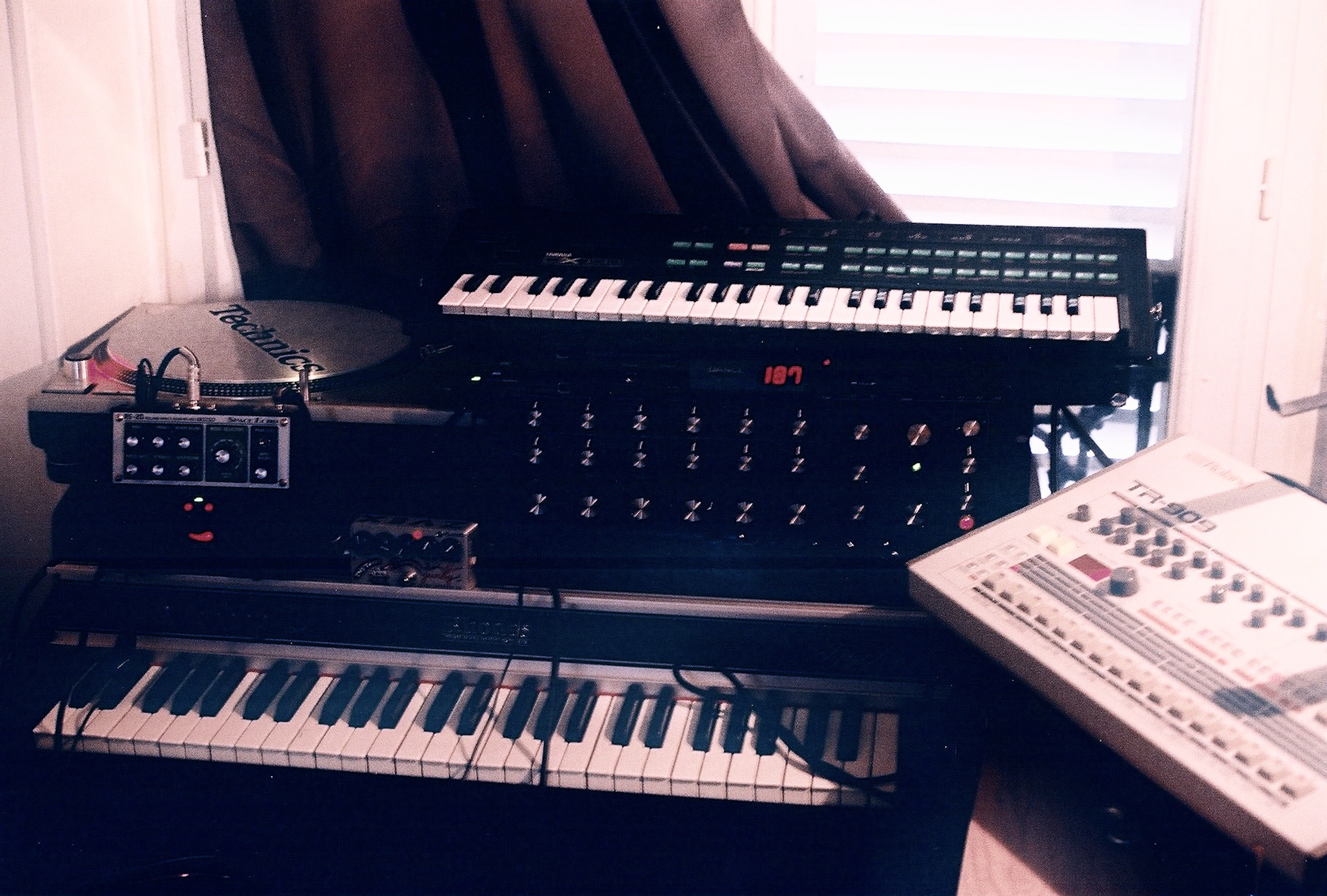

Here I would like to present a combination rather than a just one piece of gear. The DX100 is a small bomb—for me, it’s the best FM synth I’ve ever touched. At first look, you can think it’s toy-ish, but the sound is not. Juggling the four FM operators while scrolling through the presets will already send you close to an ‘80s heaven.

Green Velvet’s “Preacherman” is one of those tracks that took its substance from the DX. Not to mention Kerri Chandler’s bass signature preset “Solid Bass.” You can also use it as a talkbox like Roger Troutman. 

In almost all the live footage from the ‘80s, you can see a DX synth being played—for example, Michael Jackson’s BAD tour ‘88 or Serge Gainsbourg’s Casino de Paris ‘86. While the whole trend was analog gear, I always had a nag for early digital synths. It fits the mix like nothing else, although the knob feeling is missing; it’s menu time! This little keyboard rocked my world.


The Baby Fender Rhodes is a smaller and more affordable version of the classic Fender Rhodes Stage. It saw the light of day in 1980, all-wooden 54 keys, and it covers the middle range of a piano register, so you can’t do bass or higher range frequencies, but it’s perfect for chords and melodic content. I love to have a chorus pedal behind it to have a nice stereo feeling; it’s super inspiring to manipulate a Rhodes keyboard, even intuitively. It gives an organic feeling; you can hear it a lot on the track Lazare Hoche & S.A.M. “Beyond Synthesis.” 


Make Noise Shared System
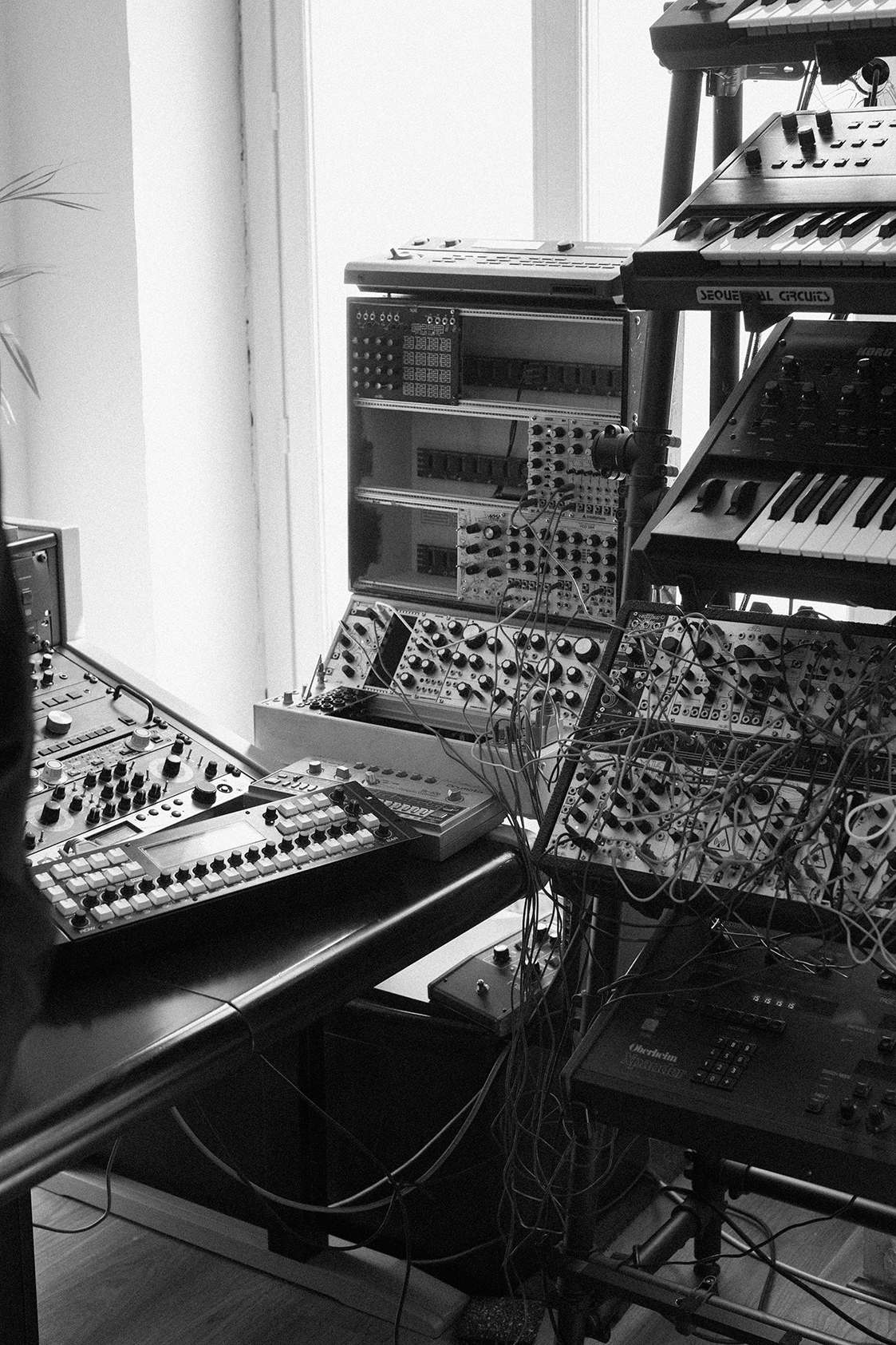
I got into modular around 2013. I checked it out in some synth showrooms in Paris with my headphones, and the sonic capabilities drove me nuts.

With this particular unit I’m more interested in sounds than music. I heard, back then, that Make Noise was a freaky brand doing some very funky and good-sounding modules. I saw that they were releasing a “road-ready” case system, and I went for it.
 

The Make Noise Shared System is an absolute bomb. I’ve recorded numerous hours of jams and improvisations with it. The sonic experience is out of this world; the delay unit “Echophon” is a crazy versatile module, the VCFA “Optomix” is perfect for those plucky percussive module sounds or what they call low pass gate, which is very effective in modern techno or house productions. The “Maths” envelope generator is also bread and butter for every kind of modular use, I saw that Ricardo Villalobos has some of it in his studio actually, which is always a good sign. The sequencer called “René,” just like Celine Dion’s husband or the French philosopher René Descartes, is a gem, a three-dimensional prism of composition. It’s a total matrix by itself, a new approach of synth sequencing.


Lazare’s Delay Chain
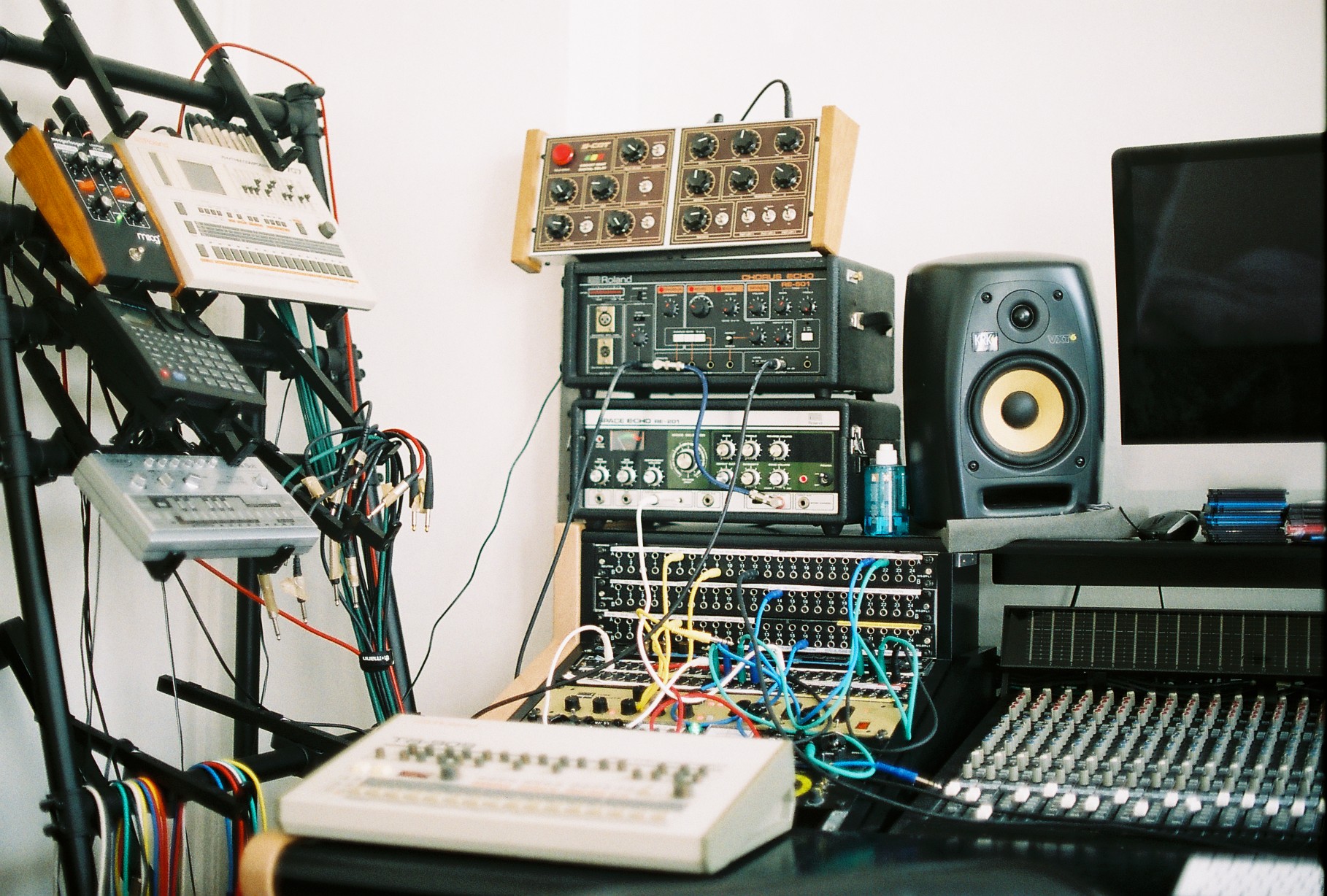
This picture is of three delays units I like to use together. They are rough, they are tough, and they are not necessarily versatile, but it’s not what I asked for when I got them—I wanted them to do one thing and to do it good: dub delay. Let’s go.

Everyone knows the Roland Space Echo series, namely the 201, produced from the mid-’70s to the early-’90s. It’s a tape echo delay that records incoming audio to a loop of magnetic tape, then replays the continuous loop over the playback head before it’s erased again by the new incoming audio. It’s warm, gritty, and unpredictable. It has been used in almost all of my productions, sometimes for a synth stab and sometimes just for one hi-hat. It all depends on the feeling. I love to place a phaser right after to phase the delays differently. It’s simply beautiful.


The Roland Space Echo 501 is using the same principle but adding the chorus effect to this beauty (so it’s now delay, reverb, and chorus). It has a lot cleaner output, with a more ‘80s feel than ‘70s. It’s a different flavor and I like to use it on synthesizers a lot. Sometimes I route the two units together to go in this infinite tape loop stuff—make sure to watch out for the feedback as you can create a huge backfire that will blow up your speakers!

The Space Cat Circuit Bent Digital Delay is a small batch company but this unit is an extra large digital delay with three rate controls, brightness, lo-fi, punch, distortion, HPF, two degeneration, dub-back, and three fast lo-fi glitch. This thing is not clean for sure, but it’s wild and warm, and that’s all I ask for in a delay.


Time Guard EP lands February 18 via his own Lazare Hoche France label.

Shlohmo Returns with Apocalypse-Themed New Album, ‘The End’

Shlohmo will put out his latest album, The End, via Friends of Friends and Wedidit on March 22.

The 13-track album is the Los Angeles producer’s first full-length offering since 2015’s Dark Red. Focus since then has been on collaborating with artists like Post Malone, Joji, Chance The Rapper, Yung Lean, and Lil Yachty, as well as writing a score for A24 film Share. 

We’re told to expect a “thunderous apocalyptic masterpiece” that sees Shlohmo, real name Henry Laufer, drawing inspiration from his interest in cults who view the end of days as an occasion to relish; “it is the sound of impending doom bringing calmness in its futility,” the labels explain. It’s made up of lo-fi compositions of the broken parts of daily life, all tied together by an overarching theme of aesthetic decay. 

Tracklisting

01. Rock Music 

02. The End 

03. Hopeless 

04. Eating Away 

05. Headache Of The Year 

06. Ungrateful 

07. Staring At A Wall 

08. We Sat In The Car 

09. Panic Attack 

10. Watching A Video 

11. The Best Of Me 

12. By Myself 

13. Still Life 

Friends Of Friends/Wedidit will release The End on March 22, with the title cut below. 

Skee Mask Locks in New Ilian Tape EP

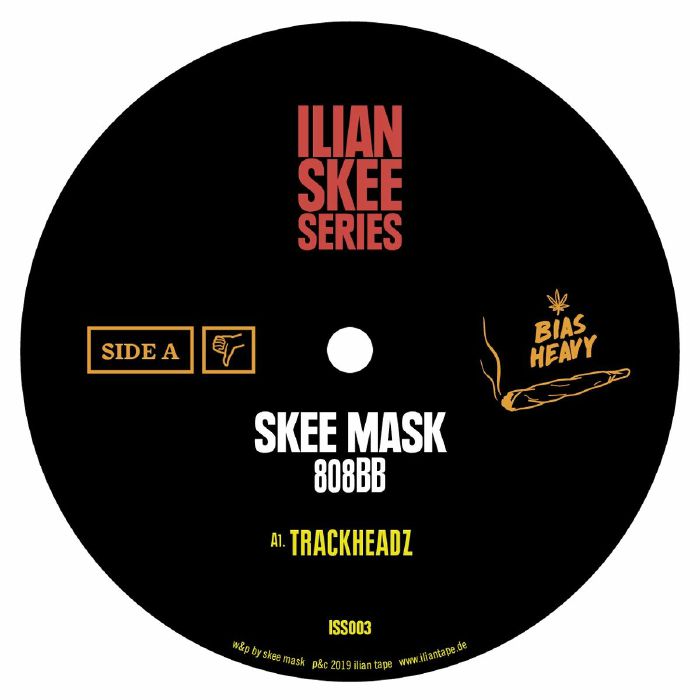
Skee Mask will release a new Ilian Tape EP next month, titled 808BB.

The three-track EP is Bryan Müller’s first new material since Compro, his latest album, and an inclusion on our Best of 2018 list. The Munich native has been a regular on the Zenker Brothers’ label since 2014. 

Tracklisting

A. Trackheadz 

B1. TH808 

B2. 808AB 

808BB lands February 18, with clips here

Watch a New Video on Creative Songwriting in Ableton With Afrodeutsche

Last Year, in partnership with Ableton’s yearly Education Tour, Point Blank hosted UK-based producer and live performer Afrodeutsche for a masterclass in creative songwriting and performing in Ableton Live.

In the video, Afrodeutsche, real name Henrietta Smith-Rolla, delves deep into how she experiments with creative writing in Ableton, including her tips on processing sound and samples, and how she’s progressed from ambient piano works to deeper, more club-based electronic productions. She also discusses how she performs live using Ableton, going into detail on how to map sounds and effects to a controller while programming beats live. During the masterclass, Afrodeutsche opens and expands on a number of her Ableton projects, giving insight into her workflow and project structure, as well as a look at scoring films using Live’s inbuilt video display.

You can watch the video below, with more on Point Blank and its courses here.

Léonie Pernet “Auaati” (Acid Arab Remix)

Acid Arab have remixed “Auaati,” a cut from Léonie Pernet‘s album Crave.

Released on Infiné Music in September of last year, Crave features 12 cinematic tracks that pull from new wave, post-punk, synth pop, ambient, and Arabic influences. Earlier this year, Pernet released a video by French director Lesly Lynch for album cut “Auaati,” on which Pernet enlists Hanaa Ouassim to sing about the anxiety, difficulties, and questions faced by the Queer Muslim community in New York. The track now gets the remix treatment from collaborators Acid Arab, who twist the cinematic pop of the original into deep and haunting acid territory. 

You can grab Acid Arab’s remix via WeTransfer below, along with the video for “Auaati,” with Crave available here.

Due to issues regarding the GDPR, EU readers can download the track here.

Premiere: Hear a Rolling, Groove-Led Remix by Priku

Romanian duo Livio & Roby will return to their new Tier imprint for its second release, Ondul.

The duo launched Tier last year with their Bala Un Ac EP, a 12″ featuring one original and remixes from Ion Ludwig and Direkt. The label’s second release presents two originals from the label heads and a remix from fellow Romanian Priku. Like much of their back catalog, Livio & Roby’s originals on Ondul favor analog grooves, from the heavy, intricate rhythms of the title track to the deep atmospheres of “Bartez.” On the remix front, Priku turns his hand to the title track, stipping it back for a rich, groove-led outing full of shimmering pads and glitchy synth chops.

Ondul can be pre-ordered here, with Priku’s remix streaming in full below.

Tracklisting:

A1. Livio & Roby “Ondul
”

A2. Livio & Roby “Ondul” (Priku Remix)


B1. Livio & Roby “Bartez
”

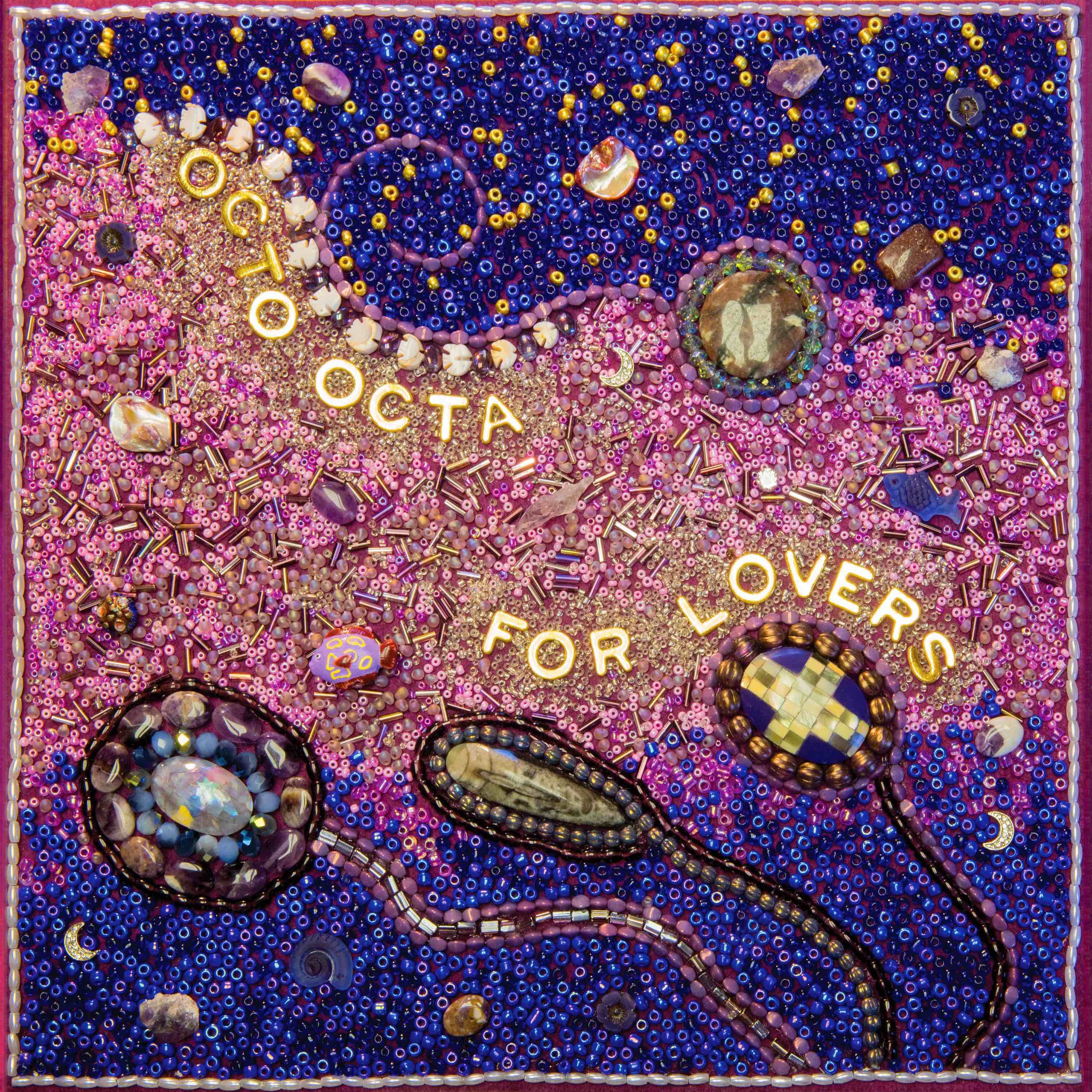
Octo Octa EP Next on Ninja Tune’s Technicolour Imprint

Photo: Charles Ludeke 

Maya Bouldry-Morrison (a.k.a Octo Octa) is up next on Technicolour Recordings

We’re told that the three-track EP represents some of Maya’s most vulnerable work to date. It follows her 2018 Eris Drew collaboration, Devotion, and will be her debut on the Ninja Tune affiliated imprint.  

Opener “I Need You” is a bold declaration regarding her need for love during a delicate time of rapid change. Written on an extended tour spent alone, the “radiant breakbeat love letter” is the first vocal performance Maya has recorded in many years, and the first since her transition. It features the voice of a woman who has been through an intense personal struggle, and through that process come to a place of understanding that she is not alone. 

The second track, “Bodies Meld Together,” is a sensuous house dub that evokes the mystical penetrating experience of a connection ritual that is at once obliterating and rejuvenating. 

The EP’s closing track, “Loops For Healing,” was written during a studio session immediately after Octo Octa completed her second album, Where Are We Going? Not originally intended for release, it was, as the title suggests, composed as a personal tool for healing. It lay dormant for over a year until Maya found it on her hard-drive and fortuitously played it at a club a few months ago. Playing the tune to a packed floor grounded her and served as a reminder of why she is a musician in the first place: to heal herself and to heal others.

Tracklisting

01. I Need You

02. Bodies Meld Together

03. Loops For Healing

For Lovers EP will be released on 12” and digitally on March 1 via Technicolour, with “I Need You” streaming below. 

Artwork by Brooke Bouldry-Morrison

R&S Records Welcomes London’s Ben Hayes

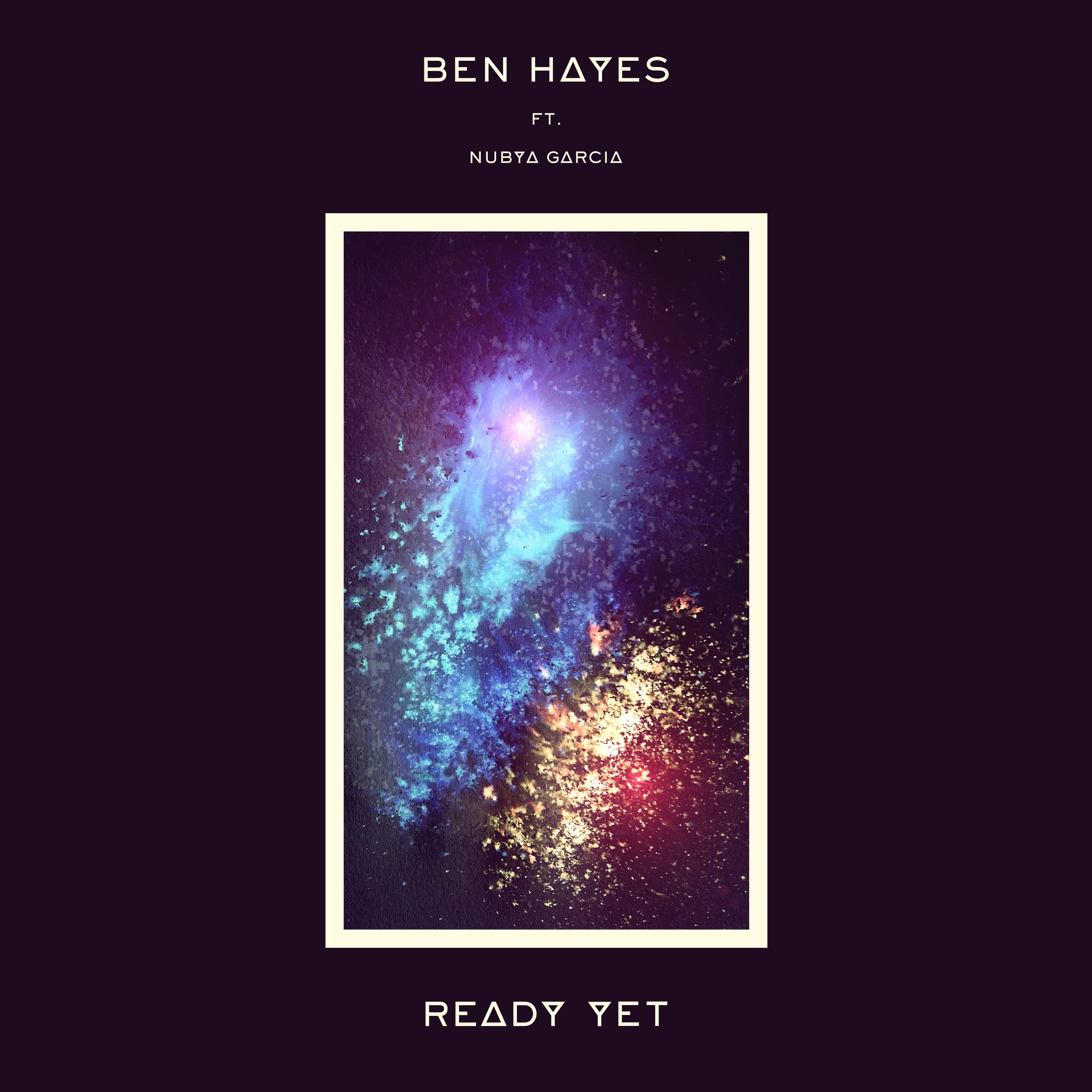
R&S Records has signed producer, composer, sound designer, and DJ Ben Hayes, and unveiled his new single, “Ready Yet,” which features new jazz queen Nubya Garcia

Hayes’ formal musical training lies in jazz, but he has accumulated influences from the LA beat scene, techno, IDM/electronica, spiritual jazz, and 3D sound. Equipped with a broad range of studio skills—including making his own tools for software—and an ability to play keys plus electric/double bass, he’s been deep amidst the South London scene since it began, watching others rise whilst patiently honing his craft. 

The London artist has previously produced for Puma Blue, Poppy Ajudha, Oscar Jerome, Maisha, and Carmody; and he has collaborated with Joe Armon-Jones, Maxwell Owin, and Nubya Garcia, whom he calls upon for this latest single. 

As a solo artist, Hayes has self-released his We Must Cultivate and Hedonia EPs. 

Ready Yet is out now with a stream available below. 

R&S Records Welcomes London’s Ben Hayes

R&S Records has signed producer, composer, sound designer, and DJ Ben Hayes, and unveiled his new single, “Ready Yet,” which features new jazz queen Nubya Garcia

Hayes’ formal musical training lies in jazz, but he has accumulated influences from the LA beat scene, techno, IDM/electronica, spiritual jazz, and 3D sound. Equipped with a broad range of studio skills—including making his own tools for software—and an ability to play keys plus electric/double bass, he’s been deep amidst the South London scene since it began, watching others rise whilst patiently honing his craft. 

The London artist has previously produced for Puma Blue, Poppy Ajudha, Oscar Jerome, Maisha, and Carmody; and he has collaborated with Joe Armon-Jones, Maxwell Owin, and Nubya Garcia, whom he calls upon for this latest single. 

As a solo artist, Hayes has self-released his We Must Cultivate and Hedonia EPs. 

Ready Yet is out now with a stream available below. 

Fennesz Details Stripped-Back ‘Agora’ LP on Touch

Photo: Danilo Pellegrinelli

Christian Fennesz (a.k.a Fennesz) will release his first solo album in five years, Agora

Agora was recorded at Kaiserstudios, Vienna in August and September of 2018, and presents four new ambient and electronic compositions that explore a wide range of textural depth and emotion. Katharina Caecilia Fennesz and Mira Waldmann feature on vocals and Manfred Neuwirth provides field recordings. The record, which is more stripped-back than the experimental artist’s six earlier albums, will launch with London-based Touch on March 29 across digital and CD formats, and a vinyl pressing will follow soon after. 

“It’s a simple story,” adds Fennesz. “I had temporarily lost a proper studio workspace and had to move all my gear back to a small bedroom in my flat where I recorded this album. It was all done on headphones, which was rather a frustrating situation at first but later on it felt like back in the day when I produced my first records in the 1990s. In the end, it was inspiring. I used very minimal equipment; I didn’t even have the courage to plug in all the gear and instruments which were at my disposal. I just used what was to hand.”

Fennesz has released a preview piece that stitches together moments from the songs across Agora, with a stream here

Tracklisting

01. In My Room

02. Rainfall

03. Agora

04. We Trigger the Sun

Agora LP arrives on March 29 via Touch.

Page 277 of 3781
1 275 276 277 278 279 3,781