Metric Systems’ People In The Dark album will be the next release on Best Effort.
People In The Dark follows the inaugural release, a four-track VA featuring cuts from Cold Emotion, NAP & D. Tiffany, IVAN, and Metric Systems. Metric Systems, an Australia duo made up of Kate Crawford and Bo Daley, return to the label for their eight-track debut album, which features just a small selection from a large archive of recorded materials produced over the last 20 years. Musically, People In The Dark is dark, haunting, beautiful, and cinematic; it’s hard-to-define music that touches on house, techno, electro, and more beat-driven pastures.
People In The Dark drops on November 26 and can be pre-ordered here, with album cut “Chinatown Warehouse” streaming in full below.
The EP, titled In Half Light, is Wells’ second solo EP on Weekend Circuit, following last year’s Three Marks of Existence EP, and the label’s second release of the year after YYYY’s Carry This Blood. In Half Light features two originals from Wells, alongside remixes from Lucy and SHXCXCHCXSH, all of which feature immersive sound design and vibrant dancefloor rhythms.
In Half Light will drop on November 27 and can be pre-ordered here, with tracklisting below.
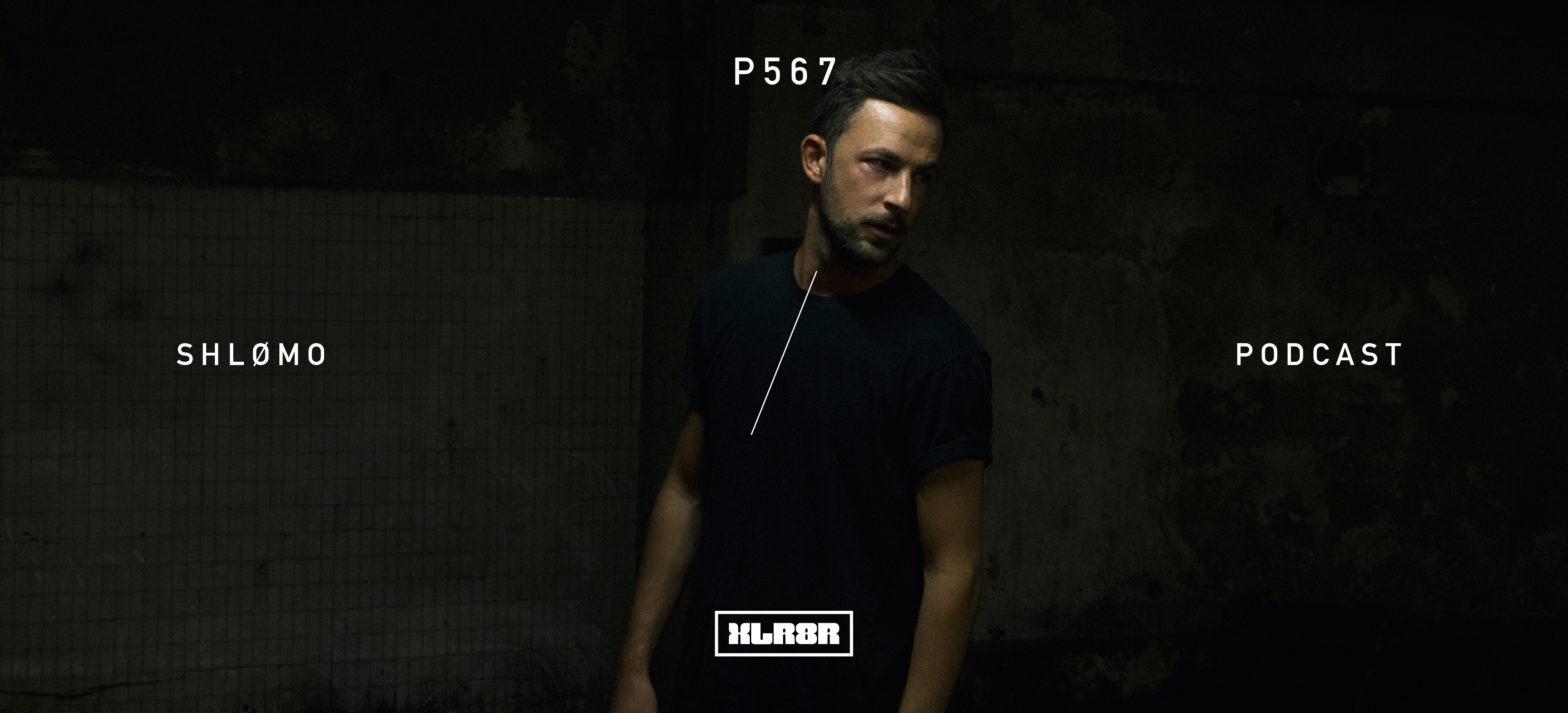
Shaun Baron-Carvais (a.k.a Shlømo) positions himself at the centre of France’s burgeoning underground music scene. After a 2013 debut, Baron-Carvais has emerged with his own distinctive take on techno, sprinkled on labels like Delsin, Singular Records, Arts Collective, and his own Taapion Records, where he will soon release Mercurial Skin, his debut album. Balancing real feeling with dancefloor function, authentic grooves and mesmeric sound design, his productions marry stark moods with absorbing atmospheres and have found favor with many of today’s key techno tastemakers.
Baron-Carvais tours as both a DJ and a live act, most frequently as Shlømo. As the latter, however, he also drops the alias, performing atmospheric live sets after a debut at 2017’s Berlin Atonal. His DJ sets, either solo or in collaboration with label mates PVNV and AWB as Taapion Soundsytem, are cerebral affairs, encompassing high pressure groove and deep, dark atmospheres. His XLR8R podcast is no different: recorded in Baron-Carvais’ Paris studio, it’s a captivating listen, featuring tracks from himself, Speedy J, and Blawan, with some left-field electro jams from Aphex Twin and Carl Finlow, among others. “I wanted to construct a mix to show what I can play during an all night long set, mixing material from both newer and up and coming talents with a selection from established artists,” Baron-Carvais explains. Turn up the volume and enjoy.
What have you been up to recently?
I recently started my album tour which is pretty intense. I just came back from a weekend in Tiblisi at Khidi and also a show in Warsaw, and I’m already getting prepared to leave to Toulouse tomorrow where I am playing at one of my favorite clubs in France, Bikini. Production-wise, after a small break away due to the completion of of my LP, I’m back at work in the studio and it feels really good already.
You have a new album on the way. How are you feeling about it?
I’m actually pretty excited to share it with everyone. It was a long process for me to work on this project because I wanted to deliver something more risky than usual. I wanted to go back to my electronic roots and back to the sounds and influences that helped me to discover electronic music. In particular, the sounds of Warp Records released from the late ’90s through to the early ’00s. It actually took me over a year to be completely satisfied with each track on the album. I made more than 30 tracks but I finally managed to decide and select these 14 tracks for the project.
Why did you decide to do an album now, and not earlier?
I’d had this project on my mind for a long time, maybe close to two years, but I was always working on either a new EP, a new live project or similar, and when all of these things combined I didn’t have enough time to work on the LP properly. I had something really precise in mind for this album, but I just needed to find enough time to work on it.
How does it compare to your earlier work?
I would say it’s another approach—it’s more of a home listening album than a club-dedicated album. It’s a combination of two of my projects: Shlømo and Shaun Baron-Carvais, my movie soundtrack-influenced and beat-less project that I performed at both Berlin Atonal and Gamma Festival in Saint Petersburg.
I definitely took more of a risk than usual for this album. For example, the way in which I produced and recorded it was different, it was more of a live construction and recording process.
Techno albums are an interesting concept: did you feel an obligation to make tracks for the dancefloor or did you use this as a reason to step away?
This project was definitely an opportunity to step away from some of my previous output. I see an album as an intimate project, but also something where you can be more free production-wise. I didn’t want to make a compilation of club tracks as this isn’t my own personal definition and idea of what an album is to me.
What’s the idea behind the LP’s artwork?
The visual is directly related to the album title Mercurial Skin. There was an entire concept and idea behind the LP, influenced and based around the ideal of heat leaving the skin when people make love, whilst mercury used to be the liquid used in thermometers to measure the degree readings and heat.
When and where was this mix recorded?
The mix was recorded around a week ago at my home studio in Paris.
How long did you spend choosing the tracks, and how did you go about choosing them?
I spent two or three days digging for some older gems and then also checking new promos from some artists and releases that I’m really into. I wanted to construct a mix to show what I can play during an all night long set, mixing material from both newer and up and coming talents with a selection from established artists.
How does this set compare to the music you play out live and DJing?
As I mentioned, I tried to create a mix that represents what I can play during an all night long set, so this mix spans a slightly wider range of electronic music genres including electro, techno, and electronica.
What’s next on the horizon, after the album?
Right now I’m working on several new projects and releases including my forthcoming EP on Soma, but also the LUXOR project that I’ve just started with Antigone. I’m also already working on a Remixed LP that will unite and combine remixes from a number of close friends and also a selection of established and esteemed artists. It will be released throughout 2019 across three or four vinyl drops.
Due to temporary issues regarding the GDPR, EU readers can download the podcast here.
Tracklisting:
01. Unknown Artist “Untilted”
02. Carl Finlow “Conduit” (Volsocs Orange Problem Remix)
Pearson Sound will returns to his own label with the Rubble EP,out next week.
All the tracks began during a “solitary week” spent at Devon Analogue Studio, and then they were arranged and mixed in London. “Rubble” is described as “the sound of two major demolition projects shaking my studio,” the UK producer explains; while “Earwig’ is “my first (and maybe last) acid track,” and “Our Spirits Soar” is “for smokey late-night dancefloors while the house lights creep up.”
The EP is the is the first to come out on the label since 2017’s Robin Chasing Butterflies.
Tracklisting
01. Rubble
02. Earwig
03. Our Spirits Soar
Rubble will drop on Friday, November 16, with clips below.
Scientists create new machines. So goes the robotically intoned lyric in “New Machines,” the opening track from Simulant’s 1998 EP Simm City. Tresor’s remastering of the track as part of last year’s Scopex 98-00 brought it and the rest of British electro label Scopex’ mysterious output to surface-level internet consciousness. But TJ Hertz—better known as Objekt—had been playing Scopex tunes for years.
By Simulant’s definition, Hertz can rightly define himself as a scientist. After completing an engineering degree at Oxford, he worked at German tech company Native Instruments as a software developer, learning how to turn signals into audio and how to change certain qualities in that audio by altering those signals.
In a more abstract, less painfully technical sense, Objekt’s new album positions the artist in the role of scientist—not in a zany, Dr. Brown way, or even in the way that most artists mess around with machines in search of music, but in a way that sees a producer building tracks as though they are machines. These are not static soundscapes or examples of sonic architecture, but moving, functioning things that don’t always behave the same way. Cocoon Crush, on PAN like Objekt’s debut LP, Flatland, is the most experimental, scientific work in the artist’s oeuvre. Yet like any mad scientist (maybe there is a touch of Dr. Brown), Objekt is forever striving to bring his machines to life.
The Scopex link is pertinent with regard to the development in Objekt’s sound, too. When he first emerged in 2011, he was touted as a golden child of dubstep (or at least post-dubstep), but an underreported influence on the artist is that of electro. Aside from sharing singles with Dopplereffekt and remixing The Exaltics, Objekt has previously aligned with a resistance of technoid 4/4 on tracks like “Balloon” and “Ratchet.” Cocoon Crush goes beyond electro’s characteristic restlessness by largely eschewing obvious tempos altogether.
Take “35,” possibly the clubbiest track on the record. A snare karate-kicks throughout the track—constant yet irregular—only to be interrupted without warning by passages of glacial ambience. “Silica” centres on the ambience, but with volatile drums programmed to burst through seemingly of their own accord. Talking about the track in his recent RBMA lecture, Hertz stated an intention to “push and pull” the listener rather than simply carry them forwards. It’s a function that could be extended to the whole album, and it’s performed to dazzling effect.
While Objekt sounds as singular as ever here, his avant-garde, anti-repetitive electro (as well as his love of machines) calls to mind recent Aphex Twin, from Syro to this year’s Collapse EP. Cocoon Crush’s “Secret Snake,” for example, is comparable to Aphex’s “T69 Collapse” in both sound—crunchy, punishing rhythms followed by heavenly choral wash—and efficacy. The opening few minutes of both tracks are fairly unremarkable, like AI-generated impressions of their creators, but both are saved by brilliant, otherworldly second halves, so good they make you think the boring bits were vital after all.
Incidentally, “Collapse,” with its mental, Weirdcore-directed visual, calls to mind the relative dearth of Objekt music videos. It would be nice to see Cocoon Crush interpreted for the screen, though it’s worth stressing that it’s already so vivid as to almost seem visible. While this album is—to use a cliché most often reserved for Harry Potter films—much darker than the last one, it’s also somehow more colourful, its creator discovering even more depth in his HD audio.
Shelving the scientist metaphor for a moment, it’s worth stating just how much the “producer” tag suits Hertz, perhaps more fittingly even than “artist.” Objekt’s painstaking approach towards sound design (he’s mentioned spending an entire day perfecting a kick drum) has made his music the kind you download in wav. form even though your laptop doesn’t really have the spare memory. Doing so will reward anyone listening to Cocoon Crush centrepiece “Rest Yr Troubles Over Me” on headphones in a dark room. The track drones like a resting spaceship, tones ranging from ominous church bell to earsplitting “Ventolin” screech, overset with the croaky android vocals which recur throughout the album. It’s terrifying, breathtaking, and one of the finest pieces of music Objekt has ever created.
Equally skin-crawling is “Runaway.” The track creaks, clanks and ratchets towards a chilling middle section in which, if you peer into the oily mist, you can hear the distant sound of children playing. Then you won’t be able to unhear it. The final few minutes unspool into a neo-percussive dance track befitting of Burnt Friedman or Second Woman. Its unnerving experimentalism make it the kind of track not many DJs would go near, but also one I’d pay well over the odds to hear in a club.
The whole artifice threatens to splutter to a halt with penultimate one-minuter “Another Knot,” but it all makes sense once the album’s colossal closer hits. After an intro you might have found on Autechre’s Amber, a neonatal appliance blinks itself awake. Figures echoing earlier points in the album, fuzzes of white noise build until, at the four-minute mark, an eruption of life. There’s something triumphant about the gorgeous, arcing Blade Runner brass line, Cocoon Crush’s melodic crescendo. It’s as though the narrative transformation is complete, as though Objekt’s mad machine has at last become a superorganism.
The album’s filmic progression evokes all kinds of cinematic imagery, but one example in particular springs to mind: Alex Garland’s Annihilation, a psychedelic sci-fi thriller about the transformative behaviour of a foreign ecosystem, with a climax to match that of Cocoon Crush. Everything from the album’s sharp, shimmering opulence (its cover could be a still from Annihilation) to its thematic interactions between machine and being align it with Garland’s apocalyptic work. Objekt— whether artist, producer or mad professor—is on top of his game, and his latest creation is as beautiful as it is powerful.
Tracklisting
01. Lost and Found (Lost Mix)
02. Dazzle Anew
03. 35
04. Nervous Silk
05. Deadlock
06. Rest Yr Troubles Over Me
07. Silica
08. Runaway
09. Secret Snake
10. Another Knot
11. Lost and Found (Found Mix)
Cocoon Crush lands on vinyl and digital formats on November 9.
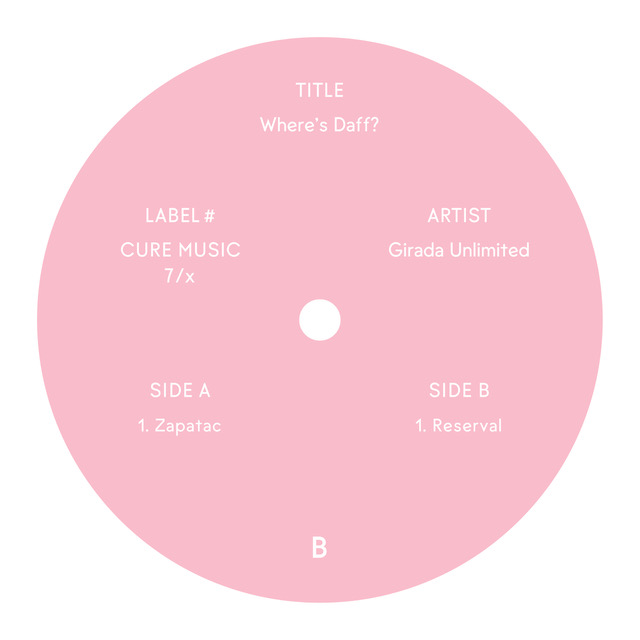
The seventh release on Cure Music comes from Girada Unlimited, featuring two reworks of previously released and very rare tracks.
“Zapatac,” the A1, has proven especially popular with Ricardo Villalobos, becoming one of the staples in his recent sets and included in his recent BBC Radio 1 Essential Mix. It is a rework of Velodrome’s “Capitaz,” released in 1988 as part of the На Велодроме 141 EP via Animalized.
“It took us eight months to get hold of the Velodome guys, namely Krishna Goineau and Jordi Guber,” Momo Trosman, label head of Cure recalls. “First we tried contact a label owner that had a connection with Jordi but didn’t want to provide us the contact. After that, we did some research and wrote to all the labels that had released something from Liaisons Dangereuses trying to contact Krishna. It was a nightmare, no one answered us and we sent over 15 emails.” Then, after a few months, Trosman received a cellphone number as a reply of one of the emails and touched based with Krishna who said: “I love the idea of doing this together and why not to release more old unreleased stuff in the future.” After two weeks, Trosman then made contact with Jordi who said that they used to “hate hi-hats” and that “if someone had told him 20 years ago that there would be a Velodrome edit with hi-hats that he would never have believed it.” But now he “loves it,” we’re told.
The identity of Girada Unlimited remains unconfirmed, but it is an alias previously used by Julian Perez and the name of his label. We’re told that this is just one example of many older tunes he or she has edited into some a little more playable.
“All these tracks were played in my hometown of Valencia in the late ’80s, beginning of ’90s. I was very young at that time when I was listening to those casettes recorded in clubs such as Barraca, Chocolate, Spook Factory, ACTV, etc. My older friends were always bringing from the nights and we were copying the tapes all the time. I haven’t got those tapes these days but sometimes I look for sets online from the famous La ruta del bakalao. That was without a doubt one of the biggest movements in Spain at their time. The first parties from Friday to Monday non-stop going from one club to another with the best drugs ever, shame I was late for all that. Listening to those sets now, I’m still recognizing some tunes which bring me memories and sometimes are even playable these days with a little editing, that’s also inspiring for me and I love to do it.” —Girada Unlimited
Details of “Reserval,” the second track, remain unknown barring that it’s another edit or a rare old record.
Tracklisting
A. Zapatac
B. Reserval
Where’s Daff? will land next month, with a snippet of “Zapatac” available below.
Released alongside a remix from South Africa’s Ryan Sullivan, the single comes packaged as both the full vocal mix and an instrumental, and has already been gaining support from artists such as Hernan Cattaneo, Danny Tennaglia, Cevin Fisher, D-Nox, Steve Parry, Gai Barone, Aly and Fila, and Magitman, among many others. Sullivan’s remix takes the high-definition original into deeper territory, refitting it with a chunky low-end groove and tribal percussion.
In support of the release, Audioglider has offered up a remix of James Zabiela’s “Weird Science” as today’s XLR8R download. Running for nearly eight minutes, it’s a tripped-out tech house weapon that presents a weirder and wonkier side to Audioglider’s productions.
You can grab “Chemtrails” here, with the remix available via WeTransfer below.
Due to temporary issues regarding the GDPR, EU readers can download the track here.
Today, November 5, marks the release of Mor Elian‘s latest EP, Move Like Atoms.
The EP is the third release to land on Fever AM, the label run by Elian and Cassegrain’s Rhyw, following two previous offerings from the label heads themselves. Move Like Atoms also continues a standout 2018 that has seen Elian release on Delta Funktionen’s Radio Matrix and Hypercolour, as well as a gig schedule that has seen her perform at De School, Golden Pudel, Closer, and Panorama Bar, among others. Featuring four cuts that touch on breaks-heavy techno (“Doss Groove”), broken-beat grooves (“Move Like Atoms”), and the deep and warped electro (“Russian Wave Group”), Move Like Atoms is yet another high-quality offering from one of techno’s most promising artists.
You can pick up the EP here, with a full stream of “Russian Wave Group” below.
It’s easy to overlook how seminal the ’90s were in birthing pretty much everything that has since come to dominate UK culture. In just a matter of years garage, jungle, UK funky, bassline, and many more genres exploded out of one another like firecrackers. In the mix of it all was MJ Cole, whose pioneering 2-step sound went on to influence everything from grime to dubstep to bands like The XX. His breakthrough track, “Sincere,” was one of the first proper garage songs to penetrate the UK top 40.
Over the years, Cole has established himself both as one of the most consistent producers in Britain and a mastermind for bringing through new talent. He’s produced tracks across the spectrum for artists like Dizzee Rascal, Katy B, and Example. In 2014, he co-wrote and produced “Nobody But You” for Mary J Blige, alongside Sam Smith and Jimmy Napes; and just last year he teamed up with the ferocious young grime MC AJ Tracey to create “The Rumble,” a dark, industrial colossus that showed just how diverse his sound has become.
Aside from dropping “Bouldaz” on Disclosure’s Method White label, “Alcatraz” on Redlight’s label Lobsterboy, and the aforementioned “The Rumble,” Cole’s last two years have been spent on a secret side project. In the heart of central London, he’s taken over and renovated an old abandoned gin factory into a mecca for new artists and producers. Aptly named The Gin Factory, it is a 12 studio soundproof factory reminiscent of Cheiron Studios in Sweden “It’s a good vibe,” says Cole. “People are constantly nipping into each other’s studios to tune vocals or play keys or sing.” It’s here, on the basement floor in a spacious room decorated with synths, pianos, and old records, that MJ Cole gets down to work.
The latest output from The Gin Factory is Foundations, a three-track release described as “irresistibly emotive and club ready all at once.” It features new singles “If Only,” “Phoenix,” and “Liquid,” and marks a return to the 2-step sound. In support of the release, we caught up with the London-based artist for 20 quick-fire questions.
01. Describe your surroundings right now.
I’m sat in my natural habitat: my studio in Clerkenwell, London. My favourite place where the weather is always dependable.
02. What advice would you give yourself 20 years ago?
Take breaks from creating music, if you can. Forcing creativity can grind you down so create time to live as a human being. The best music comes from experience and an open mind.
03. Your Carmen Mcrae remix “How Long Has This Been Going On” is a favourite in the XLR8R office. What tracks do you look back on with the most amount of pride?
It’s an obvious choice but “Sincere” will always be a special record to me. I wrote it in my bedroom with minimal equipment with no preconceptions or boundaries. It represents complete fluidity and creative freedom to me. It became the ticket to the best show I’ve ever been invited to.
04. What do you think of the garage music scene now?
There’s some great records around at the moment. I’m not hearing anything ground-breaking but I’m not sure that’s even possible now with the internet and the amount of cross-fertilisation of genres.
05. Do you think that technological advancements in production and the fact that anyone has the capacity to produce music has led to a higher output of quality?
It’s certainly easier to make records sound good these days but the magic still comes from within. The tools are sharper but the the finished sculpture is still all about the sculptor.
05. We know your love of pianos and playing live but what would do you prefer: DJ set or live band?
I love DJing. Always will. But I’m a keys guy at heart. It’s what I grew up doing to play music live again is important to me. I’m just about to start putting together a new live show for next year. Looking forward to it.
06. Which DJs are inspiring you at the moment?
On my travels I always come across some DJ sets which really stand out. No matter what anyone says, DJing at the highest level is an art form. In the garage world, EZ will always be king; he’s amazingly creative with the CDJs and can make the place erupt even with a 7/10 track. It’s all in the timing and lead up.
07. What musical genre is played most in your house outside of the studio?
I listen to music across the board away from the studio from classical to dub to jazz to ambient. I’m also pretty big on podcasts at the minute too—mostly of the non-musical type as my musical ears need a rest—Distraction Pieces, Inquiring Minds, WTF with Marc Maron, Desert Island Discs, and the Adam Buxton podcast are all favourites.
08. What are your favourite albums at the moment?
Maribou State Kingdoms in Colour
Kendrick Lamar Damn
Cinematic Orchestra Motion
09. What is your favourite aspect about producing music?
I love creating. Creating new art which will hopefully be around forever.
10. What growing music scene are you most interested in at the moment?
I’m constantly inspired and interested by a wide variety of musical flavours. I’ve recently started work on a project involving classical music so that’s been my musical diet for the last few months. It’s not exactly a growing scene or up and coming is it, but it is hugely inspiring.
11. A lot of garage from the early ’90s and 2000s is now making its way into contemporary house and techno sets. Can you see a renaissance of the early garage sound?
I hear the “it’s coming around again” thing often and have done for the the last 15 years. Garage had its elevated time around 2000. I feel new genres back then were jumped upon, rinsed, and spat out. I saw the same thing happen to dubstep. So, no, I don’t see a renaissance happening per se, but I think garage has become a solidified genre now. It’s paid its dues. It’s great to see some bits popping up in cross genre DJ sets.
12. Where have you played recently that has stood out as somewhere with an amazing atmosphere?
I played a tiny venue called The Shipping Forecast in Liverpool a month or so ago. An intimate venue underneath a bar. Had a great time in there. The crowd is everything and you can never tell how a gig is going to pan out.
13. How much time do you spend in the studio a week?
I spend about 40-60 hours in the studio per week at the moment. Autumn is my most productive time.
14. Tell us about your new release, Foundations, and where the idea for the music came about?
This EP is all about a return to the way I used to make records before I had access to recording equipment, just a sampler and a computer. It’s all about tiny samples and fragments of sound, woven into a musical tapestry. It’s not trying to be pop or radio, it’s a natural flow of creativity using the instruments and sounds I love.
15. A couple of the tracks have quite a deep emotional current running through them, almost melancholic whilst also sounding fresh and new. What influenced this deeper sound?
This is the sound of non-prescriptive music. Often there’s an expectation to make music that follows a format or ticks certain boxes. I’m naturally drawn to deeper sounds, deeper harmonies, deeper colours.
16.Would you ever be interested in making a film score?
Absolutely. With bells on. This has always been my dream.
17. What are the best films you’ve seen recently?
Really liked Idris Elba’s “Yardie.” Man’s got a few talents.
18. Your Back to Mine compilation album was on repeat in my house growing up. If you were to make a compilation album for an afters hours vibe now, name three tracks that would be on it?
Thanks. Good to hear.
Karriem Riggins “Bahia Dreamin’”
Gizmo “Red Balloon”
Kiasmos “Shed”
19. Where do you see yourself in 10 years time?
Writing film scores in my woodland studio.
20. What’s the first thing you’re going to do after answering these questions?
We are currently in the process mixing my next release so I’ll be working on that. I’m really excited about this one. It’s an unexpected collaboration. I’ll say no more except for that it’s sounding very very good.
DJ Different is Aleksandar Zekovski, an electronic artist Malmö, Sweden. He’s previously appeared on Traxx Underground, 1Ø PILLS MATE, and Distant Hawaii, a sub-label of Lobster Theremin, and now he will appear on the main label for the first time. We’re can expect “fuzzing interstellar ambient, Ilian Tape-esque heaving non-4/4 techno, skittering London jungle, RNB-infused washes of synth & breaks, and soulful, slow-lulling electro.”
Ahead of the EP’s November 30 release, you can stream “Real,” a smooth vocal-laden house cut in full via the player below.