Somewhere between post-rock, indie-rock, and folktronica sit Lymbyc Systym, the brother/brother duo that hates vowels and loves vintage keyboards, analog effects, lots of drumming, and are quickly carving a name for themselves as Mush’s latest laptop-rock creation. Fans of Tortoise, Four Tet, and My Bloody Valentine, take note.
The Baltimore Warehouse Scene
There’s no giant neon arrows pointing to the raddest of rad warehouse spaces in Baltimore. Smartly, the people who live in these spots know how to keep quiet. When they throw parties they try to keep everyone inside or on their way elsewhere, clearing the sidewalk with the passion of 1950s Irish New York cops. Sweaty students in Day-Glo tank tops and homemade sweatshirts cutting butts on the corner can still cause a stir with the authorities, despite the crime and trafficking that the city sees day and night. But if you spot a few roguish art-college escapees, you’ll at least you know you’re at the right place, since Baltimore’s warehouses are quickly becoming the best place to dance, mosh, and sweat to an ever-expanding roster of bands that blur the line between punk and electronic, hard rock and performance art.
“We started Wham City about two years ago [when] several friends and I moved down to Baltimore after we finished college at [SUNY] Purchase,” says the collective’s Dan Deacon, on the phone from his tour bus in Georgia, and probably wearing the most retarded t-shirt you can imagine. “We moved to Baltimore because there was a lot of available real estate, and the art scene was always very unpretentious, we had found.” These artistic pilgrims–not just musicians, but also a couple playwrights, a sculptor, and a painter–would eventually get the party started in Charm City. But not right away.
“We didn’t know anyone so we didn’t really do anything except sit in our house and break whatever items we brought with us from NY, and that got very boring,” recalls Deacon. To break this destructive cycle, the crew christened their loft space Wham City and began hosting shows, musical and otherwise. The first Wham City event was a production of Disney’s Beauty and the Beast; a number of stately theater and lecture nights followed, regularly mixed in with the balls-out shows the space has become known for. In turning their loft into a dual-use space–a limitless creative outlet/six-pack social club–Wham City quickly made nice with the locals, and it’s been a fruitful love affair ever since.
“Because of our building’s proximity to the [Maryland InstituteCollege of Art], people just started coming,” explains Deacon. “Eventually it started to seem like there was a scene, and that we were one of the regular venues having shows and doing things.”
MICA students and Baltimore natives alike gravitated to the freedom and energy of the space and its approach, which in turn encouraged a variety of similar endeavors.
“When I started school at MICA none of this was really going on,” says Mark Brown, an art student and DJ/promoter who throws the Are We Not Men? parties. The nights are held at The Depot, one of the few scene spots that isn’t a warehouse space; rather, it’s a bar that only recently let go of its ’90s layover gay-goth positioning. (“It used to be called ‘The Creep-o,'” says Brown.) Now Brown books a cross-section of DJs, local bands, and even touring acts (including Matt & Kim and Baltimore’s own Barr). “Things are interconnecting more and more,” says Brown. “The dots have been connected between Wham City, Wildfire, and what we do at our party.”
The Wildfire in question is the duo of Matt Papich of Ecstatic Sunshine and Devon Diamond, both MICA students. Together as Wildfire Wildfire, they promote shows, and release records like a Cex-produced mash-up/mixtape of Baltimore bands. “The warehouse situation in Baltimore definitely sprouted the scene,” says Papich. “That’s where [Ecstatic Sunshine] started playing. It’s easy because you can just do it yourself, and everyone goes because they can all drink and it’s cheaper than going to the bars. For us, it seemed like there was room for [Wildfire Wildfire] to book even more shows. No one else was going to do it.”
The importance of cheap rent and the availability of warehouse spaces cannot be scoffed at–indeed, it’s what keeps this scene fresh and fun. “There’s more willingness to participate in the show and have fun,” says Kevin O’Meara of the band Video Hippos. “People have more inhibitions in a public space. When you’re in someone’s home, people like to get crazy.” One of O’Meara’s contemporaries, Samuel N. Ortiz of Thrust Lab (a duo that can only be described as Paul Hardcastle raised on NES and Pizza Hut) concurs. “To me, it’s kind of mysterious,” he muses. “If you compare shows in Baltimore to shows elsewhere, people are really more willing to spazz out, go crazy, and get sweaty and get into it!”
Lady Saw Says Farewell to VP

Ten years and eight albums strong, dancehall’s baddest gyal Marion Hall (a.k.a. Lady Saw) says goodbye to her longtime home VP Records, with a final album appropriately titled Walk Out.
One might surmise that Hall, like other dancehall stars, is ready to cross into the territory of the majors, but the album also suggests she’s simply outgrown VP. Though packed with the same sexually-charged lyrics and no-nonsense rhythms fans have come to associate her with, Walk Out also captures a more mature profile of the singer, previously unseen. “I’m singing about a lot more positive things and revealing a side of me that people never knew I had,” says Hall, who is mother to three adopted children and has recently taken on the alias Mama Saw.
Further proof of change lies in her latest single, “No Less Than a Woman,” an empowering track that addresses stigmas attached to infertile women. And in the fickle, male-dominated world of dancehall, that’s something that should keep her voice planted in the ears of listeners for many years to come.
Walk Out is, um, out March 13, 2007 on VP.
Tracklisting
1. Hello Lady Saw
2. Big Up
3. Me and My Crew
4. Choose Me
5. No Less Than a Woman
6. World’s Prettiest
7. You Need Me
8. Baby Dry Your Eyes
9. Walk Out
10. Chat To Mi Back
11. It’s Like That
12. Power of the Pum
13. Like It
14. Stray Dogs
New At INCITE Online, March 6

If you’d like to receive a sample mix and weekly updates when new tracks are posted, please subscribe to our podcast. Subscribe using iTunes (recommended) or with the RSS reader of your choice, by clicking here.
Sen Kumpa – African Underground: Depths of Dakar is a collaboration between Senegalese MCs and Nomadic Wax Recordings, who set up shop in Dakar and opened the studio doors to anyone willing to grab the mic. The result is an album of tight musical production and politically-charged lyrics that act as the mouthpiece for social change in the country. Definitely not your average rap music.
Lymbyc Systym – Somewhere between post-rock, indie-rock, and folktronica sits the brother/brother duo that hates vowels and loves vintage keyboards, analog effects, lots of drumming, and are quickly carving a name for themselves as Mush’s latest laptop-rock creation. Fans of Tortoise, Four Tet, and My Bloody Valentine, take note.
Effacer – Appropriately signed to the UK’s experimental label Audiobulb, Effacer turns the art of sound into a true exploration on his new EP, which examines the unpredictable tendencies of abstract noise and subtle nuances of live field recording.
BloodySnowman – Ominous, cold, and, and dark are a few words that come to mind when listening to this Oakland-based producer, whose music sounds more like he’s beating the synthesizer with a large metal stick than gently tweaking its knobs. Skeptics will be pleasantly surprised it’s possible to dance to this stuff too.
Purple Crush – The title of Purple Crush’s new album, Welcome 2 Emo Club, doesn’t bring to mind heavy electro synths and programmed, dancefloor-ready beats, but such unpredictability is part of the fun when listening to this singer/producer duo.
Ed Recs Vol. 2
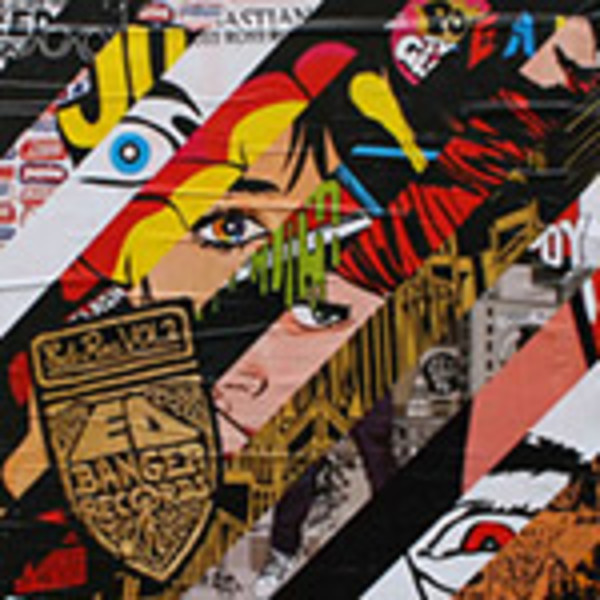
Ed Banger Records needs no introduction, and these days the Paris-based crew that specializes in everything from thrashing electro to hip-hop is cranking out the tunes faster than you can say mon dieu! Coming fast on the heels of Vol. 1, Ed Recs Vol. 2 sees the label once again pulling from its varied catalog for a nonstop digital dance party. The main players–Justice, Sebastian, Uffie, DJ Mehdi–make appearances, while the crowning achievement of the sampler is a So Me mash-up of “Golden Skans” and “Atlantis to Interzone” by the Klaxons.
Ed Recs Vol. 2 is available for download only April 10, 2007 on Ed Banger/Vice.
Tracklisting
1. Mr. Oizo “Intra”
2. Uffie “Dismissed”
3. Justice “Phantom”
4. DJ Medhi “Stick It”
5. Mr. Flash “Disco Dynamite”
6. Krazy Baldhead “Strings Of Death”
7. Feadz “Edwrecker”
8. Busy P “49ers”
9. DJ Mehdi “Lucky Girl”
10. Busy P “Rainbow Man”
11. Mr. Flash “Eagle Eyez”
12. Sebastian “Greel”
13. Klaxons “Golden Skans To Interzone (So Me Remix)”
14. Vicarious Bliss “Limousine”
120 Days on Gigantic Tour

Norway’s 120 Days joins Ratatat and Shout Out Out Out Out in April, for a non-stop tour across North America.
Adne Meisfjord, Jonas Hestvik, Arne Kvalvik, and Kjetil Oveson have come a long way since their days of living in a motorhome outside Oslo, getting harassed by junkies. Last year saw the release of the band’s self-titled debut long-player (Smalltown Suppersound), a rock-meets-technology album of spiraling guitars and crescendoing synths that they promoted the hell out of. A string of rave reviews and tour dates followed, and though it seems the band only just left North America, the boys are back.
Stay tuned for another full-length on the way, with tracks produced by labelmate Lindstrøm. Should keep the band away from motorhomes for many months to come.
Tour Dates
03/01 Ottawa, ON, Zaphod Beeblebrox
03/02 Montreal, QC, Mile End Cultural Center
03/03 Toronto, ON, Lee’s Palace Presents
03/04 Hamilton, ON, The Casbah
0306 London, ON, Call The Office
03/07 Waterloo, ON, Starlight Lounge
03/09 Brooklyn, NY, Southpaw
03/10 New York, NY, Mercury Lounge
03/11 Philadelphia, PA, Johnny Brendas
03/13 Houston, TX, Mink
03/15 Austin, TX, Flamingo Cantina
03/20 Saint Louis, MO, Gargoyle Club
03/21 Chicago, IL, Logan Square Auditorium
03/23 Denver, CO, Bluebird Theatre
03/24 Salt Lake City, UT, In The Venue
03/26 Portland, OR, Wonder Ballroom
03/27 Seattle, WA, Neumos
03/28 Vancouver, BC, Richards on Richards
03/29 Eugene, OR, WOW Hall
04/01 San Francisco, CA, Bimbos 365 Club
04/01 Ponoma, CA, The Glass House
04/02 Los Angeles, CA, Henry Fonda Theater
04/03 San Diego, CA, Porters Pub
04/05 Fort Worth, TX, Ridglea Theatre
04/06 Austin, TX, Emos
04/07 Houston, TX, Rice University Field
04/09 Nashville, TN, Mercy Lounge
04/10 Atlanta, GA, The Loft
Richie Spice In the Streets to Africa
On only his fourth proper artist album, Jamaica’s Richie Spice (né Richell Bonner) has done the improbable: He delivers a roots album that avoids sermonizing and encapsulates modern reggae flawlessly. It seemed audacious when VP signed the relatively obscure singer to a multi-album deal last year, but Spice succeeds, following up Spice in Your Life with an equally heartical recording. Guests like the late Joseph Hill of Culture, and Spice’s musical siblings Pliers and Spanner Banner, offer solid accompaniment, while producers Clive Hunt, Donovan Bennett, and Bobby Konders provide rock-solid riddims. It’s a bona fide reggae masterpiece.
Rennie Pilgrem Eraser
As a founding father of the breaks movement, Rennie Pilgrem’s challenge is to stay relevant in today’s ever-evolving market, and this is a return to storming form from this underground music mainstay. And no mistake: a nod to the oh-so-now sound of electro, married to a tough groove that actually has the temerity to use a real breakbeat. Imagine!
Various Artists Buzzin’ Fly Vol. 4 Mixed by Ben Watt
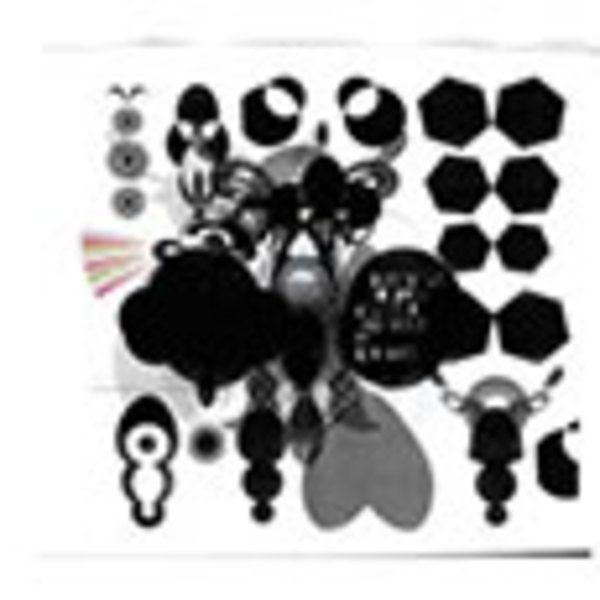
After his Everything But the Girl days, Ben Watt immersed himself in an electronic cocoon only to emerge, butterfly-like, as a glittering club DJ/producer talent. The newest installment in Watt’s DJ mix series (named after his own Buzzin’ Fly imprint) crystallizes Watt’s atmospheric approach to the big-room dancefloor: Smooth, ambient-infused tech-house hovers and floats, letting airy melodies arc gently into the next driving sequence. Lovers of non-cheesy trance will enjoy Kimouts’ blissed-out yet funky epic, “Down to Earth,” which offers one of the strongest (and most pop-friendly) examples of this compilation’s supple “nu-rave” style. Check out Watt’s quintessential 2 a.m.-trance build-up in his bouncy cut “Just a Blip,” which harkens back to the golden days of the mid-’90s.
Turntable Lab Remix Contest
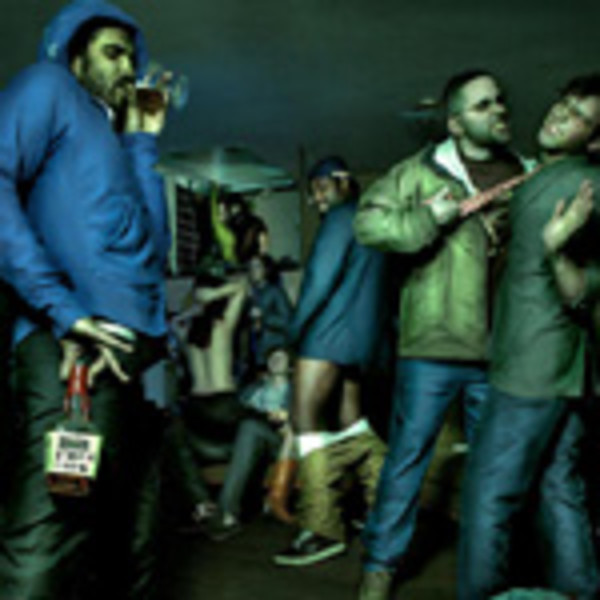
In a press release that arrived at the XLR8R office the other day, Turntable Lab extended its invitation to remix Plastic Little to include “deejays, remixers, mash-up artists, breakdancers, art school students, unpaid interns, coffee shop employees, advertising hacks, out-of-work actors, ex-reality show contestants who lost, ex-New Ravers, ex-electroclash fans, and parents.” That should include just about anyone reading this, so listen up.
Maybe you think you’ve got what it takes to remix Plastic Little and their guests, Ghostface Killah, MF Doom, and Spank Rock. Or maybe you want your edit on The Remix of the Remix record coming this Fall, and free stuff from Turntable Lab.
Submissions may be in any genre, but there are some rules. For more info check out the website, and start your trip down the road to fame and wealth today.