Clinic To Release Visitations

If the name doesn’t immediately spring to mind, go back to the 2003 Grammy awards, where Clinic‘s Walking With Thee was a nominee for Best Alternative Album, and you should recall the Liverpool-based four-piece. The band is back this year with their fourth longplayer, Visitations, an album recorded entirely at home in their Liverpool-based studio, where the band claims to have found more musical freedom.

The album has been called a party record, but just what kind of party the band had in mind is up for question. Ethereal choral vocals and plodding guitar riffs run alongside sweeping melodies that, while they don’t bring to mind typical images of a big bash, do conjure a strange lightheartedness, albeit mixed with the occasional haunted minor chord.

Visitations is out January 30, 2007 on Domino.

Track List

1. Family
2. Animal/Human
3. Gideon
4. harvest (within you)
5. Tusk
6. Paradise
7. Children of Kellogg
8. If You Could Read Your Mind
9. Jigsaw Man
10. Interlude
11. The New Seeker
12. Visitations

Nu-Dub Allstars: Low-End Fiends

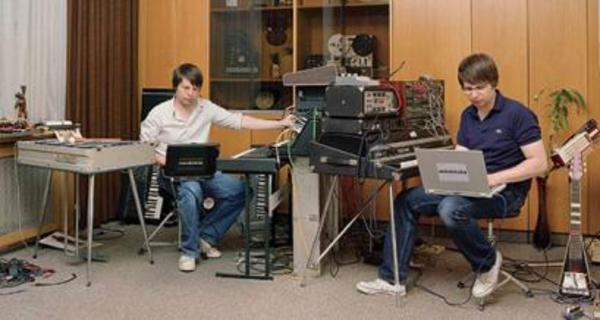
Berlin’s nu-dub scene: Its lineage can be hard to trace, but it involves members of groups The Tape, Al Haca, Tolcha, and Jahcoozi, as well as sometime collaborators like Stereotype, Modeselektor, Data MC, and DJ Maxximus. A tight-knit gang, these musicians ride the rough edges where hip-hop, glitch, dub, electro, and pop intersect, making waves in Europe and beyond. Their sound has grown throughout ’05 and ’06, with the release of The Tape’s Autoreverse and Jahcoozi’s Pure Bred Mongrel (both on Berlin’s Kitty-Yo) and Stereotyp vs. Al Haca’s Phase Three (on Vienna’s Klein label). While new records are shopped around for 2007, XLR8R snagged a chat with The Tape/Al Haca MC RQM, Shir Khan (DJ, Meta-polyp label owner, and Tolcha producer), Jahcoozi bassist Oren Gerlitz, and Jahcoozi vocalist Sasha Perera.

XLR8R: What brought you to the city and what made you stay here?

Oren: I came randomly, just wanting to move out of Tel Aviv, wanting to be in an environment that would let me experiment more musically… I met Sasha in the first week here, and Robert [Koch, The Tape and Jahcoozi’s producer] the second month.

Sasha: I was running away from London. I’d actually studied German Politics in school and the only thing I took from that was being able to speak German. But basically I was really into partying at the time, around 2001, and Berlin was the city with capital letters saying ‘RAVE.’ When I got here’ saw everyone was making music anyway and it was really easy to try stuff out here and not be self-conscious about it. Studio space is cheap and it’s not like London where time is money and it better be a good song otherwise it’s not even worth recording it. I had never even tried much as a vocalist ’til I got here.

RQM: A girl kidnapped me from New York and brought me here… and I really loved the Jazzanova remixes–those kind of shuffling, quick, four-bar changes–and I thought it would be a cool thing to do hip-hop over. All the beats in the States were really backwards back then, just MPC loops and heavy snares in everything; for someone to have 200 snares in a track and just shift up the changes in the beat every four bars was amazing to me. So I went to the Sonar Kollektiv offices with some shitty demo I had and Christian [Schwanz from Al Haca] was there, rolling up weed at 12 o’clock. He came over to my house, we swapped CDs, and that’s how it started. From that, Stereotyp and everything else followed, and then I lived underneath Oren ’cause my girl threw me out of her house!

And since that time you’ve all been working together in different combinations?

RQM: For sure! This is like family: We eat together, we do laundry together… we try and survive winter depressions in Berlin together. Six months out of the year it’s always dark. During the summer no one wants to do anything but during the winter you just sit over a beat, fixing little details; everybody’s producing, and that’s why everything sounds the way it does. Everything’s tweaked out and dark and cool.

What’s the musical thread that holds the family together?

RQM: Bass. Details in productions. More bounce.

Oren: Bass-heavy music, centered on the dancefloor. There’s a little dub in it and a little influence from grime but it’s all more mixed. The beats come out of two-step or hip-hop, and even maybe techno–because it’s Berlin, that feel comes through as well. All together, it makes something that could be described as blip-hop or…

RQM: Grime-bleep.
Oren: …tech ragga, bleep ragga.

RQM: One thing I’ve learned going between Vienna [where Christian of Al Haca and Stereotyp live] and here is that the music made in Berlin is cooler in temperature. It’s the same sounds they make in Vienna but it’s more cold, techno-y, darker. In Vienna, it’s warmer somehow. Even if it’s just a grizzly bassline, it’s more analog, more round, less techno…

What about dub and reggae? Jahcoozi, there’s clearly a pun in there, and there’s definitely a thriving reggae/dancehall scene in Berlin. Do you guys interact with that?

Sasha: Well, the problem with a lot of the dancehall scene is that they play really poppy stuff here. If you go to see Such-a-Sound and the Yaam club, it’s all kind of… nice; maybe not dark enough for me. It’s like a hit machine–if you go regularly, you’ll hear the same tracks over and over again.

RQM: Al Haca faced so many problems with this because we came from soundsystem culture. After the record came out, a lot of the bookings were at dancehall events and dudes would just run up and say, “Can you play Sizzla?” Even if we were playing our style of dancehall, even with Sizzla over the top of these digital beats, they wouldn’t have it.

Shir Khan: This is why I completely escaped from the hip-hop/dancehall/reggae scene as a DJ. If you wanted to play upfront hip-hop or electronica, you had to play it at an electro or techno party. We’re in between, so even if some of the music we do is dancefloor-intended, some isn’t. It’s not that easy to spread the sound here in Berlin, even if it is a Berlin sound.

Everyone I talk to has a story about how Berlin is not the way it used to be, that you can’t do the things here that you once could. Are you guys still excited about being here?

RQM: I came quite late, four years ago, so I didn’t feel this big change. I missed this whole idea of people just being able to break into [abandoned] apartments and just take [them] over, and I think if I came from those times I’d be like, ‘Hell yeah, this sucks.’ But I’m just happy to see the music scene grow and how all these projects that are around me are developing.

Sasha: I guess if you’re looking for some wonderland, some unique artist haven, you’re gonna be disappointed. But I still think you do a lot better to make music here then you do in a lot of other cities… Your money just goes further. You can work in a bar three days a week and still not die.

Shir Khan: I’m the only person here who was born in Berlin and to me it’s not depressing or repressive. After the Wall came down every week there was this underground, illegal cellar club that was really interesting for me. I mean’ was 13 years old, so it was also my first time going out. Now it’s definitely getting a little more chic but still there’s so much stuff happening. And, always, the people who are coming here are quite enthusiastic; they come and they want to do something. So I don’t think it’s dying; it’s a natural process. Everything’s getting commercialized but Berlin is so big that there will always be certain niches for underground art–it’s the best city for this in the world.

Infamy available on DVD Tomorrow

Infamy, latest film from Scratch director Doug Pray, premiered at 2005’s RESfest Festival and detailed the lives of seven graffiti-obsessed individuals (including the hilarious Joe Connolly, who runs around LA erasing street art with the same vigor the artists have creating it). After a long wait, the film finally comes to DVD and should be one of the essential pieces of your documentary film library. What makes Infamy stand out from other graffiti films is that it doesn’t glorify the lives of the artists so much as examine them, and is unrelenting even when examination reveals a gritty, at times depressing underside.

Infamy is available in stores October 17, 2006.

infamythemovie.com

LCD Soundsystem Makes Track For Nike

James Murphy, DFA label boss and the delightfully quirky mastermind behind LCD Soundsystem, always wrote music that made folks want to party on the dancefloor, but it looks to be the first instance his musical creations will have people running for the treadmill. Thank Nike for making that happen. The sporting gear company commissioned Murphy to write a 45 minute track that would make good background music for a workout. Murphy has delivered, and the track will be available tomorrow for $9.99 at iTunes.

According to Murphy, band members were already listening to some of his music while working out, an inspiration that helped pave the way for this super-long, space disco project to happen. Whether or not it’s appropriate music to be sweating to will be entirely up to the listener, but at least we know our heros at LCD Soundsystem perform the dreaded treadmill routine we’re all prone to make fun of. Now the rest of you can start admitting you do the same.

lcdsoundsystem.com
dfarecords.com

The XLR8R Office Top Ten Album Picks, Oct 14

Big RichBlock Tested Hood ApprovedKoch
Big Rich is not just some random dude putting out another hyphy record with “E-40 presents…” attached. This is SF hip-hop free from muscle cars, silly goggles, and thizz references. Gritty rhymes, Rick Rock beats, and appearances from Sheeek Louch, J-Hood, and San Quinn make this the hardest record to come out of the bay this year.

Jamie Saft & MerzbowMerzdubCaminante
Merzbow is the king of noise and Jamie Saft can turn out dub like Steve Albini turns out killer rock albums. Together, these gnarly dudes create the most distorted, deep, and doomy dub records known to the orbit of experimental music. We’re not sure if it’s the harsh chicken squeals or the downtempo subsonics that make this record so impacting, but it’s something, man.

Steven Brodsky’s Octave Museums S/T Hydrahead
Steve Brodsky alongside Scissorfight and Electric Bastards contributors has taken a detour from his prog-metal band Cave In for this lo-fi power pop antiquity. The trio’s debut on Hydra Head find’s Steve at his peak of vocal performance with harmonies from outer space and simple chord progressions that fly far beyond spellbinding. Ocatve Museums is a bold, unique quest for following an independent musical path, and we get it.

ClinicVisitationsDomino
Liverpool has never been so proud. Since the late ’90’s this psyche-pop band has blistered the music industry with their synth heavy, darkened anthems. On Visitations, the band makes a break from their standard psyche-pop formula for a sound that fits somewhere in between The Violent Femmes, Ravi Shankar, and a Brit-pop drum circle. This matured album will no doubt shake things up.

The RubEuropean TourThe Rub
If you’re not yet familiar, the Rub is the contemporary DJ holy trinity of New York party jams. Infamous for their mainstream hip-hop remix albums for artists like Too $hort and M.O.P., European Tour finds DJ Eleven, DJ Ayres, and Cosmo Baker scratching through old-school classics, hyphy bangers, and electro hits for a bunch of screaming, hungry Europeans. Few DJ teams can mash up Twista, Kraftwerk, and Sean Paul without a second guess.

FunckarmaBion GlentSublight
It seems weird that just about every record that Sublight sends us makes the top ten. But what are you gonna do? Unlike the midnight breakcore foundation that’s won our hearts over, Funckarma’s new full-length is more of a mid-tempo glitch-fest offering some awesome panned synth leads, choppy percussion, and plenty of Massive Attackian fervor. Another hit from Sublight!

Black Devil Disco Club28 AfterLo
The history of BDDC is a tricky one. While, initially, an ultra-rare disco find for crate diggers, the group was known for pieces created in the late ’70s. That is, until Rephlex “reissued” one of the group’s mind-bogglingly contemporary sounding records. Some say it is vintage genius, others give credit to electronic engineer Bernard Fevre for production. Either way, this is amazing, fucked up disco at its most obscure.

Hanno LeichtmannNuit du PlombKaraoke Kalk
Hanno Leichtmann is the one-man ambient army behind projects like Static, Kosmischer Pitch, and Vulva String Quartett. Not to mention, he’s worked with experimentalists John Zorn and Jan Jelink to name a few. On Nuiy de Plomb, Hanno reminds the world that ambience is one hell of an art form, as he composes his own subjective soundtrack to Hans Henny Jahann’s novel The Night of Lead. Awesome.

Songs of Green PheasantAerial DaysFatCat
Rarely do singer/songwriters have the capability to craft traditional acoustic hymns into pastoral, rustic recordings that conjure the ‘60s without sounding like imposters or burnouts–unless you’re Duncan Sumpner of SOGP. This English mystic illustrates the value of the good old fashion 4-track recording with his potent blend of windy atmospherics and foggy vocals.

UTIn Gut’s HouseBlast First
Before there was The Rapture, Gold Standard Lab’s, and Gravity records, UT was transforming post-punk into one very haunting genre through a passion for scattered instrumentation and viciously, uninhibited vocals. Mute’s iconic Blast First imprint brings this classic back to life for the youngsters in need of a serious lesson in rock history.

Generate Your Own Cassette

Yes, it’s true. Sometimes when we’re slaving away to create the magazine for you people, XLR8R staffers get the urge for a break. Not the “get up, stretch and walk around kind,” but the “stay where you are and look at a random, dumb website” variety.

Our efforts have been fruitful this week, with the recent discovery of says-it.com, where you can generate everything from your own Dubya quotes to cassette tape designs.* So if issue 103 of the magazines is nothing but screenshots of fake concert tickets and 7″, you’ll know why.

*Not recommended for people who’ve got shit to do.

Bizzart Releases Bloodshot Mama

When XLR8R released its LA issue in 2003, one page featured a quirky looking spoken word MC who went by the name of Bizzart and specialized in unorthodox rhyming and theatrics. Fast forward to the end of 2006, and Arthur Arellanes III is back under the same moniker but with a look and feel that leaves the phrase “taking a left turn” as something of an understatement.

Now immersing himself in circuit-bent hip-hop with a distinctly darker edge to it, Arellanes marries boom bap with twisted jazz, perhaps interpreting and addressing events in his childhood, which is publicly known to have been unsettling. Whether its that or that he simply wants to do something different with music, the change is welcome, if not somewhat bizarre.

Bloodshot Mama is out October 31, 2006 on Sounds Are Active.

Track List

1. Suicide Bomber’s Parade
2. Stumbling Blocks
3. Drifter
4. Shark Skin Humans
5. Liquid Beast
6. Dreams Of Sparrows
7. Bloodshot Mama
8. Mount Washington Blue And Red
9. Blank Forest

Jan Jelinek: Sowing Wild Oats

Berlin-based producer Jan Jelinek has always presented himself as a sound designer; he’s even gone so far as to say he’s “not a musician.” Hacking away at tiny, clicking samples and carefully arranging them over deep, slow basslines, he made a name for himself as a master of the sequencer with 2001’s Loop-Finding-Jazz-Records, an album that definitively shaped techno in the early Aughties. But recently, Jelinek’s love affair with the sequencer seems to have waned; on his new album, he does away with it altogether.

“Over the years, I’ve found the idea of programmed music fascinating, because the composing process is so far from the traditional ideas of music-making,” he explains. “All these romantic clichés of virtuosity and authenticity are gone–music is made like graphic design. [But] after focusing on that for a few years, I’m a bit tired of this kind of work with sequencers that organize the whole arrangement.”

Jelinek built his new album, for Pole’s Berlin label ~Scape, from tracks he recorded quickly in single takes on a modest bit of live equipment. “Originally, this setup was a compromise,” he confesses. “Last year, I had to give up my old studio, and it took a while for me to find a new one. My tracks were the result of not being able to use the sequencer yet nevertheless trying to reach a musical goal.”

He may sound tentative, but Jelinek has plenty of experience with live improvisation. On 2005’s Kosmischer Pitch, he looped Krautrock samples on his computer while jamming on mixer, effects, and synths for hours at a time. Following the lead of the ’70s bands that his samples honor, he picked his favorite bits to make up the album’s final tracks. Snuggling up even closer to rock, he hit the road with drummer Hanno Leichtmann and guitarist Andrew Pekler as the Kosmischer Pitch Band, manipulating loops, guitaret (similar to a thumb piano), bass synth, and effects pedals in the group’s noisy, effects-heavy improvisations.

One can’t help but conclude that Jelinek’s ultimate goal is to leave his ball and chain, the sequencer, at home. But techno heads need not fear: “I see my step into improvising as one that doesn’t exclude programmed music,” he says.

Disco D launches Disco Digital

Ghettotech trailblazer and multi-platinum producer Disco D-if you haven’t kept up with the underground then you’ll undoubtedly recognize his work for artists like 50 Cent-recently embarked on a new venture, his Disco Digital music house. Besides his own tracks, the business will license music out from Brazilian hip-hop group BRAZA, and the soundtrack to EA’s NBA Live 07, as well as in-house licenses for MTV’s The Duel: Real World Road Rules Challenge. We’re sure the music will be the best part of the show.

Disco D was also approached recently to write the theme for VH1’s Hip-Hop Honors show, as well as provide the original score for graffiti documentary Bomb It!

discod.com

Page 3302 of 3781
1 3,300 3,301 3,302 3,303 3,304 3,781