Now Playing At Peepshow

Numusic Festival 

Norway’s Numusic Festival (Sep 6-9, 2006) was born out of a desire to have an intimate non-commercial festival that would bring the most contemporary electronic artists together on a bill with musical pioneers who have influenced them. Everyone from the Afra Beatbox Orchestra to Annie to Andy Weatherall got people’s happy feet moving in the nearby venues, where having fun ruled and pretension of any sort was frowned on.

Numusic Festival Entry

XLR8R 101 Issue Preview 

Meanwhile, we at XLR8R have spent the last month creating our annual Music Technology issue, and the fruits of our labors are now visible. Check out a sneak preview of the issue all about the current state of music tech, including the deceptively simple question “What is actually new in music technology?” The answer, it seems, is that it’s not what you use, but how you use it.

Issue 101 Preview Entry

SonarSound Seoul Opens Today

Today marks the start of the Sónar festival’s Korean debut, following its Tokyo appearance last week. SonarSound Seoul will cover music and art through both an exhibition and performances.

The Seoul Arts Center’s Hangaram Design Museum will feature an exhibition adapted from the festival’s Sonarfiles, which are digital art audiovisual projects from the last 13 years of electronic music. Two photographic additional exhibitions will cover various moments of Sónar over the years.

Musical performances will feature three acclaimed Spanish artists, namely Angel Molina and Griffi and DJ 2d2. Japan’s Doravideo as well as Korean artists complete the music portion of the festival. All music performances take place on the nights of October 13 and 14.

SonsarSound Seoul runs from Thursday, October 12 through Monday, October 16, 2006.

sonar.es

Grime Time & Sick Girls

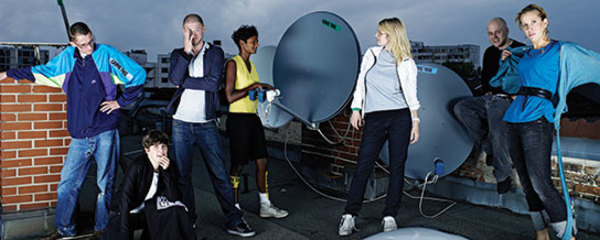
Christian “Fussi” Fussenegger, a video journalist and one of the six heads behind Berlin’s Grimetime, has no problem rattling off ridiculous stories about the UK grime MCs and DJs that have played their event. “DJ Twister of Fire Camp only ate his dessert after Lethal B had tested and approved of it,” writes Fussenegger. “Monkstar of Newham Generals was quite freaked out by ‘all the white people looking at him’ in the restaurant; Lady Fury was totally perplexed by the Berlin crusties at Friedrichshain flea market; and DJ Cameo and D Double E were not aware that there had been anything called the Berlin Wall or the Iron Curtain.”

Though people in the grime scene are known for taking themselves way seriously, Fussenegger and partners–including WMF club owner Gerriet Shultz, filmmaker Heidi Frankl, Jahcoozi singer Sasha Perera, student Jan Ramesh-Schoening, and graphic designer Frederik Frede–put together a banging party while keeping their sense of humor. Nobody in the crew DJs, so egos don’t get in the way–the simple goal is to inject a dose of roughneck lyricism and big-ass bass into the scene. “I think Berlin will be the hotbed for a new style of music that combines genres–if people here manage to drop their stupid fixation with minimal techno and 4/4 crap,” says Fussenegger, who also hopes to see a “Bob Marley or Jello Biafra of grime” one day.

“All the established clubs invite the same DJs; no clubs are taking risks or trying to be cutting edge anymore,” agree the Sick Girls. “It’s time for something new.” As Sick Girls, Alexandra Droener and Johanna Grabsch are doing their part to push the boundaries of the Berlin club scene, which still has few DJs that play multiple genres. The duo represents the gamut of underground bass music–grime, baile funk, booty house, dancehall, bass-heavy IDM–with their Revolution N°5 parties, and are good friends with the Grime Timers. (Grabsch was booking WMF when Fussenegger first walked in the door–with the Wiley album and a Nasty Crew mix in hand–and proposed the Grime Time party; Droener has known club-owner Gerriet for 14 years, from DJing and working the door at WMF and doing bookings for “dirty techno dungeon” Tresor.)

“We never planned to be DJs,” says Grabsch, “but people responded so well and so quickly, we felt the urge to go on.” The pair’s first “gig” together was a last-minute tag-team set in August 2004 in a tiny room of Tresor called the Tuna Bar. “I played Drexciya and 2 Live Crew and Ward 21 and Wiley,” recalls Grabsch. “It was one of the greatest nights of my life, finally having met someone I was able to communicate with only through music. We each played a track which the other answered and it worked so well. We even ignited some of the techno ravers with our ‘strange’ music. I remember Alexander Kowalski coming up and asking us for titles, shaking his hips heavily.”

In a city of very serious DJs, Sick Girls know their mission: to make people dance to music they have never heard before while keeping the fun intact. “Grime Time and Revolution N°5 deliver the same feel of a new beginning, like how we felt [at the start] of techno and drum & bass,” says Droener. “It’s all just a natural development [between us and Grime Time]–we’ve just stuck with the people who’ve got the same open and adventurous mind in terms of music. I just love them.”

Berlin Reggae: Break It Down

Reggae permeates Berlin street culture down to the subways. Platform newsstands stock Riddim, a German-founded, German-language reggae magazine, and the trains’ embedded TV screens advertise local heroes Seeed (who regularly pack stadiums all over the country). African Rastamen and white women in headwraps lounge in the doorways of Rasta centers in Prenzlauer Berg and Kreuzberg, while the latest 7″s from Jamaica are organized by release date (down to the week), label, and riddim at Deeroy’s Dub Store. Over at Tricky Tunes, the dub music section represents sounds from Kingston to Krakow.

Incubated in the squatter, punk, and anti-fascist scenes of the 1970s and ’80s, reggae latched on to the exploding German hip-hop community in the ’90s and now has a firm grasp on the country’s pop culture. Berlin boasts reggae parties every night of the week, and two of the names you see most frequently on flyers are Such-A-Sound and Barney Millah. The pair hosts a monthly party at Café Moskau, a former Communist military club, and a Monday night event at Bohannon, which is an extension of Berlin’s longest-running reggae party, initially started by Millah (a.k.a. Tobias Frost) at the Geburtstagsklub in 1994. Alex Such-a-Sound and Millah are basically nocturnal due to their hectic DJ schedules, so I was lucky to grab a few minutes with them during an August rainstorm.

XLR8R: When did the reggae scene in Berlin start?

Barney Millah: As far as I know, there was one soundsystem in the late ’70s [and] during the 1980s, reggae really only existed in community centers. It was the ’90s that really hyped up the scene.

Alex Such-a-Sound: When the Wall came down, every bar and basement changed into a club. [Those were] some crazy years. Nobody had a license, everything was illegal, but it was happening anyway. Nobody from the government cared.

BM: Even if someone cared, you just closed down and opened up in another place. You didn’t need flyers; word of mouth was enough to get people to the parties. Another result of this “Wild East” time is that a lot of these party promoters got their own clubs–in the mid-’90s, reggae and dancehall came out of community centers and into clubs.

AS: Before, it was more of an insider scene; after that it was everyone.

BM: Around 1997, a lot more people jumped on the reggae train… By 2000, there was four times as much reggae in Berlin as before. So many soundsystems, so many people [whose names or faces] I didn’t know, even though I worked in a reggae shop for years.

AS: Now, if you are starting a soundsystem, the hardest thing is finding a name that is not taken!

What’s the ethnic mix?

BM: Officially in Berlin we have 300 Jamaicans, but you might see 50 in the clubs.

AS: Here you have a huge African community. Before, in East Germany, you called [some African countries] the “Socialist Brothers.”

BM: Like Mozambique.

AS: …they had a big student exchange with the East. So from that point you have a lot of Africans in Germany–they make up part of the audience.

BM: You have a lot of children out of relationships between these students and Germans. And [in West Germany] also from soldiers: French soldiers who were mostly [of] African heritage and British Caribbean soldiers and black Americans, a lot of them stayed here… So you have Afro-Germans.

AS: Plus a huge [non-Afro] German audience. The mix out of all of this makes the crowd you work with. The main thing that we do is [to not] play for one kind of audience. Also, we have up to 70% girls at our parties.

BM: Girls like to come to our parties and have fun. People who are indecent in these cases, we reform them or they have to leave the club. Another thing I realized [is that], for instance, in England, people are scared of Caribbean people, of gangster business. We don’t have that here (knocks on wood).

Would you say it is more of a DJ scene or a band scene?

BM: DJs, definitely.

AS: [Promoters] can’t afford a lot of those bands anymore. Not just fees, but also taxes and the price for the venues.

BM: The youngsters are crying out for conscious dancehall [shows], but Marcia Griffiths and Lady G and a complete band came and only 150 people showed up. That’s nothing! So promoters don’t make back the money. When you ask the kids, [they say] “It’s too expensive.” Berlin is one of the cheapest cities in the world to go out, and people say they don’t want to pay more for a band.

AS: But then again, we charge eight Euros at Café Moskau–which is a lot for a club in Berlin–and we get 1000 people.

What about the sound here: roots or dancehall?

AS: It depends; it’s a big menu. You can choose whatever you like. At a good night, you can hear everything: roots, dancehall, hip-hop, soca, African reggae.

BM: As a DJ, you can go from the ’60s up to nowadays. You can even play dub if it fits at that certain moment.

What are the best spots for reggae?

AS: Café Moskau, Bohannon, and Yaam.

BM: The Yaam is an important spot in Berlin. It started in ’94 and runs in the summertime from May to September, open-air every Sunday from 2 p.m.-10 p.m. with a market, Afro-Caribbean food, and reggae music all day. Families come with their children… It’s a big gathering where people from all scenes in Berlin meet, and the music is reggae. It’s opened the ears of a lot of people.

What reggae bands are coming out of Berlin?

AS: Seeed, definitely–they’re the German super-band. It gives me goosebumps every time I see them.

BM: If you see them on a tour, each and every show will be different. They’re real performers. Gentleman is big here, but he’s from Cologne.

AS: He’s the biggest single act from Germany. And you have Patrice–he’s not really a dancehall or reggae artist.

BM: He works with reggae but he doesn’t call himself a reggae artist. There is a group called Culture Candela. They’re seven guys, all of them from a different background: a white German, three Latinos from different countries, and one Afro-German–a real mix. Their music is also mixed: you find Latin music, hip-hop, and reggae, and singing in three languages.

AS: In general, the “hip-hop over here, reggae over here” thing changed in the late ’90s, completely. You always have your favorites, but there is not one hip-hop DJ who’s not going to play a reggae set. I play a lot of hip-hop in my reggae sets, Barney plays soca…

BM: That’s the future.

AS: That’s where the fun comes in.

Chrome Children Tour US

Stones Throw joined forces with Adult Swim and released Chrome Children at the beginning of this month. This latest venture from Cartoon Network’s late night animation network is more a straight music compilation than last year’s The Mouse And The Mask, which featured cameos of Adult Swim characters in each of the tracks. But recycled concepts are most of the time boring anyway, and cartoon characters or not, Chrome Children is a solid compilation featuring the latest and greatest from Stones Throw. Usual suspects Madlib, Oh No, Koushik, and J.Rocc are joined by newcomer Georgia Ann Muldrow and the late J Dilla, to name just a few of the artists label boss Peanut Butter Wolf handpicked for the comp. And if you must have Meatwad and Frylock as part of your experience, head over to Stones Throw’s site to check the recently released Chrome Children videos.

Just wrapping up some time in Europe, Peanut Butter Wolf is joined by Madlib, J.Rocc, Ale Blacc, Percee P, Oh No, and others for a trip around the US, with a large number of the stops all ages. Check Stones Throw for specifics and enjoy the show.

Tour Dates

10/19 San Francisco, Mezzanine
10/20 Portland, Berbatis Pan
10/21 Vancouver, Richards On Richards
10/22 Seattle, Neumos
10/24 Salt Lake City, Urban Lounge
10/25 Denver, Cervantes Masterpiece Ballroom
10/27 Minneapolis, Triple Rock Club
10/28 Chicago, Metro
10/29 Detroit, Magic Stick
10/30 Toronto, Phoenix Concert Theatre
10/31 Montreal, Le National
11/01 Boston, Paradise
11/02 New York City, BB Kings
11/04 Philadelphia, Starlite
11/05 Baltimore, Sonar
11/17 Los Angeles, El Rey (rescheduled from 10/13 show)

John Tejada Releases Cleaning Sounds Is A Filthy Business

LA based techno producer John Tejada gets his hands a little dirty with his latest full-length effort, which also commemorates the 10-year anniversary of his Palette Recordings imprint. Though it’s as musically varied as 2005’s Back To Basics-and by that I mean Tejada possesses the ability to traverse electro, house, techno, drum and bass, and other genres effortlessly-he tailored this latest album to capture, as he says, “a feeling of a time when [he] was very excited about dance music.” So expect a a little harkening back to the 4/4 heavy tracks reminiscent of his old Multiplex and Playhouse releases between the animated synths and bubbly beats this time around.

Cleaning Sounds Is A Filthy Business is out October 26, 2006 on Palette.

Tracklisting

1. What Happened To Manners?
2. Clever Bunch
3. Mutation
4. Folding Room
5. The End Of It All
6. The Zone
7. Science, I Think
8. Paper Jet
9. Calculated Time
10. Panorama

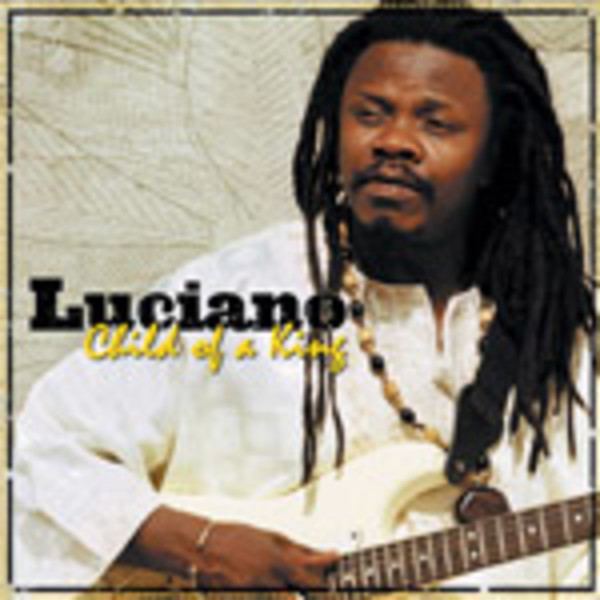
Luciano Releases Child Of A King, Tours North America

Jamaican born Jepther McClymont, a.k.a. Luciano deserves our attention not only for having the coolest birth name in the biz, but also for his latest full-length, Child Of A King. One of the foremost roots singers of his generation, McClymont has been producing music for a decade, mixing roots, dancehall, folk, and country into compelling musical compositions and stories. This is as true of his previous releases as this latest one.

Accompanied by full band, McClymont heads to the US and Canada this fall for s series of live dates well worth catching. For those of you West of Indiana, stay tuned for the November 19 – December 16 dates, to be announced shortly.

Child Of A King is out October 24, 2006 on VP Records.

lucianoreggae.com

Current Tour Dates

10/28 Atlanta, The Legacy Emporium
10/29 Charlotte, Amos
10/30 Winston Salem, Ziggys
10/31 Wilmington, The Rox
11/01 Raleigh, Venue TBD
11/02 Bladensburg, Venue TBD
11/03 Philadelphia, Trocadero
11/04 New York, Hammerstein Ballroom
11/05 Boston, Paradise
11/07 New Haven, Toads Palace
11/09 Stowe, Rusty Nail
11/10 Montreal, EB Resto Bar
11/11 Toronto, Kool Haus
1/14 Ann Arbor, Blind Pig
11/16 Bloomington, Bluebird
11/17 Cincinnati, Annies
11/18 Columbus, Brickyard

Plant Music To Release label compilation

New York’s Plant Music will switch gears a moment this fall and take a break from their Sound of Young New York series, instead presenting a compilation of tracks closer to home. The fifteen tracks here are taken from the label’s 12″ series, and feature a selection of indie rock and electronic music, some as original tracks and some as remixes of tracks that have appeared on the Sound of Young New York compilation, including several appearances from Germany’s Gomma roster.

The compilation is available November 14, 2006 on Plant Music.

Tracklisting

1. Mainline “Black Honey” (Whomadewho Remix)
2. Revlon 9 “Someone Like You”
3. Shy Child “Summer”
4. Rinôçerôse “Stop It”
5. The Voices “Sure Thing” (Munk Hacienda Mix)
6. Neurotic Drum Band “Were Gonna Rock New York” (The Glass Remix)
7. The Champagne “Mazatlán”
8. Don Cash “Star Dust”
9. The Glass “I’m Off”
10. Alex Gopher “Beep Beep”
11. 33Hz “Digital Lover”
12. DJ Wool “Friend Crush”
13. Sabotage Orchestra “Everybody”
14. Alister Doomington “Loving The Fix” (Photocall Galaxy Mix)
15. Ilana “5.05” (Selway LIghtwave Remix)

Luciano: Running the Techno Mafia

Perhaps no one better typifies the Bohemian artist myth of Berlin than Lucien Nicolet. Better known as Luciano, Nicolet is the Swiss-Chilean artist behind a slew of fêted records for Playhouse, Peacefrog, and Perlon; in a few short years, Cadenza, the label he co-curates with Geneva’s Serafin, has become the toast of techno. And his long-ass DJ sets, often alongside Berlin minimal kingpins like Richie Hawtin and fellow Euro-Chilean Ricardo Villalobos, are the stuff of legend.

Like most of his colleagues in the “Chilean Mafia” (Villalobos, Dandy Jack, Andrés and Pier Bucci, Dinky, Matias Aguayo, et al) politics and expat culture have led Nicolet down a peripatetic path. He grew up in Switzerland, returned to Chile in the late ’80s to help kick off the country’s fledgling rave scene, and eventually returned to Switzerland to forge a career all but unattainable in the Southern Cone. Frequent gigs at Berlin institutions like the Panoramabar and Beat Street meant he was already a local fixture by the time he moved here a few years ago.

His music’s very placelessness–its unheimlich sense of estrangement and discovery, longing and return–is what makes it so quintessentially Berlin. While he’s branded a minimalist, his densely psychedelic tracks brim with references and ideas, from Autechre’s generative structures to Basic Channel’s chugging dub-techno, all underscored with a particularly Latin sense of rhythm. Nicolet’s music is shot through with a subtlety that bars it from most main rooms, but listening to him tweak his endlessly shifting, hyper-percussive tracks, it’s obvious that he’s several steps ahead of almost everyone in dance music.

Nicolet’s basement studio, which he shares with the duo Exercise One, lies a stone’s throw from the Hard Wax record store in Kreuzberg; so central is the location that Nicolet, Exercise One’s Marco Freivogel, and Lan Muzic artist Jacopo Carreras recently opened Post26, a small café and gallery, directly upstairs. (One of the sandwiches on the menu is named “The Big Luciano.”) On a recent Friday afternoon, the clientele was a who’s-who of European techno: Playhouse artists My My were conducting an interview, Mike Shannon was copping wi-fi, and the proprietor of Vakant Records was hanging out.

Nicolet may soon be leaving Berlin; the recent flooding of his studio and a number of personal reasons are pointing him back towards Switzerland. Post26 will remain, as will Nicolet’s influence on Berlin’s revitalized techno community. Next time you swing through the city, sample a Big Luciano in tribute.

Now Playing At Peepshow: Music Gear Lust Fest

When it comes to fun, XLR8R Publisher Andrew Smith and Managing Editor Ken Taylor couldn’t get enough of it at the AES Tradeshow last week. There they discovered a plethora of music tech goods, including M-Audio’s Podcast Factory, speakers of both the dangling and rotating variety, gigantic transformers, and more. Not a music tech geek? Photos of Ken Taylor finding his inner AES should suffice as entertainment then.

Now playing at Peepshow.

Page 3303 of 3781
1 3,301 3,302 3,303 3,304 3,305 3,781