Tauba Auerbach: Magical Powers

For many people, language is an afterthought–to Tauba Auerbach, it’s everything. Her work centers on the power of words and alphabets, bestowing a rather mystic quality on the tools of everyday communication. Using elaborate calligraphy, reconfigured typewriters, and painstakingly rendered ink drawings that often resemble rebus puzzles, Auerbach’s pieces are at first achingly simple, then ponderously complex as they force one to muse on the shortcomings of language.

I reach Bay Area-based Auerbach just as mysteriously, via email through Laurie Lazer, co-owner of San Francisco’s Luggage Store Gallery (where Auerbach has shown, in addition to L.A.’s New Image Art). Her emails appear carefully thought out, suggesting a depth beyond her age (24) and the aftereffects of having studied art at Stanford (under the tutelage of friend and Mission School artist Margaret Kilgallen). In between doodling imperfect circles and listening to The Slits and Chilean prog-folk act Congregación Viene, Auerbach typed to us about signifiers, secret codes, and special letters.

XLR8R: By day you are a sign painter. I imagine that to be very meditative.

Tauba Auerbach: I actually quit my job at the sign shop about a year ago, but you’re right that painting signs has a meditative quality. I felt like I was constantly on a quest for the perfect balance between painting fast and gracefully and not going so fast that I would mess up, because fixing mistakes was painstaking and always made the letters end up looking stiff and labored, which was what I was trying to avoid in the first place. The example is kind of specific, but the idea applies to a lot of situations. Balance is so hard. It takes constant self-observation and millions of tiny adjustments.

What are your favorite letters to paint? Are there any letters that you don’t get along with?

My favorite letters to paint are not necessarily my favorite letters to look at. Rs and Ss are challenging to paint, but some of my favorites aesthetically. E, A, and Q are also at the top of the favorites list. There used to be some letters that I hated, but not anymore. We all get along pretty well now.

What is your favorite way to communicate?

It’s interesting that you should ask that, because in the last year or so I have become a huge mail sender. I have a few really good regular penpals. My friend Will always sends me these beautiful typewritten letters where he rotates the orientation of the paper in the typewriter to make different designs and patterns. We send letters back and forth every few weeks. My last one to him was in a code that he had to decipher. I was reading about old spy communications, and the different kinds of codes they’d write in. One of my favorite ones is where the two parties would agree to always refer to a certain book, and correspondences were made up of a series of pairs of numbers like “33,157,” which would mean that the reader should look up the 157th word on the 33rd page. The whole letter was number pairs [that were] substituted for words.

One of your shows at New Image was titled “Signs of the Real and Infinite.” What does that title mean to you?

My friend Nico [Dios] and I did that show together. We came up with the name because we were both making art about symbols–his work is mostly about numbers and math and mythology. We had this connection about signifier systems, and how they represent everything from very tangible, real things in the world to totally abstract ideas like God, truth, ambivalence, or infinity.

What’s the most interesting thing to you about the Morse alphabet?

The Morse alphabet is what got me thinking about how abstract all alphabets are. Morse is made up of flashes of light, or tones of different length, just on and off, a lot like digital encoding…And it’s amazing to me that all of our meanings and thoughts, every word you’ve ever said or written in your whole life, could be reduced to a series of flashes or pulses. I also think it’s interesting that the spaces in between the signals mean as much as the signals themselves.

Your work seems very meticulous. Are you a perfectionist in your personal life?
By nature, yes. But I am trying to have more balance about that in my work and in my personal life. Sometimes I’ll be sort of compulsive about getting things precise and perfect, but I’m starting to like and even revere the imperfect things that happen along the way.

How do you feel about computers and how they are changing language?

That is a big question. Computers are changing everything, and language kind of coats everything we do, so they are inextricably linked. What’s most interesting to me is how the language that computers use is changing our world. Everything is getting digitally encoded–old analog recordings and films, photographs, people’s voices. Film grain changes when it’s turned into pixels. And it’s not just that real things are being made into digital information, it goes the other direction too–digital information is actually creating real things. And the way the digital language works is, like any other language, not unbiased. Because it is a binary system, it precludes any real ambiguity, and can only simulate it. It’s all 0s and 1s. There is actually no 0.5 in the language.

What do you think is the ugliest word in the English language, based on either meaning or looks or both?

There is a little tiny street in San Francisco called Larch. I always walk past it and think, “That is a disgusting word.” I believe it’s the name of a tree.

What do you do when you’re lacking inspiration?

I go to the library. It never fails, because if I go there without a direct purpose, it feels acceptable to indulge a tangent or just sort of let my mind wander. Every time I feel stuck, I get out of it because I am somehow reminded of how much stuff and information there is in the world. I usually have the problem of being excited by too many things, and wanting to learn about and do more things than there is time for.

How did you get your start?

I sort of don’t know how to answer that because I don’t know where the “start” is. I have always been making art. I drew and built things as a kid and both my parents are very artistic, crafty people who would always help me carry out any project I wanted to do, no matter how stupid. My dad is one of those people who can build anything…and he has a lot of tools. One time when I was little we made this ridiculous house for my pet rabbit at the time, Momo. My dad called it Chateau Momo, because it had separate rooms, including a little private room for the rabbit to go and hide if he didn’t feel like being social. We did a lot of projects together and sometimes we still do. My mom went to CCA(C) and knows a lot about ceramics and plaster. Her art is up all over their house. My parents are very supportive and interested in art. So for me, the “start” is really my childhood.

What did you study at Stanford?

I studied Studio Art, but I chose to go there because it wasn’t strictly an art school and I could take classes in any area I wanted. For me it was really the right decision because I was kind of a nerd, so I took classes in physics and engineering even though they weren’t connected to my official major. The biggest lesson I learned in college though is that academia is not the end-all it thinks it is.

What daily rituals do you have?

I don’t really have any. I am not a person who needs structure or routine to function. I think I am very self-disciplined, so I just do things when I want or feel like I should, and everything kind of just gets done. I feel very, very lucky that I can set my own schedule and be so in control of my daily life.

Have you always been interested in letters?

Pretty much always. I was really into changing and perfecting my handwriting when I was growing up and we had to handwrite everything in school. I put a lot of thought into how I wrote letters; I even remember writing in my diary about it–how I was inventing a new “A,” and was going to use the new one from that point forward.

Soft Serve Tour Hits The West Coast

Rock Star Games’ Soft Serve Tour just completed an East Coast leg and are now ready to take over the west with an array of painting, music, video, screen printing, drawing, wheat pasting, clothing, photography and much more. The show includes art installations by Buff Monster, Blake E. Marquis/Came Crashing, Alvaro Ilizarbe/Freegums, Rony’s Photobooth, and more. Musical guests include artists from Dim Mak and Hydrahead Records.

A.D.D. & Rockstar Games Presents the Soft Serve Tour!
8/21, Minneapolis, Mall of America
8/25, Denver, Andenken Gallery
8/26, Las Vegas, Fashion Mall
8/28 – 30, Las Vegas, Pool Tradeshow
9/1, Portland, Compound Gallery
9/2, Seattle, Zebra Club Boutique
9/5, Sacramento, Toyroom Gallery
9/6, San Francisco, On Six Gallery
9/8-9/9, San Diego, Agenda
9/10, Los Angeles, A.D.D.

softservetour.com

Beenie Man To Release Undisputed

Anthony Moses Davis, aka Beenie Man, is one of the acknowledged founders of modern dancehall and someone who remains a largely influential figure in the genre, with a recording career that began when he was eight and discography that exhaustively spans the major and the indie labels. It’s no surprise then, that his upcoming release is going to be a big one. Working on the album alongside Davis is Dave Kelly, who produced Davis’ 2004 album Dude, and hip-hop hit maker Scott Storch, who has worked with everyone from The Roots to Beyonce. The list of guest artists is no less impressive, with appearances by Akon, Lady Saw, and Ivy Queen, and more.

Undisputed is out August 29, 2006 on Virgin Records.

Tracklisting

1. Undisputed
2. Chacka Dance
3. Hmm Hmm
4. Girls feat. Akon
5. Dutty Wine Gal feat. Brooke Valentine
6. Jamaican Ting
7. Beenie Man feat. D’Angel
8. Come Again
9. Fire feat. Voltio & Randy
10. Heart Attack
11. Walk Out
12. My World feat. Lady Saw
13. Set You Free
14. My Woman

beenieman.net

John Peel’s Son To Host Radio Show

Following in his legendary late father’s footsteps, Tom Ravenscroft will host his own radio show each week on Channel 4 Radio in Britain, beginning this Thursday. Ravenscroft will select from more than 12,000 unsigned acts for his sets, which aim to give exposure to the many unknown artists floating around in the world today.

Ravenscroft’s father John Peel hosted Home Truths on Radio 4 and championed everything from punk to drum and bass over the years. He died unexpectedly in October 2004 of a heart attack. Ravenscroft has a seemingly similar mission statement with his show SlashMusic, which is dedicated to unearthing unknown artists and spreading an appreciation of all music.

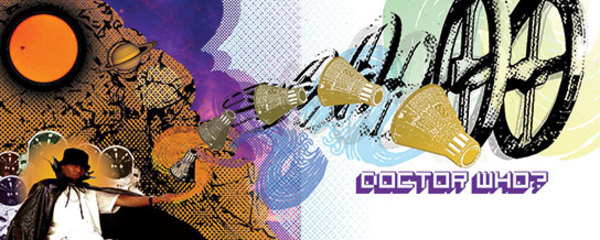
Kool Keith: Doctor Who?

If you are Keith Thornton, sometimes even an interview is an exercise in role-playing. At least this is the impression I get on the phone with the man who’s rapped under a variety of assumed names over the past two decades, including Dr. Dooom and Dr. Octagon, but most frequently Kool Keith. As he rambles on for close to an hour about aliens and government conspiracies, the division between the real man and his various sci-fi hip-hop personas melts further and further away–an ambiguity Thornton cultivates and willingly exploits.

I interviewed Keith just before The Return Of Dr. Octagon–the sequel to his 1996 cult classic album, Dr. Octagon (re-released as Dr. Octagonecologyst)–had been officially announced, and right before his April full-length, Nogatco Rd.–recorded under the alias Mr. Nogatco (as in, Octagon spelled backwards)–was about to drop. The premise of the latter–Kool Keith’s rigid search for evidence of alien landings and abductions across the landscape of rural America–was still fresh in Thornton’s mind; it’s a theme he’s returned to throughout his career. The enhanced Nogatco Rd. CD packs an original short film starring Thornton and his investigative partner, outfitted in twin full-body chemical radiation suits, dissecting rail-thin midget aliens. Though the production seems intentionally campy–the laboratory scenes are filmed in crackly, Frankenstein-esque black and white and the shots of aliens dismounting their ships sport laughably low-budget special effects–Thornton backs up the pretense with an earnestness that borders on delusional. According to him, aliens exist; moreover, he can prove it.

“I have the actual bones–the skeleton bones–of an alien head in my house,” he confesses in a whisper. “We felt cactus plants (at a landing site) in Phoenix, [Arizona], and I got a gum-like material on my fingers. It burnt.”

Serious sci-fi heads may not find this hard to swallow. The rest of us might feel more comfortable filing Mr. Nogatco’s claims alongside those of his many other “concept albums.” Though he’s been widely recognized as the pioneer of role-playing rap, he is unwilling to talk about himself as an actor, offering no easy answers about where Keith Thornton ends and his aliases begin. But the best performers truly buy into the characters they play, and Thornton’s ability to do so–or perhaps, conversely, his inability to distinguish between his real self and the characters he plays–is what sets him apart as one of the greatest conceptual rapper of all time.

Such façades are not easily cultivated. Thornton began his career as a member of the Ultramagnetic MCs, a lyrically abstract Bronx-based group formed in 1984. The trio made no secret of Thornton’s history as a psychiatric patient at New York City’s Bellevue hospital, where he was treated for depression; in fact, they used the information freely to inflate his reputation as an unstable character.

Erotic Man, his first solo album as Kool Keith, was released in 1996 (the same year as Dr. Octagon). It found Thornton trumpeting yet another fringe genre–pornographic rap–though it was his 1997 follow-up, Sex Styles, that would become the much-lauded flagship of the niche. The highly explicit (some might say freaky) descriptions of sex and foreplay had little to do with Dr. Octagon’s fantastical depictions of outer space and the future, but the projects did share one common thread: Thornton’s extensive, if not tangential, exploration of a specified subject matter over the course of an album.

“Because I have a lot of [material], I do little things to warm up my mind,” says Thornton, who has released more than 30 albums over the course of his career. “I take a (character) part and do research for a month or so to get into something. I have different sessions, like I might do curse styles: I’ll just curse all night–make myself spit the most get-off-my-chest things.”

On The Return of Dr. Octagon, Thornton throws himself once again into the role of the Octagonecologyst, a physician with prophetic insights into mankind’s future–and its sometimes surrealistically futuristic present. “Ants,” for example, is a literal birds-eye perspective of a society that has sublimated human existence with the uniformity of daily routines. “Aliens” is a lyrically fragmented account of “what we’re gonna do when the aliens get here” and the signs that might warn us of their approach. “The highway that night/The orange beam comin’ down was right/Truck stop/Not a myth/Remember that light,” he flows staccato over an uneasy, carnivalesque tempo augmented by a discordant piano.

The album is woven together more loosely than its predecessor, skimming across concerns as diverse as the world’s dwindling resources (“Trees”) and the possibility of an Illuminati-like omnipotent presence (“Perfect World”). Thornton’s chameleon flow does something to aid those transitions, though–when he narrates a cartoonish car chase in an eerie, backroads growl over the country twang of “A Gorilla Driving A Pick-Up Truck” (a wildly different tone from his club holler on “Al Green”), The Return definitely feels like a chorus of voices from a doctor who, over the years, has gone a little schizophrenic.

More than ever, we’re given the feeling that perhaps average folk aren’t meant to understand exactly where Thornton is coming from–we should simply feel lucky to have been invited to his party. Like any true recluse, Thornton says the work he’s most proud of has yet to be released and may, in fact, never make its way to the public. “I have certain songs I wrote that I won’t put out yet because they are too beyond the average human mind,” he says. “The average human mind couldn’t relate to it at all.”

Urge Presents The Digital Decks DJ Mix Series

Last week Urge, MTV’s digital music service that serves up everything from electronic to alt-country, unveiled the Digital Decks DJ mix series, a new program that allows users to stream full DJ mixes from artists for free. Chosen artists will come from all genres, and, this being MTV, will likely be some of the biggest names in the business.

Chicago’s house music legend Green Velvet kicks things off, with a mix of techno and electro tracks that cover music from labels all over the world. Also known by his Cajmere moniker, Green Velvet has created some of the most popular club tracks, including “Percolator” and “Answering Machine.”

Up next on the Digital Decks is M.A.N.D.Y., Matthew Dear, Lindstrøm, Tiga, Logistics, and King Britt. Stay tuned!

The Warehouse Project

The folks at The Warehouse Project, a new party devoted to curating a music festival that won’t be all outdoor fields and mud, seem to have gotten the event planning template right. Unlike most multi-artist, high production festivals, they’ve chosen to stage theirs indoors, at Manchester’s famous Boddingtons Brewery. Another plus is that instead of the festival running a single weekend, it runs for twelve, ending with a final bash on New Year’s Eve and guaranteeing that on any given weekend there will be something to do. Though the event’s popularity it remains to be seen, it’s possible this could change the populace’s perception about how a festival ought to run, with less focus on convincing farmers to rent their land and more emphasis on booking a fabulous lineup.

Public Enemy will start festivities with a live show, and other noteworthy nights include a Radio Soulwax Party, Giles Peterson, Fingathan, Mr. Scruff, Jamie Lidell, Jimmy Edgar, Theo Parish, The Hospital Records Crew, Black Strobe, Jeff Mills, and we could go on but you get the idea.This is an event series worth braving the new international flight regulations and heading over to England for.

The Warehouse Project runs from Friday, October 6 until Sunday, December 31, 2006.

Squarepusher To Release New Album

Tom Jenkinson, aka Squarepusher, is practically a household name in the music industry, and he should be after a decade of producing music, constantly maturing his artistic touch, and cultivating an ever-growing fanbase that includes The Neptunes and Thom Yorke. His tenth album then, comes to record stores as a celebration of sorts. Hello Everything sees Jenkinson continuing to experiment with his stockpile of electronic bleeps, clicks, and melodies, but combining them in much simpler ways than some of his previous releases. It’s a slightly mellower and simpler listen, but nonetheless another fine achievement for Jenkinson.

Hello Everything is out October 16, 2006 on Warp

Tracklisting 1. Hello Meow
2. Theme From Sprite
3. Bubble Life
4. Planetarium
5. Vacuum Garden
6. Circlewave 2
7. Cronecker King
8. Rotate Electrolyte
9. Welcome To Europe
10. Plotinus
11. The Modern Bass Guitar
12. Orient Orange

Jeff Mills: For Whom the Bells Toll

Rumor has it that when Jeff Mills plays “The Bells,” crowds recognize the track within .37 seconds. If that’s true, then playing the chiming anthem is probably quicker and more effective than waving.

“It’s something I can use to say hello to the people,” concurs the techno founder about his signature track. Made in 1994, it was not until spring of 1996 that “The Bells” saw official release on Mills’ Purpose Maker imprint. (Before that, Mills played it from a custom 13″ record.) He claims he’s played the record every time he’s DJed since he created it, and that it has never not worked.

Watching Mills play “The Bells” at Sonar, a performance documented on the DVD that Axis released to mark the track’s 10-year anniversary–his claim is easy to believe. He’s inside a monstrous dark room with big blue lights flashing. Enormous video screens behind Mills flash his name. The camera zooms to him, fingers quick and clean on the mixer, like dealing cards. We hear the recognizable plink and immediately everyone is yelling with hands in the air. The cheering is immeasurable, like Mills has just won the Super Bowl of techno. Essentially, playing “The Bells” turns any club into a 14-year-old’s first rave in the woods.

Communal delight conquered, Mills returned to France in July 2005 to give “The Bells” a bit of an adult update, performing it (alongside numbers like “Amazon” and “Sonic Destroyer”) live with the Montpellier Philharmonic Orchestra. A new DVD, Blue Potential, documents the collaboration.

During the performance, Mills wears a pastel polo shirt and green pants; he looks not unlike a J. Crew model. In the interviews that accompany Blue Potential, he comes off as outstandingly genial and happily modest–not dismissing his talent or worth, but certainly not drawing attention to it. There is an ineffable humility that comes from Mills, a total glee and thankfulness coupled with a slight bafflement that others–a whole team, even–might want to work on his work. Over the phone from his home in Berlin–punctuating his speech with frequent “umms” and “hmms”–he displays the same thoughtfulness he must have employed when mapping his songs into full orchestral compositions.

In that transcription process, Mills had minimal interaction with the orchestra members, a problem that is due to something larger than just a language barrier. “You generally work alone in this industry,” he says. “Maybe it’s just me, but I hear very little discussion about music, actually.” He seems a bit sad, but mostly accepting of the solitary electronic-dance-music lifestyle.

It’s a bizarre coda to his tender comments on the genre, one he has obviously had a strong hand in molding. When he and Robert Hood first starting making minimal techno, they consciously tried to make it “a tool to provoke a spiritual type of feeling,” and he’s unsure if it’s accomplishing that now. Laughing, he finally leaves the subject of solitude, calling the making of techno simply “a one-man spaceship.”

Blue Potential was initially inspired by Mills’ rewriting of the soundtrack to Fritz Lang’s 1927 film Metropolis in 2000, and many of the orchestral reworkings have a similar feel to them. The most striking moment, though, is to hear and watch the transformation of “The Bells,” which becomes stouter when performed by 80 classical musicians. The video of the performance features a bald and focused French man hitting golden chimes, furrowed brow steady on the sheet music. Mills–in a suit jacket, with headphones on firmly–reaches between gear with arms outstretched, moving nimbly from knob to button, thoroughly in control. The string section rubs its bows sharply, and suddenly the most frequently caned techno song ever becomes a scary soundtrack to an imaginary movie. Performed at night, outside, and with the beautiful Pont du Gard illuminated in the background, the music Mills made with mid-’90s technology is warmly recreated for the ages. The crowd stands and jumps and hoots. Just like when he DJs, Mills is steady and thoroughly powerful. He knows how much a moment with the song means to its audience and he’s careful with what he’s doling out. But over the phone, Mills finally allows himself a bit of humble joy. “Even in a situation where 80 musicians are playing this track, people still recognize it,” he says with a professorial giggle. “It’s a great feeling.”

General Mills
More Words from the techno master.

On the Meaning of the Title Blue Potential
“It’s in reference to the possibility of finding information [about] who we are or where we come from or where we’re going, and looking to the things that are around us…to find answers.”

On Melding Classical and Techno
“Whatever sound, whatever voice I can find to imitate what I am thinking–be it classical or electronic or acoustic–is applicable. I’m conscious of what sounds electronic, but not which percentage.”

On Playing in New York City
“I grew up with this fantasy of what New York was like on Saturday night back in the ’70s and early ’80s. We would hear the stories about what was going on in this city. Then you have the chance to go there and play! It’s a gift.”

On the Future of Techno
“I had dinner with Richie [Hawtin] recently. We were comparing notes to see if we hear the same thing. I think we all agree that if electronic music survives the next few years it definitely has a life in the future.”

On Plans For the Future
“I plan to play much more in America. I’ve never toured America. I’ve never been to certain parts of the country. I’m interested in going to see how people are.”

Activate Is Back

If you haven’t shelved the entire election 2004 season somewhere in the back of your mind as a distant and painful memory, then you might recall Activate. The newsletter, created by the masterminds behind culture blog Flavorpill, brought current events–mostly centered around the upcoming election–to subscribers’ inboxes once a week, and provided an easy way for very busy people to stay up to date.

The folks at Activate are back, with a weekly roundup of world news for you now available on a regular basis. Sections cover politics, business, science, and some interesting tidbits about transexual hens and police in pursuit of stolen donut trucks. So even if reading the news isn’t your thing, you can at least expect some laughs to come the way of your inbox once a week.

Subscribe To The Newsletter

Page 3329 of 3781
1 3,327 3,328 3,329 3,330 3,331 3,781