Barcelona’s Off-Week—or Anti-Sónar and Off-Sónar as it was formerly known—now brings a similar amount of people to the city as the main festival itself. The relationship between the organizers of these satellite events and those of Sónar is a fascinating one, and not one that is entirely free of adversity. It’s also one upon which the Catalan government seems to be playing an influential role. To learn more, William Ralston made the trip to the Catalan capital to talk with the locals and many of the leading promoters, including those behind Sónar. The goal was a simple one: to investigate how and why this “Off” movement has grown over recent years, and also evaluate whether these two global music attractions can live together in unison.
The sun has set on Barcelona’s Sónar festival for another year. Following its 1994 inception by Ricard Robles, Enric Palau, and Sergi Caballero, the annual event has become one of the world’s leading gatherings for forward-thinking multimedia art and established itself as a cornerstone of the electronic music festival calendar. Accompanying the music, which encompasses a fine array of established and emerging talents, are a plethora of talks, lectures and exhibits focused on exploring the interactions between creativity and technology, the accumulation of which draws over 100,000 attendees, including approximately 80,000 who travel from abroad for the three-day period each June.
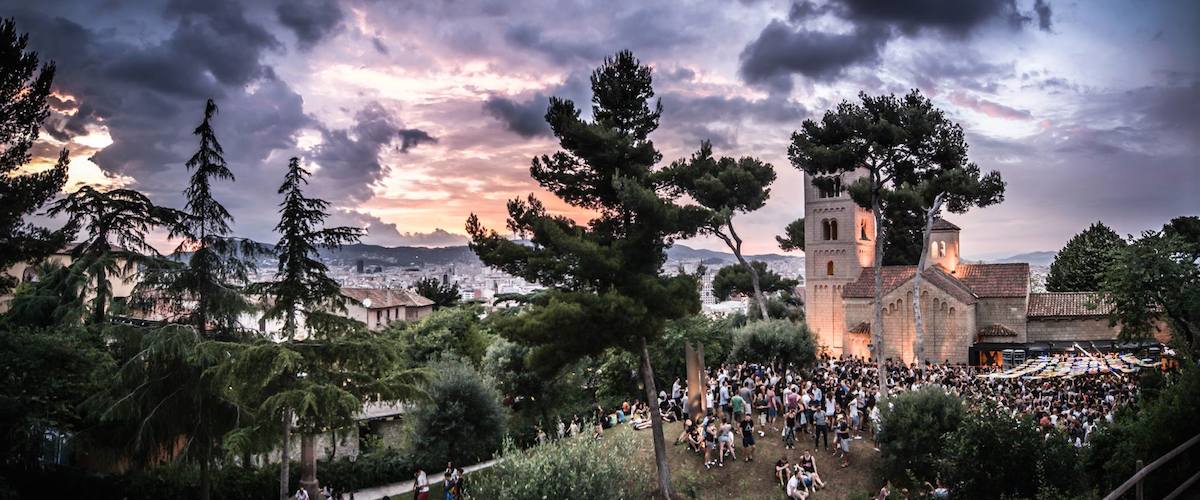
But this is just half of the picture. Alongside the official festival run a myriad of independently-run smaller satellite events, tickets for which now normally exchange hands for anywhere between €25 to €45. Several of these take place within the walls of El Poble Espanyol, an architectural museum at the foot of Montjuic, although many of the city’s rooftops clubs and beach bars are hired out by various music brands, artists and labels for the duration of the week. Together these events form Off-Week or Off-Sónar—although use of the latter term has been prohibited since 2009—an umbrella term for this former offshoot that has matured into a professionally-run global music attraction in its own right. Figures indicate that Off-Week now attracts a similar, if not higher, quantity of party-goers to the city during the same period. Somewhere along the way the side-show became the main event.
It hasn’t always been this way. The evolution of these so-called “Off” events has been gradual and organic, but not one absent of adversity. The story begins in 2002 in the car park of Fira Gran Via, a larger space to which Sónar’s night event (termed Sónar by Night) had been relocated that year. Earlier editions had seen small labels and enthusiastic locals attempt to cash in on the Sónar vibe with parties of their own, but this was the first year of any notable expansion. “It started as a weird after-party with crazy people and weird, psychedelic music,” recalls Hernan Herrera, Director of FACT, one of Barcelona’s leading promoters. “It was just full of the punks and ravers who did not have tickets for Sónar. They parked their cars and played loud music through the stereos. There weren’t even any DJs!” This event, he explains, was “stage one,” referred to by the growing masses as Anti-Sónar, an initial movement co-ordinated by those who wished to party but could not afford entry to the official event.
Stage two began just a few years later. Having seen various parties—including those hosted by 20/20 Vision, Kompakt and Get Physical—crop up in the chiringuitos (beach bars/huts) of Marbella and Nova Marbella beaches, 2004 onwards saw a swift escalation in the number of these unregulated label/artist showcases. “It took some time for people to really hear about these parties—but the beaches became heavily populated extremely quickly,” Herrera recalls. “ The atmosphere was amazing: there were thousands of people dancing around in these little cabanas, the music was great and the food was delicious. It was a real party.” All events were free and unlicensed: “All you needed were some turntables and a sound system,” Herrera continues, smiling. It was, he says, a “big moment” in the history of “Off-Week”; Anti-Sónar evolved into Off-Sónar, a rebranding that was deemed to reflect the growth and the increasingly international audience in attendance. “It wasn’t like someone changed the name officially; the change came from the people.”
Of course, it didn’t take long for Sónar and the local authorities to get wind. “We began receiving emails from Sónar organisers around 2008,” Herrera recalls. “It was obvious to everyone that there was something serious going on [with Off-Sónar].” The catalyst in this development was a 2007 party with Miss Kittin, Troy Pierce and Richie Hawtin where over 10,000 people made their way to the beaches: “The area was completely overtaken,” said an unnamed attendee. “This was the final explosion—the grand closure. It was absolute anarchy.”
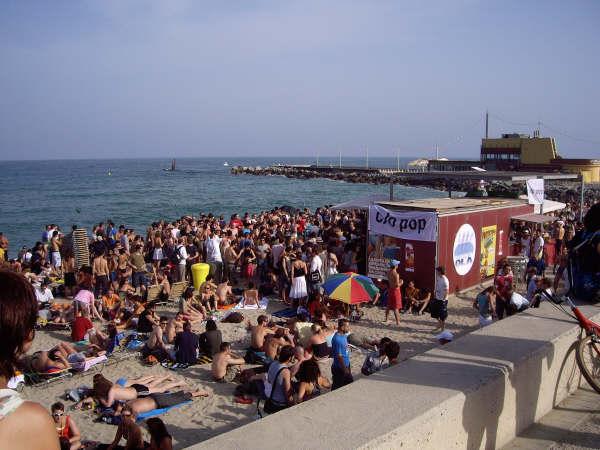
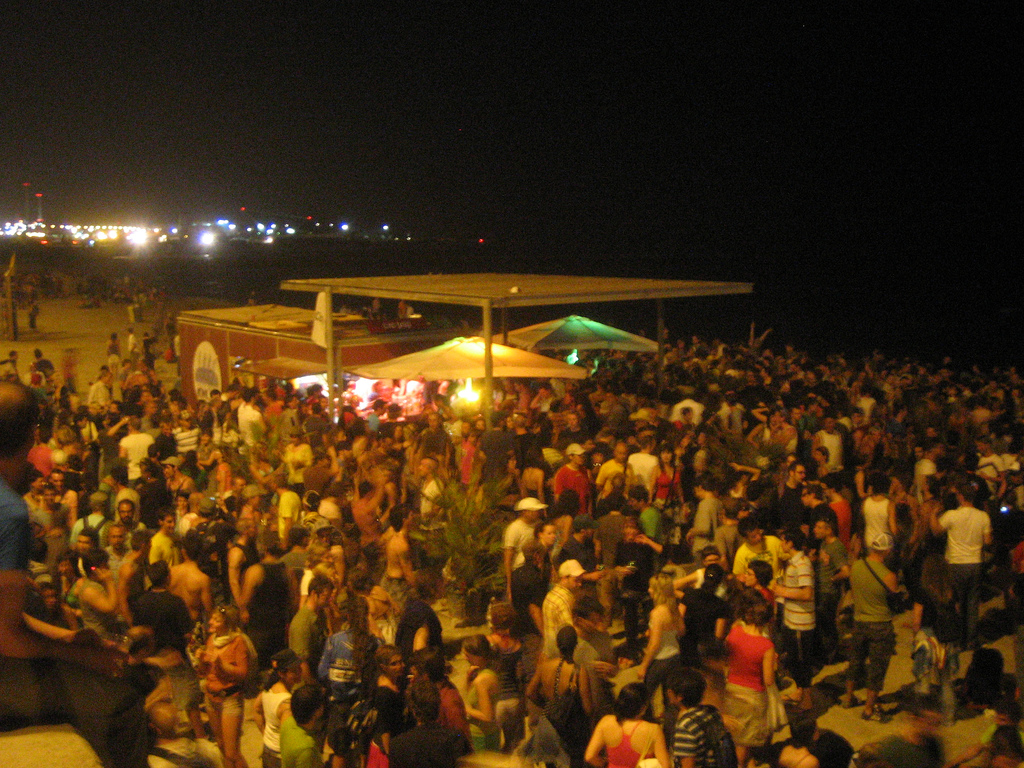
In 2009, Sónar officials then took measures to preclude the use of “Off-Sónar”—“We did not want the brand to be misused,” said a Sónar spokesman—and so “Off-Week” was born. The subsequent implementation of various regulations also forced the closure of these illegal beach parties, in effect stalling the progress of this rapidly swelling movement. “The government started to push licences on all these beach parties; they said that live music wasn’t allowed there anymore,” Herrara continues. The extent of Sónar’s influence on the tightening of these laws remains nebulous.
Naturally, these aggrieved local promoters began to seek out other spaces to host their events. “We had the people; we just didn’t have the venues,” Herrera explains. The first of these took place at Mac Arena Mar Beach club in 2010—the first fringe event that operated with these newly required permits—followed soon thereafter by various others across the city. Quickly, Herrera explains, things changed as the entire “Off” movement grew into an operation of its own: “We [local promoters] had to go to the next level; we had to upgrade ourselves.” Free parties became a thing of the past as artists began charging regular fees and promoters were forced to recoup the considerable financial outlays required of them to meet the stringent criteria for a successful permit application. The result, it would seem, is “Off-Week” as we know it today: an extraordinarily professional and highly regulated operation with ticketed events that take place at various locations across the city.
Central to this operation today are three organisations: Indigo Raw (IR), FACT and Loud- Contact, all of which work together to deliver a wonderfully diverse musical programme in the Catalan capital throughout the year. Although there are countless other smaller-scale label parties and showcases during Sónar week, it is these three promoters that sit at the core of the fringe’s offerings. On the menu this year were the likes of Perlon, Arpiar, Cocoon, Mobilee, Nina Kraviz’ трип, and many more. Much of this is owed to 2009: “It was like a cleansing process,” recalls Ralf Kollmann, whose annual Mobilee Records showcase has been a well-attended staple of Off-Week for many years. “There used to be a lot of shady promoters; there were a lot of events that didn’t match even the most basic standards—but this stopped when these new regulations came into play.” In this sense, while these early changes reduced the number of events in the fringe movement, they also accelerated the development of those few that satisfied the stringent requirements.
As it stands, the success of these fringe events is not wholly unintelligible. Much of the early appeal came because they were free—“Everybody loves a free party,” jokes Kollman— and herein lies a certain irony: one of Sónar’s founding principles was the championing of the Catalan electronic music scene but it has steadily grown to cater more for international visitors who boast deeper pockets than many residents of the city. This has certainly contributed to the growth of “Off” events: many people wanted to be part of the fun without having to pay the rising costs associated with the official festival. But the reasons behind this expansion are far greater than financial means; after all, popularity for these events has spiralled as much as the ticket prices.
Firstly, let’s not overlook the merits of the official festival. It has been at the forefront of the growth of alternative electronic music from the beginning and has pushed boundaries in the genre for over two decades. It’s no mistake that Richie Hawtin credits much of his success to the opportunity offered to him by the festival from a early stage. And still today it offers a lot, including technology talks and different musical options (artists booked for the festival are precluded from playing any other event in the city), but it’s hard to escape the feeling that Barcelona in the mid-summer lends itself to small intimate showcases in the Catalan sunshine rather than massive warehouse parties that can so often feel rather commonplace. “It [the growth of “Off” events] is down to the city itself,” says Kollmann. “It’s a beautiful city with a wonderful architecture, beach and nice weather—and this connects perfectly to the music.” In addition to this, there is a feeling that people want variety: attending the same two locations for the three-day period of the festival can become tedious, while each of these showcases scattered in beautiful spots across the city offers an entirely new experience and a sense of discovery, not to mention a sense of intimacy that cannot really be matched.
Kollmann also believes that this growth has been accelerated by a generational shift. He explains that early Mobilee showcases, which take place on the rooftop of Hotel Silken overlooking the city, were not well attended until 2009, three years after the event’s inauguration. “It took a long time for people to really begin partying in the day,” he explains. Although there is no shortage of after-parties taking place each night, showcases tend to take place during daytime hours. In contrast, while Sónar’s day music program has considerable merits—in many ways, more than that of the night—it is no longer as essential for the industry as it was back in the early-late ’00s. This, itself, may be a result of the swell of Off-Week daytime parties, but there are perhaps other influences too, including the relocation away from MACBA (Museum of Contemporary Art), an intimate place for industry folk to meet and do business. Linked to this is the actual scheduling of the event: “Sónar is held in the middle of the summer when people want to just come to relax and have fun,” explains Herrera. “ADE [in October], for example, is different: people want to do meetings and attend lectures.” This, he adds, is another reason why the fringe parties have become so well frequented.
On the surface, friction between Sónar and these other promoters feels rather inevitable. Organisers of the festival invest tremendous amounts of money in its marketing each year and are understandably aggrieved to see others unduly profit from their labor. It is for this reason that officials sought trademark protection for the use of “Sónar” within “Off-Sónar,” an injunction that remains fervently enforced today. XLR8R, for one, has been caught out on several occasions for employing the term in error. By all accounts, however, it actually runs deeper than this: evidence suggests that Sónar wishes to relinquish any existing association with these fringe events—claiming ignorance, in effect, to their very existence. “They deny the whole phenomenon,” said one source. Sónar directors were reluctant to go on record on the subject on two grounds: they didn’t wish to shine more light on these parties or even be discussed within the same feature.
But while this stance was once understandable, its merits today are questionable. Given the strength of the brand, and the comparative state of these fringe parties prior to 2009, Sónar’s desire to remain independent was perfectly natural: being connected with such an unregulated movement could easily have jeopardised their professional integrity. Justification for this stance was reinforced in 2012 when three party-goers died in a Madrid nightclub, highlighting the dangers presented by these events when proper safety precautions are not taken. “It was important that the Sónar brand was not damaged through association with these other external events,” Kollmann explains. Today, however, it’s hard to consider association with these professionally-organised events too much of a threat in this sense.
“These licenses are becoming increasingly difficult to attain each year because Sónar officials are taking action to make it harder for us.”
Yet the friction continues to exist. This is best illustrated in terms of “Extraordinary Licences,” the class of permit required for promoters to throw outside music events around the city. “These licenses are becoming increasingly difficult to attain each year because Sónar officials are taking action to make it harder for us,” says a local promoter, who opted to remain unnamed. It is not possible to confirm that Sónar is behind this because these measures are being enforced by local government officials, but “it’s strange that you can get these licences all year round except during the week of Sónar,” he continues. Another source claims to have seen a leaked document from Sónar officials directed to the local government that evidences an application for the latter’s assistance in combatting these fringe events. This particular request, he explains, was quashed on the basis of fair competition. Sónar denies the claim.
Evidencing this increasing pressure on these “Off” movement promoters is no easy task because it’s “implicit,” says one source—“but the consequences are on the table for all to see.” To support his case he points to this year’s FACT Music series (“This is just one example,” he stresses), an annual set of events held in a non-residential area in Hospitalet de Llobregat. “There is almost nothing around—yet the sound restrictions are so strictly enforced,” he explains. The question posed is this: is the policy really devised to protect the locals or to combat the growth of these “Off” promoters? Consider also how the growth of this counter movement has been repeatedly quelled by continually adapting these laws. “Whenever there has been an emergent counter movement it has been shut down,” continues the source. The best illustration of this is the cessation of the beach parties in 2007: earlier legislation that precluded “live music” from the beaches was soon amended to encompass DJing too.
However, the root of these measures is even more challenging to establish. Problems of transparency with permit and licensing applications across the entire Spanish nation are well documented, weakening any case that these measures are specific to this situation and, indeed, that Sónar organisers have any role to play. Of course, these organisers also deny any allegations that they have made any attempts to work against these “Off” parties (barring the removal of all association)—but still it remains difficult to fathom that a continual dialog with government officials is non-existent. The latter (“Generalitat de Catalunya”) is even listed as an official partner of the event, and one can only assume that it is for this reason Sónar has always been held in public rather than private spaces— including the CCCB, the Museum of Contemporary Art, and now Fira Gran Via. “There is definitely a shared understanding because they have a common interest,” explains another local promoter. “They both want to counter this “Off” movement.” But why, you ask?
“Sónar organizers just do not want other people profiting from their event,” the promoter explains. This is true despite their acknowledgement that Sónar’s growth has not been impacted by that of the Off-Week.“ The founders of the event are Catalans and it’s in their nature to always want control.” And this, too, is where the role of the government begins: Catalan culture dictates that only locals can engage directly with officials—an unofficial convenience that is not afforded to these foreign promoters. They also know that that they have leverage because the Sónar brand has worldwide credibility and it is believed to boost the Catalan economy by an estimated 0.6% per year—a considerable amount for just a three-day period. Given this, it seems only natural that they use their contact and clout to encourage the hinderance of this counter movement—validating their denial of having taken any direct measures themselves.
But any such efforts would fall on deaf ears if they did not fall in line with those of the government—and this is similarly rooted in Catalan culture. It’s no secret that some Catalans harbour a resistance to any outside influence. One long-term resident of the area used the following parable to explain her point: “Imagine there are loads of pigs in your home. They are shitting, eating and destroying the area—but at the same time they allow you to live. This is how many Catalans see foreigners.” It is this sentiment that has fuelled animosity between many local Catalans and the “guiris,” the term used for any Northern European who comes to rave in their city for either Off-Week or, indeed, Sónar itself—“we hate the Sónar circus,” said one former Barcelona resident. It is partly for this reason the official festival has changed venues on several occasions: old generations have been against Sónar and Off-Sónar because it “pollutes” the city they wish to protect.
And it would be foolish to assume that these feelings are non-existent at governmental level —you only have to follow the recent movements of Ada Colau, the current Mayor of Barcelona to see this. While Barcelona under Joan Clos sought to become more cosmopolitan, Colau—and her predecessor Jordi Hereu—want it to be a Barcelona for Catalans. Colau, a figurehead of the new left-wing politics sweeping Spain, has been termed “the world’s most radical mayor” because of the extreme measures she has already taken to reduce tourism in the city.
It is here that a direct conflict with Off-Week arises: the government is a partner of the official event and sees that it represents a local intelligentsia that moves money and local values; in contrast, they are always “bitter” about these outside promoters (the directors of FACT, Loud-Contact and IR have foreign roots) that take control and attract considerable amount of uncultured party-seeking tourists to the city. “It’s about economy and control. Sónar is the establishment and the “Off” events hang from its teat,” says one source. “The government also wants to limit the competition of their partner.” In this sense, while Sónar and the government are not working together in a formal capacity, many feel that they both use each other to achieve a similar objective.
“I wish there was an exchange or connection. Sónar must embrace these satellite events.”
Nonetheless, these fringe events have now grown to become such an important part of the week’s offering that it’s hard to envisage the government having any legitimate business in stunting their progress. After all, they attract a different audience and bring a similar amount of people to the city as the festival itself. So what is the the alternative option?
“I wish there was an exchange or connection,” Kollmann explains. “Sónar must embrace these satellite events,” he continues, a point with which both IR’s Alberto Nerone and FACT’s Herrera both agree. “There needs to be an agreement, but it should really have happened earlier,” Herrera explains. And you don’t have to look too far for templates—Cologne’s Popkomm (now Berlin Music Week) is perhaps the best place to start. In addition to the core offerings were several satellite events, similar to those of Off-Week. However, each external promoter was invited to submit an idea to the festival organisers and, if approved and certain standards were met, these events then became official additions to the main event. As a result, they benefitted from the brand name and any marketing surrounding it; in return they had to reserve a 10% capacity for festival ticket holders. Amsterdam’s ADE, too, now runs a comparable model: labels, agencies etc. are all welcome to apply to the event organisers to become part of the annual conference, in effect running their independent showcases under the ADE umbrella.
Constructing a legitimate case against a union of some capacity is no easy task—although it would fall closer to a loose agreement to cooperate rather than a partnership in the more traditional sense. There is no festival in Europe that is as authentic as Sónar—in a musical, cultural and technological sense—and this would need to be taken into consideration. This is especially true following the launch birth of Sónar+D, the international conference for creativity and technology. “We are a private event with a clear artistic direction and purpose which is definitively not only for pure entertainment,” said a Sónar representative. Incorporating a selection of these fringe parties into its official programming could blur Sónar’s public image and consequently deter some of the brand’s key sponsors—an important consideration given it is 100% privately owned and relies on 12.95% of its annual budget arriving from outside sources. This is not something that is similarly applicable to ADE, for example, because the Amsterdam event is funded as a non-profit organisation and focuses specifically on dance music and the surrounding sub- culture. “ADE has a different direction: we are two different events with different objectives,” added the Sónar spokesperson.
But that is not to say that the door to discussion should be forever closed: there is no reason why these two events cannot co-exist and be of mutual benefit to each other. The proverbial ball, it would seem, lies in Sónar’s court and soon one would think that it would be in the organisers’ best interests to begin working with rather than against these fringe events. Potential benefits—if intelligently managed and carefully curated—include increased revenue, an extension of the brand and the addition of a new talent platform for the electronic music strand of the wider Sónar model. To offer an example: many of IR’s Plaza Mayor showcases—which included artists like Cobblestone Jazz, Carl Craig and Ricardo Villalobos—would bring a welcome diversity to the programming without detracting attention from the brand’s focus on technology and creativity.
Yet, still, it remains difficult to envisage any agreement materialising soon. Sónar’s stance remains simple: they wish to “concentrate on producing their own event which is the event their company has created, with its formats, venues and market.” And right here lies the problem: this inherent disinterest in exploring the possibility of an agreement prevents any bilateral understanding from being formed and prolongs the existing divide between them.
In truth, even if nothing does arise then little is likely to change. There is space in the market for both of these events; they can live together because they appeal to two largely different audiences. This, according to Sónar, is a “fact.” While those who attend Off-Week travel in search of intimacy over enormity, Sónar has a core professional fanbase looking for “a deeper and more demanding experience,” says Nerone. It is for this reason that Sónar’s attendance has remained stable despite the growth of these fringe events over recent years. “The fringe events have not had an impact on the growth of Sónar which has always been steady through the years,” said Sónar directors in an official statement. In this sense, any partnership would be strategic rather than one born out of necessity.
And so perhaps best to view this an an opportunity, above all else. It’s hard to shake the feeling that an agreement of some sort would be a victory for all fans who attend the area and the music community as a whole. Whether they like it or not, Sónar and the collection of events that surround it are inextricably linked. The festival has long drawn people to the city (its very existence lies at the very core of the latter); while the growing attention on the “Off” movement actually serves Sónar well too. Neither would suggest that the other one has ever impeded the other. In this sense, the relationship is symbiotic rather than antagonistic—and the sooner this is acknowledged the better, for everyone involved.
In the words of one the local promoters: “These events are happening whether they like it or not. “It’s simple counter culture and culture—and the sooner this is accepted the better.”
______
Photos by: Elephant Studio and GBK.Photos.