Juno Plus has reported that Jochem Peteri (a.k.a. Newworldaquarium or Ross 154) is prepping a series of represses to be released next month, as well as the revival of his Ape label.
Dutch producer Peteri has been a cult favorite since he began releasing house and techno records in the early ‘90s, via the likes of Delsin, Eevo Lute Muzique and his own Ape imprint. In recent years he has kept fairly quiet, only releasing a couple of tracks via a Rush Hour compilation, and Ryan Elliott’s Panorama Bar mix, though he has resurfaced now to facilitate a series of represses.
First up is a reissue of the house classic Trespassers via Ape(originally on Delsin), which will be joined by new versions of the Ross 154 record on M>O>S Recordings, as well as Aroy Dee’s Kiss EP from 2003. In a Facebook post, Peteri has also alluded to the fact that more are on the way, including album reissues.
The records are scheduled for release on May 30. Pre-order them at Juno.
Mule Musiq is a label that consistently delivers top-quality music across a wide range of styles and genres. Although they all differ stylistically, there’s a distinct vibe that seems to run throughout. It’s hard to quite put a finger on what that is, but it’s also hard to deny its existence.
Perhaps it is the family-like vibe put forth from the label—a close-knit roster of artists continually return to the label, DJ Sprinkles and Kuniyuki Takahashi to name just two. Or maybe it’s the emotionally-rich quality of the records presented; from Petre Inspirescu’s beautiful LP Vin Ploile—which notably took the top spot in our annual best album list—to White co-founder Oskar Offermann’s raw and swinging Le Grand To Do and the birth of Fred P’s FP-Oner project, there’s an almost unrivaled quality to the A&Ring done by the Tokyo-based imprint (with those three released in 2015 alone). Not slowing down a bit in 2016, the label has already announced 6, the follow up the FP-Oner’s 5 and the second in the trilogy, as well as Lawrence’s long-player, Yoyogi Park.
Following on from 2009’s Until Then, Goodbye, and 2014’s ambient A Day In The Life, Yoyogi Park is the final instalment in a trilogy in collaboration with artist Stefan Marx—who also contributes the artwork to Smallville Records, another regular home for Lawrence. It’s by far the most dancefloor focused of the three records, though it’s a dancefloor record with ambient soul, much like the majority of Lawrence’s work.
As is the case with its namesake, the album’s true beauty is in its intricate subtleties, gorgeous elements that seem to hide themselves at first glance—or first listen in this case. Both “Tensui” and “Ava” use this effect brilliantly. The two pensive cuts layer various overlapping pads, faintly streaming in and out of the tracks percussion, like a light wind would through trees. Couple this with the field recordings that are sprinkled throughout the release and it creates a depth that feels like a real-world, although quite alien, environment. Lawrence’s pad work and melodic flourishes are some of the best in house music and Yoyogi Park once again cements that status—the jazz-like stabs that intermittently hit over the top of a cascading melody in “Blue Mountain” are achingly beautiful, much like the chords in “Nightlife.”
Offsetting this subtle beauty is the omnipresent bass, which underpins nearly every cut on the album. From the heavy sub-bass of opening cut, “Marble Star,” to the groove-filled bassline of “Simmer,” there’s more than enough bass weight to to satisfy any dancefloor.
The album reaches a driving pinnacle at “Clouds and Arrows,” which, like its title, is both ethereal and slicing—a perfect concoction of driving low-end thud and floating atmospheres. “Joy Ride” and “Illuminated” are fitting closers: The former employs a rasping bassline throughout, with pads that sound drenched in water, while the latter is a darker, syncopated ride into the depths of Lawrence’s sound.
On its own, Yoyogi Park is a highly engrossing record of dream-like dancefloor sounds, but when sat next to Until Then, Goodbye and A Day In The Life, it’s an intelligent melding of its predecessors and exemplary final chapter.
Yoyogi Park is out now, and can be picked up at Juno.
Tracklisting: 01. Marble Star 02. Nowhere Is A Place 03. Tensui 04. Ava 05. Nightlife 06. Blue Mountain 07. Simmer 08. Clouds And Arrows 09. Joy Ride 10. Illuminated
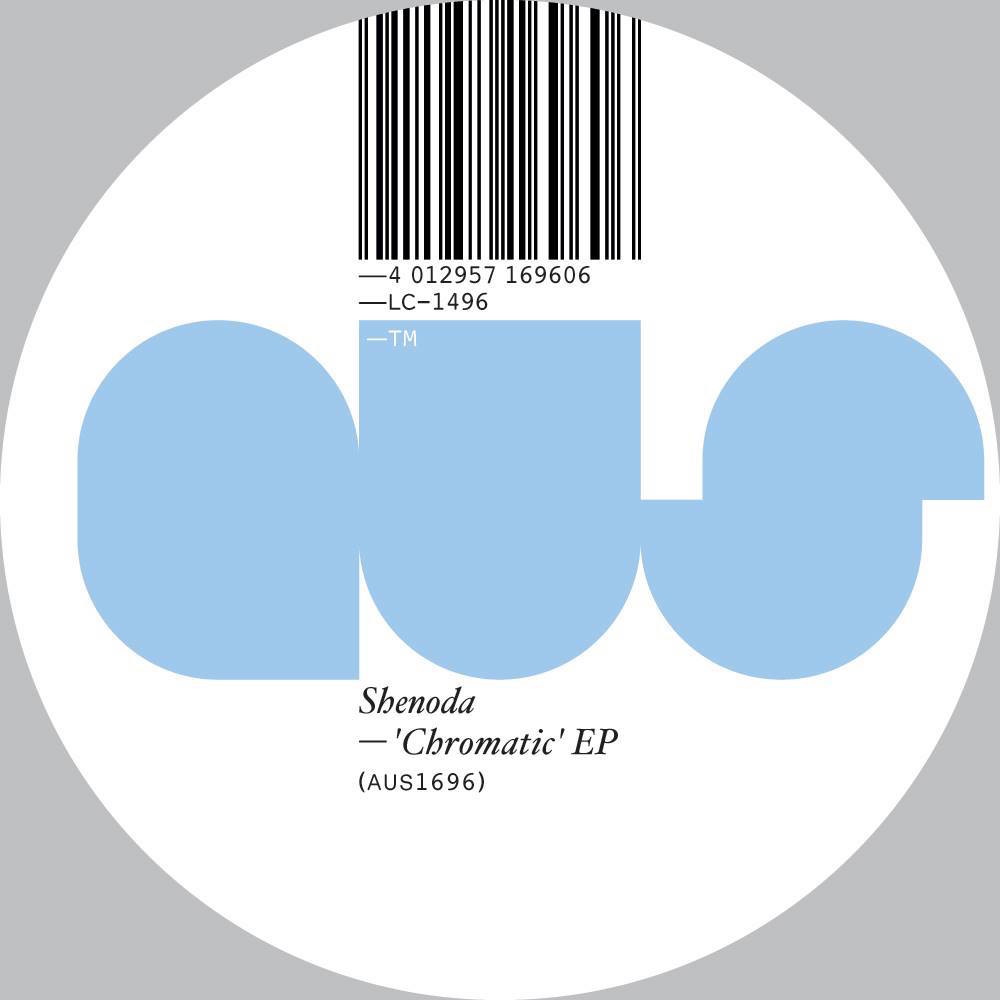
Having recently contributed to our XLR8R Podcast series and released his LabourEP back in November, Shenoda is set to drop his second EP, titled Chromatic, via the prominent and deep-seated Aus Music imprint on April 29. In this latest effort, the classically trained musician and master of far-flung house and techno grooves creates a gallant and close-knit sound with a bruising and tough dancefloor attitude.
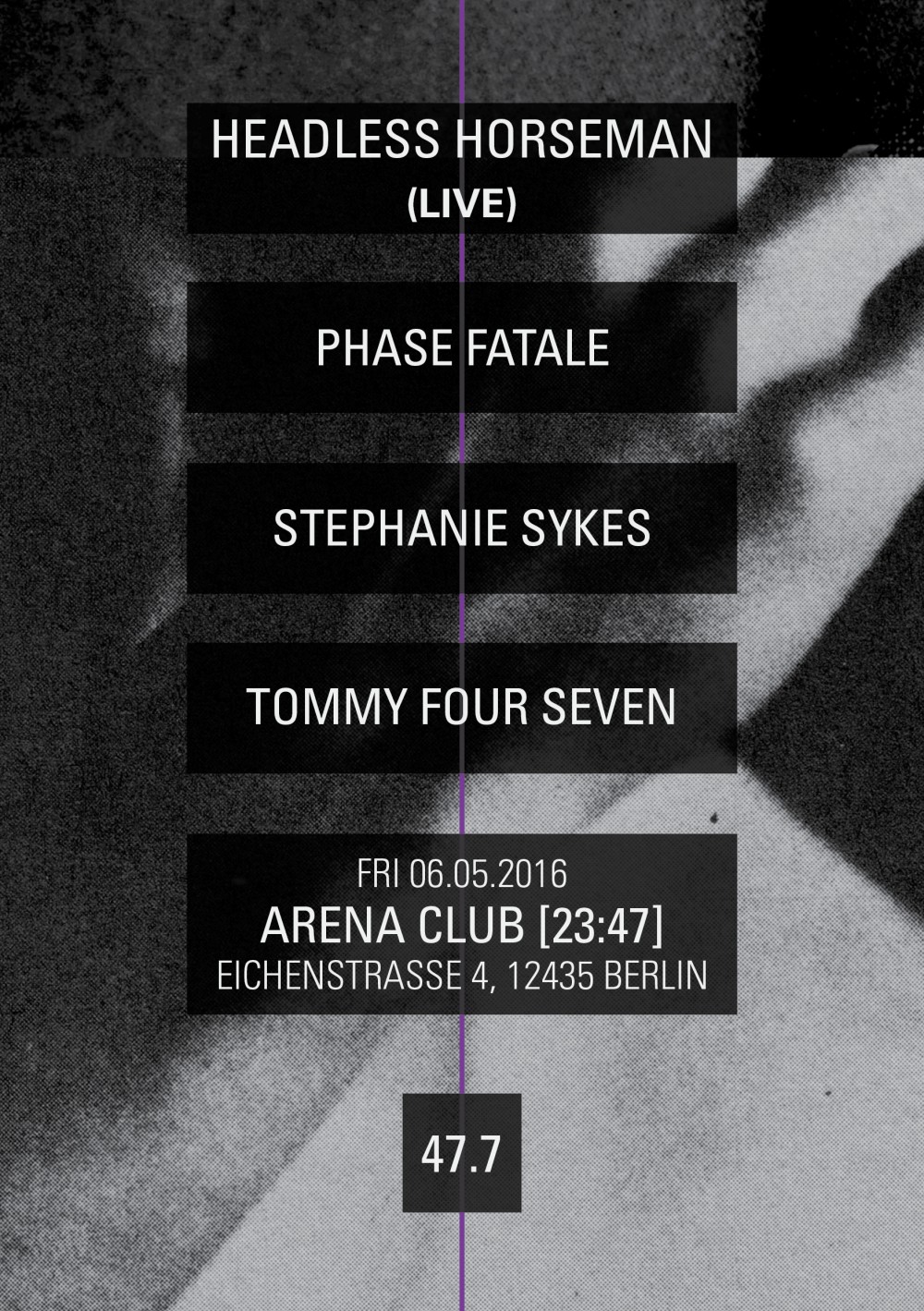
47 was launched last year, with the concept of functioning as a party at Berlin’s Arena club, and a label outlet for guests of those events. Pfirter, Shlømo and Amotik all featured at February’s edition (following on from the likes ofShards, UVB and SNTS before them), and thus now appear on the next EP, 47005.
47005 will be released on digital and vinyl formats from May 19.
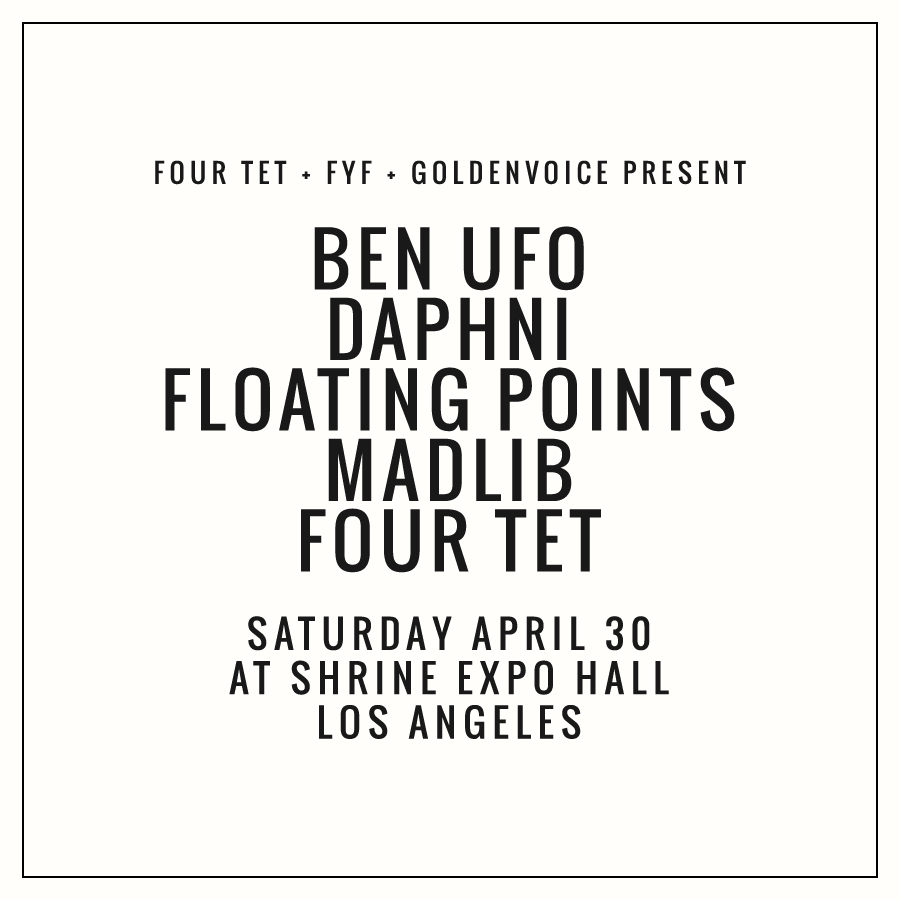
On Friday April 30 at the Shrine Auditorium & Expo Hall in Los Angeles, Four Tet, Goldenvoice, and FYF are set to present a miraculous display of music that has had the City of Angeles buzzing for the past few months. The large-scale venue, which has previously hosted events such as Low End Theory Festival, will bring in five titans of the electronic music scene for a one-night staging. The show will feature performances by the eclectic British DJ Ben UFO, Hip-Hop sensation Madlib, Daphni (Caribou’s frontman Dan Snaith), and the highly admired neuroscientist/musical virtuoso, Floating Points. Four Tet, who helped arrange this immense showing of top-notch talent, is also set to take to the stage.
For a chance to win two tickets to this event, enter your information in the box below. A winner will be chosen on Monday, April 27 2016. Winner will be contacted by the email provided.
You can also purchase your tickets to this event by going here.
[mc4wp_form id=”129791″]
[infobox]
Terms and Conditions:
The promoter is, Goldenvoice and agent, XLR8R.com whose registered office is at 1515 Park Lane, Venice, CA, USA.2. Employees of Goldenvoice / XLR8R.com or their family members or anyone helping to set up the competition shall not be permitted to enter the competition. There is no entry fee and no purchase necessary to enter this competition. Closing date for entry will be Wednesday, April 27 2016 at 11:59AM (PST). After this date the no further entries to the competition will be permitted. No responsibility can be accepted for entries not received for whatever reason. The rules of the competition and the prize for each winner are as follows: Only 1 entry per email address accepted Must be 18 years of age or older to enter Prize is for 2 tickets to Four Tet, Ben UFO, Daphni, Floating Points & Madlib at The Shrine Auditorium & Expo Hall in Los Angeles, CA on April 30, 2016. The promoter reserves the right to cancel or amend the competition and these terms and conditions without notice in the event of a catastrophe, war, civil or military disturbance, act of God or any actual or anticipated breach of any applicable law or regulation or any other event outside of the promoter’s control. Any changes to the competition will be notified to entrants as soon as possible by the promoter. The promoter is not responsible for inaccurate prize details supplied to any entrant by any third party connected with this competition. No cash alternative to the prizes will be offered. The prizes are not transferable. Prizes are subject to availability and we reserve the right to substitute any prize with another of equivalent value without giving notice. Winners will be chosen at random from all valid entries received and verified by Promoter and or its agents. The winner will be notified by email within 8 hours of the closing date. If the winner cannot be contacted or do not claim the prize within 1 day of notification, we reserve the right to withdraw the prize from the winner and pick a replacement winner. The promoter will notify the winner when and where the prize can be collected. The promoter’s decision in respect of all matters to do with the competition will be final and no correspondence will be entered into. By entering this competition, an entrant is indicating his/her agreement to be bound by these terms and conditions. The competition and these terms and conditions will be governed by US law and any disputes will be subject to the exclusive jurisdiction of the courts of US. The winner agrees to the use of his/her name in any publicity material. Any personal data relating to the winner or any other entrants will be used solely in accordance with current US data protection legislation and will not be disclosed to a third party without the entrant’s prior consent. Entries into the competition will automatically opt-in email for XLR8R.com weekly email newsletter, The Lowdown and any future events mailers. User may unsubscribe at anytime. Entry into the competition will be deemed as acceptance of these terms and conditions. This promotion is in no way sponsored, endorsed or administered by, or associated with, Facebook, Twitter or any other Social Network. You are providing your information to XLR8R.com and not to any other party. The information provided will be used in conjunction with the following Privacy Policy found at https://xlr8r.com/legal. [/infobox]
After a fitful start in the 1980s and 1990s, a new dawn of virtual reality (termed “VR”) is now finally upon us. By now, you’ve surely heard the hype; many consider it to be the “next computing platform,” following on from mobile phones and desktop computers before it. Regardless of whether VR ultimately becomes the dominant vehicle through which we interact with computers, it is fairly safe to assume that this rapidly developing technology will touch nearly every aspect of modern life in the coming years, from medicine and architecture to education and travel.
Music, too, looks to be a medium particularly well suited to VR’s particular brand of journeying. In many ways, electronic music is about building sonic landscapes for the ears, provoking the mind’s eye through various audio frequencies. The ability of VR to give these sonic landscapes virtual, though inhabitable, visual components is a powerful one; it’s not merely looking through the window as per a regular screen, but rather stepping directly through that window into an entirely different space.
For those entirely new to the medium, the logistics: Virtual reality, as promised by many science fiction writers, is experienced via a headset worn over the eyes and headphones over the ears. This seemingly simple combination of accessories effectively puts users “inside” virtual worlds inside which they can look around in any chosen direction. The best way to explain VR is that it feels like you’re somewhere else, where the “presence” conveyed by the experience is perhaps its most defining factor—that is to say, the extent to which it feels like you are, in fact, entirely submerged in that other place.
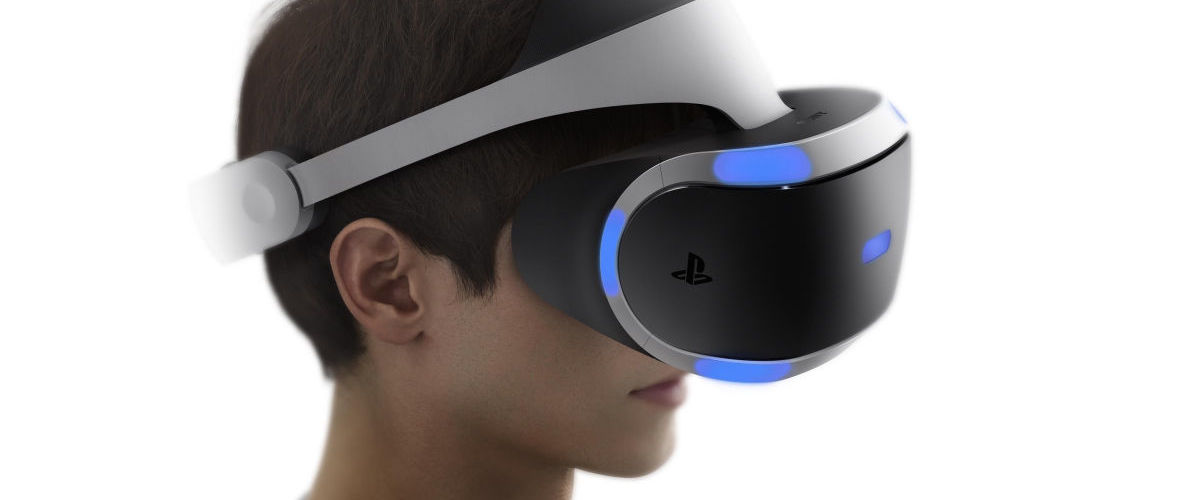
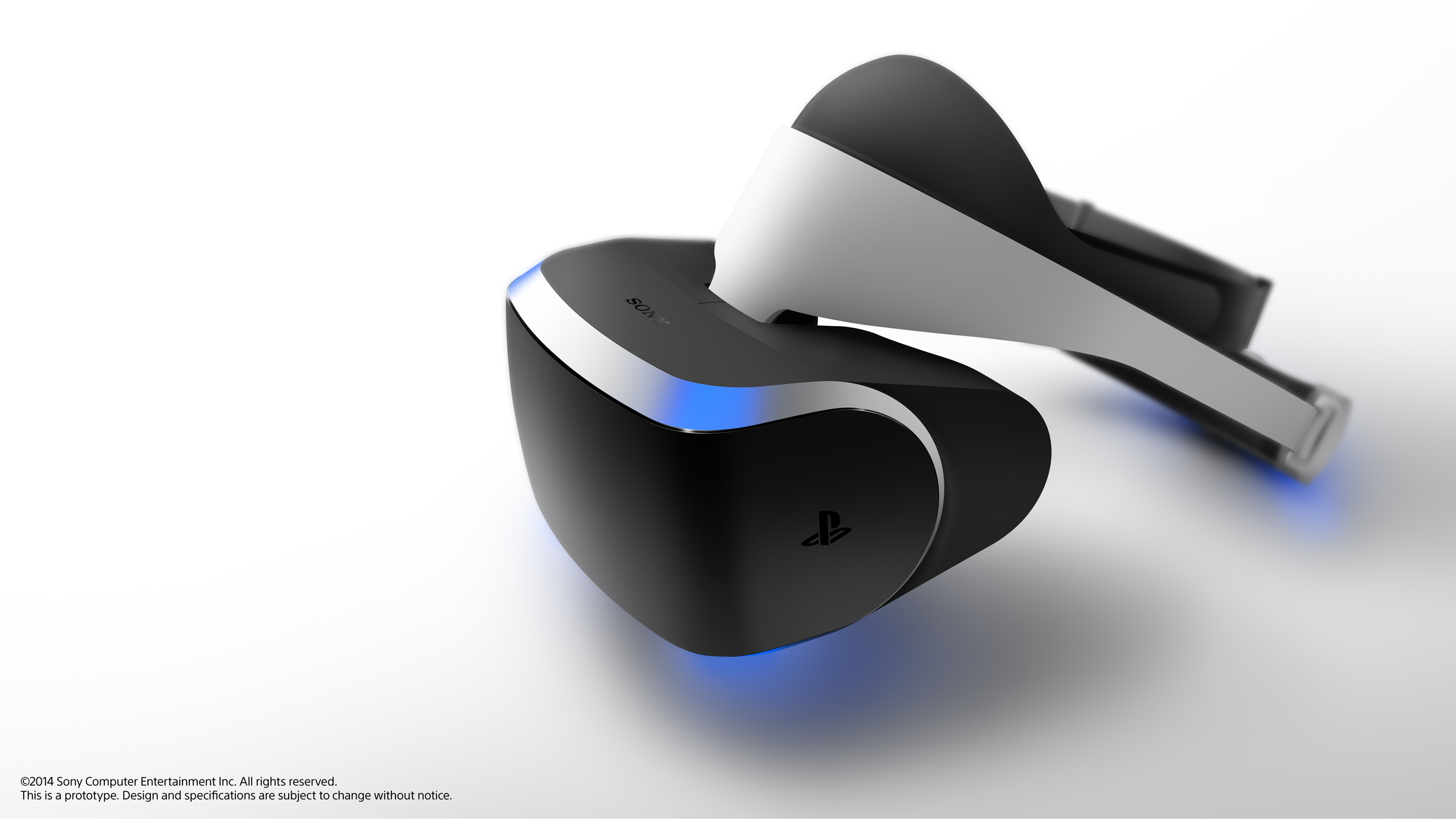
This most recent progression in virtual reality has brought ashore commercial headsets from Samsung and, more recently, HTC and Oculus. In addition to this, Sony‘s PlayStation VR is expected to land later this year. Using various cameras, lasers, accelerometers, HD screens, and other parts commodified by the mobile phone industry in recent years, the player’s head (and, with the appropriate controllers, their hands) are tracked in 3D space, giving them the ability to both look and move around inside these worlds, and interact with objects and characters inside them. This is neither 3D movies nor 5.1 surround sound; rather, it is a wildly, undeniably transformative new medium.
When it comes to music, VR can, for instance, be used to give players the experience of living inside music; as literal as being on stage with a virtual band, or as abstract as inhabiting a drum sound, perhaps, or seeing an impending bassline emerge in the form of an oncoming bullet train. Everything from album covers and music videos to laser light shows and psychedelics have extended the experience of music beyond purely listening; now, there is VR, meant to envelop the listener in private, audio-visual spaces.
With “desktop” VR experiences (i.e. those in which you are tethered to a PC that’s doing the heavy image processing) such as the HTC Vive and soon the Oculus Rift, you’re actually able to manipulate objects in virtual 3D space. This is performed using specially designed motion controllers, not unlike Nintendo’s Wii remotes, one in each hand. This is the entry point for creative input in VR, with a host of experiences designed to enable users to actually make music with virtual instruments inside virtual worlds. Again, this can take many forms—as literal as banging on virtual drums, or as abstract as throwing a handful of notes into a virtual whirlpool of synthesizer piranhas. The mind boggles at the potential applications for music creation.
In short, VR allows one to interact with computers in an entirely new way, and provides fertile new ground for how we consume and experience electronic music. We’ve taken the opportunity to highlight some of the most exciting early work being done to explore the intersection of music and virtual reality right now. Have a look and, by all means, have a go: Much like music, VR is a medium that must be experienced, not simply read about.
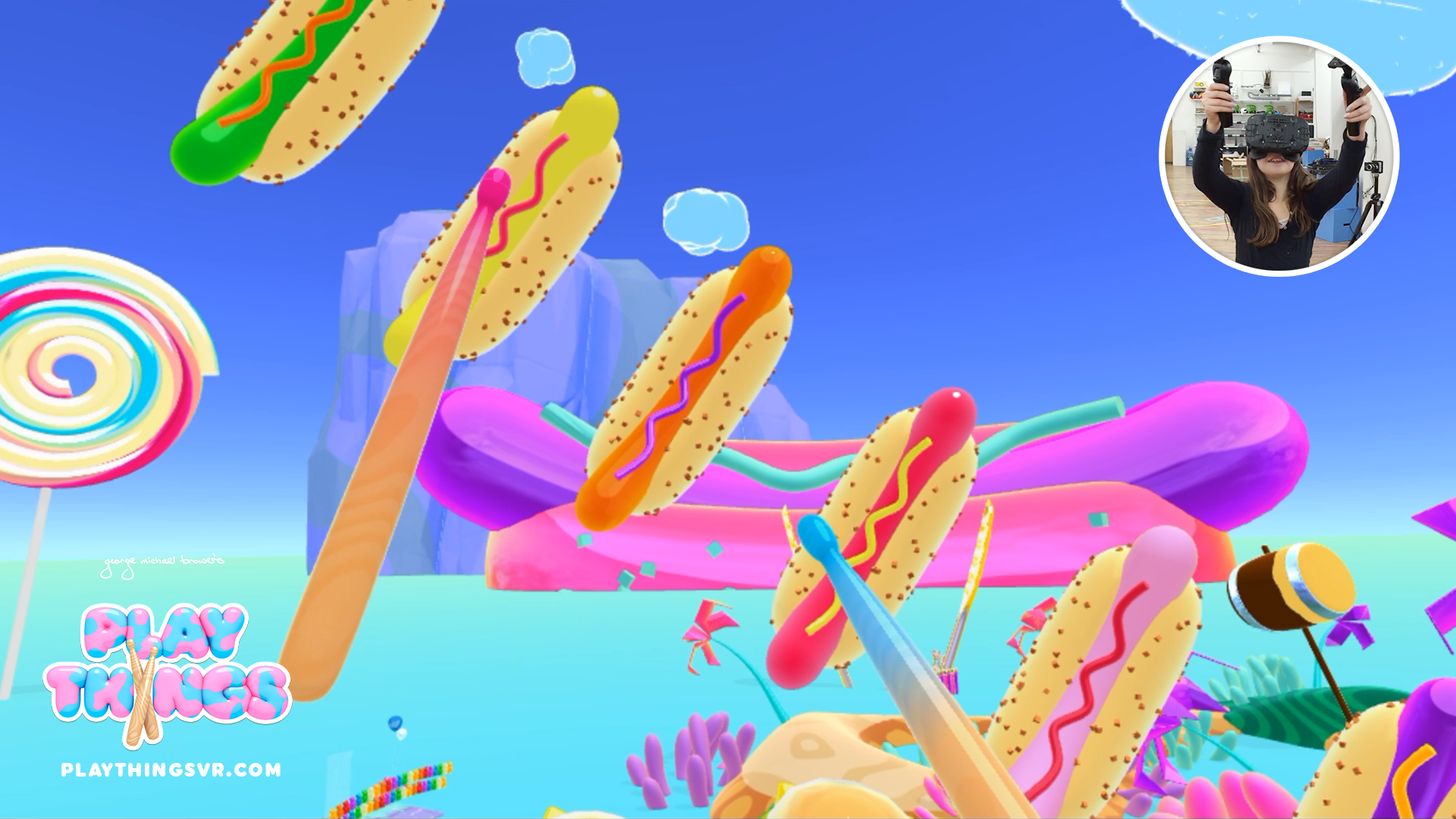
As one-man studio Always & Forever Computer Entertainment, George Michael Brower’s Playthings VR is his first release in the new medium, following on from a series of fantastic audio-visual experiences designed for web, all which can be found here.
Brower’s latest work, Playthings, is billed as a musical virtual reality playground, and gives users the ability to play anything in their environment—including gummy bears, hamburgers, and any other ephemera.“The first time I held the Vive controllers, the first thing I wanted to do was use them like drumsticks,” Brower says.
To produce its interactive soundscape, Playthings sends MIDI data to external soft synths, which plays back musical sound inside the gameworld. Because of this, Brower isn’t actively sharing any demos of Playthings; he’s still working out some of the mechanics of the game to make it work for a home audience.
XLR8R Couldn't find the embed function for type: "vimeo" and source: "<iframe src="https://player.vimeo.com/video/155628376?title=0&byline=0&portrait=0" width="640" height="360" frameborder="0" allowfullscreen="allowfullscreen"></iframe>".
How did you initially start work on Playthings VR? I was a programmer and designer working in advertising on the web before I got into VR, but everything I had done personally and professionally to that point had some element of interactive music. So I don’t really ever remember even “deciding” to do this project in particular. It was just very clearly, like, ‘This is the first thing George Michael Brower should do in Virtual Reality.’ I basically got started once the headset came into my proximity.”
“…you seem to actually be able to learn how to play instruments in VR the same way you learn an instrument in real life.”
What’s your favorite thing about the experience? Maybe a particular moment that you love watching people play? Yes, I have lots of favorite things. Maybe number one is just watching adults lose decades of maturity. Some people really just become deaf to all warnings of nearby walls in the real world, start swinging their arms violently, laying on the ground, etc. The first time Playthings came out of my studio was for an installation at New York Fashion Week of all places, so watching these really beautiful, traditionally hoity-toity fashion folk acting like lil’ babies was really fun. It genuinely seems to make people happy for a period of 5-10 minutes, and of course that’s really cool to see.
The other thing that’s really surprised me is that you seem to actually be able to learn how to play instruments in VR the same way you learn an instrument in real life. I have a bunch of friends who are much more talented musicians than myself, and it has really impressed me how each one of them has made the thing sound both better than I can and completely different, all in their own ways. I know for sure that I’ve personally gotten much more precise, and feel comfortable playing melodies and even drums. I’ve had at least one jam session with a human in the real world while I played in VR, so I can’t wait to get some sort of multiplayer in.
How’d you go about making the experience musical? Did you create visual components and interactions, and then build music around them, or vice versa? Sort of. I was primarily working in 2D before this, so I’ve been learning as I go, trying to create art I like within my technical capabilities. The whole thing started out with black and white cubes to test sending MIDI back and forth. I don’t really remember where the food came from—most of it got drawn on a visit to my family, none of whom have any VR gear.
So much of the art in Playthings was just a big rejection of realism, total escapist fantasy. I felt a sort of moral obligation to make as little sense as possible. The instruments were all created after the visual art in this case, operating principles being similar to the visual art: I want the sound design to be really tightly synesthetic, make things “sound how they look,” but always have some alien quality, trying to put together the familiar and surreal.
With the headsets coming out soon, any plans to release Plaything in any formal way? There are plans! Playthings is showing at Tribeca Film Institute‘s Interactive Playground in mid-April, at which point I hope to have a distributable .exe that people with the Vive can download! I’m currently working on making the experience rely on a single computer, as opposed to one driving the headset and another driving the music.
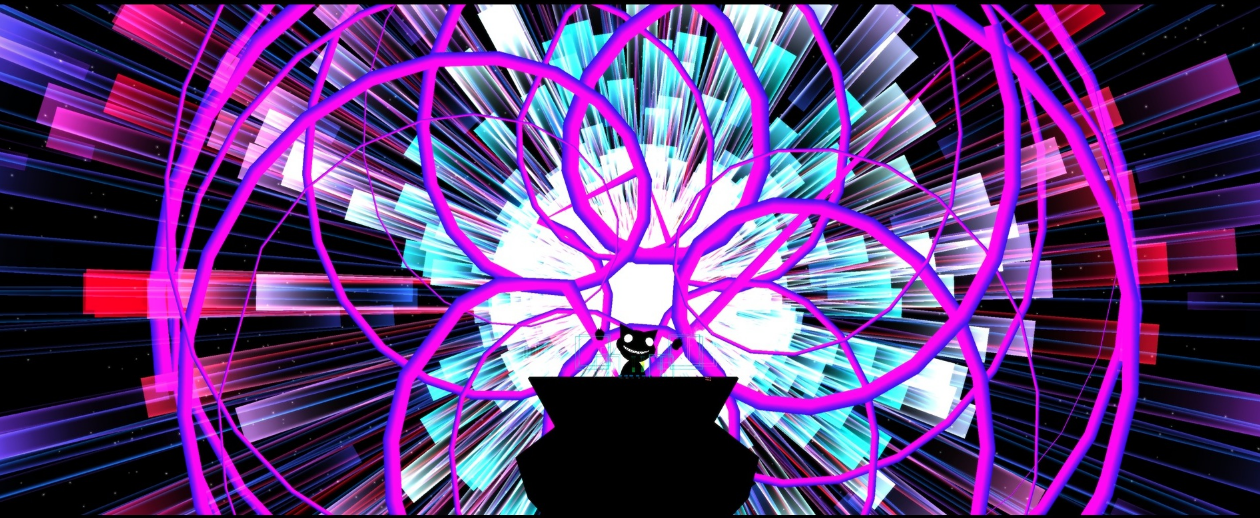
The Pyschedelic Music Space Shooter: “Rez Infinite” for PlayStationVR
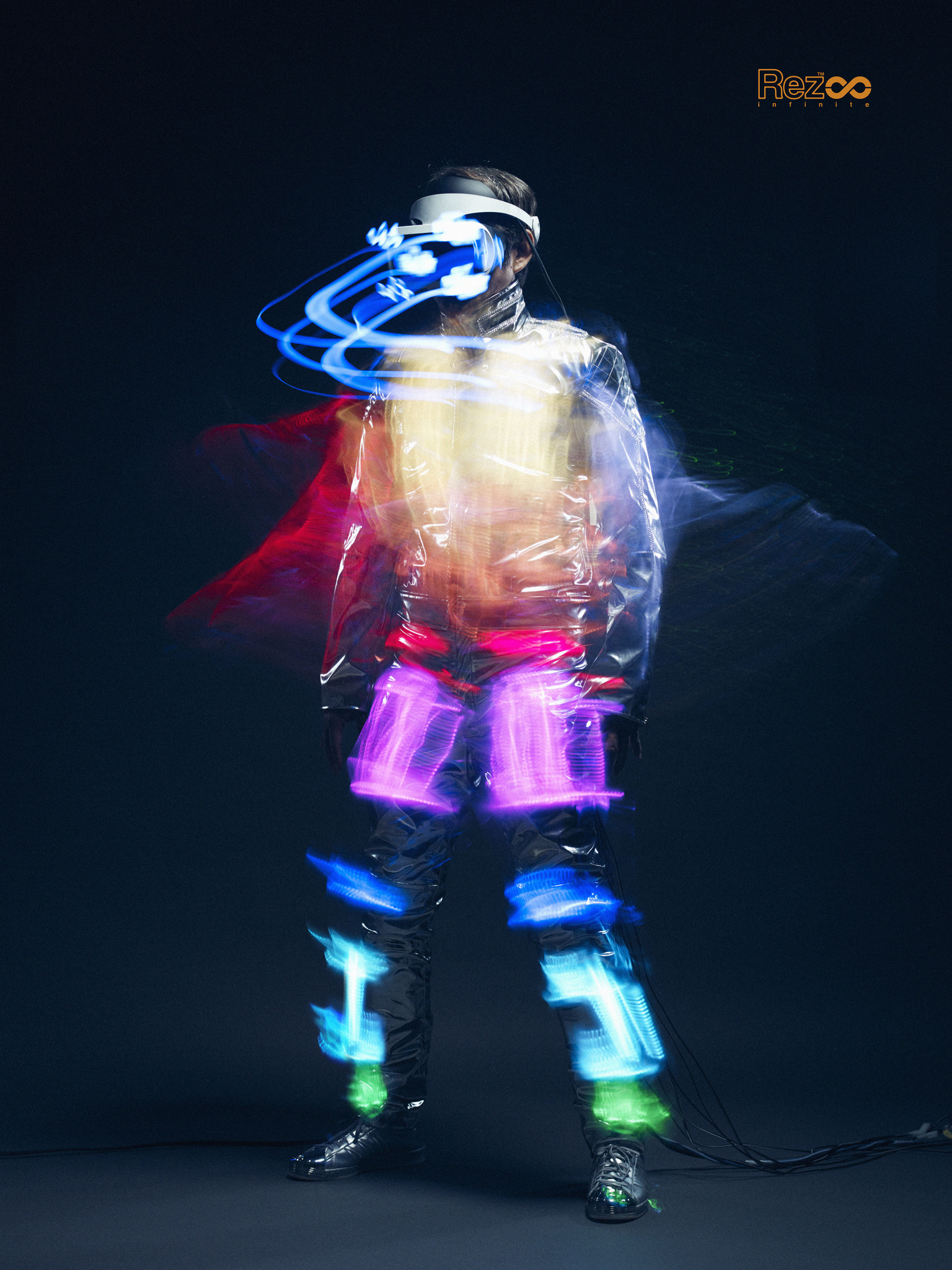
The original “Rez,” which was released in 2001 for Sega’s Dreamcast and Sony’s PlayStation 2, was a seminal music game. Based on creator Tetsuya Mizuguchi’s exploration of the rare condition of synesthesia (whereby sensory inputs get their wires crossed enabling some people to actually see sound), the game’s vector graphics and shooter-informed gameplay were soundtracked by music from Keiichi Sugiyama, Ken Ishii, Oval, and Adam Freeland, among others.
Now, almost 15 years later, Mizuguchi has assembled a team to bring “Rez” to Sony’s upcoming PlayStation VR platform, in the form of “Rez Infinite.” “When I started working at Sega in the 1990s, VR was bulky, blurry, and slow,” Mizuguchi says. “It was clear the technology wasn’t ready yet, but even that small taste had me dreaming of what might someday be possible.”
With “Rez Infinite,” Mizuguchi says the game comes closest to what the team members saw in their heads when they were creating it: Vivid colors that blend seamlessly into one another, crystal-clear textures, and razor-sharp lines, with full 3D audio.
“I know to some people that’s all just a bunch of numbers and technical mumbo-jumbo—and in a way, I agree,” Mizuguchi says. “The only thing important about that technology for “Rez Infinite” is how it makes you feel; hopefully, it makes it easier to forget the fact that you’re sitting in front of a TV playing a game, and instead lets the real world melt away into a swirl of incredible sights and sounds that could only ever exist in your imagination.”
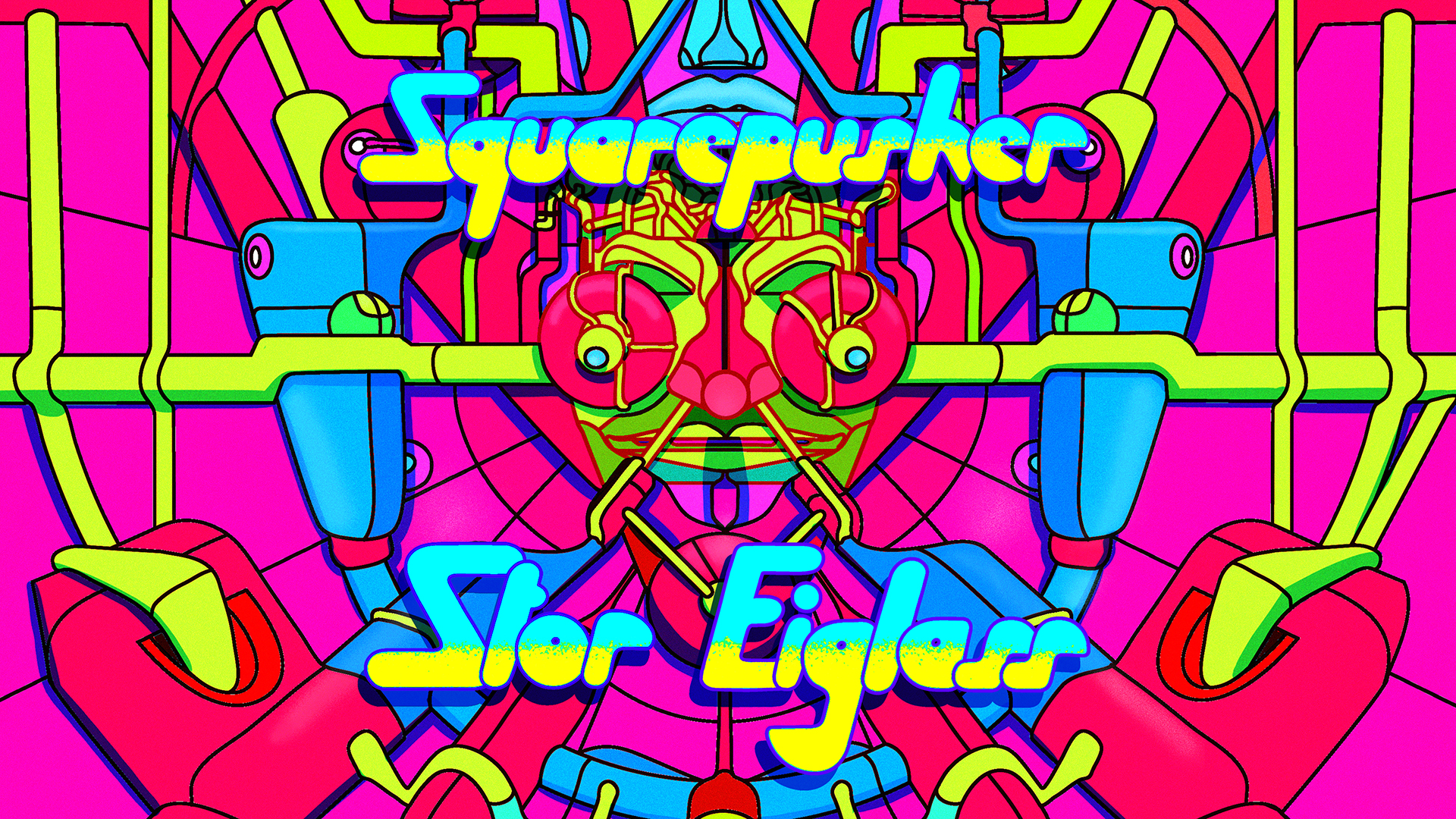
The Drum & Bass Rollercoaster: Squarepusher’s Stor Eiglass
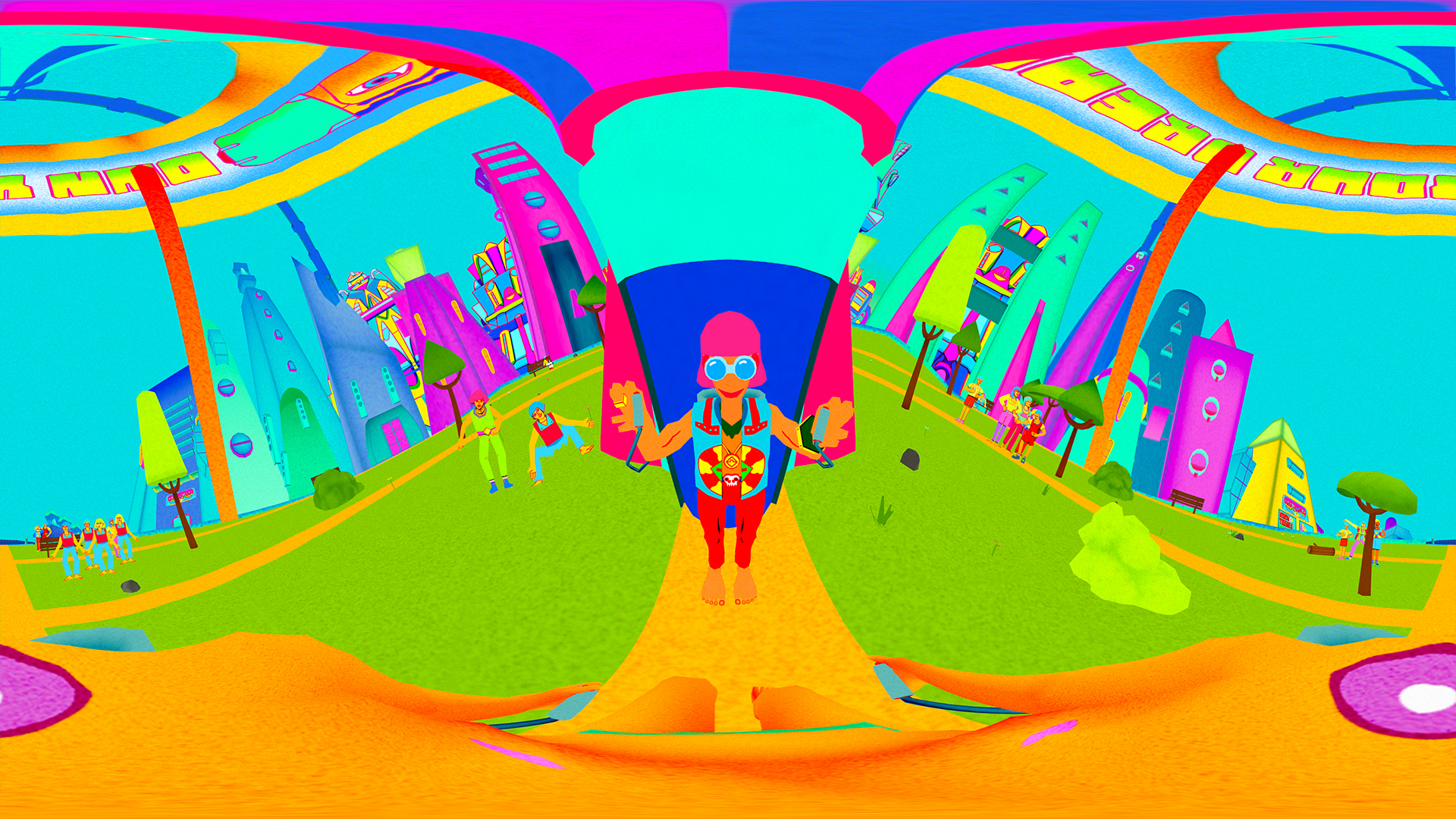
The result is a vivid, entrancing, maximalist rollercoaster of sight and sound that brings users to a hypercolor world full of weird characters and transcendental rabbit holes—all of which are tightly synched to Jenkinson’s music.
We spoke with director Robin McNicholas from Marshmellow Laser Feast about the project, which can currently be experienced via both Gear VR and Google Cardboard.
Did you specifically map certain kinds of sounds and patterns to certain visual ideas, or is it all pretty freeform? Creating a music video in VR brings up tons of new challenges, and we’d planned to have lots more synchronized material—to some extent, this was limited by the render times and hardware capabilities. We animated dance moves and other objects distributed throughout the virtual city to different stems from the track. For example, the laser beams coming from the eyes in the mountain in the shaman scene definitely needed to be synched.
How did the idea for Stor Eiglass develop? Was the artist/art style something that was envisioned from the start? There was a clear aesthetic goal from the start of the project, as we were collaborating with Rob Pybus, who has a very distinctive illustration style. However, what we found was the story took on a life of its own once we started to view it in VR. It was really good fun and one of those rare projects that had the whole studio super giddy.
What were some of the major hurdles that arose during development? Mainly boring hurdles such as optimization and exporting cropped up. Authoring content for VR and 360º video is still in its infancy, and as a result quite fiddly. Other issues were definitely camera paths—we had loads of different approaches to camera moves—some of which really spun viewers out and made it pretty uncomfortable viewing.
Do you guys have plans for more VR projects, particularly of the musical variety? Yes, we’ve got tons of plans for many VR projects—we’ve totally got the 360 bug. Also, music’s always a big and important part of our work, and we will continue to push for more sonic explorations in the future.
The Shapes and Sounds of VR Music Production: Lyra
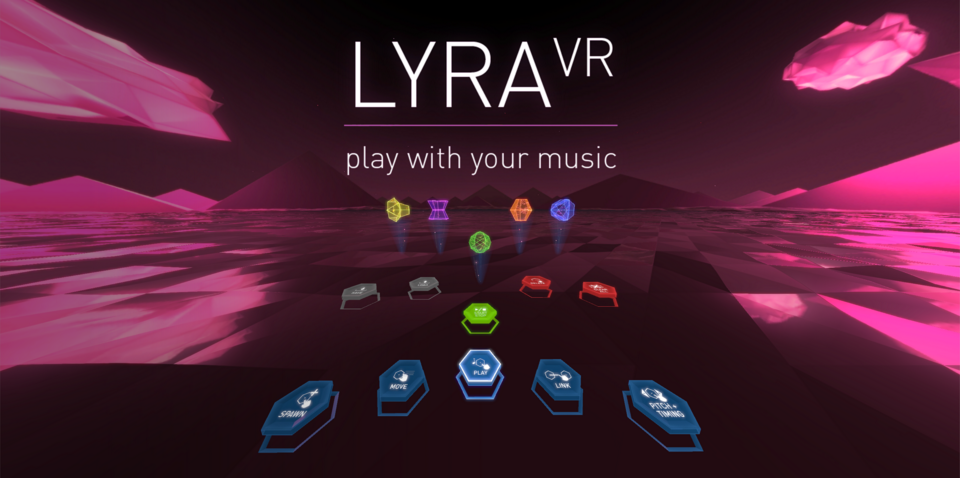
Like “Rez,” Lyra explores the concept of synesthesia, but from the perspective of music creation. Based roughly on a traditional step-sequencer, users are able to manipulate notes much as they do in traditional music software—with the notable difference that they’re doing so inside a fully immersive 3D environment. As such, sequences can be of any length, the steps can be placed anywhere in 3D space, and the user can select the duration of the gaps between adjacent steps.
“More than 25 years worth of experience—first using PC-based, MIDI-only sequencers, and then DAW software and soft synths as those became available—led to Lyra VR,” says creator Jean Marais, who also has a history creating sequencers and synths for the Arduino platform.
Marais believes that having sound sources localized in space is what makes the experience so special. “Your perspective on the music you make changes as you move around,” he says. “Since you’re able to place notes anywhere in space, there’s also an unexpected sculptural aspect to Lyra—you’re free to arrange your music in any way that makes organizational, but also aesthetic sense. Lyra also makes it very easy to create sequences of varying lengths that loop over each other, creating interesting evolving textures.”
Indeed, creating music with Lyra feels quite literally like building a physical sculpture out of musical notes. “The visual aspect is definitely no afterthought,” he says. “We’re continually experimenting with ways to make the visual experience as interesting as possible—the visuals will continue to evolve, keeping our initial concept of synesthesia in mind.” The team plans to have a beta version of Lyra available on Steam this summer.
Best known for its popular “Guitar Hero” and “Rock Band” games, Boston-based developer Harmonix has shown a taste of its first VR undertaking. Entitled (rather straightforwardly “Harmonix Music VR,” the project is essentially a music visualizer into which you can plug your own music.
“Old-school music visualizers are many and varied, but all of them were limited to a 2D screen and the use of real-time audio spectrum analysis,” says creative lead, Jon Carter. “With Harmonix Music VR, we have control over every aspect of your surroundings, using our internally developed, amazingly effective song analysis voodoo. We still use real-time data, but we can also look at the entire song, break it into sections, identify specific drum hits, and even categorize the feel of song sections to drive the visual and environmental transformations.”
Taking a different approach to music creation than Lyra, the upcoming Soundscape allows you to create electronic music in a futuristic environment, using huge virtual screens to add notes, change effects, and influence the characteristics of three discrete instruments. You can choose to do this alone, or jam along with two other randomly selected people online.
“Music, and specifically creating music via software, has always been a major interest of mine,” says Soundscape creator, Sander Sneek. “It started with FastTracker 2 and Cubase with VST plug-ins, and a MIDI controller 20 years ago.” Nowadays, Sander says he jams with Reason, Figure and Leap Motion’s Collider; as a creative coder and passionate music listener, he started to write his own audio software, and started recreating the mesmerizing ToneMatrix experiment from Andre Michelle in VR, using the gesture-based Leap Motion for input.
Soon he got the hang of it, and spent “way too much time” (his words) on implementing other instruments, nice environments, and optimizing the whole experience for mobile. “There are some features I want to implement in near-future versions, including a sampler, extra drum machine samples, and volume and BPM control,” Sneek says. “I’m also in early contact with the Amsterdam Symphony Orchestra to see if we can have a live performance in some way.”
When Robin Arnott first stumbled upon the idea for SoundSelf—his “virtual reality music meditation experience”—the Oculus Rift hadn’t yet hit Kickstarter. “VR as we know it existed privately between the brains of [Oculus founder] Palmer Luckey and anyone he cared to share his prototype with,” Arnott recalls. “[But] as soon as we started trying early builds on the early Oculus dev kits, it became clearer and clearer to me that SoundSelf and VR were meant for each other. With VR, the capacity of what we can do in terms of delivering a mind-altering experience is hugely amplified, and has justified a lot more development energy.”
Arnott says he thinks of SoundSelf as a psychedelic, or “technodelic” experience. Here’s the distinction, according to Arnott: “While both meditation and psychedelics are mind-altering technologies that allow us a glimpse beyond-the-veil, meditation gives the practitioner steadier and steadier grounding in what is real, while psychedelics are like a cannon that can blast you into a temporary experience of reality, but won’t help you build up the disciplined concentration for sober access to that space.”
What has surprised you most about developing SoundSelf for VR? I don’t know where to begin! The design space of VR is so new. Everybody is making massive mistake mistakes. I think ten years from now we’ll look back at this era of VR development and the work will seem equal parts bold and quaint.
The thing with virtual reality is that we tend to think of it as giving us access to alternative realities that are different in content from the reality we know, but identical on a more fundamental level. You’re basically playing as an animal in space through time with stereoscopic vision. That’s not the game we’re making—that’s not what SoundSelf is. So designing an experience for VR that doesn’t have the same base assumptions of what the universe you’re entering is… has required a lot of experimental subversion of people’s expectations.
Head tracking is a great example. Rotational tracking makes tons of sense in most VR because you’re pretending to be an animal with a head. But we found that using typical head-tracking in SoundSelf made the abstract visualization feel like it was occupying space—which made it feel less abstract, more graspable, more familiar. That was unacceptable to us. So we had to try alternative head-tracking techniques that would meet people’s expectations for VR to track their head movements, but wouldn’t give our visuals a sense of being based in space. This was hard! The first “solution” we came up with incapacitated me with dizziness for literally hours after playing it for just a few minutes. But eventually we came across an idea that I think works really elegantly.
How’d you go about making the experience synesthetic? Did you create visual components and interactions and then build music around them, or vice versa? It’s both. Visuals play into the sound, the sound plays into the visuals, and all of it originates from the player’s voice. That alone wouldn’t feel very synesthetic, but we’re pummeling the player with so much stimulus that they’re not as capable at making distinctions between “what I see” and “what I hear” as they usually are. All perception is sort of synesthetic anyway—more so in some people than others. So it’s more a matter of helping the player let go of their habit of writing distinctions and boundaries than anything else.
TheWave is the creation of Aaron Lemke, and allows artists to make music using virtual 3D interfaces. What makes it special is that it’s designed for groups: Other users can then join the session on any VR device, to experience the performance in a virtual networked, audio-reactive concert venue.
TheWave had its public debut at this year’s South by Southwest confernce. “The response was great—I think we definitely blew some minds,” Lemke says. “We learned that we had actually created the first cross-platform “co-presence” experience in VR, as the DJ was performing in the HTC Vive headset, and the audience members were passing around networked Gear VR headsets.”
Lemke sees a bright future for the overlap of music and VR. He says he can imagine cutting-edge dance clubs devoted entirely to VR, whereby the entire venue rigged with devices that track users in 3D space.
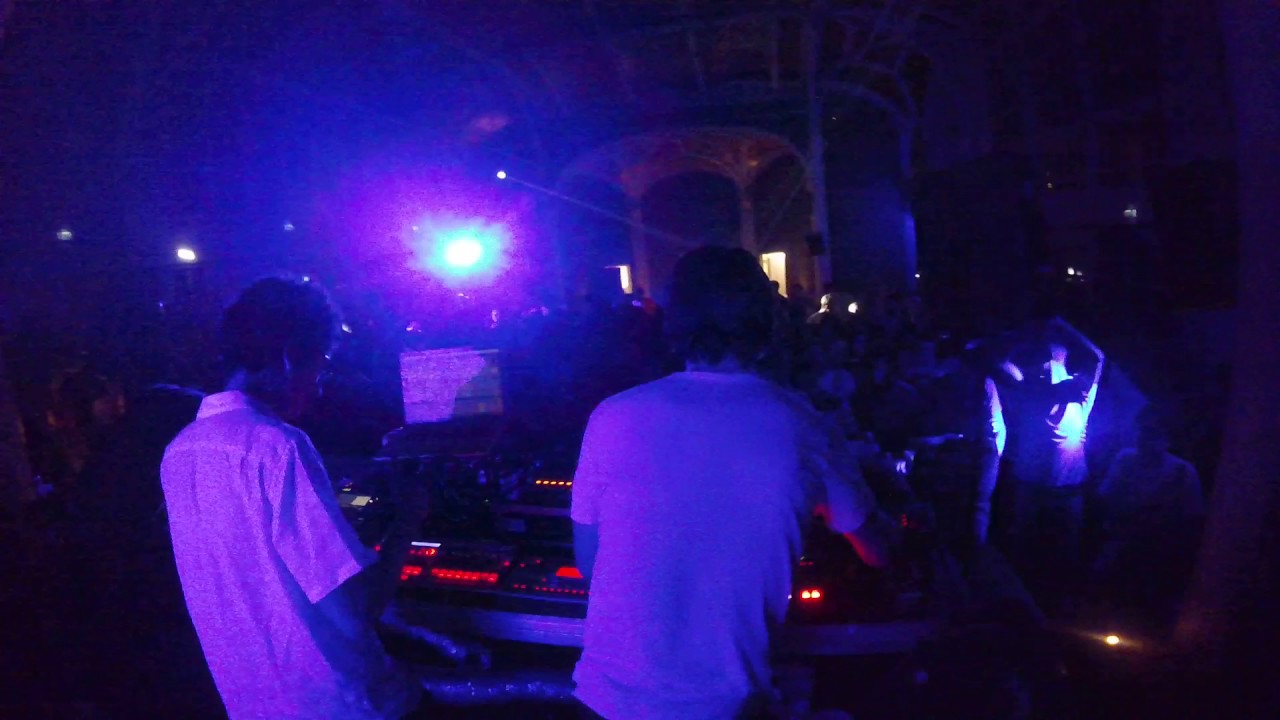
“You’ll put on a Gear VR headset when you walk in the door, and take it off when you leave,” says Lemke. He and his team demoed a small slice of this during this year’s Game Developers Conference in San Francisco, where they performed some of the first-ever live DJ sets in VR. “The performances were super fun, and we’re talking to lots of people about doing more of them,” he says. “That said, our main focus is to allow everyone to attend these shows virtually, without leaving their living rooms.”
The VR Album: Ash Koosha, I AKA I
Ash Koosha, who we’ve covered here on XLR8R, is among one of a few forward-thinking artists interested in bringing his music to virtual reality. We spoke with him about his plans for the medium, which will begin with a VR experience designed to accompany his recently released album, I AKA I.
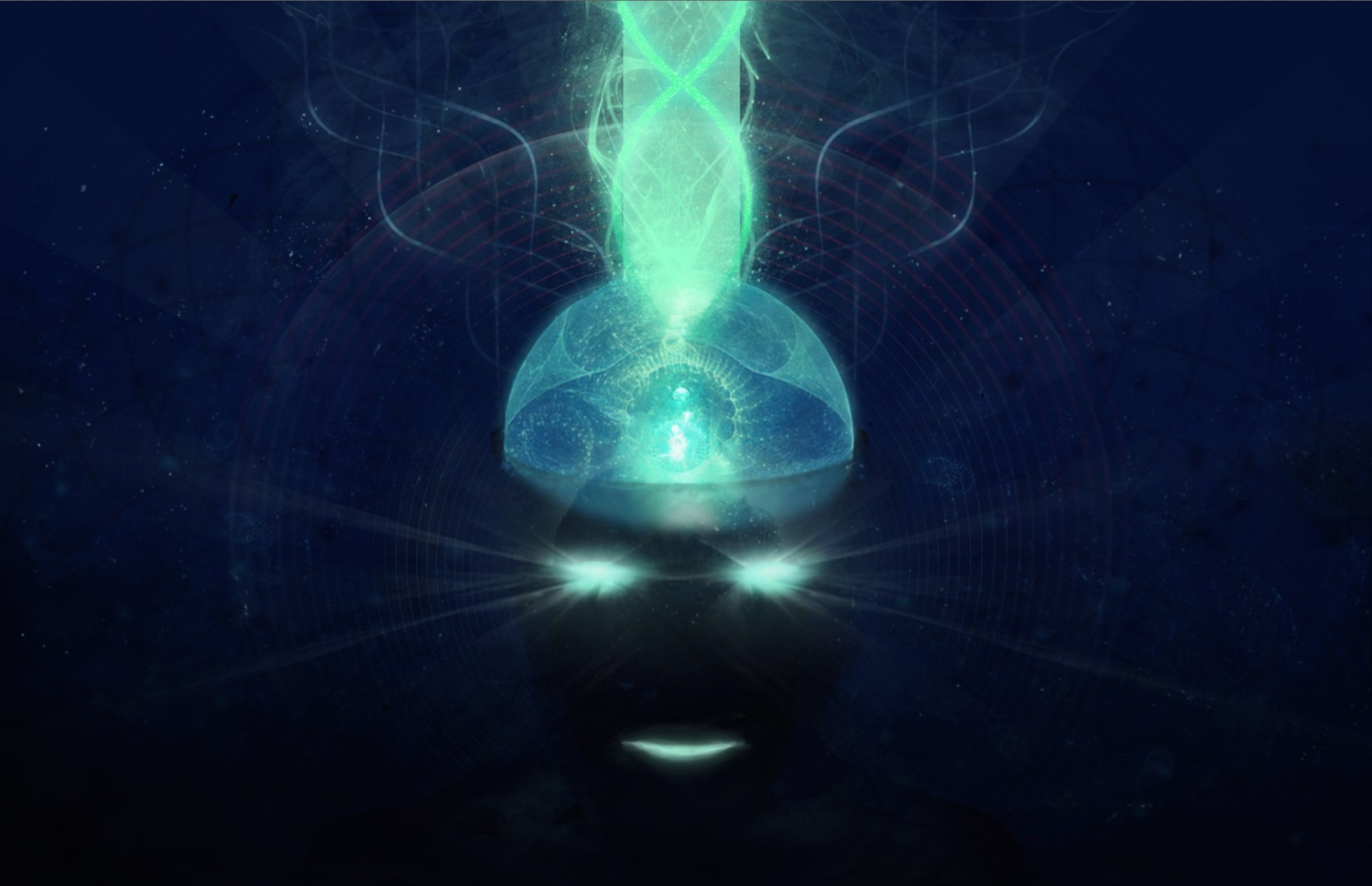
What excites you in particular about bringing I AKA I to VR? Is there something specific to the album, or is it more of a general desire to pair physical and visual immersion with music? Before I started making this record, I had a few experiences in VR at different exhibitions. I noticed how we are rapidly re-defining audio/visual content in a three-dimensional space. For years I struggled with explaining how my sound design (sound objects) have a physical and geometrical value, and always wished for a medium or a tool to translate the sound objects into visual objects; with VR, I’m thinking this can be made possible for the listener to not only hear the sound, but to see it and be there at the same time. The VR music experience can make everyone a synesthete.
How do you plan to organize “VR screenings” of the album? Will this be at venues alongside live performances by yourself? Initially I would exhibit my single VR track and ultimately a full 20-minute version of I AKA I alongside my live shows. There will be headsets and headphones presented, and people can sit and experience being inside the composer’s head. I’m working with my friend, Hirad Sab, to develop the the experience on a webpage so everyone with a headset can experience it at home.
With VR headsets coming out soon, any plans to release the VR album in any formal way? I think we’re at a point where the hardware is ahead of the content. This makes me even more excited about producing the VR experience and pushing the sonic and visual aspects of VR, but there are technical issues as well which makes the process a bit slow. I’m hoping to release a full version before end of this year.
What was your first experience with VR, or perhaps most formative? One of the first experiences that stayed in my head was a long walk-through documentary about a photographer in a surreal space. It looked as if you entered a museum that didn’t (and could never) exist in reality. I like VR when it’s “virtual,” and not replicating places or objects that already exist in reality.
The Final Word:
The immersive potential of VR suggests that much more is set to come in the near future. Artists as diverse as Björk, The Grateful Dead, Run the Jewels, and (if rumors are to be believed) Radiohead have already jumped on the VR train; expect many more to show their cards in the months and years ahead.
Likewise, the tools for making electronic music seem ripe for innovation in this space, particularly given the physicality that motion controls naturally allow for. In much the way that our portable touch screens have ushered in a new era of music creation and composition tools, VR presents a new vernacular for how we’ll be able to bring musical ideas to life.
Whether the technology actually reaches mass adoption is beginning to seem like a less salient question than when it does; Samsung is essentially giving away Gear VR headsets to new buyers of its phones, and, although they’re more expensive (ranging from US$399 to US$799), higher-fidelity headsets from Oculus, Valve and Sony are all said to be taking a loss or making minimal profits on hardware in order to accelerate adoption. Brands, advertisers, data miners and pornography producers are already among those trying to control the virtual spaces we’re about to inhabit—as much as humanly possible, let’s make sure to fill those spaces with consciousness-expanding audio-visual experiences as well.
Following last years widely celebrated debut album Elaenia, which landed the #2 spot on our top twenty-five releases of 2015, Sam Shepherd (a.k.a Floating Points) has recently shared the news that fans can expect to hear a new two-track EP from Shepherd and his band, titled Kuiper, on July 22.
Speaking about the new release, Shepherd says:
“Since starting a band to realize the music from my LP, it has sparked a deep interest in the band itself, and so Kuiper is the result of playing with Leo, Alex and Susumu. Each time we play it, its completely different. We set the scene with electronics, and some drum machines that form the foundation to allow the unfurling of the rest of the track. The version on this EP – believe it or not – was recorded at 8am!”
You can watch a live performance of the EP’s title track in the player above.
4/25 – Los Angeles, CA – Masonic Lodge 4/26 – Los Angeles, CA – Masonic Lodge 4/27 – Santa Ana, CA – Constellation Room 4/28 – Santa Cruz, CA – Catalyst 4/29 – San Francisco, CA – Mezzanine 5/1 – Portland, OR – Doug Fir 5/3 – Seattle, WA – Neumos 5/4 – Vancouver, BC – Celebrities 5/7 – Chicago, IL – Metro 5/10 – Toronto, ON – Mod Club 5/11 – Montreal, QC – Phi Centre 5/12 – New York, NY – Bowery Ballroom 5/13 – Brooklyn, NY – Music Hall of Williamsburg – SOLD OUT 5/15 – Cambridge, MA – The Sinclair 5/17 – Washington, DC – U Street Music Hall 5/19 – Durham, NC – Moogfest 2016 5/22 – Atlanta, GA – Shaky Beats Festival @ Centennial Olympic Park
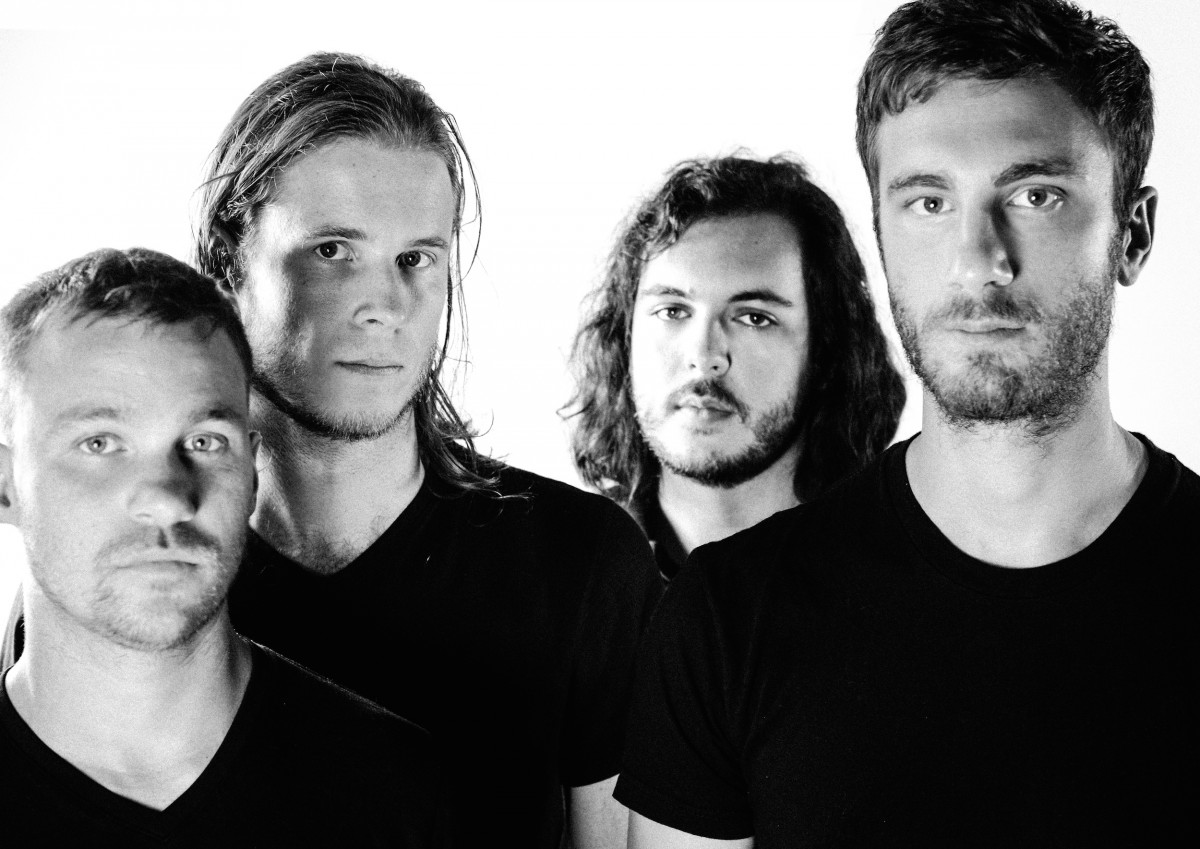
Brooklyn-based quartet Howard released its debut album, Religion, in January of last year and the latest offering, Please Recycle, is a concept EP built off the premise of reworking material solely from Religion.
In its original form, Religion is folk-based, pop-focused album, but its successor is decidedly more experimental and electronic. In stripping back the layers of the original and heavily reworking the stems, Howard Feibusch, the band’s primary songwriter, has created an altogether new beast—a new sound that reconfigures what the band is known for.
With the same concept in mind, director Sofia Rosenzweig worked with iPhone videos and images to create a similiar feel, as she explains:
“I wanted to do a music video for Please Recycle because I was drawn to Howard’s philosophy of reusing their older tracks to create new songs. Though these songs are made from the same elements as debut album Religion, the EP has a distinctly different feel, almost unrecognizable from its source.
So I went into my iPhone video archive, which dates back to 2013, looking for images that could be reused, recombined and re-contextualized. I’ve always filmed things around me everywhere I go, with the purpose of compiling a personal video journal that I was not really intending to share. With the philosophy of Please Recycle in mind, I dug up near forgotten footage and breathed new life into it by editing and overlaying videos taken in New York, Copenhagen, Argentina and South Africa, creating a new journey out of my past ones.”
You can watch the video for EP cut “Glass” in full via the player above.
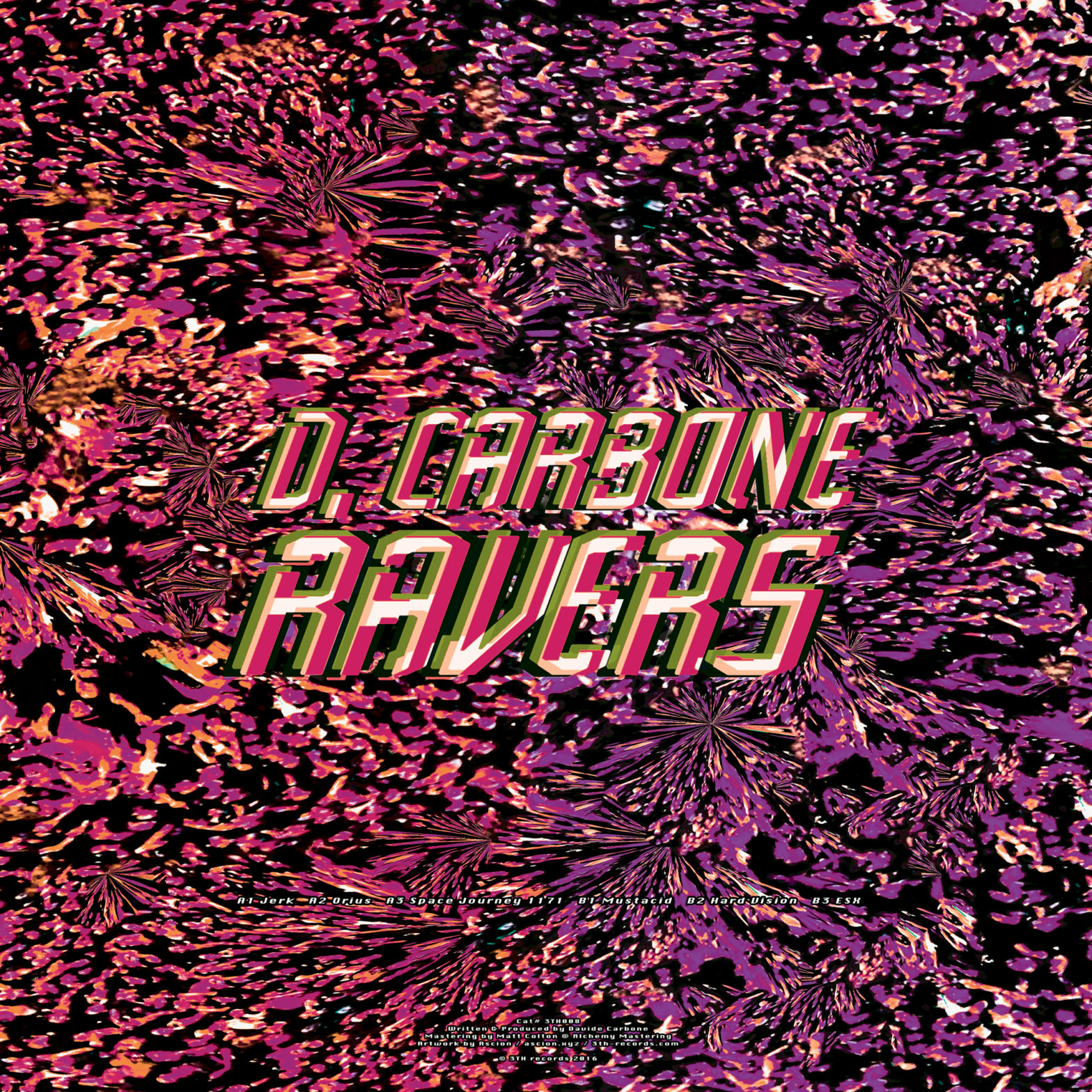
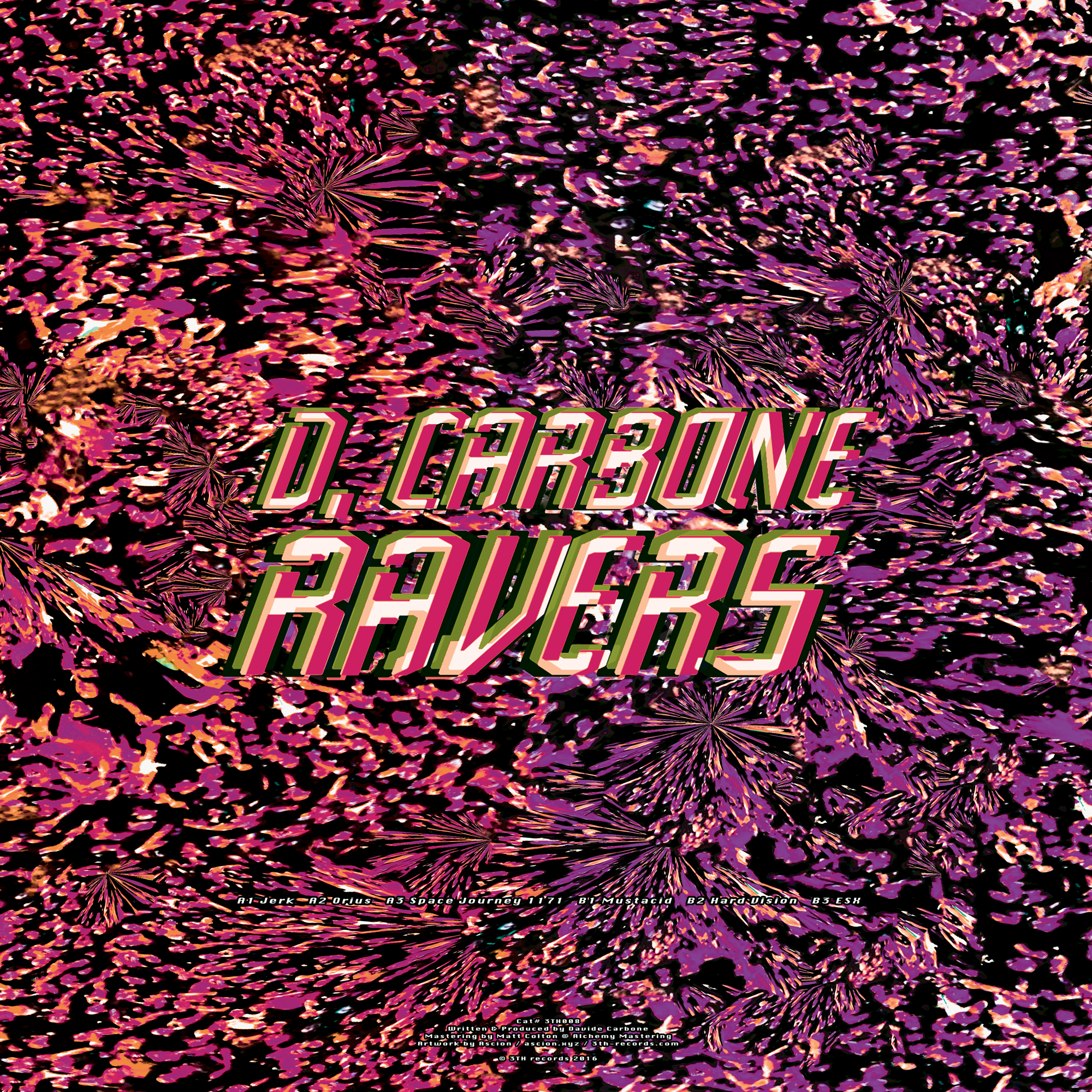
Italian techno artist D. Carbone is set to release a new mini-album under his own name.
Although the artist has spent 2015 honing the discographies of his other projects, Ravers comes after a silent year for the D. Carbone moniker which in turn gives it all the more impact.
The release is dedicated to everyone interested in the ecstatic sounds of ’90s rave culture as D.Carbone distances himself from the functional perception that techno indicates a fairly narrow tempo range. Instead, he approaches it more freely by returning to earlier formulations. The speed is higher than on the artist’s previous releases, varying from 137 to 160 BPM. It is about pushing the envelope and rejecting limitations, something that is reflected in the tracks that have been jammed out free of structural rigidness. Meanwhile, sound-wise, Ravers is classic D. Carbone: Noisy and acidic industrial techno where every single sound in the mix is subject to heavy distortion. Ahead of the release, we spoke with the artist.
Ravers is your first mini-album as D. Carbone. Why have you chosen to express yourself in this format rather than an EP? 2016 is my 10th year of producing music and I wanted a landmark in my career. Ravers is a conceptual techno release. Making a mini-LP gives the possibility to offer a more expanded project that can better explain my concept and to offer different approaches to hard driving techno.
On Ravers you’re freeing yourself from techno formulas and instead have a much freer approach, turning to ’90s rave sounds for inspiration and simultaneously working within a faster tempo range than on your previous releases. What are your motivations for doing this? Does this reflect new interests, or has the change of style been underway for a while? The main motivation behind it is to reject the market restrictions that afflict techno music nowadays. I wanted to go back to the years when music was not based on BPM range or quickly labeled with a genre. In the ’90s, techno and the whole field of electronic music was passing through a high range of BPMs, going from 80 to 200 BPM. Modern techno is stuck on heart-beat BPM, usually between 125 and 135, and the market is adding a lot of restrictions by releasing stuff that is safely playable, straight and in this slow BPM range so it can easily reach all people and be sold.
With this release I want to motivate young producers and the whole techno community to have a free approach to making music, and not to look only at trends or the market restrictions. All my friends and myself, we already offer something like this, and Ravers is totally dedicated to that side of rave culture, and people that love fast and hard driving techno. When it is club-oriented music, you have to let your body freely go crazy. The body must shake while the mind is tripping. That’s my view. I have always done faster music, but it has never been possible to release it on other labels. So yes, I have a new interest: I want techno to go back to its freer form like it was in the beginning. Feel the Rave!
What music has influenced the sound of the release—both when speaking of ’90s rave sounds and what contemporary music? There is a particular year that is relevant for me and it is the 1992. It is the year of Waveform Transmission Vol.1 by Jeff Mills; where X-102 started and Discovers the Rings of Saturn was released; where Bunker Records was born in Holland; CJ Bolland was releasing The 4th Sign and most of the best acid tracks came out in that time. There is a real meaning behind all these things coming out in that time. Techno was without restrictions; it was growing in that time and made by passionate people and without looking at what the market was asking for. I’m sorry, but I can not find any inspiration for my music in the modern era. I’m doing music and I have always done a lot of different kinds without looking to a specific genre, speaking about all the music I have done. I prefer to look at the vibe of a track, a live set or what a DJ set can give to people. It must be an emotional exchange.
Last month, Bristol producer JoeFarr released his brilliantly sprawling debut LP Sense Of Purpose on Bloc.
The LP will follow on from releases on Leisure System, Turbo, and Power Vacuum, and is a homage to his cousin, who died in an accident on the London underground tracks. “He was a massive inspiration musically,” Joe says. “He opened my ears to dance music and taught me how to mix. So the tone of the album was set to that precursor really, of losing him, then how I’ve dealt with that loss.”
Sense Of Purpose dives deeper into the musical identity of Joe, veering from his more 4/4 work and inviting the listener into his artistic core. Heady synth outings sit next to glitchy ambient excursions and the slamming techno bombs on which Joe built his fast rising reputation.
Following the release of the LP, album cut “AM05” now gets a fittingly twisted video, produced by Theo Watkins & Jamie Harding from oldropefilms.com. You can watch the video in full via the player above, with the LP available for purchase here.