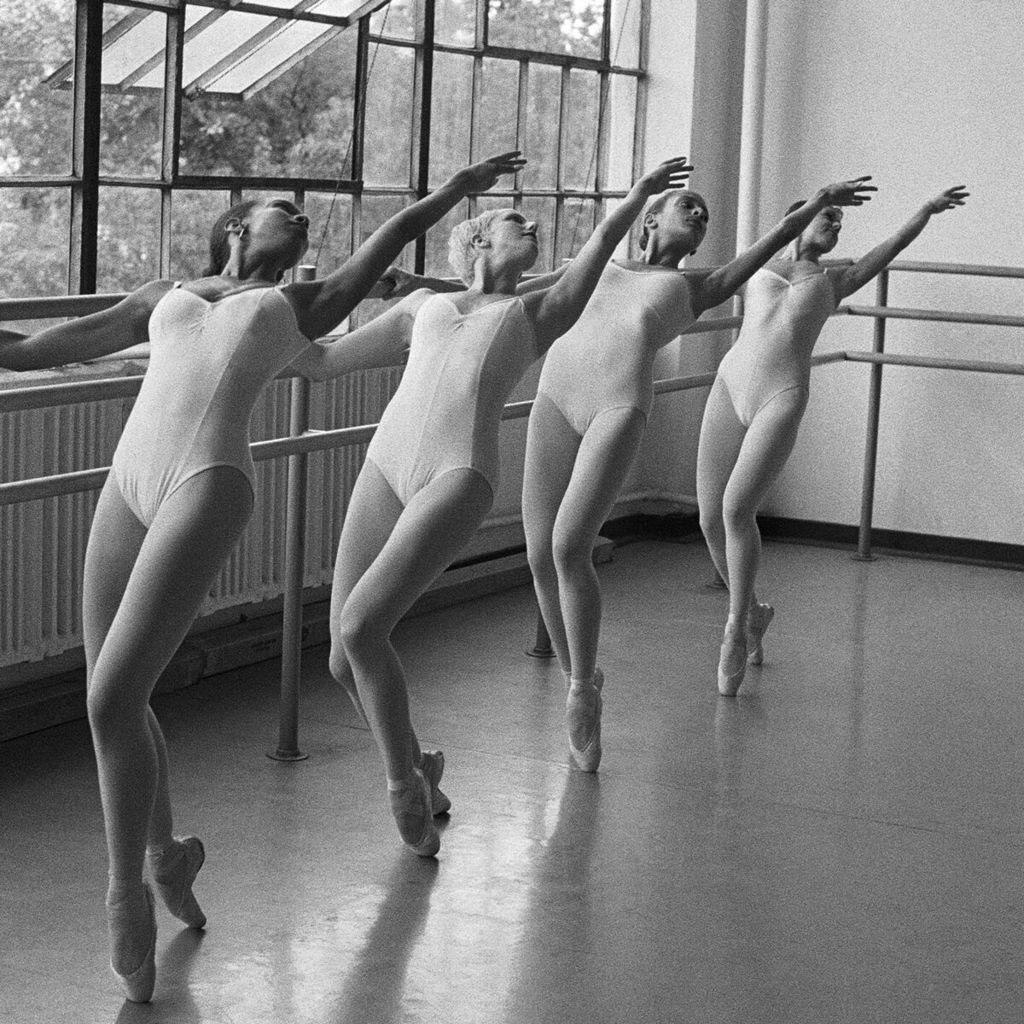
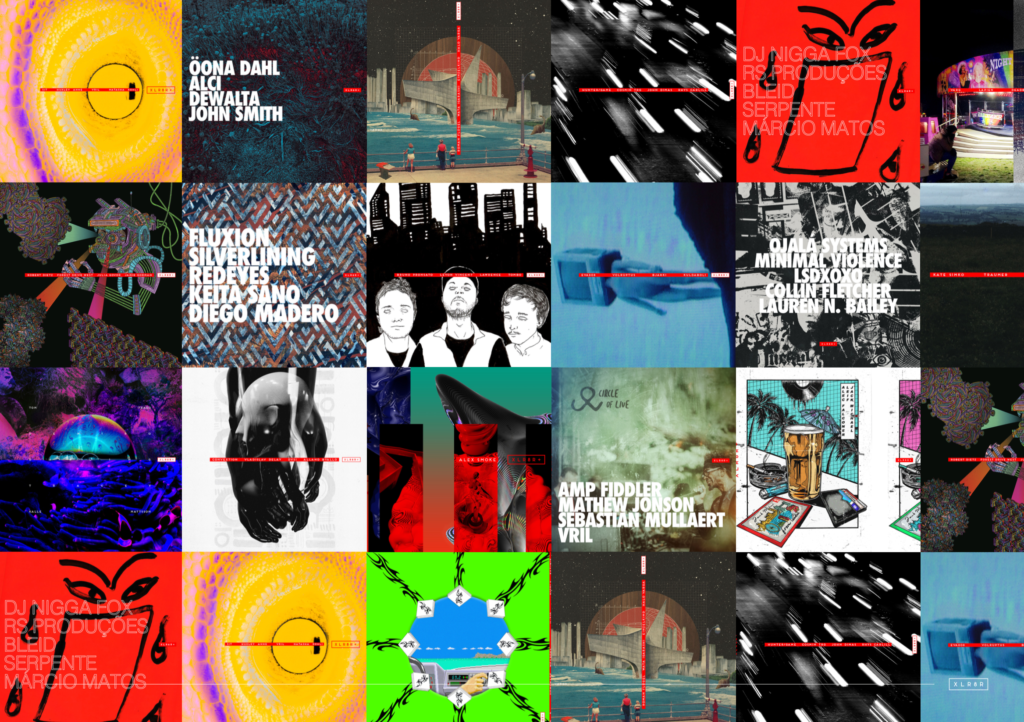
Terraforma has announced the first wave of artists that will descend on Villa Arconati (located in a woodland near Milan) this July.
The experimental and sustainable festival is approaching its third edition, and will celebrate with a host of acts that promise to deliver “a musical journey that explores soundscapes from ambient to techno and jazz fused together by the natural environment.”
Terraforma will take place on July 1-3. Tickets are available to purchase here. The festival has also shared a new concept video alongside the lineup announcement. Check it out below.
XLR8R Couldn't find the embed function for type: "vimeo" and source: "<iframe src="https://player.vimeo.com/video/163563639" width="640" height="360" frameborder="0" allowfullscreen="allowfullscreen"></iframe>".
Seven Davis Jr. is returning to Ninja Tune with his first new material of the year—the Dancing On The Sun EP, which will hit stores on May 27.
Vocalist and producer Samuel Davis (a.k.a. Seven Davis Jr.) first made his mark on electronic music back in 2013, and has since released a number of EPs with Ninja Tune, as well as last year’s Universes album. His next release promises to pick up the thread where he left off with the LP, with a variety of different funked-up cuts, from jacking dancefloor tracks, to the downtempo “Spliffs.” For the EP, Davis enlisted the help of Silver Tiger and Atari Josh on drums and bass respectively. Dancing On The Sun will hit stores on May 27, as a vinyl 12″ and digitally. You can pre-order it at the Ninja Tune store. Stream “Church” below.
Since hitting the scene in 2005 with the gentle, Detroit-tinged house of the Replace EP, Andy Stott‘s music has cycled through elegantly deep techno, idiosyncratic takes on dubstep and juke (the later under the Andrea moniker) and all manner of experimentalism. But with the release of 2012’s Luxury Problems and through to 2014’s Faith in Strangers, Stott seems to have settled—if “settled” is a term that can be used for such an adventurous artist—on a wide-ranging style that takes in both the serrated rhythms of grime and a near-gothic form of melodic grace. His latest, Too Many Voices (released on Manchester’s peerless Modern Love, as is Stott’s entire discography) zeroes in on those dichotomous sounds yet again, this time synthesizing them to near-perfection.
Like his two previous albums, Too Many Voices employs the spectral vocals of Stott’s one-time piano instructor, Alison Skidmore. The tracks that put the focus on her soothing intonations have a bittersweet feel, with a pop-tinged lightness that’s grounded by Stott’s subdued abstractions. Comparisons have been made between his music’s melodicism and that of such early-’80s 4AD acts as Cocteau Twins and Dead Can Dance‚ and while that’s a facile correlation, there is something to it—they share a gauzy darkness that’s easy to get lost in.
But here, more so than Stott’s earlier releases, there’s an airier feel, one that’s evident despite the angular, sometimes heavy percussive elements that anchor many of the songs. “New Romantic” layers Skidmore’s whispered voice and a chorused electric bass over a tough tech-funk rhythm, as spacious chords echo above—the effect is akin to what an alternate-1983-universe Art of Noise collaboration with Elizabeth Fraser might have sounded like. (We can dream, can’t we?) “Forgotten,” meanwhile, drapes her effected voice over a lurching kick drum and booming toms, as what sounds like a metallic locust scrapes away to provide propulsion—it’s eerie, yet hypnotically comforting.
Too Many Voices provides as many moments of disquiet, albeit a particularly exquisite form of disquiet, as it does of comfort. One of Stott’s trademarks is the crafting of rhythms are often slightly off, sometimes lending an air of angsty foreboding to his music. “First Night,” for instance, employs a skeletal kick-and-clap pattern that struggles to keep pace with its looped vocal and teetering synth-bass; it feels as though it could fall apart at any minute, and the effect is oddly mesmerizing. The fantastic “Waiting for You” has the feel of cleaved cathedral-chord rave (hardcore rave was an early love of Stott’s), while “Over,” all baneful sagging chords and geologic percussive accents, could pass for a gravedigger-movie theme song.
Those tracks are certainly impressive constructions, but Too Many Voices is at it’s best when Stott aims for the celestial. Songs like “Butterflies,” featuring Skidmore’s wistful vocals laid atop woozy, warbling synths and rat-a-tat rhythms, or album’s title cut—boasting an angelic choir of Skidmores, all laying down a melody that reaches for the heavens—are among the dreamiest tunes that Stott has produced. And as it happens, they’re among of the best, too.
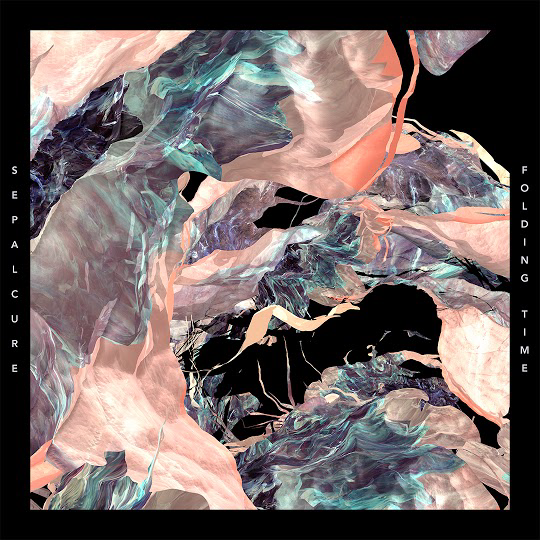
Hotflush has announced the arrival of a second full-length from Sepalcure, the American duo made up of Travis “Machinedrum” Stewart and Praveen “Braille” Sharma.
Arriving four and a half years after their acclaimed debut 11-track album, Folding Time is a singular and tender statement that lands in May 2016.
The album, written over many bottles of whiskey, is made up of brand new music, but also tracks that have been worked on, forgotten, then revived over many years.
Its title comes from the fact that, “it felt like we were connecting the present with the past. Going through each session was like digging through old memories.”
Stylistically, of course, this pair have very different musical DNAs, but that means studio work cooks up many surprises along the way and results in an album that is awash with everything from field recordings to guitars and electric piano. It is a mix of playing and programming, has many multi-layered tracks full of intimate and personal easter eggs and is, essentially, “two homies hanging out and having fun; a meeting of our minds.”
Tracklisting:
01. Fight For Us 02. Not Gonna Make It 03. Devil Inside 04. No Honey 05. Been So True 06. Hearts In Danger 07. Loosen Up 08. Dub Of 09. Brother Forest 10. Hurts So Bad 11. Ask Me
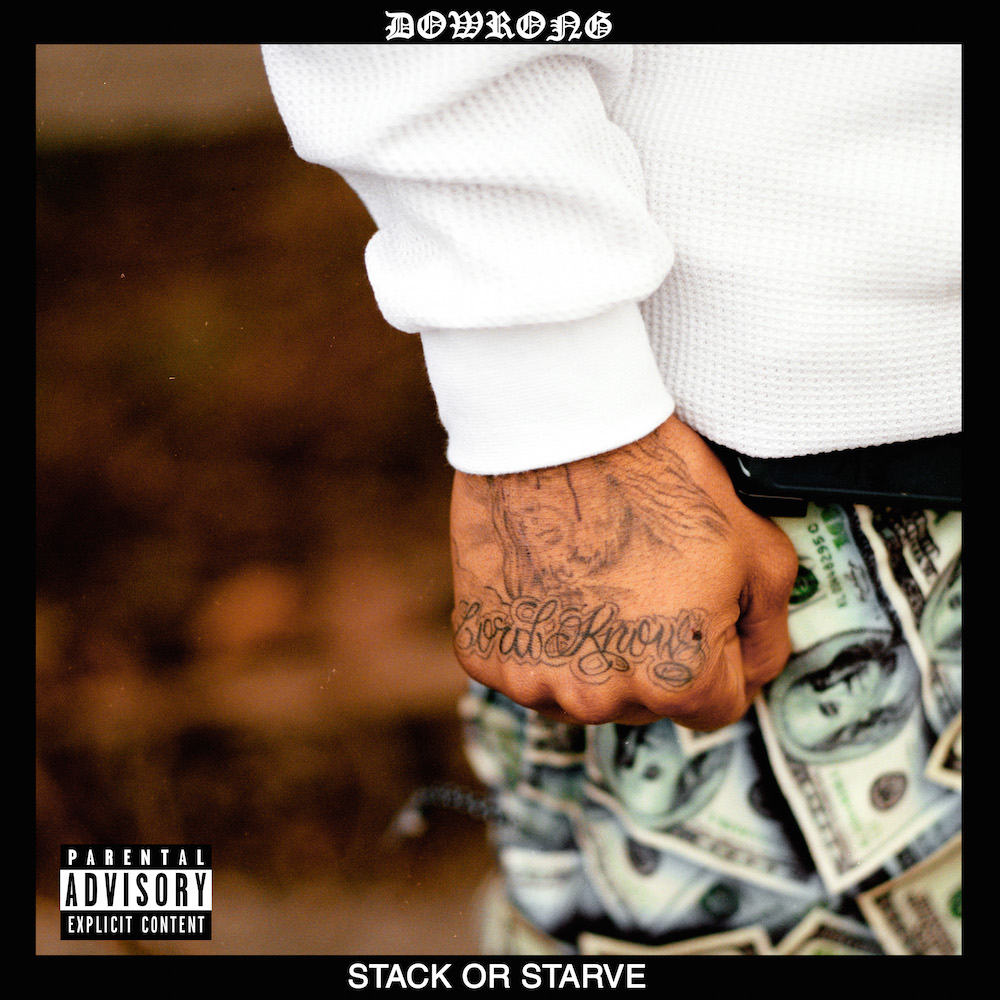
Both fostering their musical skills from a young age in Austin, Texas, rapper Dowrong and producer Eric Dingus have together crafted a raw and hardened collaborative sound that expresses “desperation, anger, glory, hope, faith and the realization that history can too often repeat itself – the stakes are real.” After finishing up their debut mixtape titled The Dowrong EP, both artists realized how well they complimented one-another and have gone on to create a full-length album titled Stack or Starve via Dream Sequence Records. Ahead of their album release, both Dowrong and Eric Dingus have graciously offered up the album’s title track as today’s XLR8R download.
You can download “S.O.S. (Stack Or Starve)” below via WeTransfer.
XLR8R got the chance to catch up with the duo to get some further insight regarding their collaborative spirit, overall artistic approach, and what the future holds for this adept hip-hop project.
The themes of this track seem pretty serious. The phrase “Stack or Starve” alone evokes a pretty severe all or nothing mantra. What inspired the intensity behind this song? DOWRONG: Basically I was trying to encapsulate that emotion, when you feeling like you don’t have no choice but to go out there and do whatever it is you have to do to make a means so that you can provide. “Watchin’ me stack while you starve.” Either you gon’ starve or you gonna watch somebody else get this money. That emotion right there: “I’m tired of doing this shit, I’m gonna make a change for myself.” That’s where that came from.
You and Dingus have been working together as a rapper/producer team for over a year now. How does your chemistry effect the music you make? DOWRONG: We just cooler than a motherfucker. We have that mutual respect, it just happened like that. We didn’t force it. We both have the same ethic, the way that he makes beats is the way that I write songs and create. Like when we feel it we just gotta make it, we do it right then. ERIC DINGUS: I feel that working as a duo gives more consistency to the full projects, as well as more of a personal connection in the music’s vibe. Also, working alongside Dowrong over time, we help each other’s creative side and try and push each other to grow with each project. When we recorded the song (SOS), Dowrong was staying at my apartment and we had been recording all day, every day. The full project really was made during the span of 2-3 weeks.
The first project you and Dingus did together, 2015’s The Dowrong Ep, introduced you guys as a group. How does the music you’re making now compare to the first album? ERIC DINGUS: The Dowrong EP feels more like a mixtape, or a collection of collaborations. With S.O.S. It’s more conceptualized, and has more of a consistent sound and feel. DOWRONG: I’m actually making songs, at first I was just rapping with hooks. I’m making cohesive songs with a more flawless presentation of my concepts than on the first project we put out. Where do you see Dowrong and Eric Dingus’ music fitting in to Texas Hip-Hop? I see Dowrong and I’s music providing an abstract soundtrack from Austin. We’re just making the music and vibes we enjoy and in the process trying to push Texas hip-hop forward.
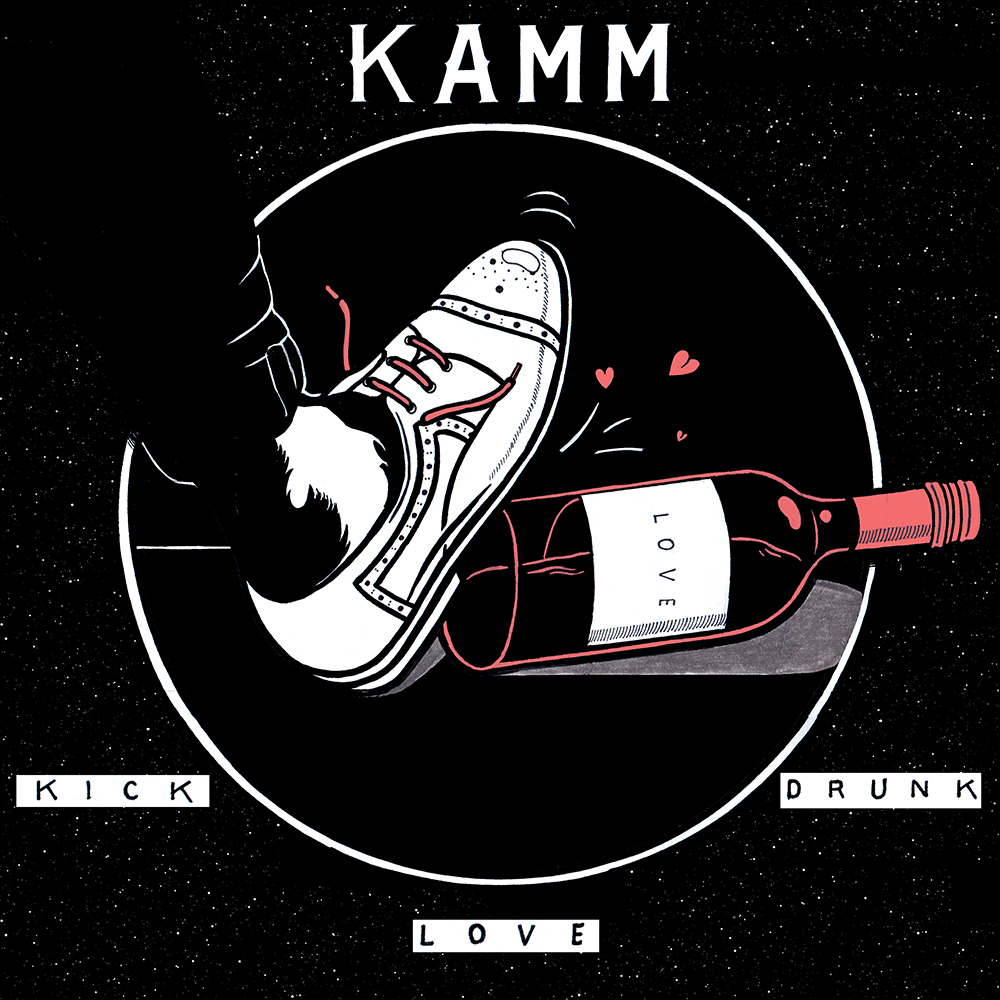
Marcel Vogel’s Intimate Friends imprint will release the debut LP from KAMM, the collaborative project from Dave Aju, Alland Byallo, Kenneth Scott, and Marc Smith—whose shared label pedigree is quite something, taking in Poker Flat, Dessous, Circus Company, Moodmusic, Liebe*Detail, Third Ear, Hypercolour, and Rawax, among many others.
Kick Drunk Love will land on Intimate Friends following on from Dikkens’ Retrospect Of A Mind with six low-slung, loose grooves. With live instrumentaion—the quartet recorded live guitar and trumpet parts, with Damian Schwartz playing bass on the track titled “Sidewalk”—vocals, and a downtempo, swinging nature, the mini LP is a decidedly more home listening affair than the solo output of the members, although adventurous DJs will surely find dancefloor gems amongst its contents. As stated by its members, the LP is influenced by “…a love of early ‘90s MoWax era laid-back beats.”
Ahead of the release on May 2, you can stream the full LP via the player below.
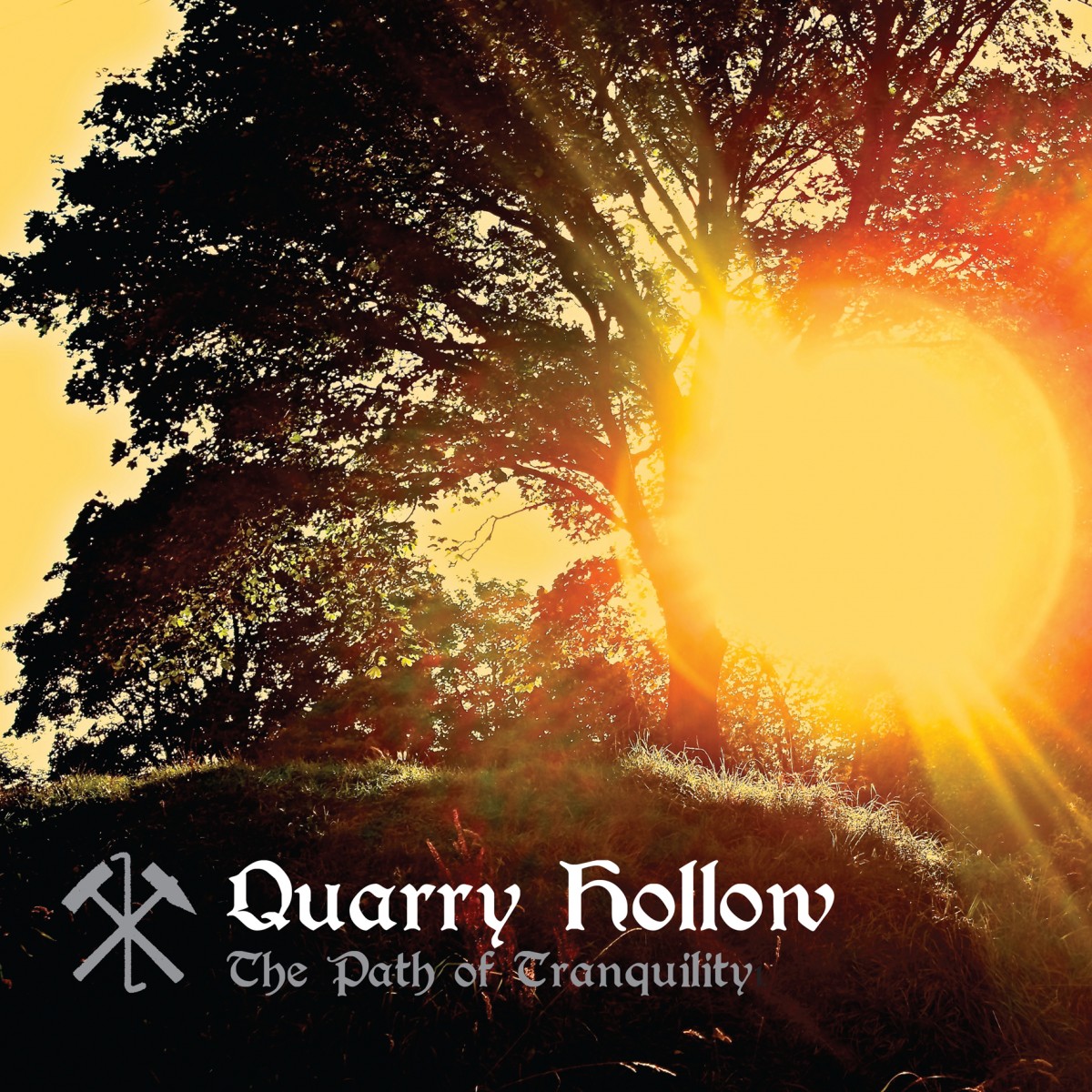
Quarry Hollow may not mean much to you as a name on its own, but peel back the covers and you’ll find two highly-distinguished artists who have can count three decades worth of experience at the top of the game between them.
Spurred from an unlikely meeting while waiting for their respective five-year-old daughters to finish school, Quarry Hollow is the newborn baby of disco-edit king Mark E and Glasgow-raised-and-based Stuart Hobbs. While Mark E might not need much of an introduction to XLR8R’s readers—his discography reads like a wish list of top-notch labels like Spectral Sound, Running Back, ESP Institute, Golf Channel, and his own Merc Records—Stuart Hobbs might be a little less known, although nonetheless prominent. Currently producing out of his SHONK studio in Oxford, Hobbs previously co-owned Crash Records in Glasgow, and has appeared in more than a handful of bands alongside former members of Teenage Fanclub, Superstar, and Ride—an exemplary career dedicated to an off-kilter craft. Together, as Quarry Hollow, they indulge in “an eclectic groove-driven forage into the wonky playing of first takes,” which, to us, roughly translates as eccentric magic.
The Path Of Tranquility, the duo’s first EP and also the product of their first encounter together, is an askew exploration that invites and engulfs the listener into a sound world that’s altogether warm and sun-drenched. It’s a stunningly loose three-track release that feels like it’s the product of a psychedelic band of synth-wielding aliens. Sprinkles of krautrock, disco, and dub are evident throughout each track, all culminating in an almost-unclassifiable genre fusion.
Kicking things off is the indulgently lush title cut, a hypnotic outing that floats along its near-seven-minute runtime with shimmering synths, crushed guitars, and fuzzy bass all endlessly flowing and wrapping around each other. It’s a disco-hybrid cut with intricacies that will most likely dumbfound even the most discerning of dancers.
Next up, “The Long Slide” takes the listener into moodier dub territory—it’s another glistening cut bookended by thick sub bass and sliding funk-filled guitar riffs. “The Long Slide” really emphasizes the sound design expertise the pair hold up their sleeves, with each element slowly-but-surely morphing and mutating to a gurgling conclusion.
“Mason’s Arm,” the EP’s deepest cut, closes proceedings with a barrage of dusty guitar lines, fraying synths, trudging bass, and tantalizing organ riffs. It’s a fittingly hazy end to an unabashedly psychedelic three-track debut.
The Path Of Tranquility will be released on April 22 via Leng Records.
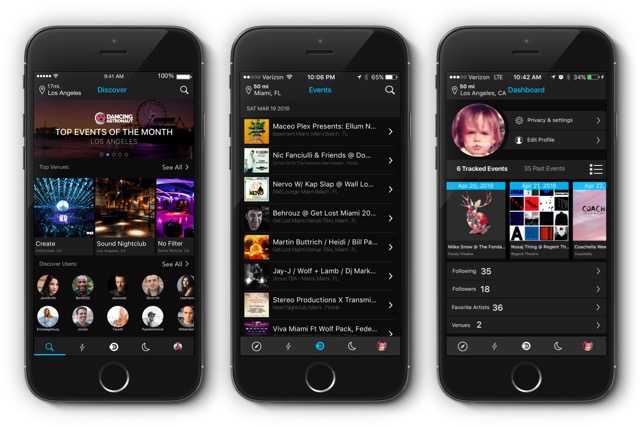
Available across the United States and Europe, Dance Tonight is a new app for smart phones that acts as a all-in-one tool for event discovery, ticket purchasing, and connecting with other party goers. Covering events of all shapes, sizes, and sounds, Dance Tonight helps unite, support, and facilitate the connections of like-minded people who have a shared passion for dance music.
Easy to navigate through various events in different cities, Dance Tonight offers a host of features that will prove a favorable tool for your nights out. Features include a discover tab that allows you to check out curated event listings—including XLR8R‘s monthly event picks in LA, SF, NY, Berlin, London, and Barcelona—venues, and other users. The app also offers an “After Party Section” chat that gives users the ability to communicate with one-another regarding the best places to keep the party alive after the bars and clubs shut down.
You can download the Dance Tonight app by going here.
Ostgut Ton sub-label Unterton has announced that Nitam will be returning with his second EP for the imprint, due out in May.
25 year-old producer Nitam was born and raised in Berlin, and still resides there today. He released his debut EP with Unterton early last year (an imprint that has put music out by the likes of Etapp Kyle and Kobosil), and is back with the label for his sophomore record.
Unterton describe the EP as versatile and not restricted by styles, as well as being a reflection of his “interest in dance music from the late ‘80s and ‘90s.”
Cancellate is due out May 13 as a 12″ vinyl and in digital format, and can be pre-ordered at the Ostgut store. Check out snippets below.
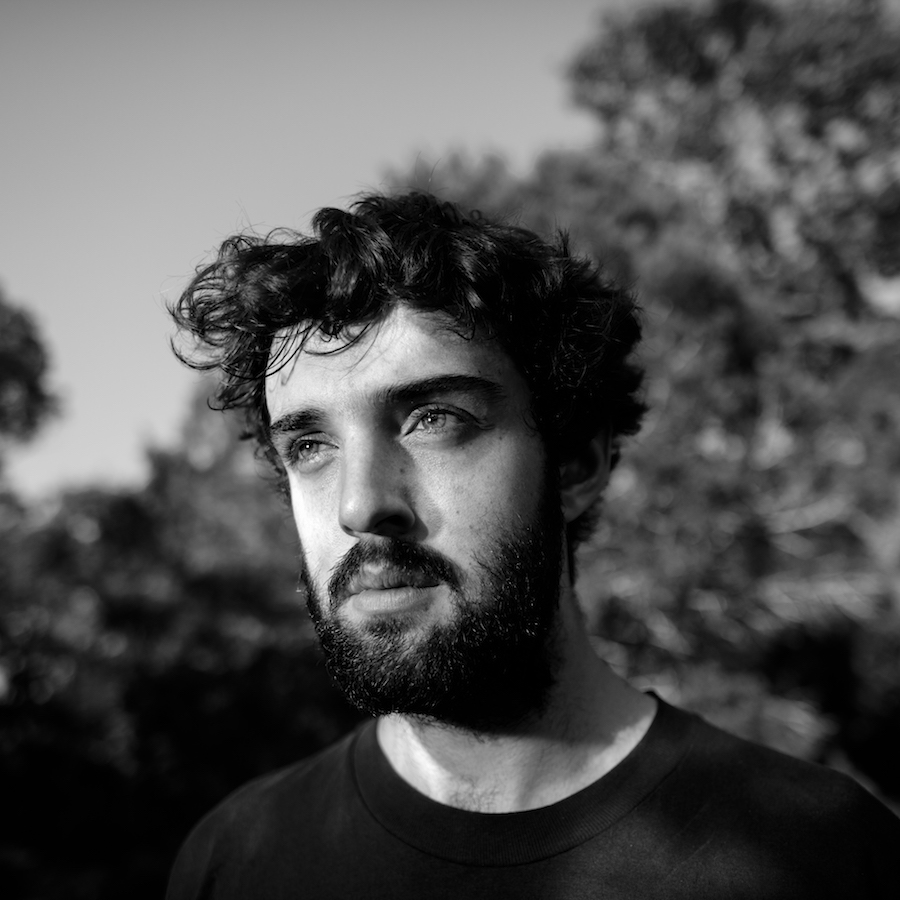
Back in the Spring of 2013, a new Audio Werner record surfaced as the debutant release on the then unknown Galdoors record label. A totally faceless affair, it was packaged with minimal artwork, even less information surrounding it, and just a trio of solid house tunes. It was a curious thing, a name like Werner’s (normally associated with the likes of Minibar and Perlon) popping up as the first EP on the anonymous operation—a bit of a head turner. The imprint has gradually moved from strength to strength, dripping out releases by Elgato and Leif, as well as the team of brothers who coordinate proceedings, Tames and Junes. As time has gone by, the aesthetics and philosophy have remained the same, and we still know little about the characters pulling strings behind the scenes.
One half of the team is Neil McDermott, or Junes. Originally from Newcastle (a small city in the North East of England, famed for its ale and football fans over any musical heritage), he has been residing in Berlin for the past few years. A friendly spirit, he’s a bit of a joker and we rattle through all sorts of conversation; yet when we arrive at the topic of his own music, he comes over all sheepish. “I feel quite shy about it all, to an extent. I don’t really enjoy talking about the tunes to people I don’t know very well.”
Even if he isn’t keen on selling himself, his produce certainly will. Junes’ third EP, Trails, is due out this May, and is some of his best (and darkest) work to date. “It’s by far the thing that I’m most happy with. I just see it as part of an ongoing progression.” Those with their ear to the ground might already have clocked one of the cuts, “Precipice,” in a recent Ben UFO Rinse show, or even the flipside getting dropped at his Berghain gig the week before. Honing in on a sound that takes some guidance from techno, his use of melodic elements injects the tracks with greater personality, and a versatility that makes them suited to rooms big and small, and both club and home sound systems.
It’s a long way from Junes’ first EP back in 2013, Colours—the second release on the label, its recordings excitedly jumped around between ambient and tribal patterns. In retrospect, it is the work of an artist getting to grips with his style. Some trademarks are present still, though the channels have been narrowed substantially today. “I started to think that I wanted to do something with elements of techno, but without such a hard aesthetic—to take bits of that vibe, and make it less full on.” His move to Berlin and exposure to the local scene played some role, though it can’t be overstated. More than anything, changes in his personal life, and a feeling of real maturity, radiate through the music. “I’ve had a bit of a coming of age thing. Moving country, getting a proper job, all that sort of stuff.”
“I decided at that point that I didn’t want to make super positive music. I prefer the idea of tunes that sound like something is not quite right, but in the future maybe we can work it all out. That’s the thing that has underpinned everything.”
Never one to ask for much, he explains that his only goal was to make some music that someone he liked would want to play. “Root Pattern was the moment that I felt like I’d achieved everything that I had set out to do. That was big for me.” His second record hit stores in the tail end of 2014, and consolidated the ideas he had toyed with previously. “I honed in on the more stripped-back stuff. I decided at that point that I didn’t want to make super positive music. I prefer the idea of tunes that sound like something is not quite right, but in the future maybe we can work it all out. That’s the thing that has underpinned everything.”
It’s a mood that ripples through the rest of the Galdoors catalog. “We never tried to come up with a sound that Galdoors would have, but we knew it would be a bit more subdued. Stripped-back, tracky cuts for the dancefloor. Gradually it fell into place. Other people would say, “oh, this sounds like Galdoors,” but I don’t even know what that is. I’m starting to sense it a bit more now, but really it’s just what we are into.” The most recent addition is Leif’s Macro Beat, an EP built out of hazy, ambient house numbers. Prior to that, Elgato drafted a reduced two-tracker, worlds apart from the bass-heavy crossover tunes he had been releasing on Hessle Audio (closer to the Audio Werner approach that had kicked things off). “We managed to join the dots between their different scenes, and I’m happy with that.”
The tunes are only half of Galdoors’ identity though—the brothers have already crafted a distinctive aesthetic, with only a handful of releases to their name. “It was pretty mysterious from the off, and I think it’s interesting when things are open for interpretation. The idea is that there are no promos, no long bios, and no banging on about how amazing it is. Hopefully the depth of how much we are into it seeps through, in the music and the artwork.” In today’s music world, where everything is available on tap, and the stream of electronic releases runs stronger, often polluted with lesser quality productions and overblown promotions, it’s a sentiment that shouldn’t be undervalued.
With strict genre constraints not being too much of a concern, the most significant influence on the direction taken by the label has been the original idea behind it. In its original incarnation, the Galdoors brand belonged to a garage door fitting company owned by McDermott’s grandparents. Galdoors as we know it today was set up with money inherited from the brothers’ late grandmother, and owes a lot to that former endeavour. “The whole idea wasn’t necessarily to be a dedication, but it gave it deeper roots, and the label already had an identity that way. It made a lot of the decisions very easy.” He explains that the pylon featured in their logo was a spot near their grandparents’ residence, and that the rest of the artwork is zoom-ins of snaps from around their house. Most importantly, that community, family-driven spirit, has resonated through their selection of artists. “The conversation quickly turned to the idea that we would keep it within that family-run idea, and release music by people we were already friendly with.” Elgato was a schoolmate of Tames, while Leif and Audio Werner had become close friends with the brothers after being booked at their party.
The more we talk, the more it becomes apparent that the family thread runs strong through all stages of McDermott’s development. He recounts tales of his Dad’s Beatles’ obsession, and the Christmas he received a drum kit via Santa (a wish inspired by photos of his brother banging a similar set). It would later be his brother who would shape his tastes in electronic music, too. “My Brother and his friend Jamie ran a monthly night called Twaddle in Leeds. When I was about 16, they had got decks. I hadn’t been into electronic music before then, but I clocked onto it. It was old, jacking house that they played back then—DJ Sneak, Derrick Carter, Justin Long, and stuff like that. It was just happy, positive music.”
Around that time, the transition from Neil to Junes also took place. Dubbed it by his elder mates, he earned the nickname as the junior of the bunch, and it stuck. “I was trying to think of DJ names as I didn’t feel right just using my name. I’m a big fan of the weird culture in dance music, where people take different names, and create an ulterior life. Junes is something a bit separate, and it gives me another space to be Neil McDermott. There’s still a lot of overlap though.”
Soon, Junes had relocated to Leeds for University, and was joining the Twaddle crew behind the decks at their regular parties (which he explains was always a “raucous affair”). Immersed in a city which at that time had a wealth of interesting club music on offer, things moved quickly. He cites the notorious Back to Basics nights as having a profound impact, especially the then residents Buckley and Paul Woolford, who were riding an acid tip around that time. “I became completely obsessed with everything, way more than I am now. I was looking for tunes all the time, going out every weekend, and it completely consumed me. It was the classic thing of going out and getting bitten by the bug.”
“Galdoors is the friendly option. I’m not adverse to the idea of doing stuff on other labels, but then at the moment it just seems better to do it via Galdoors, and have full control over how it is presented, when it comes out, and all that stuff. No surprises.”
We listen to a mix he recorded back in 2010, warming up for DJ Sneak at Twaddle. The content has shifted substantially to what you can hear him play today, but his flow remains the same. It’s all a part of his ever-maturing taste (something that is showing itself these days in his production skills), but what comes next? Thus far, with the comfort of creative sovereignty at home with Galdoors, he hasn’t been looking to contribute to other labels. “Galdoors is the friendly option. I’m not adverse to the idea of doing stuff on other labels, but then at the moment it just seems better to do it via Galdoors, and have full control over how it is presented, when it comes out, and all that stuff. No surprises.”
And so it seems the natural growth trajectory that Junes and Galdoors have mounted will continue to thrive alongside one another. After its brief hiatus last year, the label is fully back in action, with a feeling of real conviction. For two lads who didn’t have a clue about that kind of operation, the headfirst dive into the unknown has paid off. Curating things according to their instincts has pushed them in the right direction, and allowed them to share the experience with their favorite artists as well as good friends. As for Junes himself, it seems like things might just be really getting going.
Ahead of the release of his next EP, Trails, Junes has put together an hour long mix for us, available to stream and download below. It’s an insight into the kind of material you can expect to hear him playing, covering techno cuts, minimal house and UK garage, recorded at his home in Berlin.