Last year, British techno producer Tommy Four Seven launched 47, an imprint to accompany the party series of the same name held at Berlin’s Arena Club. On March 7, 47 will hit its fourth release featuring Tommy Four Seven himself, Shards, UVB, and SNTS.
Like the previous releases, which have featured artists such as Bas Mooy and AnD, 47004 is aimed squarely at the dancefloor with four propulsive and devastating techno cuts. Spearheaded by Tommy Four Seven’s melancholic opener “Scene 4,” the EP moves through sinister offerings from Shards and UVB before SNTS’ fathoms deep cut “Disappearance of Fate” closes the EP in style. It’s another top-quality, club-focused EP from 47 that will surely find its way into the record bags of techno’s finest.
Ahead of the March 7 release, you can stream Shards’ “FRSVNFRSVNFRSVN” in full via the player above.
After four years of releasing a wide spectrum of deep-seated electronic music, Parisian label Rue de Plaisance is set to drop its twentieth release in the form of a diverse and intrinsic compilation.
Titled Le Son de la Rue, the nine-track compilation features eleven different artists including Oskar Offerman, 1977, Arcarsenal, and the imprints head honcho, Varoslav. Striving to create new paths through previously uncharted territory in electronic music, Le Son de la Rue is an “ambient gateway where tribal sounds and funk converge in harmony.”
You can check out an exclusive stream of this solid compilation in the player below and be sure to check out more from Rue de Plaisance by going to the label’s SoundCloud page here.
The Field has unveiled details of his fifth full-length effort, The Follower, which is due out on frequent label home Kompakt in early spring. The Swedish producer born Axel Willner is known for his gauzy loops and layers, although his most recent effort, Cupid’s Head, found him experimenting with more muscular techno fare.
Having already shared live recordings of both the forthcoming LP’s title track and the album’s second track titled “Pink Sun,” Willner has graced us with yet another glimpse of his impending full-length effort. Recorded in Berlin, you can stream a live version of The Follower‘s third track “Monte Verità” in the player below.
Listen to The Field’s title track “The Follower” (Live in Berlin) here.
Listen to The Field “Pink Sun” (Live in Berlin) here.
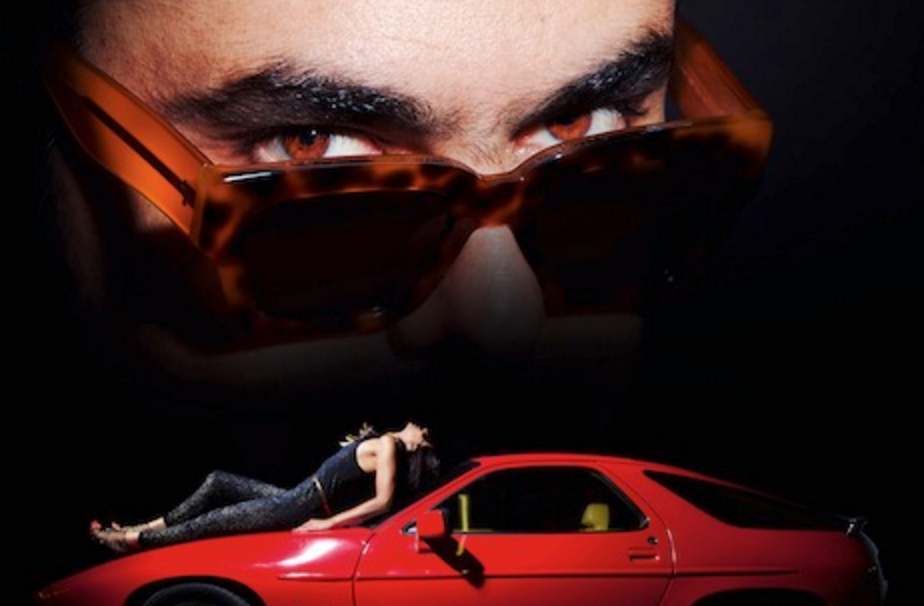
Mexican DJ-producer Rebolledo, widely acknowledged for his work as one half of the Pachanga Boys, has announced plans for his second album, entitled Mondo Alterado.
Mondo Alterado is a follow-up to his 2011 debut album, Super Vato, and is due out on Pachanga Boys’ own Hippie Dance imprint. The label describes it as “a sonic journey designed like a mixtape,” containing elements of “rock-drenched drumming, sinister atmospheres and raw synth textures.”
Mondo Alterado LP is scheduled for May 17 release on Hippie Dance.
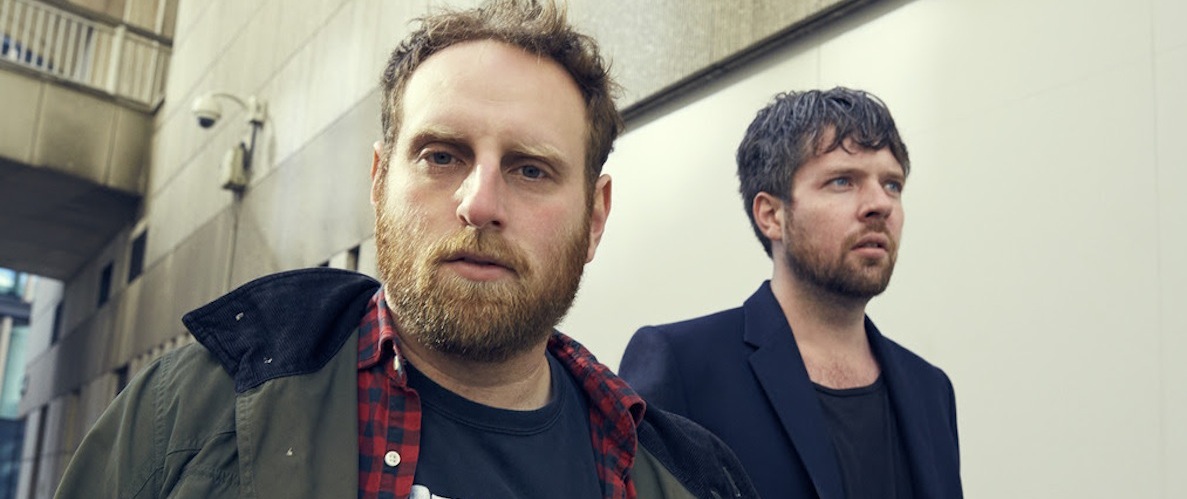
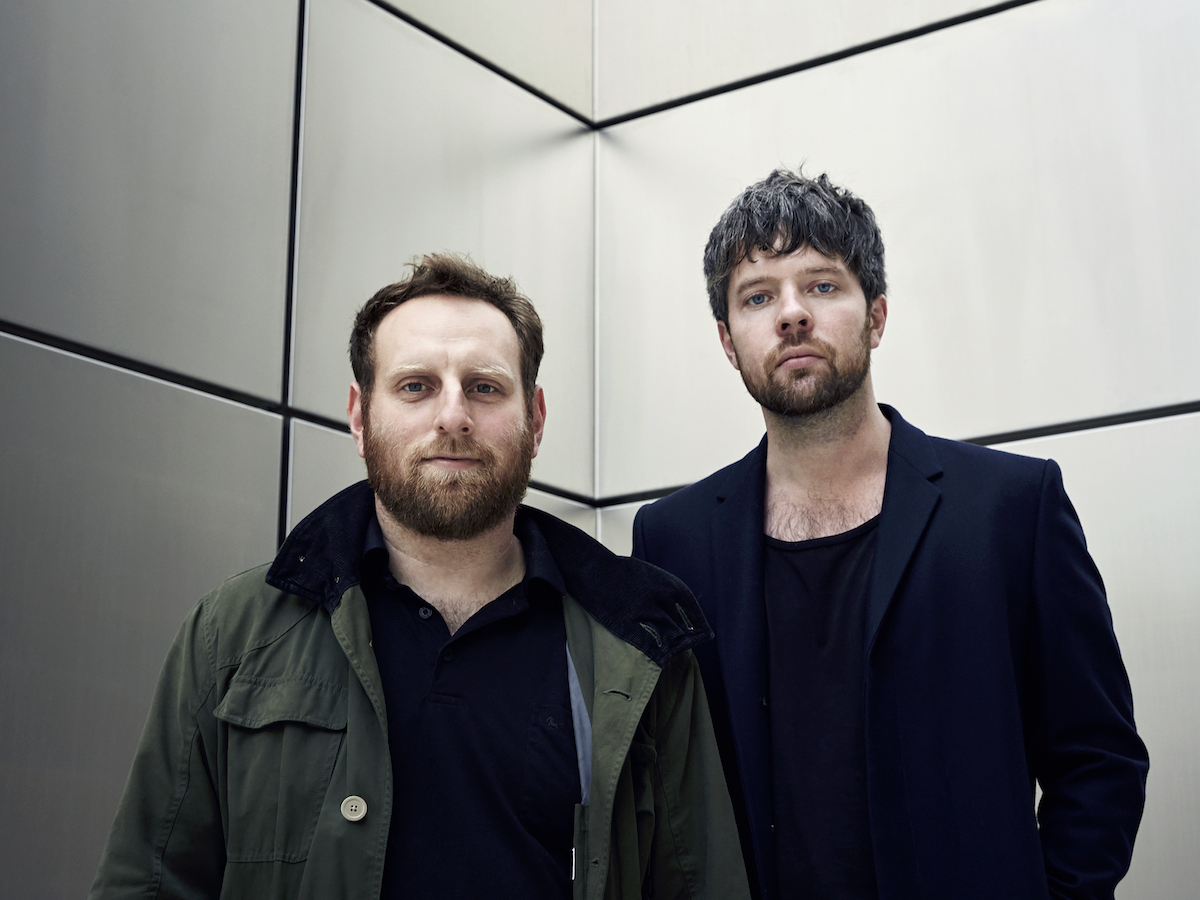
Hamilton, Ontario’s Jeremy Greenspan tends to give a little more than most interview subjects. As half of Junior Boys, along with Matt Didemus (who’s now based in Berlin), he’s made some of the most extraordinary electronic records of the last decade or so, fusing electro-pop and his engaging vocals with house, techno, disco and bass music tropes in a thrilling way. Since their 2004 debut, Last Exit, the Canadian act have carved a unique niche where memorable songs, offbeat lyrics and authentic underground club music meet.
Greenspan is considered and frank in conversation, and Big Black Coat, the new Junior Boys album recorded between Hamilton and Berlin, is just as engaging. Inspired by the immediacy and spontaneity of recording with lauded singer and producer Jessy Lanza and by making his own solo techno records, it retains the Junior Boys sound but has a new directness and rawness that takes the duo somewhere fresh. It’s less a process of refinement, and more about capturing the moment. XLR8R got in touch to find out about Greenspan’s love of Sheffield bleep techno, altering his vocals, and just what that album title means.
Big Black Coat is probably your most overtly “techno” album. What prompted a move towards more upbeat sounds? I think in the last couple of records in particular there’s been a process of writing that has been to “de-techno” our own material. Just to speak a little bit about our writing process, almost all of our stuff is done using outboard equipment. Some of it slaves off of other equipment, and you press play. So there are relationships between the equipment, and you’re dialing in knobs and stuff like that. And generally speaking a musical moment will happen. You’re playing with the sequencer…whatever it is, this thing happens where a musical thing is captured. Usually we record these and turn these things into loops with additional drums. We generally will take that material, and then try and turn that into something that resembles a song. We’ll take certain parts of the material we did, this part is the chorus and this part is the verse. What’s ended up happening, on the last two records in particular, is we would take a small amount of the things we had done, like ten songs, and turn those into traditional songs, and then work them and re-work them into more and more sophisticated songwriting things—more modulation, all this stuff, to hone them into really very deliberate-sounding songs.
With this album we took a very different approach. Instead, there was a huge amount of material that was written quite fast, and there was very little editing done. We would keep it as true to the initial moment or loop-writing moment as possible. They all have that kind of raw elemental feel because they were done quickly. I like that approach. That was an approach that I had used with the Jessy Lanza album I worked on previously. She did things quicker than I was accustomed to. It makes it so that you don’t tire of the music. I think people can feel when something is overworked.
Now that you’ve been working on other projects, you’ve said that you feel a liberation that you’ve brought to the new Junior Boys record. How did that sense of freedom manifest itself? That solo material was really important. I did those solo things with the same process: just doing things, writing little techno loops and stuff. It was the inverse process of a Junior Boys song. Instead of me adding things to create a song, I’m taking away things and turning it into a minimal thing. I think the immediacy and the speed, I wanted to bring that to Junior Boys. I wrote a whole bunch of material for Junior Boys starting quickly after the last album—but I ended up scrapping almost all of it, because it just didn’t have that sort of urgency, that feeling.
“When I started listening to dance music in Hamilton, the scene that got me into it was industrial music: Skinny Puppy, Front 242, Ministry.”
How do you and Matt work? Do you send music back and forth online? It’s a weird process. What’s happened the last couple of records—and this record was the same—is that you can split the record in half. Fifty percent I did all by myself, and then fifty percent I did with Matt as a partner. The songs I did with Matt…there’s four or five of them started in his studio in Berlin and then he came over to Canada. It’s like, “Okay, I have this thing I started,” and then we worked on those together. It’s a weird dynamic, because it’s not exactly an even partnership, but I tend to like the material I do with Matt better than the material I do by myself. It works from that perspective.
I can hear the Sheffield bleep, early Warp sound of LFO or Sweet Exorcist, particularly on the title track and on “And It’s Forever.” Is that something you were listening to when making the record? Absolutely. When I started listening to dance music in Hamilton, the scene that got me into it was industrial music: Skinny Puppy, Front 242, Ministry. Through that, all the people I knew got into techno—that European, early second wave techno sound of LFO, Speedy J, Neil Landstrumm…I think I got into that a little bit more than Aphex Twin. There’s a grooviness that I’m into a little bit more.
Where did the title for the record come from? What’s the meaning behind Big Black Coat? I bought this coat and went back and wrote this song…actually Matt started that one. I had a vocal melody, and you just start putting words in there. Sometimes you’re just joking about with words and I’d just bought this coat, started this song about the coat, and that became the song. After the fact, we had several working titles of the album that I wasn’t really into.
“Only when I wrote down all the lyrics did I realize that the songs were all about the same kind of thing—about lonely, dejected kind of people who are kind of confused emotionally, confused about women, maybe misogynists.”
It was a funny exercise—the label wanted me to write all the lyrics down for the album. I’d never done that before but I thought I would, because oftentimes people—maybe journalists—want them or then you get misquoted or people heard incorrectly. I thought, “Well I’ll get rid of that problem and write down all the lyrics”. Only when I wrote down all the lyrics did I realize that the songs were all about the same kind of thing—about lonely, dejected kind of people who are kind of confused emotionally, confused about women, maybe misogynists. Down and out characters, by virtue of the fact that my studio is in downtown Hamilton, it’s a depressive Rust Belt city.
The coat worked on two levels for me. It kind of worked as an analogy for insulating yourself and comforting yourself in the depths of winter, and then also I think of what you were mentioning before—early techno and stuff like that—I always associate it with bomber jackets. I tried to make reference to that in some way.
If you listen to that song, there’s a drum that’s going at the beginning, but then you can hear this little drum fill that happens every eight bars or whatever. To my ears, that sounded like synthetic material, swishing against itself. So that’s what made me think of the coat.
What you’ve managed on the album—and all your records—is to mix songs and cutting-edge electronics, which is difficult to pull off. How do you manage to get it right? How do you go about writing the songs and balancing the dance sensibility? Part of it is that we have a comfort feeling in both worlds. I feel comfortable writing songs in a way that maybe some techno producers don’t. I listen to a lot of songwriter people—I like that—but on that other hand, there are a lot of songwriters who are excited by dance music but don’t know much about it. I have the good fortune that I grew up with that as my roots. Dance-music production comes naturally to me because I’ve been doing it for a long time. It’s like anything, there’s a lot of people who really like dance music but aren’t really comfortable with it. And vice versa.
There’s always a lot of different influences and sounds on your albums. One aspect is the kind of boogie-funk sound of “Baby Give Up On It,” or on “Hazel” from Begone Dull Care, while there’s the synth-pop feel of “Over It.” Do you find yourselves pulled in different directions? Do you each have quite separate tastes? I think we do. For me there’s a time at which an eclectic album can go too far and become too eclectic. Apparently there’s a new documentary on 10cc that I haven’t watched, but people have been telling me about. They’re one of my favorite bands of all-time. My favorite album by them, not surprisingly, is Sheet Music. Every song is almost a completely different style from the other songs—but it has a coherence to it, and you know it’s coming from the same place. So it’s a little difficult, a little scary when you put an element into an album where there’s an eclecticism, because generally you want an album to construct a mood. If the album becomes too eclectic, there’s no mood. That’s the tricky balance.
Some of the tracks—like “Over It”—have your vocals pitched down. Why is that? It was a result of working with Jessy. She was very into doing dramatic weird things to her vocals. I think at first she was doing it because she felt an insecurity about her vocals, but after a while it became something which got her excited about the process. It became a more integral part of the songwriting for her. I really like that, and I like that approach to doing vocals. I approached doing vocals on this album much differently to how I did in the past. I would do a vocal take quickly after writing the song, and then once the vocal take is done, I would then go to another studio and do a bunch of quote-unquote professional vocal takes with really nice microphones.
On Begone Dull Care, all the vocal takes were done in this crazy studio with like, “This was the microphone used at Motown.” On this album I was inspired to not do that. I spent a day with Matias Aguayo. We were talking about how he does his vocals. He was saying how he sings into a crappy mike. Almost all the takes on the album are the takes I did right after writing the songs. I’d just sit there—most of them were recorded with a relatively crappy microphone—and then start affecting them as if they were another instrument. Just throw them in there, get it in, start doing stuff to them, and not be precious with them—not be thinking about the vocal being this sacred thing that exists. The vocal effect is Auto-tune, where you’re not using the tuning function—there’s a thing called throat control. It’s supposed to change your throat sound. I wanted it to sound… a lot of the songs are not about me, so I wanted them to sound like they weren’t coming from me. I wanted them to sound like they were coming from someone slightly disturbed. It all felt right.
What else have you got coming up? Is there more solo material on the way? There’s a new Jessy Lanza record that’s done. The whole album was strange in the sense that I was doing two albums at the same time, working with Matt and by myself on the Junior Boys record and then working with Jessy on her new record. There was a cross pollination that was happening the whole time, and then I have another solo release coming out in June, I think.
All photos: Tom Weatherall
JUNIOR BOYS ON TOUR w/ JESSY LANZA 3/10 Vancouver, BC – Imperial 3/11 Seattle, WA – Neptune Theatre 3/12 Portland, OR – Star Theater 3/14 San Francisco, CA – Mezzanine 3/15 Los Angeles, CA – The Regent Theater 3/18 San Diego, CA – Casbah 3/19 Tuscon, AZ – The Flycatcher 3/21 Dallas, TX – Club Dada 3/22 Austin, TX – The Mohawk 3/23 Houston, TX – The Warehouse Live Studio 3/24 New Orleans, LA – One Eyed Jacks 3/25 Birmingham, AL – Saturn 3/26 Atlanta, GA – The Loft 3/28 Carrboro, NC – Cat’s Cradle 3/29 Washington, DC – Black Cat 3/30 Philadelphia, PA – Union Transfer 3/31 New York, NY – Webster Hall 4/01 Allston, MA – Brighton Music Hall 4/02 Pawtucket, RI – The Met Cafe 4/04 Pittsburgh, PA – Altar 4/05 Cleveland, OH – Beachland Ballroom 4/06 Chicago, IL – The Metro 4/07 Pontiac, MI – The Crofoot 4/08 London, ON – London Music Hall 4/09 Toronto, ON – Phoenix Concert Theatre
Sam Baker’s career has followed a slowly unfolding path, marked by consistency, a patient evolution, and a talent for always delivering the goods. Working under the Samiyam moniker, the Ann Arbor–born producer first sprang onto the scene via 2008’s Return EP, four tracks of thick synths, subtly abstracted head-nod rhythms, fragmented melodies, and spare, occasionally glitchy rhythms, released in the post Donuts mini-boom of downtempo creativity. A series of long-playing releases followed—Rap Beats Vol. 1 (originally self-released but later finding a home on early backer Flying Lotus’s Brainfeeder), 2011’s Sam Baker’s Album (also on Brainfeeder) and 2013’s Wish You Were Here (on the Leaving Records imprint)—all imbued with varying degrees of sonic experimentalism, and all great. But through it all, it seems like Baker’s felt a bit misunderstood—despite the lysergic glow that occasionally tints his music, and despite the FlyLo/Brainfeeder connection, the man’s always had something a bit more down-to-earth in mind. “I’m not about futuristic spaceship beats,” he said in a 2013 interview upon the release of Wish You Were Here, “just straightforward hip-hop.”
It’s going to be a battle (one reviewer tagged him as a “tape-warping…surrealist”), but it seems that Baker’s going to do his best to prove the truth of that mission statement. A hint came last year, when the subdued slow-jam beauty “Quest/Power,” coproduced with Budgie and featuring Earl Sweatshirt on vocals, dropped on SoundCloud. And now there’s his latest full-length Animals Have Feelings, released on the mighty Stones Throw label. A series of 21 short tracks, most well under three minutes, Animals Have Feelings still has its share of slightly glitchy moments and odd juxtapositions, but it might be Baker’s most directly “hip-hop” collection to date. There’s not a lot of raps on the album—Baker’s always been primarily an instrumental artist, and Animals Have Feelings only features three vocal cuts (more on them in a bit)—but the LP just feels hip-hop, in a way that’s hard to pin down. (It plays something like a mixtape, perhaps even more than Wish You Were Here, which actually was originally released on cassette.)
Baker’s hip-hop is a particular creative version of the form, of course. Over the album’s 22 tracks—most of which clock in at under three minutes and all but three of which are instrumentals—he explores the Samiyam sound to the fullest, perfecting the style he’s always had rather than making any major alterations. As if to hammer home that point, the album’s opener, “Taco Chase,” opens with a slightly effected spoken word: “And that’s what it is today—ain’t nothin’ changed,” perhaps referencing Bone Thugs-n-Harmony‘s “Ain’t Nothin Changed (Everyday Thang Part 2).” The cut itself, like much of Animals have Feelings, is as much mood piece as song, with eerie organ tones and a spare bassline anchored by hairline-fracture beats. That’s followed by “Blowed,” a kind of G-funk/carnival-from-hell number, which leads into “Calisthenics,” characterized by something that sounds like hammered piano strings plucking it its simple melody. Later, the title track boasts staccato synths chords played over one of the best sounding snare hits we’ve heard in a while; the pastoral “Smoke Break” samples gentle strings that float over a spare synth-bass; and “Turkish Vacation,” perhaps the goofiest tune on the LP, is pretty much like the title implies.
If there’s one complaint, it’s one that’s common to instrumental hip-hop: Some tracks are almost a bit too single-minded, with Baker often content to simply let two or three ideas to ride throughout the cut without much in the way of dynamics. Then again, when a songs is as the spectral guitar-and-bass funk tune “Meditate,” all of 66 seconds long, there isn’t a hell of a lot of time for anything overly complex. The most fully fleshed-out tracks are its vocal numbers. “Lord of the Rings,” with Jeremiah Jae and Oliver the 2nd on the mike, layers the lyrics over sci-fi synths and plucked arpeggio; the Action Bronson–led “Mr. Wonderful” (somewhat confusingly, its a track not found on Bronson’s album of the same name), sputters and glides to hypnotic effect; and Earl Sweatshirt returns for the psyche-hop-gets-tough track “Mirror.” Straightforward hip-hop? Not quite—the weirdness quotient of Animals Have Feelings is a bit too high for that—but it’s hip-hop nonetheless, and another success for Samiyam.
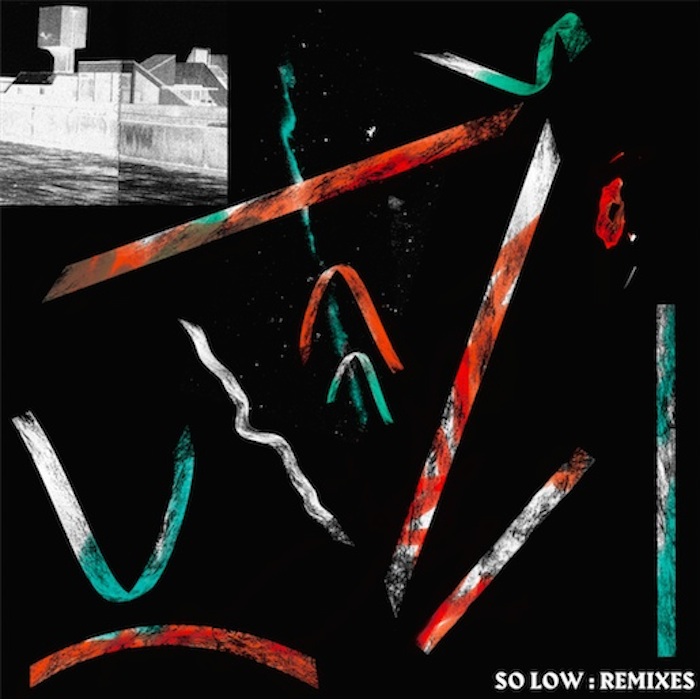
A selection of tracks from the recently issued So Low compilation have been remixed by Powell and Helena Hauff amongst others, to be released on March 18.
So Low is a recent project by Keith McIvor (better known as JD Twitch, one half of Glasgow’s Optimo), compiling early ‘80s synth, industrial and cold wave classics, as well as some undiscovered gems. It was inspired by the club night of the same name that McIvor occasionally hosts, and includes tracks by artists such as Colin Potter, Hunting Lodge and Siglo XX.
On the back of the compilation, The Vinyl Factory have organised a remix EP of tracks lifted from it. Diagonal Records boss Powell deconstructs P1/E’s “49 Second Romance,” whilst Hamburg’s Helena Hauff offers a driving version of The Klinik’s “Moving Hands.” JD Twitch himself takes on Gerry & The Holograms, and there is a Kübler-Ross version of John Bender.
You can pre-order the EP at The Vinyl Factory. Check out Powell’s remix below.
The techno duo will release their first new EP together for almost two years via Perc Trax next month.
London-based techno producers Ali Wells (a.k.a. Perc) and Tom Russell (a.k.a. Truss) have spent much of the past couple of years working on solo projects, or touring Europe and Australia. Leather & Lace will come out on Wells’ Perc Trax imprint, and is their first new material together since 2014. According to the label, “these three tracks add a melodic element to their sound without ever losing the hands-on grit and live elements that made their first two EPs so instantly memorable.”
Leather & Lace is set for release next month, both digitally and on 12″ vinyl.
The Vancouver-based artist Markus Garcia (a.k.a Heartbeat(s)), formerly one-half of the pioneering “internet aesthetic” duo LOL Boys, has recently released a new EP titled Forever, Violet on newly re-located imprint Loveless Records. Having previously released tracks on 1080p, ASL, My Techno Weighs A Ton, and more, Garcia has continued to hone his production skills which have resulted in an uncompromising and good-natured dancefloor sound.
To help celebrate this new jubilant release, Heartbeat(s) has offered up the EP cut “Eastside” as today’s XLR8R download. Kicking off with swimming and luminous Chicago house chords, the track jumps into a frenzy of bell-like percussion that sprints alongside a sparse, acidic bassline.
You can grab a free download of this radiant and zippy track via WeTransfer below.
Be sure to check out more from Heartbeat(s) by going to his SoundCloud page here.
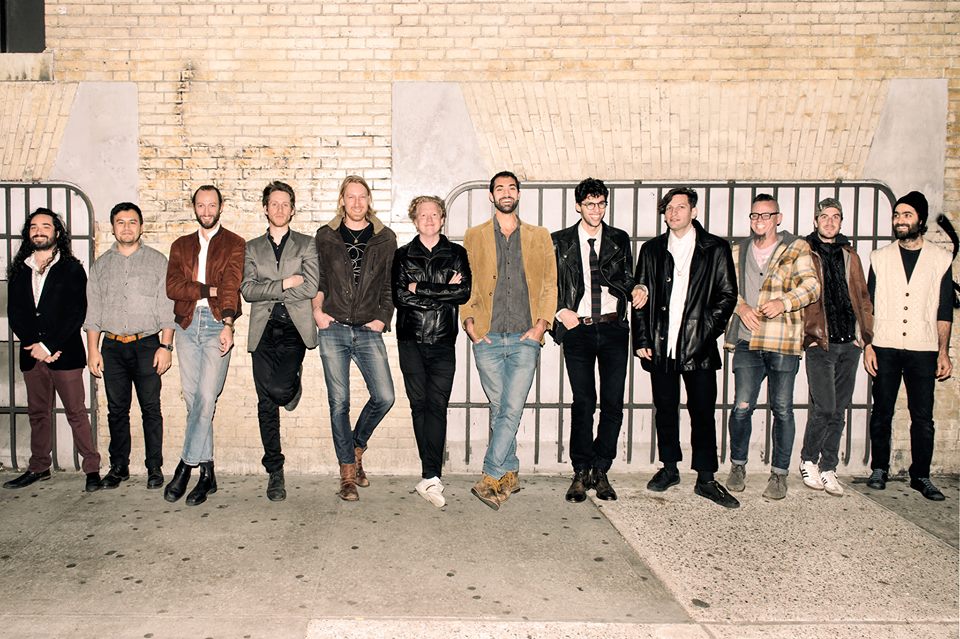
Dave Harrington (a member of DARKSIDE alongside Nicolas Jaar) has revealed details of his latest project—a solo album as the Dave Harrington Group.
Harrington is best known for his work as one half of DARKSIDE, an ambient project that was put on hiatus late in 2014. His forthcoming release as the Dave Harrington Group is the result of improvisation and jams with some of “favorite musicians and closest friends,” and was inspired by late ‘60s jazz albums (which tended to use contemporary recording methods and effects to manipulate live music). Much of the album, Become Alive, was mixed and edited whilst touring with DARKSIDE, and was co-produced by former bandmate Nicolas Jaar.
Harrington explained that the record is “very personal,” and “the result of improvising with different combinations of people, and then processing and re-sculpting those improvisations—isolating passages, turning them into something new, overdubbing layers of myself, maybe taking something from another piece and superimposing it out of its original context. But each track is always me interacting with other people, sometimes just one or two… sometimes ten. There was flute, vibes, organ, Fender Rhodes, guitar, bass, two drummers, percussion, sax…just full-on, over-blown energy. I took all that and treated it as raw material in the mixing stage… but when you have ten people in a room, you can only edit so much. Everything is in every microphone anyway—it’s all connected, so it’s about turning it into whatever it wants to be.”
Become Alive will be released via Other People, on April 15. Stream the title track below.