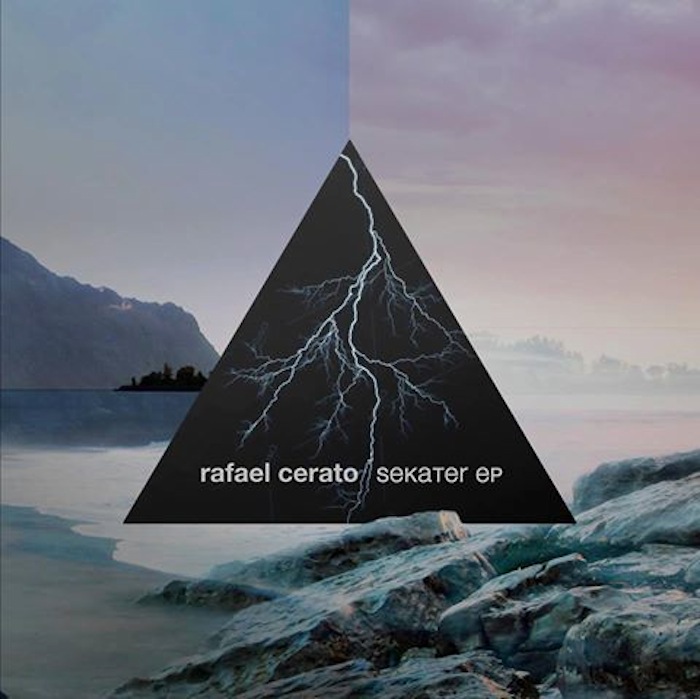
Marc Romboy has been on fire over the last 12 months—and so has his label, Systematic Recordings. After using the imprint as a springboard for some of his own original and remix work to date yet—as well as for the recent inauguration of its colored-vinyl EP series—Romboy has focused attention on a new crop of fresh name discoveries, including Rafael Cerato, who returns to the imprint fully-equipped with high octane, progressive techno via the Sekater EP.
As the first few bars of the title track kick in, it’s easy to see how this tidy collection fits into the label’s sound as a whole, while also brandishing the hallmark touches of Romboy’s own uplifting, yet head-down tech-house sound. With its melodic touches and driving, low-end rhythm, the cut’s already been rinsed by the likes of DJ Tennis and Romboy himself; its layers of melodic touches and major tonal chords keep the pace moving full-force.
Next up, “Heroes” brings with it a moody vibe, starting with eerie and foreboding effects, and sonic charges flying in and out of earshot. A snapping breakbeat soon morphs into a techno thump, while that trademark Systematic sub/mid-range bass pulses underneath; the drop releases swathes of radar-like melodies and cowbell percussion. It’s a serving of serious dancefloor fare for the most itchy of crowds.
After the sheer weight of that track, respite comes in the form of “Conkistador” with its nuanced, uplifting tone and major-tone bassline contributing to an irresistible swing, and a driving tempo that ramps up every 12 bars. This one feels more techno than tech-house, more roughly cut and reflective of “Lieb Ist”–era Stephan Bodzin.
Closing the EP is “Vertige”—and as its name suggests, things gets lofty with its soaring and pulsing lead synth melody, containing a sharp and spiky inner-edge and a core that fluctuates between swathes of warming sub-bass and razored, metronomic percussion. It’s a great track to end with, with Sekater standing as yet more proof that Romboy’s got the ear for talent—Cerato delivers the goods with aplomb and clarity.
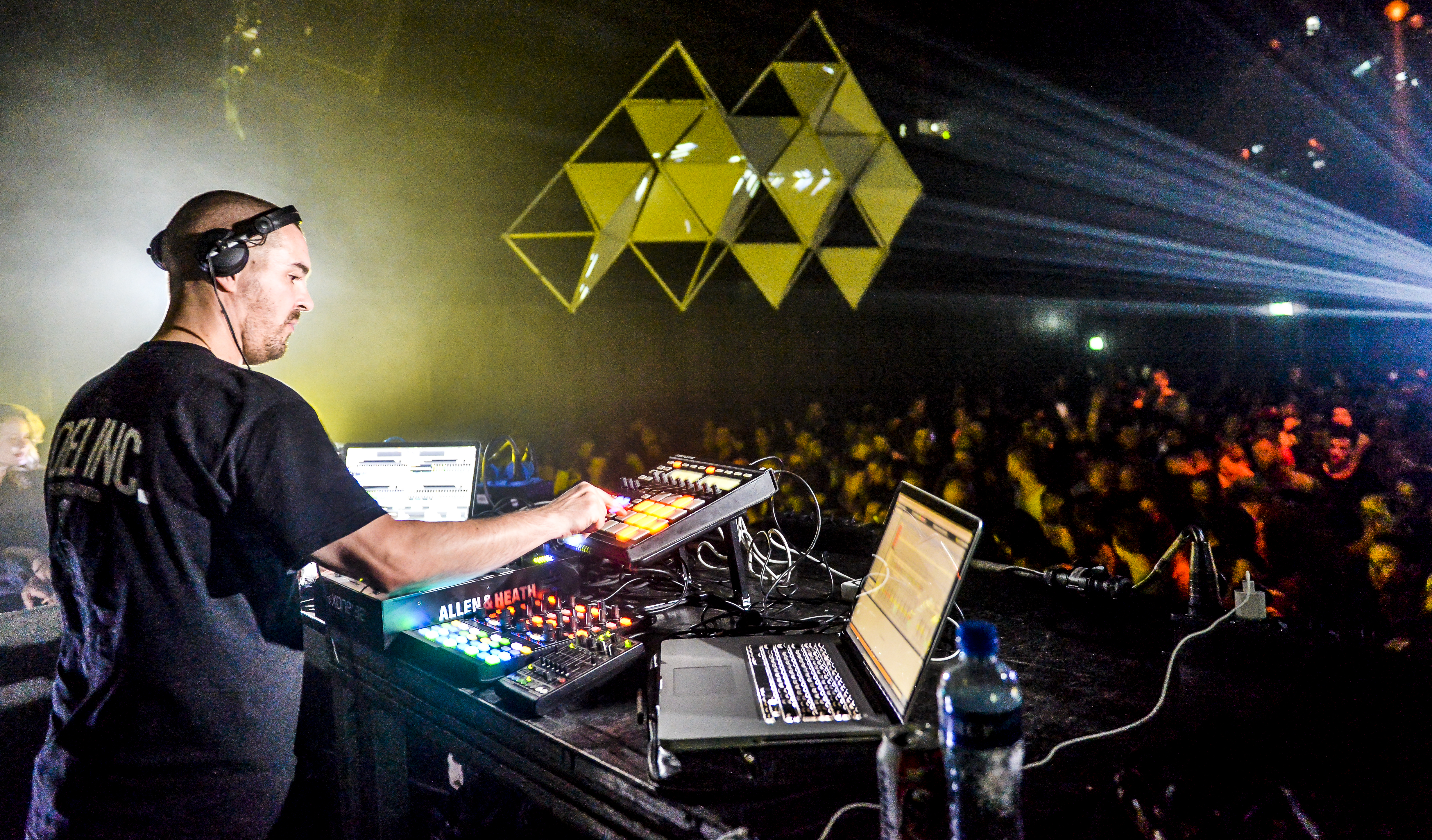
This year at BPM Birmingham—one of the UK’s leading events for the electronic music and clubbing industry—Point Blank teamed up with Native Instruments to host the Learning Zone, giving attendees a chance to learn from their expert instructors. Focused on Native Instrument’s flagship DJ software, Traktor, Point Blank held sessions on Stems, the brand new Kontrol S5, and Remix Decks, which Point Blank instructor David Clarke runs through in the video below.
You can find out more about Point Blank’s extensive DJ courses by heading here.
Eytan Tobin is a Toronto-based DJ and producer with a penchant for hip-hop, juke, and 80s R&B. His live-sets flow between heavy bass, footwork inspired selects, and dangerous dance floor tools. Over the past year, Tobin has put the final touches on various collaborations and finished off his sophomore EP.
When he isn’t producing or DJing, Eytan is spear heading a scene founded by Toronto artist / collaborator Lum who also throws weird, art-based parties called Bedroomer. The Bedroomer crew also act as an collective of Toronto-based musicians, producers, and visual artists, which acts as a boutique online record label. They release electronic music that is forward thinking, and the artists are all close friends that can be found throwing parties and spinning tracks around the city. A Bedroomer party is strictly inclusive and will typically incorporate an immersive art element, providing a multi-sensory experience for both music and art fans.
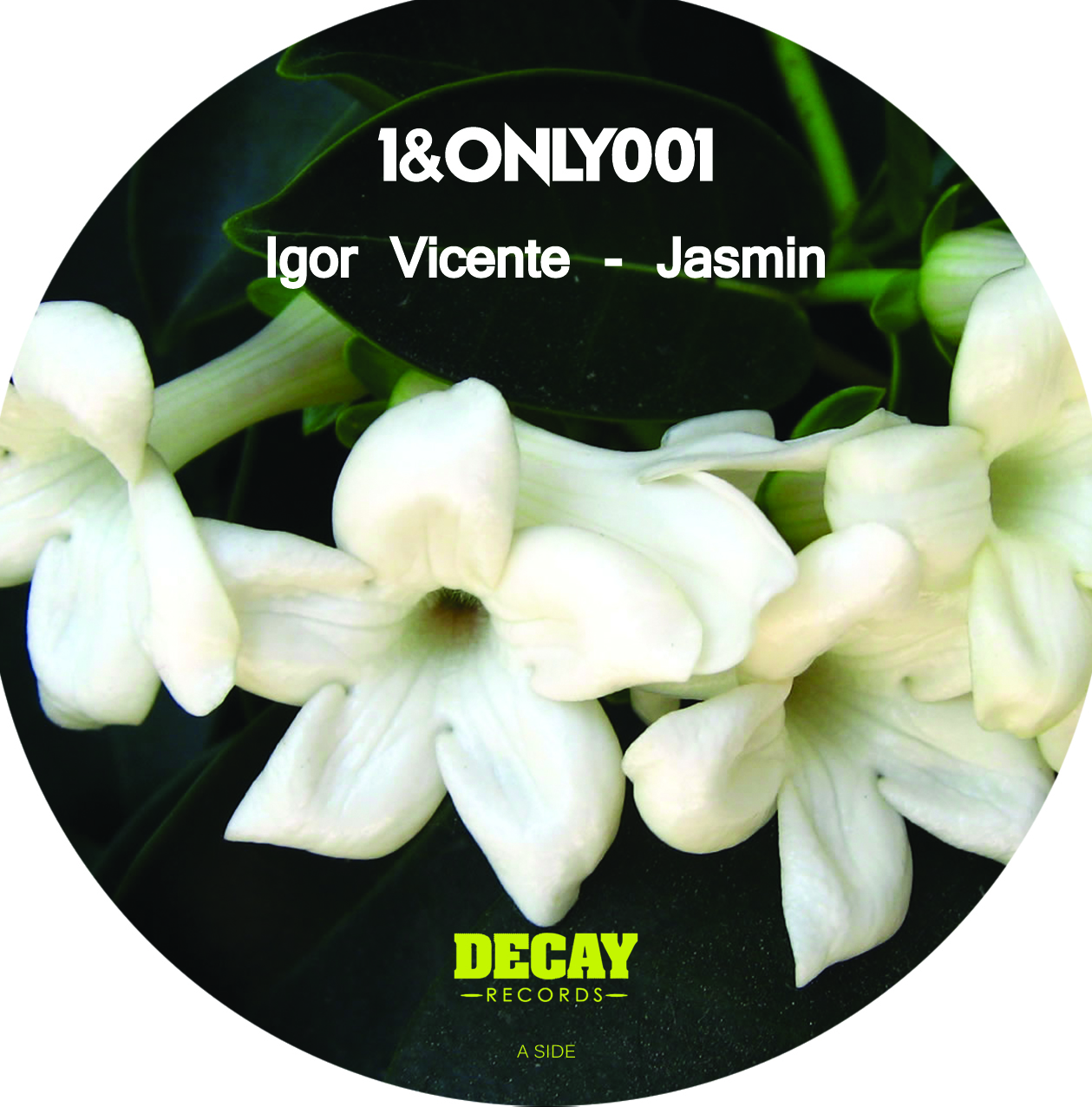
Belgian producer Igor Vicente will kick off Decay Records‘ new vinyl-only sub label, The One and Only, with his Jasmine EP, to be released October 19.
Jasmine follows on from Vicente’s previous two EPs on Hot Creations and Mobilee, presenting a gorgeous nine-and-a-half minute steamroller of a track. From its outset, Vicente begins layering in an assortment of highly atmospheric pads, delayed, unrecognisable vocal chops, and slightly muted percussion that all work beautifully together locking the listener into a groove before wall shaking sub bass stabs begin interspersing themselves throughout.
Being the first release on The One and Only, Jasmine definitely has us hanging for more from the label and Vicente. Jasmine will be released as a one-sided vinyl on October 19 and, in the meantime, you can stream the cut in full below.
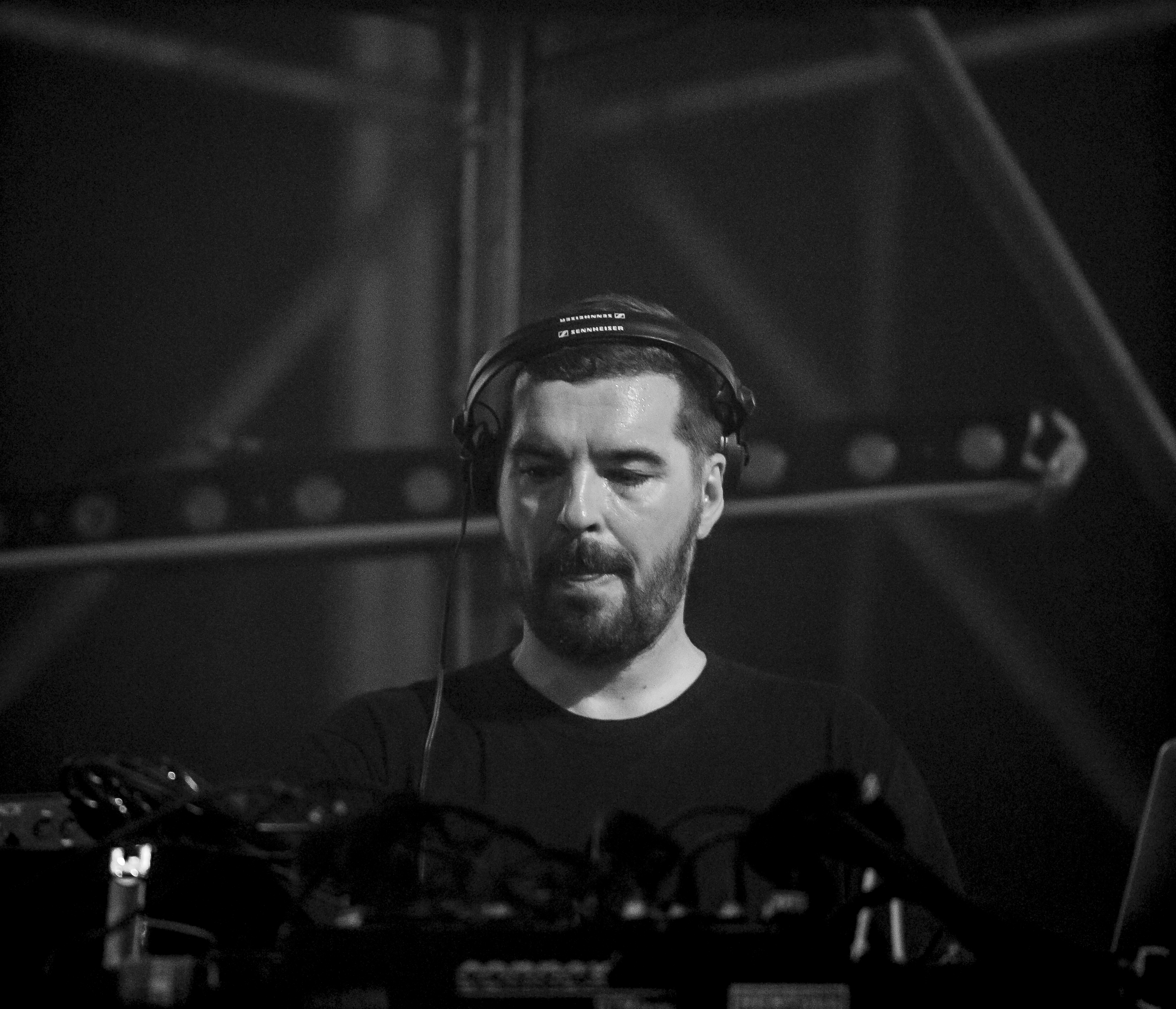
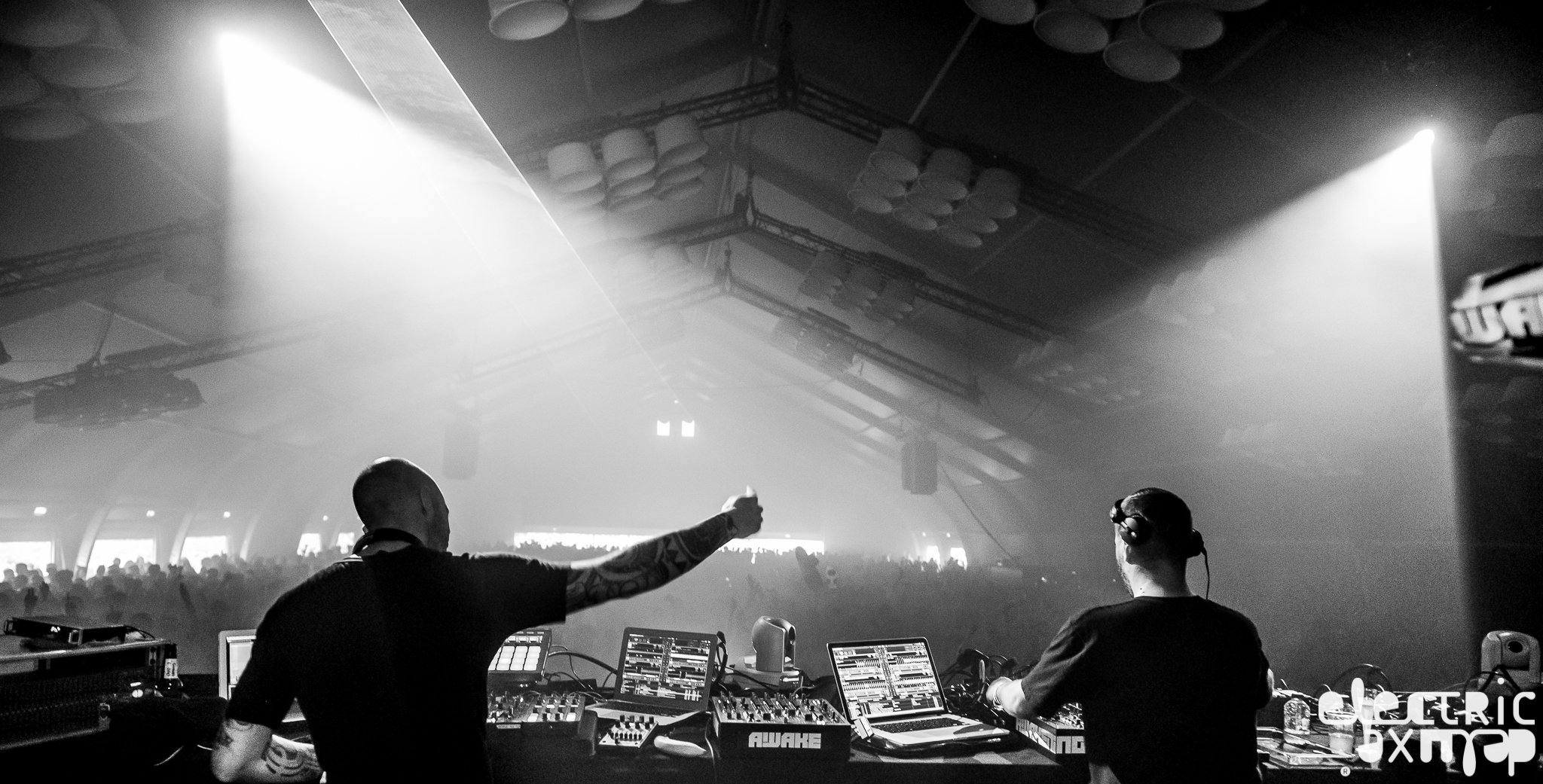
Does Jochem Paap really need an introduction? Better known by his stage name Speedy J, a moniker that stems from his speed behind the decks, the Rotterdam-based DJ-producer is synonymous with the word techno, a key figure in the genre’s renaissance. As an artist, Paap continues to push the boundaries of techno exploration, experimenting with different sounds and textures—the result being a catalog of thought-provoking records on labels including Plus 8, Warp and Novamute. Paap also heads up Electric Deluxe, a brand that encompasses both a highly-demanded event series and a flourishing imprint that promotes creative freedom by encouraging artists to push beyond their usual parameters.
On the eve of the label’s next release, a debut album from Giorgio Gigli, XLR8R connected with Paap to hear more about his production techniques and discuss his inspirations and visions for the brand.
As a solo artist, did you ever anticipate this success when you were producing in your bedroom in Rotterdam? Certainly not. I started producing music in a time when it was done for the love of it rather than anything else. There was no business around it—I just did it as a hobby because I loved it. And then in the early ’90s, things took off and this really shaped my plan. I overcame each hurdle through improvisation and the pathway just continued. Nobody who was producing music at that time could really have anticipated anything like it is today, but fortunately I am still around.
1992 and the release of “Pullover” is noted as your big breakthrough. Is that how you see it? That was a big moment—but I think the thing that really changed things for me was hooking up with Richie Hawtin and John Acquaviva when they started their Plus 8 label in Ontario, Canada.
How did you start working with them? They only had about two releases, and I was basically producing music in my bedroom— there were only a handful of people doing it in Holland at the time. I was working with some friends on a radio show between four and eight in the morning when nobody was listening—but we played the music anyway. We used to go on the telephone during those transmissions and call up labels that we liked, because it was mid-afternoon in the United States when we were on air due to the time difference. One day we called John Acquaviva, and he was so shocked that people from Holland had called him and that his label’s music had spread that far. Following the conversation, I sent over some cassette tapes by mail—and he called me back telling me that Plus 8 wanted to do at least three singles from the collection of 50 tracks that I sent. To have some releases on such a respected label definitely helped my career a lot.
And how did the Warp releases come about? In 1991 I met Rob Mitchell from Warp, and he was into my work after hearing what I had done on Plus 8. He told me that they were starting this Artificial Intelligence series that he wanted me to be part of it. This was the second big break that had fallen onto my lap, because Warp is such a hugely respected imprint. After that, I’ve just sort of focused on sustaining the same level.
“As an artist, I am interested in the whole scope of electronic music. I am not really into just one style and I don’t feel responsible for any of those styles or any particular genre.”
Following the releases of 1993’s G Spot and 1995’s Ginger, your sound took a noticeable change of direction away from techno for the dancefloor to something more complex and ambient—most noticeably on Public Energy No. 1 and A Shocking Hobby in 2000. Was this a conscious decision? No—it was a very natural progression. As an artist, I am interested in the whole scope of electronic music. I am not really into just one style and I don’t feel responsible for any of those styles or any particular genre. I certainly don’t think of myself as an ambassador for any particular sound. Some people are pushing genre or one sound—but I am different. I am just a person who is easily bored. When I think I am in a territory that I have already explored for myself, then I lose interest. That is exactly what has happened at several points in my career. It’s not a conscious plan—it’s simply what I was into at that time at that particular moment. I could have managed it a little better, I think, but I have no regrets in hindsight.
Moving from dancefloor techno to something more ambient is not especially easy. There are not too many producers who could have such success in both areas. Was it an easy transition? But I wasn’t trying to produce anything in particular—it was just a process of experimenting with the kit that I had in my studio. There was no desire to produce experimental music—that’s just not how I work. I just have some idea, like some sort of blueprint or aesthetic, in my head that I want to work towards and then something comes out of me. At some point I then have to let it go because you can only be temporarily satisfied with the music that comes out. Otherwise you’ll keep on working on it until it is something completely different.
“I just have some idea, like some sort of blueprint or aesthetic, in my head that I want to work towards and then something comes out of me.”
So this change of course to more ambient soundscapes was simply through a process of natural experimentation? Exactly. I am familiar with the term ambient, but I never set out to produce an ambient record. All the albums I have done are collections of work that I have done over a period of two years, and within those two years I probably worked on some dancefloor stuff and some listening stuff. I just tried to collect the bits that go together well. I have never really had one single direction in mind. Working in the studio is just a process of having fun with the equipment, trying to look for what is possible with certain pieces of gear. I just want to make sounds that you don’t really find on the surface of these machines, pushing them as far as I can go. That’s the basis of my music: noodling around with the equipment, pushing the equipment and trying to find this aesthetic that is on my mind.
So in that sense your whole process of making music is experimental. Yes. Experimenting is a large part of the work ethic. I never really go to the studio to copy-paste things. Each track is based on recordings I have taken while I was been noodling. I will then enhance those and find the best parts, cut it down to five minutes and move onto the next one.
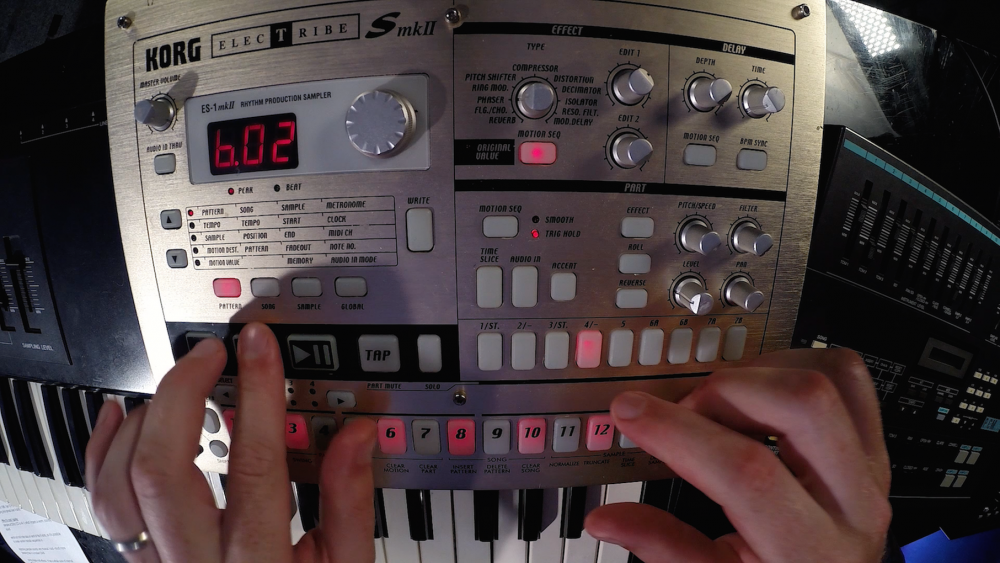
And how does the production process begin? I will always focus myself on certain pieces of gear. I limit it to a certain number of possibilities and then I look for the boundaries or the edges of what that particular gear can do. You have to take a mental picture of everything that is going on in the system and if you make this system too big then you lose sight of this as it becomes too complicated. If you limit it to a certain piece or certain pieces of gear then you can make it your own and improvise it with. This way you never lose the initial idea.
At what point do you know whether a sound is good or not? I know exactly what I like and what I don’t like. I don’t like certain sounds and I do like certain other sounds. It’s not even a decision—more of an intuition. It’s the line between excitement and boredom.
But there must also be a rational side to it too? Yes. Most of it is intuition, but at some point you have to take take a step back to decide whether there is something interesting going on or not. That is a conscious decision, and when that is decided then a line is drawn. The fact that other people may or may not like it is not on my mind when I am doing it.
Is this a very instant decision, or does it take some time? I normally try to live with the track for a couple of days or a week. If I think that it’s still special after a week then I will prepare it for release. If I don’t like it after a week then it will end on the huge pile of failed experiments.
After a prolific start, your output as a solo producer has slowed down slightly over recent years. Is there a reason for this? It’s not due to lack of motivation, rather due to lack of time. In the early days I could be a musician full time, because I was living with my parents and didn’t have any responsibilities. I could fool around and play for 24 hours a day, and this means there was a lot of output. Nowadays the label and the the events take up a lot of time. I like doing it because it shapes the context around the brand and myself, but it also clogs up my head—so it has become more difficult for me to find time to go into the studio and think about nothing. I try to create those moments, and when I do there is a lot of shit that happens. But it is hard to find the time.
“I think the album format should be reserved only for when a body of works has a certain coherence and common aesthetic.”
On that note, have you got any new solo material on the way? I’ve been working hard to find those rare spots to dedicate myself to music, and all the results are going to be collected for a release at the end of this year and go until the end of 2016. I don’t want to do a classic album, in the sense of compiling this material into one release, rather I want to do a number of smaller releases. I think the album format should be reserved only for when a body of works has a certain coherence and common aesthetic. The stuff I have been working on has been recorded in several different phases in several different environments, so it is a little all over the place. Because of this, I would prefer to make several smaller albums or EPs.
Away from your solo work, you’re also known for your collaborative work, most notably with Lucy as Zeitgeber and with Chris Liebing as Collabs 3000. How do these compare your solo work? Collabs 3000 is more of a live project. We’ve been playing together for so long now that we don’t really have to talk to each other during the set. We’re on the same wavelength all the time. It’s basically just one flowing entity and it’s really satisfying for both of us because it gives both of us a new identity. It’s a bit like Chris and a bit like myself. The collaboration with Lucy is more production-based, although we play live.
You started both the Electric Deluxe label and the events series in 2008, but how are they interlinked? I started them both for the same reason, and they support each other. I just wanted to take things into my own hands. As a solo artist without a label and without a brand supporting you, you are always relying on other peoples’ curation and ideas about how a collection of artists should work together. In the case of the events, this affects how the night progress, and in the case of a label this affects things like the distribution and marketing. By 2008 I had so much experience and I had so many ideas that I wanted to create an opportunity to push my own vision more, so than if I was working with other people. I wanted to create some context around the things I was doing.
The name Electric Deluxe stems from your release on Plus 8—but where does the name come from originally? It comes from the Electric Mistress Deluxe machine. I just liked the ring of it and so adopted it. There’s absolutely no other reason behind it.
“I want to work with artists who feel comfortable staying true to their own vision or identity. If they do this, the result is always better than if you have someone fit into this harness of a defined sound.”
The label has become a home for artists to push beyond their usual parameters. Is this how you always envisaged it? Yes. I never tell artists what to do on the imprint. I want them to come onto the label and do something that is personal to them, rather than adapting their style to something that they think fits the label ethos. I want to work with artists who feel comfortable staying true to their own vision or identity. If they do this, the result is always better than if you have someone fit into this harness of a defined sound. I hate defined sounds!
It’s a lovely concept, but as an artist it can be very tempting to bend your sound into something that will sell, especially if you’re relying on it to make a living. That’s boring. In the end we’re talking about music. As an artist, you have to develop yourself and find your own voice. Isn’t that what musicianship is all about?
But can you see why people do it? Yes. But if you follow the flavor of the month, then you’re in trouble when that flavor changes. As long as you stay true to what you believe in, then you don’t run this risk. You don’t want to be a musician to work for somebody else; you want to be a musician to speak your own voice. People become musicians to avoid day jobs so you shouldn’t turn it into a day job.
If there is no defined sound for Electric Deluxe, how do you do your A&R? Intuition. I am looking for something original. I am looking for artistry. It’s quite simple actually.
Do you listen to all the demos that you receive? I do, but I can tell very quickly whether it’s something I am interested in or not. Sometimes even after just a few seconds.
Do you also take into account the person and their ambitions as a producer? Yes. It’s very important that I connect with them on a personal level. It doesn’t necessarily mean that I have to like them as a person, but I must be able to relate to the way that they approach things. They must have confidence and belief in their own vision. If we become friends along the way then that’s great, but that’s not the starting point.
The label’s output has certainly shifted from the dancefloor material of the early years, something that’s illustrated by the upcoming release of Giorgio Gigli. Is this intentional? As with my own sound, it is still all based on intuition—but at the same time I am going through phases in my career. This is just the direction that I am most interested in currently.
“I believe that there are always going to be a bunch of people who are excited by the same things that I am excited in. I’ve learned that intuition is normally the best guide.”
Not many labels would survive on intuition alone; they need to sell records to stay in business. That’s true. I have never really gone out of business because I’ve never made such a bad judgement that has been so far from what the public is looking for. I believe that there are always going to be a bunch of people who are excited by the same things that I am excited in. I’ve learned that intuition is normally the best guide.
How did the Giorgio Gigli release come about? We’ve been in communication for a while. He’s very strong-minded about what he wanted the album to be. It’s not dancefloor orientated—it’s more romantic and dark techno. It’s a very special release for the label.
Moving on to the Electric Deluxe Presents events series, it has grown into one of the world’s most established underground series. What was the vision? I wanted to create an event where everybody is equally important. I never did it just to be the center of attention and to have a lot of people playing around me. I wanted the whole night to make sense. As an artist you want to be in an environment where you feel comfortable and the sound is good, and the artists playing around you complement what you’re putting out. There weren’t many events that had this approach and that’s why I started it.
What do you take into account when you are programming these events? We always like to include some people that we’re working with on the label, just to shape the sound a little bit. It’s also sort of a business thing. It supports the label and develops the Electric Deluxe brand as a whole. We have artists playing at the events who have never released on the label, but they are also part of the same sound. We try to combine established acts with developing artists instead of booking a bunch of headliners. We curate it in a way that we profile the label and the event in a certain way in order to build the right context.
“Every musician has a far greater knowledge of music than their releases will show, and Electric Deluxe as a brand is a platform for these artists to explore these contexts.”
With artists like Nathan Fake and Simian Mobile Disco having played these events, it’s obvious that they’re far from just techno parties. Do you intend the sonic scope of the parties to be wider than that of the label? The scope of the stuff that I like is quite large—and the Electric Deluxe podcasts venture into a wider range of sounds. Every musician has a far greater knowledge of music than their releases will show, and Electric Deluxe as a brand is a platform for these artists to explore these contexts.
It’s a remarkable achievement, having built this platform—but do you have a bigger vision in your head? I am very proud of what Electric Deluxe has become but this is just the very start—but I want to take it a lot further than this. I cannot yet tell you the long term plan but we are far from settling down. The ambitions go far further than where we are now.
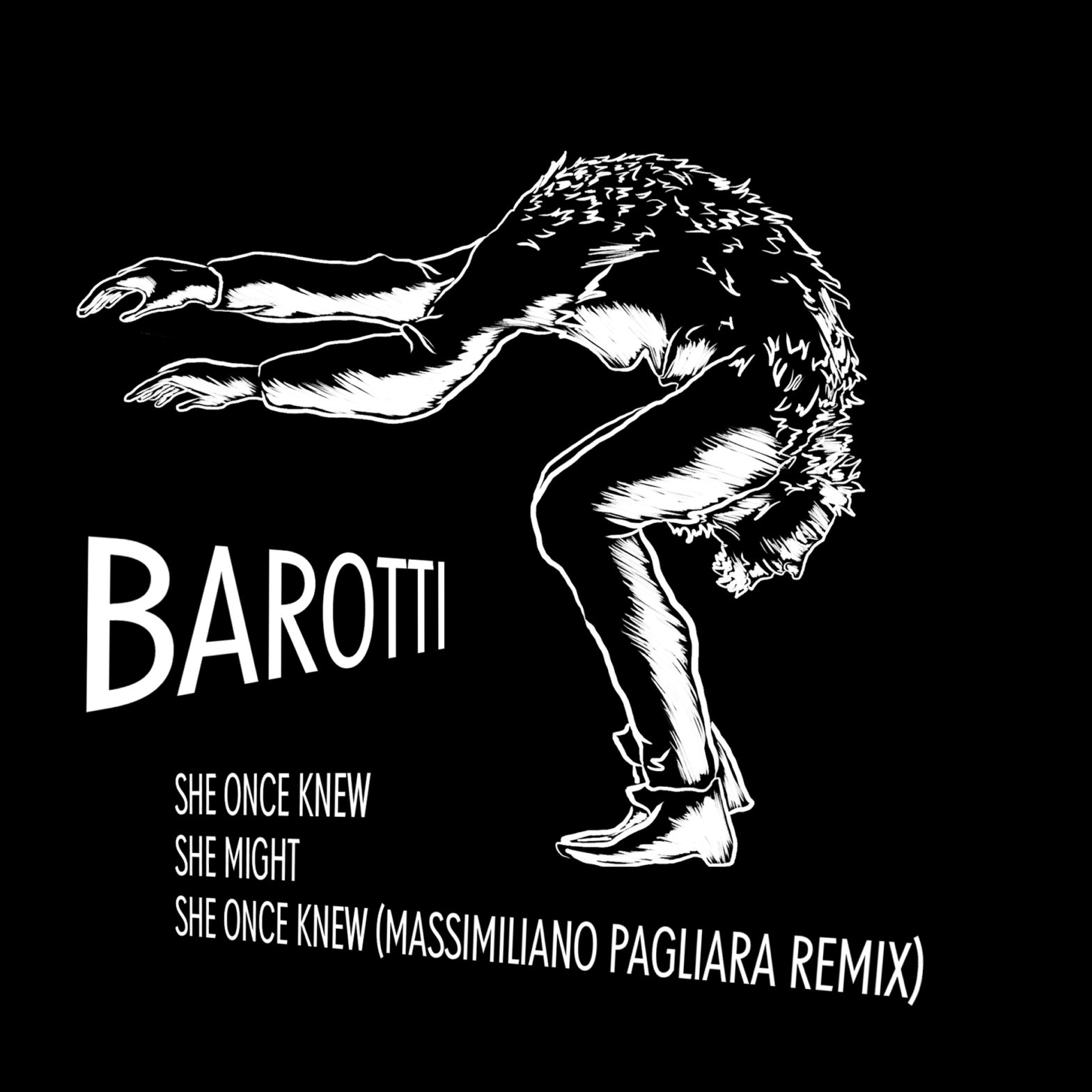
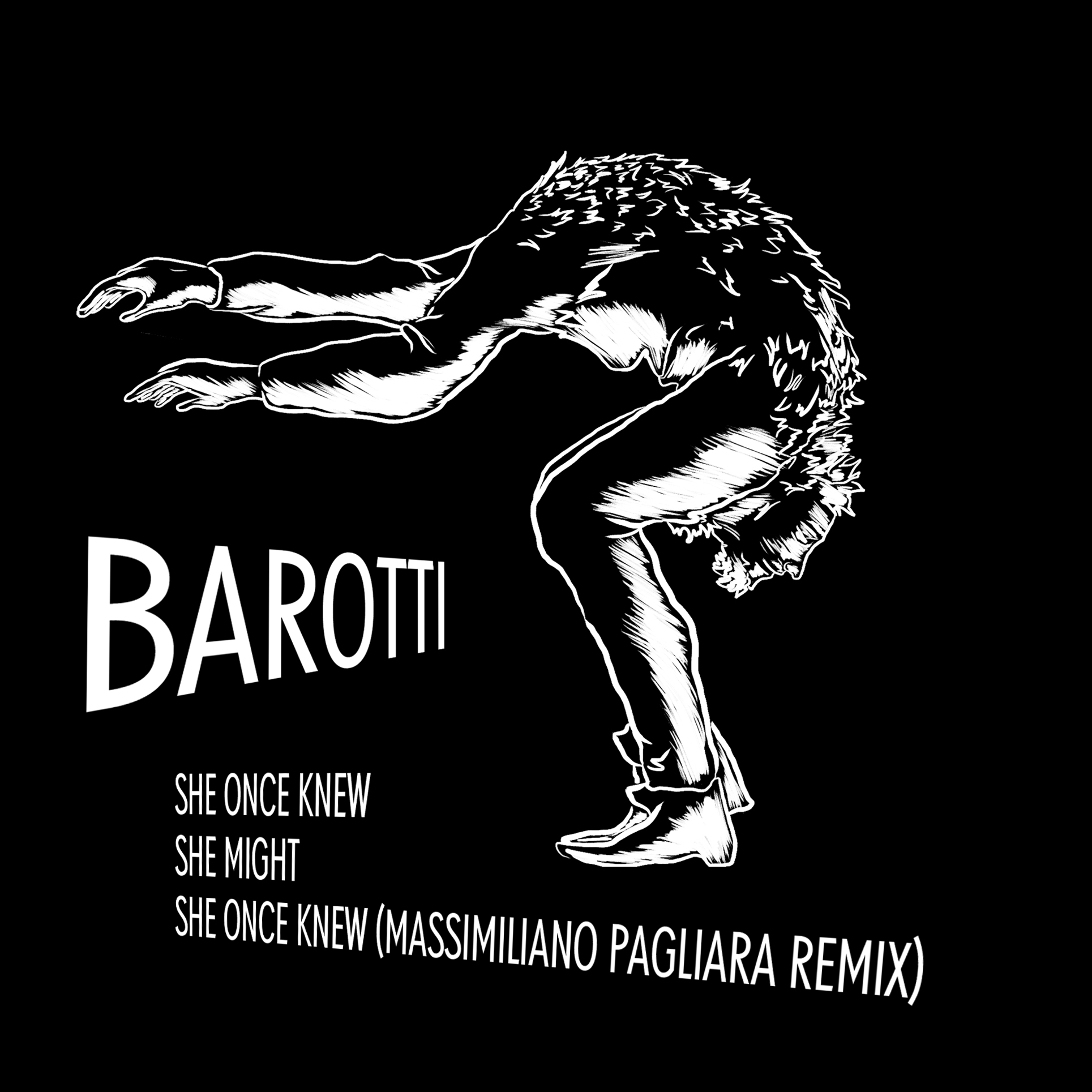
Musician and multimedia artist Marco Barotti is set to release his She Once Knew EP on October 19 via Munich-based electronic music label, Gomma.
After graduating from Siena Jazz Academy in Italy, Barotti made his way to Berlin in 2007 to fulfill his various artistic ambitions. These diverse and creative endeavors include the creation of interactive sound sculptures, film projects, inflatable architecture, and the transformation of public space. Barotti has now moved onto music, combining his knowledge of classical music with his passion for electronic intonation. Spacious and moving, Barotti uses his own low pitched vocals and constructs careful and abiding drum patterns over his track “She Once Knew,” which gives way to stirring soundscapes that blend into a momentary but enchanting saxophone riff towards the end of the song. Overall, Barotti’s sound is meticulous, spectral, and mystifying in a way that is deeply satisfying.
You can stream the track “She Once Knew” below ahead of the EP’s release and be sure to check out more from Barotti by visiting his soundcloud page here.
Two reliable selectors have entered mixes into today’s new-music rollout, starting with a three-and-a-half-hour session from Ben UFO (pictured above). Posting on Facebook earlier today, the Hessle boss shared his frustration at not having recorded while on tour in Japan last month, but returned home to discover that—unbeknownst to him—the sound engineer at Circus in Osaka had captured his full set. “This was such a fun night, and despite there being no crowd mic, I think you can hear that in the selection,” he writes. “I end up at 140 BPM and there are loads of old favorites in there, but there’s also a looseness and an energy that I find difficult to capture when I know I’m being recorded.”
Also surfacing today is a recording of Motor City Drum Ensemble at this year’s Dimensions Festival in Croatia, with a guest appearance from Jeremy Underground. The mix was singled out by Resident Advisor as its pick of the day, and runs a little over two hours. Stream both sessions in full below.
Yesterday brought word that Xosar will pilot a new label, Gyrocyre, and now, a teaser track from its first release has been made available to stream. Out next month, Show Yourself follows previous 12″s on L.I.E.S., Delsin, and Rush Hour, and dovetails with its creator’s preference for raw, hardware-driven, “mystic” techno. As for the conceptual creature behind the label, a press release states:
“When people on our planet hold built up psychic tensions under the skin, the energy gestates in a womblike growth until it’s ready to burst through the flesh and manifest as a creature called a Gyrocyre. Many people opt out of ever letting the beast emerge, happy to function at levels they can predict without having to face the challenge brought on by the Gyrocyre. It grows heavy and bloated with untapped potential. Those who embrace the change slice through. The Gyrocyre and the host come face to face… what happens next can only be determined by the nature of their heart. The Gyrocyre can give them the tools to save or destroy the world, or themselves.”
Before Show Yourself lands on November 30, listen to closing cut “Manmeat PCP” below.