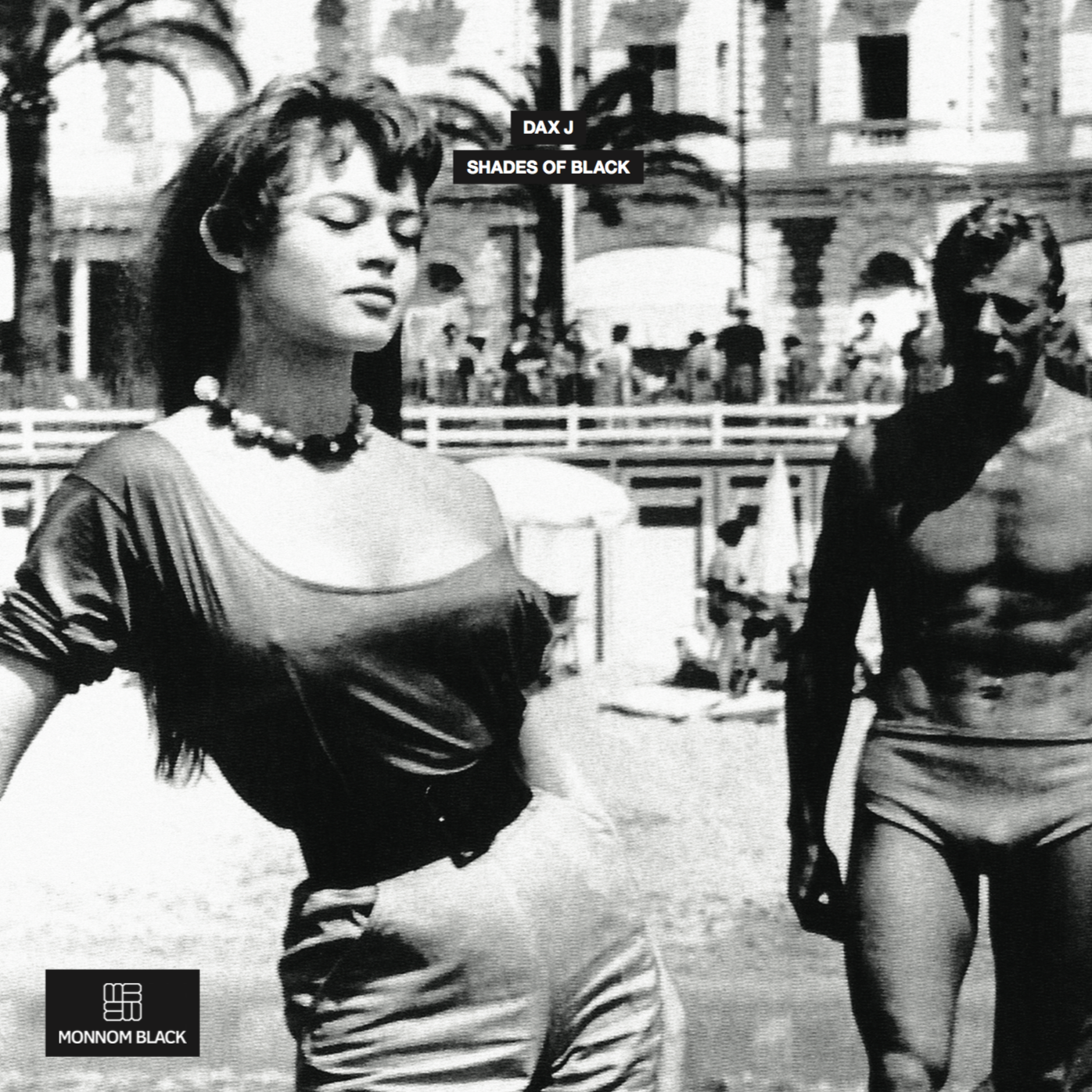
Q&A: Stream a Track from the New Dax J Album

Dax J will release his first solo album on his own imprint Monnom Black in October this year. The album will come after what will have been a busy year for Dax touring across Europe and Asia with noteable recent performances at Berghain in Berlin and Glastonbury Festival in the UK. He has also held a monthly residency at Corsica Studios in London for Jaded’s Sunday parties.

Ahead of the album’s October 30 release, XLR8R spoke with Dax J to learn more about the release, with “Devine Right” exclusively available to stream in full below.

Tracklisting:

a1 / 1 Orlok’s Symphony
a2 / 2 Beyond the Planets
a3 / 3 Renegades of Conflict
b1 / 4 Devine Right
b2 / 5 In the Shadows
c1 / 6 Protect the Prophecy
c2 / 7 Requiem Souls
d1 / 8 Black Pegasus
d2 / 9 Sempa
d3 / 10 Afterlife
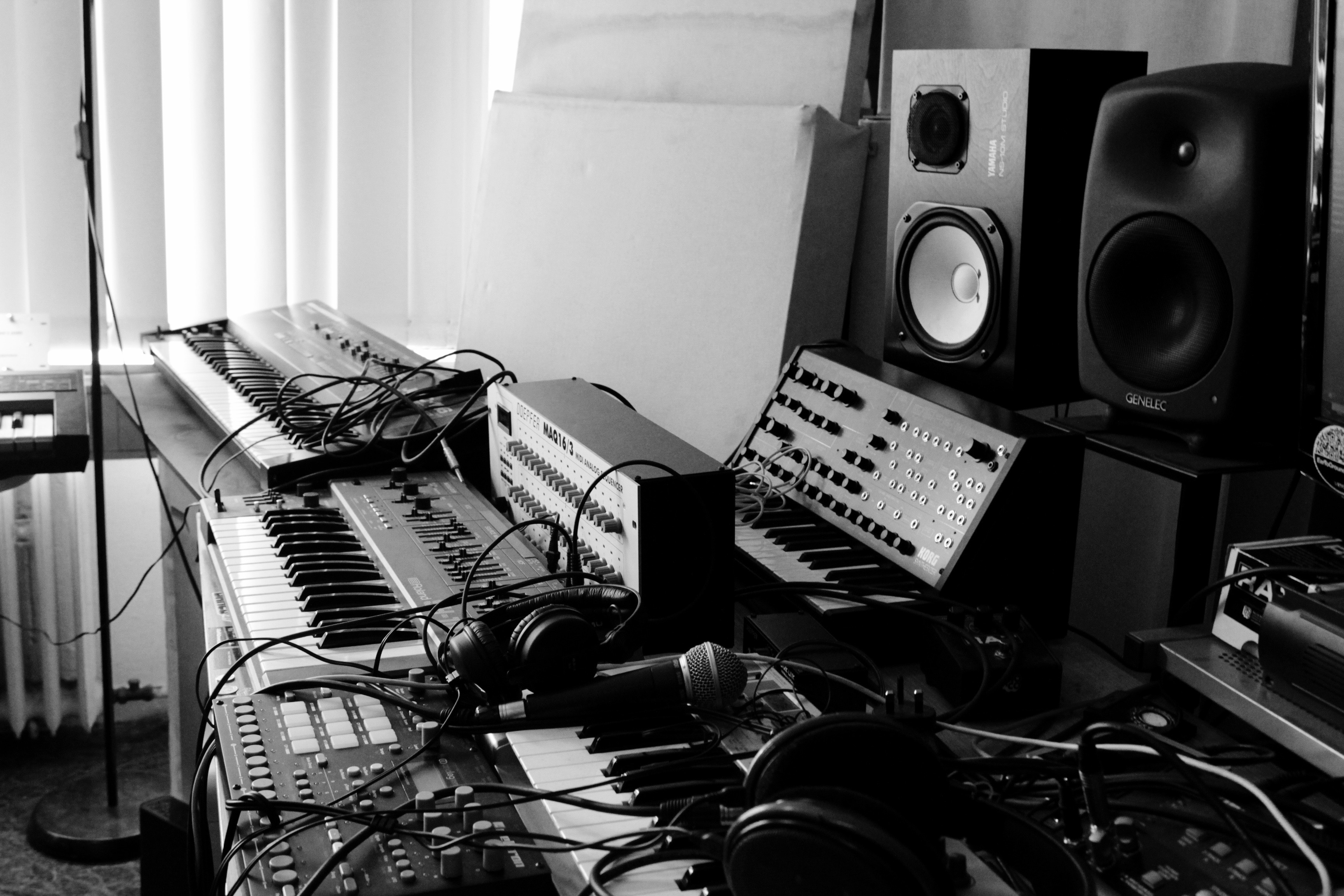
Between 16 and 21 you started to play for London’s pirate radio stations.What pushed you to begin from such an environment? What kind of records were going around at that time there?
I was at school when I discovered Pirate Radio. Some friends were bringing in cassette tapes recorded off the radio and we would listen to them at break times on our Walkmans. It’s all we would talk about. So after discovering these tapes I would tune into the radio at home myself and start recording my own. Soon after this I got a really crappy pair of belt drive decks and started to buy records and learnt to mix. I had decided then at school that I wanted to play on one of these Pirate Radios. That was my goal; I couldn’t see anything past that but I just knew that was all I wanted to do. I was fascinated by it. I loved the music I was hearing, and being a young rebellious teen I liked the fact that it was illegal too. I had completely lost interest in school by my final year; I was skipping classes regularly to go off and buy records.

How have those experiences, along with growing up in such a unique city like London, influenced the sound you are forming today? 
Those experiences have had a huge influence on my sound. Drum & Bass was all about the breaks, amens and breakbeats, and I still use these in my tracks today. This is my roots, and I use them because I just love the raw sound of them. They have soul and a story behind them.

What’s an underground rave? Can you describe it?
My first experience going to a rave in London just blew my mind! I couldn’t believe that these parties went on, I was thinking like “Is this real?” There were all types of people from all walks of life in there. I just remember that the energy was incredible–you could feel it in the air, and it was so new and fresh to me. I loved it from the first moment.

Why did you start your own label? 
I wanted an outlet to release my own music as well as a platform for other artists. It’s a very important part for me as an artist to have this, because it is essentially my own tastes that I’m pushing. The label represents me whether it’s my music or someone else’s. It’s a reflection of the sound I want to push. It’s very satisfying when I release a great record from another artist and I go out to a party somewhere and I hear it being played.

What’s your idea of Techno? Is it a closed genre itself or a blend of genres where contamination is a constant in your opinion?
For me Techno is a very open music, and its real! There is no fakeness involved like there is in other scenes. It is real raw emotional music, and that’s why it has been around since the start of the rave scene. It’s continually being influenced by the diverse backgrounds that producers and DJs come from, and it’s this diversity that keeps the music evolving and changing. That is what makes the music interesting: Everyone is coming from their unique background and bringing their own influences and flavor.

Recently you’ve been playing in almost every corner of the planet. Which local scene caught your attention the most? Why?
Every gig I’m playing in France and Italy is always amazing; the scenes over there are so strong, the crowd is always so passionate. I had a great time in Taipei recently; the music is growing really well there, and it’s one of Asia’s new leading scenes. Berlin is always amazing. The people here are so supportive of everything you do–it’s really refreshing to be in a city like this where people take the music very seriously and show you so much interest in what you do. I’ve been really lucky this year in that most of the places I’ve played have had a really great vibe. It’s almost impossible to just pick out one spot.

What does Berlin give you that a city like London has not?
I’m totally in love with the city. One of the main things it gives me is freedom. I just feel so free here with no restrictions. The vibe is so relaxed, compared to London it feels like I’m on a beach holiday. Everywhere is just chilled. I like the fact that everything is close by. I cycle everywhere, It’s really quick for me to get to anywhere I want to go. All these things have really allowed me to focus in on my music. I have more time here to work in the studio. I’m also buying alot more records again too, with so many great record shops here. I will always love London but many factors can make it a stressful city to live in. I’m happy with my new peaceful surroundings and have no plans to move.

Being a mastering engineer and work on others’ projects is actually a benefit or a handicap for an artist? Why?
For me I think it has been a benefit, because when I make a track I will immediately master it myself. And it’s at this point that I notice problems within the mix. It’s usually that the kick and bass are way too loud; this happens to me every time–still to this day! So I only notice stuff like this when I’m at the mastering stage and I can then go back to the mix and make adjustments. If I didn’t master then I probably wouldn’t be as aware to these problems as I am now.
Stream Preview of Rare AtomTM & Tobias Live Set

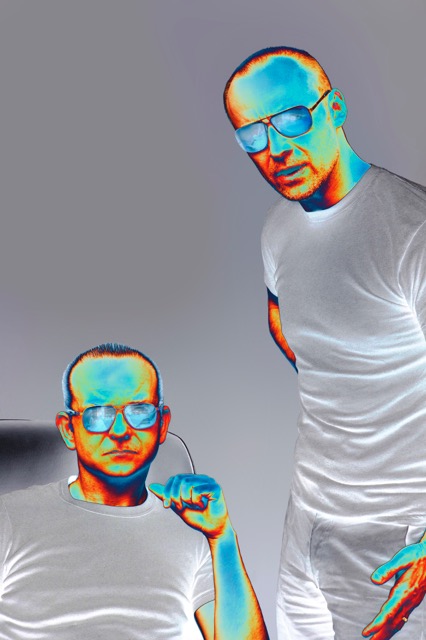
AtomTM_Audio_Archive have announced plans to release an exclusive live set from AtomTM and Tobias which was recorded on December 10 2014 in Berlin.

AtomTM & Tobias have been performing live improvised electronic music sets since 1991. The now mythical Elektroniikkaa – Live in Helsinki and Montreux recording (released in 1992 on Rising High and Ongaku Music), was one of the first live releases in techno history. That recording was the starting point for a long series of live performances and releases, which has taken us to the AtomTM & Tobias – Extended Live Set, Berlin 10/12/2014. The extended live set presents an extended, improvised set played at Panorama Bar last December, and will be the first new and unreleased production on the platform since the label’s focus has been AtomTM’s vast back catalogue.

The release will only be available digitally, and is available as a single WAV file from the AtomTM_Audio_Archive site, or as five separate one-hour mp3s from iTunes.

Ahead of the recording’s November 11 release, snippets of the five one-hour segments can be streamed below. The full WAV file can be downloaded from here. 

Tracklisting: 
01. AtomTM & Tobias, Extended Live (Excerpt 1)
02. AtomTM & Tobias, Extended Live (Excerpt 2)
03. AtomTM & Tobias, Extended Live (Excerpt 3)
04. AtomTM & Tobias, Extended Live (Excerpt 4)
05. AtomTM & Tobias, Extended Live (Excerpt 5)

Premiere: Stream a Mathew Jonson Track from his Fabric 84 Mix

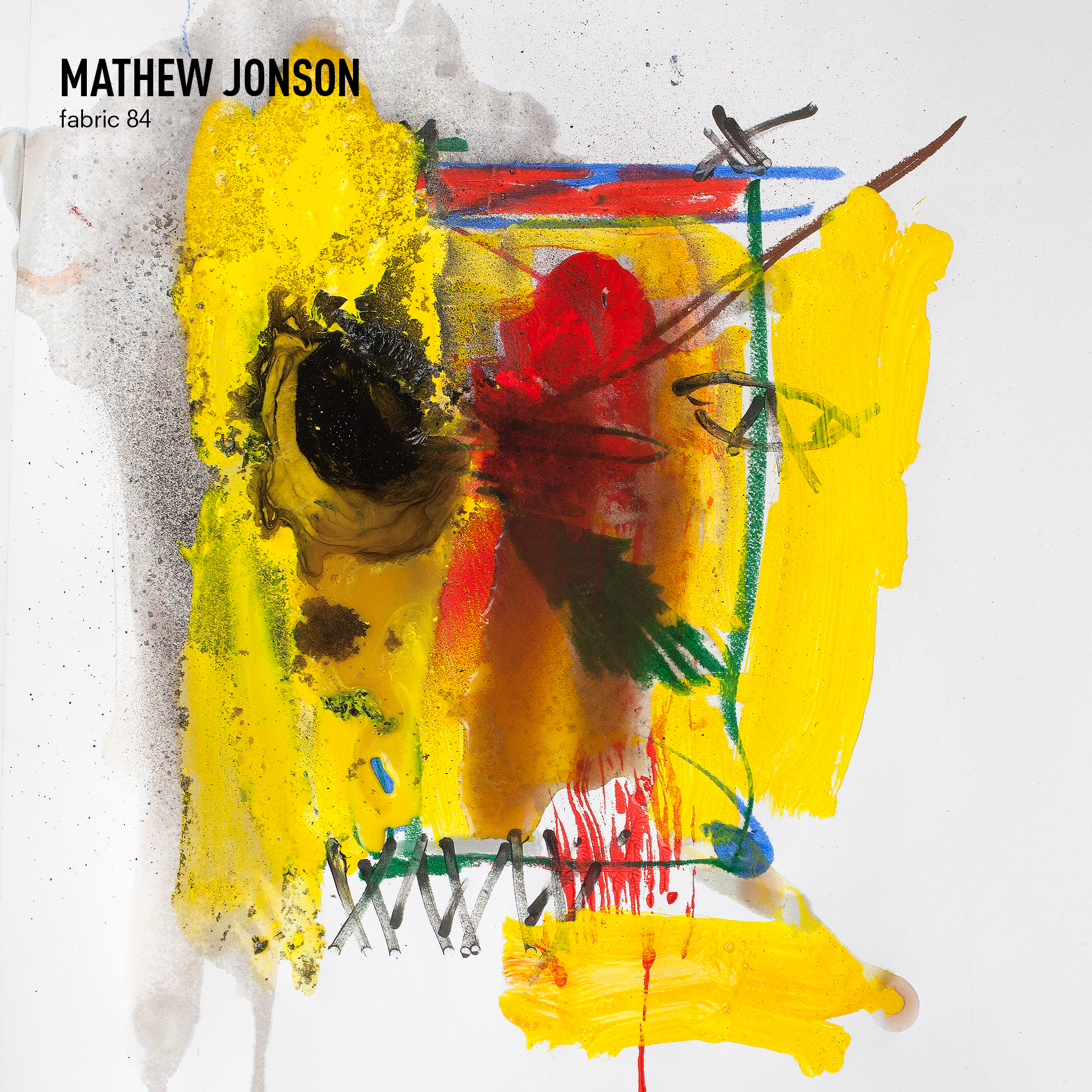
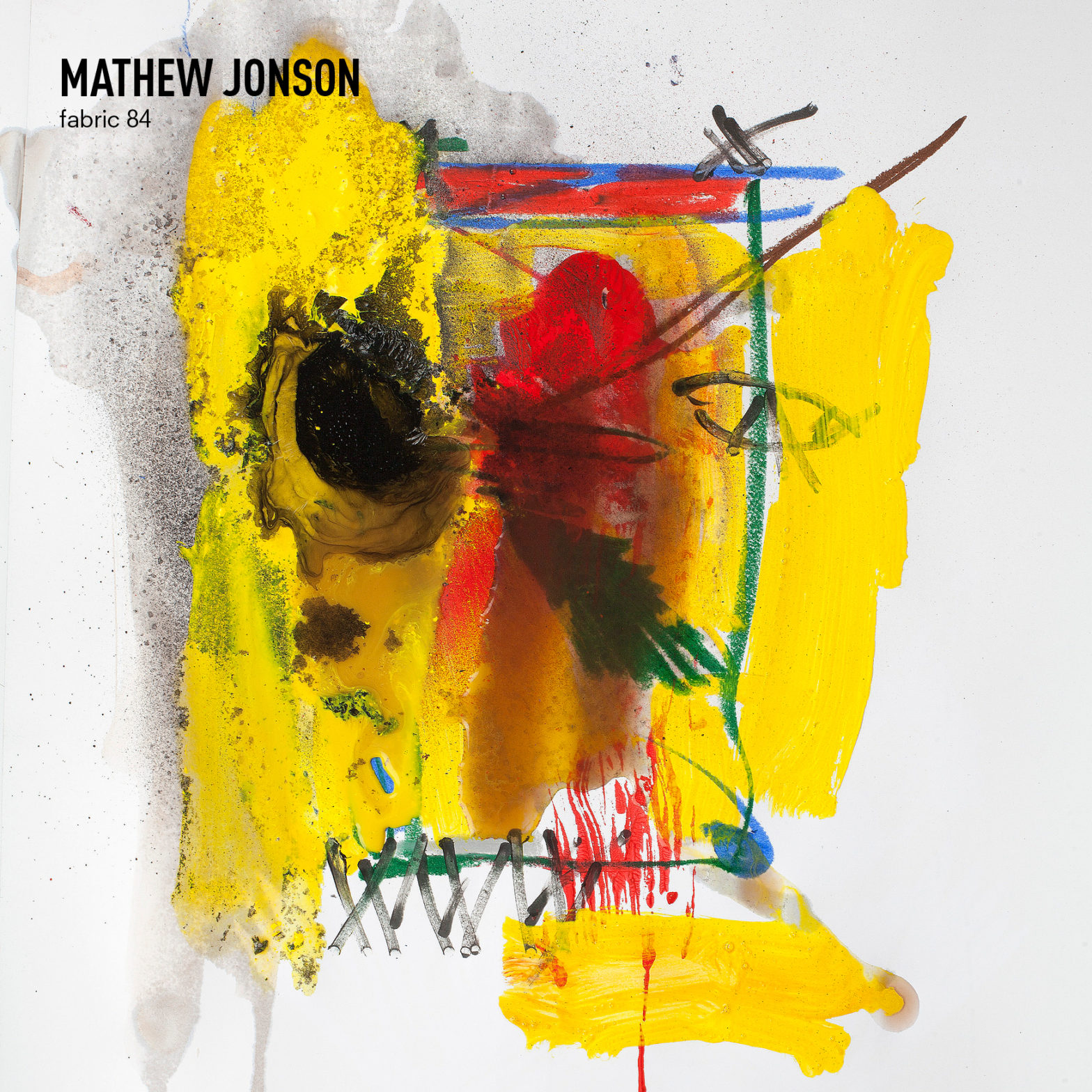
Ahead of the October 16 release of his highly-anticipated fabric 84 mix, Mathew Jonson‘s “The World Will Come Around” track can be exclusively streamed in full below. The track is previously unreleased and the only time people might have heard it was in some of Mat’s recent live sets.

fabric 84 is a live recording of Jonson’s set at fabric‘s 15th birthday party in October of 2014.

This is what Mathew had to say about the track:

“I made “The World Will Come Around” in my Berlin studio last year. The title is a reference to hopes that we as a species will start making changes to the way we live and treat our earth and each other. It saddens me to see our world leaders bending to corporations’ greed rather than doing what it right for our children and generations to come. As a musician writing mainly instrumental music, I don’t have a verbal voice when it comes to my art. However, worldly issues and my emotions weigh heavily on me, so I try to express these meanings through my titles when possible.”

Tracklisting: 
01 Cobblestone Jazz – Northern Lights [Itiswhatitis]
02 Mathew Jonson – Dayz [Crosstown Rebels]
03 Mathew Jonson – Learning To Fly [Minus]
04 Mathew Jonson – Marionette (The Beginning) [Wagon Repair]
05 Units and Measurements feat. Deadbeat – Octopus Brains [unreleased]
06 Tobias. – If (Mathew Jonson & The Mole Remix) [Ostgut Ton]
07 Mathew Jonson – In Search of a New Planet With Oxygen [Crosstown Rebels]
08 Mathew Jonson – The World Will Come Around [unreleased]
09 Mathew Jonson – Automaton [Crosstown Rebels]
10 Mathew Jonson – Decompression (Mathew Jonson Acid Cut) [unreleased]
11 Mathew Jonson – Decompression (Mathew Jonson Force Remix) [unreleased]
12 Mathew Jonson – Ghosts In The A.I. / Decompression (Mathew Jonson Mash Up) [Wagon Repair]
13 Mathew Jonson – Imagination [unreleased]
14 Subb-an feat. S.Y.F. – Say No More (Mathew Jonson Remix) [Crosstown Rebels]
15 Mathew Jonson – Cause Baby It Just Feels Right [unreleased]
16 Mathew Jonson – That Girl Can Dance [unreleased]
17 Mathew Jonson – That 101 Is Mine [unreleased]
18 Mathew Jonson – Feels Like Liquid [unreleased]
19 Mathew Jonson – Body In Motion [Crosstown Rebels]
20 Kevin Saunderson feat. Inner City – Good Life (Mathew Jonson’s Acid Mix) [KMS]

fabric 84: Mathew Jonson is scheduled for October 16 release via Fabric Records.

Q&A: Chronicle Celebrates Tenth Release with New Compilation

Bolstered by the unshakable body of work behind it, Brooklyn-born Berlin-based techno label Chronicle has reached its milestone tenth release–and, at such a point, it pays to make a strong, defiant statement of intent, toasting to what the label has been about so far. To mark the occasion, the label will release the Consider This A Warning compilation.

Consider This A Warning is a fitting title for a salvo of sounds that sets the tone for where Chronicle will head in its coming chapters. This compilation reaches out to a swathe of tempos and intensities without ever losing that haunting spark that has shaped out the label to date. Each artist on the compilation has a distinct identity, but they all strive to push techno into unexplored realms, placing the emphasis on atmosphere and psychological impact.

Ahead of the compilation’s October 30 release, XLR8R spoke with label-head Lenny Posso to learn more about the comp, Thema’s upcoming 10th anniversary and his recent relocation to Berlin.

Vinyl Tracklisting:
A1. Arnaud Le Texier – Nebulous
A2. Ben Gibson – Aida
B1. Staffan Llinzatti – Silence
B2. Hironori Takahashi – Bazeru
C1. Echoplex – 2ndndary Forcefield
C2. Aiken – Flux
D1. Zadig – In The Abyss Of Time
D2. Unknown Artist – For All Man Kind ( Vinyl only Bonus Track)

Bonus tracks on CD:
Bonus tracks on CD:
1. Imugem Orihasam – Tame Pogn
2. Mike Storm – Human Spaceflight
3. Ben Gibson – Red Lapses
4. Arnaud Le Texier – Program
5. Staffan Linzatti – From This World
6. Staffan Linzatti – Emissions

This is Chronicle’s tenth release—what is the concept behind Consider This A Warning and how did you go about selecting the artists and title for the compilation?
Yes, after four years we are hitting the tenth release—and in some ways this was the year of the milestone for us. Thema hit its 40th release earlier in the year; Thema Digital has made it to it’s 30th drop and Chronicle is now on its 10th. Hitting these milestones was a personal goal for me and for all three of them to hit on the same year made it obvious that it was a point of transition for the labels as well as myself. It helped me to make my final decision to move overseas. It became apparent that it would be very difficult for me to raise the labels and myself to the next level with me living in NYC. I chose to leave my design job and come to Berlin. The move allows me to focus more on the labels, label nights—and easier to line up promising and exciting releases on all imprints. But regarding the compilation, its concept and its title: Its really about transitions, these milestones and my move over here. The title is a statement of all that combined, getting all these artists on one project, with me now being based in Berlin and hitting the tenth release. This compilation is a collection of all the artists who have contributed before as well as some newcomers who will soon to release with us. I also felt it was a good time to get the gang together and show them what we’re all about!

I would also like to note that this will be the first time that Chronicle has a digital/CD component. The label has been a vinyl only label to date, but we decided to release this project and some tracks off of our early catalog soon.

Thema also marks its tenth anniversary next year. What’s the plan for the two labels going forward?
I can’t believe it’s already been ten years! I’m very excited for it and we are planning some big events with many of the artists, and friends of the label. I plan to do nights next summer 2016 in Berlin, NYC, and hopefully Paris and Tokyo. I’d say with many of the key players from the Strength In Numbers compilation, such as Norm Talley, Mr. G, Oskar Offermann, Ark, Suburb, and more.

As for the direction of the labels, I know we will continue to move in full stead with releases lined up for months. The slow manufacturing is definitely affecting us as well as many others. I hope this problem is resolved very soon—or we might try and invest in our own pressing machine. I started Chronicle as the techno extension of Thema. Thema will become more house, but with some techno as well—let’s just say full spectrum for Thema but leaning more towards the house vein and more focused on futuristic sci-fi techno for Chronicle. Upcoming artists are D’Marc Cantu, Myles Sergé, A&S, Dave Aju, Elbee Bad, Mike Storm and Echoplex. We are very much looking forward to the next chapter of the labels.

There is talk of a third label for more ambient/experimental left field musical expressions down the road. I already have a name for it.

You’ve just moved from New York to Berlin—what does that mean for your immediate future as a label owner & DJ?
I had planned to move overseas for some time, especially after playing more regularly–and seeing the response of the labels, the artists and a very welcoming response to myself as a DJ. So I recently transitioned from Brooklyn to Neukölln, Berlin to spend some time here and focus more on the labels and getting integrated into the EU circuit. I’m very keen to establish a few residencies throughout EU for the labels. That is part of the reason I am out here. I know that there is a better supporting infrastructure for this music than in the US. I felt it was time to make the move; Berlin was the obvious choice. My short-term goals are just to experience this great part of the world, and to meet as many people who are into what I/we are doing. I want to connect with them and the scene in their part of the world.

Interview: Fugue Machine’s Alexandernaut

Fugue Machine is the work of Alexandernaut (a.k.a. developer and musician Alexander Randon), who has the excellent apps Arpeggionome and Arpio under his creative belt. And, like many tools, Fugue Machine was developed out of the creator’s desire to use it himself.

It all started for Randon with an interest in Johan Sebastian Bach, who in the 18th century popularized a compositional style known as the fugue—complex, ornate music that was realized through the application of mathematical operations to melodies. “I learned about his work in college, and the idea of applying mathematical operations to music always fascinated me,” he says.

Since then, Randon would often apply operations to melodies as part of his own composition process. “I’d start with a melody in a piano roll, for example, inside my DAW. Then, to apply the operations, I would copy/paste notes, stretch them, reverse them, shift them up and down, etc.” This worked well, and isn’t particularly novel in today’s digital world, but he eventually recognized a problem: These operations took lots of time—often, long enough to break musical flow.

So Randon set out to build a tool to help remove that time—something that would enable him to hear the results of an operation almost immediately after curiosity struck. As it turns out, Randon realized that the best (though not-so-obvious) implementation for this was a multi-playhead piano roll—and eight months of programming later, Fugue Machine is now available for purchase on your friendly neighborhood Apple iTunes App Store.

“I was a main-track engineering student, so the idea of combining something I was good at (math) to something I wanted to be good at (music), seemed obvious.”

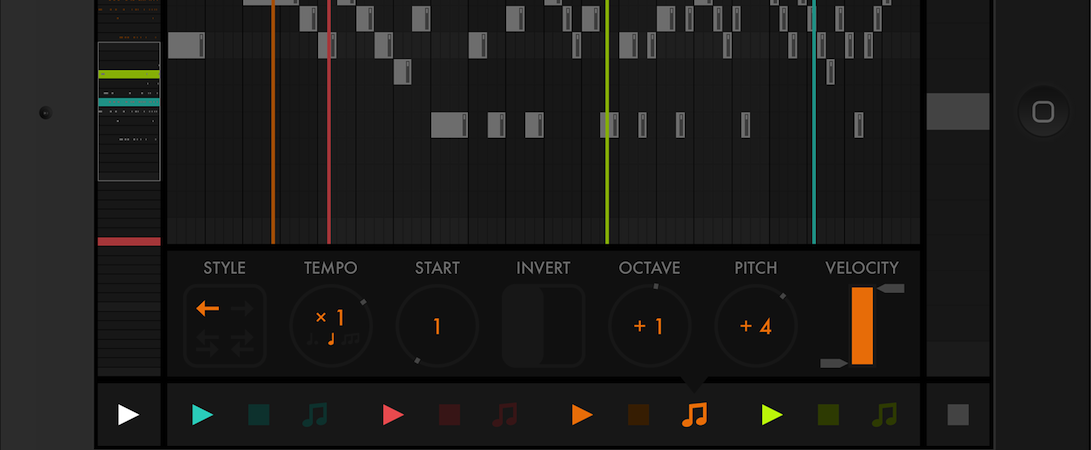
Essentially, the app lets you manipulate and change the direction, speed, and tone of the melodies you create in its familiar piano roll, playing multiple variations of that melody simultaneously via multiple playheads. It works with its own internal sound engine, and can send MIDI information to external sound sources as well. “I was a main-track engineering student, so the idea of combining something I was good at (math) to something I wanted to be good at (music), seemed obvious.”

There were, however, some notable challenges on the road from conception to reality. The first was an issue of interface design, and realizing the concept of multiple playheads. “I’ve actually wanted to build a melodic operation tool like Fugue Machine for years now, and I’ve tried a bunch of times, but was never able to satisfy all the design goals,” Randon says. In fact, it wasn’t until, fed up one day following a dead-end design approach, that Randon decided he’d build Fugue Machine’s back-end first, in hopes that the technical design might inspire its UI. “I quickly realized that the most eloquent technical design was to have one music sequence being read multiple times,” Randon says. “Then it hit me: That’s a piano roll with multiple playheads! I seriously jumped up and down, alone in my music studio, for far too long.”

MIDI Note messages provided their own technical challenges, particularly when dealing with external sound synthesizers—more specifically, how to handle moments when the same note is triggered by two or more playheads at the same time. There’s no standard way that synthesizers handle this scenario: Some will create a second voice, others will replace the first, and some will actually just freak out or get hung up. So Randon had to ensure that for each note, there would only be one active “Note On” message sent at a time. Though coding the algorithm to make this work was extremely difficult to keep lightweight, he eventually got there.

Randon worked on Fugue Machine on eight months straight, thanks in part to the Gray Area foundation, a Bay Area nonprofit based on applying art and technology to create positive social impact. (Among other things, Gray Area incubated Jono Brandel’s incredible Patatap, a mobile and web app that functions as a portable audiovisual kit.)

“The Gray Area community is just incredible, and it’s probably the main reason I choose to stay in San Francisco,” Randon says. He spent three months working inside the Grand Theater, a historic theater in the Mission District that Gray Area has rebuilt from the ground up. “The program included project critiques, various resources, and culminated in a public showcase. I work alone, so working around a diverse group of artists/technologists was refreshing and inspiring. And the deadlines! I’m convinced I got this thing to work thanks to the pressure of the impending public showcase. I had to show something!”

While Randon worked hard to create an extremely clean, lightweight internal sound, the ability to send the note data to external synthesizers makes it even more powerful. Randon says the best way is to control external hardware synths is with a CoreMIDI hardware interface, like iConnectMidi or the original iRig MIDI (which he recommends due to its ability to power the iPad, unlike its successor). The MidiMux app is another option for those looking to integrate Fugue Machine into their studio: it connects to your computer via lightning cable and, with an accompanying MidiMux server app, Fugue Machine and all other virtual MIDI ports show up in your computer as regular MIDI ports.

“I make it a point to see every little detail through before I launch anything.”

With professional applications in mind, widespread tech company approaches didn’t really apply. “There’s a common practice in the Bay Area tech scene to ‘release early and iterate’, but I don’t follow it,” Randon says. “It doesn’t seem to apply well to pro-music software—software that users have a relatively intimate relationship with. If a piece of music software crashes when you’re in the creative zone, it really is heartbreaking! And since I know the feeling all too well, I make it a point to see every little detail through before I launch anything.”

Fugue Machine is currently iPad-only, but an iPhone version is in the works. Randon has a healthy list of new features in mind as well, including the ability to send each playhead to a different destination. This means you’ll soon be able to send each playhead to a different hardware synthesizer, or to a different synth app on the same iPad. There are two other upcoming features Randon is excited about, but he’s keeping them close to the chest for now.

For Randon, it’s another step on a journey that began ten years ago. “I actually recall the exact moment I became interested in music,” he recalls. “I was in high school, and my friend bought a Korg MS2000. The first time I played with it, I held a key, turned the cutoff knob—and that was it.”

Hear a Preview from the Upcoming Sepalcure EP, Fight For Us

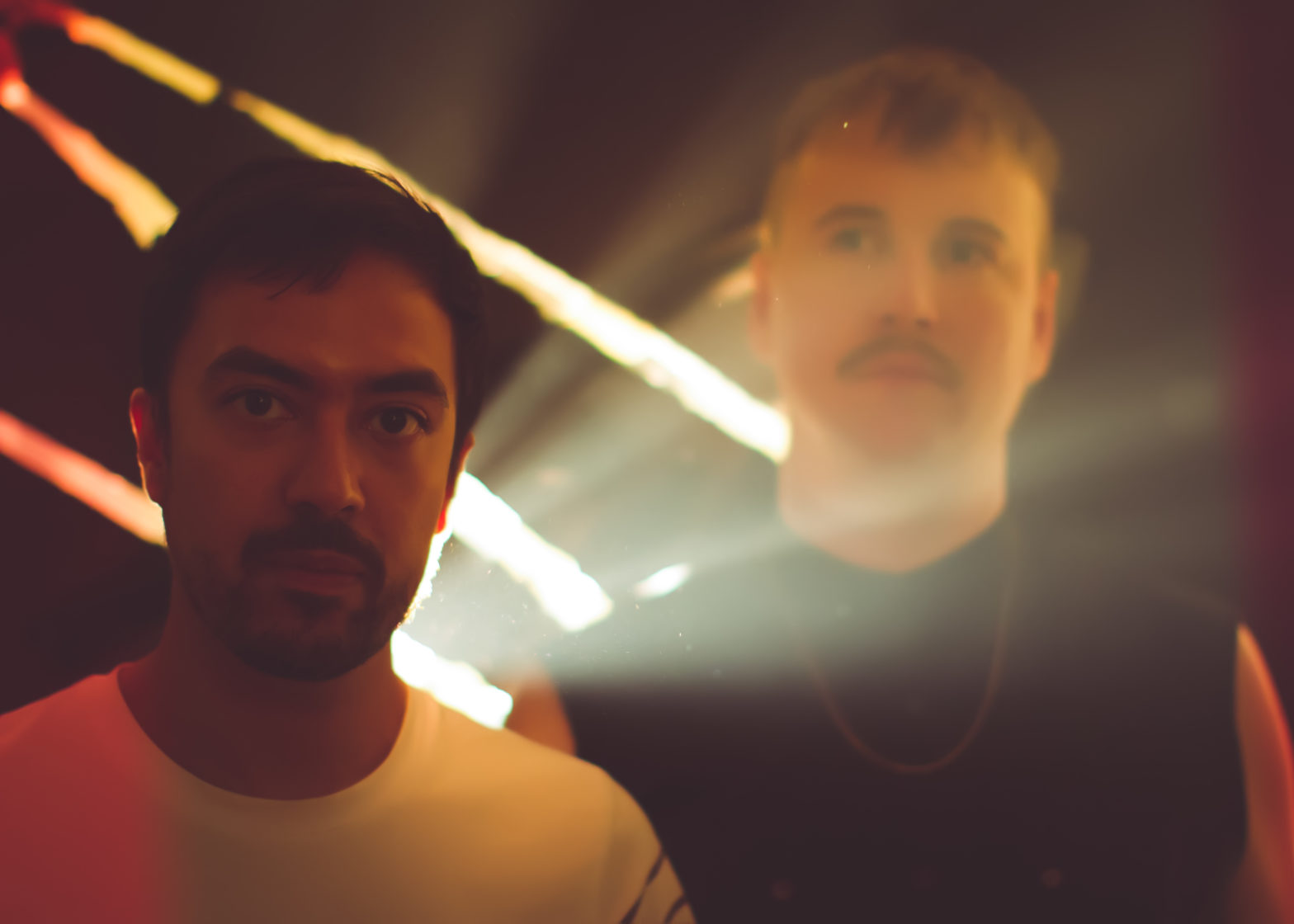
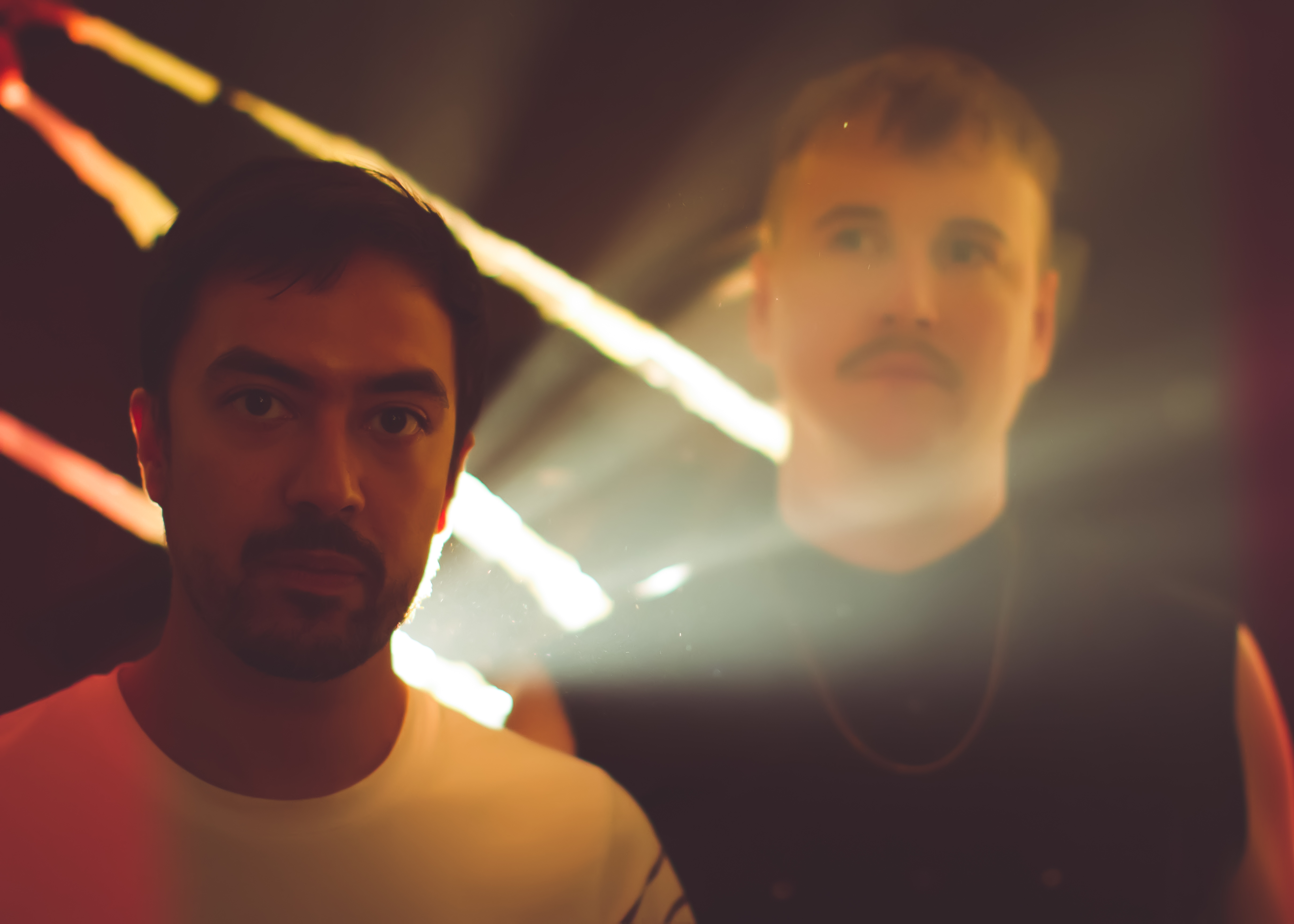
Since the release of its first EP, Love Pressure, and the follow up, self titled debut LP on Scuba’s Hotflush imprint, Sepalcure has been heralded as one of the label’s most prized groups. The duo, which consists of Travis Stewart (aka Machinedrum) and Praveen Sharma (aka Braille), have respectively taken breaks from their solo projects over the years to come together and craft a sound with a refreshing structure and genuinely unique dance vibe. The two-track EP features springy, blooming female vocals and compelling drum patterns in “Fight For Us,” and transitions into the looming chords and attractive grooves used in “Music for All.”

This will be Sepalcure’s 6th EP for Hotflush and will be followed up by the duo’s second full length, which will drop sometime in April of 2016.

You can stream the preview for the Fight For Us EP below.

Martin Buttrich Kicks Off New Label With Mathew Jonson Collaboration

Martin Buttrich’s aptitude for working the mixing board behind the scenes and crafting relentless, crisp dance music is something of a well known fact. After helping Loco Dice record and produce his LP, Underground Sound Suicide, Buttrich has decided to create his own imprint that can be an outlet for “impulsive releases of his own music.” His new label, Rhythm Assault, will kick things off with a two-volume collaborative project between Buttrich and a slew of impressive producers. These artists include DJ Tennis, Loco Dice, The Martinez Brothers, Guy Gerber, Carl Craig, Timo Maas, and Guti.

To christen this exciting new label, Buttrich has decided to release his first single, titled “Synchronicity,” with analog prodigy Mathew Jonson. You can stream the single below and be sure to follow the Rhythm Assault page on Soundcloud to keep yourself updated on these exciting collaborations.

You can buy the single by heading to Beatport here.

Premiere: Atom™ and Burnt Friedman Return as Flanger; Stream New LP in Full

Atom™ and Burnt Friedman, the genre-bending German artists behind Flanger, return with Lollopy Dripper, their first LP together in nearly 10 years.

The beautifully sprawling LP features 10 minimalistic, jazz-infused compositions, which will find home on CD and double LP formats curtesy of Friedman’s label, Nonplace. Flanger has once again crafted an album of intricate beauty—one that is rooted in experimentalism, but with body-moving undertones. With every listen, the album and its tracks open up more and more, revealing new elements and emotions to take in. It would do the album a disservice to attempt to classify or catalogue it with any genre. It should instead be devoured with open ears and without any preconceived notions.

Ahead of its release on October 16, you can stream Lollopy Dripper in full below.

Event Review: Kraftwerk at Detroit’s Masonic Temple and After-Party at MOCAD

Photo: Peter Boettcher/Kraftwerk

“Kraftwerk in the DJ booth while the Elevator plays electronic funk.” No, not a mincing of the infamous Derrick May quote describing the sound of techno, but rather the way a monumental night in Motor City some 30 years in the making concluded. Last Monday, October 5, following their first performance in Detroit since 1998, the robots were roaming around the Museum of Contemporary Art Detroit (MOCAD), taking in the electrifying and exuberant after party as techno’s founding fathers took over the acoustics.

As Kevin Saunderson tells us, “The bringing together of…Detroit techno’s innovators and Germany’s own counterpart had been a dream for us for a long time. Having the three of us on one stage with our German colleagues was truly an experience that will live on in our minds forever…it was a magical night.” If ever there was an affair that saw electronic music’s past meet up with its present and prove its timeless relevance, this was it.

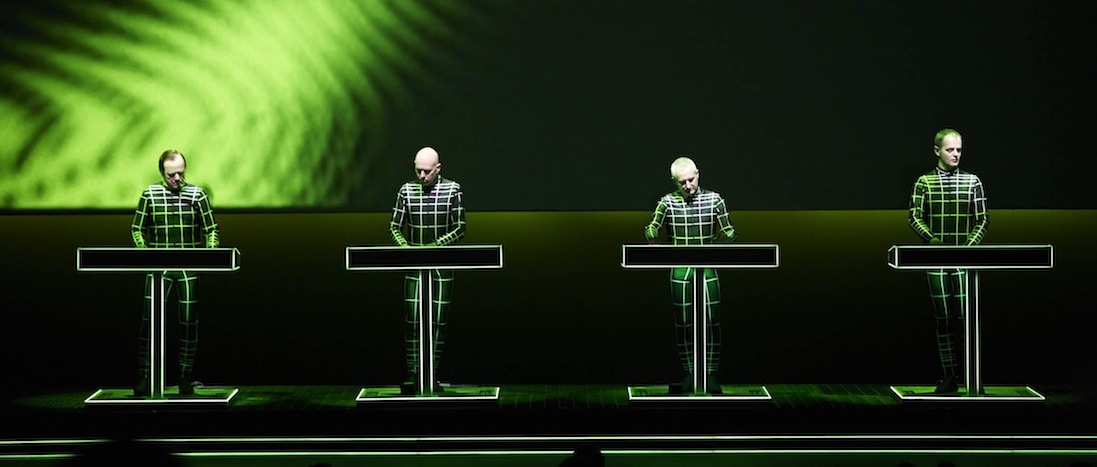
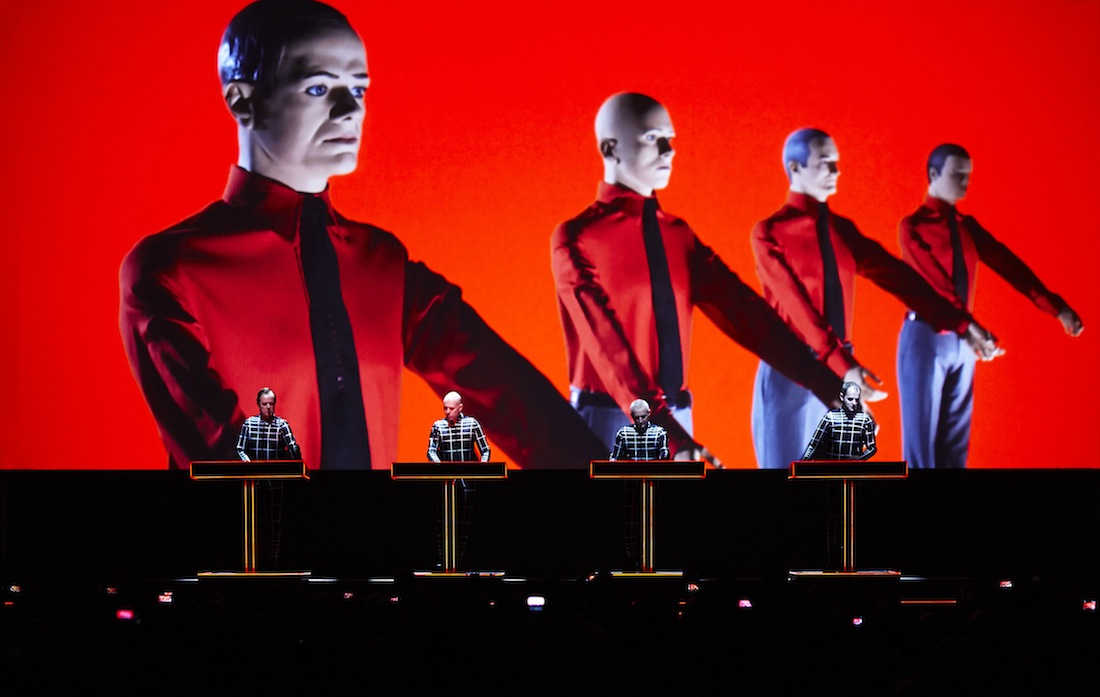
Earlier in the evening, the electronic-pop pioneers had brought their 3D show to Detroit’s Masonic Temple. A 27-song excursion that included two encores, it was one of those nights you knew will go on to live in infamy even while it’s happening. For a clue as to the significance the group holds in the city that spawned techno, one need merely peruse the crowd. A who’s who of DJ royalty sitting eagerly in their seats, Derrick May, Kevin Saunderson, Stacey Pullen, BMG, members of Detroit Techno Militia and Marshall Applewhite are all in attendance, among a plethora of peers and an auditorium of electronic-music-loving adults.

 Photo: Peter Boettcher/Kraftwerk

The red curtain lifts, seven-segment green digits flash across the screen and, as soon as those four iconic, stoic figures appear on stage, we are transported to another realm. Wrapped in Kraftwerk’s digital embrace, for two hours we exist outside the limits of space and time, experiencing close encounters of every kind. The visuals giving the feeling of a retro-futurist virtual reality or video game, “when are we” and “where are we” become questions we ask ourselves repeatedly.

 Photo: Peter Boettcher/Kraftwerk

There is something incredibly endearing about a room full of grown-ups donning dated cardboard glasses. The techno nerd-child in each of us exposed and out to play, the enthusiastic whoops of middle-aged men can be heard at regular intervals. Where much of contemporary electronic music seems centered on “the drop,” each Kraftwerk song coasts along at a steady and constant state of elevation. Unfortunately, the crowd doesn’t follow suit—save for the carefree few who take to the aisles, the room remains seated for the majority of the show. Only during the encore is everyone finally on their feet, but even then they do more standing than dancing.

With their futuristic overtones, Kraftwerk provide one of the few environments in which electronic devices capturing photo and video don’t come off as intrusive or obnoxious. On the contrary, they seem fitting. The small screens glowing something psychedelic from behind our red and blue lenses, they’re an indication of the modern-day melding of man and machine. We are the robots.

 Photo: Peter Boettcher/Kraftwerk

We mosey to the very sold-out after party at MOCAD, where Art Payne is spinning a smart and inspired set to start things off. The night’s a 101 on the music that has inspired the 313: Payne incorporates Alexander Robotnick’s “Problemes D’Amour,” Kano’s “I’m Ready,” Cybotron’s “Clear,” New Order’s “Blue Monday,” and Derrick May’s “Strings of Life.” Dantiez and DaMarii Saunderson take a turn before Mike Grant takes the helm., dropping Telex’s “Moskow Diskow,” Channel One’s “Technicolour” and Kraftwerk’s “Pocket Calculator.” Eddie Fowlkes brings aboard gems like Michael Jackson’s “Blame It on the Boogie” and Mihai Popoviciu’s bootleg mix of “Transitions.” Techno’s originators all on hand, Derrick May follows Kevin Saunderson before Juan Atkins closes it out with still more classics—Giorgio Moroder’s “Chase,” Jeff Mills’s “The Bells,” and his own “No UFOs.”

Coming full circle, the night ends the same way it began—with Kraftwerk’s “Numbers” mixed into “Computer World.” This time, though, the four Germans stand by as spectators. They soak in their own impact in a room filled with reverence for the music’s roots, within the city that they told Rolling Stone they feel a “spiritual connection” to. Putting it all in perspective, DJ Art Payne comes over the mic. “Just want to take a second to have Detroit show their appreciation for Kraftwerk. Without them, this whole genre we call techno may not have ever been. They influenced each and every DJ that’s ever touched a vinyl record in Detroit,” he acknowledges. We would happily live within the confines of the group’s Computer World as long as they would have us. Perhaps we already do.

 KRAFTWERK Burgtheater Wien 2014 TEE
 Photo: Peter Boettcher/Kraftwerk
 Photo: Peter Boettcher/Kraftwerk

Podcast 408: Tyree Cooper – ADE 2015 Edition

If you’re a DJ who ever gets the chance to drop some early-era house into your sets, try dropping an old Tyree Cooper track—let’s say 1988’s “Turn Up the Bass,” released on the fabled D.J. International label—and see what happens. The odds are good that have the happiest dancefloor around, as the Chicago producer’s seminal tunes rarely fail to work their magic, even nearly three decades on. His productions, just like his DJ sets, were imbued with that ineffable kind of jacking joy that old-school house can bring, a skill he learned from a youthful diet of the Hot Mix 5, Farley Jackmaster Funk, Ron Hardy, Frankie Knuckles, et.al.

Flash forward to the present day, and Cooper is still gleefully rocking the four-to-the-floor rhythms in his current home of Berlin and around the world—and his sets will still put a smile on the face of any lover good old-fashioned house. If you’re going to be at the so-close-we-can-feel-it Amsterdam Dance Event, you can catch him person at not one, not two, but three separate gigs on Wednesday, October 14, Thursday 15 and Friday 16. In the meantime, though, check out the below mix for an hour and a half of emotion-drenched, pumping heat—a set that begins, fittingly enough, with a track commanding you to hit the dancefloor, and ending with a tune dedicated to the power of house.

01 Mental Instrum featuring C.A. “Should Be Dancin’” (Freetown Inc)
02 Trey Lorenz “Photograph Of Mary” (Epic)
03 Ivaylo & Slammer featuring Renate “Guide” (Bogota Records)
04 Frankie Knuckles “Keep On Movin” (Definity Records)
05 Funkadelic “Ain’t That Funkin’ Kinda Hard On You” (Vega Records)
06 Corky “Traxman” Strong “Boogie with da King” (unknown)
07 DJ Spen & Tracy Hamlin “Thanks To You” (Quantize Recordings)
08 Lil Louis & The Party “Clap Your Hands” (Go! Beat)
09 Chris Burns & Jamie 3:26 featuring Denise Henderson “Say” (Quantize Recordings)
10 Claude Monnet “Voodoo Bounce” (SSOH)
11 Gershon Jackson featuring Sio Blackwidow “How Did We Get Here” (Omni Music Solutions)
12 Hugo H “Chante’-vs-James” “Lumberjacks In Hell”13 Gershon Jackson “Love Desire” (Defected)
14 Cupcakes “New Position” (Cupcakes Music)
15 Blaze presents UDAUFL featuring Byron Stingily “Spread Love” (King Street)
16 Tyree featuring Marco Anderson “All You Need Is House” (Chicago Vinyl)

Photo: Marie Staggat

XLR8R Podcast 408 – Tyree Cooper ADE 2015 Festival_Edition

Page 979 of 3781
1 977 978 979 980 981 3,781