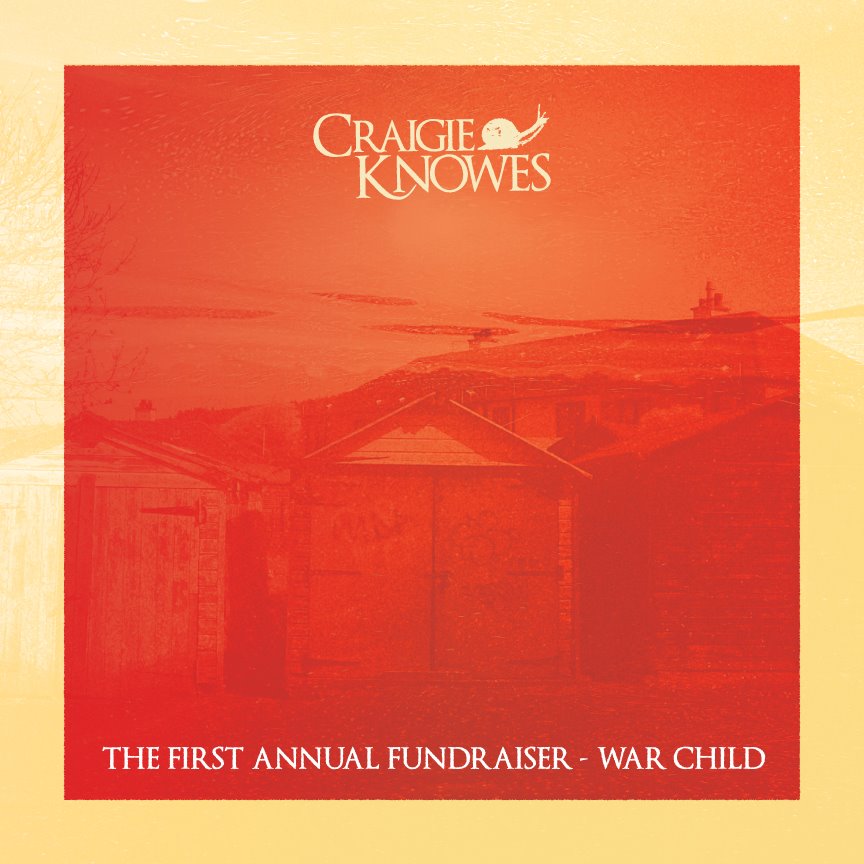
The charity compilation is invariably an effective means for allowing musicians to do their bit in support of whatever cause calls for it. In this instance, it’s the turn of fledgling Glasgow-based label Craigie Knowes, who will offer the totality of their profits from its first release to the War Child organization, in support of youngsters whose lives are affected by conflict.
As far as the musical side of the project is concerned, Craigie Knowes has succeeded in rounding up a wealth of house and techno’s poster boys to pitch in. Move D and Gerd Janson team up for “Taps Aff For Glasgow” (a situation that Move D has apparently found himself in a number of times in recent years); a fairly dark and stripped-back affair, it centers around a sluggish to-and-fro between two recurrent chords, and is primed for club use. Bicep’s “Malima,” meanwhile, is more emotional, building from choral echoes through to a climatic cacophony of acid sounds, before dropping back down again.
Some of the album’s best moments are also its most divergent. Daniel Waples’s hang-drum jam, “Djansa,” is projected through a cloud of incense haze. True to form, Lord of the Isles (a.k.a. Neil McDonald, a Scotsman himself) follows with the short but very sweet “Grafta,” a celestial jaunt among cascading broken beats. The Burrell Connection offers a slightly too over-the-top acid jam, “Acid Rapids”; ASOK’s “Toltec” is a more subtle and enjoyable take on the sound. Amir Alexander’s collaboration with Cecilia Bruun Hansen as the Binary Stars System is the most impressive contribution; with her alluring vocals echoing over an energetic bassline, “Kom!” really works. Neville Watson’s tribute to the charity, “War Child,” is also noteworthy, shifting with ease between tribal sounds and imposing synths.
The compilation is, on the whole, a success through its diversity, providing a pleasant assortment of differing takes on the genre. With the promise of more annual fundraisers, and a contribution from all future releases to War Child, it seems that Craigie Knowes are prepared to dedicate their energy and resources to making a difference through music—with some decent tunes in tow.
With loads of various EPs, singles, and remixes under his belt, the time has come for UK artist Shenoda to release his first full length EP, Labour, via the profoundly influential imprint Aus Music. Being both a classically trained musician and a DJ, whose talents remain in demand all over the world, Laurie Shenoda’s musical influences run the gamut but result in the output of some truly momentous sounding house and techno.
Each song featured on the 4-track EP varies in their stylistic agency, but all are definitively club worthy. From the vivid orchestral strings in “Sunbeam Bloodstream,” the frigid, droning synths of “Streak,” and the classic Chicago house chords in the title track, “Labour,” this is a release with an unseeming amount of reach.
Be sure to check out more from Shenoda by visiting his soundcloud page here.
Tracklist: 1. Labour 2. If Could 3. Streak 4. Sun Bloodstream
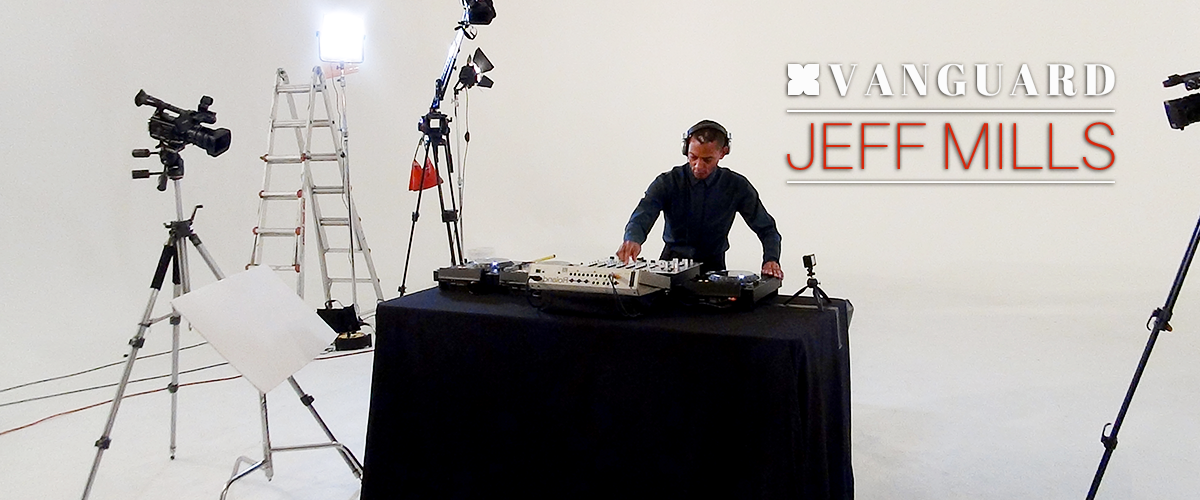
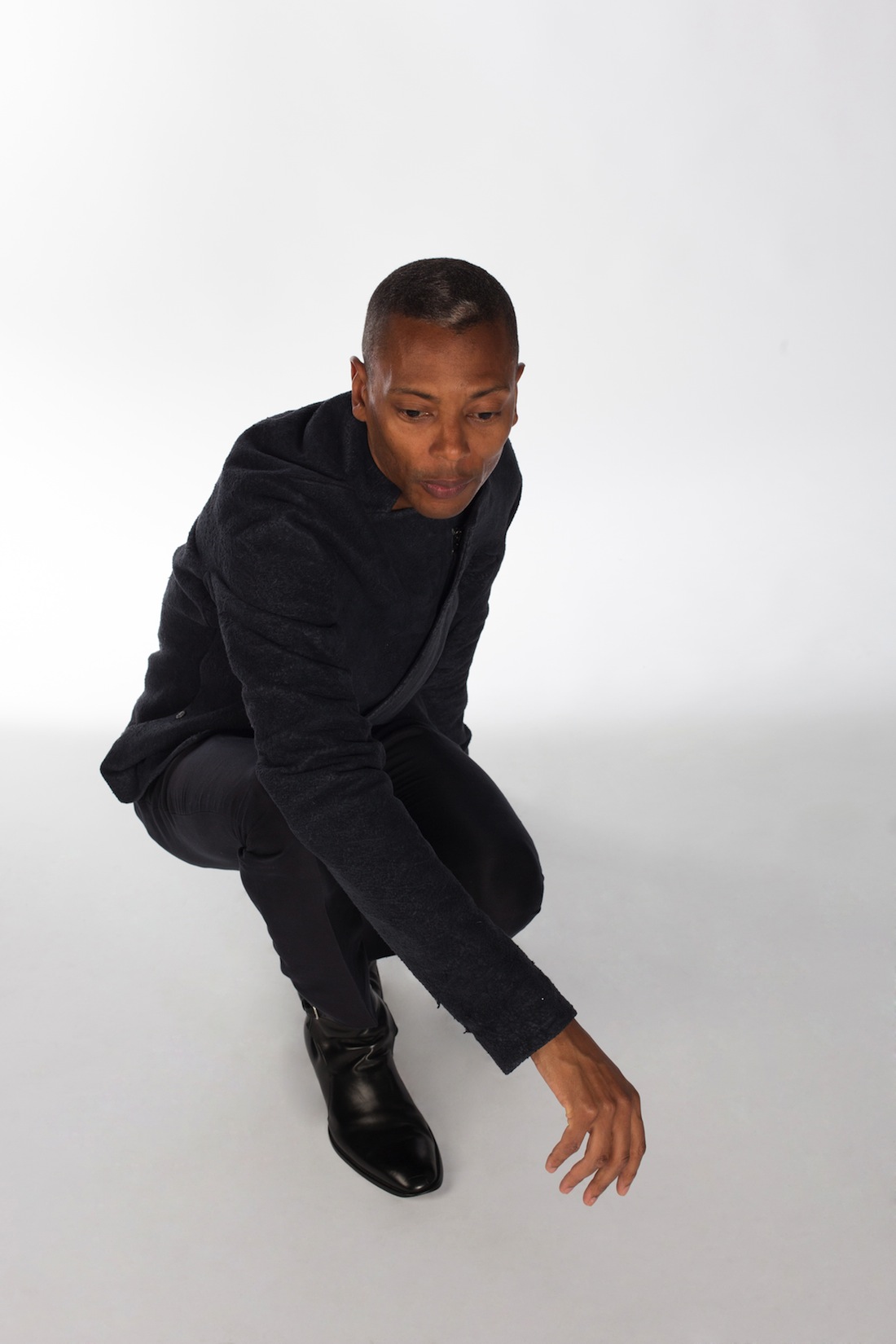
“That was weird,” I mutter aloud midway through my phone call with techno mastermind Jeff Mills. We’ve just been disconnected. At least that’s what transpired on the Detroit-born techno pioneer’s end; on mine, something much stranger has taken place. A bizarre and unprecedented technological glitch, the last word he had spoken inexplicably began looping, repeating robotically like a broken record—or a drum machine—for nearly ten seconds, until I finally hit the red button to end the call. Later in the conversation I inquire whether the sci-fi concepts so intrinsic to his work stem from personal encounters with the paranormal. “No, no, no. Just a fan,” insists the longtime head of the Axis label, who has just released the Exhibitionist 2 DVD and CD, the long-awaited follow-up to 2004’s Exhibitionist. Admittedly a bit disappointed, I inform my friend. “Jeff Mills is the paranormal,” she succinctly replies. I can’t help thinking she might be right.
I’m catching you in Chicago, where Axis HQ has been since the early ’90s. What made you choose Chicago as your home base? I had spent some time in New York [but] I had some family in Chicago. I thought before I got so entrenched in New York it might be better to experience another city. So I moved to Chicago and I found it really comfortable to work. So I eventually moved into opening an office here, and I’ve been here ever since.
Is there anything you miss about Detroit that you don’t get to experience anywhere else? You can have a certain kind of conversation with people because of the way the city is designed. When I was young, each part of the city had…well, first of all, there were lots of children everywhere. Each area basically had the same structure, so you had the certain type of shops, you had the school, swimming pool, you had certain things. So whether you lived on the east side or the west side, as you grew up, you can speak about things to people from other parts of the city and you can kind of feel that connection. So if I were to meet someone my age from Detroit, we would probably have a lot of similarity, even though we didn’t live next to each other. We could talk about the same TV shows, many different things. It’s interesting to have that connection.
On the topic of Detroit, did you hear that United Sound was recently designated a historic structure by the Detroit Historic Commission? Yeah, I think that’s well deserved. Detroit was always very full with recording studios, but that one was always one of the top because of its history. George Clinton used to record there, Aretha Franklin…it was used for a lot of recordings during the Motown era. It’s really a landmark, you know? I totally agree that it should be protected.
Absolutely. Weren’t you helping around the facility in exchange for studio time when you were first producing? I have had many different experiences. I was a musician before I became a DJ. At one point—I think this was maybe during the time I was on the radio—I wanted to understand studio recording more. I knew a lot of the engineers that worked in the studios and I eventually asked one studio if I could just intern. So I was an intern for free, just to learn how to work a big console and learn more about outboard and how to do the microphones. I think Mike [Banks] and I did something at a studio to offset the cost for recording. It was basically like that. You were very eager to learn it.
“I feel that actually it’s one of the things that we really fought for in electronic music, this freedom to express our idea and not be restricted or be prevented [by] obstacles to do it.”
It seems like a lot of your work intends to debunk misconceptions about techno—that it all sounds the same, that it has to be for the dancefloor, and so on—and strives to showcase the true art form and aims of the genre. Was there a certain point where you felt a responsibility to put that sort of work out there? I’ve always felt that if I have an idea, there might be people interested in hearing it or seeing it. I feel that actually it’s one of the things that we really fought for in electronic music, this freedom to express our idea and not be restricted or be prevented [by] obstacles to do it. I always feel that I have that option, no matter how crazy the idea is, how strange it is.
I think that we tend to think that maybe there aren’t that many good ideas left in electronic music, that everything has been done and we have exhausted all of the possibilities of electronic music. I do think that most of the music does sound the same, and I think it’s because of the technology and the way that it’s been used. Not what the technology is, but basically how it’s being used. It could be that producers feel that they need to make something similar because in the end they are rewarded for that. They’re not rewarded for making something completely exotic and something completely experimental and anything different.
Do you think that’s a problem in electronic music in general, or do you think it’s exacerbated and especially bad in the States? There’s really not that much of a difference between producers from the U.S. and Europe. Where we find a difference is how they’re being treated in terms of press and the media. I think that, in terms of the U.S., my feeling is that it seems like the people here—and especially the media and the press—were never convinced that American producers had significant things to say to the music industry as a whole, [and that] is the biggest problem.
The music industry tolerated dance music. They tolerated house music. I never thought they really liked it. When techno music evolved from Chicago…everything fell silent. There was no attention, no mention of what was happening in Detroit. I know this firsthand, because I was trying to communicate on many different levels with many different magazines in the early ’90s, and [except] for a few outlets, [they] were not interested in what was happening in Detroit with any of us. Not Juan, not Derrick, not Kevin, not Carl. They were only interested in speaking about electronic-music artists that had more mass appeal in America. It went that way.
We realized that there was no one to speak to here, so we started speaking to people in Europe. Those people began to invite us over to Europe; they began to buy our music and relationships [developed]. In a short way, that’s basically what happened with Detroit and it’s relationship to America and dance music, and for the most part it still pretty much remains to be the case. It’s sad, because the American public was never really given the chance, from what I can see, to really know what Detroit and Detroit techno was really about.
I think, in the end, American people really [aren ’t] interested, because they haven’t been shown that there’s anything interesting about it. This industry, it’s all about subjections. I think people are free to choose whatever, but the consequences are as they are, and from what I can see, Detroit techno belongs more to Europe than it does actually [to] the U.S., as a result. Because they have invested more into the industry and the art form of it than Americans have.
After Movement 2012, you retired the Wizard indefinitely. With electronic music gaining so much popularity in the US, there’s this new audience for it, but by and large they don’t have any understanding of its roots. If anything, it seems like a time when we need names like the Wizard teaching this younger generation where it came from. Since you did retire the Wizard, though—what about bringing something like Time Tunnel to the U.S. as a project that provides historical context in an engaging, digestible party atmosphere? I’ve never been asked to bring Time Tunnel to the US.
I’m asking! I tested the idea in New York, actually. Trying to understand what the audience reaction would be in that type of setup. I actually started it there. But then when I formatted the bigger production setup for it, the interest was actually in Europe, in Paris. Only recently have I been asked, and I think that’s because of what’s been going on in Europe. They ask for, in most cases, just to come over and DJ for two hours. I think the biggest problem is that there has been no real exposure about what people are doing. Let me give an example. When I got the residency at the Louvre I thought, okay, one of the nights is going to be about Egypt and the cycle of life. I had this press agent contact all of the Afro-American magazines, because I thought that it might be interesting how we’re piecing this thing together. It could be the interest of the Afro-American community here in this country. Nothing. Not even a response. That’s not the first time that I’ve tried to let people know what I’m doing, that there might be a chance that I could come here to do it.
It’s not just a racial thing. Maybe if I had gold teeth and I looked like a hip-hop artist, maybe I might have a better chance. I don’t know. I don’t know what it would take, but obviously the things that I have been doing, there is very little interest in that. I don’t really know why, I just have to equate it to the fact that the American public, black or white or whoever, hasn’t been informed that there’s more to it than just throwing pies at your audience. That the music can be about things, not just about creating a certain type of atmosphere. I think that’s one of the big problems. And I don’t mean to throw all the blame on the press. The people have a responsibility, too.
“Music isn’t a very disposable thing. Some music is really meaningful. You kind of want to hold onto that.”
Music isn’t a very disposable thing. Some music is really meaningful. You kind of want to hold onto that. I think that we just haven’t seen that many examples of…there really hasn’t been anything since hip-hop, as far as dance music, that the American public has really clung onto. And they worked really hard in hip-hop to make these things happen.
You’ve got your hands in quite a few different projects these days, a dozen or more at any given time. Does each project serve its own singular purpose to you, or do you see them as different components of the same story your greater body of work aims to tell? I really like science fiction and storytelling, so any chance to be able to do that with electronic music is what I really love. It’s mostly the case where I’m given an opportunity to do something and then I bring my interest into that, Basically, the best I can put it is, I’m given opportunities, but then I…it’s easier for me to work if they are somewhat connected to my natural interests and things that I’m already studying and researching. For instance, right now I’m studying Jupiter’s moon Europa, black holes, and the three different types of galaxies. One may go for a classical piece, another one may go for an album, and another one may go more for a sound-installation type thing.
Are there any formats out there that you have yet to pursue that you aspire to add to your repertoire? Yes, but it’s difficult because the technology is changing things so quickly. My interest is in doing something that would make people feel a certain way. And whatever it takes to do that, whether it’s something that falls within the line of a communicative type of discipline like film, or literature or whatever, yes. But I also consider all of the other things too, like virtual reality and sensory types of things.
“Creating a space that consists of just a few things to make you feel a certain way is completely logical to me.”
Creating a space that consists of just a few things to make you feel a certain way is completely logical to me. If I can make an album where there’s barely [anything] there but it makes you feel a certain way, I think I’m progressing. It’s not always the “normal” disciplines of art. I think sometimes very simple things are good enough. If I can find a way to relay
what I’m trying to show to people by doing very simple things, just one image or something like that, it’s really acceptable as far as I’m concerned. I’m very much in the business of communicating.
Speaking of communicating, you have the Exhibitionist 2 album and DVD just out. At one point during the film, a message comes onscreen that I really liked. It says, “DJs are unique creatures. Generally good at communicating, they have the responsibility of connecting people together in ways that most people are not aware of.” Can you expand on what that is referring to? As a DJ, I have been trained to look at people for certain things. And it’s those certain things that give me indications that I need to play certain music for them in order to make the party happen or make them enjoy themselves. What happens over time is a DJ develops a certain type of toolbox of things that he uses to be able to read and to be able to communicate with people. And that also carries over into other parts of your life. Their timing is generally very, very good. They’re generally, from what I find, more caring for people in most cases. Not all, [but] they generally develop a way of putting other people first before themselves. I guess that’s just the nature that you work in, and after a while it becomes hard to distinguish between your work and your real life.
There are many things that are developed in the process of just playing music. I think a lot of people maybe don’t realize that, because they’re not able to really understand the psychological thing that happens if a DJ plays thousands and thousands of parties for people that they’ll never ever meet. And so DJs, I think, are very interesting. They have a very interesting mindset and psychological structure.
If the overall purpose of the Exhibitionist 2 DVD is to demonstrate “how a DJ translates what’s in their mind to a listener using machines,” how does the album tie in and further that mission? The album consists of all the music that was made for the DVD. For months I made music that I knew that I would need in order to make the film. The album is really like a toolbox, basically. There’s certain tracks that were made knowing I would eventually be playing a drum machine on top of. There were certain sequences I knew that I would layer three of them together, and things like that.
One of the first things you say in the DVD is, essentially, that you’re exemplifying improvisation and spontaneity in DJing. Do you feel that those elements are being forgotten these days? I think that, for electronic music early on, they were never really considered, because of the way the machines were designed. These were electronic-music computers, or computing type of machines, that of course you could have tried to use it like an acoustic instrument—but the easiest way to use these machines was that you were to program. It would give you a palette which you would insert notes in, and then you would press start, and then it would play that sequence back, and then it would loop it, and then you could tie other machines to it, and there you could make a composition of these tracks to make a full composition. It’s been that way since the ’70s.
What I was trying to show in the [first] Exhibitionist is that there is a part of our history where we were using the machines in a much more organic way. Where we weren’t always tying the machines together via MIDI or CV Trigger or syncing mechanisms. Where we were actually focusing on the machines the same way a musician would focus on his instrument. The machine would be used without planning anything, without programming anything. It would be used to be able to improvise and to express what one is feeling in the moment.
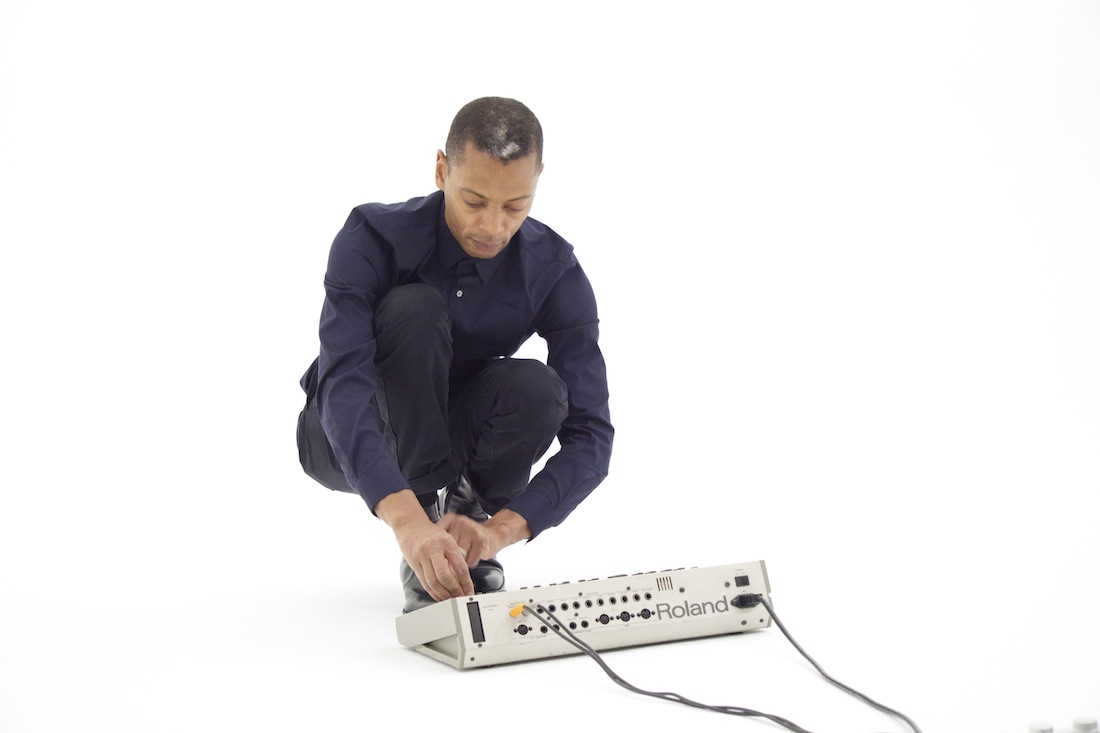
Right now we have these great, incredible pieces of equipment. I mean modular synth systems and all these things. And you have plug-ins and we can rig things to make machines do incredible things that you could never do with your hands, but I think it’s also good to remember that the person [who] is the programmer has certain skills and aspects that can be inputted into the composition that would probably speak even more to a person if we can find the right way to do it. So what I was trying to display with the TR-909 was basically that. We know the machine can be synced to other things, we know that it’s been used in a million techno records over the years. But I’m gonna try to use it in this different way that might show someone that it can be used differently. And if that can be used differently, then all the other synths can be used differently. And if that happens then we kind of, not really recreate the genre, but we then can work in it from many different perspectives, with many different results, so the music doesn’t always sound the same. That might open up other possibilities for different types of musicians to be able to kick into the industry, to do things that we never even thought of. That’s the purpose of Exhibitionist 2.
XLR8R Couldn't find the embed function for type: "vimeo" and source: "<iframe src="https://player.vimeo.com/video/86218993" width="750" height="400" frameborder="0" allowfullscreen="allowfullscreen"></iframe>".
You were the subject of the film Man from Tomorrow, which seems really appropriately named. Did you ever feel like you were born in the wrong era? No. Actually, I feel really lucky I was born in the early ’60s and young enough not to have to go to war, and then old enough not to have to go to another war. I could practice the art form of music. I could focus. I’m really lucky. The only other eras that I really like some parts of it was the 1930s and the 1940s. But as a black person, I would have caught hell back then. [One] of the best parts of the era that I was born is that I could experience the turn of the century.
“We are really at the end of an era, and at some point in this century we will make that drastic change—so a lot of music that I’m making is somewhat preparing young people.”
I read that when you were growing up you and your friends would discuss how old you would be when it hit the year 2000 and imagine what the world would be like then. For most of our lives we’d been getting ready and getting prepared for the turn of the century. From the time we were about ten, [there was] this whole idea that we’re approaching the turn of the century and, after that, we don’t know. Our world could change drastically. Nobody really knew what was coming. Literally all of my life, since I was about ten years old, had been preparing for the turn of the century. And then when it happened, there was a certain feeling of relief: We made it. I’m still alive. I wasn’t cut down in the streets.
I can reflect on this feeling through music, which I have. Certain albums like From the 21st and Rings of Saturn, and thinking differently in regard to the changing of time. I very much feel that I am in the year 2015—and we are approaching the year 2065, the end of the Age of Aquarius, which is a turning point in terms of a spiritual thing, in terms of humanity. We are really at the end of an era, and at some point in this century we will make that drastic change—so a lot of music that I’m making is somewhat preparing young people. They’re going to be able to live, if they live a healthy life, to the end of the century. So they will definitely experience all types of drastic change. So creating music that [may] in some kind of small way, help [them] to try to understand that it’s better to be open to new ideas than to be fixed and confined to things that make you feel comfortable and predictable. Being confronted with something that you don’t understand, and taking the time and the patience to wait for something that you can recognize, is going to be an important factor. I treat music that way. I predate it. I predate certain ideas, certain things, for people that I know may need it more in the future. I do believe that I fit very well in this time. Perhaps I spend more time thinking about when I’m not here as opposed to when I’m here; [the] far future.
At this point, Berlin selector and Berghain resident Ben Klock needs little by way of introduction. His inaugural mix for BBC Radio 1’s esteemed Essential Mix series, which first aired over the weekend, combines classic Detroit techno with more muscular recent releases from the likes of Josh Wink, Spencer Parker, Planetary Assault Systems, Mike Dunn, and more. Stream the two-hour session and find a complete tracklist here, and head here to revisit our in-depth interview with Klock from earlier this year.
Norwegian duo Ost & Kjex have gone a long way: From their debut album Some But Not All Cheese Comes From The Moon to their second LP Cajun Lunch and many collaborations with artists including Solomun,Jamie Jones and H.O.S.H, they have grown to become one of the few acts that perfectly bridges the gap between electronic music and indie pop music.
In the blessed summer of 2008, the boys stumbled upon Solomun, the head honcho of Diynamic—a chance meeting that resulted in a collaboration track called “Federgewicht,” which was their entrance to his highly acclaimed record label.
Hailing from quiet Oslo, there is much time on hand to invest into the more important things in life: Making babies and making music. After about five years since their last LP release, lots of touring and working on their signature sound, the two Norsemen decided it was time for another album.
“Freedom Wig” is the title, and it can mean many things: A name for the room you escape into when you listen to music. A metaphor for the sometimes false freedom we feel when we live our quite predictable lives. Or simply a party hat you put on.
The album is laced with contributions by their contemporaries. Anne Lise Frøkedal, Hanne Kolstø, Jens Carelius and Jaw of dOP fame all donate their wonderful and distinct voices to the album. Jazz legend Bugge Wesseltoft adds keys and modern composer Ole-Henrik Moe string arrangements. The Traces Gospel Choir brings a touch of Harlem to the ballpark, Nasra Ali Omar marimba, Tore Brevik percussion and Arild Hammerø guitars.
Ahead of the album’s early November release, XLR8R spoke with the guys to learn more.
Tracklist:
01. Honky Tonk 02. Le Mur de Pierre (feat. Anne Lise Frøkedal) 03. Für Gurrik 04. ChaChaCha (feat. Jaw) 05. Down River (feat. Hanne Kolstø) 06. Hush Hush 07. Queen of Europe (feat. Anne Lise Frøkedal) 08. The Baker’s Daughter 09. Heart of Gold 10. Easy (feat. Jens Carelius)
This is your third studio album. How do you think it compares to the previous two? The album is no doubt an Ost & Kjex album—but it differs to the other two in some ways. It’s more clubby and moody than before. We wanted to open up to our Scandinavian roots and make room for a more melancholic and atmospheric sound. It’s also more electronic than before.
This is your first album since 2010. Why the wait? First of all we are both fathers, and the last five years has been a fertile period in our family lives. It’s a big game changer when you get (more) kids. Also, we spent a lot of time recording, producing and reproducing the album. Over the past five years, the trends have changed and you get new ideas in your head—so after we finished the album, we reproduced almost the whole thing with Martin Stimming coming in as a co-producer. We’ve also played ball a lot with the whole Diynamic crew. It’s been a trip.
Where was the album recorded, and how long did it take to produce? It was recorded and produced all over the place. Some we did in a bohemian cabin in the forest, some in a flat in Berlin, some in various small studios in Oslo. The track “ChaChaCha” comes from a session we did with dOP in Oslo about five years ago. Other stuff was written at the last minute!
Did you have a particular vision in mind when you were in the studio? Yes, we wanted to tone down our joyous side a bit and go for a different kind of party. It’s still very Ost & Kjex, but we go from spring to autumn mode in a way
What’s the story behind the name, “Freedom Wig?” It’s hard to know where things come from, but I think the title just popped into mind. It’s an open title and can be perceived in many ways.
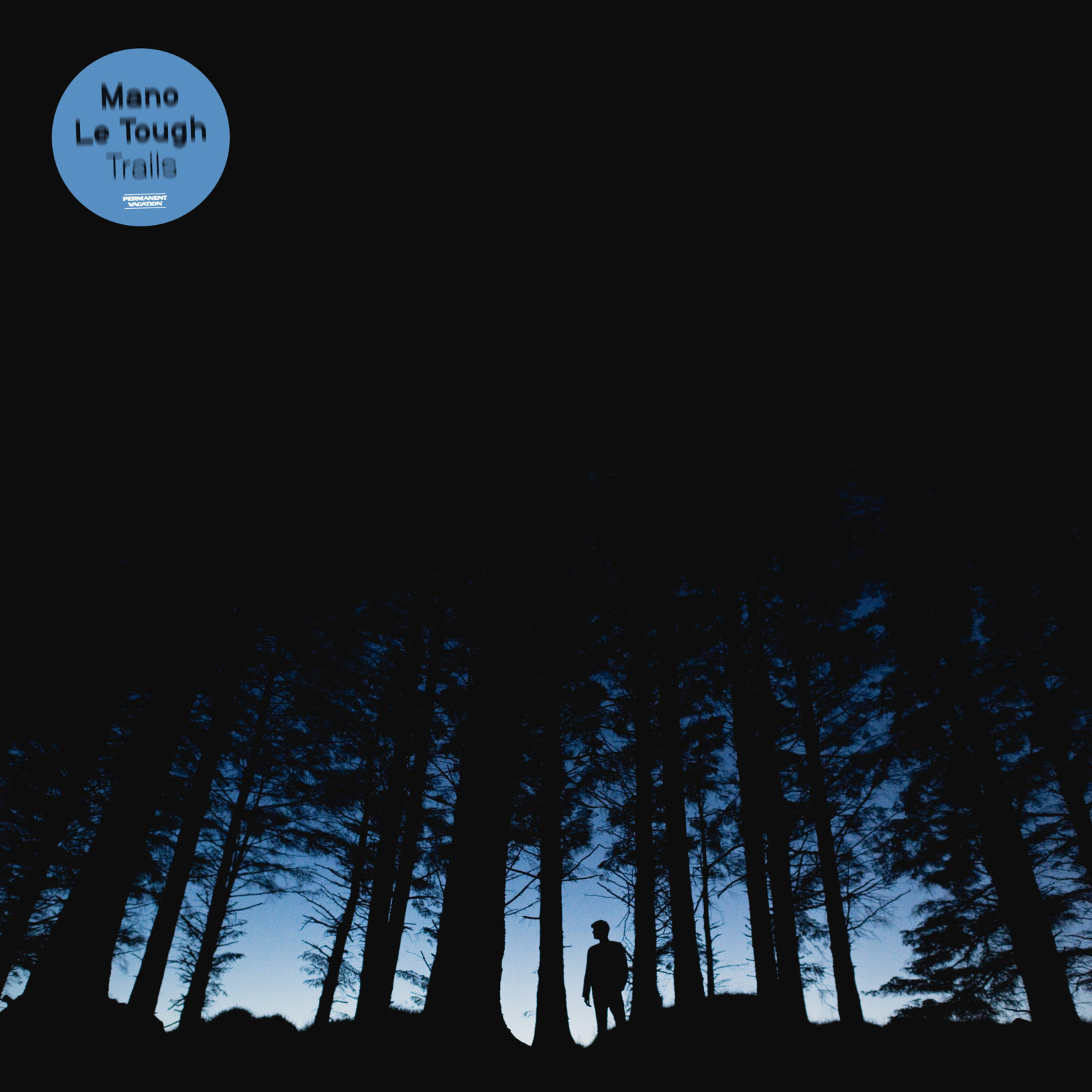
Mano Le Tough is all set to release Trails, his second album which is scheduled for an October 30 release on the Permanent Vacation imprint.
In 2014, the Irish-born artist played more than 100 gigs all around the world, but when the time came to make Trails, the follow-up to his much-lauded 2013 debut album Changing Days, Mano knew that a little time away from the dancefloor was in order.
Although much of Trails was first conceptualized while Mano was on the road, by the time that 2015 rolled around, the record was little more than a collection of notes he’d jotted down on airplanes. Some of the ideas and themes were there, but Mano needed time to let them germinate. As such, he took a break from DJing, decamped to the Swiss countryside and adopted a new routine, one that involved waking up at dawn each day and taking long meditative runs through the hills and forests overlooking Lake Zürich before planting himself in the studio. It was winter and the environment was frozen and snowy, but amongst all that nature, Mano’s creativity flourished, and the resulting flood of inspiration produced Trails.
On the one hand, the album continues down the path Mano has been walking for several years now. Trails is full of slow-brewing, melody-driven tracks, many of them featuring Mano’s emotive vocals; for fans of Changing Days, Mano’s earlier EPs, or even Maeve, the rising young label he runs alongside close friends The Drifter and Baikal, there is plenty to love here. At the same time, Trails finds Mano speaking with a more confident voice than ever before. While there’s never been much doubt about his skills as a producer, Mano’s career was largely forged in the DJ booth, and his many extended sets in clubs such as Berghain and Trouw have gradually lent his production work an impressive sense of patience. The songs on Trails are never in a rush; they swell and blossom at a deliberate pace while blurring the lines between house, techno, ambient and classic pop music.
Granted, this sort of variety has long been a staple of Mano’s DJ sets, but Trails is perhaps the first time that his diverse tastes have been so coherently reflected in his own music. Without question, the album is Mano’s deepest and most personal work to date—and while it’s undoubtedly been influenced by his time in the club, its reach goes far beyond the dancefloor.
Ahead of the album’s October 30 release, “Empty Early Years And The Seed” can be exclusively streamed in full below.
Tracklisting: 01. Running In A Constant Circle 02. Generations 03. Energy Flow 04. Half Closed Eyes 05. Empty Early Years And The Seed 06. I See Myself In You 07. Trails 08. The Space Between 09. Sometimes Lost 10. Meilen
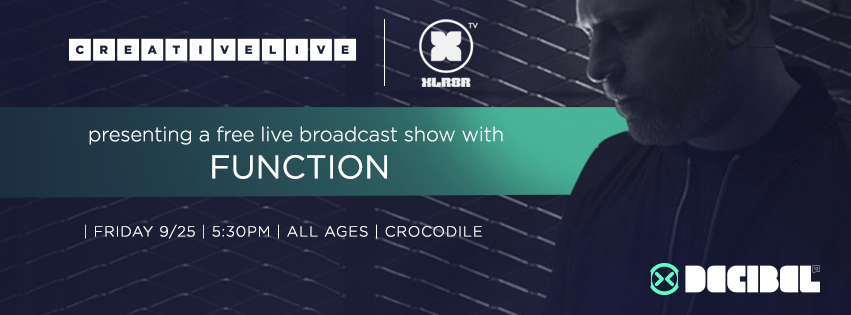
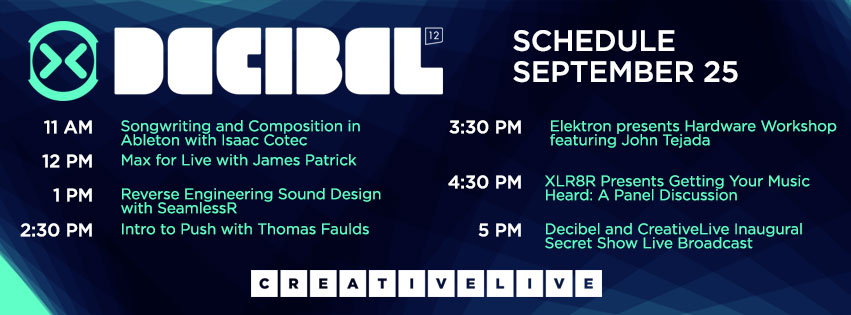
In co-operation with CreativeLive and Decibel Festival, XLR8R proudly presents a live stream broadcast from the Crocodile in Seattle during the dB Conference 2015 closing party, featuring a live performance by Function (Ostgut Ton/Sandwell District).
This video is the archived recording of the live broadcast that took place on September 25, 2015.
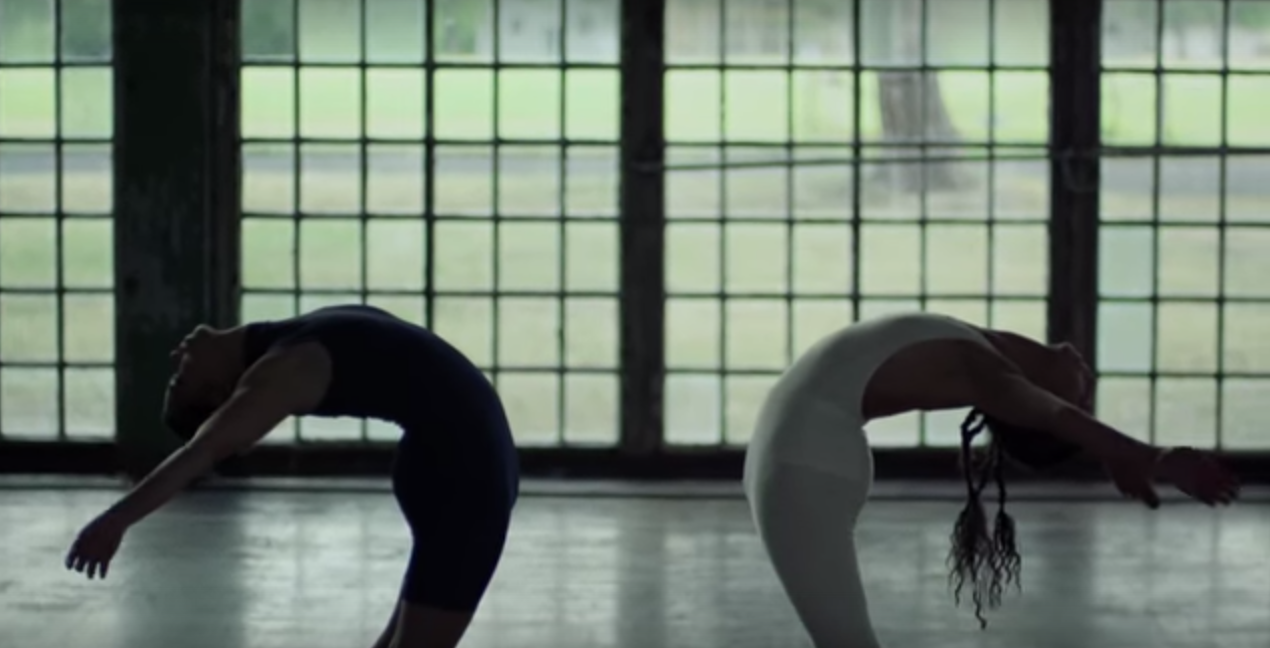
Ahead of the release of his debut album Elaenia, UK producer and Eglo label chief Floating Points has unveiled the official video for lead single “Nespole.” Directed and produced by Sander Houtkruijer, the video trains its eye on choreographer and dancer Kiani Del Valle as she moves in an otherwise-empty warehouse. Watch it in full below before the album drops on November 6 via Pluto in the UK and Luaka Bop in the US.
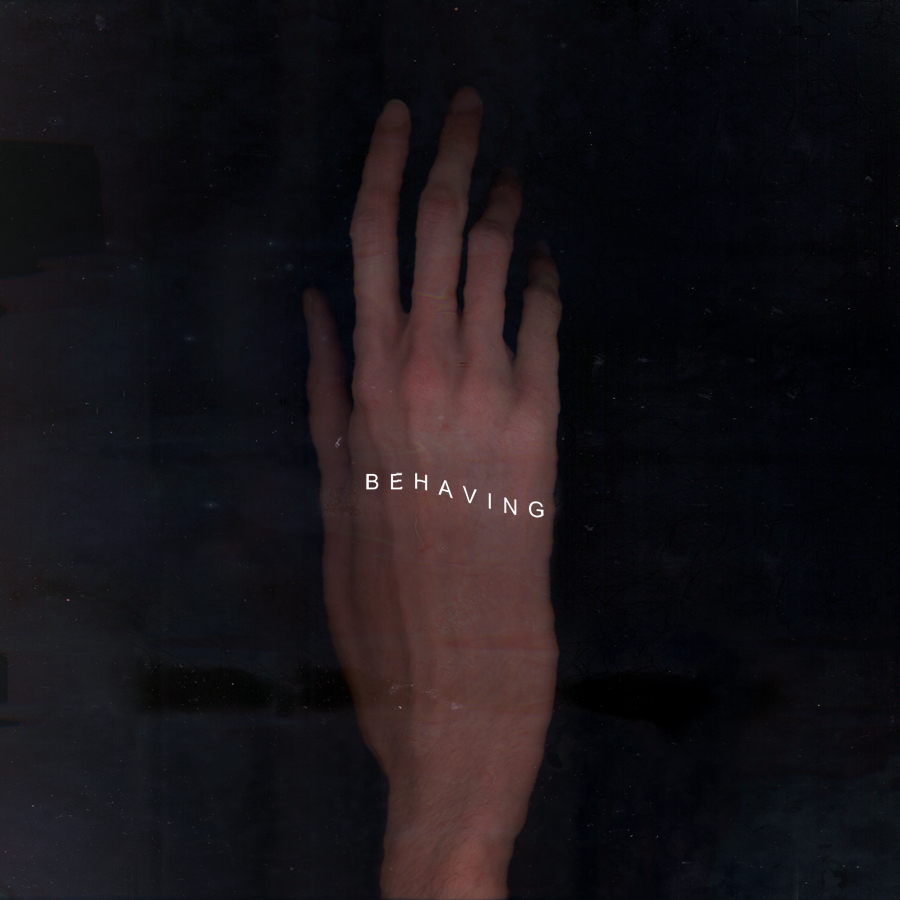
English rock musician, visual artist, and poet Keaton Henson has dropped a surprise side project and album, Behaving.
Behaving is Henson’s first foray into electronic music, and one that is altogether haunting, dazzling, and full of raw, unbridled emotion. The album and project was birthed after two years of intensive work on his third album and his first collection of classical compositions, Romantic Works, which was surprise-released on the same day of Henson’s headlining show at London’s Queen Elizabeth Hall—at the request of James Lavelle. Emotionally exhausted, Henson retreated inside, both physically and emotionally, and crafted nine superbly written, improvised cuts that would form Behaving. Intricate, loose, and delicate rhythms sit snuggly underneath Henson’s crooning vocals and gorgeous piano work, all melding together to create a stunning collection not to far removed from the work of James Blake.
Behaving is available now on iTunes, with the album also streaming in full via the player below.
Over the past few months, Nicolas Jaar has quietly delivered a pair of EPs, Nymphs II and III, via his own Other People imprint. Today, in a surprise move, the third installment in the series—a single entitled “Fight”—was released on esteemed Belgian outlet R&S. A somewhat enigmatic statement from the label reads: “This Nymph swam to Ghent.” Stream the track in full below. (via Resident Advisor)