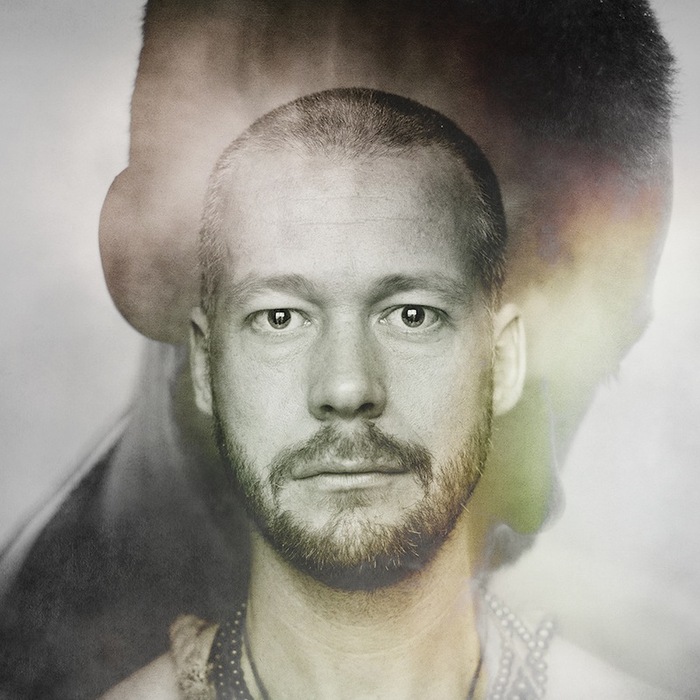
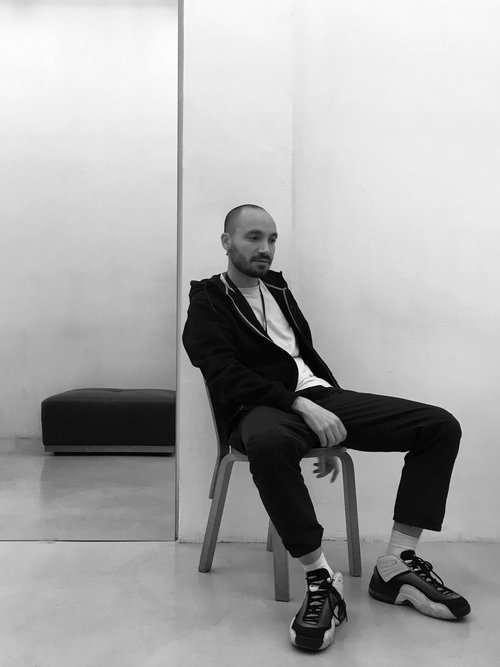
Sebastian Mullaert is most known for his work as one half of renowned Swedish duo Minilogue. However, since last year, the producer, DJ, and live performer has taken a hiatus from the group to focus on solo productions, labels, and side projects—like his latest DJ/live hybrid release with Ulf Eriksson, The Dance. The project originally began as an experiment: Eriksson would play records and Mullaert would bring out his gear and live jam over the top. From the outset, the pair, and any audience that had the pleasure of listening, knew that there was a certain magic happening. After touring the project, and an especially awe-inspiring gig at Trouw, the pair decided to conceive The Dance.
The Dance was recorded live, in one take, at Inkonst, Malmö, in front of an audience consisting of specially invited friends of Ulf, Sebastian, and Kontra-Musik. Spanning 17 tracks, The Dance features a jaw dropping lineup of cuts by Marcel Dettmann, Joey Anderson, Efdemin, and Silent Servant, among others, along with live jams and tracks by Mullaert. In support of the release, Mullaert has offered up the beautifully deep and atmospheric cut “In The Blurry Mist Of Yourself (Wa Wu We Remix),”a track that doesn’t feature on the compilation. The LP features the original version of the track but this is a different take. From the outset, slabs of undulating sonics slowly creep up from the depths, swirling and morphing in constant motion as the groove creeps in. Across its nine-minute run, Mullaert patiently controls the rising and falling of the track’s elements, creating a gorgeous haze-like quality.
The Dance was released via Kontra-Musik last month, with “In The Blurry Mist Of Yourself (Wa Wu We Remix)”” available as a free download below.
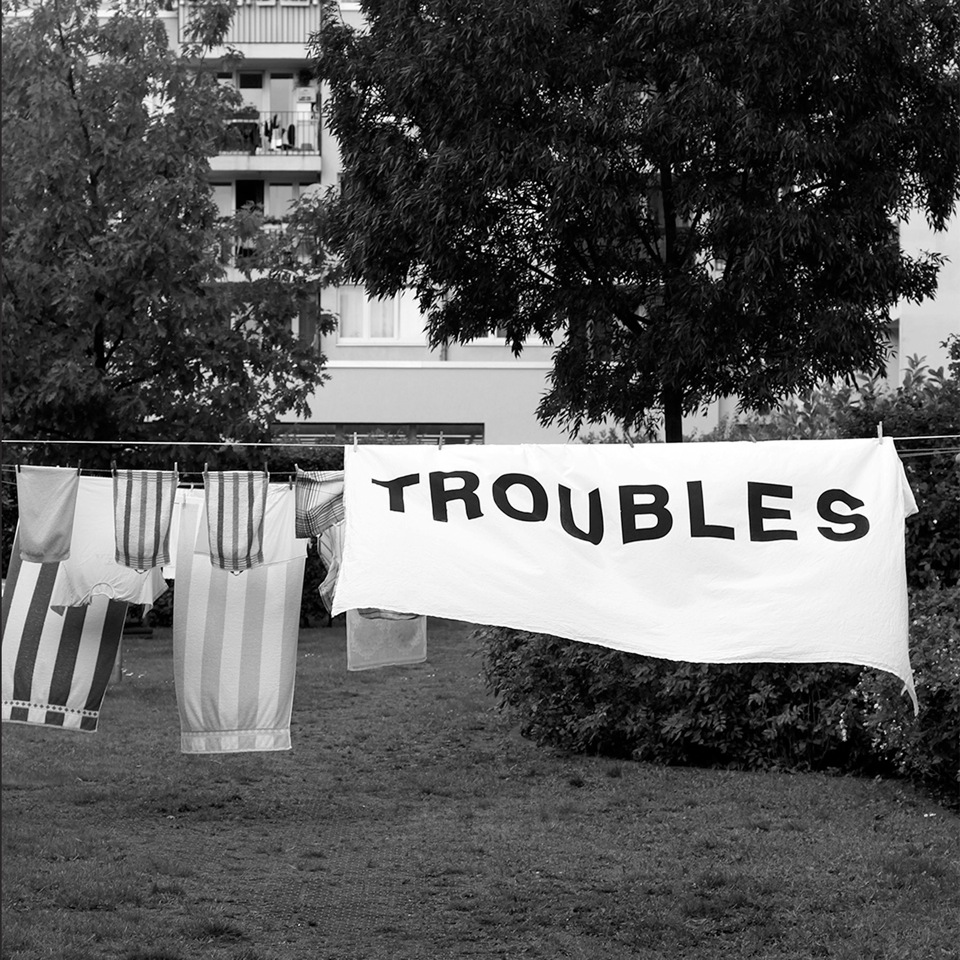
Steffie Doms, the DJ-producer better known has Steffi, will relaunch her Klakson imprint next month. The first release will be the Troubles EP by Dexter, the artist with whom she originally started the label with back in 2000.
Ahead of the EPs November 2 release, “Patternmaster” can be streamed in full below.
Tracklisting: 01 Troubles 02 Flashback 03 Twilight Life 04 Patternmaster
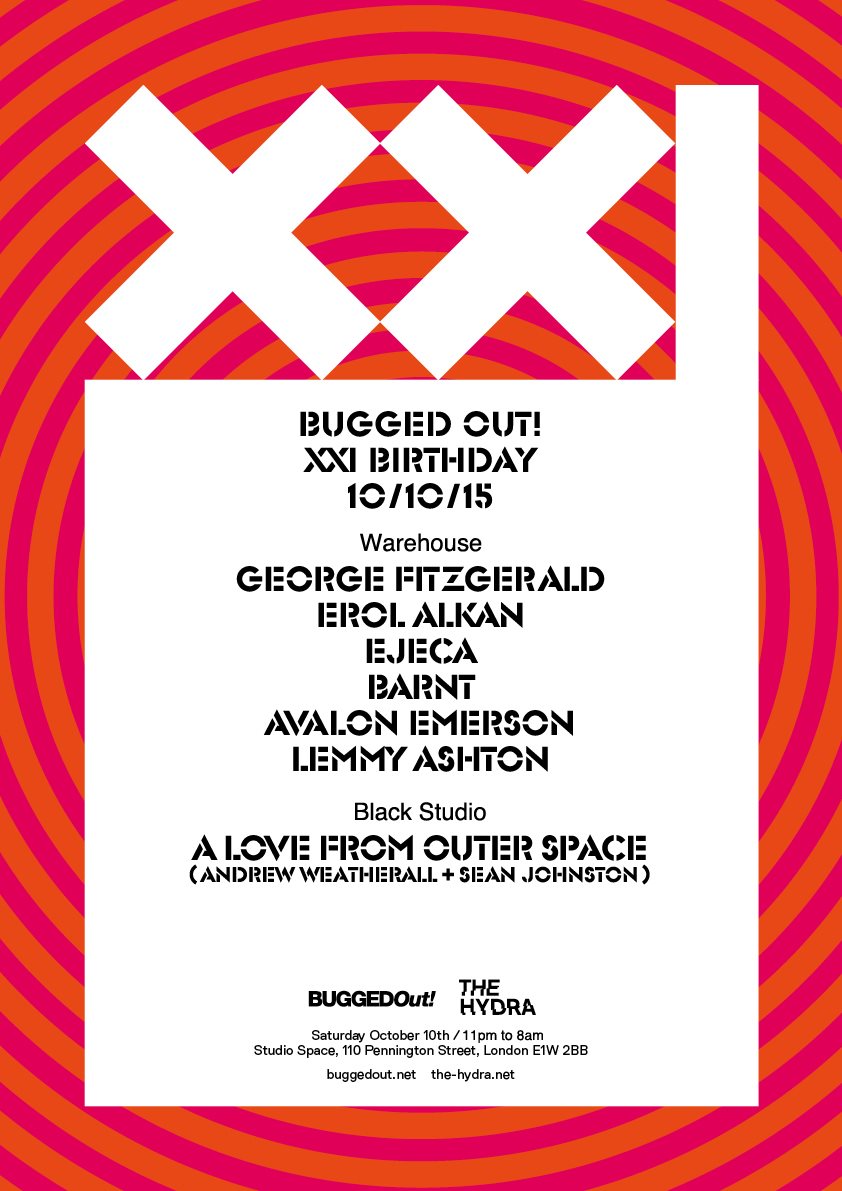
For your chance to win two tickets, give us a follow on Instagram and then enter your full name and email information below. XLR8R will choose one winner that will be contacted this weekend via the email provided. Terms and Conditions apply. Winners will be notified Friday October 9.
Click on our badge to follow XLR8R_Official on Instagram.
[mc4wp_form id=”104510″]
[infobox]
Terms and Conditions:
The promoter is, Bugged Out and agent, XLR8R.com whose registered office is at 837 Traction Ave #304, Los Angeles, CA 90013, USA.2. Employees of Bugged Out / XLR8R.com or their family members or anyone helping to set up the competition shall not be permitted to enter the competition.
There is no entry fee and no purchase necessary to enter this competition.
Closing date for entry will be Friday, Oct 9th 2015 at 11:59PM (PST). After this date the no further entries to the competition will be permitted.
No responsibility can be accepted for entries not received for whatever reason.
The rules of the competition and the prize for each winner are as follows: Only 1 entry per email address accepted Must be 21 years of age or older to enter Prize is for 4 tickets to Bugged Out Birthday XXI in London.
The promoter reserves the right to cancel or amend the competition and these terms and conditions without notice in the event of a catastrophe, war, civil or military disturbance, act of God or any actual or anticipated breach of any applicable law or regulation or any other event outside of the promoter’s control. Any changes to the competition will be notified to entrants as soon as possible by the promoter.
The promoter is not responsible for inaccurate prize details supplied to any entrant by any third party connected with this competition.
No cash alternative to the prizes will be offered. The prizes are not transferable. Prizes are subject to availability and we reserve the right to substitute any prize with another of equivalent value without giving notice.
Winners will be chosen at random from all valid entries received and verified by Promoter and or its agents.
The winner will be notified by email within 8 hours of the closing date. If the winner cannot be contacted or do not claim the prize within 1 day of notification, we reserve the right to withdraw the prize from the winner and pick a replacement winner.
The promoter will notify the winner when and where the prize can be collected.
The promoter’s decision in respect of all matters to do with the competition will be final and no correspondence will be entered into.
By entering this competition, an entrant is indicating his/her agreement to be bound by these terms and conditions.
The competition and these terms and conditions will be governed by English law and any disputes will be subject to the exclusive jurisdiction of the courts of US.
The winner agrees to the use of his/her name in any publicity material. Any personal data relating to the winner or any other entrants will be used solely in accordance with current US data protection legislation and will not be disclosed to a third party without the entrant’s prior consent.
Entries into the competition will automatically opt-in email for XLR8R.com weekly email newsletter, The Lowdown. User may unsubscribe at anytime.
Entry into the competition will be deemed as acceptance of these terms and conditions.
This promotion is in no way sponsored, endorsed or administered by, or associated with, Facebook, Twitter or any other Social Network. You are providing your information to XLR8R.com and not to any other party. The information provided will be used in conjunction with the following Privacy Policy found at https://xlr8r.com/legal.
The versatile and business savvy DJ and producer Alex From Tokyo has announced the launch of his new music label, World Famous, which will release a new EP from his group Tokyo Black Star on November 2nd. Since forming Tokyo Black Star with Isao Kumano back in 2000, they have undertaken a number of various projects, one of which being the formation of the audio brand Phonon.
Being its first release in over three years, and having added third member, Kenichi Takagi, to the group, Tokyo Black Star’s new and tightly crafted EP Edo Express showcases the overall sonic dexterity of these adapt veterans of the scene.
You can stream the rhythmic cut “Mitokomon” from the upcoming EP below and be sure to check out more from Tokyo Black Star by heading here.
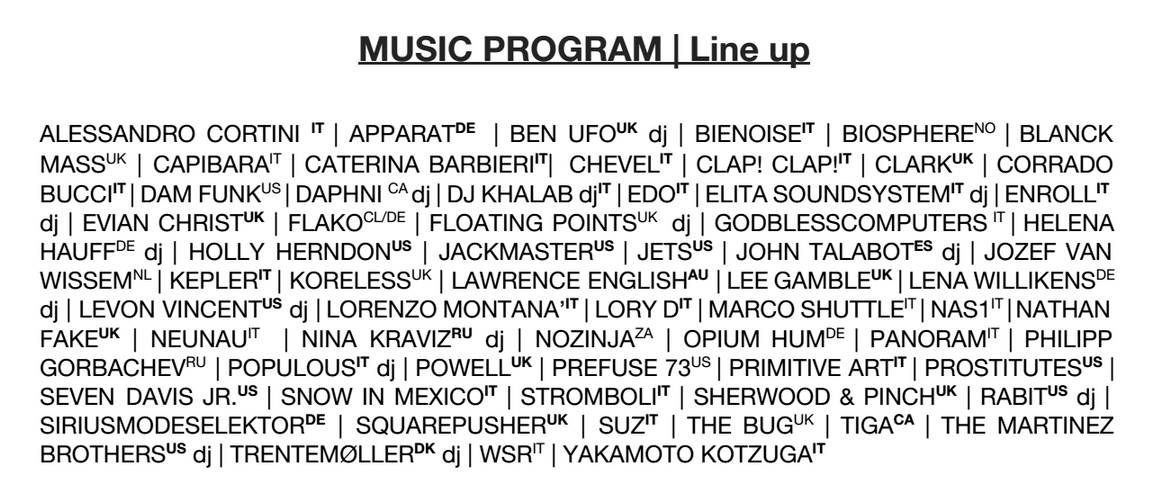
Yesterday marked the start of roBOt Festival’s, Italy’s biggest electronic music event of the season. Featuring a wildly impressive lineup (68 acts in total) that will perform across 6 different stages scattered around the medieval and elegant city, along with an amalgam of screenings, workshops, and digital arts projects.
Following on from last year’s #lostmemories theme, roBOt Festival will this year use the theme of “accelerationism,” using the hashtag #XLR8.
Be sure to check out the lineup below and find out more about roBOt Festival by going here.
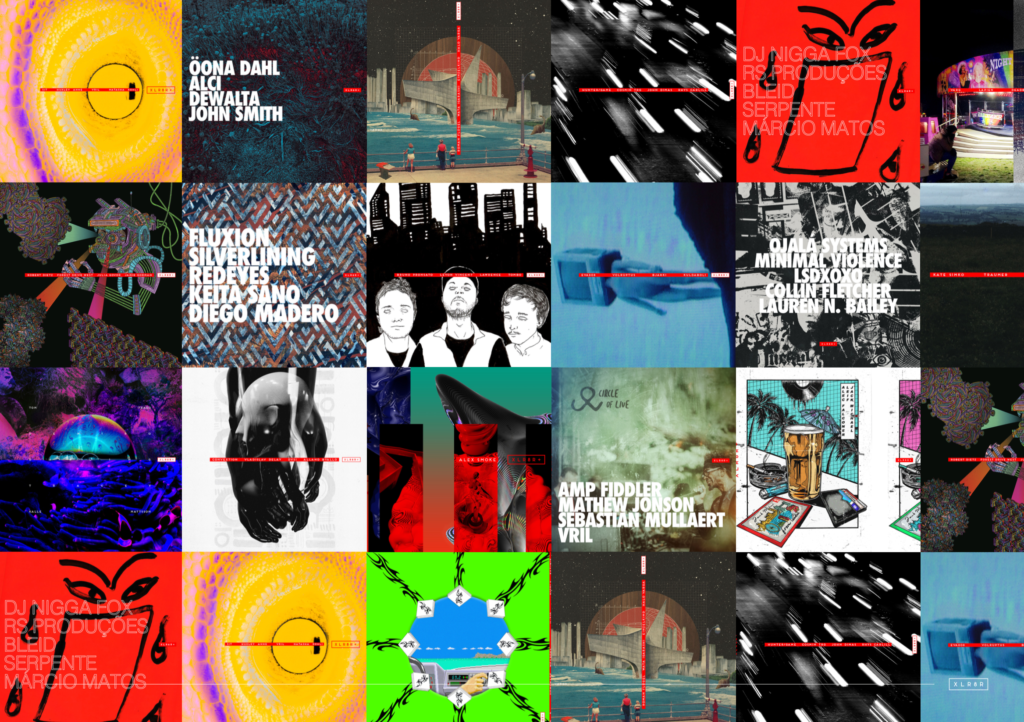
Despite the fact that both day and regular passes have been sold out, you can still grab a pro pass or night pass by heading here.
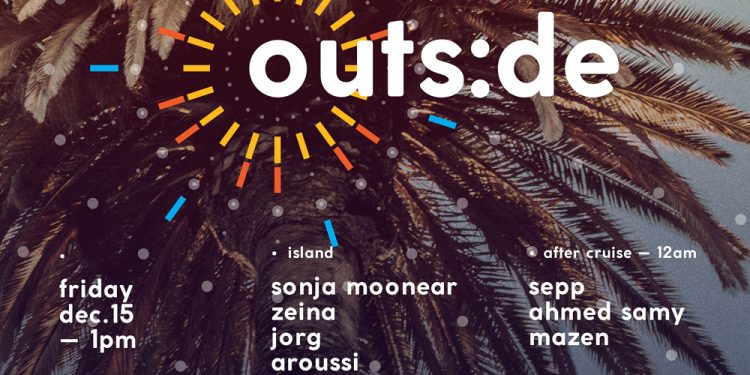
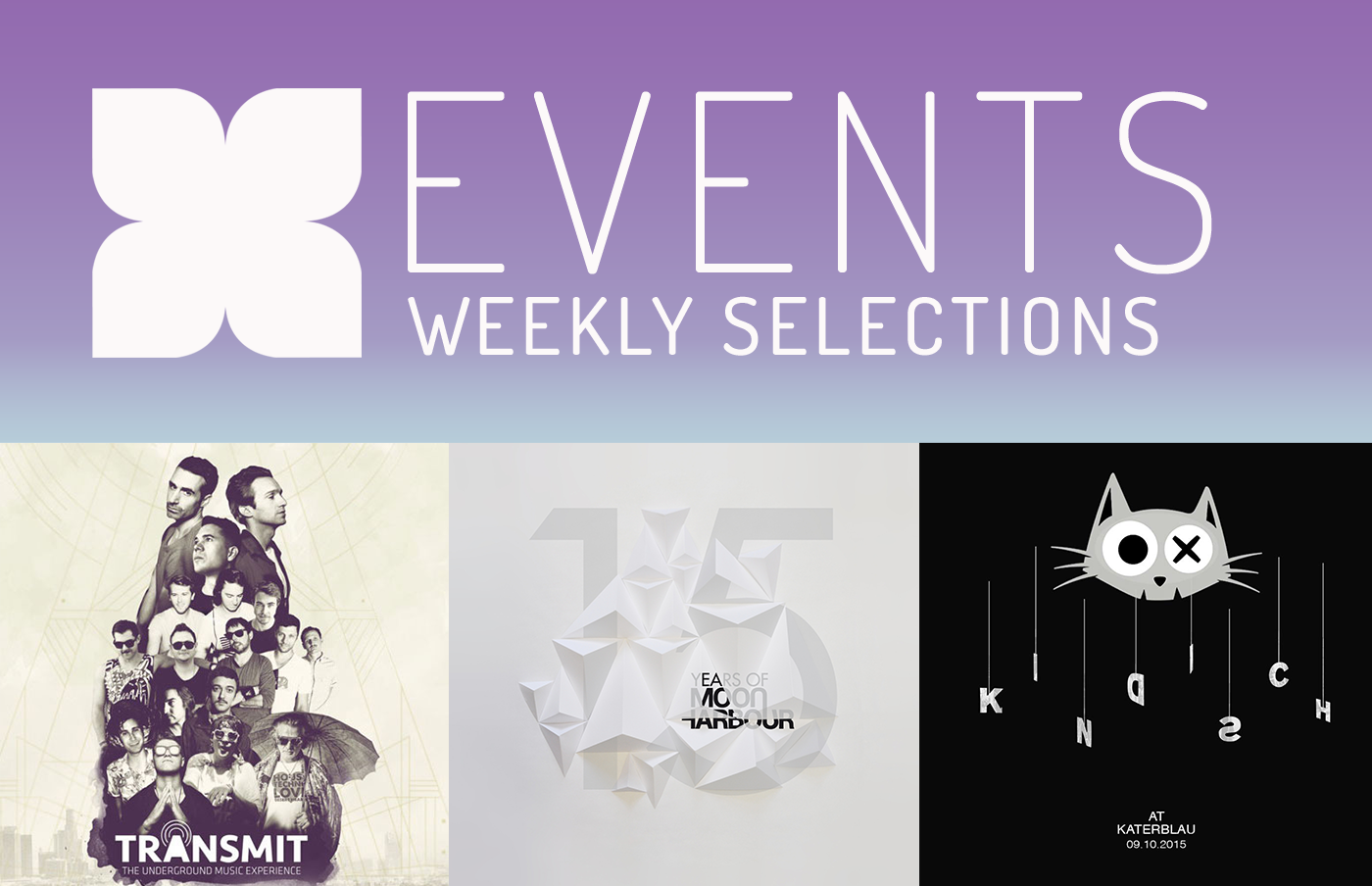
Our international event selections for this week include new outdoor daytime festival Transmit which will take place in Los Angeles this Saturday featuring Ghostly’s Matthew Dear, live sets by Benoit & Sergio and No Regular Play, plus a talented local lineup including Droog, Clovis and others; Friday night’s Kindisch label night at Kater Blau in Berlin which will showcase label acts Stavroz, Nick Galemore, Dance Spirit, and of course label founders Mia Lucci and Philipp Jung; and finally also on Friday, the 15 year anniversary of the diverse Leipzig based label Moon Harbour will be celebrated in London with label head Matthias Tanzmann, Barem, DJ T and other strong acts.
We welcome our readers to submit events for weekly consideration. To find more events in your city or to submit a new event visit our events page.
Coming this winter via the Berlin-based Project: Mooncircle imprint is KRTS’s second full-length LP, Close Eyes to Exit.
Inspired by recent world events, each of the album’s 12 tracks dwell upon the world we live in now, a world struggling to rid itself of corruption, hate, bigotry, and ignorance. The resulting record is equal parts raw, emotional, dense, and danceable.
Close Eyes to Exit is scheduled for November 27 release.
Tracklist:
01. Sealed (Intro) 02. It Starts Somewhere 03. Outside Your Arms 04. Reizenstein 05. Serve and Protect feat Mad Flows 06. Convict The Butchers 07. White Privilege 08. My Head Is Jumpin’ feat Tito & Charles 09. Light Of The Harvest 10. In Your Head 11. Come To This 12. Marriage Is Between Lovers 13. We’re Still Climbing 14. If This Was Your Child
Mike Bierbach is in holiday mode. Cigarette in hand and grin across his face, he sits in the middle of his gear-riddled studio, nestled on the top floor of a large decrepit warehouse in the east of Berlin. To his right are multiple ash trays, water bottles and empty biscuit packets, scattered along the edges of his large Prophet 08 synthesizer and various MIDI sequencers that occupy almost all of the space. To his left is a guitar, a violin bow and a pair of Sennheiser headphones. The early-evening sun shines through the spattered glass window and onto the large monitor, in the corner of which is a list of DJ playlists, including those from his recent shows at Dekmantel and Dimensions. “I take September off to go to the studio—this is my holiday,” he says, laughing. “It’s a long way to the beach from here!”
Almost four years have passed since Bierbach—known to the masses as Rødhåd—released his first EP and was dubbed Breakthrough Artist of the Year by Resident Advisor. Since then a lot has changed. Long perceived as a “closer,” a tag that stems from his revered mid-morning performances at his Dystopian parties, Bierbach has established himself as one of the world’s most respected DJs, lauded for the quality of his works and acknowledged for his efforts in spending lengthy periods on the road, often playing 15 shows in a month. And 2015 has been no different: Demand for the Berlin-based DJ has only grown over recent times, a development that has coincided with his production work and the growth of his flourishing Dystopian imprint. Following conversations back in June, however, it became clear that times are changing—Bierbach is undergoing something of a transition. Having had some time to recharge following a busy summer, he took some time out of his holiday to discuss his success and elaborate on his plans for the future.
“I have no master plan, but I do want to concentrate more on the studio work because production is becoming a very important vehicle for me to express myself.”
“I am more known for my DJing—and that is where I am better—but I think I have now found a way to express myself with the music that I make,” Bierbach explains, deep in thought. While a string of well-received EPs have heightened his profile as a producer, Bierbach has always self-identified as a DJ. It is his love for spinning records that can be traced back to his earliest years, a time when he first heard The Mix by Kraftwerk and became inspired because the “music never stopped”; he then bought his first turntables at the age of just 15. In contrast, he didn’t release his first record until 2012, a decision that was motivated as much by a desire to provide material for his label as to express himself. But 2015 is likely to see him consciously limit his touring schedule to allow himself more time in his beloved studio. “I have no master plan, but I do want to concentrate more on the studio work because production is becoming a very important vehicle for me to express myself,” he explains. “I’ve invested a lot of time and money in the studio—and I feel I have still a lot to learn in there.”
Inevitably, these kinds of statements will only fuel rumors that 2016 will see a Rødhåd full-length. From a production standpoint, Bierbach’s output has been reasonably consistent since his debut 12-inch, but the quality of his work has seen expectation mount—something that he is keen to address. “For a long time, I have felt a pressure to do an album—and now I actually want to do one because I have something to say,” he explains. “But an album is a big thing. It’s very difficult to make a good techno LP, and I think that only now do I feel technically good enough to produce one. I was happy with my latest EP,” he adds, “and that is the first time I discovered the ambient sound that I wanted to achieve.”
Closely linked to this evolution is his live set. Though it remains in its beta phase, the Rødhåd live project has been in the works for some time—and he is only too enthused to share the fruits of his recent labors. Opening up his laptop and plugging in a small portable hard drive—that catalogs his entire discography—he plays a few minutes of a recent trial run before smiling, closing the laptop, and inviting assessment. “I am producing in a way that is compatible with a live set, but creating a show that will keep the crowd’s attention is extremely challenging,” he explains. “A live set is something that is really special, and it is definitely something I intend to do—but I don’t really know how to yet.”
Bierbach, however, is keen to point out that this diversification of his repertoire in no way marks the end of his growth as a record selector. DJing will never be replaced by these other ventures; rather it will act as the foundation upon which he can now begin to explore these other vehicles of self-expression. His desire to develop as a DJ remains strong as he works to further refine his skill-set. Instead of abstaining from the mixing when not on tour, he admits to investing a lot of time in his DJ-set preparations, and practice remains a key part of his daily routine.
“Each individual record that I play will will take the mood in a certain direction and by connecting these tracks together, I can create certain moments,” he explains. “You have to work hard to create the opportunity to play a certain track. Sometimes I will get these connections wrong and this will interrupt the chain—it’ll just go bam and I’ll know immediately that it didn’t work. But that is why I have to practice at home: I have to figure out how one track will connect with the other tracks because I want to build these waves perfectly.”
Anybody who has seen Bierbach play on more than one occasion will also have noted the diversity in his output. Adaptation to the environment is a fundamental part of being a successful selector, but a Rødhåd festival set is almost incomparable with one of his more intimate showcases—and he accepts that he is still looking to locate the balance between the music that makes people scream and the more ambient sound that he enjoys. “Sometimes I will wonder why these festivals are booking me—especially when I play between two artists who are completely different to the music that I am playing,” he explains. “I have to learn that I can play a bit more weird stuff, because now people know the music that I am playing and they book me because of that.”
Equally central to this progression is innovation. Though infused with a beautiful concoction of differing genres, there is unquestionably a Rødhåd signature—a common ingredient to each record that he plays out—and finding material that fits into this ill-defined sonic mold is something that is proving challenging. “I am playing a lot of stuff that I get from promo ports, but I am missing stuff that is really recognizable,” he explains. “There are so many producers and so many tracks out every week, but its getting harder to find something different,” he adds. “It feels like all the techno hits have been written already—like the Carl Craig stuff, which came from the end of the ‘90s. Maybe people have fear of something different.”
As the conversation progresses, it becomes clear that Bierbach is enjoying the artistic freedom that his recent successes have afforded him. While pressure and expectation are by-products of such widespread achievements, he perceives the opportunities to express himself in ways that were not previously possible as a just reward for his efforts. Symbolic of the shift is his Howling remix, a stunning take on the original that drew a stark contrast to his latest Kinder Der Ringwelt EP and ventured closer to commercial pastures than any of his previous material. “For me as an artist, it’s important that I can do different things,” he explains. “When I put a record together I will always be thinking, who will play it? But I feel more free now to experiment in the studio, and also produce stuff that is not for the dancefloor. I want to do house, techno, broken beats and lots of other stuff—and I want to be able to play at big festivals, but also at small clubs in front of 300 people. It’s a continual balance for me.”
Reflecting on his sound, it’s hard not to spot the striking contrast with Bierbach’s jovial character. Laced throughout his discography—and ever-present in his brooding DJ sets—is a nebulous yet intense darkness. Sitting there before the interview, sipping on his coffee and eating his eggs on toast—part of his mid-morning holiday ritual before cycling to his studio—he tells brazen tales from the road, and smiles as he reveals that his mother will be joining him on the road for his upcoming dates in Australia and Japan. “She will be part of my new Rødhåd band!” he jokes. But if this is so, if music is nothing more than a natural reflection of its creator, then from where does this dramatic tone originate?
“I am a happy person, but I love melancholy because it touches my heart,” he explains. “I think sadness touches me far more than any other emotion. It doesn’t mean that I am unhappy—but I just cannot connect emotionally with happy records,” he adds. “Happy music just sounds boring to me and I have to switch it off!”
As with all successful artists, however—and while his carefree attitude may lead one to believe otherwise—Bierbach cares deeply about what he is trying to achieve, and his motivations remain as untarnished as when he occupied early residencies at local Berlin hot spots Golden Gate and Zementgarten. As he begins to discuss the future plans of the Dystopian imprint, a project that he runs with two close friends, it’s clear that while he may not have a grand vision for how he wishes his career to unfold, it’s far more than just a trivial pursuit. “I don’t want to be a super-famous DJ or a super-famous producer who only releases hits,” he explains.” I do it for myself, and if people want it then they will buy it, and if they don’t then that is just how it is. For Bierbach, the inevitable celebrity that accompanies success are mere burdens to his self-development, responsibilities to which he must attend if he is to continue his quest for musical exploration.
“Social media is still weird to me—all this importance in posting and tagging and liking,” he says. “I would just play in clubs and not use social media, but I also understand that I am at a certain point where I need to communicate and interact with my supporters and the people who want to know more about me. I can only try to play the game with my rules. I am no longer an underground artist—and I don’t think there is even an underground in techno music anymore. Everything is so easy to access, with dozens of interviews and podcasts all archived.”
Standing up and sparking another cigarette—he might be into his second packet at this point—Bierbach moves towards the window to get some fresh air. Looking slightly puzzled, but still smiling, he exhales deeply, trying to find an occupation of his that is not closely related to music. “I’m not too sure if I do anything else [besides music]—even when I watch a film I am thinking about the soundtrack,” he says, grinning once again. And then his eyes light up and as he moves to the corner of the room, rustling through the shelving in search of something. “Actually I have this holiday project—I’m building this synthesizer for myself,” he says, looking up with pride.
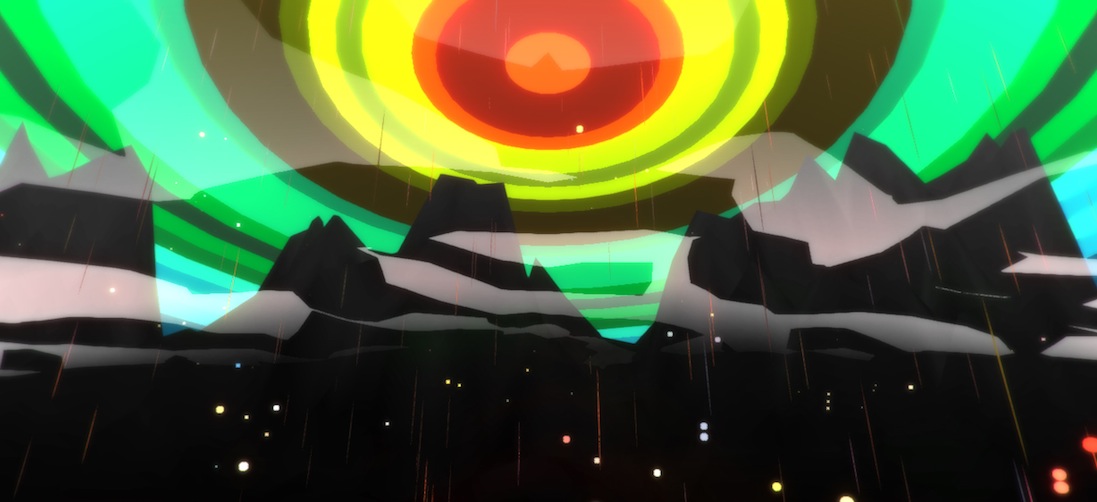
The question of how we fuzzy-eared meat sacks might best experience electronic music has certainly been asked before, with technologies and platforms ranging from cassette tapes to Peter Gabriel–produced CD-ROMs. Now, the question is being asked once again by Fernando Ramallo and David Kanaga, with their just-released not-quite-a-game, Panoramical.
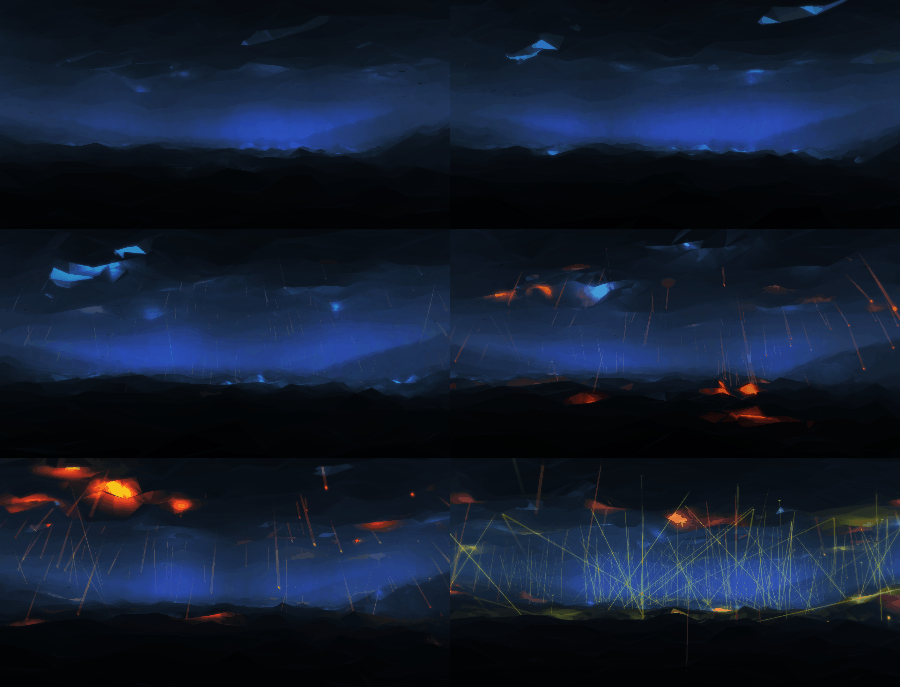
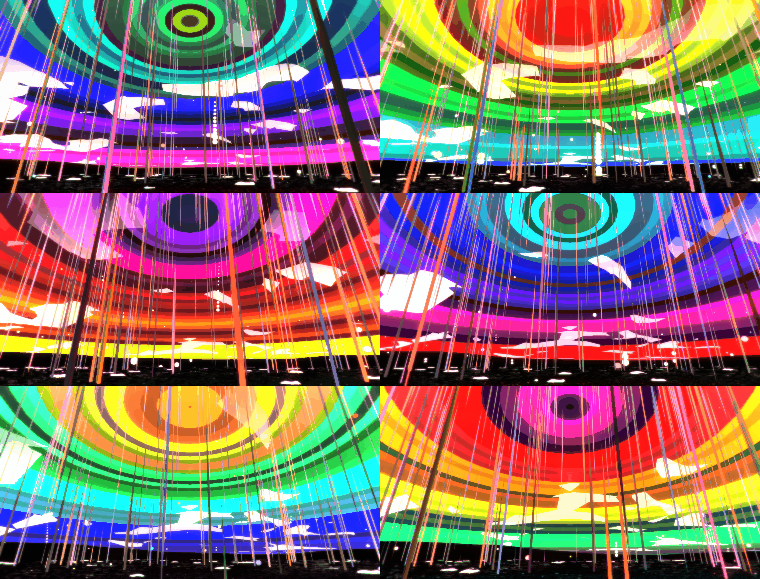
The developers describe Panoramical as “an interactive anthology of musical landscapes that morph to your touch.” Instead of controlling an avatar, the user employs a game controller, MIDI controller, or mouse-and-keyboard combo to shape both the world and the music together, as if they are part of one cohesive entity. The two are fluid and hyper-connected, with audio and visual fabric sewn into one another with bits of code—and the result is a meditative, extraordinary way of absorbing music. The experience is dramatically more sophisticated than the kinds of WebGL and iPad experiments we’ve seen before it, with controls that feel taut and physical in ways that reference both games and music production.
Ramillo designed and coded the game’s visuals, integrating the musical contributions of Kanaga, who has released records on Daniel Lopatin’s Software Recording Co., and provided the interactive score for 2013’s exploratory game, Proteus. Guest musicians included former Anticon member Doseone and Japanese producer Baiyon, among others.
In its populist form, Panoramical is available now for $10 on PC and Mac. For $100, those looking to use the game as a creative tool get permission to showcase Panoramical in public, the ability to feed the visuals into other software using the popular Syphon codec, an automatic play mode that keeps things moving on their own, all future DLC and updates, and a direct support line to the developers. There’s also a limited-run, wood-cased MIDI controller, designed specifically for the game.
Regardless of one choice of interaction method (MIDI controllers, game controllers, and mouse/keyboard combos all work surprisingly well), Panoramical is a transcendent experience, and one that peers into the future in new and exciting ways. We spoke to Ramallo and Kanaga about their work on the project, which has spanned the last three years.
Were there any particular themes, musically, programmatically, or conceptually, that you guys specifically wanted to explore with Panoramical? Fernando Ramillo: Development of Panoramical was very freeform—we didn’t have any guidelines or goals as we were making it, [and] we kept what worked as we went along. I knew from the start that I didn’t want to add any traditional gameplay elements to it, and tried to explore the pure interaction as much as possible.
Based on that, it was pretty much about trying stuff out. Anything. Purely abstract scenes, representational ones, fast-paced, slow, bright, dark, anything. Visually, it’s trying to be as diverse and interesting as possible. By the end of development, when we put everything together, some themes popped up by themselves. As I was making the transitions, I explored a very loose thematic arc about multiple dimensions, infinite spaces, the player exploring all these spaces that exist at once, where manipulating the controls changes the slice you’re looking at. The selection screen and ending have some elements of this, zooming out into infinity revealing you were only looking at a tiny slice of an infinite universe.
David Kanaga: For me, it was really cool how Panoramical embodied hyper-condensed versions of ideas and music-game forms I’d worked with previously. The form of music-textural changes tied to landscape, from Proteus, or speed/intensity, from Dyad, were used compositionally in much the same way—but with greatly amplified immediacy, now touching the sound variables directly. Playing Panoramical is very much like touching the various dimensions of the audio engines of those games directly, as opposed to indirectly, via gamespace. The “higher dimensions” theme felt huge to me, the fact that even dimensions greater than four (which is often thought as already quite otherwordly) can be felt in a very intuitive way when the “space” concerned isn’t our kind of physical floor/walls/sky space, but is a possibility space, where all the dimensions are “freedoms” instead of right angles. I’d been acquainted with the idea of “degrees of freedom” before, but this really allowed me to internalize that, understand a microcosmic picture of the idea with really solid concreteness.
Like Fernando says, themes popped up—what’s even more interesting to me than what we set out to explore is the space that opened up through the process of making it. There are so many loose themes floating around. At some point I began to associate all of the movement and freedom and control with more concrete Earth topics, like geoengineering and terraforming, which was a little more freaky than the math-y grandeur of metaphysical freedoms, dimensions, etc. A theme that felt implied is that “you can always change the environment” or “change the weather” to your liking….and that’s a little troubling to me, if read in the context of our earth-home, because it’s clearly not the case. Somehow that thematic profile snuck into how I was thinking about things, and the game definitely doesn’t propose any resolution to all of it. But I think some of the more anxious-sounding levels, and finally the whole warp, which feels to me quite dark, was informed by some of these associative relations between game environment and earth environment. It’s kind of a horror game, in its own way…I call it an ecological game, since it’s just raw materials, as opposed to economic strategy-functions) Ecology of Fear comes to mind—haven’t read that, but may do so now.
How did you guys end up coming together to work on Panoramical? Ramallo: David and I met at a games festival in LA a few years back, and stayed in touch ever since. I was surprised to hear David had played a very tiny game I made for an experimental contest, and we had similar ideas on the type of work we wanted to do. We made a few prototypes together once playing around using the nanoKONTROL MIDI controller as an interface, and things carried on from there.
Now that the game is out, what have you been surprised by in terms of users’ responses to it? Ramallo: It’s been great to see players use the built-in Twitter functionality to share their “discoveries”. This was actually a very, very late addition, right as the game was pretty much done, so I’m glad it’s being used. What I was most excited about was people making their own interfaces to play the game with, like someone projecting the Pro version on a shipping container, or Anthony Carboni making his own touch interface.
How long would it generally take to integrate a song, be it one of David’s or an external producer? Do you plan to release more songs, or do you plan to keep it as as-is, as a self-contained album of sorts? Ramallo: It really depended on the scene and the state of the project. As we created generic tools to make it easier to experiment, it became easier to get scenes going. There was a lot, a lot of experimentation involved and creating and scrapping things to get a scene to a complete state. They’d generally take two or three weeks to fill up all the parameters, and one or two weeks to polish. Some required specific things to be coded for, so they took more time. I think the one that took the longest was Mr. Div and Baiyon’s, because by the time we started, we didn’t have the generic tools in place and everything was coded from scratch—plus it had to have super precise, beat-driven animations, and every element was completely different. I’m proud of it though—it looks and feels amazing. We’d love to release more scenes if the game does well.
What exactly is happening when the players moves the XY sliders? It seems like you’re mixing in tracks along each axis, as well as applying certain effects chains? How did you figure out a framework to keep these interactions feeling consistent, but not too consistent? Ramallo: There are plenty of things happening at once as you move each slider. I created some tools where you can basically bind any property in any object to a specific slider. So the changes are parameters being modified in the objects of the scene and the audio loops at the same time. For example, we would bind the speed of the scene and the pitch of a looping sample to this one slider, so when you change it, it feels like the sound is tightly bound to the scene’s speed. It’s layers and layers of little interactions like that.
Usually I would add the interactions on the visuals, and David would then author sounds and effects and bind them to the same sliders, aside from a few exceptions where I made visuals based on the sound interactions that he had made. So the visuals aren’t reacting to the audio or vice versa, per se, but we found our way worked even better than straight visualization techniques which can be predictable and noisy. Authoring either content to match those relationships specifically worked really well.
Kanaga: Sometimes parameters are changed smoothly with the player’s movement along axes, as with a filter opening up and closing, or the wet/dry mix of a delay. Sometimes, an array of discrete events are triggered—pop pop pop—it feels a little like scraping a guiro. One of the most interesting things for me about working with Fernando’s visuals—as opposed to, for instance, mapping a MIDI setup in Ableton—is that the visual intensities are not linear; sometimes an intensity like brightness maxes out at a slider’s 75-percent value, and then dips back down. This suggests that an appropriate way to score that brightness musically involves, for instance, opening a filter all the way at 75 percent and then closing back up as it reaches 100 percent. It’s simple, but the irregularity is very satisfying. There are loads of little strange asymmetries in the game like this.
As for consistency, that was mostly just feeling out synesthetic resonances between visual and potential aural intensities, and mirroring them to some degree.
“Just a day or two after launch, someone made their own touch interface and projected it on a 53-foot shipping container!”
What are some of the coolest things you’ve seen people do with the Pro license thus far? Ramallo: Just a day or two after launch, someone made their own touch interface and projected it on a 53-foot shipping container! Also, someone else put it on auto-play and streamed it for 50 hours straight. I’m looking forward to more people using it and sending feedback so I can keep adding features to turn it into a really cool tool.
What’s your preferred way of controlling the game? I was surprised at how clean and responsive the game feels with a standard dual analog controller. Kanaga: Now my favorite way to play is keyboard and mouse, though I used to only like playing it with MIDI controls. My preference changed after we regrouped the trigger keys; it used to be the bottom row (from “z” to “.”), instead of the three-by-three grid that it is now. The grid is easier to mentally map for me than a long skinny MIDI row, and also easier to mash buttons, which I love, holding down a bunch at once.
David, do you plan to play live shows using Panoramical or a a similar setup? It’s surprisingly performative. Kanaga: I may do future live shows using similar processes, but likely not with the game proper. I would hope that the definitive “performance” of the game is the first-person experience of playing it at home.
That said, I did do one accidental “accompaniment” performance to Panoramical last year at Incubate festival in the Netherlands. I had been playing keyboard accompaniments to Wolfenstein and Diablo and Infinite Doodle, live-scoring them, and my set was going to close by letting the audience play a scene from Panoramical while I sat back. But a performance demon showed up, and bizarrely cut out all of the sound in the scene except for a bassline triggered in the discrete-guiro style (described above). It was kind of haunting. So I hopped back onto the keyboard, and played harmonies along with the bassline, which was being played by the audience member (performer). So, that was really serendipitous, better than I’d have thought up on my own, and an unexpectedly intimate improvisation. Something like that could be a fun situation to repeat intentionally.
The limited-edition MIDI controller looks incredible—how did that release come about? Ramallo: Brendan Byrne, a friend from Brooklyn, made a custom controller for us after playing it at a festival, which we ended up using to showcase the game at several other events. He’s insanely good at making all these beautiful polished wooden custom controllers, so we knew we wanted to try and make a bunch of them for sale. He ended up making 50 of them, all assembled in his own apartment. The fact that we could have these beautiful physical artifacts designed for Panoramical still blows my mind. He’s awesome and you should buy his stuff.
Taking a look into the ever-expanding list of producers that are currently responsible for pushing the dramatic minimal house sound that has spread throughout dancefloors all across Europe in the last 10 years, you will most certainly find Bruno Pronsato‘s name at the top. While playing his first electronic gigs in the early 2000’s in the US and discovering Berlin in his 30’s may make Pronsato sound like a bit of a late bloomer, but his association to the scene through his records as Half-Hawaii with Sammy Dee on Perlon, and as NDF with Sergio Giorgini on DFA Records, were more than enough to cement him as a production legend all across the world. In addition to his multiple studio albums and innumerable releases on these iconic European labels, Bruno Pronsato has also performed in the supergroup, Narod Niki, alongside Ricardo Villalobos, Zip, Akufen, Richie Hawtin, Daniel Bell and others.
Changing up his approach to production back in 2014, Pronsato made the decision to shake things up a bit and produce an album under the newly formed alias, Archangel. His debut album on the London-based record label Foom, titled The Bedroom Slant, saw the producer update the style he had developed over the last decade, and in the process, manifest his love of pop, rock and post-punk in his music for the very first time. The music made under the moniker Archangel came from the need to break up the everyday programs that he was starting to settle into stylistically as Pronsato, and was a way to put himself in an uncomfortable position where he could force himself to change, fighting against his own routines that he had spent years crafting as a leader of the scene.
Now, Pronsato is back as Archangel with a remix EP of his debut album on Foom, titled The Bedroom Slant Versions, which features remixes by Dean Blunt, Oliver Coates, and Peter Gordon. With the first track on the EP “Blue Eyes Blind/This Romance” being gifted to XLR8R as our download for today, we are treated to an early, unreleased track from the original studio recordings that started back in 2012. A perfect blend of the percussive dancefloor Bruno Pronsato sound and his darkly melodic and lyrical Archangel side, the overlap between the projects at this early stage is captured in this recording.
You can pre-order The Bedroom Slant Versionson vinyl ahead of its November 6 release date by visiting the Foom Bandcamp page here. You can download the first track off the remix EP by clicking on the media player below.