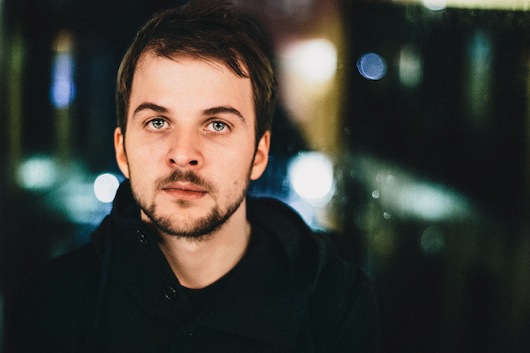
After catching our eye with an unforgettable live performance at this year’s MUTEK festival, piano virtuoso Nils Frahm has announced that his new record, Spaces, will arrive this fall via Erased Tapes. In the two years since Felt—Frahm’s last studio album of meditative, modern composition—the German artist has expanded into a more varied sonic palette and allowed his pieces to grow through improvisation. Spaces was recorded in a variety of live settings, using mediums like reel-to-reel recorders and cassette decks to capture his favorite impromptu cuts, later piecing them together as a “collage of field recordings” in his own Durton Studio. Before Erased Tapes releases Spaces on November 28 (November 19 in the US), a short album trailer featuring clips from the composer’s live show can be seen below, where Frahm’s upcoming tour dates can also be found.
XLR8R Couldn't find the embed function for type: "vimeo" and source: "<iframe src="//player.vimeo.com/video/71124794" width="530" height="226" frameborder="0" webkitallowfullscreen="" mozallowfullscreen="" allowfullscreen=""></iframe>".
09/26 SEATTLE (WA) : Decibel Festival – Oliveray set with Peter Broderick 09/27 SEATTLE (WA) : Decibel Festival x Erased Tapes with Ólafur Arnalds 09/28 PORTLAND (OR) : Mississippi Studios with Ólafur Arnalds › tickets 09/29 SAN FRANCISCO (CA) : Regency Ballroom with with Ólafur Arnalds & Hauschka 10/01 LOS ANGELES (CA) : First Unitarian Church with Ólafur Arnalds & Hauschka 11/25 NEW YORK (NY) : Le Poisson Rouge – ‘SPACES’ Album Release Concert
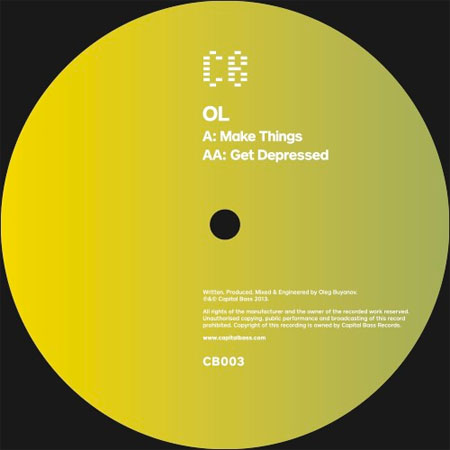
One of the reasons Moscow’s underground electronic music scene has remained so exciting over the past few years is that it doesn’t stand still. Artists seem to absorb sonic influences like some kind of mutant SoundCloud sponge, and as a result, their tracks are in a constant state of change, forming hybrids that are endlessly switching pieces in and out. OL is one such producer, and with his forthcoming, vinyl-only Make Things EP for Moscow label/party/crew Capital Bass, the Russian tunesmith seems to have soaked up the sounds of soulful boogie and drum machine-fueled house. “Feel Me,” a one-off track which has been streaming online since early last month, follows suit with its filtered chords, hand percussion, and slight uptempo skitter merging with bits of dark atmosphere for an intriguing combination. OL’s Make Things EP can be previewed before it officially drops on September 23, after the jump.
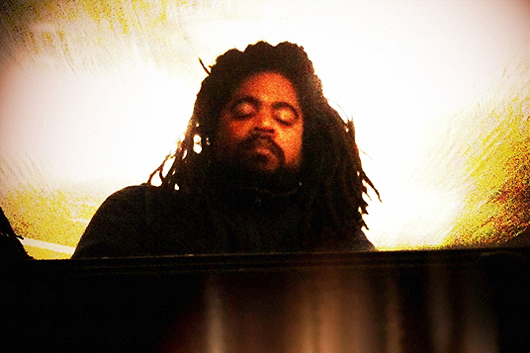
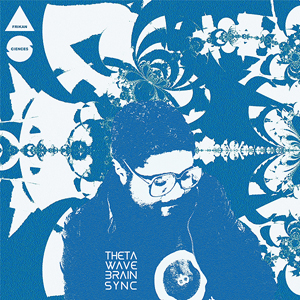
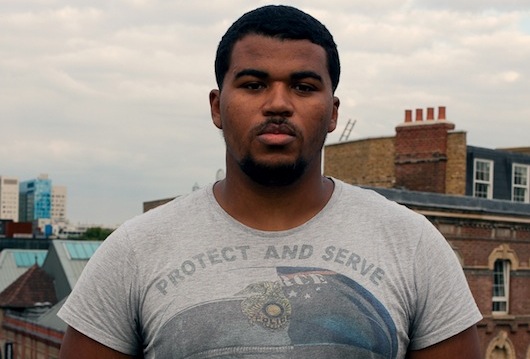
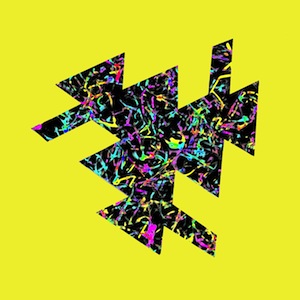
Somewhere between the realms of ambling, galactic techno and texturized instrumental hip-hop is Oakland producer Afrikan Sciences, who has been quietly honing his unique sound across releases for hometown label Deepblak since 2006. Now, the artist born Eric Douglass is preparing to add another LP to his discography, the 11-track Theta Wave Brain Sync. The release will mark Afrikan Science’s sophomore full-length when it drops next month, and is said to “build on [his] ethos of free-form exploration of rhythm, dance, and sound,” while “utilizing an expansive rhythmic dialect” to transport listeners to a “special place where numbers and counting are rendered meaningless, leaving nothing left for the listener but the groove.” Before Theta Wave Brain Sync appears as a double-LP on October 23, its artwork and tracklist can be found below.
A1. Sage Projection A2. Need Want Have A3. A Trove B1. As You Were Brother B2. What Who What, The Bazooka Was Who B3. Theta Wave Brain Sync C1. New Morning C2. o4U C3. A Healthy Turn Around D1. Monseq Q D2. Magnetism Is More Intelligent Than Force
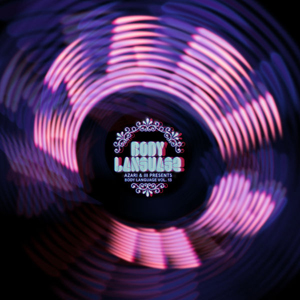
Still riding on the success of its debut LP from 2011, Canadian house outfit Azari & III will be next to issue a mix for Get Physical‘s ongoing Body Language series. And this latest mix album will offer something a bit different, as the band’s core DJ/producers, Dinamo Azari and Alixander III, will each release their own exclusive sets across two discs. As Resident Advisor reports, Dinamo Azari’s submission is described as “too hard for the day, too soft for the night,” while his counterpart says his part of the mix album was inspired by “memories of cassette mixtapes from my early ’90s industrial/rave days.” Heady and driving tunes from the likes of Robert Hood, Planetary Assault Systems, Shed, Plastikman, Scuba, L.I.E.S. affiliate Jahiliyya Fields, Moiré, Daphni, and Locked Groove, among the mixer’s own productions and other artists, will appear across the two-disc mix album. Before Azari & III’s Body Language 13 drops as a digital download on September 27 and as a CD package on October 18, its artwork and tracklist can be found below.
Dinamo Azari mix: 01. Intro 02. Shed – 44A (Hard Wax Forever) 03. Locked Groove – Lost 04. Locussolus – Berghain 05. Streetwalker – The Nymph 06. Barnt – Geffen 07. Daphni – Light 08. Acid Jesus – Radium 09. Tommy Four Seven – Track 5 (Robert Hood Remix) 10. Unknown – Test 11. Perspects – They Keep Dancing 12. Moire – Drugs 13. Samo DJ – Leggo 14. Unknown – S.Y.S 15. Outro
Alixander III mix: 01. Acid Junkies – Weird-O-Eight 02. Jahiliyya Fields – White Cabbage 03. Phone Sex feat Grimes – Blood Diamond 04. Origami Suicide – Sweet Blasphemies 05. Teste – The Wipe 06. Electric Mistress – Manhattan Ave 07. Alixander III – In A Vacuum 08. Planetary Assault Systems – Suktion 09. Gazelle Twin – Heartbeat 10. Plastikman – Plasticene 11. Azari & III – Change Of Heart 12. Scuba – Underbelly 13. Alixander III & Hugues St. Amour – 3rd Bi-Annual M-nority Report 14. Gazelle Twin – Heartbeat
It’s been three years since we last heard from Delorean, the Barcelona group whose deeply melodic, richly textured 2010 album Subiza went over well among club and indie/pop audiences alike. (We certainly liked it here it XLR8R, as we named the LP our favorite release of the year.) After a great deal of work in its hometown studio and at Gigantic Studios in New York, the band has finished a new full-length, Apar, an alternately bright and wistful record that both broadens Delorean’s palette and presents its sound with a new, crystalline studio sheen that suits the music nicely. We spoke with singer and bass player Ekhi Lopetegi about the band’s studio, as well as how the group went about recording this new album in comparison to the last one.
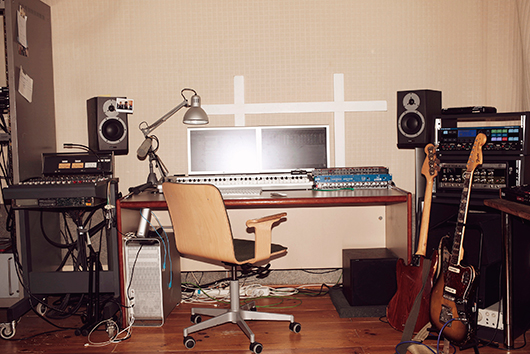
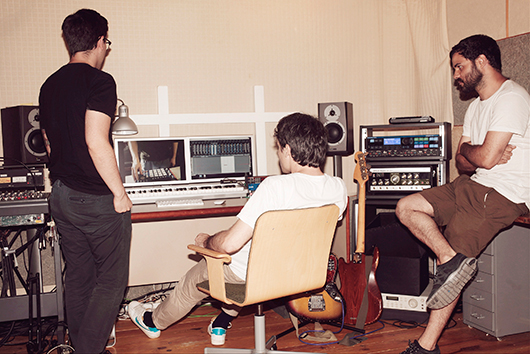
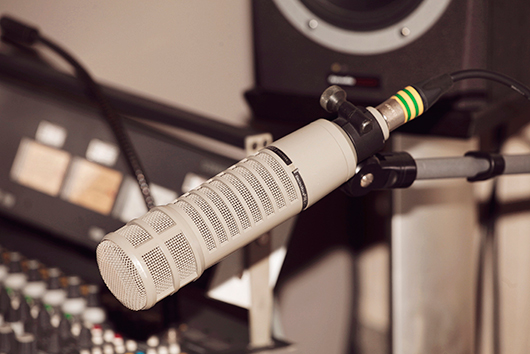
XLR8R: Tell us a bit about the studio. Is it where you practice and record? Is it in Barcelona? Ekhi Lopetegi: The studio is in Barcelona in this neighborhood called Poblenou, in this industrial area, and it’s actually shared with some other bands. There are four different rooms, and one common room that we all share for live performances. It’s pretty cool honestly—we have our production room and the live room, so we can both do production and rehearse when we need. And if we need to record something, we can also use the live room. Besides that, all of us come here to work… it’s like a workplace.
So you practice there, and you record there? And you write your music there? Yeah. Although we all have computers at home, and sometimes we do our stuff by ourselves in our apartments. But it all got centralized here.
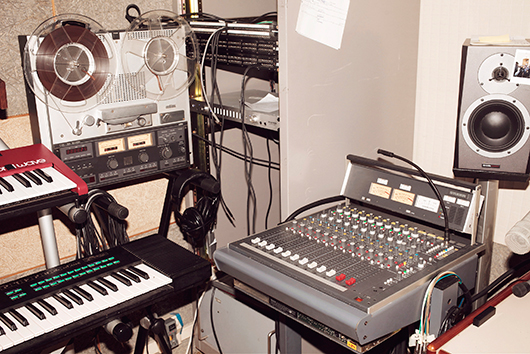
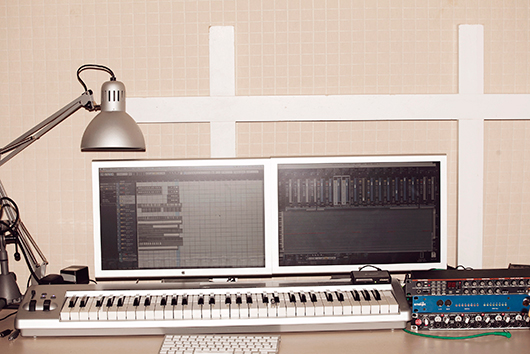
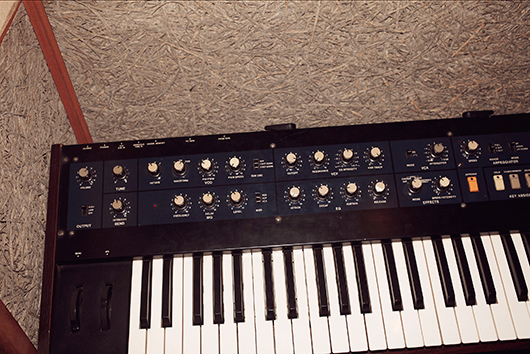
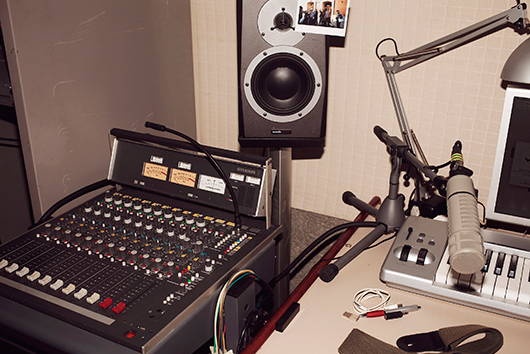
Have you been in this studio for a while? We already had this room when we were doing the Subiza album, but we never used it as an actual studio. There wasn’t enough equipment. We didn’t have the mixing board that we have now, and we didn’t have the computer, the tape recorder, all the synths, and the hardware that we’ve been buying. So it was basically this room, but it was empty—it was probably just a laptop and some speakers. Now it’s a proper studio.
One gets the impression that the process for this record was much different than the one for the last one. Tell us a bit about how the songwriting worked for this new album. I think [the songwriting] has changed, but not that much. We wanted to write the record differently, and instead of writing the record by clicking on the mouse and editing sound, we wanted to have actual instruments and mics and hardware, just in case. If we needed a hi-hat, instead of using audio samples, we wanted to be ready to actually play a hi-hat pattern, record it, and integrate it in the song. We wanted to have all these instruments ready, just in case we needed them to write the songs. We wanted to have the guitar ready to play and record, we wanted to have the bass ready to use, and we wanted to have drum machines ready to be used. But in the end, you end up working with a computer, editing sound and stuff, because it’s so easy. Even if we wanted to write the album differently, we kind of ended up going halfway to what we ideally thought the [recording process] was going to be.
What did you originally envision recording was going to be like? I personally thought that the writing was going to be more like composition—you know, having a guitar and playing chords, or playing around with the drum machine a little bit and then recording it. In the end, we used hardware, but we still based the writing on the computer. But, you know, I played bass more than ever, there are more guitars than ever, and we had the drum machines ready in case we needed them.
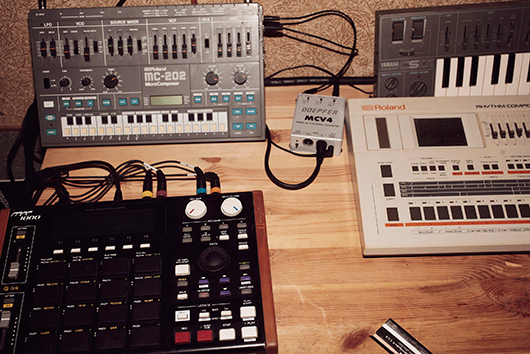
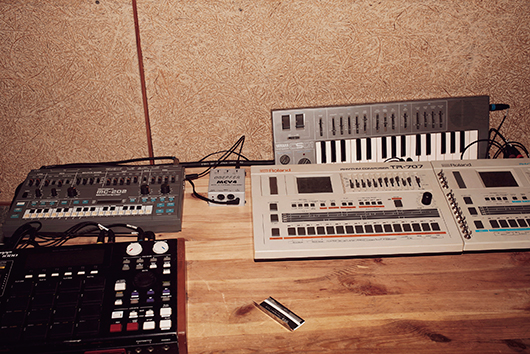
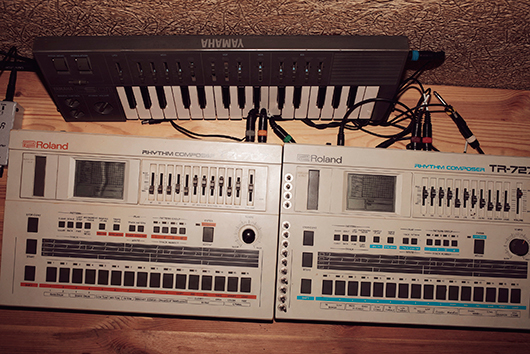
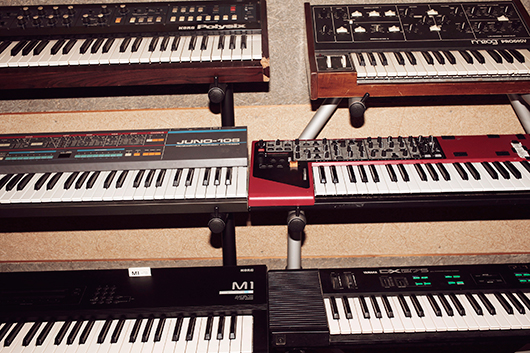
It looks like you have at least three different Roland drum machines. There’s the MicroComposer MC-202, and then there’s the Roland 707 and 727. We have a Roland 626 too. Those drum machines were bought because we were using the sound samples a lot. We didn’t want to do the drum patterns on MIDI, so we bought the actual drum machines. Some of the patterns and sounds are taken straight from the drum machines—not all of them, but they were there when we needed. There’s a lot of 707 drum snare on the record. A lot of drum snares that you can hear will probably be the [live] drums that we recorded or the 707. Some of the [707] snares were replaced by actual snares, but it was there.
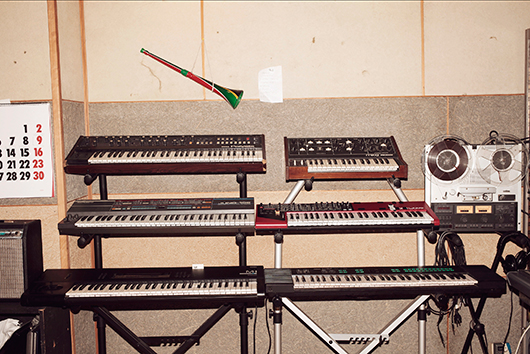
We used to use a lot of the Korg Polysix plug-in, and we were using the Korg M1 plug-in too. But we didn’t want to use the plug-ins anymore, so we bought a Polysix and a M1. We also bought this Novation drum machine, which is like an emulation of the 909 and 808. So we pretty much have the 606, 626, 707, 727, 808, and 909.
Then we bought all of the guitars and basses. When we went to Chris Zane’s studio [Gigantic Studios in New York], we didn’t want to lose time with a performance—we didn’t want to spend a lot of time trying to record a proper bass or guitar performance. So we recorded all of the guitars and basses here using this old Studer mixing board. Everything was recorded here with no effects, and then we went to New York and re-amped everything, and that’s when we worked on the sound.
Were you using mostly analog gear for recording? Not all of the stuff was analog. For instance, there’s this nylon guitar sound throughout the whole record that was taken from the Korg M1 plug-in. We tried to find that one on the actual M1 keyboard, but apparently that sound is only on the plug-in. They designed this sound exclusively for the plug-in, it’s called a “silk guitar” or something like that. All of those Indian/Arabic-sounding nylon guitar sounds are actually that synth plug-in.
For this new album, Apar, did you use live vocals for the female backups? Yeah. There are two things: on one hand, we wanted to have female backups, to enrich the vocals, and on the other hand, one of the techniques that we used for writing songs and melodies was editing female voice audio samples. A lot of the sample-based vocals were actually sung by real singers. We wrote down some lyrics, and we worked with Cameron Mesirow [Glasser] and Caroline Polachek from Chairlift.
Basically, there were vocal samples that we wanted to be real. We would go with a sample vocal, write down a lyric for that, and try to emulate that with the [real] voice. We would adapt it to a human voice, but we wouldn’t sample back those vocal takes—we wouldn’t edit them. In certain songs it was a pretty hard job.
When you were recording parts in the studio, you were tracking individual instruments, right? You wouldn’t play live together in the studio? There hasn’t been any live playing as a band, it’s only been [individual] tracking. Even the drums—when we were in the studio with Chris Zane, Igor played the drums individually and separately. He played the kick, then the snare, then the hi-hat, then the toms, and all that. We had some good surprises because most of the congas and stuff—there are a few tracks with congas—were the 707 congas, but Chris Zane, who’s very good at playing drums and percussion, re-recorded all of those congas, and re-recorded all of the percussion. Same with tambourines: all the tambourines we used were taken from the 707, but we re-recorded all of the tambourines, so you actually hear real tambourine. That was a pretty cool surprise.
With the last album, when you mixed it, it was a trans-Atlantic thing—you were in Spain and you mixed it remotely over iChat. Did you do it differently this time? No, it was exactly the same. It’s actually a great way to work—you sit down in front of the computer, you open this stream link, and you hear what the mixer is doing in real time, and you can communicate on Skype or whatever. That gives you more time to do the tracking and to produce. You don’t really need to be in the studio because you’re hearing it in real time.
The way it works is that you can stream that mixing session. You send that link, you open it on iTunes, and you hear what’s coming from that person’s mixing board. Not all of the record was recorded here [in Barcelona]. We only did the tracking for guitars and basses, and some drum machines. We set all the MIDI files too, so that when we were actually recording it, in New York, we would only have to re-amp things instead of performing. But almost all the drums were performed by Igor—they were actually recorded there, and a couple of guitar lines were too. We used some of Chris’ synths too, because we had the MIDI files—so the bassline in “Spirit” was made with another sound, and we used another synth for that.
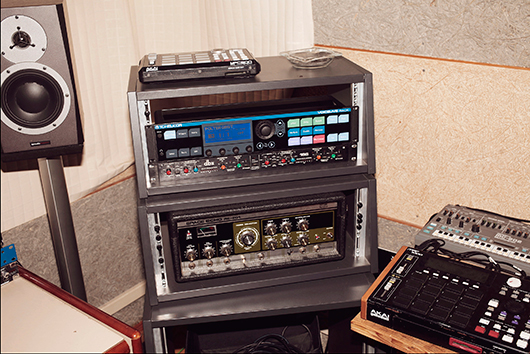
I noticed there is a reel-to-reel in the studio. Did you use that at all? Oh yeah, the Revox. Some of the early demos had this reel-to-reel. We haven’t used it. We want to use it for mastering and stuff. It has this very cool thing we like: speed deviation. You can change the speed of the reel so that, instead of time-stretching things digitally, where there’s a loss of quality, you can time-stretch it analog with the Revox reel-to-reel tape recorder. We bought it because of that, and it’s always cool to send it through a tape machine in case you wanna give some crispness or warmth to the final mix. The speed variation thing is pretty amazing, it sounds very vivid.
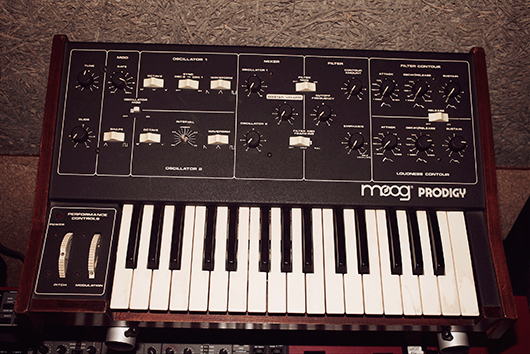
There’s a Moog Prodigy in there too—did you use that much? That’s like a museum piece for us. We never use the Prodigy, but that’s the first synth that we bought. We bought it back in 2002 or 2003, something like that. I haven’t plugged it in in years—we just wanna keep it.
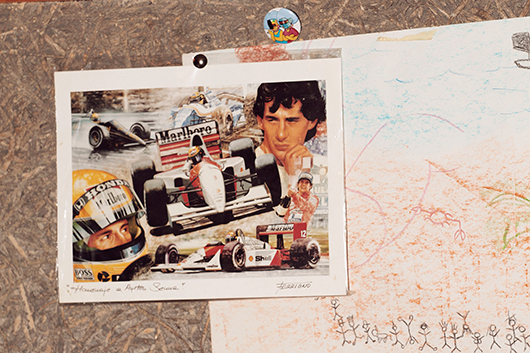
And there’s a picture of a racecar driver on the wall. Is that Ayrton Senna, whose name is the title of a Delorean EP from 2009? Yeah! That’s Ayrton Senna.
Do you have a favorite piece of gear you used on this record? There’s definitely this sound that I told you about: the M1 “silk guitar” preset. We modified that preset, but the name is “silk guitar.” That’s one of the features of the sound on this record. The Korg M1 sound has been used mainly for writing the songs, and the arrangements. For instance, “Dominion”—all of the song is based on the “silk guitar” sound.
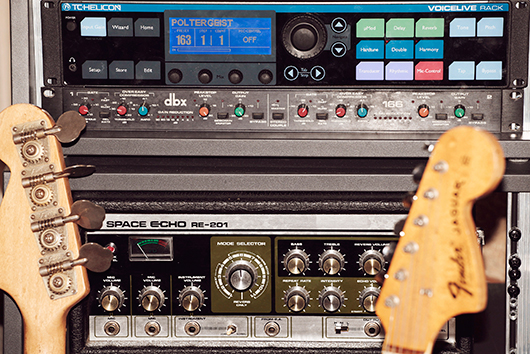
I would personally say that I’m very happy with the way the guitars are sounding. We used to be Fender Twin Reverb people, but now we work more with sounds like the Roland Jazz Chorus 85 [guitar amp]. We re-amped everything at Chris’ studio with some other amps, but the chorus that this amp is giving you… is actually a chorus sound that we had in mind when we re-amped and produced the guitar sounds. So we actually recorded with other amps, but this guitar sound has always been in mind for us as a reference for guitars. There’s a lot of chorus on the guitars.
I’m pretty happy with the way the drums sounded too. Chris did an amazing job. [Our drums] have never sounded the way they sound on this record. There are a lot of gated reverb snares, for instance, which is another thing that shaped the sound.
You’ve described this as Delorean’s “big production album.” Could you tell me a little more about what you meant by that? We basically got inspired by big albums from 1985 to 1990. We didn’t mean that this is like a “big production” record, because it’s been pretty cheap, but there’s been some effort in working in the studio in a proper way. A lot of inspiration comes from records from around that time, when there was a lot of money and the records that were put out were very taken care of. There was this hi-fi approach to songs, but it was still pretty much analog because computers were not there yet. Most of those records sound VERY big, they sound huge, and there’s this huge care in those records and it’s great. We had that in mind as an idea, as a reference, but it’s not that we think we made that—we only had it in mind.
Are you talking about pop records or R&B records? I’m talking more like Peter Gabriel’s So, Paul Simon’s Graceland—huge studio efforts. A lot of records that are in that BBC Classic Albums series are a reference. Another album from later times is Primal Scream’s Screamadelica, a big studio album. Paul Simon and Peter Gabriel made so many records before Graceland and So, but with those records, they took their time and made big “studio” albums. They took like a year and all that effort and resources, and worked in the studio so much, and they sound the way they sound because of that.
Rising grime artist Mr. Mitch has quickly made his way into our consciousness after having been included on Big Dada’s Grime 2.0 compilation and delivering the odd free download over the years. Next, he’ll release the Suave EP via Run Music on September 16, and the producer has sent over the fresh “September” track ahead of time. His production is a romantic one, floating around at a cloud’s pace. It begins with a sensual dialogue exchange draped in pillowy reverb, before elevating its fairly ethereal structure with buoyant toms, circular synth paradiddles, and off-kilter claps.
The gradual transformation of Factory Floor‘s music into its crystalline present form has been fascinating to witness. All along, there’s been a semi-visible backdrop of early UK post-punk, along with the trio’s palpable appreciation of the frenzied, grinding corners of the no-wave period. The group’s members have even worked with several prominent musicians in that realm, ranging from Chris Carter and Cosey Fanni Tutti (Throbbing Gristle/Chris & Cosey/Carter Tutti) to Stephen Morris (Joy Division/New Order) and Mark Stewart (The Pop Group). There’s little resemblance, however, between the Mancunian post-punk homage documented on the band’s earliest records and the fine-tuned, immense dance cuts Factory Floor is releasing today.
With its self-titled debut album, the group’s attention to scrupulously sculpted drum tracks and deep, fully realized songs has resulted in something great. Factory Floor is, without a doubt, very dancefloor-oriented and in some ways is a bit more reined-in than the band’s earlier releases. Its club readiness will be of little surprise to anyone who’s heard Factory Floor’s records in the last two years, particularly its singles for Optimo and DFA, but it’s nonetheless a notable progression given how experimental the group has been at various times since its conception in the mid-2000s. Odd, noisy elements do pop up, but they’re subservient to the establishment of the record’s colossal rhythms. This is evident on the album’s two lead-up singles, “Two Different Ways” and “Fall Back,” both of which appear on the LP. The former, originally released all the way back in 2011, is intricate and thoroughly infectious; it’s as irresistible now as it was two years ago. “Fall Back,” meanwhile, might be the group’s most brilliantly realized track, deftly weaving a panoply of drum sounds with Nik Colk Void’s cold, alien-feeling vocals. Her voice, ordinarily distorted or augmented with reverb, is a terrific fit for the record in its slightly removed, serious delivery, which pairs very effectively with the group’s alternately warm and intimidating modes.
Although conceived as an album, Factory Floor comes across as a collection of seven long-form club cuts, separated by three brief ambient interludes (titled “One,” “Two,” and “Three”). The entire record has a dry yet punchy production quality, giving a serrated edge to tracks that already sound huge. The drum production in particular can’t be praised enough—the rhythm tracks really do sound great throughout the whole record. “Here Again,” the album’s second track, smashes together one particularly memorable rhythm with crisp synths, resulting in a tune that’s both hypnotic and uplifting. “How You Say,” meanwhile, employs copious upbeat dance rhythms but hits hardest on a purely textural level, unfurling its screeching, tightly wound synth track into the taut yet disciplined synths that introduce the next song, “Two Different Ways.”
Everything feels just the right length on Factory Floor—the care and attention to detail that clearly went into this record are immediately apparent and easy to appreciate. Sure, many of the musical tropes the group is working with here could’ve been pulled straight out of the New York Noise playbook, but one can’t really hold the derivative elements against the band when the end result is so compelling and fully enveloping. What the group has come up with on this LP may not be as bizarre as the outfit has sometimes been in the past, but it turns out that Factory Floor is pretty damn good at balancing accessibility and art. Factory Floor is really quite a solid dance record, not to mention the group’s most coherent, hard-hitting statement yet. It’s the record’s craft that strikes first, and the subtleties that’ll keep the listener intrigued on continued listens. Whether it’s the muffled, unsettling synths that peer out from underneath the groove, the mannered and highly potent collision of seemingly incongruous drum patterns, or simply the masterful arrangement, it all adds up to make a record that’s difficult to second-guess and lots of fun to unpack.
Even in 2013, it’s hard to argue with a good break. Cleveland native Josh Hastings (a.k.a. RUMTUM) seems to agree with that production philosophy, basing “Ritz Bitz”—a cut from his forthcoming Mystic Wonders LP—on a compressed-to-all-hell, midtempo drum loop, on top of which he layers a set of impossibly funky chords, bubbling arpeggios, and loads of crisp percussion. The combination yields a track that has just enough boom-bap to keep the beatheads happy and just enough psychedelic weirdness to make it an easy choice to accompany one’s afternoon smoke session—all of which boasts well for RUMTUM’s soon-to-drop album, out later this month via 1320.
Changing Days, Mano Le Tough‘s debut album, threw listeners a curveball upon its release earlier in the year; compared to the breezy, upbeat singles on which the Irish producer (real name Niall Mannion) made his career, the record introduced darker hues, with many tracks featuring moody vocals by Mannion himself. The LP’s pop introspection was not especially club-friendly, so it makes sense that fans of his earlier dancefloor material should be appeased by some remixes. All three remixers here do a solid job, but because none provide a total transformation, mileage will likely vary depending on one’s reception of the LP.
Italian duo Tale of Us takes on “Primative People,” interweaving twinkling bells and a wonky, climbing synthesizer before the introduction of Mannion’s stark vocals. Its rhythm is kind of tinny, but Tale of Us compensates with an arrangement that’s brimming with anthemic potential. Dixon, meanwhile, takes a bumping disco-house approach to “Everything You’ve Done Before.” Like Tale of Us’ track, it’s underscored by bells, and again, vocals appear midway through. Both are isolated in a more elegant manner, however, and this adds considerable weight to Mannion’s mumbly voice. Finally, fellow Irish act New Jackson delivers a take on “Please.” Although the producer’s soulful croon is a little hard to take at first, the track’s chirpy melody makes it the biggest left turn here, transplanting the original to somewhere sun-dappled. All three pieces aim at the dancefloor, but none eclipse Mannion’s own proven strength in that department.
Throughout the week, a whole lot of material gets posted here on XLR8R. And while we know—and love—that some hardcore readers will eagerly pour over every single news story, interview, podcast, video, and MP3 download that appears on the site, we also realize that for most people, it’s impossible to see everything, which means that some quality XLR8R content is likely to get missed in the hustle and bustle of everyone’s daily lives. In the interest of making it easier for everyone to catch up, every Friday we present The Lowdown, a weekly wrap-up of the top 10 tidbits from our site.
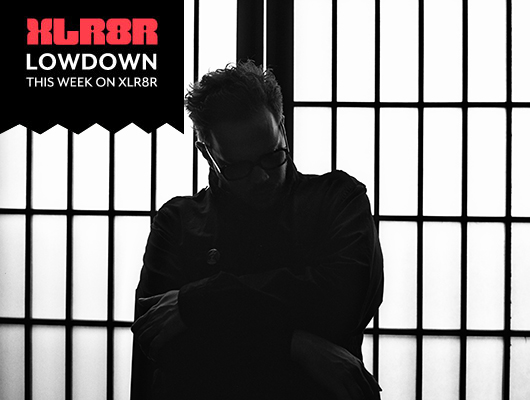
1. Fresh off the launch of his new label Yellow Year, veteran beat experimentalist Prefuse 73 (pictured above) assembled an exclusive mix for this week’s XLR8R podcast.
2. As we do at the start of every month, we checked the numbers and compiled a list of the Top 20 Downloads of August. Now readers can grab all of last month’s hottest free tunes in one place.
3. At the end of this month, Machinedrum will be releasing his latest LP, Vapor City, and this week, he shared another single from the album, “Gunshotta.”
4. Though he’s spent much of the past year or so outside of the limelight, Bristol producer Joker reappeared this week with a Sega-inspired album, which he offered up for free download.
5. Longstanding UK outift The Black Dog announced plans to launch its own music-tech company, and is currently raising money to fund the creation of its first product, a custom-designed MIDI controller.
6. After several years of waiting, Apple recently released Logic Pro X. XLR8R spent some time with the software, and this week we published our official review of the program.
7. Physical Therapy is about to release the new whitelabel EP on Sinden’s Grizzly imprint, and the label was kind enough to give us the record’s final song—a remix of the title track by Canadian producer Nautiluss—as a free download.
8. Chilean producer Ricardo Tobar will soon be dropping a new full-length, and has elected to donate a remix of lead single “If I Love You” by Parisian artist Low Jack to our Downloads section.
9. This week’s contest offered readers the chance to win a set of portable speakers from NudeAudio. Enter now before it’s too late.
10. Another highlight from the Downloads section this week was “Rodeo,” a frantic piece of pop-tinged IDM from Brooklyn beatmaker Bruce Smear.
An expanded version of the The Lowdown is also available via a weekly email newsletter. Those interested in an even more in-depth round-up of XLR8R content, including a complete listing of all the free downloads we’ve offered in the past seven days, should sign up by entering their email address below.