Theo Parrish Announces New EP

Detroit techno mainstay Theo Parrish is set to release Any Other Styles, a new EP on his own Sound Signature imprint due near the end of July. The release will feature two versions of the EP’s title track, as well as an additional tune, “Beat These.” Parrish, a genre innovator who’s worked as part of the Three Chairs collective with Rick Wilhite, Kenny Dixon Jr., and Marcellus Pittman since the 1990s, has been pushing a roughly hewn sound for the past few years, and will reportedly continue that trend with Any Other Styles. In case you missed it, check out a recent interview Parrish did with Slices below. (via FACT)

96Wrld “Clark”

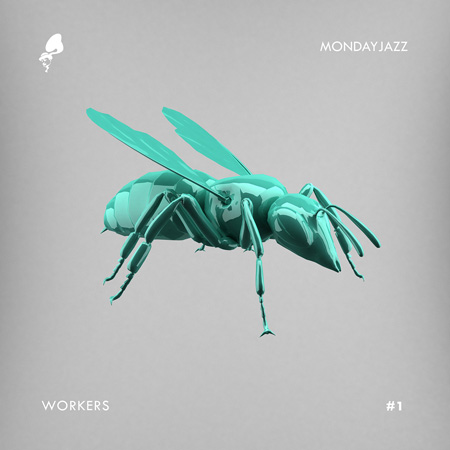
A massive cascade of bleeps and clicks accompany the onset of a heavy halfstep beat in this track from Lithuaninan producer 96Wrld. “Clark” arrives via Mondayjazz’s Workers #1 compilation, and sounds something like a Mario Kart adventure weaving through Moscow’s skwee-skewed beat culture, LA’s organic hip-hop undergrowth, and the grimey alleys of UK dubstep. Hyper-melodic and full of scissoring hi-hats, the beat serves a secondary role to the percolating arpeggios which rise, crumble, and reform at every angle. The Workers #1 compilation also includes tracks from DZA, Fulgeance, and OL, among others, and will be available digitally on July 2.

Clark

Video: Disclosure “Control”

Here, the Lawrence brothers (a.k.a. Disclosure) deliver the first music video to come from their recent The Face EP for Greco-Roman, a subtle and muted clip for the vibrant “Control” single. Directed by Ben Murray and Ross McDowell, the piece plays something like a Calvin Klein ad, as it features young and attractive people getting down to the bubbling dance tune. And after you get an eye full of the black-and-white video, you can check out a remix of “Control” from Greco-Roman co-owner and Hot Chip cohort Joe Goddard, below.

Get Free Remixes From Nicolas Jaar, Shlohmo, Groundislava, and More

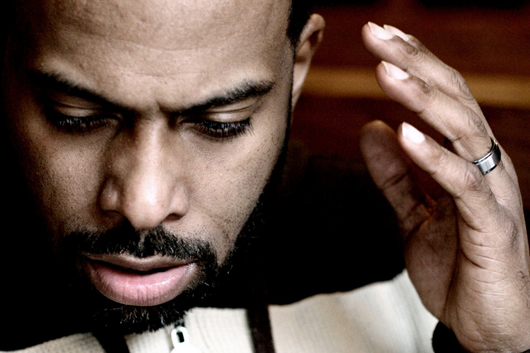
If LA-based label Friends of Friends is known for anything, it’s that every one of its releases features a remix or two (or three, or four…). 2012’s FoF records were no different, and now, the electronic record hub has gathered together a handful of those reworked tunes from the first half of the year, offering the collection as a free download. Included in the package are FoF staples like Shlohmo (pictured above), Groundislava, and Salva, alongside non-label artists such as Nicolas Jaar and RL Grime. You can grab the whole gratis shebang here, and check out the full list of tunes below.

1. Shlohmo – Rained The Whole Time (Nicolas Jaar Remix) x Number One (Hemsworth Blend)
2. Lil’ Wayne – Nightmares of the Bottom (LOL Boys Edit)
3. Lianne La Havas – Lost & Found (Ernest Gonzales Remix)
4. Nicki Minaj – Super Bass (Groundislava Remix)
5. Kanye West – Mercy (RL Grime & Salva Remix)
6. Tyga – Rack City (Tomas Barfod 909 Edit)
7. Jamie Foxx – Blame It (Groundislava Cool Mix)
8. Drake – Crew Love ft. The Weeknd (Shlohmo Remix)

Beatsurfing

Following its recent release, we take a look at the app and talk about the unique music software with its designers.

If you’re anything like us, you were equal parts intrigued and confused when news first broke of the Beatsurfing iPad app. The initial demo videos featured nothing more than the tablet’s bright, colorful screen and a congregation of shapes manipulated by the hands of performer; these things—combined with the fact that the app was being released by the forward-thinking Belgium imprint Vlek and was a project headed by the Herrmutt Lobby collecive of electronic musicians and designers (a repututable name in any self-respecting circle of gear nerds)—made us all the more curious. Now that Beatsurfing has officially hit the iTunes store ($11.99), the details of the software are beginning to take shape, so we thought we’d ask the designers themselves to help us navigate their creation.

Essentially, Beatsurfing is an environment in which you can build and perform with a custom controller on your iPad. With four objects (or “operators”)—the line, the circle, the polygon, and the fader—at your disposal, users can design their own controllers that send MIDI data to external equipment while also allowing for manipulation of other aspects of the environment. Beatsurfing was created with a focus on ease of use, flexability, and—above all else—the ability to freely perform electronic music, rather than just triggering sequences. The video below serves as a proper introduction to what Beatsurfing can do, and the following interview with Hermutt Lobby sheds more light on the exciting new software.

XLR8R Couldn't find the embed function for type: "vimeo" and source: "<iframe src="http://player.vimeo.com/video/44342807?title=0&amp;byline=0&amp;portrait=0&amp;color=ffffff" width="530" height="269" frameborder="0" webkitallowfullscreen="" mozallowfullscreen="" allowfullscreen=""></iframe>".

XLR8R: Where did the idea for Beatsurfing start?
Hermutt Lobby: A few years ago, we started trying to move past using sequencing in our live performances. We wanted to find a solution that allowed us to play electronic music live as an extension of physical movement, like a musical instrument. We started to make a Max For Live device that would allow the user to play drums using faders or anything on a controller that could be connected to body movement. The idea was not just for us: We wanted to help other people be able to play music live without a sequence, but with the Max For Live devices, this was not easy to share—it was geek shit, it was complex. Then we came across the iPad, which seemed suitable to play music in real time because it could send a lot of different data depending on how the user slides their fingers across the pad or what direction their hands are moving in. All these processes we were able to utilize in Beatsurfing with only four simple objects.

Who do you think will take to this app? Do you see it being used more for live performance or composition?
I could see someone using the app to enable them to perform parts of a composition, or to get ideas while composing, so maybe both. But it is especially made for use on stage, that was our focus. If you write music at home, it could be interesting to include it in your set-up because it is so easy to get running. You can just drag toys and build a basic usable instrument in the app in eight or ten seconds, and maybe use it to mess around and record a loop for a few bars and then never use that layout again; it could be just part of your creative process. When you are on stage, it can be at the center of the process as it allows you to not only be able to play the samples or the drums or the bassline, but will allow you to play the whole song in an improvisatory manner.

XLR8R Couldn't find the embed function for type: "vimeo" and source: "<iframe src="http://player.vimeo.com/video/38308666" width="530" height="298" frameborder="0" webkitallowfullscreen="" mozallowfullscreen="" allowfullscreen=""></iframe>".

It sounds like it was important to make Beatsurfing easy to use. Do you think that anyone with a basic understanding of music production could pick it up?
Yes, it is a very small software. To understand how to completely use the software would only take a few hours; it’s not a huge modular system, there are not a lot of maneuvers. It is very user friendly—you just drag and drop some objects and it’s done. If you have a favorite piece of gear or software that you like to use, it is really easy to make Beatsurfing talk with it via MIDI. You’re not changing your workflow, but just adding another tool. It’s really easy to integrate into an existing setup.

And that’s because Beatsurfing isn’t its own instrument, but a MIDI controller of sorts?
Yes, but there is a difference between a MIDI controller and Beatsurfing: A MIDI controller sends MIDI data from itself to other machines (a DAW, a sampler, etc.), which Beatsurfing does, but the app can also interact with itself. Meaning that when you hit an object on Beatsurfing, it can send data to another machine, but it also sends data to the other objects in the scene. The objects can talk together, they can interact with themselves before they send the MIDI output. This makes it so that with only three or four objects, you can play a really complex sequence. To play the same sequence without that interaction, you’d need 20 pads on a controller or maybe more. But there is nothing random to it at all. It is like a sequence, but you are the clock. The player is the one who drives the performance and changes the rules of the music. It’s like dancing on the screen with your finger, it can give you a simpler relationship with the music because it is so tied to movement.

Right now there is a huge demand for people to make their own MIDI controller, and with the app its not only fast to prototype your controller, but if you don’t like what you’ve done, you just have to edit or maybe even start over—you don’t have to build a whole new machine. If you come up with a nice layout, it can be really fun to play, even for people who have never made music in their life. Once you have a setup, its like beatboxing or singing. There is really not a lot of time between getting the iPad in your hands and being able to play a song.

It sounds like the Beatsurfing experience is based on experimentation from the beginning. You start by dragging objects and seeing what you can come up with.
Yeah, you begin by doing that, and after a period you are able to think of what else to do with these objects. Once you begin building enough or see some existing set-ups, you start to see how it can become more.

XLR8R Couldn't find the embed function for type: "vimeo" and source: "<iframe src="http://player.vimeo.com/video/44341271?byline=0&amp;portrait=0&amp;color=ffffff" width="530" height="330" frameborder="0" webkitallowfullscreen="" mozallowfullscreen="" allowfullscreen=""></iframe>".

And you can export and share your instruments with other Beatsurfing users once you’ve made them? Are there any plans to set up a sort of user community so that people can share what they’ve come up with, as the Max/MSP community does now?
Yes, you can send the scene by email. That feature is already included in the application. We’d like to set up a site for users to be able to share their instruments with each other, and include tutorial and demonstration scenes, but for now we haven’t set that up. We’re still waiting to see how people use the app, because for us, too, Beatsurfing is new. For us to be able to see what someone else with a different background will produce with the app, that will really help us make it better in the future.

It looks like there is a lot of visual feedback when using the app, was that something you focused on?
Yes, that is the point. To have this visual feedback allows you to see the rules computing on the screen, not just executing in the background. You can see in real time the state of all the objects. Even if the objects are moving on their own based on a rule, you can always see where you are on the iPad and affect and control the objects at any point.

And you control these parameters simply by sliding your fingers?
Gliding is the main way to use the app, as it allows you to use the natural movement of the fingers on your hands. This is maybe the biggest difference between a real-time music application and the iPad. The iPad is not accurate at all for tapping, you’re better off using something else, but for gliding, it’s really fun and opens up a lot of possibilities.

XLR8R Couldn't find the embed function for type: "vimeo" and source: "<iframe src="http://player.vimeo.com/video/40236917?byline=0&amp;portrait=0&amp;color=ffffff" width="530" height="300" frameborder="0" webkitallowfullscreen="" mozallowfullscreen="" allowfullscreen=""></iframe>".

How many points of control can you have on the app?
You can have six, so a few fingers on each hand.

How far off do you think a second revision will be, once you get enough feedback to make changes?
Just a few months. We’re planning to release another version by September.

For detailed information on all of Beatsurfing’s features and uses, head here.

Sei A Preps EP for Simple

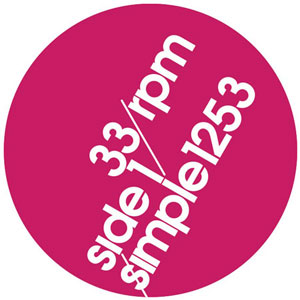
Following his Flux 12″ for Turbo from earlier this year (you know, the one with the crazy Martyn remix), UK producer Sei A will release a three-track record via Aus Music sister label Simple. The You Can Bring EP will feature two original productions from the tunesmith and a remix from Swedish artist Axel Boman, and will be available on July 9. You can check out the forthcoming release’s artwork and tracklist below.

A1 You Can Bring
A2 Going Down
B1 You Can Bring (Axel Boman Remix)

Filterwolf “Brooklyn Via Montmartre (Altered Natives Remix)”

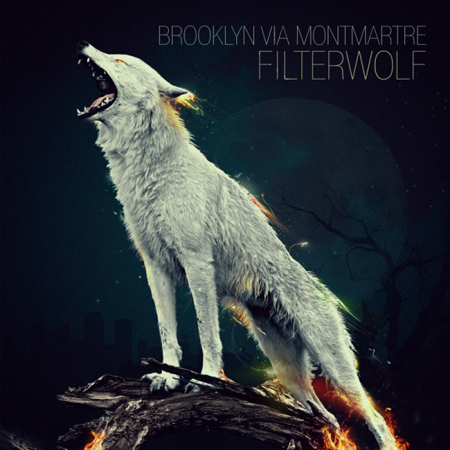
Danny Native, the bolshy UK producer behind the Altered Natives moniker, serves up a chunky, vibe-laden remix of Filterwolf‘s new single, “Brooklyn Via Montmartre,” off of his upcoming third LP, Viva La Rave. The Altered Natives version of the tune is tape-degraded and subtle, showing a softer side to the artist’s production by incorporating the original’s vintage piano line and male vocals into a rugged-but-unobtrusive house framework. Fans of Native’s previous work, however, will recognize the thick, rolling bass he uses, as it morphs underneath the atmospheric melody.

Brooklyn Via Montmartre (Altered Nat

Various Artists Purple Legacy – A History of Purple WOW

Released on Gemmy‘s World of Wonders imprint, Purple Legacy – A History Of Purple WOW is a vibrant attempt to canonize the fractal soundscapes that drew our attention to a Bristol-based clique of analog-equipped producers in the late ’00s. When these colorful tunes first surfaced on releases from Joker, Gemmy, Ginz, and Guido, “purple wow” fast became a recognized elucidation for the Technicolor strains of a clearly identifiable genome of dubstep. Cast in dazzling color, cut through with skewed, squealing G-funk synths and enormous, bitcrushed basslines, the main proponents of this much-celebrated niche were quickly made distinct from the darker recesses of the 140-bpm movement. Purple Legacy looks to celebrate this colorful caste with 15 tracks that caught our imaginations over the past five years. Many of these releases have been widely celebrated; a few have become outright genre staples. Naturally, this raises the question: what function could a seemingly cursory re-grouping of these micro-genre standards offer to anyone?

Well, maybe it’s all the Bristolians have left; releases from this loosest of all collectives have been increasingly thin on the ground (with the notable exception of Joker’s particularly lackluster debut LP, The Vision), whilst the mantle of “most pixellated worldview” has surely been passed to Rustie following his expansive Glass Swords. Yet even with this slower output, it still seems particularly premature to be boasting retrospectives of relatively marginal genre microcosms at this point. Opening with the sweeping, stuttering “Stuck In The System,” there’s a familiar pleasure to be taken in revisiting Joker’s earlier cuts, songs taken from a time before hands-in-the-air synths and sub-chart vocals became the norm. The simple fact is Joker’s early releases could have filled the tracklisting single-handedly, but instead settle for stealing the show with “Play Doe,” “Purple City,” “Re-Up,” and “Stuck In The System” all surfacing within the first five tracks. The breadth of sound comes when Joker leaves the limelight; Guido’s delicately trilling “Korg Back” and “Micro X” show that there’s more to the movement than soundtracking the fiery destruction of a space station. The compilation is crammed full of dramatic, evocative hardware workouts and infectious whistling synthesizer lines, but haven’t we quite literally heard it all before?

Well, yes, actually and, if anything, the thrill is further diminished by a lack of context. Each cut offers no less heft or inspiration than when it first surfaced, but the songs do lack a simple spark of relevance, a sense of otherness that was so apparent when these glassy sounds were more unfamiliar. Cluttered together, the disparate characters of this shared, luminescent timbre lose their individual identities in a sea of videogame noises and glaring synths. These aren’t releases that were meant to sit together, and in one listen, the glaring color can be overwhelming and indistinct. For new initiates, Purple Legacy will make for an indispensable canonization and fascinating introduction to this particular sound. All the bases are covered; be it in the sultry digi-sax of Guido’s “Mad Sax,” the final boss atmospherics of Ginz’s “Chrome,” or the utter digital meltdown of Joker and Ginz’s “Purple City,” the collection offers a suitably broad look at a rather particular niche. For those already acquainted though, it’s essentially a pointless endeavor. In the absence of any hearty amount of new material, the whole compilation becomes a perfunctory exercise in reminiscence. Whilst it’s unclear whether Purple Legacy was intended as a celebration, an obituary, or just a way of staying on the radar, most moments in the compilation make for essential listening as much as they did at conception. Ultimately though, we’re left with the frustrating and confusing sight of such a famously forward-thinking sound—one that was initially so indebted to raw futurism—curiously intent on looking backwards.

Bicep Prepares Retrospective for Throne of Blood

As its title makes perfectly clear, Bicep Presents Throne of Blood is a retrospective mix album helmed by Irish DJ/production duo Bicep and featuring the sounds of Throne of Blood‘s back catalog. In addition to selecting the tracks and crafting the mix, Bicep will also contribute an exclusive beatless version of their standout track “Darwin,” which will appear alongside releases from John Selway, Ulysses, Daniel Avery, and more gems from the the NYC-based label’s repertoire. Bicep Presents Throne of Blood will be available digitally on July 9, but before then, you can stream Bicep’s “Darwin (Beatless In Space Version)” and check out the tracklist and artwork below.

1. Bicep “Darwin” (Beatless In Space Version)

XLR8R Couldn't find the embed function for type: "soundcloud" and source: "<embed allowscriptaccess="always" height="81" src="https://player.soundcloud.com/player.swf?url=http%3A%2F%2Fapi.soundcloud.com%2Ftracks%2F51154066" type="application/x-shockwave-flash" width="100%">".

2. Bicep “Darwin”
3. Ford Inc “Satire”
4. Saarid “Bad At Love”
5. Bicep “Silk”
6. Beat Pharmacy “Inside Job”
7. John Selway “Shake The Snow” (Extended Reuptake Dub)
8. Ulysses “Implanted”
9. Remain & Mlle Caro “Heat” (Filipsson & Ulysses Jam Hot Remix)
10. Populette “Mommy” (Harkin & Raney Remix)
11. Harkin & Raney “Workin & Steamin”
12. Eamon Harkin “Electric Light” (Brendon Moeller Remix)
13. Daniel Avery “Flashlights”

The Hypnotic Lights “Storm (Lanny May’s Dark Space Edit)”

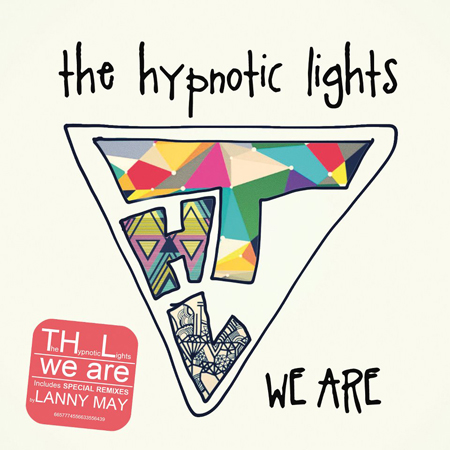
Swirling synths out of a John Carpenter soundtrack and a relentless forward motion drive this suitably epic edit of German trio The Hypnotic Lights‘ “Storm.” Spliced by Berlin resident Lanny May, the textures in his “Dark Space Edit” breathe in the background, sidechained heavily by powerful-but-restrained percussion that accelerates rhythmically as the tune progresses into its first, glistening drop. The synths are smooth in parts, serrated and hissing in others, and buoyed by a heavily distorted bassline that smudges the track with a dream-like quality as it enters its second melodic progression four minutes in. It’s the second drop that gives credence to the “Dark Space” title of this edit, sucking the listener into a black vortex. Look for this tune to drop alonside 7 others when the We Are EP is made available via The Hypnotic Lights’ own imprint.

Storm (Lanny May’s Dark Space Edit)

Page 2004 of 3781
1 2,002 2,003 2,004 2,005 2,006 3,781