Review: Monotribe V2

MSRP: $310, Korg

Korg’s Monotribe unit is the big brother to the company’s succesful Monotron series, beefing up the pocket-sized analog synthesizer with a few extra features, a sequencer, and some actual knobs.

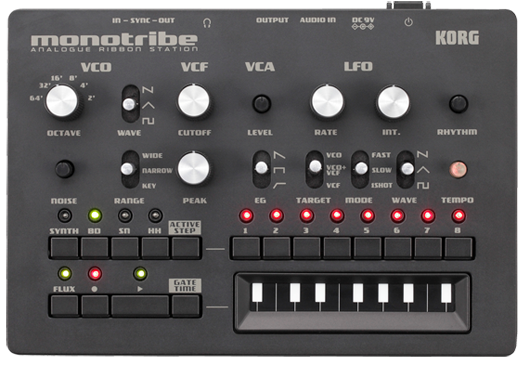
The Monotribe is still a relatively small unit (measuring roughly 6″x8″), but feels unexpectedly solid with buttons, knobs, and switches that look as if they could take some real abuse. Some big improvements have been made between the Monotron and the Monotribe, most importantly, the larger unit actually gives you a quarter-inch output, allowing for much easier interfacing with pedals, rack gear, and the like. The Monotribe is also more of a “real synth” than its smaller counterpart, built with access to six different octaves, three waveforms (square, triangle, and sawtooth), and a considerably thorough LFO section to modulate the analog oscillator. The synth sound on its own is a pure, single-oscillator analog tone—buzzing and warm, even a bit thick considering its only utilizing a single sound generator.

But the Monotribe’s most alluring aspect is its filter section, which boasts a simple two-knob operation (cutoff and peak) that allows for shaping sound sources from their plain roots and, at times, nonsensical patterns (selecting exact notes on the ribbon controller keyboard can prove difficult) into much more interesting audio. Best yet, Korg included an eighth-inch input jack for external sources on the back of the unit, allowing you to run an outside sound source (turntable, keyboard, etc.) through the filter section, which, incidentally, is an identical circuit to the filter sections found on Korg’s classic MS-10 and MS-20 synthesizers. For all the bells and whistles that the Monotribe offers (and it does offer quite a lot), the crisp fidelity and control—not mention the sweet, crunchy distortion one can get by slightly overloading the circuit—that comes from the unit’s filter is perhaps its best selling point, especially for those looking to get real analog warmth in their tones without draining their bank account to support such a weighty investment as vintage analog gear.

A big difference between the Monotron and the Monotribe is that the latter unit comes with a 16-step sequencer, which allows for recording and playback of the internal synth and three analog drum tones: kick, snare, and hihat. While this feature is quite handy—making the synth fire off notes while the user’s hands are free to tweak knobs and flip switches—the inclusion of these analog drum sounds seem a bit unnecessary aside from serving as really sophisticated click tracks. Still, as in all pieces of gear, the dedicated user is no doubt bound to find a worthwhile use for this feature or, at the very least, have fun making beats with it.

Overall, the Monotribe is an impressive unit with a rich sound and a lot of useful features for its price point. About the only thing the Monotribe is lacking is the ability to be used with MIDI, but it’s hard to tell how that would affect the cost, size, components, etc. of the unit. And, hey, it’s an analog piece of gear, so maybe there’s something to the fact that it can’t interact with the digital world. At the end of the day, it’s a solid analog synth with an incredible filter section that can fit into a backpack without any problems, which is to say, it’s a synth nerd’s portable dream.

Myakkah “I Want To Feel”

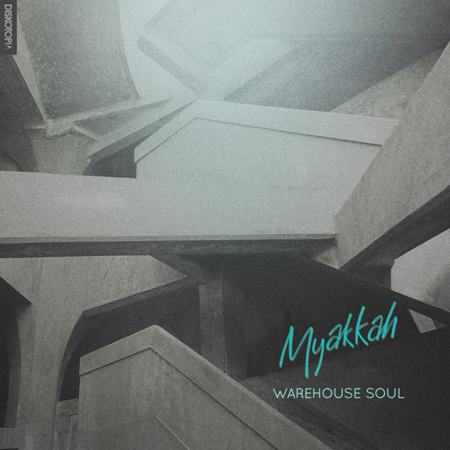
Thudding, intricately designed kicks are often the centerpiece of an artist’s work, carving out a suitably weighty core for the other elements of the track to orbit. But what if these other elements were of the same hefty material, and demanded the same amount of gravitational pull as that all-important bass drum? Answering that question is Myakkah, a new producer with a forthcoming EP on Diskotopia, Warehouse Soul, that focuses on the tension and grittiness of classic New York house without sacrificing an oft-forgotten aspect of that era: balance. “I Want To Feel” strikes an equilibrium by pitching kicks, subs, and higher-register percussion into new shapes that seem to enter and exit knowingly, anticipating their brethren on the frequency range to create a breathing effect. The synths certainly add to this inhale/exhale headspace, but the role of the percussion in inducing a push and pull is what Myakkah really seems to be keyed in on. Warehouse Soul is out on May 21; click through to the jump for a video of “I Want To Feel,” a new DJ mix from Myakkah, and a preview stream of the four-track EP.

Diskotopia DSKMIX: Myakkah by Diskotopia on Mixcloud

I Want To Feel

Teen Daze All of Us, Together

At some point toward the beginning of her musical career, Björk was quoted in an interview saying, “I find it so amazing when people tell me that electronic music has not got soul, and they blame the computers… It’s like, you couldn’t blame the computer. If there’s no soul in the music, it’s because nobody put it there.” Her point was an excellent defense of a once grossly misunderstood kind of songwriting, and it certainly bears revisiting in an era where creating music electronically is the easiest and most widespread method available. Instead of using the sentiment to justify computer-made music, however, use it to consider the fact that a potential lack of human soul looms over every synth preset, drum sample, and effects patch that Ableton Live, Reason, Logic, or some such DAW offers hopeful producers. Maybe now more than ever before, it would seem that, in addition to creating compelling song structures and unique sounds, it is the job of electronic artists to infuse a bit of themselves into their musical work in order to help combat the soullessness that computer programs can foster. Someone should’ve reminded Teen Daze of this before he made his first “proper” album, All of Us, Together.

Perhaps we should apologize, both to our readers and to the nameless Vancouver producer, as XLR8R was one of the first publications to prominently feature Teen Daze’s tunes. Back in 2010, the artist seemed to be budding with potential, an assumption based on a fewdreamypopsongs that reminded us a bit of John Hughes movies, not to mention other artists who also reminded us of those ’80s teen flicks. Eventually, the music became known as chillwave, and Teen Daze fit the genre all too easily. We watched as a producer who started out sounding like a young M83, or one of Jimmy Tamborello’s many projects, lowered himself into a pit of reverb chambers, vague dancefloor references, and adolescent sentimentality. But people seemed to enjoy his concoction, which the Canadian tunesmith would slightly tweak from release to release, and we continued to keep our ear trained on his output. By the time All of Us, Together finally arrived, it’d be a stretch to say it was an anticipated release, but there was a certain amount of curiosity surrounding the record. And yet it didn’t take long for any hope of hearing a promising new artist come into his own to be demolished.

Returning to the Björk quote, All of Us, Together is the kind of album that the early detractors of electronic music feared the most, a record which ultimately comes off like a robot poorly imitating human emotion. In that capacity, however, the music sounds perfectly fine. All of Teen Daze’s washy synth pads are manicured with just the right filter, his straightforward beats are EQed into the best possible frequencies, his bass tones are soft and non-confrontational; everything is as ideally composed and well-arranged as it could be. Some might call it perfect, some might call it sterile, and others might call it unbearably boring. The formula approaches something worth returning to on tracks like “Cold Sand” and lead single “Brooklyn Sunburn,” when Teen Daze seems to be writing songs that should feature a strong vocal performance but inexplicably don’t. Even the muddled, unintelligible singing on “The Future” is a welcome sign of life in a stretch of otherwise impersonal, generic cuts of foggy electronica. At their best, All of Us, Together‘s songs sound like a flimsy replica of Gold Panda, Tycho, or The Field; at its worst, the album is the approximation of nine poignant Ableton Live demos, everything easy to understand and unquestionably in its ‘right’ place.

Consider Dead Cities, Red Seas & Lost Ghosts, the first major album by M83, as the highest watermark of contemporary electronic pop music both made on a computer and made to sound like it was made on a computer. All of Us, Together actually shares many qualities with that contemporary classic: both records are largely instrumental, the albums’ aesthetics are composed of familiar digital sounds, each release initially appealed to younger generations, they both aim to evoke a sense of longing and nostalgia in the listener, etc. So, then, how does Teen Daze’s LP so drastically fail to resonate like M83’s? For starters, All of Us, Together would be hard pressed to be less unique. Preset instrumentation and uninspired song structures notwithstanding, you could tack on just about any other blog-buzzing name—like, say, Washed Out, Blackbird Blackbird, or Houses—to these songs, and no one would second guess it. Teen Daze’s album also has a distinct lack of scope, especially for one with such an all-encompassing title; he created 45 minutes of music with an arc about as flat as the screen it was composed on. Lastly, as opposed to the wild starts and stops, chaotic field recordings, and lengthy ambient lulls in Dead Cities, All of Us, Together takes absolutely no risks. There isn’t one chord change, one sample, one beat, one timbre, or one song structure that hasn’t been pre-approved by the Tumblr Consensus for Electronic Indie-Pop. This just might be the safest ‘underground’ electronic album released in 2012.

Let’s cut Teen Daze a little slack, though. “The New Balearic” could be a pretty fun track to dance to under the right circumstances, namely an 18+ club night for kids who don’t actually listen to dance music. It’s easy to imagine songs like “Late” or “Hold” providing the soundtrack to a pivotal moment in the next Gossip Girl season finale. And the hard-hitting ambient techno of “Erbstück” will likely excite budding electronic-music fans who somehow missed The Field’s From Here We Go Sublime and Gold Panda’s Lucky Shiner. Sure, that sounds harsh, but those aren’t exactly meant as quips, it’s more to say that All of Us, Together will undoubtedly find the right audience, one which will enjoy its streamlined structure and saccharine sensibilities. But if you consider yourself a fan of challenging and exceptional tunes—with an ear for inherent grooves, raw musical expression, and, yes, soul—it’s highly unlikely that you are a part of that audience.

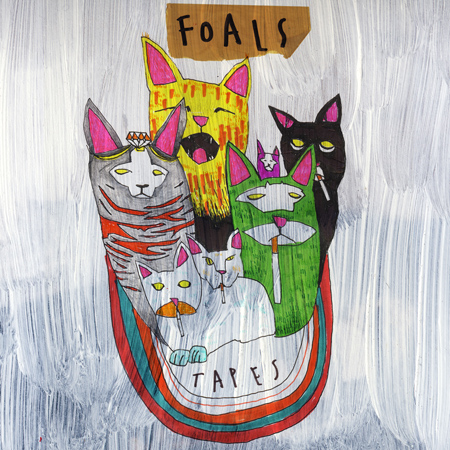
Foals Contribute to !K7’s ‘Tapes’ Series

Indie-leaning UK outfit Foals is set to mix the third installment of !K7‘s Tapes series, which will be released on cassette and digital on July 24. In line with previous Tapes contributions from The Rapture and The Big Pink, the mixtape will find Foals operating in a style that’s “very different to the music the band make themselves, heavy on dance and electronic as opposed to indie rock.” With selections from Dorian Concept, Sepalcure, and Caribou, the mix will feature well-known luminaries from the world of bass music while also incorporating “delicate electronica, world music, and woozy disco.” Watch for the release to drop on July 24 and take a look at the full tracklist, below.

SIDE A
Nicolas Jaar – Variations
Clark – Ted (Bibio Remix)
Dorian Concept – Tropical Hands
Condry Ziqubu – Confusion (Ma Afrika)
The Invisible – London Girl
JR Seaton – Way Savvy (Gatto Fritto Remix)
Blood Orange – Dinner
Tanner Ross – B Side
Teengirl Fantasy – Cheaters (John Talabot’s Classic Vocal Refix)
Château Flight feat. Marie Daulne – Superflight (Maurice Fulton Remix)
In Flagranti – Effective Placebo Affect
Tony Allen – Kilode (Carl Craig Remix)

SIDE B
Art Department feat. Soul Clap & Osunlade – We Call Love
Cerrone – Give Me Love (Frankie Knuckles Remix)
Arnold Jarvis – Take Some Time Out
Oni Ayhun – OAR003-B
Sepalcure – Every Day Of My Life (Jimmy Edgar Remix)
Marshall Jefferson vs. Noosa Heads – Mushrooms (Justin Martin Remix)
Julio Bashmore – Battle For Middle You (Maurice Donovan Dub)
Caribou – Sun (Midland Edit)
Konono Nº1 – Paradiso
Gospel Comforters – Yes God Is Real

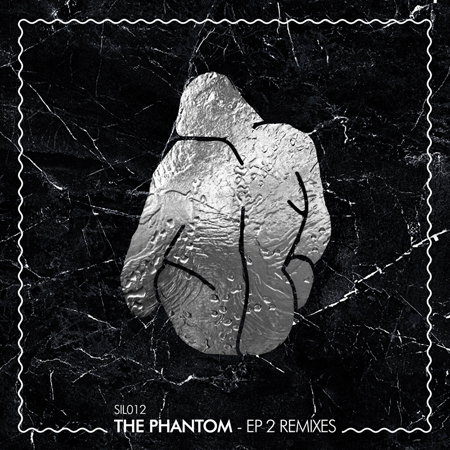
The Phantom “Ceremony (Ultravid Remix)”

Spiraling, speculative synths are the primary driving force on this heaving remix of The Phantom’s “Ceremony” by Belgian producer Ultravid. Pretty, luminescent, and punctuated with Night Slugs-style drops that transport the tune into hi-hat laden mayhem, Ultravid has clearly set his sights on unsuspecting dancefloors. Complete with cowbells and slurred vocals, the remix seduces a dancer into a lull before diving into grimey bass stabs and riding a syncopated house beat. Out in late May/early June, The Phantom’s EP2 Remixes will also feature Mike Q & Divoli S’vere, BD1982, and Optimum on remix duties. You can stream a preview of the EP, after the jump.

Ceremony (Ultravid Remix)

South London Ordnance “Shutter Island”

South London Ordnance, a young producer from, well, South London, is celebrating his 1000th Facebook like with a free track, the deep “Shutter Island.” The track flitters about on the fuzzy line between UK garage and more straightforward deep house, serving up seven enjoyable minutes of distant organ stabs, 808 claps and rimshots, and reverb-laden samples. The producer just dropped his debut 12″ via 2nd Drop and has several more releases in store for the rest of the calendar year, including records on the Audio Culture and Well Rounded Housing Project imprints. You can check out a preview of his 2nd Drop debut, after the jump.

Shutter Island

Posthumous J Dilla Record to Drop Next Week

Arriving next week, Dillatroit is a 12-track record of 100% previously unreleased productions by the late great James Dewitt Yancey (a.k.a. J Dilla). Moodymann’s Detroit-based Mahogani Music label will drop the revered beatmaker’s “EP”—the second posthumous J Dilla record since 2009’s Jay Stay Paid—on May 25 as a limited-edition vinyl release, but has shared a preview of the music ahead of time, which you can stream in the player below while checking out the full tracklist. (via Juno Plus)

1. Birthright
2. Feel This Shit
3. The Best That Ever Did It
4. Lets Pray Together
5. Ride Wit It
6. Say My Name
7. Dillatroit
8. Detroit Madness
9. Possible
10. Mind Yo Business
11. Rebirth is Necessary
12. Pitfalls

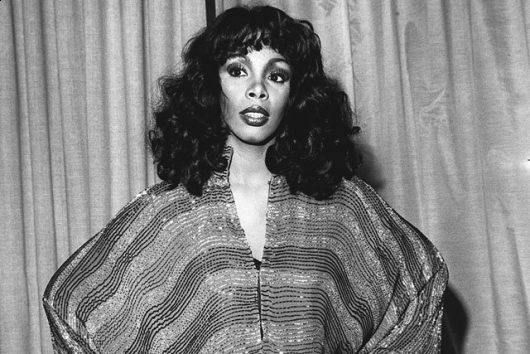
R.I.P. Donna Summer

It was announced today that singer LaDonna Adrian Gaines (known to most as Donna Summer) has passed away at the age of 63. The iconic artist was a prominent figure in the music world, known as “The Queen” of classic first-wave disco, with releases as far back as 1974. Summer worked with fellow disco powerhouses like Giorgio Morodoer and Pete Bellotte, as well as R&B/pop don Quincy Jones, across the span of 17 studio albums, her latest being 2008’s Crayons. She is best known for a string of timeless singles, including “I Feel Love” and “She Works Hard for the Money,” and her constant touring. The unmatched singer died today after a long battle against breast and lung cancer. Watch Summer performing “I Feel Love” live in 1978 below.

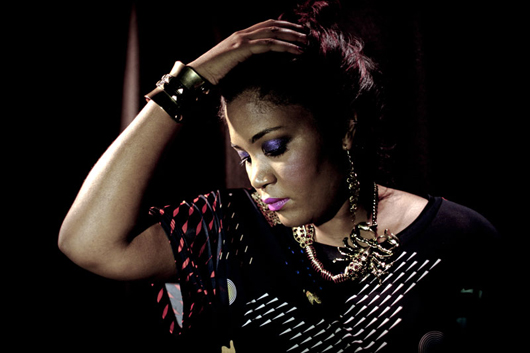
Cooly G to Drop Debut LP

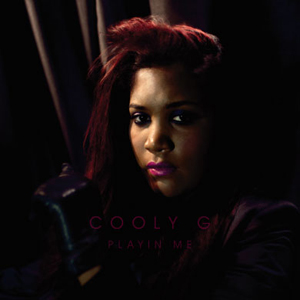
It’s been in the works for quite some time, but the debut full-length from Cooly G is finally ready to see the light of day. The London-based artist (and former XLR8Rcover girl) has been releasing music since 2008, mostly in the form of her Dub Organizer EPs and a series of singles for Hyperdub. The Kode9-helmed imprint will also be the home for her album, which has been titled Playin’ Me and is scheduled for release on July 17. While she’s long been affiliated with the UK funky scene and known for her dubby, stripped-down take on house and techno rhythms, Playin’ Me is being touted as an effort that, “displays the full spectrum of her sound, plummeting from her sometimes melancholy, sometimes romantic songs through to her more menacing, trackier sound.” The album artwork and complete tracklist is below.

01. He Said I Said
02. What This World Needs Now
03. Come Into My Room
04. Landscapes (features Sinbad)
05. Good Times
06. Sunshine
07. Trying
08. Playin Me
09. Trouble
10. What Airtime
11. It’s Serious (features Karizma)
12. Is It Gone
13. Up In My Head

DJ Earl “Teklife or No Life”

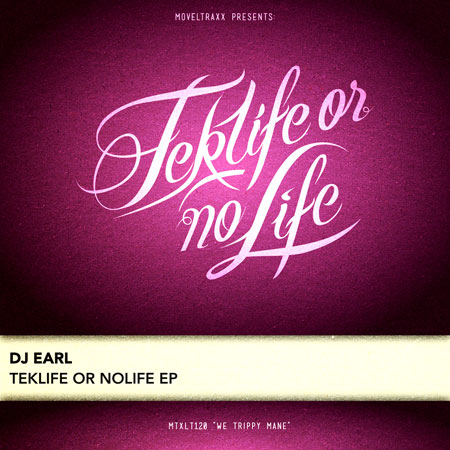
“Teklife or No Life” is the title track from DJ Earl‘s first EP (artwork above) for the ghetto-leaning Moveltraxx imprint out of France, a hub which is already home to releases by Traxman, DJ Rashad, DJ Clent, and more. The label is pushing Earl as the latest chapter in the ongoing Chicago juke/footwork explosion, and this track certainly keeps up with the finest of the Windy City’s producers. The young Chicago native propels “Teklife” with ghetto-house-influenced percussion, all clicking about a noodling, seductive synth whine. The complete tracklist and a preview of the Teklife or No Life EP can be found after the jump.

1 We Trippy Mane
2 Untouchable
3 Get Up Hoe
4 That’s the Way
5 Dey Don’t Know Bout Da Bottom
6 Teklife or No Life

Teklife Or Nolife

Page 2038 of 3781
1 2,036 2,037 2,038 2,039 2,040 3,781