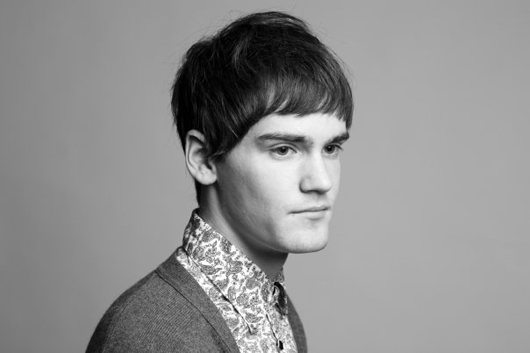
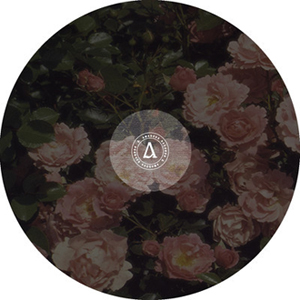
We’re treated to some smooth and marbled deep house from Los Angeles producer Lawrence Black on his remix of “Trinity” by Forrest (pictured above), which he crafted for the growing Amadeus label. A Dirtybird-style bassline, fat and full of hip-swerving momentum, sends “Trinity (Lawrence Black’s 4AM Mix)” along a moody trajectory toward the introspective end of the dancefloor, as cascades of conversational snippets and an inhuman, droning voice lurk in the distance. The track’s breakdown introduces a snaking-yet-lethargic arpeggio that serves to highlight a hauntingly lonesome refrain just before the bass thuds return for one last jaunt. After the jump, you can take a look at a teaser video for Forrest’s forthcoming Trinity / Don’t Forget Forrest EP (out digitally now), as well as the artwork and a short mix previewing the release.
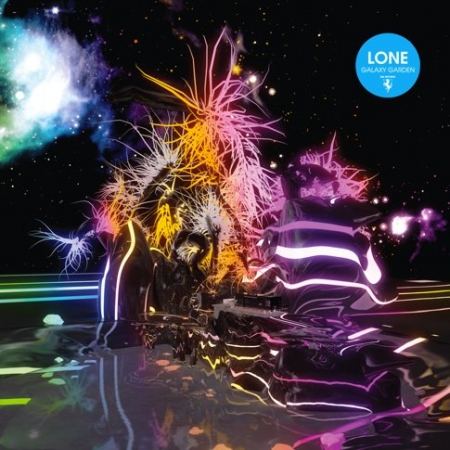
As if we all didn’t have plenty of new music to listen to already (like, say, the awesome new oOoOO EP, Our Loving is Hurting Us), Manchester dreamweaver Lone has let loose with a full stream of his brand-new LP, Galaxy Garden. Before Belgian label R&S releases the album next week, Hype Machine presents the 12-track record in all of its cosmic, neon, rave-inspired glory, which you can listen to in the player below.
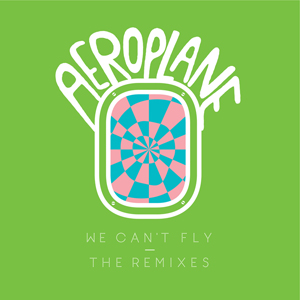
Just in time for an early start to the summer weather, we’ve received this refix of Aeroplane‘s “Caramella” by veteran producer Joakim (pictured above). Appearing not on the the digital release (out today) of Aeroplane’s We Can’t Fly – The Remixes album, but on a limited-edition, see-through vinyl that’s due out in the near future, “Caramella (Joakim Dub)” ascends like a wafting summer breeze on the tails of Chicago keys and a charmingly laid-back organ line, the entire affair buoyed by a housey progression of drums with just the right amount of swing. Clipped vocals and a distortion-heavy shaker punctuate the dub halfway through its beachside stroll, only to come back into the dunes with funky bass licks and that rising organ crescendo once more. The 12″ will house another Joakim remix of the same track, in addition to a Cassius remix of “We Can’t Fly.” As for the full We Can’t Fly – The Remixes package, you can peep the cover art and tracklist for both the digital and vinyl releases, after the jump.
1. Aeroplane – Caramellas (Joakim Remix)* 2. Aeroplane – We Can’t Fly (Cassius Remix)* 3. Aeroplane feat. Chromeo – She’s a Superstar 4. Aeroplane – Without Lies (Breakbot Remix) 5. Aeroplane – My Enemy (Rex The Dog Remix) 6. Aeroplane – Superstar (The Krays Remix) 7. Aeroplane – Without Lies (Black Van Remix) 8. Aeroplane – My Enemy (Green Velvet ‘Love My Enemy’ Remix)
Not long after Night Slugs unveiled its new Club Constructions 12″ series, the UK bass hub now kicks off a string of free mixes with fresh DJ set from label co-head Bok Bok. NSMIX001: Bok Bok is the first installment of “an in-house platform that will allow the key DJs in the [Night Slugs] camp to open up their collections and showcase their individual styles,” creating in effect the DJ’s “manifesto.” The inaugural 27-track mixtape is now available to stream and download free of cost, here, and you can check out its tracklist below.
01 – BOK BOK – On A Journey [cover] 02 – LEVON VINCENT – Six Figures (Novel Sound) 03 – KOWTON – Des Bisous 04 – BOK BOK & TOM TRAGO – Pathfinder BB VIP (Night Voyage) 05 – BOK BOK – Midnight Stop 06 – KOWTON – Jam01 (Levity Sound) 07 – COOLY G – Last Nite (Dub Organiser) 08 – GIRL UNIT – Cake Boss (Night Slugs) 09 – SOUND STREAM – “Live” Goes On (Sound Stream) 10 – JAM CITY – Her [BB Dubplate mix] (Night Slugs) 11 – BOK BOK – Silo Pass [VJUAN ALLURE Remix] (Night Slugs) 12 – HELIX – Damson.wav 13 – JAM CITY – How We Relate To The Body [12″ Mix] (Night Slugs) 14 – HELIX – Pul$e Remix 15 – LIL SILVA – [untitled] 16 – ANTHONY SHAKIR – The Floor Filler [SKUDGE’s Floor Killer Mix] (Rush Hour) 17 – GEENEUS vs SLIMZEE – Log Off (Dump Valve) 18 – BOK BOK – MJT [The Torture Trak] (Night Slugs) 19 – HINDZY D – Target Remix 20 – KAOS SOULJAS – Melody Refix 21 – YOUNGSTAR / FLIRTA D – Shottaz Riddim vocal 22 – HELIX – Drum Track [BB Devil Tool] (Night Slugs) 23 – GIRL UNIT – Double Take (Night Slugs) 24 – LLOYD DEVASTATING JACKMASTER – Magic Fingers (Dance Mania) 25 – DIZZEE RASCAL – Wheel (Dirtee Stank) 26 – BOK BOK – Charisma Theme Remix (Night Slugs) 27 – MORRI$ – White Hood (Night Slugs)
Paris native Surkin released his USA LP for the tight-knit Marble crew late last year, and subsequently invited a vast crew of producers to remix the album. This group had one characteristic in common, and that was the ability to calibrate a sweaty club environment for maximum dancefloor impact, sparing no wallflowers in the process. From hometown heroes Brodinski, Club Cheval, and Canblaster to boundary-breakers Rustie and the Night Slugs crew, it seems that Surkin has an ear firmly in tune with a wide swath of raucous parties. The collection (artwork above) dropped last week, but Surkin has since let loose the Bok Bok & L-Vis 1990‘s remix of “Gold Island,” which sees the Night Slugs ruffians dissecting the original’s stems to create a six-minute burner complete with Bok Bok’s signature grime stabs and L-Vis 1990’s reverb-washed, peak-time chord progressions. Fueled by these well-balanced elements, the track gallops into a frenzy before opening into a string-infused breakdown at the four-minute mark, after which we’re placed reassuringly back into the booty-shaking fray. You can check out the entire remix package from Marble and Surkin, here.
Next week, shadowy San Francisco beatmaker oOoOO will release the Our Loving is Hurting Us EP (artwork above). While much of the music community seems insistent on using the record as a jumping off point to dissect the current state of witch house and evaluate the genre’s questionable legacy, we’re content to soak in the EP’s gloomy spirit and sharp hip-hop beats. (That’s why we deemed it an XLR8R Pick.) It will be interesting to see how the perception of the EP evolves over time, particularly once it officially drops on April 30 via the Tri Angle imprint. In the meantime, XLR8R readers can get a jump on formulating an opinion of their own while listening to Our Loving is Hurting Us in its entirely, as all five of its tracks are streaming in full, after the jump.
The XLR8R Music Player requires Adobe Flash Player version 9 or later. Click here to install.
Today, we present the first installment of our new feature series, Deep Inside. We intend to use this space as a forum to expound upon the themes and sounds of releases deemed important by the XLR8R staff in a more in-depth manner than our daily reviews. You’ll see both good records and bad records come through here, as Deep Inside is essentially a feature-length assessment of noteworthy albums.
Death is arguably life’s most personal experience. It’s a tragedy that we all view in our own unique ways, our perceptions often colored by factors beyond our control. Though specifics of death and the possibilities of an afterlife are essentially a complete mystery, speculations about their nature are anything but scarce. Yet the weighty and controversial topic is often left unexplored in much of contemporary culture, at least in an any extensive manner. Leave it to Darren Cunningham, the enigmatic figure behind the music of Actress, to tackle it on his third LP, R.I.P., and present to us not only an intimately personal vision of death and the hereafter, but also what is one of the best albums yet unveiled in 2012.
The Wolverhampton-born Cunningham was somewhat reticent with the press as his new record prepared to drop this past Friday via Honest Jon’s, but UK paper The Guardian and Brooklyn-based website Self-Titled somehow managed to sit down and chat with him about R.I.P.. His conversation with the former publication gravitated toward the metaphysical themes explored throughout the record’s 15 tracks, while the latter’s interview mostly discussed the actual sounds and processes that went into creating the captivating music. Both angles are of utmost importance here.
“I make my music in a space [in which I’m] thinking about all the sounds I’ve heard over the years,” Actress explained to Self-Titled, loosely implying that this album is something of a culmination of his life experiences thus far. And when he spoke to The Guardian, the artist said, “I started the album with death.” Later, he adds, “I wouldn’t be able to write the music that I write if I didn’t believe in God, trust me.” Throw those quotes together with a few choice song titles—like “Ascending,” “Caves of Paradise,” and “IWAAD” (or “It Was All a Dream”)—and a full image starts to form: R.I.P. is an out-of-body experience, the account of Cunningham’s inner travels through the realms of Paradise rendered as delicate and mystifying electronic sound.
“Raven” from R.I.P.
In the hands of a lesser producer, an attempt at translating such heady and nebulous ideas into music could go horribly awry, but Actress has three necessary tools to make it work—patience, insight, and techno. Cunningham has explained that during his creative process, he considers himself to be “dead,” unable to consider what he’s creating until after it’s been made. Of course, more realistically speaking, he’s not actually dead while he works, but something closer to unconscious or just beside himself, allowing the music to entirely fill his headspace (undoubtedly with the help of copious amounts of his beloved weed). That could be the first clue as to how R.I.P. sounds so extradimensional; it isn’t the product of a totally cognizant mind. Like Salvador Dalí’s infamous painting methods, Actress seeks communion with his subconscious in order to accurately portray his spiritual journey. He begins with “R.I.P.,” the album’s impetus and most ominous moment—its wavering synths sounding like an alien lament and its heavy low end burrowing through your skull. Indeed, you have to die before you can be reborn, and “Ascending” is, as its title states, the soul’s subsequent rise into the heavens, after which Cunningham pushes on to explore the otherworldly terrain and its phantom inhabitants with his mind’s eye.
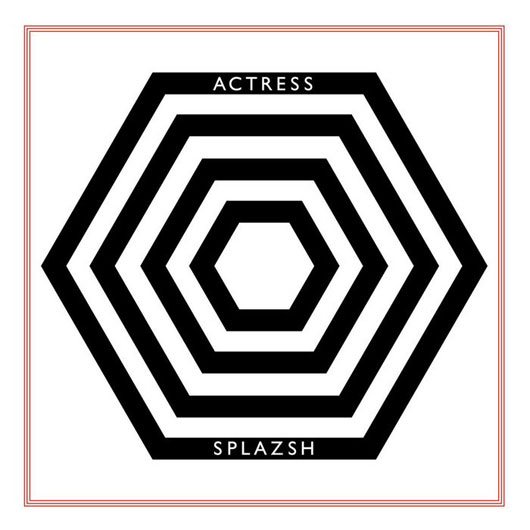
R.I.P. is, without question, far removed from the twisted techno jams that comprise 2010’s Splazsh and Actress’ debut album, Hazyville, but the genre’s influence is nonetheless dominant. Instead of blatantly nodding to the great Detroit veterans or, say, the German minimalists, however, Cunningham inverts techno and dives further into its deep cavern of possibilities than ever before. Only after he’s reached the tunnel’s end does the producer return, emerging with a sound that favors visceral textures and supernatural moods over outright rhythms and melodies. Even R.I.P.‘s relatively straightforward productions—”Marble Plexus,” “Shadow From Tartarus,” “The Lord’s Grafitti,” et al—boast hooks and basslines that have been obscured into oblivion with white noise, tape hiss, and/or enough reverb to choke a mix. The lighter, pristine moments are often times more confounding, albeit in an entirely different manner, as the beats are eschewed completely for what amounts to an implication of rhythm. Spindly and bewitching, the finespun arrangement of “Jardin” has no fewer than four fragile sounds flowing on independent trajectories and bpms, and “Raven,” another of R.I.P.‘s loveliest tracks, only hints toward a central tempo with a shuffle of fuzzy static and stuttered thumps that are more strongly felt than heard.
“Maze” from Splazsh
Cunningham’s solitary meditations and subversive experiments ultimately serve a power beyond the dancefloor, so much so that even loosely referring to this music as techno feels like a misnomer. Maybe what he’s created across the nearly hour-long record is a form of ambient music, which would actually help explain why R.I.P. is inherently reminiscent of one particular groundbreaking album: Selected Ambient Works Volume II. Aphex Twin’s seminal masterpiece made quick work of turning both ambient and techno tropes upside down, somehow converting such well-travelled genres into a singular and transcendental moment in electronic-music history. You could make the argument that Actress does precisely the same thing on R.I.P., and specific examples of similarities between the two LPs are bountiful enough to make a strong case. “Cliffs” seems to have bestowed “Uriel’s Black Harp” with the instrument of its namesake; Actress’ mysterious “Glint” interlude or the uplifting “N E W” has plenty in common with spacious arrangements like “White Blur 1” and “Grey Stripe”; maybe R.I.P.‘s best track, “Caves of Paradise”‘s punch-drunk groove brings to mind the resonant rhythms of “Blur,” if only Richard D. James had infused it with his funky “We Are the Music Makers” bassline.
And yet, despite all of these parallels, Actress maintains his inimitable imprint on the album’s extraordinary brand of ambient techno via the power of gradual process. The Guardian closed its piece on Actress with an excellent quote from the producer: “It’s like people who make pop tracks, when they know they have a number one hit. I know at a certain point when that track is me, I’m the track now, this is what I am, this is what I’m meant to be.” How exactly a production gets to that point remains an absolute mystery to us. Does it involve prayer? Is there some kind of methodical sonic deconstruction required? Must Cunningham lose all sense of self in order to become the “instrument” he says he is? Much like any ideas and speculations about death, these questions can only be answered by the person who’s undergone the experience. And who’s to say it’s all the same for everyone? R.I.P. is obviously Actress’ own personal interpretation of death, faith, and the unknown. We’re just fortunate that it’s one which feels unquestionably truthful and sounds wholly sublime.
While there are currently many artists operating in an emerging sphere of house and 2-step music centered on drifting, tropical textures, two of the most promising are Pictures Music‘s Dauwd and 100% Silk‘s Fort Romeau (pictured above). Similar in vein to artists like John Talabot, “Whats There (Fort Romeau Remix)” brings these Chicago-influenced Englishmen together. It’s a humid, but never claustrophobic take on Dauwd’s original from last year, but Fort Romeau takes the fluid ebb and flow of the synths and smooths out the edges in a show of classicist restraint, peeling back the intricate, shuffling rhythms and letting each element breathe.
One day in the not-so-distant future, the internet just might buckle and implode under the weight of the 1,000,001st British bruv to make R&B-influenced UK garage on his computer. London-via-Manchester’s xxxy (a.k.a. Rupert Taylor) has stood at the front of that swelling mass over the past few years by carefully crafting heavily sampled, spattering garage cuts for labels like All City and Orca, in addition to mixing a fantastic XLR8Rpodcast last summer. But on his latest EP, Everything, the producer has shifted gears, putting together a more mature set of house-influenced beats for Brighton imprint Well Rounded.
The title track carries traces of today’s UK garage scene—soul vocal samples, impeccably clean production—but it more noticeably parks itself in that other garage, the one from across the pond. With detuned synth stabs this side of Mark Kinchen and shuffling percussion reminiscent of Masters at Work, Taylor moves his sound into buoyant, mid-’90s garage-house territory. “I Know This Can’t Be Love” similarly cruises on a locked-in house groove, but it adds a gorgeous, trance-like synth sheen that periodically throbs in and out of the mix. The Brit shared a video for the track a few weeks back that features a handful of roses slowly wilting until they erupt in flames—it was a perfect illustration of the brutally serene, temporally bewildering qualities of the piece, which is certainly the EP’s standout.
On 2011’s “Ordinary Things,” arguably xxxy’s best-known track, the producer used layered sampled “woos” and pitched pop hooks over the glitchy, scattered ideas of the rest of the track’s arrangement. On “Everywhere” and particularly on “Can’t Be Love,” the vocal samples are cradled carefully into both the song’s mix and emotional framework, better reflecting a sense of focus and gravity from Taylor. This is the ultimate triumph of the EP, but it’s also the failure of the vinyl-only bonus track, “I Can’t Stop,” which places its samples in a grating context over the usual 808 samples and stutter. It’s a hiccup that detracts from the other two more-inspired productions, but xxxy has still demonstrated plenty of promise here, something he can easily build upon in the future as his evolutionary process continues.
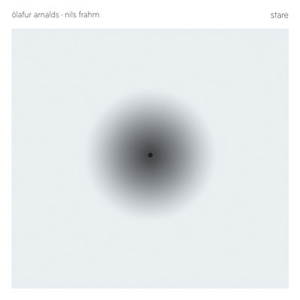
“We got together in April 2011 and after having a big pizza, I plugged in some old analogue synths and we played for four days until late in the night.” So goes an excerpt from the press release for Ólafur Arnalds & Nils Frahm‘s new EP, Stare, which was released on Record Store Day this past weekend on limited-edition vinyl (as well as digitally) via Erased Tapes. The new, three-track effort comes on the London/Berlin-based imprint’s fifth anniversary, and as a digital bonus, we have this remix of “a2” by labelmate Max Cooper (pictured above), which transforms the duo’s original ambient piece into a starry-eyed house experience that fits seamlessly into a soulful, deep-felt dancefloor dynamic. Swells of low end surge into a crisp, percussive breakdown that never seems to shift too abruptly, leaving Arnalds’ & Frahm’s original melody work to come humming through the compressed kick in a blissful wave of moonlit elegance. Listen to the original and have a look at the cover art for Stare, after the jump.