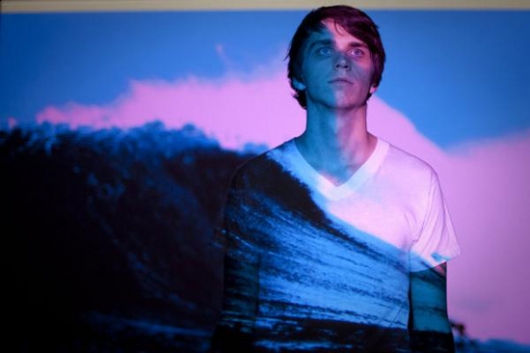
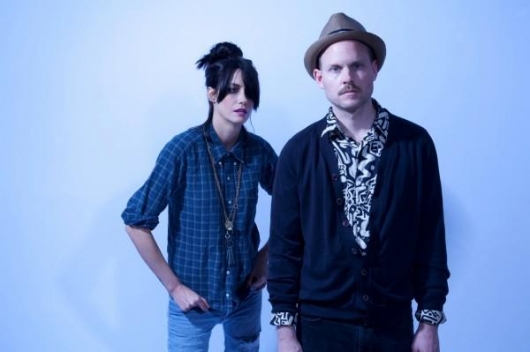
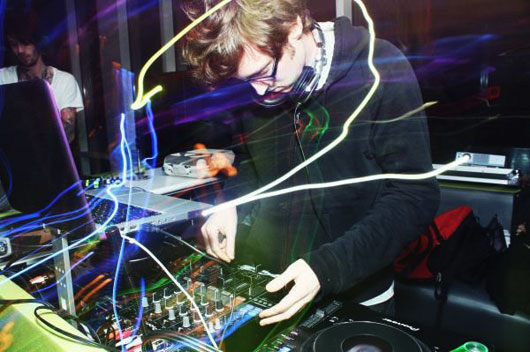
Chillwave has become, with good reason, a term that makes some of us cringe, but this remix of Ohio-based Brothertiger (pictured above) from Grecian duo Keep Shelly In Athens shows that there are definitely redeeming qualities to the array of blissful, bedroomy sounds often associated with the genre. Not that this remix is straight-up chillwave—sure, its got a lo-fi arpeggio intro, completely reverb-washed vocals, and layers of distant pads, but about halfway through the track, something sinister takes over. A dark, distorted bassline begins to peek through the layers of reverb and delay, pulsing along at a slow chug until, just beyond the three-minute mark, the noisy bassline and steady beat completely take over. A small army of evil, fast-moving synths eventually join this sludgy procession, capping off this remix in a much different place than where it began.
Back in November, we delivered the news that Los Angeles duo Rainbow Arabia planned to put out its debut LP on Cologne’s legendary Kompakt label. Even though there’s still a little less than two months until Boys and Diamonds sees its release, we’ve gotten our hands on a stream of “Without You,” a quaint ’80s-electro-meets-Balearic-percussion pop tune. “Without You” is an excellent example of what we can expect from the duo’s forthcoming LP, a culmination of vast influences from different genres and artists spanning decades and continents, all tied together with a unique brand of production and Tiffany Preston’s urgently icy vocals. Boys and Diamonds will be available March 1.
XLR8R Couldn't find the embed function for type: "soundcloud" and source: "<embed allowscriptaccess="always" height="81" src="http://player.soundcloud.com/player.swf?url=http%3A%2F%2Fapi.soundcloud.com%2Ftracks%2F9041752&show_comments=false&auto_play=false&color=ff7700" type="application/x-shockwave-flash" width="100%">".
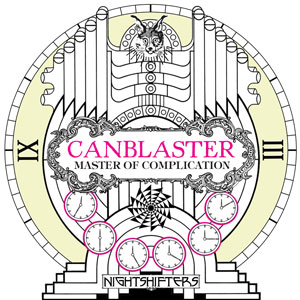
Young French DJ/producer Cédric Steffens (a.k.a. Canblaster) continues to secure himself as an integral part in the forward movement of contemporary club music with a brand-new release scheduled to drop on the party-starting Nightshifters label. The Master of Complication EP will be released on Feburary 15, and features eight tracks comprised of four original tunes and four remixes from the likes of Teki Latex & Para One, Jubilee, and others. You can check out the artwork and full tracklist for Canblaster’s forthcoming EP below.
1. Clockworks 2. Triple Ring 3. Lost in the Shell 4. Timemaster’s Chronicles 5. Clockworks (Teki Latex & Para One Remix) 6. Triple Ring (Magnum Remix) 7. Triple Ring (Jubilee Remix) 8. Timemaster’s Chronicles (Bambounou Remix)
Originally slated for a planned EP/single/what-have-you from Mad Decent’s premiere ‘clubstep’ patron Rusko that was ultimately scrapped, this version of “Feel So Real” by Austin, TX-based DJ/producer Dubbel Dutch (pictured above) certainly inspires a couple of questions upon first listen. Namely, is this really a Rusko remix? Sure, snippets of the canned vocal performance by Ben Westbeech weave in, out, and around the spacious bass composition crafted by the Texan tunesmith, but, thankfully, it seems like not a single other sound is related to the original track. Dubbel Dutch treats the acappella of Rusko’s song like he would any other found vocal sample, chopping and tweaking it to perfectly fit the shuffling dance beats and deep soundscapes he’s so keen to create. So, maybe since this solid, UK-leaning club tune didn’t quite make it on an official remix release, we’ll just thank Mr. Westbeech for the voice work, slap Dubbel Dutch’s name in the “Artist” field, and be on our merry way.
The Red Bull Music Academy has been gathering up-and-coming producers, DJs, and musicians with legends and pioneers of the music world since it began in 1998, every year choosing a new city and music scene to highlight. For 2011 the Academy has chosen Tokyo, Japan as its destination. There they will gather 60 participants with an assortment of music professionals (other artists, journalists, DJs, label heads, studio engineers, etc.) to share ideas, make music, perform, and do all the other things that fall in between. Starting February 2, RBMA will be accepting applicants until April 4, with the event taking place in two seperate fortnight-long terms between October 23 and November 25. In the meantime, you can check out the newest RBMA podcast, which just dropped on its site and features 40-plus minutes of material, including unreleased tracks from 00Genesis and Ango as well as an exclusive track each from Subeena and GuSHee. As always, RBMA will be making its way around the globe throughout the year with various events, workshops, and the likes so we’ll make sure to keep you posted.
XLR8R Couldn't find the embed function for type: "vimeo" and source: "<iframe src="http://player.vimeo.com/video/18486237" width="530" height="298" frameborder="0"></iframe>".
A song like Magick Mountain‘s heavenly house track “One For My Ego” doesn’t need anything more than the company of a handful of pretty images to make a great music video. And that’s exactly what director Aaron Katsnelson does, to absolute perfection. Beautiful computer-generated images appear and fade away, manipulating and contorting themselves into an array of different patterns, shapes, and colors while NYC producer Magick Mountain methodically adds layer upon layer of bliss-house goodness. Are the images just a random assemblage of Katsnelson’s creations or are they purposeful in their order and placement throughout the video? We really don’t know and, frankly, we really don’t care. We’ll be fine taking this one at face value—an entrancing song with an equally trance-inducing video. The “One For My Ego” b/w “Plains” single is out now on The Pop Manifesto
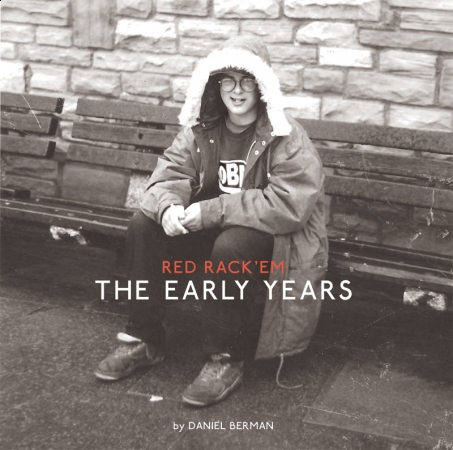
UK-based producer and head of the newly-founded Bergerac imprint, Danny Berman (a.k.a. Red Rack’em/Hot Coins), has continued to build on his reputation since the release of his debut LP, The Early Years, last October. “Housey,” taken from said LP, is a clear example of Berman’s style which finds him searching the common ground amongst a variety of influences, including deep house, electro-boogie, space disco, and Detroit techno. The track comes together as if all the different elements had gone for a pleasant afternoon stroll, the funky bassline and boogie drums strutting confidently along before meeting up with the percolating synths and twinkling pianos along the way. It all happens so effortlessly that it’s a surprise when the song actually comes to an end, so if you wish to remain in the warm, easy flow that “Housey” creates, make sure to put this one on repeat before diving in. It appears Berman’s already having a busy 2011, as a single for the track “Feel My Tears” is slated for release on his label in February and he’ll be launching a new vinyl-only label, Nettles, in March.
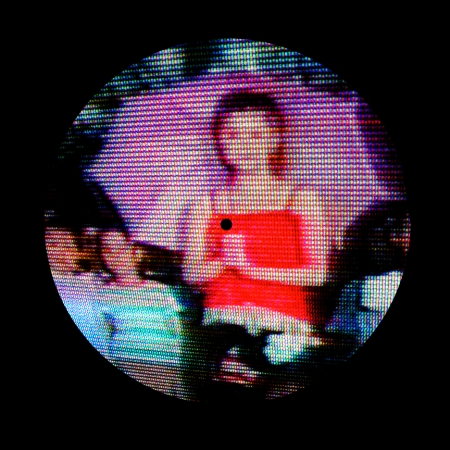
Following not long after the release of his debut EP for the PTN label, The Mind of DJ Dom, London future-house patron DJ Dom will soon drop his second offering of tunes on Brackles’ and Shortstuff’s illustrious Blunted Robots imprint. The two-song 12″ (that’s the label, up top) will feature older-yet-unreleased productions from the tunesmith, called “Sunshowers” and “You Can’t See Me,” and will drop on February 4. You can listen to snippets of each track before they drop, courtesy of Blunted Robots’ SoundCloud, below.
XLR8R Couldn't find the embed function for type: "soundcloud" and source: "<embed allowscriptaccess="always" height="225" src="http://player.soundcloud.com/player.swf?url=http%3A%2F%2Fapi.soundcloud.com%2Fplaylists%2F517289" type="application/x-shockwave-flash" width="100%">".
XLR8R Couldn't find the embed function for type: "vimeo" and source: "<iframe src="http://player.vimeo.com/video/18331622" width="530" height="398" frameborder="0"></iframe>".
Here, we get the first look at the brand-new video from Japan’s electronically inclined singer/songwriter/producer Clive Tanaka. The tune, “Lonely for the Highscrapers,” is taken from his recently released album for the Tall Corn label, Jet Set Siempre No. 1—which was once only available on cassette, but can now be found on digital and vinyl formats. Director Brandon Domer pairs Tanaka’s homespun electronic pop with some equally precious and homemade VHS footage of children frolicking about in amusement parks, playgrounds, beaches, and other sunny, carefree locales, all delivered under the banner of 1987 Florida Vacation. The song and video carry a strong sense of nostalgia with them, as they both seem to look towards the simpler times of childhood for inspiration, and simultaneously remind us of our own youthful days.
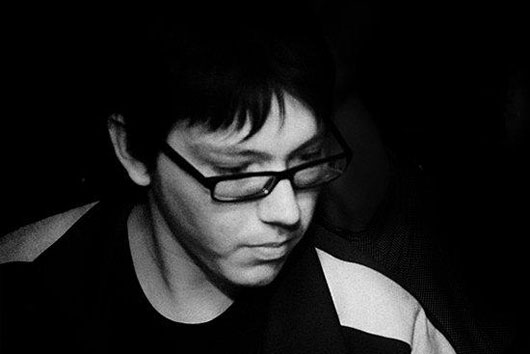
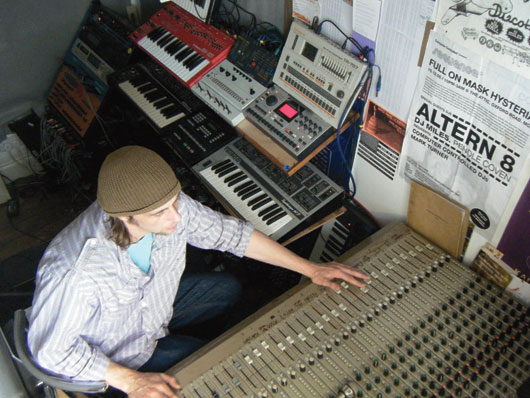
Miles Whittaker is the long, tall, shaggy-haired Lancastrian gentleman behind the dub/tech/house monikers MLZ and Millie, and one half of the groups Pendle Coven, with Gary Howell, and Demdike Stare, with Sean Canty of the Finders Keepers vinyl collective. All his projects are different but share a dark, autumnal, primeval vibe. With Demdike Stare, especially, Whittaker has been on a tear of late, releasing three LPs of original material—a cryptic marriage of techno from Detroit and Berlin circa ’93, British hardcore/rave of roughly the same period, and imaginary soundtrack/library recordings by way of Asia Minor—and two mix CDs in 2010 alone. We tracked down Whittaker in his studio in the borough of Pendle, about 30 miles outside of Manchester, to hear more about the projects.
XLR8R: How does place, in particular the north of England, where you’re from, affect your production, its tones and overtones? Miles Whittaker: It’s definitely influencing the music. The weather is wet, grey, and oppressive most of the year, the countryside is bleak, and the culture quotient leaves a lot to be desired. The post-industrial landscapes that have appeared in the last couple of decades have made this part of the UK quite devoid of growth in both economic and cultural terms; of course, this can be turned into inspiration if one is objective enough.
Describe your work space and the type of gear we’d find there. The set-up varies wildly, as I’m a little obsessive about rebuilding the studio into different configurations, which happens roughly every two months. At the moment it’s quite minimal, and consists of a 1980s 24-into-8 modular console, three monosynths (Roland TB-303 and SH-09, and Teisco 60F), a Waldorf XT, six delay units (from a self-modded Powertran DDL, which doubles as a simple 12-bit sampler, to a Roland Space Echo RE-201), four filters (Waldorf 4-Pole, Akai MFC42, and two hand-made band-pass filters), a modded TR-606, an Elektron Machinedrum, and an Akai S1000 and S3000XL. There are also four patchbays, three compressors and various other outboards, mics, DAT, ADAT, and a MacBook Pro with a Focusrite Pro40, running Logic for recording and Ableton for sequencing.
What goes on in your head while you’re producing? Is it more an unconscious or conscious process? It’s a strange one. Personally I’ve always worked with engineering problems, and the tracks are kind of a byproduct of this process. I’ll set myself a problem to fix, and make tracks along the way. I’m very particular about recording everything: I press record before I turn the rest of the kit on, as some of the older pieces of equipment do the craziest things when you turn them on. My most important instruments are the console and the patchbays, which is probably the best insight into how things happen. A good console can change your life, and patchbays make everything possible. It’s obviously different with different people and projects, but I’m mainly a producer and engineer, not a musician.
Do you have a separate mindset for each project you do? How does Demdike Stare differ from Pendle Coven? MLZ from Millie? Definitely, technically and creatively, each project is different. This is what makes it more interesting for me. Pendle Coven comes from a long history of jamming sessions—that’s how all the tracks are realized, through Gary and I getting together and improvising until we’re happy or lucky enough to get a good take. Demdike Stare is all about records and the archive of aural culture from the last 50 years, coupled with hardware, hence it’s a very sample-centric project. MLZ is probably the most traditional-sounding of my projects, more because of what’s been released than any actual traditional intent. Millie was derived for more forward-thinking dancefloor tracks, things which wouldn’t fit anywhere else, and also enabled both me and Andy Stott [the Andrea in Millie & Andrea] to have an outlet for some of the more steppy-based material.
In all your projects, the music sounds authentically human. How or where does this come from? An intrinsic desire to get that human feel into the tracks. Hardware, triggers, sync instead of MIDI, room noise recorded in the background… all of it goes into the music. I’m a firm believer that hardware injects a certain je ne sais quoi into all the music I make. Hardware has its own character—even the same model synths can sound very different due to component decay or the environment. I find it very difficult to write pure software-based tracks. I believe there is a lot you can do with the new technology, but not a lot of people actually push the envelope where software is concerned. Most people are trying to find a cheaper and easier way to have a great studio, and software gives you that.
In contrast, a lot of contemporary electronics-based music appears increasingly lifeless: The mechanics are sound, but the heart and soul are missing. Comment? Too much influence and not enough individuality. Many people, myself included, started producing because of influential music. But emulating someone else’s music without injecting something personal into what you’re doing will only deliver a shade of what you’ve heard. The idea is to add to the exploration of music, and its techniques, rather than rinse and repeat.
Demdike Stare’s Triptych is out now on Modern Love.