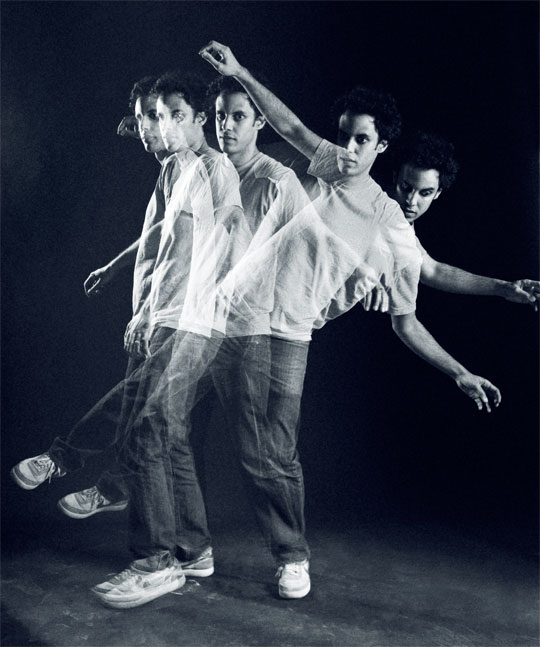
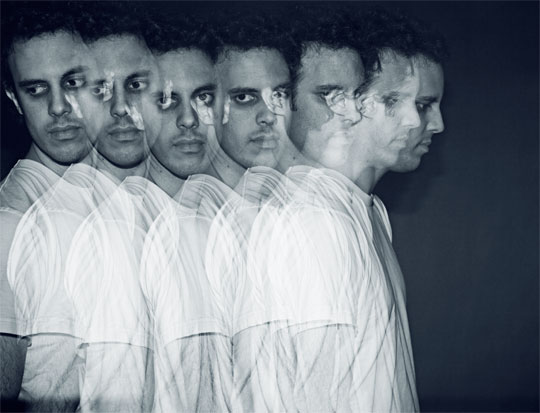
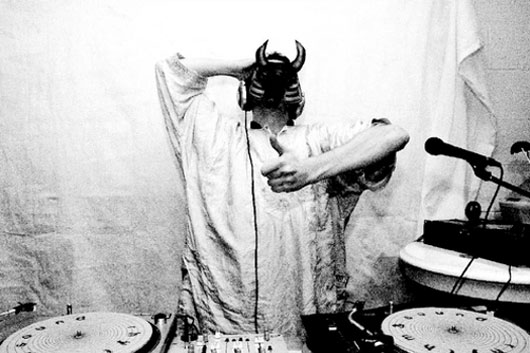
Now, here’s a pleasant surprise: St. Louis’ Phaseone—a music maker who follows in the ways of bass—made XLR8R a great mix of low-end-centric tunes, and we didn’t even ask for it! Obviously, the producer (born Andrew Jernigan) is a nice guy who makes pretty solid tracks (you can download one of those here), but apparently, he knows his way around a couple of turntables, too. Phaseone’s 43-minute DJ set juggles the bass frequencies and dancefloor rhythms of his own jams, along with songs from the likes of Basic Channel and Digital Mystikz, and toys with elements of dubstep, footwork, screwed hip-hop, and beyond. You can stream or download Jernigan’s mixtape here, and check out the tracklist below.
Cocteau Twins – Lazy Calm [4AD] Phaseone – All To Herself [Dub] Phaseone – Desperate Housewives [Dub] Phaseone – True Romance [Dub] Basic Channel – Radiance III [Basic Channel] Phaseone – Zen [Dub] Phaseone – Being With You [Forthcoming Way Slow] Phaseone – Above The Rim [Dub] Phaseone – Right & Wrong [Forthcoming Way Slow] Phaseone – Richard Dreyfuss [Dub] Twista – Who Am I? [Blackground] Digital Mystikz – Pop Pop Epic (Phaseone Remix) [Dub] Phaseone – Hands [Dub] Phaseone – Get Rich Quick [Dub] Phaseone – Airmax [Dub] Bjork – Hidden Place (Phaseone Remix) [Dub] Phaseone – Stealing To Feed Your Family (Excerpt) [Dub]
Over the past 12 years, Londoner Kieran Hebden (better known as Four Tet) has forged an impressive career crafting music that is thoroughly modern yet somehow timeless, expertly mashing hip-hop, jazz, folk, techno, and house in a thoughtful blaze of abstraction.
His highly acclaimed There Is Love in You LP, released this past January, is pitch-perfect listening for many situations: when it’s raining in the dead of winter and the city feels like it’s caving in on you; when your friends decide to smoke weed and watch the Discovery Channel with the sound off, giggling wildly; when you’re on a plane leaving behind someone you love who lives in another country. It’s what robots will listen to, once they learn how to feel. It’s a top-notch soundtrack for moments of introspection or joyful abandon and, sometimes, for dancing your fucking ass off.
As a teenager growing up in South London during the mid-’90s, Hebden attended Elliott School in Putney, where he counted Burial and the guys of Hot Chip amongst his peers. The first record he ever bought with his own money was the 7″ single of Tears for Fears’ “Shout”; the first shows he attended without parental chaperones were American grunge and noise-rock acts like Mudhoney, Sonic Youth, and Helmet. The London drum & bass scene was kicking into motion at the same time, and Hebden started picking up releases by producers like Photek on Goldie’s Metalheadz label. “We had a little café at school and there was a stereo there. People would play whatever music they wanted every day. It’d just be tapes of pirate radio from the night before. So that music was the sound of school, and the sound of every party you went to,” he describes on the phone from his home in North London.
In 1996 he and schoolmates Adem Ilhan and Sam Jeffers formed post-rock outfit Fridge, quickly releasing their first two LPs, Ceefax (1997) and Semaphore (1998), on Trevor Jackson’s now-defunct Output Recordings. Initially, Hebden played guitar for the band, but soon began to pick up other instruments (especially the sampler), adding flourishes to their sound. “DJ Shadow’s [Endtroducing…..] had just come out,” he muses. “I’d been listening to a lot of hip-hop, and the concept that you could have four loops and two different drum beats and melodies and sample all these different records and put them together—it was such an obvious and simple idea. But somehow when DJ Shadow put that record out, it was a bit like, ‘Ah… This is something that can be done.'”
Soon after, Hebden created a track entirely on his own, “Thirtysixtwentyfive,” named as such because of its length. The air of Endtroducing….. is definitely present; it begins with a stuttering downtempo beat doused with bits of bare, rising-and-falling rubbery horns, and twinkling chimes. About halfway through, a distinct, hard drum kicks in, seeming almost like a proto-dubstep tune, with some melancholy guitar strumming eventually added on top. Then the sound drops out completely, and a laughing female voice repeats “with buzzing stereo noises” a number of times before coming to a close with an old-timey flute-and-piano combo. He played this for Jackson, who decided to release it on Output as well. “I was thinking of names, and at the time I was buying all these European free jazz records,” he recalls, “so the record was called Four Tet, like quartet, because I thought it was the sort of thing I might see on one of these weird European records I was buying.” And thus, Four Tet was born.
Four Tet “Thirtysixtwentyfive (Part 1)”
When the 12″ of “Thirtysixtwentyfive” was released, Hebden was in college studying computer science and math, but soon dropped out. “I’d be at home sitting in my pajamas working on a remix, and going to a lecture about an operating system couldn’t compete,” he reveals, chuckling. While he had dance tunes on heavy rotation and was beginning to dabble in the genre with his own productions, Hebden was not actually going out to raves or clubs. His first visits to London’s nightspots, in fact, were some of his first DJ gigs. “The first time I DJed, I’d never even touched two turntables and a mixer before,” he admits.
Fridge’s output began to slow, and the Four Tet project took off. Over the next few years, Hebden released Dialogue (Output, 1999), Pause (Domino, 2001), Rounds (Domino, 2003, which reached #60 on the UK charts), and Everything Ecstatic (Domino, 2005). These records—especially Pause—saw Hebden honing his signature sound, which was quickly dubbed “folktronica,” implying the confluence of sampled folk instruments and electronic beats. “The thing I’ve done to death, when I did all the stuff endlessly sampling harps, acoustic instruments, and mandolins…the whole folktronica thing happened, and you get a bit trapped going down one path,” he laments. “I imagine sometimes when I’m working on stuff, I am trying to rebel against things I’ve done in the past.”
One way Hebden subverted this was to team up with recently deceased, legendary jazz drummer Steve Reid for a pair of recordings called The Exchange Session Volumes 1&2 (Domino, 2006), followed by a smattering of tour dates together across the globe. Recorded over the course of one day, these albums showcase the guys’ improvisational abilities by pairing Hebden’s quirky electronic soundscapes with Reid’s avant-garde drum hits. His most recent attempt to rebel against his folktronic days is There Is Love in You, which takes up where his 2008 Ringer EP left off—exploring house and techno influences in a more straightforward way than any of his previous releases. “Once you’ve put a lot of records out, to put something else out, you’ve got to feel like there’s a point to it,” he asserts. “I spent time making sure I had something that was definitely different from stuff I’d done before.”
Kieran Hebden and Steve Reid “Brain”
In late 2008, Hebden began a residency at East London club Plastic People, which, over the course of a year, would become his de facto laboratory for cooking up tracks. To electronic music geeks, the place is a modern legend: Attendees descend a flight of stairs and enter a small, almost pitch-black room with massive Funktion One speakers producing crystal-clear sound; the DJ is barely visible, with only a small lamp to guide the way. “This is the sort of club where you can play an Art Blakey jazz record at 2 a.m., peak time, following a jungle record, and everyone will go mental,” he says affectionately. “It totally informed what I was doing with the record in a big way, because then, when I came back to working on tracks, it was always in the back of my mind like, ‘I wonder what this is going to sound like at Plastic People; maybe this one will really work there.'”
Hebden says “Love Cry,” the second song on There Is Love in You, was the first one he tested out and completed—it did really work there. He describes it as the clubbiest track on the record. Indeed, what begins as blippy, lo-fi fuzz and sporadic synths soon turns into a thoroughly danceable beat with high-pitched female vocals echoing on repeat.
When playing the track out live that was ultimately named after the venue, “Plastic People,” Hebden noticed the drums seemed slow and blurry when heard loudly through the soundsystem. “I had to come back home and rework all the timing of them,” he explains. “Sometimes you play something loud and realize that the sub-bass has got a kind of rhythm to it, and if that’s not sitting tightly with everything else that’s going on, the track can suddenly feel lethargic when it’s not supposed to.” Listening to the tune with full knowledge of the circumstances of its construction, “Plastic People” feels, appropriately, like a paean to the dancefloor in all its grotty, euphoric glory. Solemn bells and a sparse four-to-the-floor flirt with a wonky handclap before a shaky, maraca-like beat kicks in, evoking that afterhours moment when your body wearily tries to keep up with your brain, which is busy focusing on the sounds emanating from the speakers.
Four Tet “Plastic People”
The first track on the album, “Angel Echoes,” rather simply pairs a beat, bells, and a chillingly glitched-out female vocal sample that, though it’s impossible to tell what the woman in question is saying, is most definitely yearning for… something. “Sing” is perhaps the most upbeat song on offer, serving up choppy 8-bit bleeps atop a quick-paced four-four and adding a softly crooned (and gorgeous) vocal snippet along the way; closing track “She Just Likes to Fight” is structured around a basic guitar melody and gives off an air of pensive sweetness.
Anticipation for There Is Love in You‘s release had been building, since it was to be the first straight-up Four Tet full-length effort to come out in five years. It climbed to #35 on the UK charts and #157 on the US charts, and garnered massive praise from the music press, both alternative and mainstream. The Guardian claimed that Hebden had “mastered the art of the smooth musical and emotional gear change,” while Pitchfork called it his most focused album to date. “I’ve had a really good year with that record,” he affirms.
While most producers with lasting music careers might choose otherwise, Hebden keeps his production set-up simple, eschewing a fancy home studio for a PC hooked up to a hi-fi. If he ever needs large amounts of gear or a complex set-up, he rents a studio for a period of time. “If I have lots of equipment, I spend loads of time messing around with it and plugging it in rather than actually making music,” he says.
He played and sampled bits of his own electric guitar and borrowed a keyboard from a friend for There Is Love in You, but is quick to note that Four Tet is all about constructing sounds through a computer. “It is aggressively digital music, basically,” he stresses. “Everything is samples to me. Even if I just play a bit of guitar, and record some bits into the computer and then use it like I would use samples of something else. There’s never any live performance of any sort on the records. I’m totally not interested in that at all with the Four Tet project. Everything you hear is essentially humanly impossible a lot of the time.”
What often gives Four Tet material its undeniably human, emotive quality is Hebden’s use of nontraditional and highly personal samples, whether it’s a rubber duck squeaking on “Slow Jam” off of Rounds, environmental noises from a sound check for a gig outside Mount Fuji on “Fuji Check” from Everything Ecstatic, or his friends’ unborn child’s heartbeat, which comprises the 12-second track “Pablo’s Heart” from There Is Love in You. “Using those little bits of sound like that is like taking a picture,” he describes. “It’s nice to just have it kept and preserved there so I can remember it nice and easily.”
Four Tet “Slow Jam”
In July, Angel Echoes Remix was released on Domino, containing re-works of “Angel Echoes,” “Love Cry,” and “Sing” from folks including Roska, Floating Points, Jon Hopkins, and Hebden’s long-time friend Dan Snaith (a.k.a. Caribou). While he’s reluctant to play favorites, he says Joy Orbison‘s take on “Love Cry” particularly excited him. “It’s just a drumbeat and a bit of vocals,” he offers. “He managed to take the sounds I used and make it sound like him, but make it sound like my track at the same time.”
On the heels of There Is Love in You, Hebden is finishing some touring for the record, and has taken up his old residency at Plastic People, which the local Hackney Council threatened to close earlier this year (following claims that the club’s dank, underground feel made it seem like a drug den), will in fact remain open. He’s also trying to find time to spend at home playing tunes to his baby daughter, Tallulah, born this summer. “Anything really screechy or gnarly seems to bother her,” he says lovingly. “Anything with a rolling rhythm she seems to be quite at ease with.”
When asked to reflect on his musical career up to this point, Hebden notes that, for him, there is a direct journey from the early Fridge records he helped realize, to Four Tet, to his collaborations with the late jazz drummer Steve Reid, up through his most recent record and extensive remix work. “I like the fact that I can see all the records I’ve made sitting on a shelf together, and that’s like my musical life mapped out,” he articulates. “All I know is that next year, I’m going to make new music. And that at the moment, I don’t have a clue what it’s gonna be. I like that feeling a lot. It’s nice to have the space to be ready to embrace something really different.”
We’re still about a week from the release of Shackleton’s contribution to the ongoing Fabric mix series, Fabric 55, and just to make sure you didn’t forget about that stellar set of new, unreleased, and classic material by the Skull Disco co-owner, both the producer and the label have relinquished a downloadable tune from the disc. The previously unreleased “International Fires” is nearly right in the dead center of Shackelton’s mix album, so it’s no surprise he’s knee deep in a bed of throbbing bass tones and erratic rhythms built from reverberated percussion and otherworldly vocal samples. The sparse production of the tune might give this one a quieter vibe, but if you try talking over “International Fires” in a club, your voice is likely to find itself muffled by the oppressive frequencies having their way with the airspace.
One of Berlin’s overachieving musical busybodies, Jason Forrest (a.k.a. DJ Donna Summer, co-head of the Nightshifters label) just resurrected his eponymous musical endeavor for its first release in six years. The four-song Utopia EP came to fruition when Forrest was approached by Brian Miller, head of the LA-based Deathbomb Arc label, about contributing to his digital singles club, and Forrest opted to do a full EP instead, releasing it ahead of an upcoming full-length album. But don’t expect any of the same raucous party music the multi-faceted tunesmith slangs from his more active outlets; this is leftfield, instrumental audio geekery through and through. As “Ciccone Youth” is the first track on Forrest’s new EP, the track takes its sweet time swelling to a proper volume, as if it’s slowly preparing you for the onslaught of buzzing electronics, churning rhythms, and indecipherable ear candy that’s about to overcome your brain. It’s a fine example of noise music with a serious taste for melody and tempo, more of which you can download for free from Forrest’s Utopia EP, here.
Roman DJ/producer AD Bourke is no stranger to the music-making game (he’s had a beat tape out for nearly three years, now), but the recently released Mirage EP for Citinite seems to be the only full-formed record written under his name so far. Taken from that list of eight funky and soulful tunes (well, there’s 10 if you buy the digital version), “Diff Star” is a sort of boogie-flavored hip-hop jam that somehow invokes the vintage sounds of Miami, LA, Detroit, and New York all at once. The track’s bassline sounds ripped out of a lost G-funk joint, the beat might as well be an over-compressed break from hip-hop’s early days, each sparse guitar pluck bears the aftertaste of Motown, and the whole thing is enveloped in the sunny, drug-fueled decadence of South Beach. AD Bourke probably isn’t a geographer of any sort, but the dude certainly seems to have his modern music history down pat.
We picked up on some sad news late last week with the passing of Peter “Sleazy” Christopherson, a founding member of the legendary industrial band Throbbing Gristle and of iconic ambient darkwave producers Coil, in his home in Bangkok. Last year, during TG’s tour stop through San Francisco, we caught up with the band—well, mostly with front person Genesis P-Orridge—and got a few moments with Sleazy, who walked us through his live set-up. Check out the video below, and then stop by the Sleazy condolences book here to pay your virtual respects.
XLR8R Couldn't find the embed function for type: "brightcove" and source: "<embed src="http://c.brightcove.com/services/viewer/federated_f9?isVid=1&isUI=1" bgcolor="#FFFFFF" flashvars="@videoPlayer=692265774001&playerID=636467917001&playerKey=AQ~~,AAAAlDCAefE~,zm-1fAP_KJXI-yaJ-rS_Tky3yWc_bHT_&domain=embed&dynamicStreaming=true" base="http://admin.brightcove.com" name="flashObj" width="480" height="270" seamlesstabbing="false" type="application/x-shockwave-flash" allowfullscreen="true" allowscriptaccess="always" swliveconnect="true" pluginspage="http://www.macromedia.com/shockwave/download/index.cgi?P1_Prod_Version=ShockwaveFlash">".
Now that the paganistic Manchester duo of Miles Whittaker and Sean Canty (a.k.a. Demdike Stare) has finished its three-part series of albums for 2010, the string of LPs will coalesce into a box set of sorts next year. The label responsible for all Demdike Stare releases thus far, Modern Love, will drop Tryptych, a three-disc record that compiles Forest of Evil, Liberation Through Hearing, and Voices of Dust along with 40 minutes of never-before-released music, on January 24. It will be the first time any of the spooky, bass-ridden music has been available on CD, as all three LPs of the series were released exclusively on vinyl. Before that massive offering of music is available, you can check out its cover artwork and full tracklist below. We also included included links to all of the separate albums, which are streaming in full on Modern Love’s SoundCloud profile. (via Pitchfork)
Disc One – Forest of Evil 01 Forest of Evil (Dusk) 02 Forest of Evil (Dawn) 03 Quiet Sky (Bonus Track)
Disc Two – Liberation Through Hearing 01 Caged in Stammheim 02 Eurydice 03 Regolith 04 The Stars Are Moving 05 Bardo Thodol 06 Matilda’s Dream 07 Nothing But the Night 2 (Bonus Track) 08 Library of Solomon Book 1 (Bonus Track) 09 Library of Solomon Book 2 (Bonus Track)
Disc Three – Voices of Dust 01 Black Sun 02 Hashshashin Chant 03 Repository of Light 04 Of Decay & Shadows 05 Rain & Shame 06 Desert Ascetic 07 Viento de Levante 08 Leptonic Matter 09 A Tale of Sand 10 Filtered Through Prejudice (Bonus Track) 11 Past Is Past (Bonus Track)
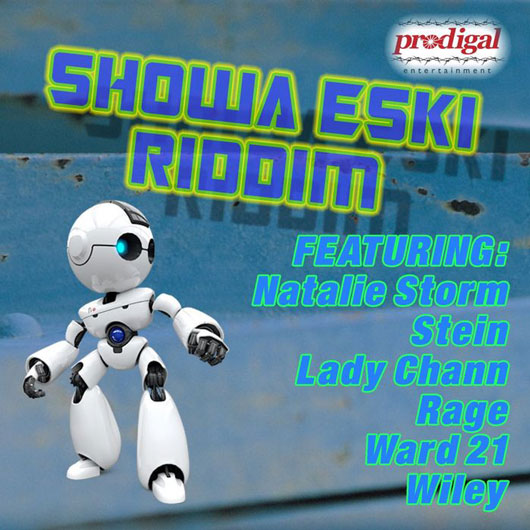
Back in October, UK grime godfather Wileyoffered up yet another musical freebie in the form of the Prodigal Entertainment-produced “It’s Wiley,” a gift he brought back from his well-Ustream-documented trip to Jamaica. “It’s Wiley”‘s beat, the Showa Eski Riddim, has now been graced by familiar JA deejays like Stein (formerly Einstein) and Ward 21, not to mention femmes fatales Natalie Storm and Lady Chann. These vocalists can all be heard back-to-back in a new Show Eski Riddim mix highlighting short verses from each artist. The ladies really take the cake on this one, both Natalie Storm and Lady Chann together offering up enough personality to give Wiley himself pause. The mix can be downloaded here, and you can decide for yourself whether or not Wiley’s verse could do with a spit-shine amidst the vocal onslaught.
Party Guy Records wants to make sure everyone knows that not all low-end-dedicated club music comes from the UK, and it does so in spades on its latest release, a compilation of talented US producers called Future Sounds of North America (you can listen to it here and grab it for keeps here). Though his own production work doesn’t make it into the tracklist, Pacific Northwesterner and XLR8R-approved Bubblin’ tunesmith Cedaa was asked to give one of the compilation’s tracks a remix, and the juke-loving youngster delivered quite a doozy. His take on Clicks & Whistles‘ “When I Feel” more or less retains the same sonic palette of the original—overwhelming bass frequencies, a thinly sliced vocal sample, and a soothing din of a synth melody—within the re-work, but utilizes the sounds in a far more frantic way. Cedaa spends the whole time with his influences split between the music of UK nightclubs and Chi-Town’s underground footwork parties, though he never sounds divided. In fact, it seems more like the producer has found an untrodden path smack-dab between those well-traveled roads.
Out today from the Banana Clipz project, made up of Bersa Discos’ Oro11 and Ghetto Bassquake’s Chief Boima, is the duo’s entirely free, seven-track self-titled EP. Inspired in part by the two artists’ love of cumbia and coupé decalé respectively, the EP hardly consists of just those two genres alone, but instead taps into a long, rich history of Latin American, African, and Caribbean musical cross-pollination. In addition to the Los Rakas-featured “Afro Latino” we posted last week, the EP features other standouts like “Push Am,” a slow-burning coupé decalé rhythm that supports ripe synth lines and a wanton bassline. Check the rest of the tracklist below and download the whole EP here.
01 Push Am 02 War Dem Want feat. MC Tidal 03 Crisis Remix feat. Khady Black 04 Sweet Girl feat. Black Nature & Missy Galore 05 Talking Drum 06 Afro Latino feat. Los Rakas 07 Coupe Cumbia