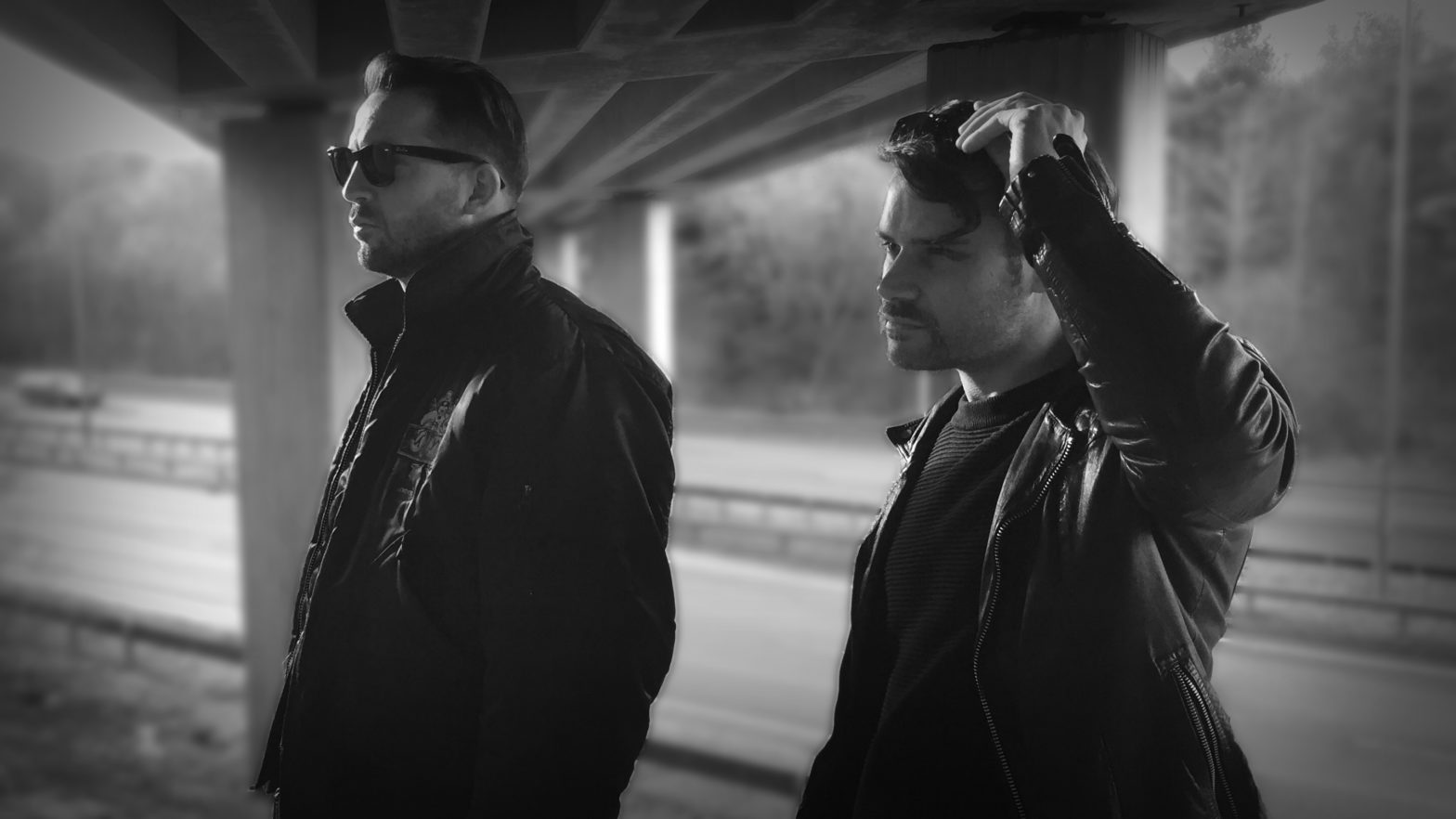
Flying Lotus will release Flamagra, his much-aniticipated new album, via Warp next month. The album features (in order of appearance) Anderson .Paak, George Clinton, Little Dragon, Tierra Whack, Denzel Curry, Shabazz Palaces, Thundercat, Toro y Moi, Solange, and more. David Lynch even pops up for an eerie narration wherein he warns that “Fire is coming.”
It’s been nearly five years since the last Flying Lotus album, the Grammy-nominated You’re Dead! Since then, the multi-disciplinary Los Angeles artist has remained in constant orbit, collaborating with Kendrick Lamar on the classic To Pimp a Butterfly, directing and writing the Sundance-premiered comic horror hallucination “Kuso,” and producing much of Thundercat’s Drunk. He’s also nurtured his Brainfeeder imprint into one of the most consistently innovative record labels of the decade.
Flamagra is a work that “sweeps up every quantum advance and creative leap of the last dozen years of Lotus’ career and takes them even further,” the label explains. It encompasses hip-hop, funk, soul, jazz, global dance music, tribal poly-rhythms, IDM, and the L.A. beat scene, but it “soars above a specific vortex whose coordinates can’t be accurately charted,” the label adds. It’s described as an “astral afro-futurist masterpiece of deep soul, cosmic dust, and startling originality.”
“I’d been working on stuff for the past five years, but it was always all over the place. I’d always had this thematic idea in mind—a lingering concept about fire, an eternal flame sitting on a hill,” Lotus says. “Some people love it, some people hate it. Some people would go on dates there and some people would burn love letters in the fire. Then I went to this party and heard David Lynch saying the words that he wound up saying on the record. And I was like: ‘That’s it, we’re just going to go in that direction.'”
Although the album is built on traditional elements of hip-hop, there’s a newness present that stems from Lotus’ newfound appreciation for the piano. A visit to an art installation created by Tokyo’s Team Labs also triggered his childlike capacity for wonder, and Flamagra aims to be emblematic of that expansive mindset.
It was going to be a 10-track project, then a straight up beat record with no jazz solos, and various other things, until Lotus realized that it had to contain everything, “the complicated and jagged realms of emotions and ideas spiralling in the smoke-riddled, light-polluted San Fernando Valley sky,” he says.
The album also pays tribute to Lotus’ friend and collaborator Mac Miller with tracks “Find Your Own Way Home” and “Thank U Malcolm.” “This album has been a refuge for pain and trying to make the most out of that pain,” Lotus says. “Music can heal and in the wake of that tragedy it reminded me what I’m here to do. As we get older, we start to figure out what our purpose is and embrace it and I want to do good things with my work. I want it to be able to help people through tough times and inspire them to be creative.”
Tracklisting
01. Heroes
02. Post Requisite
03. Heroes In A Half Shell
04. More feat. Anderson .Paak
05. Capillaries
06. Burning Down The House feat. George Clinton
07. Spontaneous feat. Little Dragon
08. Takashi
09. Pilgrim Side Eye
10. All Spies
11. Yellow Belly feat. Tierra Whack
12. Black Balloons Reprise feat. Denzel Curry
13. Fire Is Coming feat. David Lynch
14. Inside Your Home
15. Actually Virtual feat. Shabazz Palaces
16. Andromeda
17. Remind U
18. Say Something
19. Debbie Is Depressed
20. Find Your Own Way Home
21. The Climb feat. Thundercat
22. Pygmy
23. 9 Carrots feat. Toro y Moi
24. FF4
25. Land Of Honey feat. Solange
26. Thank U Malcolm
27. Hot Oct.
Flamagra LP lands May 24 via Warp Records, with “Fire Is Coming” feat. David Lynch streaming below.
Max Richter writes beautifully crafted, intelligent work that is as disarming as it is honest. After studying composition and piano at the University of Edinburgh, the Royal Academy of Music, and with Luciano Berio in Florence, the German-born British composer launched his career as a solo artist with 2002’s Memoryhouse, deemed “a masterpiece in neoclassical composition” by the BBC. Inherently sophisticated but seemingly simple, the album reflected on the aftermath of the Kosovo conflict and established Richter as a blossoming talent in contemporary composition. It was a status that he cemented with 2004’s The Blue Notebooks, another piece of heart-stopping orchestral writing and mind-bending synthesis, this time a reflection on the Iraq War and a meditation on his own troubled childhood.
The success of The Blue Notebooks opened up various new avenues for Richter. The second track, “On the Nature of Daylight,” appeared in Martin Scorsese’s “Shutter Island” and also as the opening and closing sequences of Denis Villeneuve’s sci-fi epic “Arrival,” and pricked the ears of Israeli filmmaker Ari Folman, who hired Richter to score “Waltz with Bashir,” his devastating Golden Globe-winning animated film about the the 1982 Lebanon war. Combining a traditional orchestral sound palette with modern electronics earned himself the European Film Award for Best Composer. “So I did that one and people were licensing bits and pieces into films before that so there was a kind of awareness, I guess, amongst film makers,” Richter recalls. “Slowly people started calling and now I really enjoy it.”
Richter is now established as one of the most in-demand composers for moving picture in a time when more and more contemporary musicians are looking for a seat at the table. . He’s the man behind the original soundtrack for the HBO series The Leftovers, and in 2016 he delivered the score to “Nosedive,” an episode of Charlie Brooker’s Black Mirror. Add to that Luke Scott’s debut feature “Morgan” and the political thriller “Miss Sloane,” plus BBC One‘s drama Taboo. More recently, he’s composed music for the films “Hostiles” starring Christian Bale, “White Boy Rick” starring Matthew McConaughey, and “Mary Queen of Scots” starring Saoirse Ronan and Margot Robbie, all the while continuing to work on his own solo albums and other artist collaborations.
Notoriously private and extraordinarily occupied with various projects and family commitments, Richter rarely engages with the media, much less to discuss anything on a more personal level. In a rare exception, he invited XLR8R down to his Hampstead studio where we discussed his artistic vision, processes, and the challenges of scoring for picture.
You’ve travelled a lot, living in Edinburgh, Berlin, London, and now Oxford. What’s the draw to the UK?
You know, it was really random. We were living in Berlin and for family reasons we were thinking about coming back to the UK and we literally knew we had to be an hour away from London because that’s where all the studios are, and that’s where the music is really. Certainly the film side of it in the UK. So it was just more of a click-on-the-map kind of scenario.
A lot has been written about you over the recent years, even more so since “Arrival.” You don’t strike me as a character who enjoys the spotlight.
Yes, I tend not to read those things to be honest because I’m really only interested in the notes on the page; that’s what I can control. That’s why I get out of bed in the morning. I also think that if I read reviews than I’d end up self-censoring and being sort of anxious about trying to please some sort of imaginary audience. For me, every project is a kind of experiment and within an experiment you want to be free to try new things; you know, that’s the whole point of it. So, yeh, I try to keep away from feedback.
“I like music that allows you space to think about what you are hearing, while you are hearing it.”
If you are not trying to please the audience, then what are you doing?
For me, music is a storytelling language and it’s also a way of having a conversation. It’s a way to talk about stuff I am interested in, like an enquiry into the state of where we are, how we are living our lives, and what’s going on. That’s why there is often a theme to my work. The things that make me want to write something tend to be the bigger questions. Infra was to do with the London 77 bombings, and then a lot of the film projects I work on address social themes. The Iraq war inspired The Blue Notebooks so it has a kind of emotionality to do with what that was all about, you know, the loss of certainty and the replacement of facts by fictions, and obviously the personal human losses of those political decisions. I like music that allows you space to think about what you are hearing, while you are hearing it.
This way of producing, making a soundtrack to an image in your mind, must lend itself to scoring for film, where you’re given an image. How do they compare?
Yeh, writing for cinema is fun because there is a text, there is given material, there are characters, and there is a situation that you’re interacting with and responding too. It is an inquiry into that imaginary world and how music can bring something to it that isn’t already there; which isn’t already in the characters or the storytelling of the directional camera. Therefore, the music has a kind of utility dimension; it’s there to serve a purpose. When the music plays in a film, why is it playing? So it has a job, to put us in somebody’s point of view or it makes the time pass a certain way. So it’s a technical thing as well, and it can be technically demanding. You really need a good toolkit! In contrast, with a solo project there are no parameters, you know. I sit down at the piano or go to the studio and it’s a pure musical exploration; a musical inquiry. Purely about the sounds.
What is it that determines whether you accept a scoring request?
It’s all about the script, about the subject matter really. A large number of cinema projects I have taken on have kind of social themes. This goes back to “Waltz with Bashir.” “When We Leave” is about domestic violence in a German community; “Mary Queen of Scots” is a retelling of the sort of Mary and Elizabeth story which we kind of all know. There are more examples. So you know these are all the kinds of things, things where there is a social justice dimension or political dimension, that get me excited.
“You’re trying to find spaces within that world where music can enrich it in some way. So you have to really be immersed in the world. If you don’t care about it then that’s impossible.”
Do you have to be impassioned by the project?
Yeah, completely. I wouldn’t do a film that I’m not excited about, no way. Because it would be really hard; what you are trying to do is get into the emotional world of something. You’re trying to find spaces within that world where music can enrich it in some way. So you have to really be immersed in the world. If you don’t care about it then that’s impossible.
You had recorded five albums by the time you recorded your first film score. How did you make the transition?
It was totally accidental. I never set out to score films and so I never studied it. So I still kind of don’t know how to do it; I just do it my way. But what happened with “Waltz with Bashir” is that Ari [Folman, Director] just sent me this email out of the blue saying, you know, “I’ve written this film and I was listening to The Blue Notebooks constantly so now you have to score my film.” So, he sent me a two-minute animatic trailer of it and I thought it was an incredible bit of work. So I did that one and people were licensing bits and pieces into films before that so there was a kind of awareness, I guess, amongst film makers. Slowly people started calling and now I really enjoy it.
Why do you think we’re seeing so many contemporary musicians break into scoring?
I think there are a few reasons really. People who are making films are very often music fans, and in the past there was a kind of standard modus operandi for getting your film scored: you’d go to one of the composers who only do film scoring and you’d get your score from that assembly line. But we now we have a lot of young directors who are passionate fans of experimental music, and they want to be working with artists whose work they admire away from film. Everything goes in cycles and I think that when I started there was a feeling that the sound of film was becoming predictable, and so I also think people began looking for something a little bit more individual.
What do you perceive the key skills of composing for film to be?
Well, I guess the first thing that helped me is that I had a straightforward university conservatoire training. It was very old school; we did a lot of work on historical techniques, renaissance, counterpoint harmony, and loads of technical stuff. That means that I have sort of got the tool kit that allows me to manipulate material. I think that’s a huge advantage, because with story-telling you are trying to get a dialogue going between the images, the acting, and the music. In order to be able to really handle material in a flexible kind of dynamic way you need a good toolkit; if you’re scratching your head thinking, ‘What chord could do that?’ then you’ve already lost it. So I am lucky that I studied this even though I found it totally boring at the time and I wanted to do electronic music. It’s imperative that you can form and handle material in a tactile way.
This is interesting because you don’t really have a musical background.
Yes, I sort of self-invented. I always had music going on in my head, it was like a drug, but I was slightly alien in my family. My mum played the piano in an amateur way but there was no other music in the family. I was sort of troubled as a kid, and a little isolated, and like a lot of people in that situation I wanted to have something creative to get me out of there. In my case it was music. I got a couple of lucky moments and they sort of opened doors. The biggest one was when I was still a kid actually. So basically I am practising piano in the afternoon and the milkman is coming by to get paid for his weekly deliveries, so he hears me practising and it turns out this guy is an artist but works as a milkman to pay the bills, which you could do at the time, be a postman or milkman. So you do your thing in the morning and then write your novel or whatever in the afternoon. So he basically started delivering experimental music LPs, the milkman! I didn’t know any music like this because I was living in suburbia and had no exposure to this music, and he was dropping off all these amazing records he got in New York. So I got a kind of experimental music schooling in my sort of mid-teens. I had never heard music like this, and it just started something.
Do you believe that your success is down to hard work, or do you feel there’s a natural predisposition?
I think it is a real mix, going back to the idea of music being a drug. I mean, it is a kind of an obsessive activity for me. I probably spend way too much time writing music. Decades have gone by and I have basically just been writing music. But that’s because even beyond the work itself it’s become my natural way to kind of get through the days. Everyone has things which they use to make sense of life; in my case it has been writing music. I sort of get a bit twitchy if I haven’t played the piano in a day. I just sort of feel like there is something missing. It’s how I get from A to B.
When you are making music, how much is conscious analysis and how much is following instinct?
That’s also really a mix, I mean it always starts with ideas and kind of a scheme, I want to write “X.” But after that you have to forget about that and just see what happens. Then there’s a kind of iterative process of refining and editing and turning it into something. I am always interested in intentionality and creativity, how they fit together, because I have lots of ideas and sort of conscious strategies and things I want to do with something but a lot of the time I end up just having to throw that away because the material seems to take on its own character, which kind of feels like novelist talk. It’s like the music takes up its own life, and I have to cater to that.
“If something starts to have a gravitational pull for me then there is a possibility it might have that effect on someone else.”
How do you determine whether something is ready for release?
I am trying to find something that makes sense to me and something that feels authentic—that feels like all the notes have landed in the right places, which is not common really. If something starts to have a gravitational pull for me then there is a possibility it might have that effect on someone else. That for me is a kind of let’s see. But releasing anything is more like asking a question than making a statement. It’s like a proposition: I have made this thing and in a way when you release it, you’re really saying, “Now tell me, what have I made?”
Do you have to be in a certain headspace to create music?
I think you get a kind of energy from rhythmic work practices. I know that if I have a few days in a row where I am in the studio, I will be there in the morning and leave in the evening, whatever. I will get better during those days because you’re basically telling your brain this is what we will be doing. So you sort of fool yourself then you start to get material going. On the other hand, I basically have got stuff going on in my head all the time. So if I am sitting on the train I’ll write something down and make a little note, quite a lot of the time. It’s the boundary between me composing and me not composing that is really fuzzy. It’s not like I walk into the studio and I’m working then the other times I’m not thinking about music, because I am thinking about music all the time.
Returning to film, “White Boy Rick” is obviously the latest one to come out. Can you talk to me about the processes behind that, and what is it about the film that made you want to score?
Yeah, I really liked the script of “White Boy Rick,” I like the Yan’s [Demange] work, and he’s a cool guy and I liked the idea of the world of the film which is Detroit in the ‘80s. I liked the idea of trying to figure out how to make a score which could coexist with the music in that time, which is obviously going to be in the film. So it was sort of an interesting puzzle for me because I had to make that score that can sort of make sense in that context.
It isn’t as emotional as your earlier work.
Yes, I always like to try new things and the palette I ended up with was a step into a different space. So it’s quite electronic but it feels sort of quite tactile, I think; there is a lot of piano and then a lot of processed electronics. Which I felt like that was a sort of a good connection with the hip-hop stuff from the period, you know, to join it by using a more electronic language.
Do you think carefully about where you are going?
Not really, no. I have always just done what seems right instinctively rather than what was next, and I have always tried to follow the material really. Whether it’s making a record or doing a film, I have always just done what seemed like the right move creatively. Not to do with perception or with what anyone else might think. Because I just think it wouldn’t make any sense for me to think about those things because I cannot control those, but I can control the notes on the page and that’s where I am. It’s this thing of wanting to make something to satisfy myself creatively, and I can’t really be in control of other people’s responses to that.
Max Richter writes beautifully crafted, intelligent work that is as disarming as it is honest. After studying composition and piano at the University of Edinburgh, the Royal Academy of Music, and with Luciano Berio in Florence, the German-born British composer launched his career as a solo artist with 2002’s Memoryhouse, deemed “a masterpiece in neoclassical composition” by the BBC. Inherently sophisticated but seemingly simple, the album reflected on the aftermath of the Kosovo conflict and established Richter as a blossoming talent in contemporary composition. It was a status that he cemented with 2004’s The Blue Notebooks, another piece of heart-stopping orchestral writing and mind-bending synthesis, this time a reflection on the Iraq War and a meditation on his own troubled childhood.
The success of The Blue Notebooks opened up various new avenues for Richter. The second track, “On the Nature of Daylight,” appeared in Martin Scorsese’s “Shutter Island” and also as the opening and closing sequences of Denis Villeneuve’s sci-fi epic “Arrival,” and pricked the ears of Israeli filmmaker Ari Folman, who hired Richter to score “Waltz with Bashir,” his devastating Golden Globe-winning animated film about the the 1982 Lebanon war. Combining a traditional orchestral sound palette with modern electronics earned himself the European Film Award for Best Composer. “So I did that one and people were licensing bits and pieces into films before that so there was a kind of awareness, I guess, amongst film makers,” Richter recalls. “Slowly people started calling and now I really enjoy it.”
Richter is now established as one of the most in-demand composers for moving picture in a time when more and more contemporary musicians are looking for a seat at the table. . He’s the man behind the original soundtrack for the HBO series The Leftovers, and in 2016 he delivered the score to “Nosedive,” an episode of Charlie Brooker’s Black Mirror. Add to that Luke Scott’s debut feature “Morgan” and the political thriller “Miss Sloane,” plus BBC One‘s drama Taboo. More recently, he’s composed music for the films “Hostiles” starring Christian Bale, “White Boy Rick” starring Matthew McConaughey, and “Mary Queen of Scots” starring Saoirse Ronan and Margot Robbie, all the while continuing to work on his own solo albums and other artist collaborations.
Notoriously private and extraordinarily occupied with various projects and family commitments, Richter rarely engages with the media, much less to discuss anything on a more personal level. In a rare exception, he invited XLR8R down to his Hampstead studio where we discussed his artistic vision, processes, and the challenges of scoring for picture.
You’ve travelled a lot, living in Edinburgh, Berlin, London, and now Oxford. What’s the draw to the UK?
You know, it was really random. We were living in Berlin and for family reasons we were thinking about coming back to the UK and we literally knew we had to be an hour away from London because that’s where all the studios are, and that’s where the music is really. Certainly the film side of it in the UK. So it was just more of a click-on-the-map kind of scenario.
A lot has been written about you over the recent years, even more so since “Arrival.” You don’t strike me as a character who enjoys the spotlight.
Yes, I tend not to read those things to be honest because I’m really only interested in the notes on the page; that’s what I can control. That’s why I get out of bed in the morning. I also think that if I read reviews than I’d end up self-censoring and being sort of anxious about trying to please some sort of imaginary audience. For me, every project is a kind of experiment and within an experiment you want to be free to try new things; you know, that’s the whole point of it. So, yeh, I try to keep away from feedback.
“I like music that allows you space to think about what you are hearing, while you are hearing it.”
If you are not trying to please the audience, then what are you doing?
For me, music is a storytelling language and it’s also a way of having a conversation. It’s a way to talk about stuff I am interested in, like an enquiry into the state of where we are, how we are living our lives, and what’s going on. That’s why there is often a theme to my work. The things that make me want to write something tend to be the bigger questions. Infra was to do with the London 77 bombings, and then a lot of the film projects I work on address social themes. The Iraq war inspired The Blue Notebooks so it has a kind of emotionality to do with what that was all about, you know, the loss of certainty and the replacement of facts by fictions, and obviously the personal human losses of those political decisions. I like music that allows you space to think about what you are hearing, while you are hearing it.
This way of producing, making a soundtrack to an image in your mind, must lend itself to scoring for film, where you’re given an image. How do they compare?
Yeh, writing for cinema is fun because there is a text, there is given material, there are characters, and there is a situation that you’re interacting with and responding too. It is an inquiry into that imaginary world and how music can bring something to it that isn’t already there; which isn’t already in the characters or the storytelling of the directional camera. Therefore, the music has a kind of utility dimension; it’s there to serve a purpose. When the music plays in a film, why is it playing? So it has a job, to put us in somebody’s point of view or it makes the time pass a certain way. So it’s a technical thing as well, and it can be technically demanding. You really need a good toolkit! In contrast, with a solo project there are no parameters, you know. I sit down at the piano or go to the studio and it’s a pure musical exploration; a musical inquiry. Purely about the sounds.
What is it that determines whether you accept a scoring request?
It’s all about the script, about the subject matter really. A large number of cinema projects I have taken on have kind of social themes. This goes back to “Waltz with Bashir.” “When We Leave” is about domestic violence in a German community; “Mary Queen of Scots” is a retelling of the sort of Mary and Elizabeth story which we kind of all know. There are more examples. So you know these are all the kinds of things, things where there is a social justice dimension or political dimension, that get me excited.
“You’re trying to find spaces within that world where music can enrich it in some way. So you have to really be immersed in the world. If you don’t care about it then that’s impossible.”
Do you have to be impassioned by the project?
Yeah, completely. I wouldn’t do a film that I’m not excited about, no way. Because it would be really hard; what you are trying to do is get into the emotional world of something. You’re trying to find spaces within that world where music can enrich it in some way. So you have to really be immersed in the world. If you don’t care about it then that’s impossible.
You had recorded five albums by the time you recorded your first film score. How did you make the transition?
It was totally accidental. I never set out to score films and so I never studied it. So I still kind of don’t know how to do it; I just do it my way. But what happened with “Waltz with Bashir” is that Ari [Folman, Director] just sent me this email out of the blue saying, you know, “I’ve written this film and I was listening to The Blue Notebooks constantly so now you have to score my film.” So, he sent me a two-minute animatic trailer of it and I thought it was an incredible bit of work. So I did that one and people were licensing bits and pieces into films before that so there was a kind of awareness, I guess, amongst film makers. Slowly people started calling and now I really enjoy it.
Why do you think we’re seeing so many contemporary musicians break into scoring?
I think there are a few reasons really. People who are making films are very often music fans, and in the past there was a kind of standard modus operandi for getting your film scored: you’d go to one of the composers who only do film scoring and you’d get your score from that assembly line. But we now we have a lot of young directors who are passionate fans of experimental music, and they want to be working with artists whose work they admire away from film. Everything goes in cycles and I think that when I started there was a feeling that the sound of film was becoming predictable, and so I also think people began looking for something a little bit more individual.
What do you perceive the key skills of composing for film to be?
Well, I guess the first thing that helped me is that I had a straightforward university conservatoire training. It was very old school; we did a lot of work on historical techniques, renaissance, counterpoint harmony, and loads of technical stuff. That means that I have sort of got the tool kit that allows me to manipulate material. I think that’s a huge advantage, because with story-telling you are trying to get a dialogue going between the images, the acting, and the music. In order to be able to really handle material in a flexible kind of dynamic way you need a good toolkit; if you’re scratching your head thinking, ‘What chord could do that?’ then you’ve already lost it. So I am lucky that I studied this even though I found it totally boring at the time and I wanted to do electronic music. It’s imperative that you can form and handle material in a tactile way.
This is interesting because you don’t really have a musical background.
Yes, I sort of self-invented. I always had music going on in my head, it was like a drug, but I was slightly alien in my family. My mum played the piano in an amateur way but there was no other music in the family. I was sort of troubled as a kid, and a little isolated, and like a lot of people in that situation I wanted to have something creative to get me out of there. In my case it was music. I got a couple of lucky moments and they sort of opened doors. The biggest one was when I was still a kid actually. So basically I am practising piano in the afternoon and the milkman is coming by to get paid for his weekly deliveries, so he hears me practising and it turns out this guy is an artist but works as a milkman to pay the bills, which you could do at the time, be a postman or milkman. So you do your thing in the morning and then write your novel or whatever in the afternoon. So he basically started delivering experimental music LPs, the milkman! I didn’t know any music like this because I was living in suburbia and had no exposure to this music, and he was dropping off all these amazing records he got in New York. So I got a kind of experimental music schooling in my sort of mid-teens. I had never heard music like this, and it just started something.
Do you believe that your success is down to hard work, or do you feel there’s a natural predisposition?
I think it is a real mix, going back to the idea of music being a drug. I mean, it is a kind of an obsessive activity for me. I probably spend way too much time writing music. Decades have gone by and I have basically just been writing music. But that’s because even beyond the work itself it’s become my natural way to kind of get through the days. Everyone has things which they use to make sense of life; in my case it has been writing music. I sort of get a bit twitchy if I haven’t played the piano in a day. I just sort of feel like there is something missing. It’s how I get from A to B.
When you are making music, how much is conscious analysis and how much is following instinct?
That’s also really a mix, I mean it always starts with ideas and kind of a scheme, I want to write “X.” But after that you have to forget about that and just see what happens. Then there’s a kind of iterative process of refining and editing and turning it into something. I am always interested in intentionality and creativity, how they fit together, because I have lots of ideas and sort of conscious strategies and things I want to do with something but a lot of the time I end up just having to throw that away because the material seems to take on its own character, which kind of feels like novelist talk. It’s like the music takes up its own life, and I have to cater to that.
“If something starts to have a gravitational pull for me then there is a possibility it might have that effect on someone else.”
How do you determine whether something is ready for release?
I am trying to find something that makes sense to me and something that feels authentic—that feels like all the notes have landed in the right places, which is not common really. If something starts to have a gravitational pull for me then there is a possibility it might have that effect on someone else. That for me is a kind of let’s see. But releasing anything is more like asking a question than making a statement. It’s like a proposition: I have made this thing and in a way when you release it, you’re really saying, “Now tell me, what have I made?”
Do you have to be in a certain headspace to create music?
I think you get a kind of energy from rhythmic work practices. I know that if I have a few days in a row where I am in the studio, I will be there in the morning and leave in the evening, whatever. I will get better during those days because you’re basically telling your brain this is what we will be doing. So you sort of fool yourself then you start to get material going. On the other hand, I basically have got stuff going on in my head all the time. So if I am sitting on the train I’ll write something down and make a little note, quite a lot of the time. It’s the boundary between me composing and me not composing that is really fuzzy. It’s not like I walk into the studio and I’m working then the other times I’m not thinking about music, because I am thinking about music all the time.
Returning to film, “White Boy Rick” is obviously the latest one to come out. Can you talk to me about the processes behind that, and what is it about the film that made you want to score?
Yeah, I really liked the script of “White Boy Rick,” I like the Yan’s [Demange] work, and he’s a cool guy and I liked the idea of the world of the film which is Detroit in the ‘80s. I liked the idea of trying to figure out how to make a score which could coexist with the music in that time, which is obviously going to be in the film. So it was sort of an interesting puzzle for me because I had to make that score that can sort of make sense in that context.
It isn’t as emotional as your earlier work.
Yes, I always like to try new things and the palette I ended up with was a step into a different space. So it’s quite electronic but it feels sort of quite tactile, I think; there is a lot of piano and then a lot of processed electronics. Which I felt like that was a sort of a good connection with the hip-hop stuff from the period, you know, to join it by using a more electronic language.
Do you think carefully about where you are going?
Not really, no. I have always just done what seems right instinctively rather than what was next, and I have always tried to follow the material really. Whether it’s making a record or doing a film, I have always just done what seemed like the right move creatively. Not to do with perception or with what anyone else might think. Because I just think it wouldn’t make any sense for me to think about those things because I cannot control those, but I can control the notes on the page and that’s where I am. It’s this thing of wanting to make something to satisfy myself creatively, and I can’t really be in control of other people’s responses to that.
The release sees the NYC-based producer, real name Brian Piñeyro, bring his deep reggaeton style to the Dutch imprint, magnifying his drum sequencing and merging the worlds of drone-driven electronica, cerebral synths, and steely dancehall.
Python’s last release came in 2017 in the shape of Dulce Compañia, his debut album via Anthony Naples’ Incienso. He also releases as DJ Wey, Deejay Xanax, and Luis.
For more information on Python, read our feature here.
YPY is back with his third full-length album, Be A Little More Selfish, out May 29 via EM Records.
YPY is the solo alias of Osaka-based Koshiro Hino, known to many as leader of Japanese band goat. His unruly outputs encompass a wide variety of styles, often with a focus on percussive elements, from dancefloor-friendly techno and house tracks to noisier experimental excursions. After self-releasing works via his own birdFriend label, his first EP, Visions, surfaced via Berlin’s Nous Disques in 2015, followed by his debut full-length, Zurhyrethm, in June, then his second LP, 2020, through the UK’s Where To Now?
Here he delivers five tracks of varying density and intensity, all thoroughly beat-oriented, with skeins of synthesized and sampled sound stretching to the horizon.
The cover image and title hark back to Hino’s past, with the image obscurely referencing his green mohawk, and the title derived from Talking Heads.
EM Records is an independent record label based in the southern part of the city of Osaka, Japan, established in 1998.
Tracklisting
01. Guilty Pants (10:43)
02. It’s Not So Bad I Think (1:39)
03. Resom Plants (7:31)
04. All Wounds (13:09)
05. Games #2 p-type (6:34)
Be A Little More Selfish’LP lands May 28 on digital, 12-inch vinyl, and CD, with clips below.
Turbio was conceived in 2017 during a period where the Mexican producer lost two computers, and so composition and arrangement were only possible during late night hours on borrowed computers.
All the songs present the same motif: “a desperate quest for tonality and to approach feelings from behind a curtain of smoke,” the label explains. It touches on dembow, gqom, dancehall, deconstructed club, grime, and more; and there’s an orchestral aspect on some tracks. Track 02, “La Excavación,” includes some sounds recorded during the rescue efforts of the Earthquake that hit México City in 2017, where Wasted Fates volunteered. All the final tracks and details were then finished during the RBMA 18 at Funkhaus Berlin, a different scenario to where the whole album started.
The nine-track release follows Wasted Fates’ NAAFI debut, Mundialero EP. His last LP, Data Nomadics, surfaced in 2016.
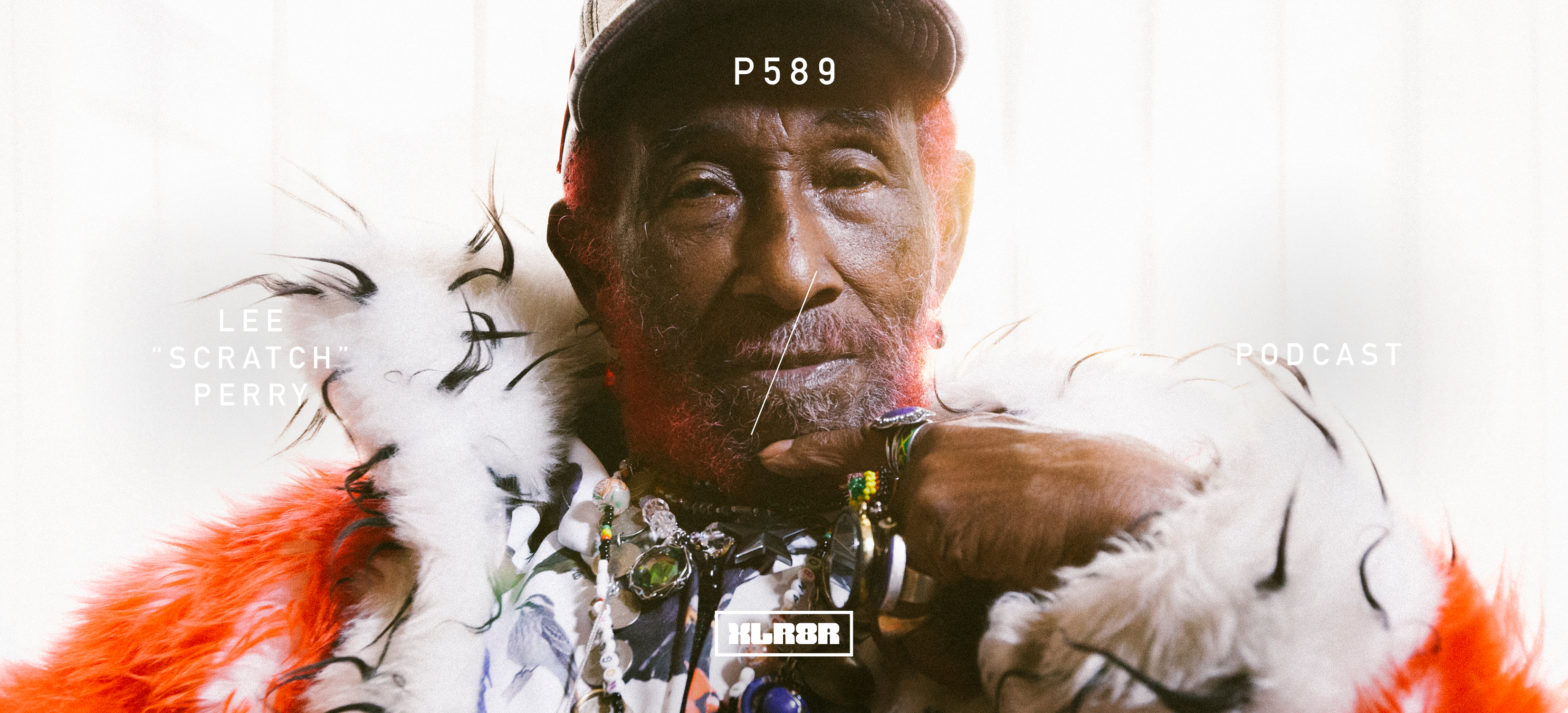
Only recently it was announced that Rainford Hugh Perry, universally known as Lee “Scratch” Perry, is set to return with Rainford, a new album produced by Adrian Sherwood, a long-term collaborator with whom he’d shared a working relationship since the mid-1980s. We’re told to expect the “strongest batch of original material that Perry has released for many years,” according to On-U Sound, the British label behind the release.
Over the course of a 50-year career, Perry has released more solo albums than some have had hot dinners; and he has started more labels than many have releases. He was born in Jamaica and began his music career in the ’50s, working as an apprentice at Studio One, one of Jamaica’s most renowned record labels and studios, before moving to Joe Gibbs’ Amalgamated Records. Disagreements forced him to find his own path, starting Upsetter Records in 1968. With his first major single, “People Funny Boy,” he pioneered the reggae genre with a fast, chugging beat and innovative use of sampling.
Perry went on to fill the ’70s by releasing records on various labels, making a name for himself on home turf and across the United Kingdom. A string of high-profile collaborations with Bob Marley & the Wailers, Junior Byles, Junior Murvin, and the Heptones, among others, marked Perry as one of the most innovative and original producers out there. “‘Scratch’ had a particular sound and everybody was fascinated by his sound,” recalls Jamaican percussionist Paul Douglas. “He had this way of putting things together; it was just his sound and it influenced a lot of people.”
Perry’s list of achievements grew through the ’80s and ’90s. A vocalist appearance as vocalist for Beastie Boys’ “Dr. Lee, PhD,” exposed him to a wider audience; in 2003, he won a Grammy for Best Reggae Album with the album Jamaican E.T.; then, just a year later, Rolling Stone ranked Perry #100 on their list of the 100 Greatest Artists of All Time. There are two films made about his life and work.
Now 83, Perry’s output has waned even if his enthusiasm for music hasn’t. His last major body of work came in 2015 with The Super Ape Strikes Again in collaboration with Belgium-based band Pura Vida. One year before that, he recorded an album with Daniel Boyle, released in May 2014 as Lee “Scratch” Perry—Back on the Controls; and before that he teamed up with The Orb, Dubblestandart, and also Adrian Sherwood on The Mighty Upsetter. Between 2007 and 2010, Perry worked with British producer Steve Marshall on three albums that featured performances by Keith Richards and George Clinton. Two of these , End Of An American Dream and Revelation, received Grammy nominations in the category Best Reggae Album. He’s now based in Switzerland with his wife and two children.
Perry’s XLR8R podcast is a mixture of old and new. You’ll enjoy a first-play of some his latest productions, “Cricket On The Moon” and “African Starship,” plus some of his older work, either in collaboration or solo. Alongside these, he’s added some originals by Dub Syndicate, a dub band formed by Adrian Sherwood including one where he features. Download it now via the WeTransfer button below.
Due to issues regarding the GDPR, EU readers can download the podcast here.
Tracklisting
01. Lee “Scratch” Perry “Pick ’n’ Mix”
02. Lee “Scratch” Perry “Music & Science & Madness”
03. Lee Perry & Dub Syndicate “Train to Doomsville”
04. Lee “Scratch” Perry “Heavan & Hell” (Dubplate)
05. Lee “Scratch” Perry “Dubbing Psycho Thriller”
06. Dub Syndicate “Fucious”
07. Dub Syndicate “Let The Spirit Rise”
08. Lee “Scratch” Perry “Scientific Dancehall”
09. Dub Syndicate feat. Lee Perry “The Only Alternative”
10. Sherwood & Pinch (feat. Lee ‘Scratch’ Perry) “Lies”
11. Lee “Scratch” Perry “Obeah Room” (Digital Mystikz Remix)
DJ Fulltono has dropped Draping 9, the ninth part of his Draping series.
The Draping series sees the Japanese artist work with two of Japan’s most prominent footwork creators, CRZKNY and Skip Club Orchestra, to offer up three new tracks (one each) each month. This one follows the same formula of old, and follows Part 8, which arrived in early March.
While rooted in juke and footwork, DJ Fulltono’s repertoire spans over ghetto-tech, electro, Chicago house, and beyond. He pursues his own way of weaving them all together with the sensibilities of techno mixing style and the skills he has developed over decades of experience playing out in clubs. His track was included in Burial & Kode9’s exclusive mix for Mary Anne Hobbs on BBC 6 Music last year, and he just had his latest Before The Storm EP released on dBridge’s EXIT Records.
Artwork comes from Megumu Yamamoto.
Tracklisting
01. Skip Club Orchestra “Draping 9”
02. DJ Fulltono “Draping 9”
03. CRZKNY “Draping 9”
Draping 9 is available now, with stream and order here.
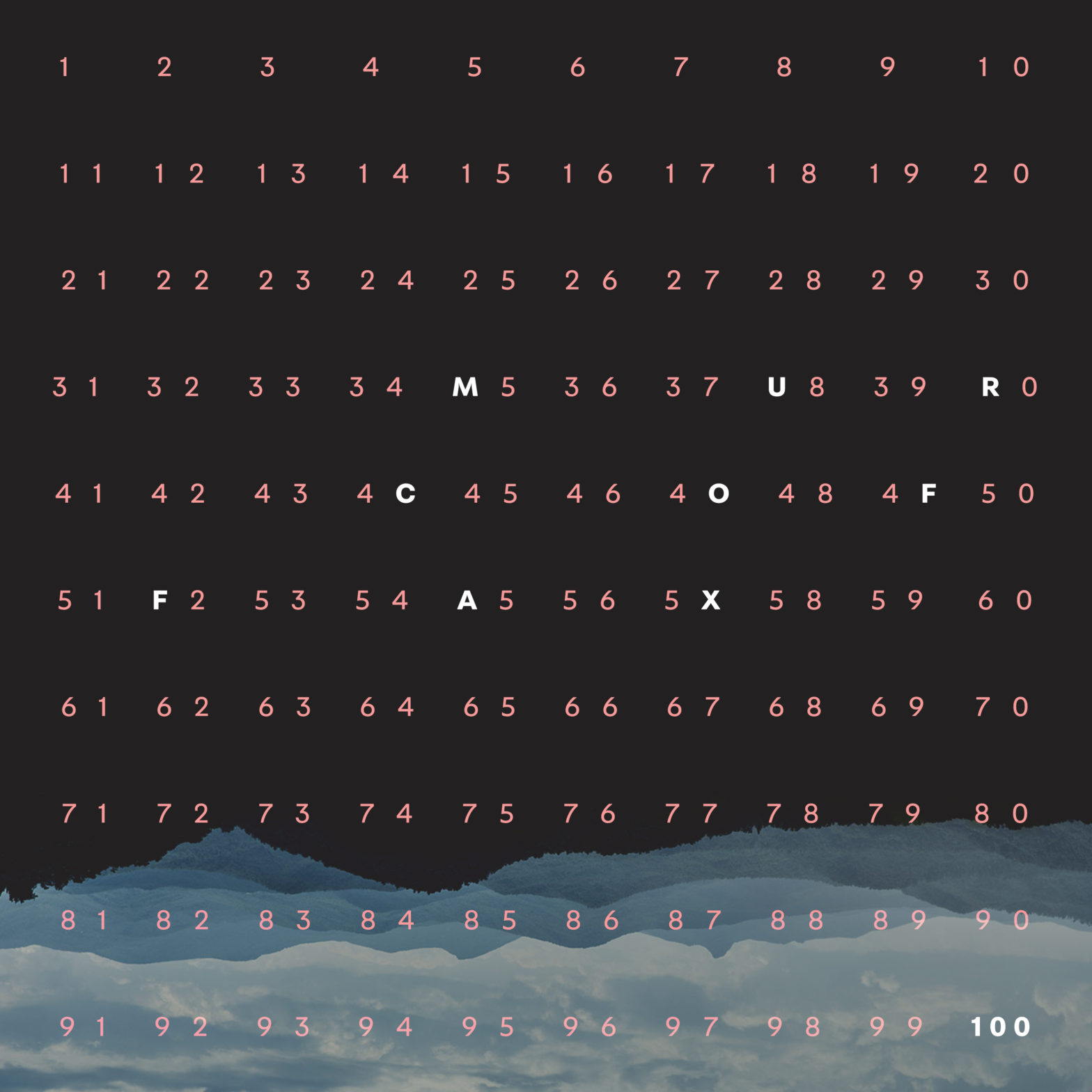
Static Discos will celebrate its 100th release with a one-track collaboration from label heads Murcof and Fax.
100 is described by the Mexico label as an “invitation to close our eyes and listen deeply for 100 seconds, far from all the digital detritus that absorbs us everyday.”
Murcof and Fax founded Static Discos in 2002 alongside Ejival, and the label has since released music from Mexico’s most important electronic producers, including Murcof, Fax, Cubenx, Childs, Duopandamix, Machino, Carrie, and newcomers like Camille Mandoki, Microhm, Gaspar Peralta, and Braulio Lam.
Fax’s most recent release is The Changing Landscape via Static Discos, while Murcof’s latest is Lost in Time via Glacial Movements.
Apollo View are Tom Coveney (a.k.a. one half of Psychemagik & 100% of techno-titan Thomaas Banks) and long-term collaborator Jon-Mark. Together they’ve cooked up two tasty interpretations of pieces that inspired them when they began their musical journey together back in 1992. These renditions make up their debut release, Delta V, out May 3 via Timothy Clerkin‘s Insult To Injury. The release features two originals, “IV and “II,” and two remixes from Logtoad and Violet.
Ahead of the release, you can download a club Timothy Clerkin edit of the Logtoad remix via the WeTransfer button below, or here for EU readers due to GDPR restrictions.